Hua Er Jie Jian Wen

Search documents
越跌越买?新加坡散户排长龙抢购黄金
Hua Er Jie Jian Wen· 2026-02-02 10:48
Group 1 - Retail investors are showing increased enthusiasm for purchasing physical gold despite a more than 20% pullback from last week's historical highs [1][6] - The demand for physical gold has surged, leading to a rare crowd at the gold trading area of UOB in Singapore, with some products sold out due to high customer demand [2] - The recent sell-off in gold prices was triggered by institutional traders closing their long positions, contrasting with retail investors who view the price drop as a buying opportunity [6] Group 2 - The long-term bullish sentiment for gold remains intact, driven by ongoing policy uncertainty from the Trump administration and the search for assets that hedge against currency devaluation and sovereign bond risks [1][6] - Deutsche Bank reaffirmed its long-term gold price target of $6,000 per ounce, emphasizing that the core factors driving the recent gold price increase have not changed [6]

这次白银暴跌是人为操纵的?
Hua Er Jie Jian Wen· 2026-02-02 10:19
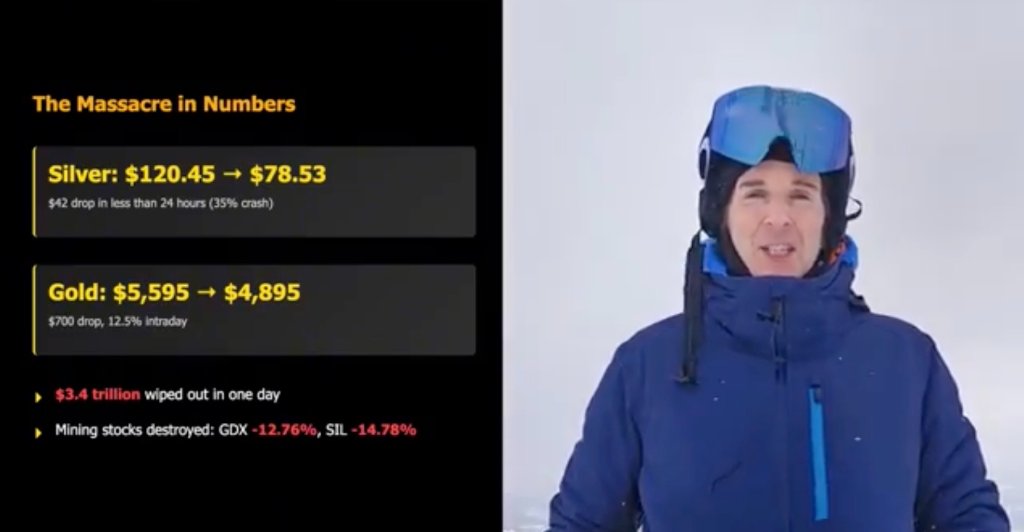
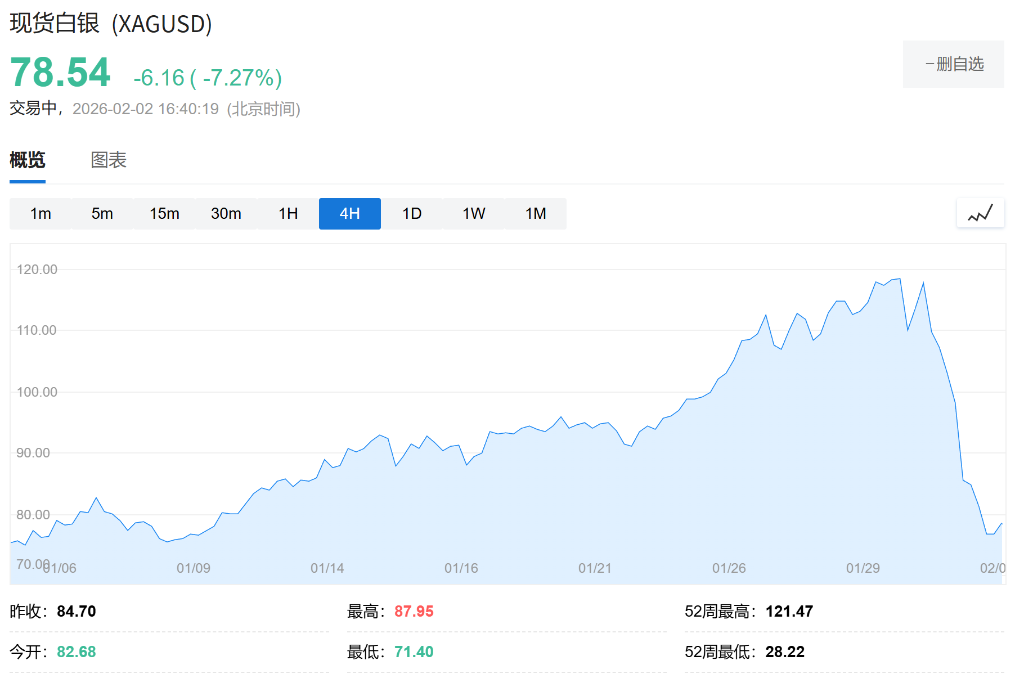
以下为前投资银行家、企业律师、Goat Academy创始人Felix Prehn在2月1日节目中的核心观点提炼: 本次贵金属暴跌与一系列市场事件在时间点上高度重合。2026年1月底白银价格在24小时内从120美元暴跌35%至78美元,黄金同步下 挫12%,市值蒸发约3万亿美元。值得关注的是,此次暴跌恰逢伦敦金属交易所(LME)与汇丰银行系统同时中断、芝加哥商品交易所 (CME)突击上调保证金要求,且时间点精准对应亚洲市场周末休市期。 此次白银暴跌是一场精心策划的市场清洗。核心证据包括:摩根大通在价格最低点精准平仓空头头寸;芝加哥商品交易所突然大幅提 高保证金,导致杠杆交易者连环爆仓并引发算法踩踏;而路透社发布的虚假报道(称美国将终止战略金属支持,后被官方否认)则为 抛售潮推波助澜。 历史数据显示,类似的剧烈波动模式曾在1980年、2011年及2025年12月多次出现:当白银价格快速上涨后,交易所往往会上调保证金 要求,导致杠杆交易者被迫平仓,进而引发价格大幅下跌。本次暴跌是该模式第四次出现,且波动幅度显著扩大。 期货市场与实物市场已出现明显分化。纸白银价格易受保证金调整、算法交易等因素影响而剧烈波动,而实物 ...

台积电2nm产能告急:苹果包揽首批,AMD谷歌排队,英伟达已瞄准1.6nm
Hua Er Jie Jian Wen· 2026-02-02 10:17
台积电最先进制程产能争夺正式打响。全球科技巨头加速涌入2nm工艺节点,该产能已被全数预订,而 先进封装供应同步收紧,凸显AI与移动芯片需求叠加对半导体供应链的持续挤压。 英伟达CEO黄仁勋1月31日晚间宴请核心供应链高管时表示,台积电今年必须全力运转,直接点出先进 制程产能紧张现状。这一表态印证了业界对台积电2nm产能告急的判断。 英伟达的工艺路线图显示出不同策略。据报道,该公司计划2028年推出Feynman AI GPU,预计采用台 积电A16工艺,该工艺特色为背面供电技术。 A16工艺代表台积电1.6nm节点,专为高性能计算产品设计。背面供电技术将电源传输网络移至芯片背 面,可改善信号完整性并提高功率传输效率,对大型AI加速器尤为关键。 这一时间表意味着英伟达可能跳过或仅小规模采用2nm工艺,直接转向更先进节点,反映出AI芯片厂商 对制程技术的激进追求。 先进封装成新瓶颈,CoWoS产能增长仍追不上需求 据报道援引产业消息人士称,苹果已锁定首批2nm产能的一半以上,高通同为2026年主要客户。AMD 计划2026年启动基于2nm的CPU生产,谷歌和AWS则分别瞄准2027年第三季度和第四季度导入该工 艺 ...


锂电池重大突破!马斯克:特斯拉实现干电极电池规模化生产
Hua Er Jie Jian Wen· 2026-02-02 09:53
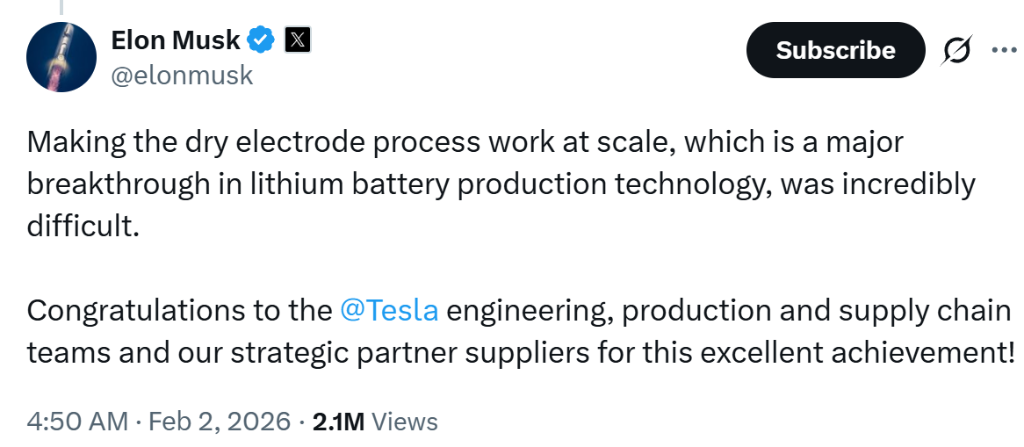
Core Insights - Tesla's CEO Elon Musk confirmed a significant breakthrough in lithium battery manufacturing with the successful scaling of dry electrode technology, marking a major advancement in reducing manufacturing costs and improving production efficiency in the electric vehicle industry [1][7]. Group 1: Technological Breakthrough - The dry electrode manufacturing process has been described as a "major breakthrough" in lithium battery production, overcoming a long-standing technical challenge that the industry deemed difficult to scale [1][5]. - This technology eliminates reliance on traditional wet solvent coating processes, validating the feasibility of dry processing in industrial production environments [7]. Group 2: Commercial Value - The dry electrode technology is expected to significantly reduce costs and energy consumption while simplifying factory processes, leading to lower capital expenditure requirements and greater production flexibility for Tesla in future battery capacity expansions [4]. - The new process also enhances performance, allowing for a pure dry cathode design that uses minimal binder (as low as 1.25%), thereby increasing energy density and extending battery life [8]. Group 3: Business Context - Tesla's energy storage business is experiencing strong growth, with annual deployment reaching 46.7 GWh and a 44% year-over-year increase in energy storage revenue to $3.4 billion [9]. - However, Tesla faces challenges in automotive sales, with a reported 20.2% decline in European sales from December 2024 to December 2025, highlighting the importance of technological innovations to maintain competitiveness and profit margins [10].
金银“史诗级巨震”之后,可以抄底了吗?
Hua Er Jie Jian Wen· 2026-02-02 09:06
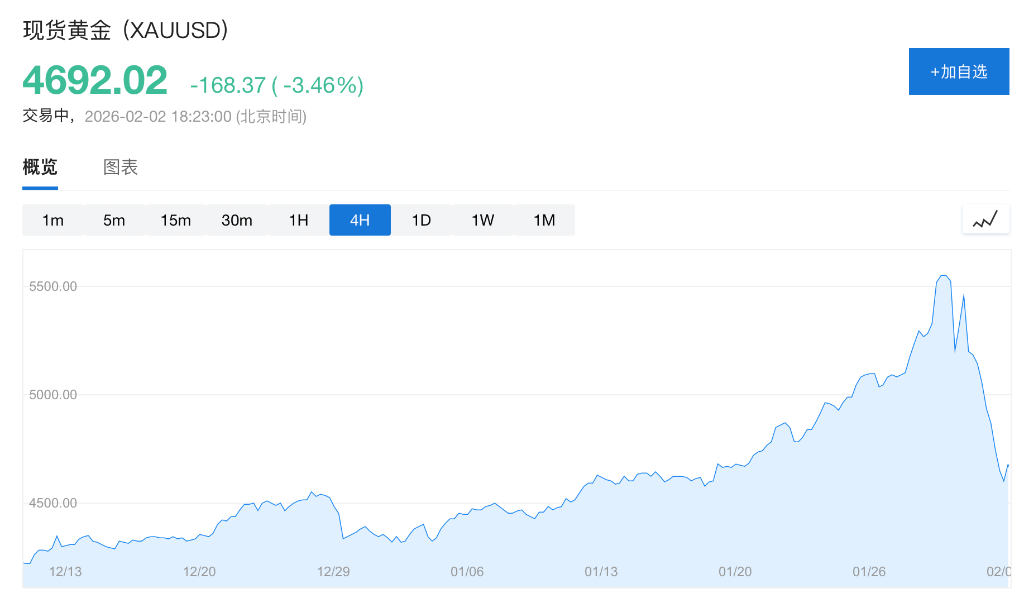
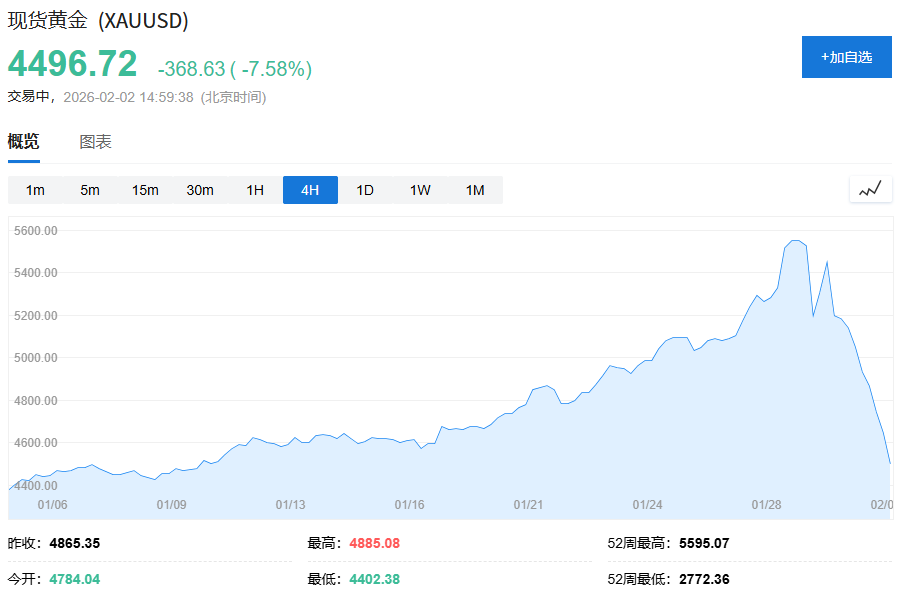
Core Viewpoint - The precious metals market continues to decline, with silver dropping 7% and gold falling 4.7%, breaching the $4500 mark, indicating a significant market correction driven by profit-taking and forced liquidation of leveraged positions [1][4]. Group 1: Market Dynamics - The recent drop in precious metals is attributed to multiple factors, including policy expectations, trading congestion, and exchange interventions [5]. - The nomination of Kevin Warsh as the new Federal Reserve Chairman has heightened hawkish expectations, leading to a stronger dollar and tighter liquidity, which negatively impacts precious metals [5][10]. - Exchanges like CME and SHFE have raised margin requirements, contributing to the market's downward pressure [5][7]. Group 2: Speculative Positioning - Prior to the crash, silver was one of the most crowded long positions globally, with extreme speculative positioning indicated by a 14-day RSI for gold exceeding 90, marking a historic high [7]. - The volatility index for silver reached 111, the highest on record, suggesting a precarious market environment where any reversal in sentiment could lead to severe deleveraging [7][10]. Group 3: Macro Influences - Concerns over profitability in AI tech stocks, such as those reported by Microsoft and Tesla, have led to a risk-off sentiment in the U.S. stock market, prompting some investors to liquidate precious metals to maintain liquidity [10]. Group 4: Future Outlook - Despite the short-term turmoil, institutions believe the long-term bullish logic for precious metals remains intact, supported by ongoing demand from central banks and concerns over U.S. debt sustainability [11][13]. - The market is expected to experience a period of wide fluctuations, with cautious buying sentiment prevailing in the near term [13][14]. Group 5: Investment Timing - Investors are advised to be patient and wait for volatility to decrease before entering the market, with specific indicators such as implied volatility dropping below 20% being suggested as potential entry points [16]. - Historical data indicates that gold typically sees an average pullback of about 8% over approximately 18 days after reaching a peak, providing a reference for potential timing [16]. - There is a warning regarding the risk of price discrepancies between spot and futures markets, particularly for silver, which may still have room for further declines [16].



市场担心沃什重启QT?但真正的工具可能是SOMA
Hua Er Jie Jian Wen· 2026-02-02 08:50
特朗普提名Kevin Warsh(凯文·沃什)担任下任美联储主席,引发市场对资产负债表收缩的担忧。虽然 沃什以资产负债表鹰派立场著称,但花旗认为完全重启QT(量化紧缩)的可能性不大。 花旗分析师认为,真正值得关注的是美联储SOMA投资组合的加权平均到期期限(WAM)调整——通 过将到期券种转为短期国债,美联储可以在不引发市场动荡的情况下实现资产负债表"瘦身"。这一策略 可能在2026年下半年至2027年释放约4200亿美元的再投资空间。对投资者而言,这意味着曲线将进一步 陡峭化,3年至5年期或成为最佳"避风港"。 沃什的鹰派立场:对资产负债表"动刀"的可能性 花旗判断,完全重启QT在去年回购市场波动后将面临重重阻力。更可能的操作是: 储备管理购买(RMPs)的缩减:从目前的每月400亿美元降至约100亿美元(花旗预计4月 中旬后自然降至200亿美元)。但这对宏观影响有限。 SOMA投资组合的WAM调整:将到期的美国国债券种转投短期国债。按每月300亿美元上 限计算,2026年下半年可实现约1400亿美元,2027年可达约2750亿美元。这一做法将获得美 联储内部广泛支持。 花旗在研报中指出,美联储可能将短期国 ...
甲骨文要崩?银行不借钱、股价腰斩,周日再融资500亿“续命”
Hua Er Jie Jian Wen· 2026-02-02 08:45
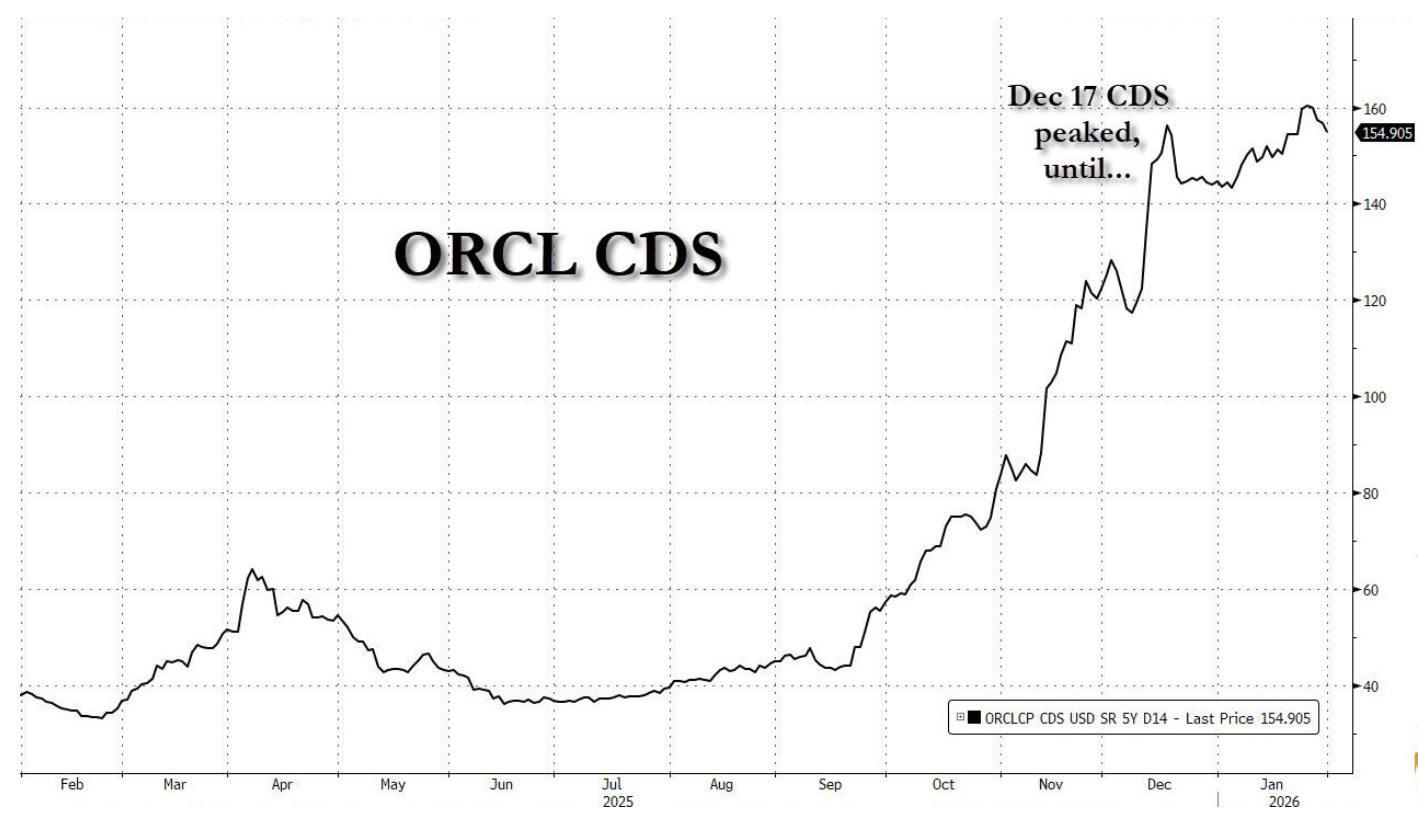
甲骨文正陷入一场流动性危机。其周日宣布今年拟筹资450亿至500亿美元,用以扩张AI数据中心,而此前多家投行已发出警告,称其可能最早在2026年底 耗尽现金。与此同时,其股价已较去年9月的峰值腰斩,信用违约掉期(CDS)价格飙升至2008年金融危机以来最高水平。 甲骨文这次融资被市场视为生死攸关之举。甲骨文计划通过强制转换优先股,以及规模最高达200亿美元的按市价发行计划筹集一半资金。其余资金拟在 2026年初通过一次性债券发行完成。 美国多家银行已开始抽离对甲骨文相关项目的融资支持。据彭博报道,TD Cowen的渠道调查显示,由于对甲骨文融资能力的担忧,多家美国银行已停止向 其数据中心项目提供贷款。 仍愿提供融资的银行已将利率提高至非投资级水平,从去年9月的SOFR+225-250个基点扩大至SOFR+300-450个基点。 甲骨文建设AI数据中心对资金的需求速度远超其现金流入速度,公司自由现金流已转为负值,预计这一状况将持续至2030年。 据TD Cowen分析,为支持与OpenAI的现有协议,甲骨文需采购约300万块GPU及其他IT设备,按保守估计每兆瓦3000万美元的IT配置成本计算,这意味着 约15 ...

忘掉1月非农!年度就业或下修100万,美国就业正在被系统性高估
Hua Er Jie Jian Wen· 2026-02-02 08:40
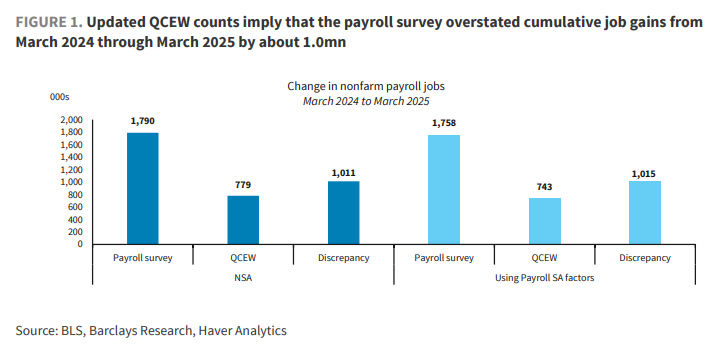
Core Viewpoint - There is a significant divergence in the January non-farm payroll (NFP) employment forecasts between Barclays and Citigroup, but both firms agree that the U.S. employment figures for 2025 are systematically overestimated, and the annual benchmark revision will reveal this discrepancy, indicating that the market is underpricing the risks of employment decline [1][5][20]. Group 1: Employment Predictions - Barclays predicts only 50,000 new jobs in January, with a similar increase in the private sector, while the unemployment rate is expected to slightly decrease to 4.3% [2]. - Citigroup, on the other hand, forecasts an increase of 135,000 jobs, with approximately 140,000 in the private sector, significantly above the market consensus of around 70,000, and maintains the unemployment rate at 4.4% [3]. Group 2: Data Quality Concerns - Both firms emphasize that the information content of the January employment data is low. Barclays notes that the employment data for Q4 2025 is significantly affected by government "delayed resignation plans," and short-term fluctuations do not represent trends [4]. - Citigroup points out that January is one of the most favorable months for seasonal adjustments, historically showing a pattern of "initial strength followed by a decline" [4]. Group 3: Systematic Overestimation of Employment - Despite differing views on January's data, both Barclays and Citigroup agree that the core issue lies in the overestimation of cumulative employment over the past year. Barclays cites QCEW data, indicating a discrepancy of nearly 1 million jobs between the non-farm survey and QCEW data from March 2024 to March 2025 [6][7]. - This suggests that the official non-farm payroll figures have systematically overestimated job growth by an average of 80,000 to 90,000 jobs per month [7]. Group 4: Market Mispricing of Employment Risks - The market is currently focused on whether the January NFP will "beat/miss" expectations and if the unemployment rate will hold at 4.5%, while neglecting critical signals indicating employment market pressures [12][13]. - Key indicators include a declining JOLTS hiring rate around 3.2%, worsening consumer sentiment regarding job availability, and significant distortions in employment data for the latter half of 2025 [17]. Group 5: Implications of Employment Revisions - A downward revision of employment figures by 700,000 to 1 million will alter the historical narrative, indicating that the past year's growth was not as robust as reported [18]. - This will necessitate a reevaluation of frameworks for wages, consumption, and GDP, and may challenge the perceived "employment safety net" by the Federal Reserve [18][19]. - The current labor demand intensity corresponding to the unemployment rate will be reassessed, suggesting that the employment market is closer to a "turning point" than the market anticipates [19].


“黄金估值已达极端水平,”花旗警告:金价支柱面临坍塌
Hua Er Jie Jian Wen· 2026-02-02 08:26
Core Viewpoint - Citi Research warns that gold valuations have reached extreme levels, with global gold spending as a percentage of GDP soaring to 0.7%, the highest in 55 years. If the gold allocation ratio returns to the historical norm of 0.35%-0.4%, gold prices could face a "halving" risk [1][10]. Group 1: Current Market Conditions - The current gold price is completely detached from the marginal production costs of mining, with high-cost gold miners experiencing profit margins at a 50-year high [6]. - Citi's report indicates that a mere 5% exit of profit-taking could offset global physical demand, leading to significant market disruption [2][13]. - The report highlights that the current annual gold spending as a percentage of GDP is far above levels seen during the 1980 oil crisis, indicating a disconnection from the real economy [3]. Group 2: Future Price Predictions - Citi maintains a target price of $5,000 per ounce for the next 0-3 months but expresses caution for the second half of 2026, predicting a decline to $4,000 per ounce by 2027 [2][15][19]. - The report outlines a base case scenario where gold prices will average $4,600 in 2026, with quarterly predictions showing a decline from $5,000 in Q1 to $4,200 in Q4 [15][18]. - Three scenarios are presented: a bull market scenario predicting $6,000 per ounce (20% probability), a base case of $4,000 (60% probability), and a bear market scenario of $3,000 (20% probability) [19]. Group 3: Risks to Gold Prices - The report identifies that the support for current high gold prices may diminish as geopolitical tensions ease, particularly with expectations of a resolution to the Russia-Ukraine conflict by mid-2026 [11]. - Economic conditions in the U.S. are expected to improve, which could reduce the need for gold as a hedge, particularly if the economy enters a "Goldilocks" phase of high growth and low inflation [11]. - The independence of the Federal Reserve is anticipated to remain intact, which could further contribute to downward pressure on gold prices [11].
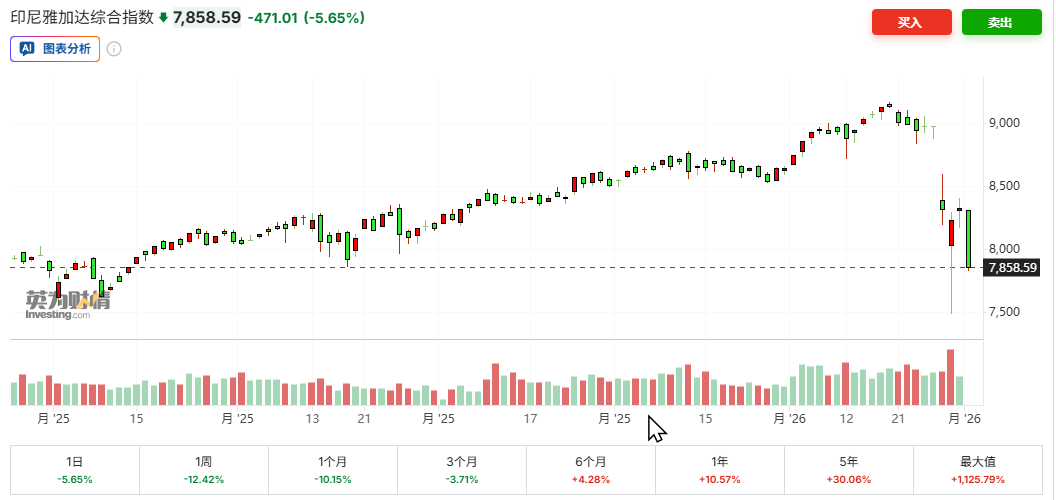
屋漏偏逢连夜雨!商品暴跌拖累,印尼股市重挫6%
Hua Er Jie Jian Wen· 2026-02-02 07:17
周一的抛售令印尼监管层的救市努力复杂化。雅加达综合指数一度大跌6%,矿业和能源类股票成为最大拖累。印尼作为重要的大宗商品出口国,其股 市对商品价格高度敏感。 印尼股市周一继续大跌,基准雅加达综合指数盘中暴跌6%,成为亚洲表现最差的市场。此次下挫源于大宗商品价格走弱,矿业和能源股领跌,令监管 机构刚刚启动的市场信心修复努力面临严峻考验。 这场新一轮抛售发生在印尼监管层密集出台改革措施之际。上周MSCI警告可能将印尼市场降级至前沿市场后,印尼股市遭遇"黑色一周",两日暴跌 16%,市值蒸发超800亿美元,交易所CEO Iman Rachman为此引咎辞职。 监管机构随即宣布一系列改革,包括指示主权财富基金Danantara指导旗下资产管理公司买入股票,并计划将最低自由流通股比例翻倍至15%。 而周一的下跌则追随亚洲市场的避险情绪,金属价格暴跌,美元走强,此前特朗普提名新的美联储主席人选。大宗商品的持续疲软可能迫使监管机构 调整改革策略,更加注重短期稳定性。 野村证券成为最新下调印尼股票评级的券商,理由是额外风险,此前高盛上周已下调评级。尽管上周五改革措施一度提振市场反弹,但市场仍不确定 这些举措能否满足MSCI的 ...