
Zhong Guo Qi Che Bao Wang

Search documents
以造车素养,守护每一份热爱 | 2025广汽本田躁梦节:与爱车人共创无界车生活
Zhong Guo Qi Che Bao Wang· 2025-12-09 14:30
Core Insights - The 2025 GAC Honda Zao Meng Festival emphasizes the theme of "Upholding Car Manufacturing Quality and Expanding Car Life Boundaries," showcasing nearly 300 classic and modified vehicles, creating an immersive experience for car enthusiasts [1][20] - GAC Honda has maintained its 27-year commitment to quality car manufacturing, highlighting the long-term value of trust that can withstand market cycles and foster a shared passion for car culture [2][20] Group 1: Event Highlights - The festival created an immersive space for car lovers, featuring a circular layout that connects core interactive areas, where classic and modified vehicles coexist, symbolizing the energy and passion of car enthusiasts [3][20] - The event included a variety of activities such as a limited-time trendy market, KOL appearances, and interactive experiences that engaged participants across different cultural dimensions [1][12] Group 2: Quality and Innovation - The "Craftsmanship Exploration" exhibit showcased GAC Honda's commitment to quality materials and manufacturing processes, including a demonstration of the UV protection capabilities of the Honda P7's sunshade [6][20] - The festival featured high-mileage vehicles, including the sixth-generation Accord, which completed a 24-hour endurance challenge, reinforcing the brand's reputation for durability and reliability [6][8] Group 3: Technology and Experience - The "Smart Experience" area allowed participants to engage with Honda's SENSING 360 safety system through VR technology, enhancing the understanding of smart connectivity and safety features [9][20] - The driving experience zone offered interactive activities, including a replica of the Shanghai F1 circuit, allowing participants to immerse themselves in the thrill of racing [10][20] Group 4: Community and Connection - The festival served as a platform for car owners to share their stories and experiences, fostering a sense of community among different generations of car enthusiasts [17][20] - The event highlighted the emotional connections between car owners and their vehicles, emphasizing that cars are more than just tools; they represent relationships and shared memories [6][20] Group 5: Brand Philosophy - GAC Honda's commitment to quality and user respect is central to its brand philosophy, emphasizing that true value lies in long-term trust rather than short-term gains [27][20] - The festival reflects GAC Honda's dedication to evolving with the times while maintaining its core values of quality and driving pleasure, aiming to resonate with younger audiences and foster deeper connections [20][25]


吉利联合高校开发首款中国体征汽车碰撞测试假人
Zhong Guo Qi Che Bao Wang· 2025-12-09 13:54
Core Insights - Geely's Global Safety Center is set to officially launch on December 12, featuring a core advantage of a dummy testing laboratory equipped with over 60 automotive crash test dummies valued at over 2 billion yuan [2] - The center has developed a unique crash test dummy in collaboration with Hunan University, specifically designed for testing occupant protection performance in various seating postures, including reclined positions [2] - Geely has invested over 250 billion yuan in safety technology research and development over the past 11 years, emphasizing safety as the top priority in vehicle manufacturing [2] Summary by Categories Safety Technology - The Global Safety Center is built according to the highest global safety standards and holds five Guinness World Records, showcasing Geely's leading capabilities in safety technology [2] - Each Geely vehicle undergoes more than 12,000 safety simulation analyses and thousands of safety tests at the vehicle, system, and component levels before market launch [2] - Geely ranks first among Chinese automotive companies with 1,562 safety patents [2] Research and Development - The dummy developed for testing is the first in China suitable for reclined position testing and is the first crash test dummy led by a Chinese automotive brand [2] - The collaboration with Hunan University highlights Geely's commitment to innovation in safety technology tailored to Chinese body characteristics [2]


吉利创新中心甲醇制备技术达国际卓越水平,实现核心催化剂国产化量产破局
Zhong Guo Qi Che Bao Wang· 2025-12-09 13:46
Core Insights - Geely Innovation Center's carbon dioxide hydrogenation to methanol technology has passed authoritative evaluation, achieving international advanced levels, particularly in catalyst performance which reached exceptional standards [2] Group 1: Technology Development - The technology development focused on overcoming key technical bottlenecks in carbon dioxide hydrogenation to methanol through innovative strategies, including the creation of a complete catalyst preparation process that enhances mechanical strength and water resistance [2] - The catalyst achieved over 99% total conversion rate of CO2 and H2, as well as over 99% total selectivity for methanol [2] Group 2: Pilot Projects and Feasibility - A pilot project for carbon dioxide hydrogenation to methanol has been completed, demonstrating 2000 hours of continuous stable operation without catalyst performance degradation, confirming the engineering feasibility of the technology [4] - The pilot project successfully passed a 72-hour continuous on-site assessment, with core indicators exceeding expectations and impurity levels in crude methanol significantly lower than industry standards [4] Group 3: Commercialization and Market Impact - The catalyst is now capable of mass production and commercial sales, meeting domestic chemical companies' demand for low-carbon methanol production technology and breaking the market monopoly of foreign catalysts [6] - Geely Innovation Center plans to accelerate the industrialization and market promotion of this technology, contributing to the global carbon dioxide resource utilization industry upgrade and supporting the green low-carbon transition [6]

对标国际标准 助力我国危险货物运输车辆迈向全球
Zhong Guo Qi Che Bao Wang· 2025-12-09 08:21
12月9日,中央电视台《朝闻天下》聚焦危化运输行业重大变革,全面解读了GB21668-2025《危险货物运输车辆安全技术条件》强制性国家标 准。 据了解,GB 21668-2025《危险货物运输车辆安全技术条件》于2025年10月5日发布,即将于2026年7月1日全面实施。作为整合替代GB21668-2008等三 项旧标的重磅新规,GB21668-2025构建了覆盖车辆设计、制造、使用全生命周期的安全技术体系,其核心升级直指行业痛点。不仅强制要求中型以上车辆 配备ESC电子稳定系统、AEBS自动紧急制动等智能安全装备,更对罐体结构强度、后部防护距离、新能源车辆电池热失控防护等提出严苛要求,同时实现 与联合国危险货物运输标准的全面接轨。这意味着,危化运输行业将迎来"安全门槛"的全面提升,合规不再是底线,而是生存必备前提。 记者了解到,新国标还有一个显著特点——更加国际化。具体技术要求全面对接危险货物国际道路运输协定及联合国相关法规,为中国危险货物运输车 辆进入国际市场扫除技术障碍。 中汽中心武汉检验中心党委书记柳东威也表示,新国标在车辆的一般安全技术要求和专项安全技术要求方面,与国际标准基本保持一致。对于车辆分 ...

多省市抢抓这一热门赛道!为何成为未来五年布局重点?
Zhong Guo Qi Che Bao Wang· 2025-12-09 07:19
"发展自动驾驶"、"布局飞行汽车"、"推动汽车智能化、电动化"……近日,多省市纷纷出炉"十五五"规划建议,尽管各自立足不同的实际情况, 但其中的共同点之一,是均把汽车产业作为未来五年的发展重点,作出布局。 纷纷盯上汽车行业 布局汽车产业,重视汽车消费,成为各地未来五年共同追求的目标。 有关专家表示,全球汽车产业正经历着百年未有之大变局,而汽车智能化、电动化无疑是这场变革的核心驱动力。2025年,我国新能源乘用车零售的市 场渗透率达到59.3%,较去年同期提升7个百分点。这一数据不仅彰显了我国在新能源汽车领域的蓬勃发展态势,更意味着我国在新能源汽车位居世界领 先,而各地将汽车产业尤其是新能源汽车视为未来五年实现"换道超车"的关键抓手,正是因为新能源汽车产业既是朝阳产业,也是发展新质生产力的重要着 力点。 同时,各省市"十五五"规划建议中频繁出现的"固态电池"、"车网互动(V2G)"、"自动驾驶"等前沿技术方向,无一不指向汽车电动化与智能化融合的 未来赛道。固态电池被视为下一代电动汽车电池的理想选择,具有高能量密度、高安全性和长寿命等优势,一旦实现大规模商业化应用,将彻底改变电动汽 车的性能与市场格局。车网互动( ...

这家新势力发布未来五年产销规划,透露了怎样的玄机?
Zhong Guo Qi Che Bao Wang· 2025-12-09 07:18
Core Insights - Faraday Future (FF) has announced an ambitious production and sales target of 400,000 to 500,000 vehicles over the next five years, despite having delivered fewer than 20 vehicles in the past decade [3][4] - The company aims to focus on the FX brand, particularly the FX Super One priced between $150,000 and $250,000, and the FX4 targeting the mainstream U.S. family car market under $30,000, hoping to replicate the success of Tesla's Model Y [3][4] Production and Financial Challenges - FF's previous flagship model, the FF91, has seen dismal sales, with fewer than 20 units delivered by October 2025, leading to a significant reduction in its production capacity to 12,000 units per year [4] - The FX brand is expected to account for over 90% of FF's sales targets, while the FF91 will serve primarily as a technological benchmark [4] - Financially, FF is in a precarious position, with only $13.26 million in cash reserves as of Q2 2025, and a net loss of $48.1 million in the same quarter, raising concerns about its sustainability [5][6] Market Positioning and Strategy - The introduction of the FX brand is seen as a potential lifeline for FF, but there are concerns about the viability of this strategy given the company's financial instability [5][6] - FF's revenue structure is heavily reliant on non-automotive income, with over 80% of its revenue coming from California's zero-emission credits and technology licensing, indicating a lack of robust automotive sales [6] - The company's initial positioning of the FF91 as a super-luxury electric vehicle failed to resonate with consumers, highlighting the importance of understanding market demands and consumer expectations [7][8] Industry Implications - The challenges faced by FF serve as a cautionary tale for the automotive industry, emphasizing the need for effective financial management and a sustainable business model [8] - The competitive landscape for electric vehicles is expected to intensify over the next five years, making it crucial for companies to not only set ambitious targets but also to execute them effectively [8]


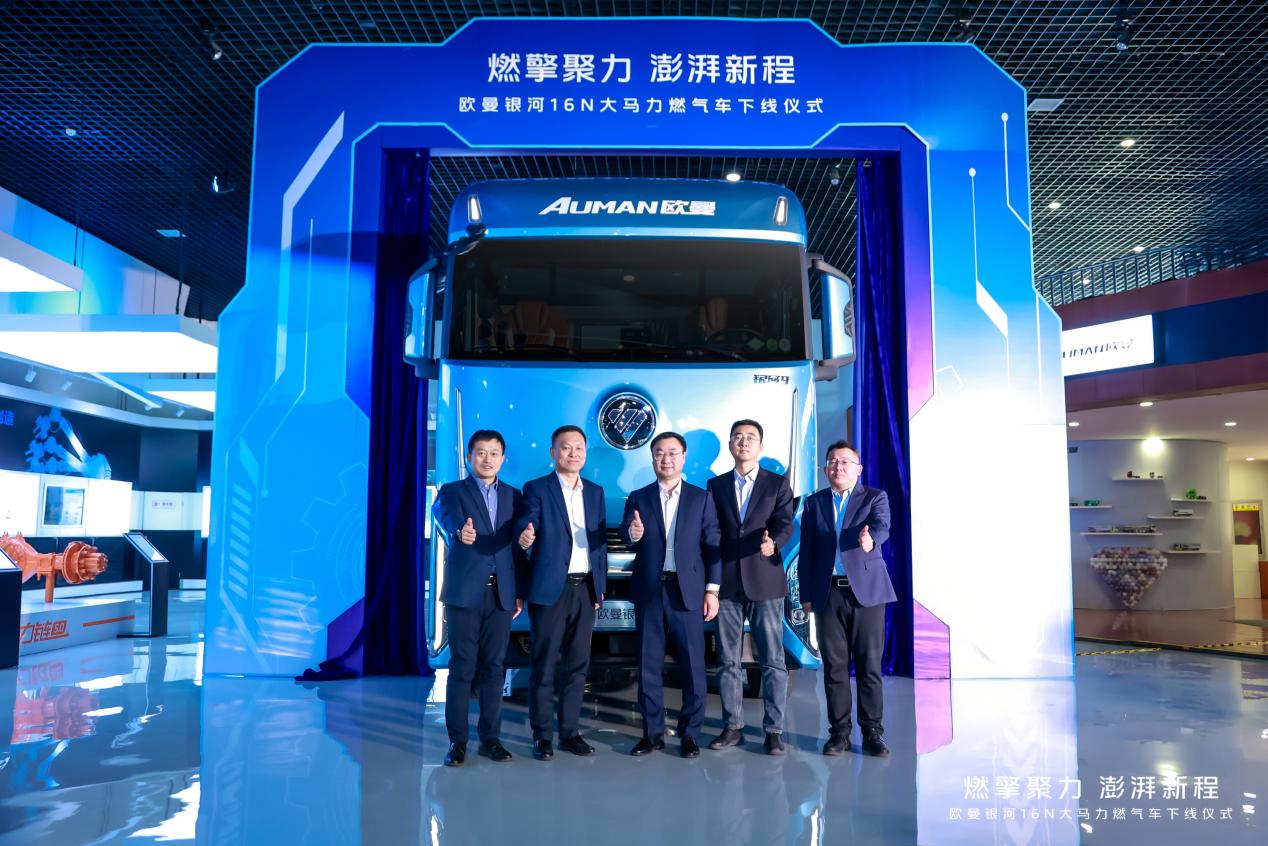
欧曼银河16N大马力燃气重卡握有哪些“关键筹码”?
Zhong Guo Qi Che Bao Wang· 2025-12-09 07:11
12月8日,欧曼银河16N大马力燃气车在北京下线。这款搭载720马力、3600N·m峰值扭矩的旗舰产品,不仅宣告欧曼在大马力燃气赛道进入新阶段,更 以多项行业领先的技术指标,直面物流行业"降本增效"的核心诉求,重塑燃气重卡的价值标准。在天然气重卡市场连续增长、技术竞争日趋白热化的背景 下,欧曼银河16N大马力燃气车的登场,是一次技术实力的集中展示,更是对行业未来走向的一次深刻回应。 重塑燃气重卡价值标杆 在降本增效成为核心诉求的当下在物流行业竞争加剧、运营成本高企的当下,降本增效成为从业者的核心诉求,尤其是大马力燃气重卡凭借产品丰富的 应用场景以及经济高效特性,已经成为干线运输的主流选择。 值得一提的是,欧曼银河16N大马力燃气车的发布,建立在欧曼在燃气重卡市场已经取得的坚实领先基础之上。2025年,在国内重卡市场复苏、天然气 重卡实现"四连增"的行业背景下,欧曼的表现尤为亮眼。 据统计,2025年1-11月,欧曼燃气重卡销量同比大幅增长45%,实现了销量与市场占有率的双提升,全面领跑行业增速。 这一成绩的取得,得益于欧曼 精准的产品策略。从年初推出的银河15N 630马力燃气车,到今天16N 720马力产品 ...

三菱、日产、本田联合在美造车?
Zhong Guo Qi Che Bao Wang· 2025-12-09 01:59
Core Viewpoint - Mitsubishi Motors is exploring joint vehicle production in the U.S. with Nissan and Honda due to the ongoing impact of U.S. tariff policies, aiming for substantial progress before the mid-term plan release in spring 2026 [1][9]. Group 1: Impact of U.S. Tariffs - The U.S. government imposed a 25% tariff on imported vehicles starting in April, significantly affecting Japanese automakers reliant on the U.S. market [3]. - Japanese automakers, including Toyota, Honda, Nissan, Mazda, Mitsubishi, Subaru, and Suzuki, are projected to incur a total loss of 1.5 trillion yen (approximately 686 million RMB) due to these tariffs in the first half of the 2025 fiscal year [3]. - Mitsubishi, lacking a vehicle production base in the U.S., faces increased losses in its North American operations, with a projected sales volume of 113,000 vehicles in the 2024 fiscal year, significantly lower than competitors [3][4]. Group 2: Capacity and Collaboration - Nissan operates assembly plants in Mississippi and Tennessee with a combined capacity of 1 million vehicles, but is only expected to produce 525,000 vehicles in 2024, indicating excess capacity [4]. - Honda's five U.S. assembly plants are running at over 80% capacity, leaving little room for additional production, necessitating external support for new market demands [4]. - The collaboration between Mitsubishi, Nissan, and Honda is seen as a natural complement to their production capacities, especially in light of competitive pressures and the transition to electric vehicles [4]. Group 3: Historical Context and Future Prospects - Mitsubishi and Nissan have a history of collaboration dating back to 2010, with significant partnerships established, including the formation of a joint venture focused on microcars [6]. - In 2024, Nissan and Honda signed an agreement to collaborate on vehicle software and electrification, with Mitsubishi expressing interest in joining this partnership to leverage their technological strengths [7]. - As the 2026 mid-term planning deadline approaches, the collaboration discussions among the three companies are entering a critical phase, which could set a new precedent for cooperation in the global automotive industry [9].

增强供需适配性 释放汽车消费乘数效应
Zhong Guo Qi Che Bao Wang· 2025-12-09 01:33
当前,我国包括汽车在内的消费供给已进入优质且优价的新发展阶段,但供给侧结构性矛盾依旧突出。在此背景 下,"增强供需适配性"的举措顺势而生,意在解决要素错配和资源浪费,进一步打通消费卡点堵点,形成"需求牵引供 给、供给创造需求"的良性循环,实现生产和消费从量到质的转变。 以消费升级引领产业升级,以优质供给更好满足多元需求,实现供需更高水平动态平衡……这不仅是近日工信部、 国家发改委、商务部、文化和旅游部、中国人民银行和市场监管总局联合印发《关于增强消费品供需适配性进一步促进 消费的实施方案》(以下简称《方案》)的主旨,也是当前和今后一段时间汽车业促消费的重要方向。 "《方案》体现出'供需端联动'的政策设计,本质上是对汽车消费乘数效应的深度开发。"中国汽车流通协会副会长王都 在《方案》发布后接受《中国汽车报》记者专访时表示,增强供需适配性的意义,就是让汽车消费从单一产品销售转向 综合服务供给,从"产品刺激"向"生态培育"跃升,为构建新发展格局提供有力支撑。 探索汽车消费新路径 《方案》提出,到2027年我国将形成3个万亿元级消费领域和10个千亿元级消费热点,并明确提出智能网联新能源汽车 是其中的重点之一。同时,将 ...

东安动力打造生态市场增长新引擎
Zhong Guo Qi Che Bao Wang· 2025-12-09 01:33
Core Insights - The Chinese automotive market is undergoing a significant transformation characterized by deep penetration of new energy vehicles, rapid upgrades of traditional powertrains, and the emergence of new sectors, leading to intense competition among automakers [2] - Dong'an Power is leveraging AI and ecological strategies to turn the competitive "卷潮" (involution) into opportunities for growth, thereby reshaping its competitive advantage and solidifying its leading position in the industry [2][3] Market Structure and Strategy - Dong'an Power has developed a diversified market ecosystem by analyzing industry trends and customer needs, creating integrated power system solutions tailored for various vehicle manufacturers [3] - The company has established a comprehensive power industry layout covering traditional and new energy efficient engines, range extenders, and specialized products, forming a multi-dimensional market structure [3][4] Innovation and AI Integration - Dong'an Power is focusing on innovation-driven market development, utilizing AI tools to analyze market trends and customer demands, which enhances decision-making and operational efficiency [6] - The company has achieved an 80% project conversion rate for potential new market projects, demonstrating its effective market development capabilities [6] Partnerships and Market Expansion - Dong'an Power has formed partnerships with over 90% of leading new energy vehicle manufacturers, optimizing its customer structure and enhancing its core competitiveness [7] - The company is actively expanding into new markets, including specialized products, with nearly 30 new projects initiated in areas such as drones and flying cars, contributing to a diversified growth strategy [8] Product Development and Sales Growth - In 2023, Dong'an Power has initiated 68 new market projects, with a significant focus on new energy, resulting in a 138% year-on-year increase in new energy market projects [9] - The company expects to achieve a sales volume of approximately 400,000 units from these new projects, with new market initiatives projected to contribute nearly 45% to total sales [9] Future Outlook - Dong'an Power is developing a new generation of specialized rotor engines aimed at the aviation sector, focusing on lightweight and efficient designs to meet market demands [10][11] - The company aims to continue its growth trajectory by deepening its core business in power systems and expanding into emerging market sectors, contributing to the transformation of the Chinese automotive industry [11]

