
Zhong Guo Qi Che Bao Wang

Search documents
销量、营收、核心市场份额占比不断提升,海外市场成新增长极
Zhong Guo Qi Che Bao Wang· 2025-12-05 09:57
Core Viewpoint - The Chinese automotive industry is transitioning from incremental competition to stock competition, with overseas markets becoming a new growth driver as domestic competition intensifies [4][8]. Export Growth - In October, China's automotive exports reached 666,000 units, a month-on-month increase of 2.1% and a year-on-year increase of 22.9%. From January to October, exports totaled 5.616 million units, up 15.7% year-on-year [4]. - The export growth rate is outpacing domestic production and sales growth, indicating a shift in focus for Chinese automakers towards international markets [4]. Company Performance - Chery's overseas sales for January to October reached 1.06 million units, accounting for 46% of total sales, with a year-on-year growth of 13% [5]. - BYD's overseas sales for the same period were 780,000 units, a significant increase of 130%, raising its export share to 21% [5]. - Great Wall Motors reported overseas sales of 454,100 units, making up nearly 37% of total sales, with a 44.61% increase compared to 2023 [5]. - Geely's overseas sales reached nearly 300,000 units, with a remarkable 214% increase in exports of new energy vehicles [6]. Market Expansion - GAC's overseas terminal sales grew by 36.5%, covering 85 countries and regions, with over 570 sales outlets [7]. - Chinese automotive brands are increasingly penetrating mature markets like the EU, with a record 7.4% market share in the European passenger car market as of September 2025, doubling from 3.3% year-on-year [14]. Revenue Contribution - Chery's revenue for the first three quarters of 2025 was 214.83 billion yuan, a 17.9% increase year-on-year, with exports contributing significantly to this growth [10]. - BYD's overseas revenue share increased from 28% in 2024 to 36.5% in the third quarter of 2025, with a net profit margin of 4.2% [11]. - Great Wall Motors' overseas revenue surged to 80.3 billion yuan, accounting for 39.69% of total revenue [12]. Strategic Insights - Chinese automakers are focusing on localizing products to meet diverse market needs, which is essential for integrating into local markets [9][20]. - The shift from product export to ecological output is becoming a key strategy for Chinese car manufacturers, enhancing their competitiveness in international markets [13][19]. - The global market share of Chinese automobiles is expected to exceed 38% by 2025, with significant growth in emerging markets like Southeast Asia and Africa [14][16]. Future Projections - By 2030, it is anticipated that Chinese automotive brands will achieve over 12% market share in overseas markets, with sales reaching nearly 10 million units [18]. - The global expansion of Chinese car manufacturers is accelerating, with strategies focusing on building a global vehicle that meets diverse market demands [19].






全球动力电池前三季度“答卷”出炉
Zhong Guo Qi Che Bao Wang· 2025-12-05 09:55
Core Insights - The global electric vehicle (EV) battery installation volume reached 811.7 GWh in the first three quarters of 2025, marking a 34.7% year-on-year increase, with Asian companies dominating the market [2][3] Market Overview - Six Chinese companies, three South Korean companies, and one Japanese company remain in the top ten global battery manufacturers, with Chinese companies increasing their market share to 68.2% from 65.5% in the same period last year [2][3] - The total battery installation volume for the top six Chinese companies was 553.6 GWh, while South Korean companies' market share fell to 16.9%, a decline of 3.3 percentage points year-on-year [2][3] Company Performance - CATL maintained its leading position with a battery installation volume of 297.2 GWh, but its growth rate slowed to 31.5%, resulting in a slight decrease in market share to 36.8% [4] - BYD's battery installation volume grew by 45.6% to 145 GWh, increasing its market share to 17.9% [4] - Other notable performers include: - Zhongxin Innovation with a 41.5% increase to 39.3 GWh and a market share of 4.8% [5] - Guoxuan High-Tech with a 65.8% increase to 29.7 GWh and a market share of 3.7% [5] - EVE Energy with a 73.2% increase to 21.9 GWh and a market share of 2.7% [5] - Honeycomb Energy with an impressive 89.5% increase to 20.5 GWh and a market share of 2.5% [5] Regional Dynamics - South Korean companies LG Energy, SK On, and Samsung SDI saw their combined market share drop to 16.9%, with Samsung SDI being the only top ten company to experience a decline in installation volume [8][10] - Japanese company Panasonic's market share slightly decreased from 4.2% to 4.1% [8] Market Challenges - The slowdown in growth for South Korean and Japanese companies is attributed to weak demand from core customers and a mismatch between their strategies and market needs [8][9] - The U.S. EV market growth has slowed significantly, with a 11.7% increase in sales year-on-year, primarily due to the expiration of federal tax credits [8][10] Technological Trends - The shift towards lithium iron phosphate (LFP) batteries is gaining momentum, with LFP batteries expected to account for over 50% of global installations by 2024 [9] - Chinese companies dominate the LFP battery market, while South Korean companies continue to rely heavily on nickel-cobalt-manganese (NCM) batteries, which are losing market share [9] International Expansion - Chinese battery companies are aggressively expanding into international markets, with significant growth in battery installation volumes outside of China [12][13] - BYD's international battery installation volume reached 25.8 GWh, a 145.9% increase, while Honeycomb Energy's international volume surged by 425.2% [13][14] Strategic Shifts - Both Chinese and international battery manufacturers are increasingly focusing on the energy storage market as a new growth avenue, driven by rising demand and the need to diversify from the competitive EV battery market [16][17] - Major companies like CATL and LG Energy are ramping up their energy storage battery production, with significant orders already in place [16][18]


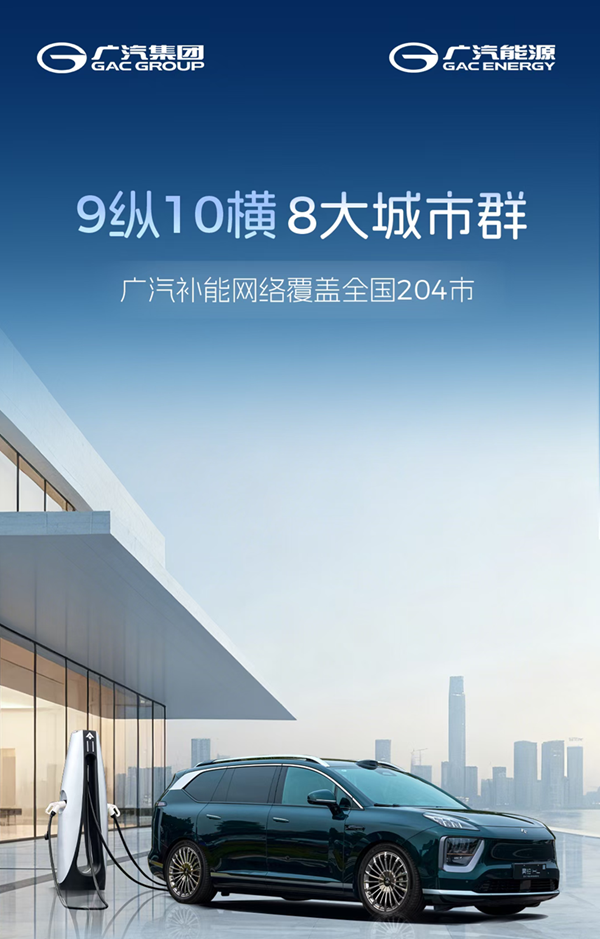
广汽能源补能网络覆盖全国204城:“9纵10横”布局+超2.2万桩成行业标杆
Zhong Guo Qi Che Bao Wang· 2025-12-05 09:44
2025年12月,广汽集团旗下广汽能源发布最新补能生态进展:其"9纵10横8大城市群"补能网络已覆盖全 国204座城市,自营充电桩总量突破2.2万根,以全维度布局成为国内新能源补能领域的核心玩家之一。 网络布局:"黄金三角"50公里必有站,核心区1公里全覆盖 据广汽能源数据,11月单月新增自营桩1104根,当前网络已实现"核心城区直线1公里必有站",且在京 津冀、长三角、粤港澳大湾区组成的"黄金三角"高速沿线,每50公里就布局一座充电站,覆盖西北、川 渝、中原等8大城市群,形成全国性补能网络。 车网互动+超充体验:V2G放电创收益,1000V快充成行业第一 在车网互动领域,广汽能源V2G(车网互动)累计放电已达75万度,其中11月广汽V2G示范中心单月放 电35万度,单站日放电量可满足 44户家庭月用电需求,参与的车主月收益最高近2万元。 用户规模破840万,碳减排超320万吨 截至11月,广汽能源用户已超840万,11月单月充电总量达5664万度、服务220万次,深夜时段服务用户 1.7万人(行业第一)。在绿色减排上,累计碳减排320万吨,参与电力交易售电超1.18亿度,其中绿电 交易占比近10%。 宠粉福 ...

专访 || 亿纬锂能江吉兵:以刚性需求和运力价值驱动技术创新 由产品解决向场景解决升维
Zhong Guo Qi Che Bao Wang· 2025-12-05 09:40
Core Viewpoint - The first EVE Energy Open Source Battery Media Day showcased the company's commitment to the commercial vehicle battery strategy and its ambition to promote the electrification of commercial vehicles [1] Group 1: Market Trends and Growth - In the first ten months of this year, the penetration rate of new energy commercial vehicles in China reached 24.6%, with monthly sales of new energy heavy trucks exceeding 20,000 units [3] - The growth in penetration is driven primarily by truck products, with pure electric vehicles contributing the most to this trend [3] - The rapid development of new energy commercial vehicles is attributed to their operational value and lower total cost of ownership (TCO) compared to fuel models, as well as decreasing battery prices [5] Group 2: Technological Innovations - EVE Energy presented several technological innovations at the media day, including the LF668-448kWh battery for heavy trucks, which has a 5% increase in energy capacity while being 560kg lighter than the industry average [7] - The company's strategic shift from product solutions to scenario solutions aims to enhance user experience and meet real-world demands [8] - EVE Energy's high-rate fast charging technology addresses user concerns about charging anxiety by optimizing charging efficiency in logistics and time-sensitive scenarios [9] Group 3: Organizational Changes and Strategy - EVE Energy has established a product line organization for commercial vehicle batteries to enhance market responsiveness and innovation [12] - The company emphasizes breaking down internal barriers and focusing on customer needs to drive technological innovation and product upgrades [13] - The vision for 2030 includes becoming a global leader in battery technology, with a commitment to innovation and meeting real-world demands through collaborative efforts [13]

“去中国化”与“在中国化”共舞
Zhong Guo Qi Che Bao Wang· 2025-12-05 09:39
Group 1: Core Perspectives - The automotive industry is experiencing a dual phenomenon of "localization in China" and "de-Chinaization," driven by geopolitical factors, market dynamics, and industrial upgrades, reflecting a dynamic balance in globalization and regionalization [2][8] - Major automotive companies are increasingly adopting a "China for China" strategy, moving beyond simple localization to deeper integration in response to the rapid transformation towards new energy and intelligent vehicles in the Chinese market [3][6] Group 2: Actions by Automotive Companies - Volkswagen Group has accelerated innovation in China, investing approximately 7.5 billion yuan to establish a major R&D center in Hefei, which has shortened new product development cycles by 30% [6] - Toyota has appointed a Chinese national as the general manager of Toyota China and implemented a "Chief Engineer in China" system, shifting product development leadership to local engineers [6] - Ford has unified its sales channels by establishing a wholly-owned sales service company to enhance brand experience, while General Motors has achieved over 99% localization in its supply chain in China [7] Group 3: De-Chinaization Trends - Some foreign automakers, influenced by geopolitical tensions and supply chain security concerns, are attempting to reduce reliance on Chinese suppliers, with reports of European companies seeking to replace Chinese-made semiconductors [8][9] - The U.S. has imposed tariffs and trade restrictions on China, prompting some companies to consider "de-Chinaization" strategies to maintain competitiveness in the face of rising costs [9][10] Group 4: Resilience of Chinese Supply Chain - Despite external pressures, the attractiveness of the Chinese market continues to drive companies to maintain close ties with Chinese supply chains, particularly in the automotive sector [13][17] - China's supply chain has shown significant resilience and competitiveness, with many companies establishing a robust multinational supply system since 2018 [14][18] - The transition of supply chains may incur initial costs of 30% to 50%, but the efficiency of integrating with existing Chinese supply chains remains advantageous [14][15] Group 5: Future Outlook - The Chinese automotive market is expected to continue its rapid growth, with a shift in how vehicles are perceived, moving from mere transportation to mobile living spaces [17] - The integration of AI and smart technologies is enhancing the potential of vehicles, prompting multinational companies to localize R&D and decision-making processes in China [17][18] - The ongoing transformation from "localization in China" to "de-Chinaization" and ultimately to a new global balance reflects the evolving landscape of the global automotive industry, with China playing an increasingly pivotal role [18]

观车 · 论势 || 场景适配才是商用车的核心竞争力
Zhong Guo Qi Che Bao Wang· 2025-12-05 09:39
Core Insights - The commercial vehicle industry in China is entering a new stage of diversified development, with various powertrain technologies such as fuel, pure electric, hydrogen, hybrid, and methanol competing in the market [1][4] - The concept of "scene defines vehicles" has become a consensus in the industry, emphasizing the importance of accurately understanding and addressing the needs of specific market segments [1][3] Group 1: Industry Trends - The penetration rate of new energy commercial vehicles has surpassed the market activation threshold, while fuel vehicles still hold significant positions in certain scenarios [1][4] - Different powertrain technologies are responding to diverse application scenarios, indicating a mature and rational development of the industry [2][4] Group 2: Strategic Shifts - Major manufacturers like FAW Jiefang, Dongfeng, and Shaanxi Automobile are building product matrices that cover multiple energy routes, moving away from a single technology approach [3][4] - The focus of competition is shifting from mere data parameter comparisons to a deeper understanding of user scenarios and precise adaptations [3][4] Group 3: Value Creation and Ecosystem Development - Companies are transitioning from being "product suppliers" to "solution providers," extending their vision to the entire operational ecosystem [4][5] - Innovations in logistics platforms, financial services, and lifecycle management are enhancing vehicle operational efficiency and creating new value [4][5] Group 4: Opportunities and Challenges - The diversification of technology routes presents historical opportunities for China's commercial vehicle industry to "overtake on a bend," particularly in the new energy sector where domestic companies show strong innovation and competitive advantages [4][5] - Companies must enhance their strategic determination and organizational capabilities to keep pace with technological innovations and market demands [5]
渗透率逼近 30% 重卡电动化拐点已至
Zhong Guo Qi Che Bao Wang· 2025-12-05 09:07
01 市场热度持续攀升 跑赢重卡市场大盘 2025年以来,新能源重卡市场热度持续攀升,加速在全国范围内推广普及,销量规模不断上演增速 神话。截至11月,新能源重卡市场已实现同比"34连增",连续30个月跑赢重卡市场大盘。 在新能源重卡市场月度销量"排位赛"中,11月,有12家企业新能源重卡销量超百辆,月销量破千的 企业都有7家,月销量超过3000辆的企业则有4家。 具体来看,11月,徐工销量达到3963辆,排名月销榜第一,同比增长216%;三一、解放和重汽分 别排名第二、第三、第四,月销量分别为3724辆、3715辆和3321辆,分别同比增长127%、139%、 293%;排名月销榜第5位的陕汽,其销量达到2676辆,同比增长248%;福田和东风分别销售1748辆和 1333辆,同比增长189%、68%,排名月榜第6、7位;远程以785辆的销量成绩排名第8位,同比增长 161%;宇通和联合重卡位列9、10位,分别销售522辆和463辆新能源重卡,分别同比增长28%、977%。 当新能源重卡逐渐打破场景局限,加速向长途干线领域渗透,其崛起势头锐不可当。数据显 示,11月,国内新能源重卡销量达2.4万辆,环比增长 ...
高增速与巨亏损的背离,北汽蓝谷的战略迷局
Zhong Guo Qi Che Bao Wang· 2025-12-05 08:28
Core Insights - North汽蓝谷 reported a significant increase in vehicle sales, with a total of 67,200 units sold in the first half of 2025, representing a year-on-year growth of 139.73%. However, the company also faced a net profit loss of 2.308 billion yuan, extending its continuous loss period to five and a half years, with cumulative losses exceeding 30 billion yuan [1] - The company's high-end strategy has failed, transitioning from targeting luxury brands to competing on price, leading to a dilution of brand value and profitability challenges [3][4] Sales Performance - The extreme growth in sales was primarily driven by the extreme price reductions of the 极狐 brand, which saw a shift in its pricing strategy from high-end models to more affordable options, with the introduction of models priced below 200,000 yuan [3][4] - The 极狐 T1 model, priced at 62,800 yuan, achieved over 35,000 orders and monthly sales of 15,000 units, but this pricing strategy has solidified the brand's image as a budget option, conflicting with its original high-end positioning [4] Financial Challenges - Despite the increase in sales volume, North汽蓝谷's financial performance deteriorated, with revenue projected at 14.319 billion yuan in 2023 and a further increase to 14.512 billion yuan in 2024, while the average selling price per vehicle dropped by 62.45% [7] - The company's net profit loss is expected to widen to 6.873 billion yuan in 2024, indicating a troubling trend of "selling more but losing more" [7] Brand Strategy Issues - The 享界 brand, developed in collaboration with Huawei, has struggled with unclear positioning and a lack of differentiation, resulting in low sales figures and a failure to penetrate the luxury market effectively [5][9] - The 享界 S9 model, priced between 309,800 and 449,800 yuan, has not resonated with its intended target market, leading to only 3,295 units sold in 2024 [5][9] Internal Conflicts - The dual-brand strategy has led to internal competition rather than synergy, with 极狐 focusing on volume sales while 享界 aims for profitability, resulting in resource allocation issues and strategic misalignment [10][12] - The lack of collaboration between the two brands has hindered North汽蓝谷's ability to leverage its strengths in the competitive electric vehicle market [10][12] Strategic Recommendations - North汽蓝谷 needs to redefine its brand positioning to avoid internal competition and establish a collaborative mechanism between 极狐 and 享界, focusing on volume for one and profitability for the other [13] - The company must balance scale and profit by enhancing product value through technological innovation, moving away from a reliance on low pricing strategies [13]


从武汉车展看产业未来 中国商用车正迈入深度融合新阶段
Zhong Guo Qi Che Bao Wang· 2025-12-05 07:16
Group 1: Core Themes - The 2025 China International Commercial Vehicle Exhibition highlighted the transformation of the commercial vehicle industry in China, driven by technology, market dynamics, and policy changes, focusing on high-end, intelligent, and green developments [1] - The exhibition served as a significant platform to observe the trends in the commercial vehicle sector, particularly as the industry transitions from the "14th Five-Year Plan" to the "15th Five-Year Plan" [1] Group 2: Green Transformation - The sales of new energy commercial vehicles in China reached 566,000 units from January to September 2025, marking a 61.4% year-on-year increase, with a market penetration rate of 23.9%, indicating a shift from policy-driven growth to market-driven dynamics [5] - At the exhibition, the ratio of new energy vehicles to fuel vehicles was 2:1, showcasing various technologies such as pure electric, hydrogen fuel cells, and hybrid systems, reflecting the industry's diverse technological landscape [5][6] - Dongfeng Liuzhou's participation featured a significant number of new energy models, demonstrating the company's strategic commitment to the new energy sector, contrasting sharply with its previous year's lineup [5] Group 3: Technological Advancements - Key competitive factors in the industry include high-voltage platforms, large-capacity batteries, and fast charging capabilities, exemplified by the Dongfeng Liuzhou's electric tractor, which offers a range of 500 kilometers and rapid charging [6] - Hydrogen fuel cell technology is gaining attention, particularly for long-distance and heavy-load applications, as infrastructure and demonstration projects develop [6] Group 4: Intelligent Upgrades - The industry is transitioning from basic functionality to deep scenario-based empowerment, with L2+ level intelligent driving assistance systems becoming standard in mid-to-high-end models [10] - Intelligent connectivity systems are emerging as a core differentiator for commercial vehicle companies, enabling digital transformation in vehicle management and operational efficiency [10][11] Group 5: High-End Development - High-end development is characterized by a focus on user lifecycle value rather than mere configuration enhancements, with ongoing improvements in fuel efficiency and reliability in traditional power vehicles [14] - The application of advanced technologies such as high-voltage platforms and lightweight materials is indicative of the industry's progress in manufacturing and system integration [14] Group 6: Global Expansion - From January to September 2025, China's commercial vehicle exports reached 748,000 units, a 10.2% increase year-on-year, with new energy vehicle exports growing 150% to 64,000 units [18] - Chinese commercial vehicle companies are shifting from simple product exports to deeper collaborations involving technology transfer and localized production, enhancing their global competitiveness [18] Group 7: Future Outlook - The exhibition reflects the ongoing transformation and innovation within the Chinese commercial vehicle industry, which is poised for high-quality development characterized by green, intelligent, and global strategies [19] - Companies with systematic layouts, technological foundations, and global perspectives are expected to gain a competitive edge in the evolving market landscape [19]

月交付首破2万辆,岚图汽车初长成
Zhong Guo Qi Che Bao Wang· 2025-12-05 06:47
Core Viewpoint - Lantu Automotive, established only five years ago, has achieved significant milestones, including the delivery of over 20,000 vehicles in November, marking an 84% year-on-year growth, and has maintained a continuous growth trend for ten months [1] Group 1: Company Growth and Achievements - Lantu has reached the milestone of 300,000 vehicles produced and successfully launched the Lantu Taishan model [1] - The company has achieved a remarkable 84% year-on-year increase in November deliveries, totaling 20,005 vehicles [1] - Lantu has experienced ten consecutive months of month-on-month growth, setting multiple historical records [1] Group 2: Product Development and Innovation - Lantu has developed a comprehensive product matrix covering SUVs, MPVs, and sedans, including flagship models like Lantu Dreamer, Lantu Free+, and Lantu Taishan [2][4] - The company has established a robust technological innovation system, with over 5,000 patent applications, including 1,141 invention patents, making it one of the fastest-growing patent holders in the new energy vehicle sector [4] - Lantu's self-developed ESSA architecture allows for the production of pure electric, hybrid, and range-extended vehicles on the same line, significantly shortening development cycles [4] Group 3: Strategic Partnerships - Lantu has collaborated with Huawei in the field of smart technology, launching several models equipped with Huawei's HarmonyOS and ADS systems [5] - The partnership with Huawei aims to enhance user experience and accelerate the development of intelligent vehicles [5] Group 4: Market Position and User Engagement - Lantu has positioned itself as a user-centric technology company, integrating user feedback into product development, resulting in successful launches of multiple models [6][9] - The Lantu Dreamer has maintained its position as the industry leader in the high-end MPV segment, with a net promoter score ranking first in the industry [8] Group 5: Financial Performance and Future Outlook - Lantu's gross margin has increased from 8.3% in 2022 to 21.3% in the first seven months of 2023, ranking second in the new energy vehicle industry [12] - The company achieved its first quarterly profit in Q4 2022 and has maintained profitability in the first seven months of 2023, showcasing strong operational resilience [12] - Lantu plans to expand its global presence, aiming to establish 500 sales and service outlets across 60 countries by 2030 [13]
