
Qi Huo Ri Bao Wang

Search documents
全仓登新增6个金属品种仓单登记业务
Qi Huo Ri Bao Wang· 2025-11-11 23:30
Core Insights - The conference held in Shanghai focused on exploring a credible collaborative model for the allocation of bulk commodity resources, emphasizing the importance of credit construction and collaborative innovation in the bulk commodity market [1] Group 1: Conference Highlights - The event was supported by the Shanghai Municipal Commission of Commerce and aimed to showcase significant practical achievements in building an integrated collaborative system of "registration + storage + finance" for bulk commodities [1] - Liu Min, Deputy Director of the Shanghai Municipal Commission of Commerce, highlighted the high proportion of bulk commodities in both domestic and foreign trade, underlining their importance for supply chain security and enhancing urban core functions [1] Group 2: Registration System Expansion - The national bulk commodity warehouse receipt registration center (全仓登) expanded its registration scope by adding six non-ferrous metal varieties, including aluminum, lead, zinc, tin, nickel, and silver, bringing the total registered varieties to 13 with over 12.1 million tons of registered warehouse receipts and inventory [2] - The center awarded licenses to major domestic logistics groups for the first batch of cooperative warehouses, establishing a credible warehousing network to ensure the safety and ownership of goods corresponding to electronic warehouse receipts [2] Group 3: Financial Collaboration - A strategic cooperation agreement was signed between the national bulk commodity warehouse receipt registration center and the Shanghai Clearing House to explore a safe and efficient clearing model for warehouse receipt transfers [3] - Major banks, including Industrial and Commercial Bank of China, Bank of Communications, Shanghai Pudong Development Bank, and Jiangsu Bank, signed agreements to expand financing scenarios for warehouse receipt pledges, thereby broadening financing channels for industry chain enterprises [3] Group 4: Future Directions - The establishment of a trade, finance, and data infrastructure centered on warehouse receipt registration is viewed as a key measure for upgrading the bulk commodity market [4] - The national bulk commodity warehouse receipt registration center aims to create a credible trading environment for bulk commodities, facilitating Shanghai's development as a global resource allocation hub and supporting the construction of a unified national market [4]
资金动态20251112
Qi Huo Ri Bao Wang· 2025-11-11 23:20
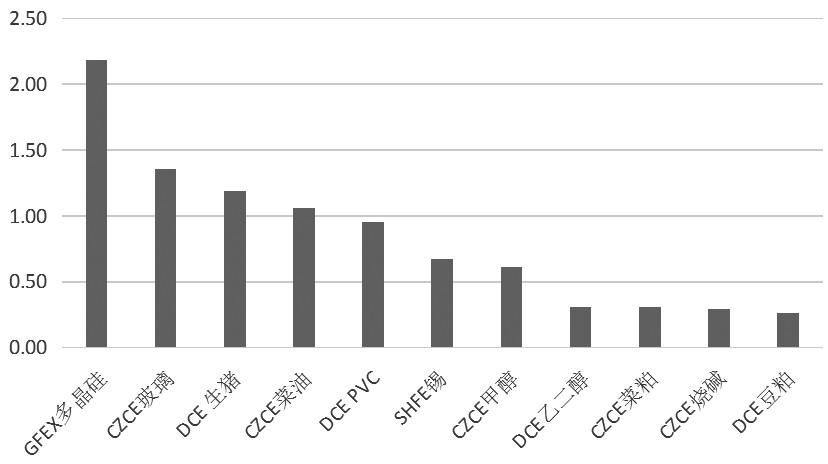
Core Viewpoint - The overall trend in commodity futures shows a slight outflow of funds, with specific sectors experiencing varying inflow and outflow dynamics [1]. Fund Inflow Summary - The main commodities with significant fund inflows include polysilicon (¥218 million), glass (¥135 million), live pigs (¥119 million), rapeseed oil (¥106 million), and PVC (¥95 million) [1]. - The agricultural and chemical sectors are noted for their inflow status, particularly highlighting glass, live pigs, rapeseed oil, and methanol [1]. Fund Outflow Summary - Major commodities experiencing fund outflows include gold (¥408 million), crude oil (¥93 million), iron ore (¥83 million), silver (¥82 million), and soybean oil (¥82 million) [1]. - The black and non-ferrous metal sectors are identified as having outflow status, with a focus on gold, iron ore, silver, and coking coal [1]. Sector Analysis - The agricultural and chemical sectors are showing inflow trends, while the black and non-ferrous metal sectors are experiencing outflows [1]. - Financial futures, particularly the CSI 500 index futures and 30-year treasury futures, are highlighted for attention [1].

立于不败而后求胜
Qi Huo Ri Bao Wang· 2025-11-11 23:15
Core Insights - The article highlights the success of Wang Zhini in the competitive futures trading market, emphasizing her unique trading philosophy of ensuring she remains "invincible" while navigating market complexities [1] Background and Experience - Wang Zhini comes from a financial family and initially faced significant losses in commodity futures trading, which led to a transformation in her trading system [2] - A pivotal change occurred in 2021 when she shifted her focus from commodity futures to stock index futures, benefiting from the real-time updates and historical data available for analysis [2] Trading Strategy and Philosophy - Wang Zhini's trading style is characterized by a focus on stock index futures, relying on pure technical analysis and favoring one-sided trades with daily wave operations [3] - She identifies that bear markets tend to be smoother due to passive declines, while bull markets require more careful navigation due to their inherent volatility [3] - Risk management is a cornerstone of her strategy, with an emphasis on strict stop-loss controls to mitigate potential losses [3] Emotional Management and Execution - Wang Zhini has developed a core trading philosophy that prioritizes remaining "invincible" before seeking profits, emphasizing the importance of recognizing identifiable opportunities [4] - She avoids emotional trading by not constantly monitoring the market, instead focusing on post-trade analysis to maintain a clear perspective on market trends [4] - Her understanding of human emotions in trading allows her to separate execution issues from technical problems, thereby minimizing emotional interference [4] Market Understanding and Adaptability - Wang Zhini believes that market prices are the result of competitive dynamics and that higher participation levels enhance the significance of support and resistance levels [4] - She asserts that market predictions are not feasible; instead, traders should adapt to ongoing market changes through continuous analysis of price movements [4]
小资金的突围之路
Qi Huo Ri Bao Wang· 2025-11-11 23:15
Core Insights - The article highlights the success of Li Guofeng, who achieved the 10th place in the 19th National Futures (Options) Trading Competition, using a strategy focused on "bearish oil and bullish silver" options, establishing himself as a benchmark for small capital traders [1] Group 1: Trading Strategy - Li Guofeng's trading philosophy is centered around the idea that "offense is the best defense," which reflects the survival rules for options buyers [1] - His key trades during the competition were based on commodities, specifically bearish oil options and bullish silver options, utilizing a method that combines fundamentals and market sentiment [2] - The success of his trades was attributed to tracking OPEC+ production cuts and analyzing market sentiment through position data and the Volatility Index (VIX) [2] Group 2: Monthly Trading Approach - Li Guofeng employs a "monthly offensive strategy," allocating a fixed amount of funds for options trading each month, with a single entry per commodity, only increasing positions when the trend remains intact [3] - This strategy is informed by a deep understanding of the characteristics of options buyers, who face high risks and potential losses if they engage in frequent trading [3] - He focuses on liquid commodities such as oil, precious metals, and non-ferrous metals, which are significantly influenced by macroeconomic factors and have transparent supply chain information [3] Group 3: Risk Management and Mindset - Li Guofeng emphasizes the importance of systematic trading frameworks, having transitioned from a previous focus on index futures, where he suffered losses due to chasing trends [4] - His current strategy involves monthly fund allocation and trend tracking, with a focus on isolating profits and managing risks through profit withdrawals and dividing capital into ten parts to mitigate the impact of consecutive losses [4] - He advocates for traders to maintain a "trading diary" to document decision-making processes and outcomes, as learning from failures is crucial for avoiding repeated mistakes [4]
央行:前三季度GDP同比增长5.2% 下阶段将保持金融总量合理增长
Qi Huo Ri Bao Wang· 2025-11-11 18:00
Core Viewpoint - The People's Bank of China (PBOC) has implemented a moderately accommodative monetary policy to support economic recovery and maintain financial market stability, with GDP growth of 5.2% year-on-year in the first three quarters of the year [1]. Group 1: Monetary Policy Implementation - The PBOC has maintained ample liquidity by utilizing various monetary policy tools such as open market operations, medium-term lending facilities, and re-lending [1]. - The focus is on ensuring reasonable growth in money and credit, meeting the effective credit demand of the real economy, and improving the efficiency of fund utilization [1]. - The PBOC aims to lower the comprehensive financing costs in society by enhancing the market-oriented interest rate adjustment framework and effectively implementing interest rate policies [1]. Group 2: Credit Structure Optimization - The PBOC is guiding the optimization of credit structure by utilizing 500 billion yuan for consumer services and elderly care re-lending, as well as increasing the re-lending quota for technological innovation and transformation [1]. - The aim is to support key domestic demand areas such as consumption and technological innovation, while continuing to implement structural monetary policy tools [1]. Group 3: Risk Management and Stability - The PBOC emphasizes the importance of risk prevention and resolution, focusing on the orderly resolution of financial risks in key areas and improving the financial risk monitoring and early warning system [3]. - Future actions will include maintaining reasonable growth in financial aggregates and ensuring that the growth of social financing and money supply aligns with economic growth and price level expectations [3].
郑商所、大商所主要负责人同日调整
Qi Huo Ri Bao Wang· 2025-11-11 16:57
Core Points - The China Securities Regulatory Commission (CSRC) has appointed Zhu Lihong as the Party Secretary of Zhengzhou Commodity Exchange (ZCE) and nominated her as the candidate for the Chairman of the Board [1] - Xiong Jun has been relieved from his positions as Party Secretary, Chairman, and non-member director of ZCE [1] - The ZCE held its 29th meeting of the 8th Board of Directors to elect Zhu Lihong as the Chairman [1] - Concurrently, the CSRC appointed Xiong Jun as the Party Secretary of Dalian Commodity Exchange (DCE) and nominated him as the candidate for the Chairman of the Board [1] - Ran Hua has been relieved from his positions as Party Secretary, Chairman, and non-member director of DCE [1] - The DCE held its 66th (communication) meeting of the 4th Board of Directors to elect Xiong Jun as the Chairman [1]
国家发展改革委召开民营企业座谈会
Qi Huo Ri Bao Wang· 2025-11-11 16:57
Core Viewpoint - The meeting chaired by Zheng Zhaojie emphasized the importance of the service industry in China's economic development and the need for further reforms and support to enhance its growth potential [1][2]. Group 1: Service Industry Development - The service industry in China has experienced rapid growth, with an expanding market size and the emergence of new models and formats, providing ample opportunities for high-quality development [1]. - There is significant potential for both expansion and quality improvement in the service sector, which is a key indicator of a country's economic development level [2]. Group 2: Recommendations and Government Support - Enterprises suggested that the government should deepen institutional reforms, improve social security and tax policies, innovate regulatory methods, and strengthen the support system for service industry development in the "14th Five-Year Plan" [1]. - The National Development and Reform Commission (NDRC) plans to incorporate the feedback from enterprises into the "14th Five-Year Plan" to create better conditions and environments for business development [2]. Group 3: Integration and Communication - The NDRC aims to promote the deep integration of modern services with advanced manufacturing and modern agriculture, enhancing quality, reducing costs, and lowering carbon emissions in the industry [2]. - There will be a focus on regular communication between the government and enterprises to address practical challenges faced by businesses, fostering healthy and high-quality development of the private economy [2].
金融“活水”精准滴灌宁夏铁合金产业
Qi Huo Ri Bao Wang· 2025-11-11 16:57
Core Viewpoint - The training event on "Options+" aims to enhance risk management tools in the ferroalloy industry, facilitating the transformation and upgrading of enterprises in Ningxia, China's second-largest ferroalloy production area [1][2]. Group 1: Training Event Overview - The "Options+" training was held in Yinchuan, Ningxia, with the support of various financial and regulatory bodies, focusing on promoting options strategies and innovative trading models for nearly 60 local enterprises [1]. - The training covered fundamental theories, risk management practices, and case studies, emphasizing both relevance and foresight for the ferroalloy sector [2][3]. Group 2: Industry Development and Challenges - Despite achievements, there is a need to improve the understanding, participation scale, and diversity of trading models among Ningxia's enterprises in the futures market, which is still considered to be in a relatively late stage of development [2]. - The training is seen as a crucial step in empowering enterprises to enhance their risk management capabilities and core competitiveness [2]. Group 3: Government and Regulatory Support - The Ningxia Financial Office plans to continue collaborating with regulatory bodies to strengthen policy guidance and optimize service offerings, aiming to create a favorable market environment for enterprises to better understand and utilize futures and derivatives [2][3]. - The event aligns with national strategies to promote high-quality development in the futures market, highlighting the essential role of futures and derivatives in risk management and supply chain stability [3]. Group 4: Practical Applications and Future Prospects - Companies like Maoye Metallurgy have begun using over-the-counter options for risk management and view the introduction of on-exchange options as an additional tool for risk transfer [4]. - The successful implementation of the "Options+" model is expected to build a more robust risk management framework for local enterprises, stimulate innovative trading models, and contribute to the sustainable development of the regional economy [4].
护航产业链发展 期市筑牢粮食安全根基
Qi Huo Ri Bao Wang· 2025-11-11 16:47
Core Insights - State-owned enterprises (SOEs) are crucial for the national economy and actively engage in the futures market to manage risks and enhance industry integration [1][2] - The application of futures tools has evolved from simple hedging to a comprehensive integration across the entire supply chain, significantly benefiting the company's operations [5][9] Group 1: Futures Market Participation - Since its establishment in 2017, the company has focused on supporting national food security and has integrated futures and derivatives into its entire supply chain [2] - The company began using futures for hedging in 2018, initially focusing on soybean meal and corn, which has since expanded to over 1 million tons annually [3][4] Group 2: Risk Management and Operational Efficiency - The company transitioned from a reactive approach to a proactive risk management strategy, utilizing futures to stabilize pricing and reduce inventory devaluation risks [3][4] - A specific case in Q1 2025 demonstrated successful hedging, where the company locked in a profit of 180 yuan per ton by managing the basis effectively [4] Group 3: Value Creation Across the Supply Chain - The company has moved beyond simple hedging to include basis trading, secondary pricing, and futures delivery in its daily operations, enhancing collaboration with upstream and downstream partners [5][6] - The establishment of a designated delivery warehouse has improved operational standards and customer relationships, allowing for better risk management and financing options [7][8] Group 4: Strategic Integration and Compliance - The company adheres to strict internal controls and compliance measures, ensuring that all futures transactions are aimed at hedging rather than speculation [9] - The understanding of hedging has deepened, recognizing that successful hedging is linked to overall business performance rather than isolated futures gains or losses [9][10] Group 5: Future Outlook and National Strategy - The company is exploring innovative hedging models that extend risk management services to farmers and small enterprises, aligning with national agricultural service goals [8][11] - The futures market is seen as a key component in optimizing resource allocation and enhancing the company's competitive edge in the agricultural sector [10][11]
国家发改委:进一步推动投融资高效对接,更加精准向民营企业投放信贷资源
Qi Huo Ri Bao Wang· 2025-11-11 10:22
Core Viewpoint - The National Development and Reform Commission (NDRC) emphasizes the importance of private investment as a key indicator of economic activity, which plays a significant role in stabilizing growth, employment, and expectations [1] Investment Policy - The NDRC will utilize central budget investments to actively support eligible private investment projects, enhancing the guiding role of government investment on social investment [1] - As of October 29, 500 billion yuan of new policy financial tools have been fully allocated, with a portion supporting eligible key area private investment projects [1] Government Procurement Policy - The government will increase procurement support for small and medium-sized enterprises (SMEs) by reserving over 40% of the budget for engineering procurement projects exceeding 4 million yuan for SMEs [2] - Local governments are encouraged to further increase the reserved share for SMEs [2] - Procurement units are encouraged to raise the advance payment ratio for contracts with private enterprises to over 30% of the contract amount [2] Credit Policy - The NDRC and financial regulatory authorities will enhance coordination to support financing for small and micro enterprises, optimizing approval processes and improving financial service levels [2] - Financial institutions are required to set annual service goals for private enterprises and implement inclusive credit policies [2] - The "innovation points system" will be promoted to guide financial resources towards technology-driven enterprises [2] Direct Financing - The NDRC will continue to implement policies that facilitate the listing and financing of technology-driven enterprises and mergers and acquisitions through a "green channel" [2] - There will be active support for more eligible private investment projects to issue infrastructure REITs, broadening financing channels for private enterprises [2] Financing Service Platform - The NDRC plans to establish a national investment and financing comprehensive service platform to enhance efficient connections between investment and financing, targeting credit resources more precisely towards private enterprises [3]