
Qi Huo Ri Bao Wang

Search documents
美联储“盲飞”降息引发政策风险
Qi Huo Ri Bao Wang· 2025-10-30 01:09
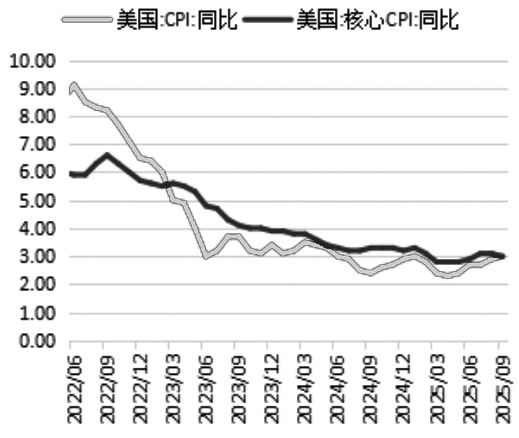
Core Viewpoint - The Federal Reserve faces unprecedented challenges in formulating monetary policy due to a "data vacuum" caused by the U.S. government shutdown, which has halted the release of critical economic data [1][3][11]. Economic Data Impact - The government shutdown has led to a complete halt in data collection and publication by key departments, including the Labor Statistics Bureau and the Commerce Department, affecting important metrics like non-farm employment and retail sales [1][3]. - Goldman Sachs highlights that prolonged shutdowns can damage data quality, as seen in the 2013 shutdown when only 75% of regular price samples for CPI were collected [3]. Inflation and Employment Signals - Recent economic indicators show a consistent signal of policy direction, with the September Consumer Price Index (CPI) rising 3% year-on-year, below the expected 3.1%, and core CPI also underperforming expectations [4][5]. - The ADP employment report indicates a surprising decrease of 32,000 jobs in September, significantly below the expected increase of 51,000, marking the largest decline since March 2023 [5]. Federal Reserve's Policy Balancing - Fed Chair Powell emphasizes the difficulty of balancing the need to combat inflation while addressing employment market risks, especially in the context of missing key economic data [7][9]. - Powell signals a potential end to the balance sheet reduction policy, which has seen the Fed's assets decrease from approximately $9 trillion to $6.6 trillion since mid-2022 [7]. Divergence in Policy Perspectives - There is a growing divide within the Federal Reserve regarding the pace and extent of potential rate cuts, with some officials advocating for aggressive cuts due to employment market concerns, while others caution against inflation risks [9][10]. - The internal disagreement is exacerbated by the lack of recent official economic data, leading officials to rely on their interpretations of limited information [10]. Market Reactions and Future Outlook - The market has priced in strong expectations for rate cuts, with a 99.9% probability of a 25 basis point cut in October, reflecting concerns over economic growth and inflation dynamics [11][12]. - The 10-year U.S. Treasury yield has dropped below 4% for the first time since last September, indicating market apprehension about economic slowdown and the anticipated rate cuts [12][14]. - The dollar index remains under pressure due to rate cut expectations, while geopolitical risks and global economic uncertainties provide some support, leading to a mixed outlook for the dollar [16].

交通运输部:推进市场培育一体联动
Qi Huo Ri Bao Wang· 2025-10-30 01:05
Core Viewpoint - The Ministry of Transport of China projects that the annual volume of container rail-water intermodal transport will grow by approximately 15% by 2027 [1] Infrastructure Development - The Ministry of Transport will promote integrated infrastructure connectivity, focusing on enhancing hard connectivity levels [1] - Key initiatives include accelerating the construction of port railways, promoting shared container yard operations between railways and ports, and improving inland terminal systems [1] Operational Efficiency - The Ministry aims to enhance the efficiency of the entire supply chain through coordinated intermodal organization [1] - Emphasis will be placed on promoting intermodal operational intensification, improving the quality and efficiency of container intermodal products, and optimizing the transition from road to rail and from bulk to container transport [1] Standardization and Data Sharing - Efforts will be made to improve the standard system for container rail-water intermodal transport and promote the coordinated development of ports and railways [1] - The Ministry will accelerate the interconnectivity of information for container rail-water intermodal transport and develop a unified "one order" system for intermodal transport [1] Market Development - The Ministry will work towards cultivating a unified large market for container rail-water intermodal transport [1] - This includes establishing a market pricing mechanism for container rail-water intermodal transport and enhancing customs clearance efficiency at ports [1]
践行社会责任 同舟集团踏入花生市场
Qi Huo Ri Bao Wang· 2025-10-30 01:03
Core Insights - The company, Henan Tongzhou International Trade Group, is diversifying into the peanut market, which is a significant shift from its traditional focus on cotton business, driven by the increasing importance of peanuts in national food security and agricultural policy [1][5] - The company aims to leverage its existing infrastructure and expertise in cotton to enhance peanut production and processing, addressing the current inefficiencies in the peanut industry in Henan [2][4] Company Strategy - The company recognizes the strategic advantages of entering the peanut industry, given that Henan is a leading peanut production area, and it can utilize its cotton farming experience in Xinjiang to develop peanut cultivation [2][3] - The company plans to implement a model that integrates enterprises, cooperatives, and farmers to improve production efficiency and quality in the peanut sector [4][5] Industry Challenges - The peanut industry in Henan faces significant challenges, including a fragmented market dominated by smallholder farmers, low processing capabilities, and a lack of strong leading enterprises [3][4] - The current production model is inefficient, with small farmers lacking bargaining power and facing price pressures from intermediaries, leading to low profitability [3] Future Outlook - The emergence of leading enterprises like Tongzhou Group is expected to drive high-quality development in the Henan peanut market, transforming it from a raw material output model to a value-added product model [4][5] - The company’s cross-industry exploration is seen as a response to national strategies for food security and rural revitalization, potentially leading to a more robust and competitive peanut industry in Henan [5]
资金动态20251030
Qi Huo Ri Bao Wang· 2025-10-30 00:56
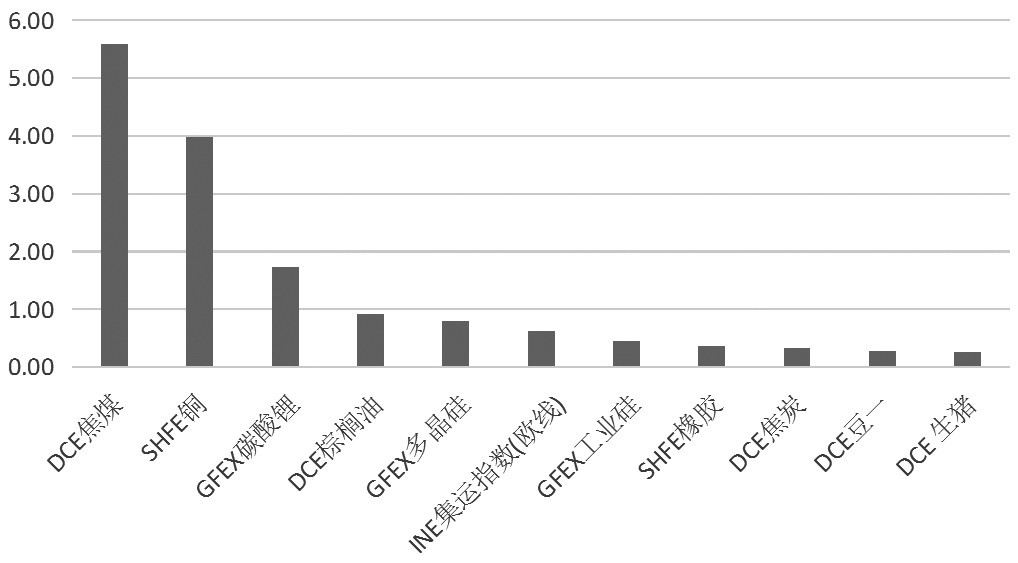
Core Insights - The article highlights the recent capital flow trends in commodity futures, indicating a significant outflow in certain sectors while others experienced inflows [1] Group 1: Capital Inflows - The main commodities with capital inflows include coking coal (5.59 billion), copper (3.98 billion), lithium carbonate (1.74 billion), palm oil (0.92 billion), and polysilicon (0.80 billion) [1] - The black and financial sectors showed a net inflow, particularly focusing on coking coal and iron ore [1] Group 2: Capital Outflows - Major commodities with capital outflows include gold (13.60 billion), silver (4.17 billion), apples (2.02 billion), crude oil (1.87 billion), and rapeseed oil (0.96 billion) [1] - The agricultural, chemical, and non-ferrous metal sectors experienced significant outflows, with particular attention to gold, silver, apples, crude oil, and rapeseed oil [1] Group 3: Sector Analysis - Overall, the commodity futures market experienced a moderate outflow, with a focus on the outflow from agricultural, chemical, and non-ferrous metal sectors [1] - The financial sector's key focus is on the CSI 500 index futures and 30-year treasury futures [1]
不做市场“预判者” 只做行情“跟随者”
Qi Huo Ri Bao Wang· 2025-10-30 00:56
Core Insights - Zhou Xiaofeng, an experienced investment manager, has achieved outstanding results in a trading competition, demonstrating the effectiveness of his trading system and commitment to serving the real economy [2] Group 1: Trading Philosophy - Zhou emphasizes a clear trading philosophy of "grabbing the big and letting go of the small," focusing on market trends rather than predictions [4] - He advocates for simplifying complex market conditions and following market movements instead of trying to predict them [4] - Zhou utilizes various analytical tools such as K-line charts, MACD, and moving averages to assess market conditions and identify underlying logic [4] Group 2: Trading Strategy - His trading style is characterized by trend-following, particularly in capturing breakout opportunities in commodities like PTA and crude oil [3] - The core strategy in options trading is "long volatility," viewing derivatives as tools for risk management [3] - Zhou employs a "moving stop-loss" strategy to protect profits, adjusting stop-loss levels as gains increase [4] Group 3: Profit-Taking and Risk Management - Zhou uses a "partial profit-taking" strategy to avoid profit erosion, locking in gains at key market levels [5] - He believes that many traders' losses stem from psychological factors rather than technical skills, emphasizing the importance of maintaining a balanced mindset [5] - Setting realistic annual return expectations is crucial for maintaining a stable trading approach [5] Group 4: Advice for New Traders - Zhou advises new traders to clearly distinguish between being a trader and an investor, as their approaches and time horizons differ [5] - He stresses the importance of building a solid foundation in trading rules and risk management before engaging in live trading [5] - Zhou reminds that trading is a marathon, not a sprint, highlighting the need for a steady and disciplined approach to succeed in the long term [5]

“银行+期货+订单”模式助力生猪产业风险管理
Qi Huo Ri Bao Wang· 2025-10-30 00:49
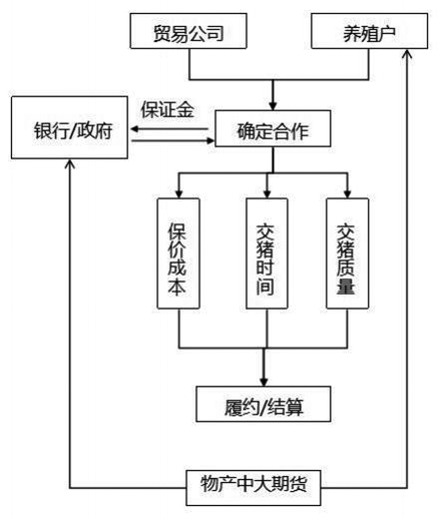
Group 1: Project Background - Wuchan Zhongda Futures Co., Ltd. was established in September 1993 in Hangzhou and is a core member of the Fortune Global 500 Wuchan Zhongda Group, with a registered capital of 600 million yuan [1] - Jiayue Wuchan Group Co., Ltd. was founded in 2017 with a registered capital of 10.5 million yuan, focusing on creating value in the bulk commodity industry, including energy chemicals and agricultural products [1] - Guangfa Bank, established in 1988 with a registered capital of approximately 21.79 billion yuan, is one of the first national joint-stock commercial banks in China and ranked 59th in the Banker’s Global 1000 Banks in 2023 [1] Group 2: Market Context and Challenges - The volatility of prices for bulk commodities, such as agricultural products, poses significant risks to producers and related enterprises [2] - The pig farming industry is a crucial part of China's agriculture, facing severe price fluctuations that impact farmers' income stability and production motivation [2][3] Group 3: Service Model and Implementation - The "Bank + Futures + Orders" service model integrates bank credit, futures risk hedging, and bulk commodity trading to provide comprehensive risk management for pig farmers [4] - This model includes direct contracts with farmers to stabilize pricing and mitigate risks associated with market price fluctuations [4] - Guangfa Bank provides credit support to help farmers address funding issues, while futures companies offer market analysis and tailored hedging strategies [4] Group 4: Project Outcomes - The "Bank + Futures + Orders" model has successfully stabilized income for participating farmers, ensuring a minimum income of 100,000 yuan, which has restored their confidence in farming [8] - Jiayue Wuchan has gained significant profits through structured income and basis trading, enhancing its control over the supply chain [8] - Guangfa Bank has successfully launched agricultural loans, optimizing its credit structure and enhancing its brand image and social influence [9] Group 5: Innovation and Replicability - The model represents an innovative approach in agricultural finance, creating a closed-loop operation that integrates bank financing, futures hedging, and order stabilization [9] - It has strong replicability potential for other agricultural products and bulk commodity industries, allowing for localized adaptations based on regional characteristics and financial ecosystems [9][10] Group 6: Industry Insights - The project emphasizes the need for deep integration among financial institutions, futures companies, and enterprises to build a risk-sharing and benefit-sharing ecosystem [10] - It highlights the importance of leveraging the core functions of the futures market for price discovery and risk management, supported by financial technology [10]
量化交易 赢在执行
Qi Huo Ri Bao Wang· 2025-10-30 00:49
Group 1 - The core strategy of the participant "屈身守份" in the trading competition is based on the Turtle Trading Rules, optimized with trend-following strategies and a small amount of swing trading [1] - "屈身守份" employs a unique model of "quantitative + subjective" trading, where strategy execution is fully automated, but selection of instruments is based on subjective judgment [1] - The participant has achieved significant profits from various instruments, including stock index futures,焦煤 (coking coal), carbon lithium, and polysilicon [1] Group 2 - The journey in quantitative trading has not been smooth, with challenging market conditions from March to June affecting trend-following strategies [2] - The participant emphasizes the importance of risk control, advocating for conservative position sizes and using spare funds for investment to ensure long-term survival in the market [2] - "屈身守份" believes that execution ability is the most valuable quality for quantitative traders, highlighting the need for discipline in both profit-taking and loss acceptance [2]
三个化工品月均价期货平稳上市
Qi Huo Ri Bao Wang· 2025-10-29 19:56
Core Viewpoint - The launch of monthly average price futures for LLDPE, PVC, and PP on October 28 has been smooth, with active participation from industry players, enhancing risk management tools in the sector [1] Group 1: Market Performance - On the first trading day, the monthly average price futures for LLDPE, PVC, and PP were listed with contracts for the months L2602, V2602, and PP2602, with benchmark prices based on the settlement prices of corresponding physical delivery futures on October 28 [1] - By the close on October 29, a total of 8,254 contracts were traded, amounting to 230 million yuan, with open interest at 2,468 contracts and 89.7% of the positions held by institutional clients, indicating strong industry participation [1] - The closing prices for the near-month contracts L2602F, V2602F, and PP2602F showed slight increases of 0.04%, 0.86%, and 0.10% respectively compared to the benchmark prices [1] Group 2: Industry Participation - Leading companies such as Jingbo Petrochemical, Zhongtai International Trade, and Mingri Holdings actively participated in the first day of trading [2][3] - Jingbo Petrochemical, with an annual capacity of 600,000 tons for polypropylene, utilized the PP2602F contract to lock in sales prices, aligning with their monthly sales and average settlement model [2] - Zhongtai International Trade used the V2602F contract for hedging long-term orders, enhancing price risk management in the PVC industry [3] Group 3: Future Outlook - The Dalian Commodity Exchange plans to continue optimizing rules and improving market quality to facilitate industry participation and enhance the influence of Chinese chemical prices [4] - The introduction of monthly average price futures is expected to provide more pricing references for companies in export pricing, aiding their integration into the global trade system [2]
第十七届期货高管大会今日召开
Qi Huo Ri Bao Wang· 2025-10-29 19:52
Core Viewpoint - The 2025 Financial Street Forum Annual Conference aims to gather industry wisdom and discuss the development of the futures market, emphasizing the importance of protecting small and medium investors and enhancing market quality and service capabilities [1][2]. Group 1: Industry Development and Regulation - The conference highlights the need for the futures industry to align with the regulatory framework established by the China Securities Regulatory Commission (CSRC), focusing on risk prevention, strong regulation, and promoting high-quality development [1][3]. - The futures market is recognized as a crucial part of China's financial system, playing a significant role in price discovery, risk management, and resource allocation, which directly impacts enterprises and the public [3]. Group 2: Service to the Real Economy - The futures industry must transition from being mere "trading service providers" to "value partners in the industrial chain," offering strategic research and customized solutions to address common challenges faced by industries [2]. - There is a call for futures companies to provide comprehensive solutions that integrate research, risk management, and capital connection, thereby offering a closed-loop service that addresses various risks faced by industrial clients [2]. - The establishment of an integrated service ecosystem that combines spot trading, warehousing, logistics, financing, and data services is essential for enhancing operational efficiency and risk management across the entire industrial chain [2].
嫁接期货引擎 激活大宗商品全链条
Qi Huo Ri Bao Wang· 2025-10-29 19:52
Core Insights - The article highlights the transformation of the Wanzhuang Anyang Logistics Park into a key player in the bulk commodity market, integrating logistics with futures trading [1][2][4] Group 1: Business Transformation - Wanzhuang Anyang Logistics Park transitioned from a traditional logistics provider to a hub for bulk commodity resource allocation, officially entering the futures market in 2018 [2][4] - The logistics park is now a designated delivery warehouse for multiple futures products, including urea and silicon manganese, enhancing its operational capabilities [4][5] - The establishment of the Zhengzhou International Bulk Commodity Trading Center is a significant step in this transformation, aiming to integrate the logistics hub with national market dynamics [2][3] Group 2: Role of Futures Tools - Futures tools have played a crucial role in stabilizing prices and reducing costs for enterprises associated with the logistics park, allowing them to hedge against price fluctuations [4][5] - The logistics park's identity as a futures delivery warehouse has elevated its status, enabling better supply chain management through enhanced logistics capabilities [4][6] - The "Shangchu Wuyou" project initiated by Zhengzhou Commodity Exchange has provided financial support for fertilizer supply stability, showcasing the effectiveness of futures in managing price risks [5][6] Group 3: New Service Ecosystem - The logistics park, in collaboration with the trading center, is building a comprehensive service ecosystem that integrates logistics, warehousing, and trading [6][7] - The trading center offers a four-in-one service system combining spot trading, futures, warehousing, and logistics, addressing the needs of small and medium-sized agricultural enterprises [6][7] - The integration of IoT and big data in the trading center aims to enhance transparency and efficiency in the commodity market, transforming idle inventory into liquid assets [6][7] Group 4: National Food Security - The logistics park's efficient logistics system supports national food security by ensuring effective storage and distribution of fertilizers, which are critical for agricultural productivity [7] - The combination of logistics hubs and reserve systems is positioned as a stabilizing force for food security during seasonal fluctuations in supply and demand [7]