
Zhong Guo Huan Jing Bao

Search documents
云南省文山州富宁县筑牢鸟类生物多样性保护屏障
Zhong Guo Huan Jing Bao· 2025-10-21 03:10
Core Viewpoint - Yunnan Province's Wenshan Zhuang and Miao Autonomous Prefecture is making significant strides in biodiversity conservation, particularly in bird species protection, through comprehensive monitoring, habitat restoration, and industry integration [1][2][3] Group 1: Biodiversity Monitoring and Data Collection - The county has recorded 356 bird species, accounting for 23.65% of the national total, with 47 species under national protection and 4 endemic species, an increase of 137 species since 2016 [1] - A precise monitoring network has been established, utilizing innovative survey methods and data integration to assess bird resources, with 50 primary and 5 supplementary survey lines set up across various habitats [1] - The monitoring approach includes a combination of line surveys, point observations, and nighttime light trapping to capture migratory bird data, filling gaps in nighttime monitoring [1] Group 2: Habitat Protection and Law Enforcement - A dual protection system combining spatial control and law enforcement has been developed to address habitat fragmentation and illegal hunting, ensuring bird survival [2] - Habitat restoration efforts include optimizing economic forest layouts and implementing ecological corridors to reduce habitat fragmentation [2] - Law enforcement has intensified, with 76 cases related to ecological and resource protection processed to date [2] Group 3: Economic Integration and Community Involvement - The introduction of Wenshan Bird King Mountain Agricultural Development Co., Ltd. has integrated ecological tourism with local industry, achieving national 3A tourism certification and attracting over 50,000 visitors [3] - Local ethnic minorities are employed as "bird protectors" after training, promoting both conservation and economic benefits [3] - Eco-friendly agricultural subsidies are provided to villagers for planting native bird-friendly plants, enhancing habitat quality and economic forest productivity [3]
深化生态文明体制改革,辽宁答卷这么写
Zhong Guo Huan Jing Bao· 2025-10-21 01:50
Core Viewpoint - The 20th Central Committee's decision emphasizes the need for deepening ecological civilization reforms to promote the construction of a beautiful China, particularly in Liaoning province [1] Group 1: Institutional Foundations - The establishment of a robust institutional framework is essential for advancing ecological civilization reforms in Liaoning, ensuring that regulations act as strict constraints [2] - Implementation of the "Four-level Three-category" land spatial planning system is crucial for optimizing agricultural, ecological, and urban layouts [2] - Strengthening legal protections and local regulations in the ecological environment sector is necessary to support the construction of a beautiful Liaoning [2] Group 2: Governance System - A modern environmental governance system must be established, involving leadership from the Party, government initiatives, corporate responsibility, and public participation [3] - Collaborative mechanisms for pollution control and a focus on major river and lake protection are vital for effective environmental management [3] - A comprehensive ecological safety assurance system should be developed to enhance the management of key ecological areas and improve risk assessment capabilities [3] Group 3: Green and Low-Carbon Development - Green and low-carbon development is identified as a key focus for high-quality growth, necessitating structural adjustments in industries and energy [4] - Strengthening technological support and innovation in clean energy and environmental protection is essential for achieving green transformation [4] - Financial and policy incentives should be implemented to support green and low-carbon initiatives, including the development of green finance mechanisms [4] Group 4: Incentive Mechanisms - Exploring pathways for converting ecological benefits into economic value is crucial, including the establishment of an ecological product value evaluation system [5] - Economic incentive policies should be aligned with agricultural green development to enhance ecological industries in Liaoning [5] - The focus should be on protecting key ecological areas while promoting green agriculture and tourism to create exemplary regions for ecological civilization [5]
持续深化“三个年”活动,推动美丽陕西建设迈出坚实步伐
Zhong Guo Huan Jing Bao· 2025-10-21 01:24
Core Viewpoint - The Shaanxi Provincial Ecological Environment Department is actively implementing the "Three Years" initiative to enhance the business environment, improve the capabilities of officials, and promote high-quality projects, focusing on ecological protection and pollution control, thereby advancing the construction of a beautiful Shaanxi [2][4][14]. Group 1: Ecological Protection and High-Quality Development - The department emphasizes the integration of ecological protection and high-quality development, particularly in the Qinling Mountains and the Yellow River basin, while also addressing air pollution in the Guanzhong area [2][4][14]. - In 2023 and 2024, Shaanxi Province received an "excellent" rating in the national pollution prevention and control assessment, significantly enhancing the ecological environment satisfaction among residents [2][4]. Group 2: Pollution Control and Environmental Quality - The ecological quality index for the Qinling section in Shaanxi is expected to reach the highest category by 2024, with over 99% of the area maintaining good ecological quality [4][15]. - The Yellow River's water quality in Shaanxi has consistently met Class II standards for three consecutive years, with ongoing efforts to protect water sources [4][15]. - By 2024, 96.4% of national control sections in the province are projected to meet Class I to III water quality standards, improving by 7.2 percentage points since 2020 [16]. Group 3: Economic and Administrative Reforms - The department is implementing reforms to streamline administrative processes, including a "two-in-one" approval system for environmental assessments and pollutant discharge permits, significantly reducing project approval times [5][23]. - As of September 2025, 95.3% of provincial key projects have completed environmental assessment procedures, with a 65% reduction in approval times compared to legal requirements [19][23]. Group 4: Green and Low-Carbon Development - Shaanxi is promoting green and low-carbon development as a fundamental strategy to address ecological issues, with initiatives like the "Carbon Benefit Sanqin" platform facilitating carbon asset management for enterprises [17]. - By September 2025, the province has participated in national carbon market transactions totaling 2.703 billion yuan [17]. Group 5: Enhancing Business Environment - The department is committed to optimizing the business environment in the ecological sector, implementing measures to support private sector development and reduce burdens on enterprises [22][24]. - A comprehensive administrative enforcement system is being established to enhance regulatory efficiency and reduce the compliance burden on businesses [24][25].

如何破解调节服务类生态产品价值实现“四难”问题?
Zhong Guo Huan Jing Bao· 2025-10-21 00:22
Core Viewpoint - The article discusses the challenges and solutions related to the valuation and monetization of ecological products, particularly focusing on regulatory services that are public goods and face difficulties in measurement, collateralization, trading, and realization of value. Group 1: Measurement Challenges - The core issue of "difficulty in measurement" arises from the intangible nature, public attributes, and hidden value of regulatory services, making them hard to quantify and recognize in traditional market systems. Solutions include enhancing localized parameter databases and dynamic monitoring capabilities, integrating "3S" technologies (Remote Sensing, GIS, GPS) with IoT sensor networks for real-time ecological monitoring [2] Group 2: Collateralization Challenges - The "difficulty in collateralization" stems from ambiguous property rights, high value uncertainty, and lack of effective risk mitigation mechanisms, preventing regulatory services from being qualified as financial collateral. Solutions involve establishing a legal basis for the capitalization of ecological assets, clarifying operational and income rights, and innovating diverse green financial tools such as "ecological asset mortgage loans" and "green bonds" [3] Group 3: Trading Challenges - The "difficulty in trading" is characterized by the absence of trading platforms for regulatory services, poor supply-demand matching, and high transaction costs. Solutions include developing multi-tiered market models, optimizing government ecological compensation methods, and innovating horizontal trading models for pollution rights and carbon emissions [4] Group 4: Realization Challenges - The "difficulty in realization" focuses on promoting industrial operations and precise market demand alignment. Solutions involve fostering "ecological+" industry integration, implementing origin-based ecological labeling systems, and guiding the development of new business models that rely on high-quality regulatory services [5]
刘长松、潘家华:“十五五”时期,我国该如何全面应对气候变化造成的安全挑战?
Zhong Guo Huan Jing Bao· 2025-10-20 23:15
Core Viewpoint - The global climate crisis is intensifying, with the average global temperature in 2024 surpassing the pre-industrial level increase of 1.5°C for the first time, posing severe challenges to urban safety and socio-economic development in China [1][2]. Group 1: Global Climate Situation - The global temperature is rising rapidly, with 2024 confirmed as the hottest year on record, exceeding the 1.5°C target [2]. - Nine out of sixteen climate tipping points have already been breached, including significant ice melt in Greenland and Antarctica, coral reef death, and thawing permafrost [2]. - The frequency and severity of climate disasters are increasing, with an average of 350 to 500 major disaster events occurring annually over the past 20 years, projected to rise to 560 by 2030 [3]. Group 2: Economic and Social Impact - Developing countries face greater losses from disasters, averaging 1% of GDP annually, compared to 0.1%-0.3% for developed countries, with the Asia-Pacific region experiencing the highest losses at 1.6% of GDP [3]. - Climate change is identified as the greatest development and security threat of the 21st century, affecting approximately 3.3 to 3.6 billion people living in highly vulnerable areas [3]. Group 3: International Cooperation Challenges - Geopolitical tensions and rising trade barriers hinder international climate cooperation, exacerbating the climate security situation [5]. - The EU's Carbon Border Adjustment Mechanism (CBAM) and increased tariffs on Chinese electric vehicles are examples of unilateral measures that disrupt global trade and impact China's green transition [5]. Group 4: China's Climate Security Risks - China is in a climate-sensitive zone, facing risks to ecosystems, human health, and infrastructure due to climate change [6]. - Extreme weather events, such as heatwaves and floods, are increasing, with significant economic losses and impacts on key industries across all major regions [6][7]. - The risk of ecosystem degradation, urban environmental challenges, and public health threats are rising, with extreme heat and vector-borne diseases becoming more prevalent [7][8]. Group 5: Policy and Strategic Recommendations - A comprehensive climate security framework is needed, focusing on mitigation, adaptation, and safety strategies to address the escalating risks [10]. - Investment in climate resilience infrastructure and early warning systems is crucial to enhance adaptive capacity and reduce economic losses from extreme weather [12]. - Strengthening international collaboration and domestic climate governance is essential to effectively tackle climate security challenges [12][13].
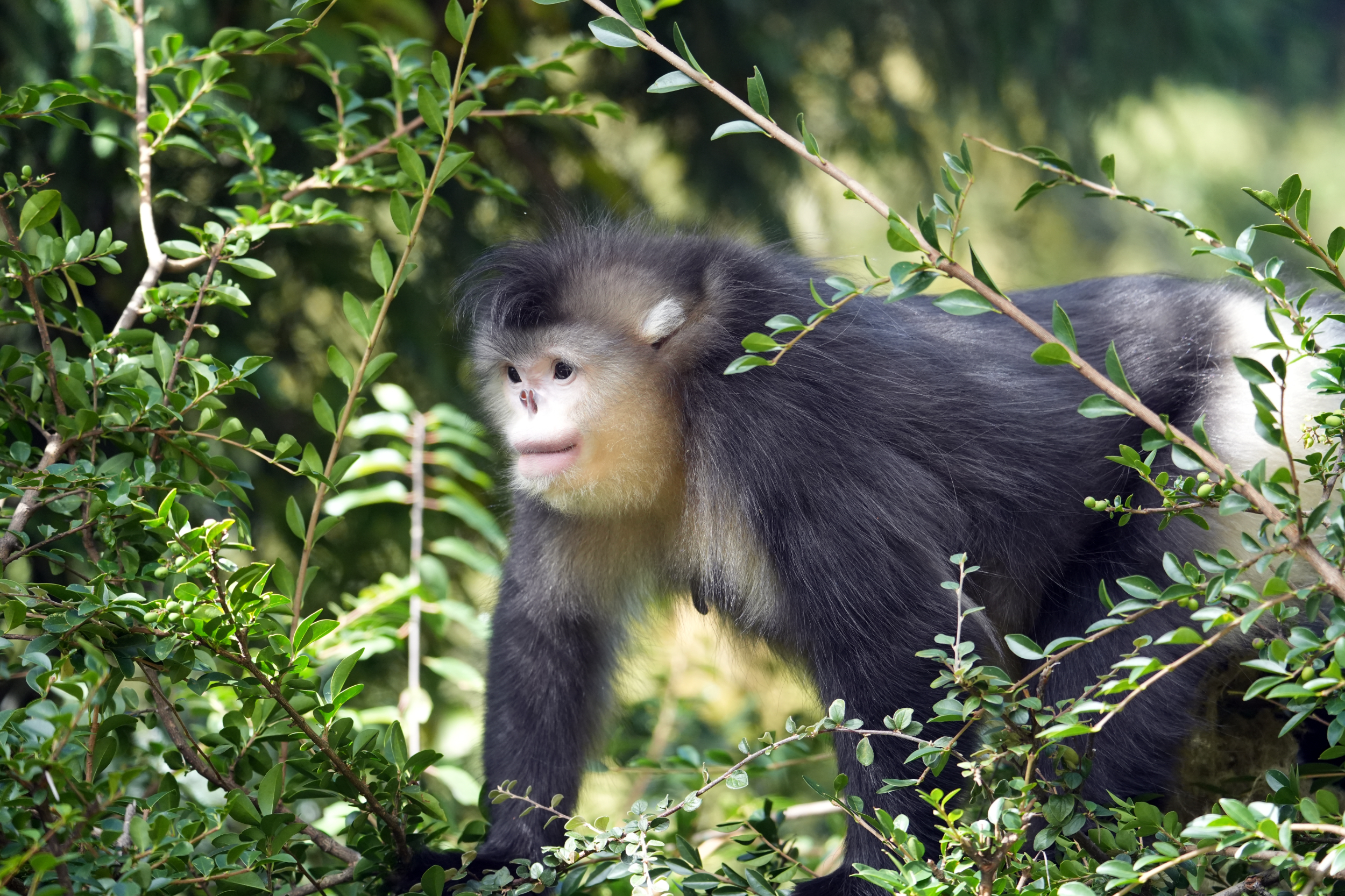
读图丨云南持续改善滇金丝猴生存环境
Zhong Guo Huan Jing Bao· 2025-10-20 08:04
Core Insights - Yunnan is recognized as a "plant kingdom," "animal kingdom," and "world garden," highlighting its significance as a biodiversity treasure trove in China [2] Group 1 - The local government has implemented various measures such as habitat restoration, ecological corridor construction, scientific monitoring, and community co-management to continuously improve the living environment of the Yunnan golden monkey [2] - The population of the Yunnan golden monkey has increased to 3,845 individuals, indicating a trend of sustained and stable growth [2]
加强海洋生态保护 释放北部湾高质量发展潜力
Zhong Guo Huan Jing Bao· 2025-10-20 03:07
Core Insights - The article emphasizes the importance of protecting and enhancing the marine ecological environment in Guangxi, particularly in the context of the North Bay area, to unlock its "blue" potential [1][4]. Marine Ecological Environment Governance - Guangxi has implemented strict ecological protection measures, leading to improved marine ecological governance and a positive trend in marine environmental quality [2]. - The nearshore water quality in Guangxi is projected to have a good quality area ratio of 92.9% by 2024, with efforts to eliminate poor water quality in rivers flowing into the sea [2]. Marine Ecosystem Protection and Restoration - From 2019 to 2024, Guangxi has invested nearly 4 billion yuan in 10 marine ecological protection and restoration projects, including the rehabilitation of coastal wetlands and mangroves [2]. - The population of the national first-class protected species, the Chinese white dolphin, has exceeded 300 individuals in the North Bay area [2]. Strengthening Marine Monitoring and Governance - Guangxi has established over 200 marine ecological monitoring stations, ranking among the top in the country, and has implemented a comprehensive marine disaster prevention system [3]. - A real-time monitoring network covering 14,280 square kilometers of marine area has been developed [3]. High-Level Marine Ecological Protection - The article calls for enhanced measures to address new challenges in marine ecological protection due to increased resource development [4]. - Key goals include improving water quality in nearshore areas and managing pollution sources effectively [4]. Deepening Marine Ecosystem Restoration - The article outlines a tailored approach to restoration based on specific bay ecological characteristics, promoting a "wetland + coastal zone" restoration system [5]. - Efforts are being made to control nitrogen and phosphorus levels in rivers flowing into the sea and to manage marine pollution sources [5]. Strict Marine Ecological Supervision - Regular evaluations of marine resource and environmental carrying capacity are being conducted, with a focus on implementing restrictive measures based on the assessment results [6]. - A comprehensive monitoring network is being developed to enhance marine environmental oversight [6]. Exploring Marine Ecological Value Realization - The article discusses the establishment of marine ecological compensation and damage compensation mechanisms, along with the development of local standards for marine ecological product value accounting [7]. - Initiatives to promote blue carbon projects and explore innovative paths for converting marine ecological product value are highlighted [7].
铜仁创新生态产品再分类破解生态产品价值实现难题
Zhong Guo Huan Jing Bao· 2025-10-20 02:11
Core Viewpoint - Establishing a sound mechanism for realizing the value of ecological products is a key path to implementing the concept that "lucid waters and lush mountains are invaluable assets" [1] Group 1: Classification of Ecological Products - The article reclassifies ecological products into three categories: rights-based ecological products, public ecological products, and operational ecological products, focusing on value transformation rather than mere valuation [2][3] - Rights-based ecological products are defined as those with clear or identifiable property rights that can be standardized and traded in the market, such as carbon emission rights and water rights [2] - Public ecological products are characterized by their non-competitive and non-exclusive nature, including clean air and biodiversity protection, making it difficult to charge specific beneficiaries [2] - Operational ecological products are tangible products or services that can generate returns through market transactions, such as eco-friendly agricultural products and eco-tourism [2] Group 2: Value Realization Mechanisms - The realization of rights-based ecological products relies on a government-built trading platform with clear rules and strict supervision, emphasizing the importance of property rights clarity and platform construction [3] - The value realization of public ecological products is primarily driven by a government-led ecological compensation mechanism, linking ecological protection outcomes to funding distribution [3] - The operational ecological products' value realization is based on market-driven industrial operations, where quality enhancement and brand premium are fundamental [4] Group 3: Recommendations for Establishing Value Realization Mechanisms - For rights-based ecological products, it is recommended to solidify property rights and create a unified market, including the establishment of a national ecological product trading center [6] - For public ecological products, it is suggested to improve compensation mechanisms and promote multi-faceted collaboration, ensuring that compensation is linked to ecological protection outcomes [6] - For operational ecological products, the focus should be on strengthening brand certification and optimizing the market environment, including the establishment of a national standard for ecological product certification [7]
粮食主产区怎样兼顾“粮袋子”与“好空气”?调研发现农业施肥是关键
Zhong Guo Huan Jing Bao· 2025-10-20 00:25
Core Viewpoint - The article discusses the challenge of balancing high agricultural productivity with environmental protection in Henan Province, which is a major grain-producing area in China. It highlights the significant impact of fertilizer use on PM2.5 pollution levels and suggests pathways to achieve both food security and improved air quality [1][6]. Group 1: Agricultural Fertilization and PM2.5 Relationship - Henan's agricultural practices require high fertilizer input, with a total fertilizer usage of 5.84 million tons in 2023, which is 3.6 times the national average. The application intensity is 35 tons per square kilometer, ranking first in the country [2]. - Nitrogen fertilizers dominate the fertilizer structure, leading to a nitrogen loss rate of 15%-30%, resulting in approximately 470,000 tons of nitrogen being released into the atmosphere annually, contributing to PM2.5 pollution [2][3]. Group 2: Temporal and Spatial Patterns of Pollution - There is a spatial correlation between high pollution areas and major grain production regions, with Henan's grain-producing areas also being PM2.5 hotspots [4]. - The fertilization period disrupts the typical seasonal PM2.5 patterns, with significant fluctuations observed during fertilization months, indicating a direct relationship between agricultural practices and air quality [5]. Group 3: Solutions for Balancing Production and Pollution - The article proposes a three-pronged approach to address the dual challenges of maintaining grain production and reducing pollution: policy support, technological advancements, and industrial transformation [6][7][8]. - Policy recommendations include establishing compensation mechanisms for reduced fertilizer use and monitoring ammonia emissions to assess their contribution to PM2.5 levels [6]. - Technological initiatives focus on promoting efficient fertilization techniques and the use of environmentally friendly fertilizers through subsidies and regulatory measures [7]. - Industrial transformation involves optimizing crop structures to reduce nitrogen demand and developing sustainable agricultural practices that create an ecological cycle [8].
“两新”政策与生态环境保护形成协同效应
Zhong Guo Huan Jing Bao· 2025-10-19 23:21
Core Insights - The "Two New" policy is a crucial strategy for addressing ecological challenges and promoting green transformation through large-scale equipment updates and consumer product exchanges [1][2] Policy Coordination - The "Two New" policy is systematically designed at the national level, integrating ecological benefits into the core evaluation of policy implementation [2] - A three-dimensional coordination mechanism has been established, focusing on "standard guidance, subsidy incentives, and constraint enforcement" [2] - The green standards have been raised, with 168 important standards published, setting ecological red lines for outdated equipment elimination [2] Industrial Transformation - Equipment updates are driving source reduction in emissions, with a 14.4% year-on-year increase in investment in equipment purchases from January to August 2025, significantly outpacing overall investment growth [3] - Traditional manufacturing industries are enhancing pollution control and production efficiency through the adoption of advanced equipment [3] - The clean and low-carbon transformation of the energy structure is accelerating, with non-fossil energy installed capacity reaching 2.24 billion kilowatts by August 2025, accounting for 60.8% of total capacity [3] Green Consumption - The consumer product exchange policy is not only stimulating consumption but also reducing pollution emissions from households [4] - By 2025, funding for the exchange program will increase to 300 billion yuan, expanding support to digital products and promoting green consumption [4] - The sales proportion of energy-efficient appliances has significantly increased, and the penetration rate of new energy vehicles continues to rise [4] Circular Economy - The "Two New" policy is transforming waste materials into valuable resources, contributing to the establishment of a modern ecological infrastructure [5] - A standardized recycling network is being developed, with over 11,000 new intelligent community recycling facilities added in 2024 [5] - The resource recycling industry is rapidly emerging, alleviating resource constraints and reducing solid waste pollution [6] Future Outlook - The integration of the "Two New" policy with ecological protection is reshaping the green foundation of economic development [6] - Continuous improvement of the policy framework, technological innovation, and market mechanism optimization will provide lasting momentum for building a beautiful China [6]