
Qi Huo Ri Bao

Search documents
严查煤矿主产区 动力煤供应端持续收缩
Qi Huo Ri Bao· 2025-08-13 23:12
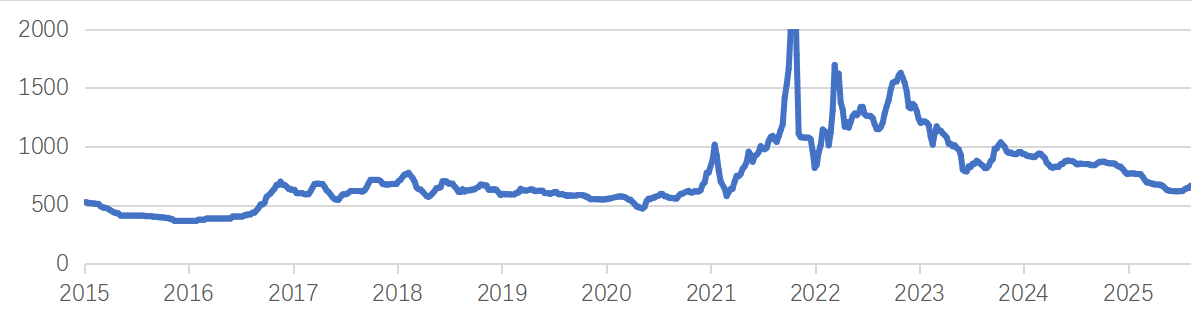
煤矿主产区严查 近期,郑煤走势强劲,连续拉涨并突破580点;港口动力煤价格也小幅上调。其根本原因在于供应端持续 收缩以及运输遇阻,上下游传导不畅加剧了供需错配。 近期青海露天矿违法开采事件进一步发酵,使得露天矿严查关停预期进一步升温;陕北地区露天矿也面 临严查,部分煤矿已经关停。今年以来,主产区煤矿持续面临严格的监察,内蒙古?"倒查20年"的政策 力度很大,极大抑制了超产煤;陕西地区煤管票政策执行得非常严格,并且露天矿开采受到显著影响。 整体来看,今年以来国内打击黑煤、超产煤力度加大。有关机构发布的数据显示,今年1—7月原煤累计 产量21.2亿吨,同比下降0.1%;7月原煤产量环比进一步下降,单月产量为3.2亿吨,同比下降3.7%,环比 下降4.9%。 在扩大内循环的政策主导下,今年全年专项债发行规模是3.75万亿元,1—8月已经发行2.9万亿元,后期 剩余额度8537亿元,财政部要求在10月底前全部发行,那么9—10月月均发行规模为4268亿元,明显高 于1—8月月均发行力度。大规模的专项债投放将明显支撑新基建、新型城镇化建设,交通、水利等重大 工程建设,从而带动第二产业用电量回升。除基建大发力外,9月房地 ...
社会库存高企 期螺出现五连阴大跳水
Qi Huo Ri Bao· 2025-08-13 23:12
Core Viewpoint - The steel market is experiencing a downward trend in prices due to high inventory levels and lower-than-expected demand, but there are expectations for a rebound in the upcoming "Golden September and Silver October" season [1][2]. Group 1: Market Trends - Last week, the national rebar market prices fell slightly, with an overall decline of 10-30 yuan/ton, and a cumulative drop exceeding 100 yuan/ton [1]. - Steel production in September is at historically high levels, but sales remain flat compared to last year, contributing to recent price declines [2]. - Analysts indicate that despite the recent downturn, confidence among traders remains, with an increase in bullish sentiment for the steel market [2]. Group 2: Supply and Demand Dynamics - There are currently 12 planned production line repairs affecting 11 steel mills, expected to impact finished product output by approximately 46,150 tons per day [3]. - The overall operating rate of blast furnaces and rolling lines remains high, with steel mills showing strong production enthusiasm despite low profit margins [3]. - Regional inventory pressures are easing in the western and southern areas, while demand is slow to start in eastern, northern, and northeastern regions [4]. Group 3: Profitability and Future Outlook - Most steel enterprises are still profitable despite low margins, with plate manufacturers performing better than long product manufacturers [4]. - The steel market faces significant downward pressure due to high inventory levels and uncertainties related to potential COVID-19 outbreaks in the autumn and winter [4][5]. - There is a divergence in market sentiment regarding the upcoming demand, with some analysts cautioning against overly optimistic expectations for price increases [5].
热浪、山火侵袭欧洲多国
Qi Huo Ri Bao· 2025-08-13 22:43
Core Viewpoint - Europe is experiencing a new heatwave, with temperatures exceeding 40 degrees Celsius in several regions, leading to wildfires and casualties [1] Group 1: Weather Impact - Multiple regions in Spain, Portugal, Greece, Turkey, and the Balkans are facing extreme heat and wildfires, resulting in at least 4 fatalities and thousands of evacuations [1] - Spain's national meteorological agency reported temperatures reaching up to 44 degrees Celsius in certain areas, exacerbating the risk of wildfires due to high temperatures, strong winds, and low rainfall [1] Group 2: Wildfire Incidents - In Madrid's suburbs, a fire destroyed a stable, resulting in one death, and spread to nearby farms and homes [1] - In Catalonia, a 61-year-old Hungarian laborer died while working in the fields, suspected to be related to the extreme heat [1] - Castilla y León reported 32 active fire points, with over 1,200 firefighters deployed for firefighting efforts, leading to mass evacuations [1] Group 3: Firefighting Efforts - In northern Portugal, over 1,300 firefighters and 16 aircraft are engaged in firefighting, with one wildfire burning for 10 days [1] - Turkey's northwest, Albania, and Montenegro are also reporting large-scale wildfires, with casualties including a man in Albania and a soldier in Montenegro [1] - Greece has initiated emergency evacuations for tourists in several wildfire-affected areas [1]
郑商所提示菜粕、菜油市场风险
Qi Huo Ri Bao· 2025-08-13 18:06
Core Viewpoint - The Zhengzhou Commodity Exchange has issued a risk warning letter highlighting the increased uncertainty factors affecting the market, urging member units to enhance investor education and risk prevention efforts, and reminding investors to participate rationally and trade in compliance [1] Group 1 - The Zhengzhou Commodity Exchange has identified multiple uncertainty factors impacting the market [1] - The exchange emphasizes the importance of investor education and risk prevention measures [1] - Investors are advised to engage in rational participation and comply with trading regulations [1]
中央财政11.46亿元支持实施秋粮“一喷多促”
Qi Huo Ri Bao· 2025-08-13 18:05
Core Viewpoint - The Ministry of Finance, in collaboration with the Ministry of Agriculture and Rural Affairs, has allocated 1.146 billion yuan to support disaster prevention and relief in agricultural production, focusing on stabilizing autumn grain production in 13 major grain-producing provinces [1] Group 1: Financial Support - The central government has provided financial assistance specifically for the application of plant growth regulators, foliar fertilizers, stress resistance agents, and pesticides to key autumn grain crops such as corn, soybeans, and medium rice [1] - This funding aims to ensure stable autumn grain production and contribute to a successful overall grain harvest for the year [1]
今日沪指创4年新高 未来有望延续强势表现
Qi Huo Ri Bao· 2025-08-13 09:04
期货日报网讯(记者 曲德辉 见习记者 肖佳煊)8月13日,股票市场全天震荡走高,沪指突破去年10月8 日高点,创近4年新高。A股全天成交额2.18万亿元,较上个交易日放量2699.99亿元,全市场超2700只 个股上涨。截至收盘,沪指涨0.48%,深成指涨1.76%,创业板指涨3.62%。 中邮证券指出,PEEK材料耐磨、耐热、抗腐蚀、密度较低质量较小,在性能、商业价值上都处于工程 塑料的"皇冠"位置,目前在汽车制造业、航空航天业、工业制造业、医疗行业得到了广泛的应用。 从板块来看,AI硬件股持续爆发,工业富联等多股续创历史新高。券商股一度冲高,国盛金控2连板。 有色金属概念股震荡走强,紫金矿业、洛阳钼业双双创历史新高。板块方面,有色金属、PEEK材料、 CPO、光刻机等板块涨幅居前,煤炭、银行、港口、物流等板块跌幅居前。 中金公司认为,算力是后GPT-5时代的"硬通货",在"DeepSeek创新热"过后,全球各大模型厂商在2025 正以更快的节奏将更强能力的产品推向市场;用户侧,token的加速消耗也推动着算力需求持续提升。 银河证券也表示,AI应用强赋能推动算力硬件高成长可期,通信行业在系统协同优化趋势下 ...
期债 短线震荡思路对待
Qi Huo Ri Bao· 2025-08-13 05:23
Group 1: Macroeconomic Trends - Recent fluctuations in treasury futures are driven by macroeconomic data and policy changes, with the Ministry of Finance announcing the resumption of VAT on interest income from newly issued government bonds starting August 8, leading to increased demand for older bonds [1] - Domestic economic resilience is evident, with a rising risk appetite in the A-share market and the central bank maintaining ample liquidity, while the Federal Reserve keeps interest rates unchanged, causing upward momentum in treasury futures to weaken [1] Group 2: Trade Performance - In July 2025, China's total import and export volume reached $545.32 billion, a year-on-year increase of 5.9%, with exports at $321.78 billion, up 7.2%, outperforming market expectations [2] - The increase in exports is attributed to fluctuating U.S. tariff policies, leading to a "rush to export" effect, particularly with accelerated growth in exports to the EU, South Korea, Taiwan, and Belt and Road countries, despite a significant decline in exports to the U.S. [2] Group 3: Import Dynamics - Import growth continued to rebound in July, driven by rising prices of bulk commodities, with the CRB index increasing from 3.5% in June to 6.0% year-on-year, positively impacting both import volume and value [3] - The decline in imports from the U.S. narrowed from 15.5% to 10.3%, indicating a slight alleviation of the overall import pressure [3] Group 4: Price Levels - The Consumer Price Index (CPI) remained flat year-on-year in July, with a slight decrease in the growth rate compared to June, while the core CPI increased by 0.1 percentage points to 0.8%, the highest since March 2024 [4] - Food prices showed a moderate improvement, with the year-on-year growth rate of fresh vegetables and pork prices contributing to a downward adjustment in CPI [4] Group 5: Producer Price Index (PPI) Trends - The Producer Price Index (PPI) decreased by 3.6% year-on-year in July, consistent with June, reflecting low construction industry sentiment and price pressures in export-oriented sectors due to international trade uncertainties [5] - Recent government meetings emphasized maintaining a "moderately loose" monetary policy, indicating that the foundation for a "bull market" in bonds remains solid, although upward momentum in the bond market may weaken due to economic resilience and commodity price recovery [5]
煤炭“反内卷”和供给侧改革对比研究
Qi Huo Ri Bao· 2025-08-13 04:25
Core Viewpoint - The article discusses the concept of "involutionary competition" in the coal industry, highlighting the need for effective measures to address this issue and promote high-quality economic development through supply-demand balance [1][2]. Group 1: Policy Background and Goals - The supply-side reform from 2016 to 2018 aimed to address severe overcapacity in the coal industry, with over 80% of companies facing losses, by eliminating outdated capacity and optimizing the industry structure [5]. - The "anti-involution" initiative launched in 2025 focuses on regulating market order and curbing disorderly competition due to declining coal demand and price drops, with a goal to stabilize coal prices and enhance supply quality [6]. Group 2: Policy Measures and Implementation Paths - The supply-side reform employed rigid measures to eliminate capacity, including banning new capacity and enforcing production limits [7][8]. - The "anti-involution" approach combines administrative and market mechanisms, emphasizing self-discipline among enterprises and strict control over excessive production [10][11]. Group 3: Policy Effects Comparison - The supply-side reform led to a significant reduction in coal production capacity from 573 million tons in 2016 to 440 million tons in 2017, improving capacity utilization from 59.53% to 77.82% [13][14]. - The "anti-involution" measures have resulted in a rebound in coal prices, with futures contracts rising from a low of 709 yuan/ton to a peak of 1288.5 yuan/ton by August 2025, indicating potential for further price increases if strict production checks continue [15]. Group 4: Policy Synergy and Differences - Both policies aim to resolve overcapacity and inefficient competition, promoting high-quality development in the coal industry [16]. - The supply-side reform focuses on reducing existing capacity, while the "anti-involution" strategy emphasizes controlling new capacity growth, with the former relying on administrative orders and the latter on market mechanisms [18]. Group 5: Thoughts on Coal "Anti-Involution" - The "anti-involution" initiative is primarily targeted at industries with severe overcapacity, and the coal market is currently not in a state of overcapacity, especially for coking coal, which remains in short supply [19]. - The article suggests that excessive constraints on supply could lead to significant price increases, adversely affecting downstream enterprises and consumers [19][20]. Group 6: Conclusion - The coal "anti-involution" represents a deepening and extension of supply-side reforms, combining flexible regulation to stabilize market order with rigid capacity reduction to reshape the industry landscape [21].


境内外机构期待更多开放合作的“期货方案”|2025中国(郑州)国际期货论坛
Qi Huo Ri Bao· 2025-08-13 04:10
Core Viewpoint - The 2025 China (Zhengzhou) International Futures Forum, co-hosted by Zhengzhou Commodity Exchange and Chicago Mercantile Exchange, aims to enhance the internationalization of China's futures market, focusing on high-level openness and attracting global financial institutions and enterprises [1][5]. Group 1: Market Opening and Internationalization - Since the implementation of the Futures and Derivatives Law, the legal foundation for the opening of China's futures market has become increasingly solid, with clear cross-border regulatory cooperation mechanisms [1]. - The internationalization of China's futures market is a composite product of the country's opening-up strategy, the real needs of the实体经济, and financial market institutional innovation [1][4]. - The current internationalization paths are complementary, with specific products enhancing pricing influence and QFII/RQFII improving market liquidity [1][2]. Group 2: Benefits of International Participation - The gradual and controlled opening model allows for the introduction of mature futures products, ensuring stable market operation while balancing the "bringing in" and "going out" strategies [2][4]. - The introduction of foreign traders enhances market liquidity and improves pricing capabilities, providing favorable conditions for enterprises' hedging and spot business [4]. - The participation of foreign investors in RMB-denominated internationalized products indirectly promotes the use of RMB in global commodity trade, extending the internationalization of the currency [2][5]. Group 3: Impact on Enterprises - The internationalization of the futures market significantly improves operational efficiency for enterprises, with simplified approval processes for foreign traders and enhanced cross-border trading efficiency [4]. - The demand for international risk management tools from China's实体经济 creates substantial opportunities for collaboration between foreign institutions and Chinese enterprises [5]. - The forum will showcase various case studies on the integration of production and finance, highlighting the practical applications of futures in cross-border trade [3][5]. Group 4: Future Prospects and Innovations - The forum is expected to facilitate discussions on optimizing the high-level opening paths of the domestic futures market and enhancing the global pricing influence of "Zhengzhou prices" [5][6]. - There is a focus on strengthening cooperation with foreign exchanges and clearinghouses, as well as leveraging technological innovations to upgrade cross-border trading systems [6]. - The expansion of QFII and RQFII tradable futures and options products indicates a favorable environment for further opening of China's futures market [6].


分析人士:市场波动料加大
Qi Huo Ri Bao· 2025-08-13 01:40
Core Viewpoint - The gold market is experiencing volatility due to recent developments, including the implementation of the "reciprocal tariff" policy by the U.S. and upcoming geopolitical meetings, particularly between U.S. and Russian leaders, which may impact market sentiment [1][3]. Group 1: Gold Price Movements - Domestic and international gold prices have both declined recently, following a spike caused by concerns over high tariffs on gold imports [1]. - The COMEX gold price reached a high of $3534.1 per ounce due to fears of tariffs, but this was followed by a significant drop after the U.S. government clarified that gold bars would not be subject to tariffs [1][2]. - The price difference between COMEX gold and London gold surged over $100 per ounce before retreating to $50 per ounce after the clarification [1]. Group 2: Economic Indicators and Federal Reserve Actions - Following a disappointing U.S. non-farm payroll report, market expectations for Federal Reserve rate cuts have increased, with pricing reflecting potential cuts in September and two cuts within the year [2]. - Inflationary pressures are rising, particularly due to the new tariff policy, which may limit the Federal Reserve's ability to cut rates [2]. - The internal divisions within the Federal Reserve are growing, with an increase in "dovish" members, which may further strengthen market expectations for rate cuts [2][4]. Group 3: Geopolitical Factors - The upcoming meeting between U.S. and Russian leaders on August 15 may lead to significant political developments regarding the Ukraine situation, which could influence gold prices [3]. - Market participants are already pricing in expectations of a ceasefire, leading to a decline in gold prices, although substantial agreements are considered unlikely [3][4]. - The Jackson Hole global central bank summit later in August is anticipated to impact long-term interest rates and monetary policy, with a focus on remarks from Federal Reserve Chairman Jerome Powell [3]. Group 4: Market Outlook - Analysts suggest that while short-term gold prices may remain weak, there is potential for a long-term upward trend if the Federal Reserve confirms rate cuts in September [5]. - The interplay of weakening fundamentals, U.S. fiscal expansion, and rate cut expectations will be key factors for market participants to monitor [4].