
Qi Huo Ri Bao

Search documents
2026年A股核心驱动力即将切换
Qi Huo Ri Bao· 2026-01-19 01:01
Group 1 - The core viewpoint indicates that the valuation levels of major scale indices have reached above the historical 80th percentile, suggesting a shift in market drivers from liquidity to profit improvement in the future [1] - Since the "9.24" market event, the A-share market has undergone significant valuation recovery, with the valuation percentile of the CSI 500 exceeding 90%, indicating that systemic undervaluation opportunities have largely disappeared [1] - The driving forces for 2026 are expected to continue along the lines of "liquidity + profit," with a notable shift in core drivers likely to dominate the pace of future index increases [1] Group 2 - Profit improvement signals are expected to come from three clear directions: profit recovery in industries such as industrials and materials, sustained domestic demand policies, and continued external demand support from moderate global economic growth [2] - The current index composition reflects a significant increase in the weight of information technology and industrial sectors within major indices like the SSE 50 and CSI 300, while traditional sectors like finance are seeing a reduction in their weight [2] - For 2026, the trading rhythm is anticipated to show an upward trend in the first half due to a favorable combination of a loose liquidity environment and price recovery, particularly benefiting indices with higher allocations in cyclical sectors like the CSI 500 and CSI 1000 [2]

季节性消费驱动 2026年生猪价格面临“一波三折”
Qi Huo Ri Bao· 2026-01-19 00:58
Group 1 - The average price of live pigs in China as of January 16 is 12.72 yuan/kg, an increase of 2 yuan/kg from the lowest point in 2025 [1] - Seasonal consumption is driving the current price increase, but there are concerns about price fluctuations before and after the Spring Festival [1] - The supply of new piglets has been increasing, indicating a potential rise in pig slaughter numbers before March 2026 [1] Group 2 - The seasonal increase in pork consumption is expected to support prices, with a peak average price projected at 13 yuan/kg before the Spring Festival [2] - After the Spring Festival, supply pressures are anticipated to push prices down to a low of 10.5 yuan/kg due to weak demand [2] - The second quarter of 2026 may see a turning point in supply, with a potential stabilization of prices between 11 to 12 yuan/kg [3] Group 3 - The number of breeding sows has decreased, indicating accelerated liquidation, which may affect supply levels in the second half of 2026 [4] - Price expectations for the third quarter of 2026 are for seasonal increases, with average prices projected between 12 to 13.5 yuan/kg [4] - The overall supply of pigs is influenced by breeding sow numbers, production efficiency, and slaughter weights, which should be monitored closely [5]
需求有望保持增长态势 纸浆重心将逐步上移
Qi Huo Ri Bao· 2026-01-19 00:55
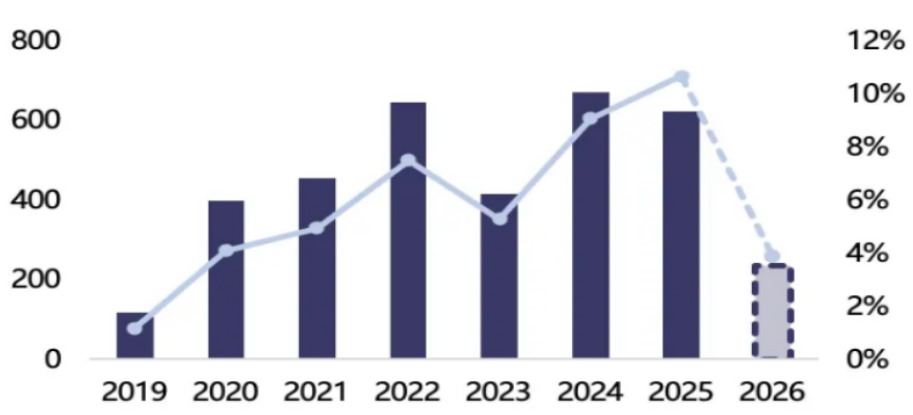
Core Viewpoint - The domestic commodity futures market has shown a warming trend since the beginning of the year, with the pulp futures market experiencing a relatively flat performance compared to the strong rise in non-ferrous metals and new energy products. The potential for pulp prices to break out of the current range and enter a low valuation recovery phase is under discussion as macroeconomic recovery becomes more evident [1]. Supply Overview - In 2025, global pulp supply is expected to face a tight-to-loose pattern, with new production capacity offsetting reductions. No new pulp lines are expected to be commissioned overseas, while significant reductions are anticipated, particularly in hardwood pulp. Domestic production capacity is projected to increase by approximately 1.7 million tons, mainly in softwood, hardwood, and chemical pulp [1]. - By the third quarter of 2025, major domestic players like Chenming Paper will gradually resume production, balancing the annual capacity increase with maintenance shutdowns [1]. - In 2026, global pulp production pressure is expected to emerge in the second half, primarily from new projects in Indonesia and domestic chemical pulp plans. However, supply constraints from North American and Nordic mills will continue to impact the market [1]. Shipment Volume - In 2025, the shipping pressure for wood pulp is significant, with global hardwood pulp shipments remaining high while softwood pulp shipments rebounded in the third quarter after a decline in the second quarter. Notably, shipments to China have increased [2]. - From January to November 2025, global shipments of bleached softwood pulp increased by 0.6% year-on-year, while bleached hardwood pulp shipments rose by 7.7% [2]. - For 2026, limited new overseas capacity and potential delays in some projects are expected to ease shipping pressures, with hardwood pulp inventory levels remaining manageable [2]. Production and Profitability - The paper industry has faced low profitability due to rapid capacity expansion and insufficient demand. Major paper manufacturers have been pressured by rising costs, leading to production cuts in some cases [2]. - In 2025, the introduction of new capacities for white card and double offset paper has added pressure to the market, resulting in low profits for these products. Overall production has not significantly increased despite the capacity additions [3]. - The production of various paper types showed mixed results from January to November 2025, with double offset paper and coated paper experiencing declines, while life paper and white card paper saw growth [3]. Demand Outlook - Domestic demand for pulp is expected to continue growing, supported by rigid demand from the downstream paper industry. The market for finished paper remains divided, with cultural paper demand weak due to demographic changes, while white card paper is expected to see continued support from domestic and export needs [4]. - Life paper demand is projected to grow steadily due to increased per capita usage and diverse applications [4]. Market Trends - The pulp supply-demand imbalance is expected to ease in 2026, with clear signals of a market bottom and a gradual upward shift in long-term price levels. Global hardwood pulp inventories are healthy, and domestic production is set to contribute reasonable supply increments [6]. - However, the overall demand growth is expected to slow down due to excess finished paper supply, low operating rates in paper mills, and cautious purchasing attitudes, which may dampen short-term demand release [6].

焦煤期货新旧交割规则对比分析
Qi Huo Ri Bao· 2026-01-19 00:39
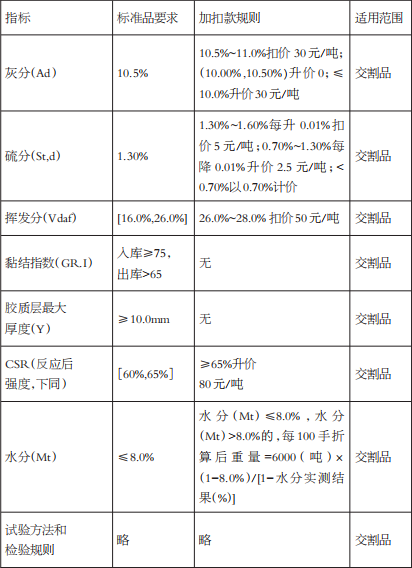
Core Viewpoint - The adjustments to the coking coal futures delivery quality standards by Dalian Commodity Exchange (DCE) aim to enhance the alignment between futures and spot markets, improving delivery efficiency and market functionality [1][24]. Current Rules Core Content - The current F/DCE JM003-2022 standard establishes differentiated pricing rules based on key quality indicators for coking coal, including specific requirements for ash content, sulfur content, volatile matter, and strength [3][13]. - The delivery area price adjustments for coking coal were made to reflect transportation costs more accurately, with specific changes in the price adjustments for designated delivery warehouses in various regions [3][21]. Industry Practice Issues - There is a discrepancy between the sulfur content pricing gradient and market realities, leading to potential misalignments in hedging positions for industry players [4]. - The existing pricing mechanism does not account for brand reputation and quality stability, which can lead to undervaluation of premium brands in the market [5]. - The strength and moisture content pricing mechanisms are not rigorous enough, leading to potential mismatches with the characteristics of local coal [6][7]. Reasons for Rule Modifications - Changes in the supply-demand structure of the coking coal market post-2020 necessitate adaptations in the delivery rules to better reflect current market conditions [10]. - Upgrades in environmental policies and cost changes in the steel and coking industries have influenced the pricing dynamics of high-sulfur coal [11]. - The need for standardized inspection methods has increased as third-party testing institutions become more involved in delivery inspections [12]. Adjustments Made in New Rules - The new rules, effective from December 19, 2025, include modifications to the quality standards and pricing rules for key indicators such as sulfur content and ash content [13][14]. - The sulfur content pricing gradient has been adjusted to better align with market trends, with specific changes in the pricing for low and high sulfur ranges [15]. - The ash content rounding rules have been refined to reduce discrepancies in inspection data, enhancing pricing accuracy [16]. - A flexible pricing mechanism for volatile matter has been established to reflect the increased supply of high-volatile resources [17]. - The CSR strength indicator has been elevated to reflect higher quality standards, with corresponding pricing adjustments [18]. - The moisture content calculation rules have been standardized to eliminate discrepancies in testing results [19]. - A linkage between brand reputation and pricing has been proposed to ensure that premium brands are appropriately valued [20]. Impact on Futures and Spot Markets - The new delivery rules are expected to narrow the price gap between Shanxi medium-sulfur coking coal and Mongolian coking coal, enhancing the economic viability of domestic Shanxi coal [22][24]. - Adjustments in delivery area price differentials are designed to prevent risk-free arbitrage opportunities and reinforce Shanxi's status as the benchmark delivery location [23][24]. - The overall impact of the new rules is anticipated to be manageable, with market participants encouraged to adapt to the changes for improved hedging effectiveness and market efficiency [24].
焦煤期权在大商所正式挂牌
Qi Huo Ri Bao· 2026-01-19 00:39
Core Viewpoint - The launch of coking coal options on the Dalian Commodity Exchange (DCE) marks a significant step in enhancing risk management tools for the coal, coke, and steel industries, providing a more comprehensive risk management toolbox for enterprises [1][2][3]. Group 1: Industry Significance - Coking coal is a critical raw material for the steel industry, and its stable supply is essential for the smooth development of steel and related industries [1]. - The introduction of coking coal options is expected to provide more precise and flexible risk management tools for industry chain enterprises, contributing to the high-quality development of the coal and steel sectors [2]. Group 2: Market Development - Since the launch of coking coal futures in 2013, the trading scale and operational quality have steadily improved, with a daily average trading volume of 1.06 million contracts and an average open interest of 680,000 contracts in 2025, both showing significant year-on-year growth [1]. - The DCE has optimized contract rules and delivery standards to align with market supply structure changes, enhancing the integration of spot and futures markets [3]. Group 3: Future Outlook - The DCE aims to deepen product and institutional innovation to enhance market operation quality and expand its influence on commodity prices, contributing to national energy security and economic development [3]. - With the addition of coking coal options, the DCE now offers 19 options products, with over 70% of its 26 listed futures having corresponding options, enhancing the synergy between futures and options markets [4].
反制 欧盟多国考虑对美商品加征关税!预期落空 铂、钯期价震荡下跌
Qi Huo Ri Bao· 2026-01-19 00:27
Group 1: EU-US Trade Relations - The EU is considering imposing tariffs on €93 billion worth of goods imported from the US as a retaliation against US tariffs on eight European countries [3] - A joint statement from eight European countries highlighted that the threat of tariffs undermines transatlantic relations and could lead to a dangerous cycle of retaliation [5] Group 2: US Federal Reserve Leadership - The nomination for the next Federal Reserve Chair is expected to be announced this week, with speculation that Kevin Warsh is the likely candidate [6] - The decision may be influenced by President Trump's loyalty test, which has affected other candidates like Rick Reed and Kevin Hassett [6] Group 3: Platinum and Palladium Market - Platinum and palladium prices have experienced a downward trend, with platinum futures down 3.17% and palladium futures down 9.04% as of January 16 [8] - The recent price adjustments are attributed to the market's disappointment over tariff expectations on key minerals, as the US has opted for a negotiation window rather than immediate tariffs [9] - The prices of platinum and palladium have seen significant increases since 2025, with platinum rising over 155% and palladium over 100% [10] Group 4: Market Dynamics and Future Outlook - The core issue for platinum and palladium lies in their heavy industrial usage and unique fundamental challenges, with the transition to electric vehicles posing a threat to palladium demand [11] - Current inventory trends show a slight increase in platinum stocks while palladium stocks are decreasing, indicating differing market dynamics [11] - Analysts suggest that while the market is currently in a consolidation phase, long-term demand for platinum remains stable due to hydrogen energy prospects, while palladium's price is supported by short-term supply constraints [12]
宏观预期落空,铂、钯期价震荡下跌
Qi Huo Ri Bao· 2026-01-19 00:25
Core Viewpoint - The recent decline in platinum and palladium prices is attributed to the market's disappointment regarding tariff expectations on key minerals, as the U.S. government has opted for a negotiation window rather than immediate tariffs [1][2]. Group 1: Price Movements - As of January 16, platinum futures closed at 610.05 yuan per gram, down 3.17% weekly, while palladium futures closed at 469.35 yuan per gram, down 9.04% weekly [1]. - International platinum and palladium prices have seen increases of over 155% and 100% respectively since 2025 [3]. Group 2: Market Analysis - Analysts suggest that the U.S. government's decision to delay tariffs reflects a balance between maintaining supply chain stability and encouraging domestic industry [2]. - The current market for platinum and palladium is characterized by high volatility, driven by macroeconomic factors and the ongoing geopolitical landscape [3][4]. Group 3: Supply and Demand Dynamics - The platinum market is experiencing a slight inventory build-up, while the palladium market remains in a de-stocking phase, with NYMEX platinum inventory rising to 664,400 ounces and palladium inventory decreasing to 207,000 ounces as of January 16 [4]. - The demand for palladium is heavily reliant on internal combustion engine vehicles, which face long-term challenges due to the shift towards electric vehicles [4]. Group 4: Future Outlook - Analysts predict that while the platinum market is in a structural expansion phase, palladium may face a long-term supply-demand imbalance, although current tightness in the spot market provides some price support [5]. - The combination of potential interest rate cuts and a soft landing for the economy could enhance the price elasticity for platinum in the long term [5].
外部干扰落定 白银后市关注三方面变化
Qi Huo Ri Bao· 2026-01-19 00:19
Core Viewpoint - The silver price has reached new highs despite rumors of a potential decline due to the Bloomberg Commodity Index (BCOM) rebalancing, driven by strong investment demand and supply constraints [1][2]. Group 1: Price Movements and Trends - As of January 16, the London silver price closed at $90.134 per ounce, with a weekly increase of 12.8%, peaking above $93 per ounce [1]. - COMEX silver futures saw a weekly increase of 13.37%, while Shanghai silver futures surged by 22.83% [1]. - The BCOM annual rebalancing period from January 8 to 14, 2026, is expected to have a short-term impact, with market participants likely to use any price dips as buying opportunities [2]. Group 2: Supply and Demand Dynamics - Investment demand for silver remains strong, with non-commercial net long positions on COMEX increasing from 30,000 contracts in late December to 32,000 contracts by January 13 [1]. - The global silver production dropped to 820 million ounces (approximately 25,800 tons) in 2025, a 12% decrease from the peak in 2020, while recycled silver supply has increased only slightly, insufficient to meet industrial demand [2]. - The ongoing supply constraints are expected to keep silver in a "bull market" due to a widening supply-demand gap [2]. Group 3: Future Outlook and Market Factors - Experts predict that silver prices will likely remain high in Q1 2026, with potential for further increases, although volatility is expected to rise due to various market factors [3]. - The U.S. government's decision to delay imposing tariffs on key minerals, including silver, may introduce short-term price correction risks [3]. - The rising costs in industries due to increasing silver prices have prompted companies, particularly in the photovoltaic sector, to accelerate the adoption of copper alternatives, although widespread replacement is not yet feasible [3][4]. Group 4: Strategic Considerations - Future silver trading should focus on whether positive factors have been fully priced in, such as ongoing declines in silver inventory and potential Federal Reserve interest rate cuts [4]. - Monitoring risk control measures by exchanges is crucial, as decreased trading activity could halt the upward price momentum, leading to a "slow bull" market [4]. - Global geopolitical tensions may further accelerate silver price increases if they continue to escalate [4].
反制,欧盟多国考虑对美商品加征关税!美联储下任主席提名人选本周或揭晓!预期落空,铂、钯期价震荡下跌
Qi Huo Ri Bao· 2026-01-19 00:07
Group 1: EU and US Trade Relations - The EU is considering imposing tariffs on €93 billion worth of US goods in response to US tariffs on eight European countries [2] - A joint statement from eight European countries warns that the threat of tariffs could damage transatlantic relations and lead to a dangerous cycle [3] Group 2: US Federal Reserve Leadership - The nomination for the next Federal Reserve Chair may be decided this week, with speculation focusing on Kevin Warsh as the likely candidate [4] - Kevin Hassett appears to be close to being eliminated from consideration despite his loyalty to Trump, as Trump has expressed a desire to keep him in his current position [4] Group 3: Platinum and Palladium Market Trends - Platinum and palladium prices have experienced a downward trend, with platinum futures down 3.17% and palladium futures down 9.04% as of January 16 [5] - The recent price adjustments are attributed to the market's disappointment over tariff expectations on key minerals, as the US has opted for a negotiation window rather than immediate tariffs [6] Group 4: Market Dynamics and Price Fluctuations - International platinum and palladium prices have seen increases of over 155% and 100% respectively since 2025, with significant volatility observed in early 2026 [7] - The core issue for platinum and palladium lies in their heavy industrial usage and unique fundamental challenges, with platinum facing a shift towards electric vehicles and palladium's demand being closely tied to internal combustion engines [8] Group 5: Inventory and Supply Chain Insights - As of January 16, NYMEX platinum inventory rose to 664,400 ounces, while palladium inventory decreased to 207,000 ounces, indicating differing supply dynamics [8] - Analysts suggest that the current market for platinum and palladium is in a consolidation phase, with prices facing downward pressure but maintaining a healthy support level [9]
探索开展人民币外汇期货交易试点,稳步有序发展期货和衍生品市场……上海“十五五”规划建议最新部署!
Qi Huo Ri Bao· 2026-01-19 00:03
Group 1 - The core viewpoint of the Shanghai "14th Five-Year" planning proposal emphasizes the acceleration of building "five centers" to enhance the city's capabilities and competitiveness, with a focus on futures and derivatives [1] - The proposal aims to strengthen Shanghai's position as an international financial center by establishing a global RMB asset allocation center and risk management center, expanding cross-border and offshore financial services, and promoting RMB internationalization [1][2] - It highlights the need for a robust financial market system, promoting direct financing, enhancing capital market functions, and developing a multi-tiered equity market while also focusing on the orderly development of futures and derivatives markets [2] Group 2 - The proposal includes plans to enhance the international trade center by strengthening the resource allocation function of bulk commodities and supporting the establishment of a national bulk commodity warehouse registration center [2] - In the context of building a global leading international shipping center, the proposal emphasizes the development of modern shipping services and the establishment of a world-class shipping exchange [3] - It supports the expansion of shipping financial services, including insurance and financing leasing for ships and aircraft, while also promoting the use of RMB for shipping freight settlements [3]