华尔街见闻

Search documents
再造行业分水岭:华为Mate X7以“统治级”实力重塑折叠屏价值锚点
华尔街见闻· 2025-12-29 10:24
Core Viewpoint - The foldable smartphone market has transitioned from a niche innovation to a mainstream product, with Huawei capturing nearly 70% market share, indicating a significant shift in consumer preferences towards foldable devices [1][15][22] Group 1: Market Position and Consumer Sentiment - Over 90% of consumers are considering foldable smartphones for their next purchase, with Huawei being the preferred choice due to its technological advancements and ecosystem [1][15] - Huawei has maintained the leading market share in the foldable smartphone sector in China for five consecutive years, reaching a remarkable 68.9% market share in the first three quarters of 2025 [15][16] Group 2: Product Innovation and Features - The Huawei Mate X7 represents a comprehensive re-engineering of the foldable smartphone experience, emphasizing not just hardware but also user interaction and system architecture [2][9] - The Mate X7 features a new "Time-Space Door" camera module and incorporates traditional craftsmanship into its design, enhancing both aesthetic appeal and cultural significance [5][6] - The device is designed to be ultra-thin and reliable, weighing approximately 235 grams with a thickness of only 4.5mm when unfolded, addressing durability concerns that have historically hindered foldable phones [6][9] Group 3: Imaging and AI Capabilities - The Mate X7 breaks the limitations of foldable phones in imaging, achieving flagship-level photography capabilities with significant improvements in color accuracy and low-light performance [10][11] - Video recording capabilities have also seen substantial enhancements, with improved dynamic range and clarity, supported by advanced AI and software integration [11][12] Group 4: Market Strategy and Consumer Engagement - Huawei's strategy includes offering extensive customer service benefits, such as free screen protection services and a comprehensive care program, to enhance consumer trust and satisfaction [21][22] - The Mate X7 is positioned not just as a consumer device but as a productivity tool, facilitating mobile office experiences and intelligent task management through AI [12][22]


白银跳水,有大银行爆仓了?
华尔街见闻· 2025-12-29 07:48
Core Viewpoint - The article discusses a significant market event involving a major bank's failure to meet margin requirements in the silver futures market, leading to forced liquidation and potential systemic risks in the banking sector [2][4][6]. Group 1: Market Reaction - On Monday, the spot silver price experienced extreme volatility, initially rising by 6% to nearly $84 per ounce before dropping 4% to $76.15 per ounce, with a low of around $75 during the day [2]. - A rumor circulated on social media regarding a "systemically important bank" facing a margin call in the silver futures market, which drew widespread attention [2][4]. Group 2: Bank's Margin Call - The bank in question reportedly failed to pay an additional $2.3 billion in margin by the required deadline, leading to forced liquidation by the futures exchange [4][7]. - The bank was described as one of the largest participants in the precious metals derivatives market, holding "hundreds of millions of ounces" in short positions [5][6]. Group 3: Market Speculation - There is speculation about the identity of the bank, with guesses focusing on a few large European banks, although the exact name was not disclosed [6][12]. - Analysts expressed differing opinions on the rumor's validity, with some believing that the bank's liquidity reserves could handle the shock, while others warned of a potential panic selling scenario [6][12]. Group 4: Financial Analysis - The bank was required to provide $2.3 billion in cash collateral due to insufficient liquidity, as silver prices surged past $70 per ounce [7][13]. - In extreme scenarios, if the bank's short positions were entirely self-held, it could face liquidity pressures of approximately $7.75 billion, which is manageable given its high-quality liquid assets of around $330 billion [13][14]. Group 5: Potential Risks - The bank is undergoing a complex integration process, with only about 70% of its systems migrated, raising concerns about potential risk spillover [16]. - Market behavior tends to follow a "sell first, ask questions later" pattern, which could exacerbate stock price volatility even if the rumors are unfounded [16]. - The bank's involvement in the London Bullion Market Association (LBMA) adds another layer of uncertainty regarding its liquidity risks, as LBMA's disclosure practices are less transparent than those of COMEX [16].

巴菲特谢幕、OpenAI搅动万亿市值、谷歌强势崛起......2025全球十大商业事件盘点
华尔街见闻· 2025-12-28 12:49
Core Insights - The article highlights significant business events in 2025, emphasizing the rise of AI competition and the reshaping of the technology landscape [4] - Key players like OpenAI, Nvidia, and Google are at the forefront of this transformation, with substantial investments and strategic partnerships [1][3] AI Competition and Investments - The U.S. government announced a $500 billion investment in AI infrastructure, dubbed "Stargate," aiming to build 20 large-scale AI data centers [5] - OpenAI's partnership with SoftBank and Oracle faced challenges, leading to a reduction in project scope and delays in execution [6] - CoreWeave, a company specializing in GPU cloud services, went public with a valuation of approximately $230 billion, marking a significant moment for AI computing rental services [7][12] Major Corporate Developments - Nvidia became the first company to reach a market capitalization of $5 trillion, driven by the demand for AI-related hardware [24][26] - The company invested $50 billion in Intel, marking a strategic alliance to enhance their competitive positions in the PC and data center markets [13][15] - OpenAI's influence on the market was profound, with its valuation and orders significantly impacting the AI industry narrative throughout the year [17][21] Market Dynamics and Trends - The article discusses the shift in the automotive industry, particularly Germany's decision to amend its 2035 ban on internal combustion engines, reflecting the tension between aggressive transformation and market realities [2][40] - Google's advancements in AI, particularly through its TPU and Gemini models, are positioned to challenge Nvidia's dominance in the AI infrastructure market [43][44] Conclusion - The events of 2025 illustrate a complex interplay of alliances, competition, and market adjustments, with companies navigating the evolving landscape of AI and technology [3][21]
“躺平”后,老干妈卖了快54亿
华尔街见闻· 2025-12-28 12:49
Core Viewpoint - The article discusses how Lao Gan Ma, a well-known Chinese chili sauce brand, has managed to achieve significant revenue growth without engaging in typical marketing strategies like social media operations and live streaming, contrasting with other brands that are heavily investing in these areas [4][5][29]. Revenue Recovery - Lao Gan Ma's sales revenue reached 5.391 billion yuan in 2024, nearing its historical peak of 5.403 billion yuan in 2020 [5][12]. - The brand experienced a revenue drop of 20% in 2021, falling to 4.201 billion yuan, attributed to the pandemic's impact on offline consumption [7][9]. - From 2022 to 2024, Lao Gan Ma's revenue steadily increased from 5.26 billion yuan to 5.391 billion yuan, alleviating market concerns [12]. Marketing Strategy - Unlike many brands that focus on live streaming and social media marketing, Lao Gan Ma has adopted a "laid-back" approach, relying on natural consumer repurchase for online sales [5][14]. - The brand has ceased regular updates on its social media accounts, with the last posts dating back to March 2022 for WeChat and February 2025 for Douyin [15][16]. - The decision to minimize marketing efforts may stem from the high costs and low returns associated with live streaming and e-commerce channels [17]. Product Development and Innovation - Despite the lack of marketing noise, Lao Gan Ma continues to develop new products and expand into overseas markets, with significant growth in international sales [6][18]. - The brand has successfully entered 160 countries by 2024, with a 30% year-on-year growth in overseas markets [18][19]. - Lao Gan Ma has introduced over 20 new products since 2020, including various chili sauces, although its product innovation has not aligned with the rising demand for healthier options in the domestic market [25][28]. Competitive Landscape - Other brands like Fuling Mustard and Zhongjing Foods have faced challenges in maintaining revenue growth post-pandemic, highlighting the competitive pressures in the condiment market [10][11]. - The pricing strategy for Lao Gan Ma's products is constrained by competition, with many brands operating within a similar price range, necessitating a focus on volume sales [26][27]. - The emergence of new brands in the chili sauce category has led to a diversification of product offerings, but Lao Gan Ma remains a leading name internationally [19][24].

元旦周重磅日程:美联储主席或揭晓,巴菲特退休,“港股GPU第一股”挂牌
华尔街见闻· 2025-12-28 12:49
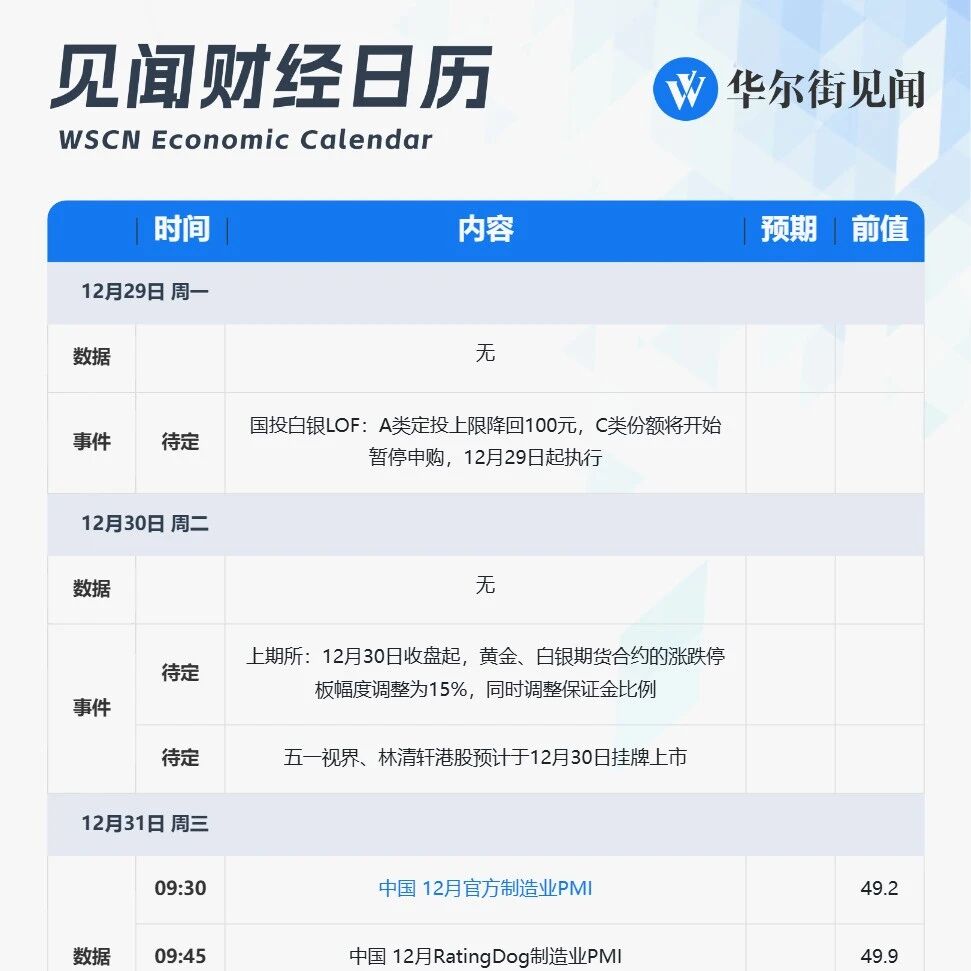
Core Viewpoint - The article highlights significant upcoming events and economic indicators, including the release of manufacturing PMI data for China and the US, changes in trading regulations for silver and gold futures, and notable corporate developments such as the leadership transition at Berkshire Hathaway and the IPOs of several companies in Hong Kong [4][6][12][16][17]. Economic Indicators - China's official manufacturing PMI for December is expected to be released on December 31, with a previous reading of 49.2 indicating contraction. Analysts anticipate a slight recovery due to policy support, focusing on new order indices and performance across different enterprise sizes [6]. - The US will release the S&P Global Manufacturing PMI for December on January 2, along with data on initial jobless claims for the week ending December 27 [7]. Corporate Events - Warren Buffett officially steps down as CEO of Berkshire Hathaway, with Greg Abel taking over the role starting January 1, 2026 [12]. - Wall Street anticipates the announcement of a new Federal Reserve chair by President Trump in the first week of January [10]. - Wall Street and various global markets will observe a holiday break from January 1 to January 4, 2026 [13][14]. Price Adjustments in Industries - A price increase trend is noted in the paper and chemical industries, with companies like Jilin Chemical Fiber and Hunan Youneng announcing significant price hikes for their products starting January 1, 2026 [25][26][27][28][29][30][31]. Regulatory Changes - The National Investment Silver LOF has tightened its subscription limits, reducing the A-class investment cap back to 100 yuan and suspending C-class subscriptions effective December 29 [18][19]. - The Shanghai Futures Exchange has adjusted the price fluctuation limits for gold and silver futures to 15% and modified margin requirements effective December 30 [20]. Legislative Developments - The "Fujian Province Promotion of Cross-Strait Standard Commonality Regulations" will take effect on January 1, 2026, marking a significant legislative move aimed at enhancing standards between the two regions [32].
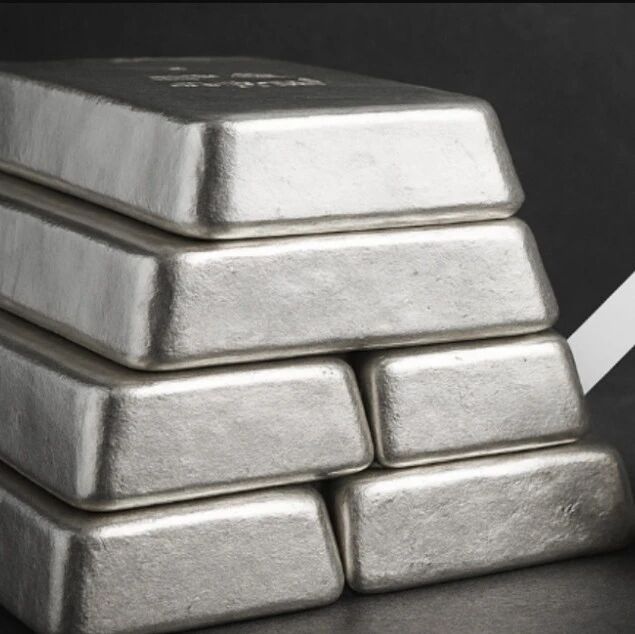
白银直逼80,马斯克直言:这不好!
华尔街见闻· 2025-12-28 12:49
Core Viewpoint - The global silver market is experiencing a structural deficit, with supply shortages leading to significant price increases, driven by industrial demand rather than just safe-haven investment sentiment [3][6]. Supply Gap and Capacity Constraints - In 2025, global silver demand is projected to reach 1.24 billion ounces, while supply is only expected to be 1.01 billion ounces, resulting in a supply gap of 100 to 250 million ounces [5]. - This situation is characterized as a "structural deficit" with no quick fixes in sight [6]. - The rigidity of supply from mining is a core issue, as silver is primarily a byproduct of copper and zinc mining, and new mines typically take over 10 years to develop [7]. - Recycling efforts are insufficient to bridge the supply gap, leaving the supply side weak against rising demand [8]. Inventory Data and Market Dynamics - COMEX silver inventories have plummeted by 70% since 2020, while London vaults have seen a 40% decline [9]. - Current demand rates suggest that available silver inventories in some regions can only sustain 30 to 45 days of supply [10]. Discrepancy Between Paper and Physical Silver - There is a significant imbalance between "paper silver" and physical silver, with an estimated ratio of 356:1, meaning each ounce of physical silver corresponds to hundreds of paper claims [12]. - This disconnection increases market vulnerability, as even a small number of buyers requesting physical delivery could risk system collapse [12]. - Market participants are increasingly aware of this risk, contributing to the recent sharp price increases as banks and institutions react to supply constraints and physical shortages [12]. Industrial Demand and Sensitivity - Industrial applications now account for 50% to 60% of total silver demand [3][13]. - Industrial buyers are less sensitive to price fluctuations due to a lack of effective substitutes, but they are extremely vulnerable in the face of supply shortages [14]. - The volatility in silver prices poses a significant challenge for industries reliant on this critical raw material, as highlighted by concerns from industry leaders like Elon Musk [15].
白银还能更疯狂?资深分析师喊出300美元天价
华尔街见闻· 2025-12-27 10:53
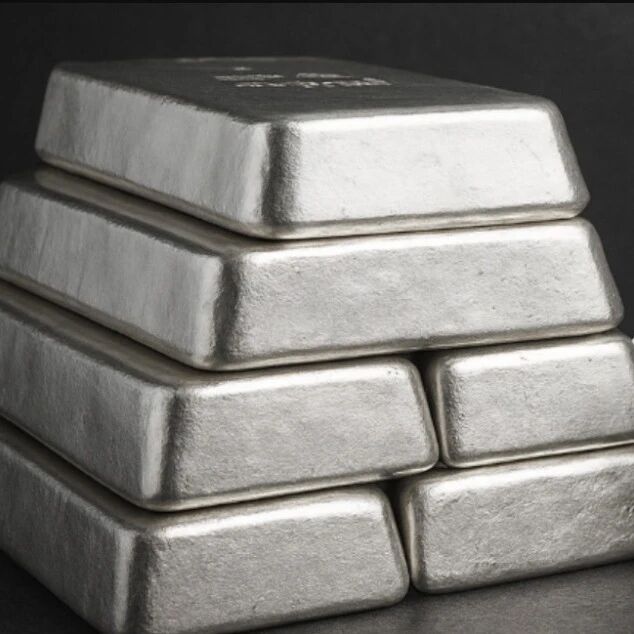
Core Viewpoint - The article discusses the significant surge in silver prices, which have increased approximately 10.3% recently, reaching around $79.30 per ounce, and have risen over 170% this year, outpacing gold's increase of over 70% [1][4]. Supply and Demand Dynamics - The current price surge is primarily driven by a supply-demand imbalance, with all factors supporting this trend expected to persist for a considerable time [6]. - A structural deficit of approximately 800 million ounces over the past five years, equivalent to nearly a full year of mining supply, is a key reason for the price explosion [7]. - The Silver Institute predicts that this deficit will continue for the next five years [7]. - Industrial demand, particularly from solar panel manufacturers, is a major driver, with investment demand for silver ETFs expected to reach nearly 200 million ounces this year, significantly higher than the previous estimate of 70 million ounces [9]. Market Sentiment and Predictions - Peter Krauth, a notable silver analyst, anticipates that silver prices could reach $300 per ounce during an upcoming "frenzy phase," driven by a significant adjustment in the gold-silver ratio [5][10]. - The gold-silver ratio peaked at 104 in April but has since fallen to around 68, with predictions that it could drop to 15 in the future [10]. - Using a current gold price of approximately $4,500, a ratio of 15 would imply a silver target price of $300 [11]. - Krauth acknowledges more aggressive predictions of $800 to $1,000 but considers them unrealistic compared to his more measured forecast [12]. Additional Influencing Factors - Other factors contributing to the surge in precious metals include a weakening dollar, high government deficits, inflation concerns, and geopolitical risks [13]. - Krauth maintains a cautious outlook for the short term, suggesting that while silver is in a strong market position, minor corrections may occur [14].

美国人形机器人初创公司:连我们都觉得,外界吹得太过了
华尔街见闻· 2025-12-27 10:53
Core Viewpoint - Despite billions of dollars flowing into the humanoid robot sector, executives from startups are collectively voicing concerns to temper the overheated market expectations [1][2]. Group 1: Industry Concerns - Executives express worries that while recent technological advancements have been made, the hype surrounding humanoid robots has become detached from reality, with significant technical challenges remaining for commercial deployment [3]. - Agility Robotics' CTO emphasizes the distinction between creating a robot and one capable of performing "useful work," highlighting that current robots lack the reliability for complex tasks [4]. - The CEO of Weave Robotics compares the current state of humanoid robots to Apple's Newton, indicating that while the concept is promising, the technology is not yet mature enough for commercial success [6]. Group 2: Investment and Cost Considerations - Approximately $5 billion has been invested in the humanoid robot field this year, showcasing a stark contrast between the industry's cautious perspective and the capital market's enthusiasm [5]. - Cost-effectiveness is a critical consideration for investors, as installation costs are a primary reason companies avoid deploying robots, with only about $20 of every $100 spent on robots going towards the purchase itself, while the remaining $80 is for safety measures [6]. Group 3: Design and Efficiency Debate - The industry may be overly fixated on humanoid form as the ultimate robot design, with some engineers suggesting that specialized robots could be more efficient in factory settings [8]. - Challenges such as stability and tactile feedback in mimicking human form are noted, with predictions that future robots may not replicate human shapes but instead exceed them, potentially using designs like four arms or suction grips [8]. Group 4: Industry Outlook - Despite optimistic predictions from figures like Elon Musk regarding the production of Tesla's Optimus robot, startup executives advocate for a more cautious approach, urging the industry to be responsible with timelines and avoid overpromising [9].

谁会阻止疯狂的白银?当年亨特兄弟是栽在谁手里?
华尔街见闻· 2025-12-27 10:53
大洋彼岸的白银市场正陷入癫狂。12月26日周五,现货白银飙升逾10%,逼近80美元/盎司关口,COMEX白银期货周涨幅接近18%。 这一轮"金属狂潮"不仅局限于白银,黄金已突破4550美元,铜价跟随沪铜创下历史新高,铂金和钯金亦录得双位数涨幅。市场正在定价"商品控制权"的新叙 事,以及将其作为对冲"AI泡沫"和货币贬值的工具。 然而,在疯狂的行情背后,历史的警钟已经敲响。芝加哥商品交易所(CME)已于12月12日将白银保证金上调了10%。 2011年白银崩盘与1980年亨特兄弟 (Hunt Brothers)逼仓失败的历史案例表明,当交易所开始出手限制杠杆时,往往意味着狂欢接近尾声。 与此同时,国内也已采取行动。北京时间12月26日,上海期货交易所发布通知,将黄金、白银期货合约的涨跌停板幅度调整为15%,并相应上调交易保证金比 例。这是继12月10日上调保证金、12月22日限制日内开仓数量及调整手续费之后,上期所本月内针对白银期货出台的第三轮风控措施。 对此,中信建投期货和国信期货的分析师指出,尽管存在长线利多因素,但短期快速上涨显然过度交易了预期。资金"抢跑"导致投机情绪高涨,市场犹如"高空 走钢丝"。 2 ...
2026年的特斯拉:电动车承压,AI接棒
华尔街见闻· 2025-12-27 10:53
Core Viewpoint - Tesla is betting on artificial intelligence and autonomous driving technology to redefine the future [1] Group 1: Stock Performance - Tesla's stock price has increased by over 25% this year, surpassing the S&P 500 index's 18% gain, reaching an intraday all-time high of $498.83 in December [2] Group 2: Sales and Market Expectations - Despite pressure on electric vehicle sales, there are high hopes for Tesla's progress in autonomous taxi services, humanoid robots, and self-developed chips. Analyst Dan Ives predicts Tesla could reach a $3 trillion valuation after a "monster year," nearly double its current market value [4] - U.S. electric vehicle sales are expected to decline by 9%, with a similar 9% drop in China and a significant 39% plunge in the EU market [5][14] - Analysts believe investors are accustomed to Elon Musk's over-promises and will not overly worry as long as they see visible progress [6] Group 3: Robotaxi Network Progress - Tesla's robotaxi network is progressing far below expectations, with only about 160 vehicles currently operating, significantly less than Musk's promise of deploying in at least eight metropolitan areas [6][7] - The service offered in Austin and the San Francisco Bay Area is similar to that of Uber or Lyft, using Model Y vehicles equipped with the FSD system but still requiring employee supervision [8] - Analysts have mixed expectations for expansion by 2026, with some warning that Tesla's pace compared to competitors like Waymo remains unclear, potentially leading to stock price volatility [10] Group 4: Full Self-Driving (FSD) Software - The adoption rate of Tesla's FSD software is low, with only 12% of customers paying for it as of Q3. However, international expansion could change this, providing additional revenue and training data [12] - Tesla aims to offer FSD in the UAE by January, marking its first market in the Middle East, with hopes for regulatory approval in Europe by February or March [13] Group 5: Future Products and Technology - Tesla is set to begin production of humanoid robots and a new microchip, which could define its future. The humanoid robot market is estimated to reach $5 trillion by 2050 [17][18] - Musk has proposed selling the Optimus robot for around $30,000, which he believes could account for 80% of Tesla's value in the future [19] - The company faces challenges in designing the robot and sourcing components, with a prototype expected to be ready for demonstration by March [20][21] - The AI5 chip, planned for production by the end of 2026, is expected to significantly improve performance compared to the current AI4 chip [22][23] - Tesla's roadmap for 2026 includes producing new energy products and the long-awaited update of its next-generation sports car, with the all-electric Tesla Semi truck expected to enter mass production in the second half of 2026 after years of delays [24]