吴晓波频道

Search documents
没有好船长,只有老船长
吴晓波频道· 2025-09-08 00:30
立即点击 ▲ 观看视频 吴晓波: 好莱坞电影《加勒比海盗》 里的 杰克船长,自由,浪漫,永远冒险,而宋坤跟我 说,没有好船长,只有老船长。 宋坤: 这是我们水手间的一句话。不管你是一个多么好的船长,虽然你能跑得比别人快,能优 秀的 组织管理 你的船员,但是如果你没有活下去,你就不是一个好船长,只有那个活到老的船 长才是真正的好船长。 吴晓波 : 企业也一样,能够活得久,能够不下牌桌就是一个好的企业。因为企业会经历无数的 周期,经历无数的挑战。 这个创新是来源于我过去丰富的航行经验,我可能没有遇到过这样的事件,但我可能看过其他 船长用类似的方法解决这样的情况。所以我认为在船上所有的创新都是源于自己的经验,更多 的经验会让你有更多的能力去创新。 吴晓波 : 在我们这个行业叫做"所有的创新都是遭遇的结果"。 吴晓波: 你觉得创新和经验在你的成长经历中,他们分别扮演怎么样的一个成分和角色呢? 宋 坤 : 创新其实是源于经验的。我打个比方,假设今天正在航行,突然之间我的主帆缭绳崩 断了,我的横杆飞出去在风中抖,也没有人教过我应该怎么办,我现在就想,我要怎么把这个 问题解决掉? 那么,我现在一定要找一根绳子,把它从最后面 ...


外卖大战下,打不垮的“夫妻店”|一线
吴晓波频道· 2025-09-08 00:30
Core Viewpoint - The article discusses the impact of the recent food delivery war on small and micro businesses, highlighting the decline in profit margins and the challenges faced by local eateries amidst aggressive competition from major platforms [2][3][7]. Group 1: Market Dynamics - The food delivery market has significantly expanded, with daily orders from major platforms reaching 250 million, up from 80 million before the competition intensified [4]. - Major platforms like Meituan, JD, and Alibaba reported a combined profit drop of over 20 billion yuan in the second quarter, with net profits down 89%, 50.8%, and 18% respectively [3][5]. - The competition has led to a substantial increase in user engagement, with Taobao's flash purchase orders peaking at 12 million daily and Meituan maintaining a dominant market share with over 15 million daily orders [5]. Group 2: Impact on Small Businesses - Small and micro businesses, particularly those with low average transaction values, have seen profit margins decline by 7.2% overall, with those under 20 yuan experiencing a 12.61% drop [7][10]. - Community-based eateries, often family-run, are struggling as consumer preferences shift towards cheaper delivery options, leading to a decrease in foot traffic and profitability [12][13]. - Many small business owners report that participation in delivery services often results in losses, as they are forced to subsidize delivery costs while receiving only half the profit compared to dine-in orders [15][16]. Group 3: Survival Strategies - Some small businesses have adapted by focusing on enhancing the dine-in experience, using delivery as a supplementary channel rather than a primary revenue source [21][26]. - Successful examples include eateries that maintain a strong local presence and customer loyalty by offering unique dining experiences and quality service, which helps convert delivery customers into dine-in patrons [26][31]. - The article suggests that the future of small eateries may involve either enhancing dine-in experiences or embracing retail trends, similar to successful models seen in Japan and Singapore [34][39][43].




拒绝升职、自恋风潮、假面社交……年轻人七大新文化趋势
吴晓波频道· 2025-09-07 00:30
Core Viewpoint - The article discusses seven emerging cultural trends among the younger generation, highlighting their shift away from traditional career paths and societal expectations towards a more self-defined lifestyle and values [5][11][48]. Group 1: Career and Work Trends - A significant portion of the younger workforce is rejecting traditional management roles, with 59.7% of post-95 employees unwilling to take on management positions, a 31 percentage point increase since 2018 [6][8]. - Many young individuals are prioritizing work-life balance over salary increases, with a growing sentiment that promotions do not justify the additional responsibilities and stress [7][9]. - The trend of pursuing side hustles, freelancing, and entrepreneurship is on the rise, with nearly 40% of respondents preferring to become entrepreneurs or freelancers [10][11]. Group 2: Social and Identity Trends - Young people are increasingly adopting "fake identities" as a coping mechanism for excessive social interactions, allowing them to navigate social situations with more ease [12][15]. - The concept of "self-love" has evolved into a positive cultural phenomenon, with over 90% of respondents viewing self-love favorably, emphasizing personal well-being and social relationships [16][20]. - The rise of AI companionship products reflects a growing trend of self-exploration and emotional support, with the AI emotional companionship market projected to grow significantly, reaching over 595 billion by 2028 [21][22]. Group 3: Parenting and Education Trends - A new approach to parenting, termed "苦难育儿" (hardship parenting), is emerging, where parents focus on teaching children practical survival skills rather than traditional academic achievements [39][41]. - This shift is driven by a recognition of the changing landscape of education and the need for children to develop resilience and adaptability in an AI-driven world [39][40]. Group 4: Consumption and Lifestyle Trends - Young people are redefining value in their consumption choices, gravitating towards community-based services and public facilities that offer affordable and multifunctional spaces [41][45]. - The nostalgia trend is becoming a significant consumer behavior, with brands increasingly tapping into this sentiment to drive sales, as seen in the rise of "nostalgia marketing" [29][30].

释放体育消费20条发布,港股IPO火爆券商收入激增 | 财经日日评
吴晓波频道· 2025-09-06 00:30
Group 1: Service Trade Growth - In the first seven months of 2025, China's service trade exports grew significantly, with total service trade reaching 45,781.6 billion yuan, a year-on-year increase of 8.2%. Exports alone reached 19,983 billion yuan, growing by 15.3% [2] - Travel service exports saw the fastest growth, with a total of 12,594.6 billion yuan in travel service trade, increasing by 10.4%. Exports in this sector surged by 62.9% [2] - The share of service trade in China's overall foreign trade remains low, accounting for only 14.6% in 2024, indicating potential for future growth [2] Group 2: Sports Industry Development - The State Council recently issued 20 measures to enhance the sports industry, aiming to cultivate world-class sports enterprises and events by 2030, with the industry expected to exceed 7 trillion yuan in total scale [4] - The focus is on expanding sports product supply, stimulating consumer demand, and strengthening industry support, highlighting the potential for experiential consumption in the sports sector [4] Group 3: AI Adoption in Employment - A survey by the New York Fed revealed that about 40% of service sector firms are using AI, up from 25% last year, with expectations for further growth in AI deployment [5] - Despite the rise in AI usage, only 13% of firms anticipate layoffs due to AI, indicating that job reductions have not yet materialized significantly [5] - The impact of AI on the job market is expected to evolve gradually, with many white-collar jobs potentially at risk of being replaced by AI in the future [6] Group 4: Semiconductor Tariffs - Former President Trump announced tariffs on semiconductor companies that do not establish production in the U.S., with exemptions for those investing in U.S. manufacturing [7] - The tariffs are seen as having limited impact, as many semiconductor firms have already planned expansions in the U.S. due to previous pressures [7] - Recent court rulings suggest that many of Trump's tariff measures may be illegal, potentially leading to changes in tariff policies [8] Group 5: Real Estate Debt Settlement - Yunnan Chengtou announced a debt settlement plan involving property as collateral, with a total of 92 residential units valued at approximately 81.05 million yuan being used to offset debts [9] - The property market conditions indicate challenges in liquidating these assets, as the valuation is lower than market prices, suggesting potential difficulties in future sales [10] Group 6: Xiaohongshu's Profit Growth - Xiaohongshu is projected to triple its annual profit to 3 billion USD, surpassing competitors like Pinterest and Snap [11] - The company's valuation has surged to 31 billion USD, driven by successful monetization strategies and a growing e-commerce segment [11] - There are ongoing speculations about Xiaohongshu's potential IPO, supported by its profitability and favorable market conditions [12] Group 7: Hong Kong IPO Market - The Hong Kong IPO market saw a significant increase in financing, with a 714% year-on-year growth, reaching 14 billion USD in the first half of the year [13] - The surge in IPOs has led to increased revenues for brokerage firms, with a notable rise in underwriting and investment banking fees [13] - The favorable regulatory environment and improved listing processes have encouraged mainland companies to pursue listings in Hong Kong [14]

黄金逼近3600美元,还能买吗?
吴晓波频道· 2025-09-06 00:30
Core Viewpoint - The article discusses the investment landscape, comparing the long-term potential of A-shares with the recent surge in gold prices, highlighting the choices investors face between these two asset classes [3][5]. Group 1: A-shares Market - The Shanghai Composite Index has recovered above 3800 points, marking a significant rise over the past four months, reaching a nearly ten-year high [3]. - The China Securities Regulatory Commission has proposed to lower the subscription fee rates for various types of funds, signaling an effort to stabilize investor confidence in the A-share market [5][6]. - Analysts believe that the A-share market can sustain its slow bull trend, viewing recent adjustments as opportunities for investors [5]. Group 2: Gold Market - Gold prices have recently surpassed $3500 per ounce, reaching historical highs, with predictions suggesting potential increases to $3730 by the end of the year and even $4000 by mid-2026 under baseline scenarios [6][9]. - The expectation of interest rate cuts by the Federal Reserve is seen as a key factor driving gold prices higher, with market sentiment shifting towards gold as a safe haven amid economic uncertainties [7][24]. - Central banks globally are increasing their gold reserves, with gold now surpassing the euro as the second-largest reserve asset, indicating strong long-term support for gold prices [9][11]. Group 3: Investment Strategies - Investment experts suggest that gold and A-shares can coexist in a diversified portfolio, with historical data showing periods where both asset classes have risen simultaneously [27][29]. - Recommendations for individual investors include allocating 5%-10% of their portfolios to gold to optimize performance and reduce volatility [27][36]. - The article emphasizes the importance of monitoring gold ETF holdings and futures market positions to gauge market sentiment and potential price movements [14][24].

一场阅兵,掀开未来六大重点产业
吴晓波频道· 2025-09-05 00:30
Core Viewpoint - The 9.3 military parade serves as a "preview" of China's future industries, highlighting the importance of developing future industries as a driver for high-quality economic growth and a factor in a country's global competitiveness and influence [2][8]. Group 1: Military Equipment and Technological Advancements - 84% of the equipment showcased in the parade was revealed for the first time globally, including advanced weapons like the J-20S and DF-61 [4]. - The rapid development of "sci-fi" military equipment over six years reflects the integration of cutting-edge technologies from civilian sectors, such as AR glasses in tanks and advanced radar systems [6][8]. Group 2: Future Industries Strategy - The concept of "future industries" was first introduced in the 14th Five-Year Plan, emphasizing the need for strategic layout in areas like brain-like intelligence, quantum information, and hydrogen energy [7]. - By 2024, six major battlegrounds for future industries have been identified: future manufacturing, information, materials, energy, space, and health, encompassing 78 key tracks [7][8]. Group 3: Investment and R&D Growth - During the 14th Five-Year Plan, China's total R&D investment reached 3.6 trillion yuan, a nearly 50% increase from the end of the 13th Five-Year Plan, solidifying its position as the second-largest R&D investor globally [8][15]. - The focus of R&D investment is shifting towards foundational fields and strategic emerging industries, with expectations that basic research funding will exceed 8% by 2025 [16][17]. Group 4: Production Services and Industry Competitiveness - The development of productive services is crucial for enhancing industrial competitiveness and resilience, with China's productive services accounting for about 31% of GDP, still below the EU average of 40% [18][24]. - Recommendations include fostering numerous small and medium-sized enterprises in productive services and developing leading firms in this sector to enhance overall industrial efficiency [25]. Group 5: Global Competitors and Strategic Focus - Countries like the U.S., Germany, Japan, and South Korea are focusing on strategic areas such as AI, manufacturing, and renewable energy, with each country having its unique industrial emphasis [28][30]. - China's competitive landscape shows strengths in areas like renewable energy and quantum communication while striving to catch up in critical technology sectors like AI [34]. Group 6: Market Projections for Future Industries - By 2030, the market size for key future industries in China is projected to reach approximately 10 trillion yuan, with specific sectors like future intelligence expected to grow to 5 trillion yuan [43]. - Other sectors, such as quantum information and low-carbon energy, are also anticipated to see significant market growth, with projections of 300 billion yuan and 1.6 trillion yuan, respectively [44][46]. Group 7: Emerging Technologies and Innovations - Technologies such as general artificial intelligence, humanoid robots, and controllable nuclear fusion are highlighted as key areas for future growth, with significant market potential and advancements expected in the coming years [51][54][55]. - The new energy storage sector is experiencing rapid growth, with China's new energy storage installations expected to exceed 73.7 GW by 2024, representing over 40% of the global total [56].

寒武纪单日市值蒸发超800亿,六大行个人房贷再缩水 | 财经日日评
吴晓波频道· 2025-09-05 00:30
Group 1: Trade and Regulatory Developments - China has initiated its first anti-circumvention investigation against U.S. imports of specific optical fibers, aiming to address evasion of anti-dumping measures that have been in place since 2011 [2][3] - The investigation is a response to evidence that U.S. exporters altered product types to bypass existing tariffs, highlighting ongoing trade tensions in the global fiber optics market [2][3] Group 2: Economic Insights from the Federal Reserve - The latest Federal Reserve Beige Book indicates economic concerns, with businesses hesitant to hire due to weak sales and trade uncertainties, while inflation pressures from tariffs are described as moderate [4][5] - The report suggests a stable but weakening labor market, with companies increasingly using AI to replace jobs and manage workforce levels cautiously [4][5] Group 3: Local Government Financing and Debt Issuance - In August, local governments issued 977.6 billion yuan in bonds, exceeding previous plans, with a significant portion directed towards government investment funds to support technological innovation and future industries [7][8] - The shift in bond allocation reflects a response to limitations in traditional financing sources, aiming to stimulate local economic growth through new investment strategies [7][8] Group 4: Housing Market and Banking Sector - The six major state-owned banks reported a decline of 107.8 billion yuan in personal mortgage loans in the first half of the year, continuing a downward trend for three consecutive years [9][10] - Despite the overall decline, some banks remain optimistic about future mortgage applications, indicating a potential recovery in housing demand in key urban areas [9][10] Group 5: Technology Sector Developments - Apple is reportedly collaborating with Google to enhance Siri's search capabilities with a new feature called "World Knowledge Answer," which aims to provide AI-generated summaries rather than simple links [11] - This move reflects Apple's need to catch up in AI technology, as the company has faced criticism for a lack of innovation in recent years [11] Group 6: Market Reactions and Stock Performance - The stock of Cambricon Technologies saw a significant drop, losing over 800 billion yuan in market value due to index adjustments and concerns over its reliance on a few major clients for revenue [14][15] - The overall market experienced a downturn, with the Shanghai Composite Index falling by 1.25%, driven by declines in technology and military sectors, while consumer stocks showed resilience [16][17]

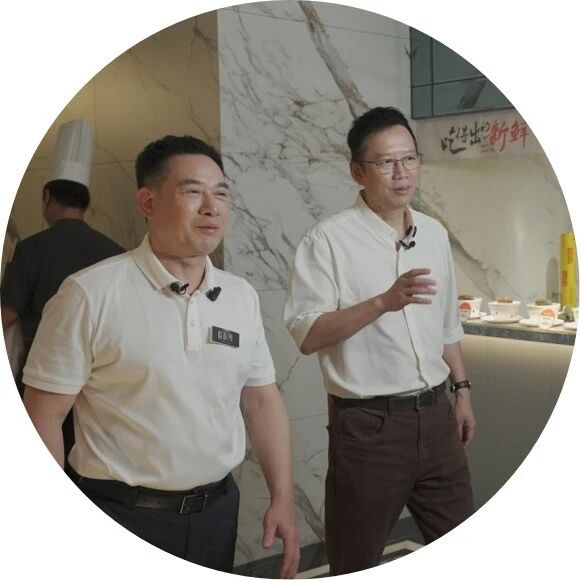
吴晓波对话徐国华:为什么内陆城市能诞生海鲜酒楼榜首品牌?
吴晓波频道· 2025-09-05 00:30
Core Viewpoint - The article discusses the success story of Xu Ji Seafood, a high-end seafood restaurant chain based in Changsha, Hunan, which has expanded significantly despite being located inland, far from the sea. The founder, Xu Guohua, emphasizes the importance of fresh ingredients, integrity, and adapting to market changes as key factors in the restaurant's growth and resilience during challenging times [4][6][34]. Group 1: Company Overview - Xu Ji Seafood has been operating for 24 years and has opened over 60 direct stores nationwide, including in major cities like Shenzhen and Shanghai [4]. - The restaurant is known for its fresh seafood, with strict policies ensuring that ingredients are purchased and sold on the same day, maintaining quality and freshness [5][18]. - Xu Guohua started the business with a loan of 400 yuan, initially supplying seafood to hotels before establishing the restaurant [6][12]. Group 2: Business Philosophy - The core philosophy of Xu Ji Seafood revolves around the principles of "fresh, authentic, and seasonal" ingredients, which are crucial for delivering quality dishes [5][18]. - Xu Guohua highlights the importance of integrity in business, stating that building trust with suppliers was essential for his success [12][14]. - The restaurant aims to provide "good seafood" that is fresh, tasty, healthy, and affordable, ensuring a high cost-performance ratio for customers [19][20]. Group 3: Market Adaptation and Strategy - Xu Ji Seafood has successfully navigated market changes by closely observing consumer needs and differentiating its products [22]. - The company has adopted a strategy of "buying and selling on the same day," which allows for better price control and quality assurance [18][20]. - During the pandemic, despite facing significant losses, the company managed to double its store count by focusing on core business principles and adapting to new market conditions [34]. Group 4: Long-term Vision - Xu Guohua emphasizes the importance of long-term commitment to a single mission, which is to excel in the seafood dining experience [33]. - The company is exploring new market segments, such as launching a sub-brand "Ocean Little Guest" to tap into the lower-tier market and enhance its offerings for family gatherings and celebrations [34]. - The article concludes that in challenging times, businesses must return to their fundamentals, focusing on product quality and customer satisfaction [34].
新手股民,被“技术性调整”跌懵了
吴晓波频道· 2025-09-04 00:29
点击上图▲立即收听 " 从 4 月至今, A 股保持慢牛上涨的走势,并未出现像样的 ' 换手 ' ,这意味着市场积累了大量获利盘。一旦市场出现风吹草动,都可能触发获利盘的卖出需求。 " 文 / 巴九灵(微信公众号:吴晓波频道) 很多股民昨天都哭了两次,早上看阅兵哭了一次,下午看账户又哭了一次。 经过连续两 日的调整, A 股终于还是"跌上了"热搜。 9 月 3 日当天,上证指数跌 1.16% , 3800 点整数关口一度失守,深成指下跌 0.65% , 比 昨天缩量 5109 亿元,两市超过 4500 只个股下跌。 对于经验丰富的老股民来说,这种级别的下跌只能算是 "技术性调整",但是对于那些才刚刚进入 A 股的萌新投资者来说,连续下跌,无疑是对他 们来 A 股"捡钱"的梦想,给出了一击重拳。 最新数据显示, 8 月份上交所新开户数 265.03 万户,比 7 月份增长超 30% ,同比大增 165% 。 但这数百万新股民才刚刚进入市场,感受了没几天牛市的氛围,就迎来了在他们看来 "过山车"式的调整。 持续上涨的行情会无限放大人们的贪婪 , 而 剧烈的波动则时刻考验着 投资者的操作 纪律 。 如何应对 "牛市 ...

宇树科技拟提交上市申请,新茶饮上半年赚超50亿 | 财经日日评
吴晓波频道· 2025-09-04 00:29
Group 1: Manufacturing Sector Insights - The US ISM Manufacturing Index for August is reported at 48.7, indicating contraction for six consecutive months, with new orders index rising to 51.4, marking its first expansion since early this year [2][3] - Markit Manufacturing PMI shows a stronger performance, suggesting robust expansion in the manufacturing sector, driven by increased sales and a recovery in domestic demand [3] - The cautious attitude towards production expansion and low hiring intentions in the manufacturing sector may exert pressure on the US job market [2] Group 2: Gold Market Dynamics - Non-US central banks' gold holdings have surpassed US Treasury holdings for the first time in 30 years, with gold prices reaching historical highs [4][5] - The World Gold Council anticipates an increase in global central bank gold reserves over the next 12 months, with Morgan Stanley setting a year-end gold price target of $3,800 per ounce [4] - The shift in central banks' asset allocation towards gold reflects concerns over potential financial conflicts and a diversification away from US dollar assets [5] Group 3: Robotics Industry Developments - Yushu Technology plans to submit its IPO application between October and December 2025, with a focus on transparency in operations as it prepares for public listing [6] - The company has expanded its product line from quadruped robots to humanoid robots, aiming to capture new market opportunities [6] - Despite being a leading player in the robotics sector, Yushu Technology faces challenges in commercializing its products, with a significant portion of sales coming from research procurement rather than industrial applications [7] Group 4: State-Owned Enterprises Collaboration - China National Petroleum Corporation (CNPC) plans to transfer 5.41 billion shares to China Mobile, enhancing strategic cooperation and optimizing shareholding structure [8][9] - The share transfer is seen as a common practice in state-owned enterprise reform, with potential for improved collaboration in exploration and sales through technology integration [8] - The government encourages state-owned enterprises to adjust resource allocation and enhance competitiveness, indicating a shift towards more flexible capital management [9] Group 5: New Tea Beverage Market Performance - Six new tea beverage companies reported a total revenue exceeding 30 billion yuan and a net profit of over 5 billion yuan in the first half of 2025, with significant growth in most companies [10][11] - The competitive landscape is shifting as brands focus on cost control and market expansion, particularly in lower-tier markets, while some high-end brands struggle with profitability [10] - The overall market is expected to face intensified competition as external subsidies decline and consumer preferences shift towards value [11] Group 6: Stock Market Trends - The number of new A-share accounts opened in August increased by approximately 165% year-on-year, reflecting growing investor interest amid a rising market [14][15] - The Shanghai Composite Index rose by 7.97% in August, marking its fourth consecutive month of gains, driven by increased trading volume [14] - The trend of "deposit migration" suggests that investors are reallocating funds from savings to the stock market due to lower interest rates and better market performance [15]