美股研究社

Search documents
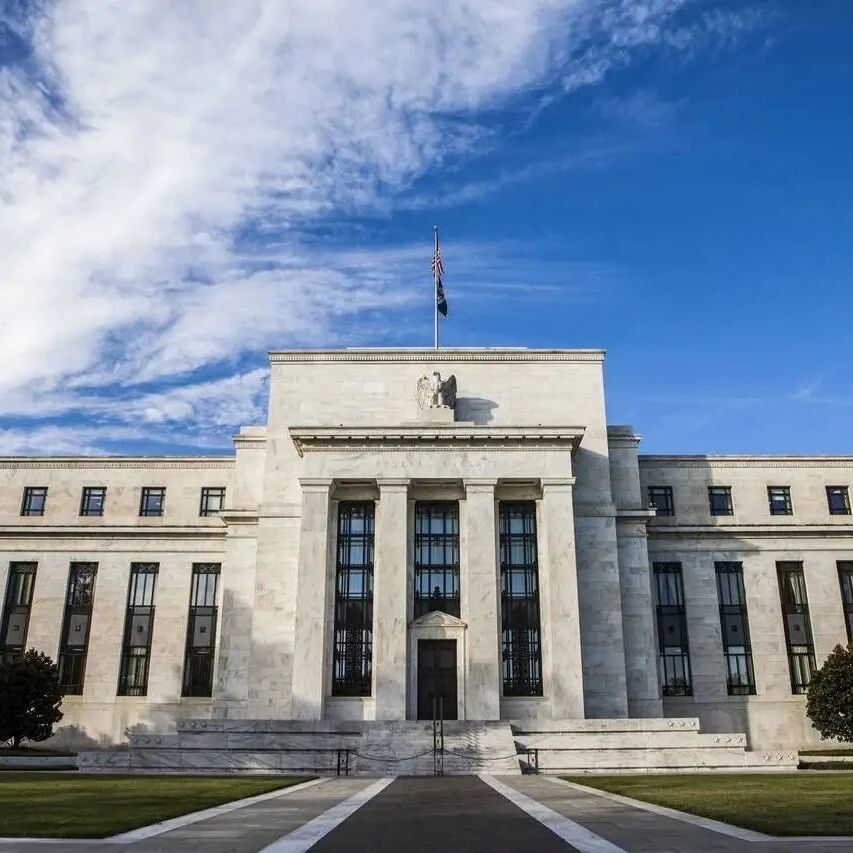
美联储褐皮书:美国经济冷暖并存,消费市场“K型分化”加剧
美股研究社· 2025-11-28 11:06
Core Viewpoint - The latest Federal Reserve Beige Book indicates that U.S. economic activity has shown little change in recent weeks, with overall consumer spending declining except among high-income groups [5][6]. Economic Activity - Economic outlook remains largely unchanged, with some contacts noting an increased risk of economic slowdown in the coming months, while the manufacturing sector shows some optimism [6]. - Employment levels have slightly decreased, and prices have risen moderately [5]. Consumer Spending - High-income consumers are maintaining spending levels, but middle- and low-income households are tightening their budgets [6]. - Retailers report that the government shutdown negatively impacted consumer spending, with increased demand for food assistance due to disruptions in the Supplemental Nutrition Assistance Program (SNAP) [11]. Employment Trends - Companies are increasingly opting for hiring freezes and natural attrition instead of direct layoffs to manage labor costs [8]. - Wage growth has generally aligned with the Federal Reserve's inflation targets, but sectors like manufacturing, construction, and healthcare still face moderate wage pressures [10]. Price Pressures - Cost pressures are expected to continue rising, with mixed attitudes towards recent price increases among businesses [9]. - Tariffs remain a significant concern for industries, particularly manufacturing and retail, affecting profit margins and financial stability [8]. Regional Economic Insights - Boston: Stable restaurant menu prices, but expected beef price increases may lead to future adjustments [12]. - New York: Strong demand for talent in finance and technology, especially those with AI skills [13]. - Philadelphia: Consumer-facing businesses report difficulties in raising prices as customers seek discounts [13]. - Atlanta: Most companies have exhausted cost-cutting measures and plan to raise prices on in-demand products [15]. - San Francisco: Low-income groups are cutting non-essential spending, while high-income consumers' demand remains stable [20].

AI日报丨阿里巴巴发布夸克AI眼镜,将内置千问助手,苹果反馈表单泄漏,Apple Intelligence或将马上登陆中国市场
美股研究社· 2025-11-28 11:06
Group 1 - The rapid development of artificial intelligence (AI) technology is creating widespread opportunities in various sectors [3] - Alibaba's Qianwen application has been natively embedded in the Quark browser, providing AI assistance to over 100 million users [5] - Alibaba has launched the Quark AI glasses, which integrate the Qianwen assistant and connect with various Alibaba ecosystem services [6] Group 2 - Beijing plans to build a large-scale data center system in the dawn-dusk orbit, aiming to move significant AI computing power into space [7][9] - Morgan Stanley reports that Google's Tensor Processing Units (TPUs) may be sold externally, potentially transforming its cost center into a profit center and challenging Nvidia's hardware dominance [15] - The Chinese AI industry is experiencing a clear development trend, with expectations for application innovation and popularization in 2026 [10]



末日蓝线飙升46基点:华尔街狂欢、狼狗已噬喉,你的钱包可能血本无归!
美股研究社· 2025-11-28 11:06
Core Viewpoint - The article discusses historical market crashes and the strategies employed by various investors during these crises, highlighting the importance of timing, market sentiment, and the psychological aspects of trading. Group 1: Historical Market Crashes - The article references the 1929 market crash, where Joseph P. Kennedy sold all his stocks and only held a long position in a Cuban sugar company, indicating a strategic exit from the market when sentiment was overly bullish [6][8]. - Jesse Livermore, known as the "King of Speculation," made significant profits by shorting the market before the 1929 crash, earning $1 billion (equivalent to $20 billion today) [11][12]. - The 1987 crash is highlighted with the story of Mark Cook, who turned a $30,000 investment into $11 million by holding deep out-of-the-money puts on the S&P 500 [15][17]. Group 2: Investor Strategies and Lessons - Bill Lawton, CEO of Westgate Global Group, profited from the 1987 crash by betting on volatility, emphasizing that calmness is crucial during crises [33][34]. - John Paulson made a significant profit during the 2008 financial crisis by purchasing credit default swaps (CDS) against subprime mortgages, earning $10 billion from a $22 million investment [50][52]. - The article mentions the importance of being contrarian, as seen in the actions of various investors who thrived during market downturns by maintaining a clear strategy and not succumbing to panic [12][34][50]. Group 3: Current Market Indicators - The article notes that the cost of options to protect against a significant market downturn has risen to 46 basis points, the highest level since the sell-off in April [66]. - It suggests that investors are increasingly willing to pay for insurance against a potential 55% drop in the S&P 500 over the next five years, indicating heightened market anxiety [66][69].

亚马逊 2025 年表现疲软,是为2026年布局铺路
美股研究社· 2025-11-28 11:06
Core Viewpoint - Amazon's recent performance has lagged behind its peers, presenting a potential investment opportunity as analysts believe its fundamentals are strengthening, particularly in artificial intelligence [1][2]. Financial Performance - Amazon's Q3 revenue reached $180.17 billion, a year-over-year increase of 14.55%, with adjusted diluted EPS of $1.95, up 36.36%, exceeding market expectations [4]. - The company's EBIT could have reached $21 billion if not for FTC-related expenses and severance costs, with AWS's backlog at $200 billion and annual recurring revenue around $132 billion [4]. Artificial Intelligence Developments - Amazon is enhancing its AI capabilities with infrastructure like Trainium chips and partnerships with Nvidia, aiming to reduce reliance on third-party GPUs [6][7]. - The upcoming AWS re:Invent conference is expected to showcase significant updates, including the Trainium3 chip, which is anticipated to double the computing power of its predecessor [6][7]. Market Position and Strategy - Amazon's investment in AI and cloud services for government clients, with a planned $50 billion investment, could significantly alter its market narrative and valuation [8]. - The company is leveraging AI to improve operational efficiency, with reported savings of 700,000 hours of labor, equating to the annual workload of 335 developers [9]. Valuation and Future Outlook - Analysts project a target price of approximately $270.48 per share based on a forward P/E ratio of 30, indicating an upside potential of over 18% in the next 12 months [10]. - Amazon's return on invested capital (ROIC) has improved from about 3% in 2016 to 16.5%, supporting the stability of its current valuation [9]. Conclusion - Despite a forward P/E ratio exceeding 30 appearing risky, analysts believe Amazon's growth prospects and competitive advantages justify this premium, especially if it successfully expands into new markets like government services [14].


暴跌40%!软银成为“OpenAI链”风向标
美股研究社· 2025-11-27 14:24
Core Viewpoint - The stock price of SoftBank Group has become a key indicator of market confidence in the non-public company OpenAI, amid rising concerns over overvaluation in the AI sector and changes in industry competition dynamics [2][4]. Group 1: SoftBank's Stock Performance - Since the end of October, SoftBank's stock has plummeted approximately 40%, resulting in a market value loss of over 16 trillion yen (about 102 billion USD) [4]. - The recent sell-off is primarily driven by market anxiety regarding competitive pressures faced by OpenAI, especially following the release of Alphabet's highly praised Gemini 3.0 model [4][11]. - The deep exposure to the AI sector previously brought significant gains to SoftBank, with unrealized gains of 14.6 billion USD from its investment in OpenAI contributing to a surprising net profit of 2.5 trillion yen in the second fiscal quarter [6]. Group 2: Investment Strategy and Risks - SoftBank's founder Masayoshi Son is preparing to double down on investments in OpenAI and its supporting infrastructure, aiming to position SoftBank as a core player in an OpenAI-led AI ecosystem [7][8]. - The market's sharp reaction indicates that investors are reassessing the risks and returns of this high-stakes gamble [8]. - Analysts highlight that SoftBank's stock price decline reflects its sensitivity to OpenAI's valuation rather than a general downturn in the AI market [11]. Group 3: AI Chip and Infrastructure Investments - Masayoshi Son's ambitions extend beyond being a financial investor in OpenAI; he is actively building a comprehensive AI ecosystem through acquisitions and investments [13]. - SoftBank has sold shares in Nvidia and Oracle to raise funds for acquiring AI chip design companies, holding nearly 90% of Arm and recently acquiring Ampere Computing LLC for 6.5 billion USD [13]. - Challenges exist in this chip strategy, particularly with the growing penetration of open-source architecture RISC-V in AI chip design [13]. Group 4: Market Dynamics and Investment Logic - The volatility in SoftBank's stock reflects a shift in AI investment logic, moving away from indiscriminate buying of AI-related stocks to a more selective approach [15]. - Reports indicate a market differentiation, with companies like Meta Platforms Inc. planning to use Google's Gemini AI chips, raising concerns for Nvidia's business and affecting its Japanese suppliers [15]. - Conversely, some companies are benefiting from this shift, such as Toppan Holdings Inc., which saw an 11% stock increase due to its partnership with Broadcom in AI chip design [15].


财务回暖,市值冰封:路特斯的豪华电动梦只值8.3亿美金市值?
美股研究社· 2025-11-27 14:24
Core Viewpoint - The luxury electric vehicle market is experiencing a downturn, characterized by weak demand and intensified competition, as evidenced by Tesla's price cuts and Porsche's inventory issues [1][2]. Group 1: Market Overview - The luxury car market in China priced above 400,000 yuan is projected to decline by 9.7% in the first three quarters of 2025 [2]. - Lotus, a luxury sports car brand backed by Geely, is highlighted as a key player amidst the ongoing market transformation [2]. Group 2: Financial Performance - Lotus reported a revenue of $137 million in Q3, with a net loss reduced by 68% to $65 million and a gross margin increase to 8% [4][6]. - The company’s nine-month cumulative revenue reached $356 million, indicating a significant improvement in operational efficiency [4]. Group 3: Cost Management and Product Strategy - Lotus has implemented strict financial discipline, optimizing inventory and reducing operational costs, leading to a 70% reduction in Adjusted EBITDA [6]. - The company secured $300 million in convertible bond financing and 1.6 billion yuan in credit support from Geely, focusing on R&D and brand building rather than capacity expansion [6]. Group 4: Product Mix and Market Position - In the first nine months, Lotus delivered 4,612 vehicles, with a notable increase in high-margin models following the launch of a revamped sports car [6]. - The ELETRE supercar topped the market in the segment above 400,000 yuan, contributing to an 11% growth for Lotus despite a 9.7% decline in the overall luxury car market [6]. Group 5: Competitive Landscape - Compared to competitors like NIO and Li Auto, which maintain gross margins of 15%-20%, Lotus's 8% gross margin appears underdeveloped [7]. - The company faces ongoing challenges with net losses and must balance cost-cutting with revenue generation to avoid stagnation [7]. Group 6: Market Sentiment and Future Challenges - Despite operational improvements, Lotus's market capitalization has plummeted to $830 million, down 88% from its peak in early 2024, reflecting investor skepticism [8]. - Concerns about the overall luxury electric vehicle market and uncertainties regarding Lotus's transformation strategy contribute to this negative sentiment [8]. Group 7: Strategic Initiatives - Lotus is exploring new business avenues, including a partnership for Robotaxi services in Saudi Arabia, aiming to commercialize smart driving technology [9]. - The company is also enhancing its brand through motorsport marketing and participation in international exhibitions to showcase its electric and intelligent transformation [9][10]. Group 8: Brand Evolution - Lotus is attempting to redefine its brand image from being solely associated with aesthetics and performance to incorporating luxury, electric, and intelligent elements [10]. - The company faces multiple paradoxes, such as balancing hybrid technology with its luxury electric identity and managing the long-term feasibility of new business ventures [10].

AI日报丨阿里巴巴发布夸克AI眼镜,时隔14年,苹果iPhone的出货量将首次超过三星
美股研究社· 2025-11-27 14:24
Group 1 - The rapid development of artificial intelligence technology is creating widespread opportunities in various sectors [3] - Alibaba has launched the Quark AI glasses, which integrate the Qianwen assistant and connect with multiple core scenarios in Alibaba's ecosystem [5] - The AI company Wuwen Xinqun has completed nearly 500 million yuan in Series A+ financing, with participation from various venture capital firms [6] Group 2 - The South Korean government has established an AI working group with major companies like Samsung and Hyundai to plan the deployment of 260,000 GPUs supplied by Nvidia [7][8] - Naver and Dunamu plan to invest 10 trillion won (approximately 6.8 billion USD) over the next five years to create an AI and Web3 ecosystem [9] Group 3 - Apple is projected to ship approximately 243 million iPhones in 2025, surpassing Samsung's expected 235 million units, marking the first time in 14 years that Apple's shipments exceed Samsung's [11] - Apple is challenging India's new antitrust penalty law, facing a potential fine of up to 38 billion USD [12] Group 4 - Wedbush has included Nvidia and Microsoft among its top ten tech stocks for the year-end, emphasizing that the current AI market is not a bubble [13] - Bank of America has reiterated its buy ratings for Nvidia, AMD, and Broadcom, while Meta is considering using Google's tensor processing units to supplement its existing Nvidia GPU supply [15]




IBM财报解读:估值合理但上涨潜力有限
美股研究社· 2025-11-27 14:24
Core Viewpoint - IBM's valuation is significantly lower compared to large tech companies, which reassures analysts. The company remains a meaningful allocation in the overall IT portfolio, not for valuation expansion, but as a defensive buffer that provides dividends while analysts position themselves in SaaS and large tech stocks [1]. Financial Performance - IBM has demonstrated strong execution in its AI, hybrid cloud, and IBM Z infrastructure business lines, achieving stable growth in revenue, profit margins, and free cash flow. However, since April, the stock has risen significantly, leading analysts to question whether there are any new changes not yet priced in [2]. - The core software business growth is maintaining a double-digit level, albeit slightly below the fourth quarter of 2024 [3]. - The Red Hat business continues to grow, but the growth rate has slightly slowed from 16%-17% to approximately 14% [4]. - Consulting business revenue has stabilized, shifting from a year-over-year decline of 2% to a growth of 2% [6]. - Infrastructure support business revenue is flat or slightly increased, contributing stability to total revenue and EBITDA, but without significant acceleration in trends [7]. Business Segments - The automation business has made significant progress, with growth accelerating from about 15% to approximately 24%, indicating potential for substantial margin improvement [7]. - Data and AI business growth has also increased moderately, from 4%-5% in Q4 2024 to 8% currently [7]. - The hybrid infrastructure business has rebounded significantly, with IBM Z business reversing from a 20% year-over-year decline to a 61% growth in Q3 2025 [7]. - The narrative around automation, AI, and IBM Z reflects a bullish sentiment in the market, with most optimistic expectations being reasonable [7]. Revenue and EBITDA Insights - The overall revenue growth guidance for 2025 exceeds 5%, suggesting a year-over-year growth of about 3% in Q4, which is a slowdown compared to the nearly double-digit growth in the first two quarters [9]. - EBITDA growth is positive, with a year-over-year increase of approximately 21% in Q3 2025, compared to 7%-8% in Q3 2024 [10]. - Since April, IBM's valuation has increased by 20%-25%, from about 14.5 times to approximately 17.5 times forward EBITDA [11]. Investment Logic - The current investment logic for IBM remains consistent with that of April, indicating a reasonable valuation. The potential uplift from AI business is promising, but the best-case scenario for EBITDA improvement seems to be already priced in [17]. - The AI business focuses on enterprise-level solutions, integrating AI into software, consulting, and infrastructure to drive incremental growth and margin improvement, but faces competition from large tech companies and specialized AI providers [17]. - The dividend yield and defensive attributes of IBM make it a quality stock to hold, but analysts do not recommend adding new funds given the missed opportunity from April to October [17].


AT&T财报解读:现金流与资本配置足以支撑估值
美股研究社· 2025-11-27 14:24
Core Viewpoint - AT&T presents an attractive buying opportunity following its Q3 2025 earnings report, driven by strong cash flow guidance and an updated capital allocation plan that enhances flexibility [1]. Cash Flow and Dividend Insights - The current free cash flow (FCF) guidance supports existing dividends and future growth, with Q3 2025 FCF at $4.9 billion, up from $4.6 billion year-over-year. The full-year FCF guidance is set at $16 billion to $16.5 billion, significantly reducing capital return plan risks and indicating potential dividend increases [2][5]. - The estimated annual dividend commitment is approximately $7.9 billion, based on a quarterly dividend of $0.2775 per share and the current share count [4]. Capital Allocation and Debt Management - The company reduced net debt by $6.9 billion year-over-year, from $125.8 billion to $118.8 billion, enhancing its balance sheet and providing greater flexibility for investments and shareholder returns. In Q3 2025, AT&T invested $5.3 billion, focusing on fiber and 5G network development, while returning $3.5 billion to shareholders through dividends and stock buybacks [9][12]. - The stock buyback plan for FY 2025 is set at $4 billion, with a notable buyback yield of 2.58%, which is rare in the telecom sector [12][14]. Dividend Payout Ratios and Historical Context - The current dividend payout ratio is 41.1%, significantly below the historical average of 58.2% since 2016 and at a 10-year low [7]. - The long-term outlook for dividends appears optimistic, with the potential for a return to dividend growth likely to improve investor sentiment and boost valuations [18]. Valuation Metrics - The stock is currently priced attractively, with a forward P/E ratio of 12.5. The PEGY ratio, which accounts for dividend yield and growth, is approximately 1.08, indicating a favorable valuation compared to historical standards [16].


AI日报丨英伟达反驳TPU担忧,称其GPU仍“领先一代”,新AI模型可精准锁定人体致病突变
美股研究社· 2025-11-26 11:54
Group 1 - Alibaba is focusing on both AI to B and AI to C strategies, aiming to make Alibaba Cloud a leading full-stack AI service provider and develop AI applications for end-users [5] - Nvidia claims its GPU technology is a generation ahead of Google's AI chips, emphasizing its flexibility and capability to run all AI models across various computing scenarios [6][9] - A new AI model named popEVE has been developed by researchers from Harvard Medical School and the Barcelona Genomics Center, which can accurately identify disease-causing mutations in human proteins, potentially transforming genetic disease diagnostics [7] Group 2 - Apple is projected to surpass Samsung to become the world's largest smartphone manufacturer again, driven by strong sales of the new iPhone series and a significant upgrade cycle among consumers [9] - Meta is in negotiations with Google for a multi-billion dollar AI chip deal, which could significantly reduce its data center costs and allow for more investment in product innovation and user growth [10]