
美股IPO

Search documents
iPhone 17首发无缘国行AI,全新Air机型今年恐缺席中国市场
美股IPO· 2025-09-08 11:13
据知名科技记者古尔曼爆料,Apple Intelligence最早也要到今年年底才能上线,意味着该功能将无缘随iPhone 17在中国市场首发;全新轻薄机 型"iPhone 17 Air"预计将完全取消实体SIM卡槽、全面转向eSIM,这将使其在中国大陆的销售变得困难",不排除"受到限制或推迟"的可能。 据知名科技记者马克·古尔曼(Mark Gurman)的最新报道,苹果的AI套件"Apple Intelligence"将无缘随iPhone 17在中国市场首发。尽管苹果仍在积极 推进其在华落地, 但目前预计的上线时间最早也要到今年年底,这意味着新机发售初期将缺少一个关键的核心卖点。 与此同时,预计将在9月10日发布会上成为亮点的全新轻薄机型"iPhone 17 Air", 可能因其仅支持eSIM卡的设计而在中国市场遭遇准入难题。 古尔曼 称,这一硬件规格可能导致该机型在中国的发布"受到限制或推迟",直到苹果与运营商找到解决方案。 根据计划, 苹果原本希望在年中通过iOS 18.6系统更新将Apple Intelligence引入中国,但这一进程被一再推迟。 据了解,目前,苹果在技术层面(如iOS 18.5系统 ...


高盛:美股涨势将扩展至小盘股
美股IPO· 2025-09-08 11:13
然而,这种优势可能不会持久。Kostin 同时指出,他预计小盘股的优异表现在未来12个月内不会持续。这表明,虽然市场广度有望在短期内改善,但 投资者对于长期布局仍需保持审慎。 策略师David Kostin认为,迄今为止的美股涨势由少数股票驱动,市场广度狭窄,这为小盘股等板块的"追赶式"上涨留下了空间。美联储即将到来的降 息周期和企业盈利回升,将增加涨势从少数龙头股向更广泛市场扩散的可能性。 以 David Kostin 为首的策略师团队近日指出,迄今为止的美股涨势由少数股票驱动,市场广度狭窄,这为小盘股等板块的"追赶式"上涨留下了空间。他 们认为,美联储即将到来的降息周期和企业盈利回升,将增加涨势从少数龙头股向更广泛市场扩散的可能性。 高盛重申了其标普500指数的年底目标位为6600点。这一看涨观点也得到了华尔街同行的呼应,摩根士丹利的 Michael Wilson 同样预计美股将进一步 上涨,并指出美国经济正向"早期周期"阶段过渡,这将支持企业盈利实现"持久而广泛"的复苏。 尽管市场情绪乐观,但上周弱于预期的非农就业报告也引发了部分投资者的担忧。有观点认为,股市估值已"消化了完美预期",而疲软的经济数据给 ...

高盛:应纳入商品“分散化”投资组合,“最坚定推荐”黄金
美股IPO· 2025-09-07 03:29
Core Viewpoint - Goldman Sachs highlights the rising risk of institutional credibility in the U.S. and increased concentration in commodity supply, creating "tail risks" that investors should consider when diversifying their portfolios with commodities, particularly gold, which is recommended as the "highest-conviction long" investment [1][3]. Commodity Diversification Value - Since spring, the market has shifted from tariff uncertainty to tariff realities, stabilizing economic activity indicators and reducing the probability of a U.S. recession. Despite this, Goldman Sachs believes that the appeal of commodities as a diversification tool has increased due to slowing employment growth and high economic downturn risks [4]. Commodity Index Outlook - Goldman Sachs' baseline scenario indicates that the commodity index is expected to yield only moderate positive returns over the next 12 months [5]. Gold and Other Commodities Outlook - The firm maintains a bullish outlook on gold (due to strong central bank purchases), copper (driven by electricity, infrastructure, and defense demand), and U.S. natural gas (liquefied natural gas exports), while expecting current oversupply in the oil market to worsen [6]. Federal Reserve Independence Risk - Goldman Sachs emphasizes the risk of diminished Federal Reserve independence, which could lead to rising inflation, falling long-term bond prices, declining stock prices, and a weakened dollar reserve currency status. In contrast, gold remains a reliable store of value not dependent on institutional trust [7]. Commodity Supply Concentration Risks - Increased concentration in commodity supply poses significant risks, with key commodities being sourced from geopolitically sensitive regions. This situation has led to frequent supply disruptions, heightened price volatility, and rising imported inflation [8]. Structural "3D Trends" Supporting Long-term Commodity Bull Market - Three structural trends (De-risking energy, Defense spending, Dollar diversification) are systematically tightening commodity market supply and demand [10]. 1. De-risking Energy - Global energy security policies are driving a surge in grid investments, significantly increasing copper demand. Goldman Sachs predicts that by 2030, grid-related investments will contribute to 60% of global copper demand growth, with copper prices expected to reach $10,750 per ton by 2027 [11]. 2. Increased Defense Spending - Military spending in Europe is projected to rise from 1.9% of GDP in 2024 to 2.7% in 2027, which will boost demand for industrial metals like copper, nickel, and steel, providing substantial support for metal prices [12]. 3. Central Bank "De-dollarization" - Since the freezing of Russian dollar assets in 2022, global central bank gold purchases have surged fivefold, driving a 94% increase in gold prices since then. Emerging Asian countries are expected to continue significant gold purchases for several years, creating a long-term institutional demand for gold [13].

高盛市场调研:进入9月,美股多头继续押AI、空头担心增长和集中度、所有人都看多黄金
美股IPO· 2025-09-07 03:29
Core Viewpoint - Institutional investors in the US stock market are experiencing significant divisions, with optimists betting on AI and pessimists concerned about economic slowdown and market concentration risks. Regardless of their stance, there is a strong consensus on bullish sentiment towards gold, with a record high in bullish intentions and a long-to-short ratio close to 8:1. Additionally, interest in the Chinese market remains strong, with over 60% of respondents planning to maintain or increase their positions in Chinese stocks [1][3][6]. Group 1: Market Sentiment - The sentiment among global institutional investors is notably split, with a recent Goldman Sachs survey indicating that the bullish camp continues to pursue gains in AI-driven tech stocks, while the bearish camp is increasingly wary of economic growth slowdown and market concentration risks [3][4]. - Over half of the respondents plan to maintain or increase their long positions in the "Magnificent 7" tech stocks, although there is a slight decline in new capital inflows into this trade, indicating some changes beneath the surface [5]. Group 2: Gold Investment - Gold has emerged as the most uncontroversial investment choice, with the ratio of bullish to bearish investors reaching nearly 8:1, marking gold as the most favored long trade in Goldman Sachs' survey for the first time. This unprecedented interest in gold surpasses that of developed market equities [6]. - Both bullish investors anticipating a Fed rate cut and bearish investors seeking safe-haven assets view gold as an ideal allocation, supported by demand from central banks and potential private investors [6]. Group 3: Chinese Market Interest - Investor interest in the Chinese market is on the rise, with 62% of respondents planning to maintain or increase their positions in Chinese stocks, reflecting heightened attractiveness following a strong summer rebound [7]. - When asked about the performance comparison between the S&P 500 and the MSCI China, opinions were nearly evenly split, indicating that interest in the Chinese market is now on par with that of the US market [7].

贝森特要“适度长期利率”,美银Hartnett:重回“尼克松时代”,做多黄金、数字币、美债,做空美元!
美股IPO· 2025-09-07 03:29
Core Viewpoint - The article discusses the potential for a return to a "Nixon-era" economic environment in the U.S., driven by political pressure on the Federal Reserve to adopt yield curve control (YCC) as a monetary policy tool, which could create opportunities for gold, digital currencies, and bonds while negatively impacting the dollar [1][2][5]. Group 1: Political Pressure and Historical Parallels - U.S. Treasury Secretary Yellen has publicly urged the Federal Reserve to return to "moderate long-term interest rates," criticizing unconventional policies for exacerbating inequality and threatening the Fed's independence [2][4]. - Hartnett draws parallels between the current situation and the early 1970s Nixon administration, where political pressure led to significant monetary easing [5][7]. - The market perceives Yellen's comments as a signal for the Fed to take a more active role in managing long-term interest rates, indicating a potential major shift in U.S. monetary policy [4][6]. Group 2: Yield Curve Control (YCC) as a Policy Tool - Hartnett predicts that rising global bond yields will force policymakers to intervene, potentially leading to the implementation of YCC to control government financing costs [8][9]. - The current environment shows that risk assets are reacting mildly to rising yields, as the market anticipates central bank intervention [8]. Group 3: Investment Strategies - Hartnett recommends a clear trading strategy: go long on bonds, gold, and digital currencies, while shorting the dollar until the U.S. commits to implementing YCC [10]. - The first step involves going long on bonds, as YCC would artificially lower bond yields, creating significant upside potential for bond prices [11]. - The second step is to go long on gold and cryptocurrencies, which serve as hedges against currency devaluation resulting from YCC [12]. - The third step is to short the dollar, as the announcement of unlimited money printing to lower domestic rates would undermine the dollar's international value [13]. Group 4: Long-term Risks - Hartnett warns that the current favorable trading window may lead to significant long-term risks, similar to the inflation and market crash that followed the Nixon-era monetary policies [15].

“新美联储通讯社”:非农报告几乎确定9月降息,但此后的降息争论更复杂
美股IPO· 2025-09-07 00:17
Core Viewpoint - The August employment report indicates a significant slowdown in job growth since the beginning of the year, leading to expectations that the Federal Reserve will lower interest rates by 0.25 percentage points in the upcoming meeting, complicating future discussions on rate cuts [1][3]. Employment Data Summary - In August, U.S. employers added 22,000 jobs, with the private sector contributing 38,000 jobs, while the unemployment rate rose to 4.3%, the highest level since 2021 [5]. - The June employment data was revised downwards, showing a decrease of 13,000 jobs, while July's data was revised upwards from 73,000 to 79,000 jobs. The net job loss in the latest report was 21,000 [6]. - Over the past three months, the average monthly job growth in the private sector was 29,000, marking the lowest increase since the pandemic began. The average job growth over the past six months has slowed to 67,000 [6]. Labor Market Insights - The June job growth marked the end of a 53-month streak of monthly non-farm employment growth, the second-longest on record, significantly shorter than the 113-month streak that ended with the COVID-19 pandemic [9]. - The number of permanent job losses slightly increased in August, but the rate has remained stable this year, at just above 1.1% of the labor force [10]. Wage Growth Analysis - The comprehensive weekly wage index, a good monthly indicator of nominal income growth, rose by 4.4% year-over-year in August, marking a new low for this cycle. The three-month annualized growth rate was revised down from 4.6% to 2.4% [13]. Unemployment Rate Projections - The unemployment rate in August, calculated without rounding, increased from 4.248% in July to 4.324%. Federal Reserve officials previously projected that the unemployment rate would rise to 4.5% in the fourth quarter [15].
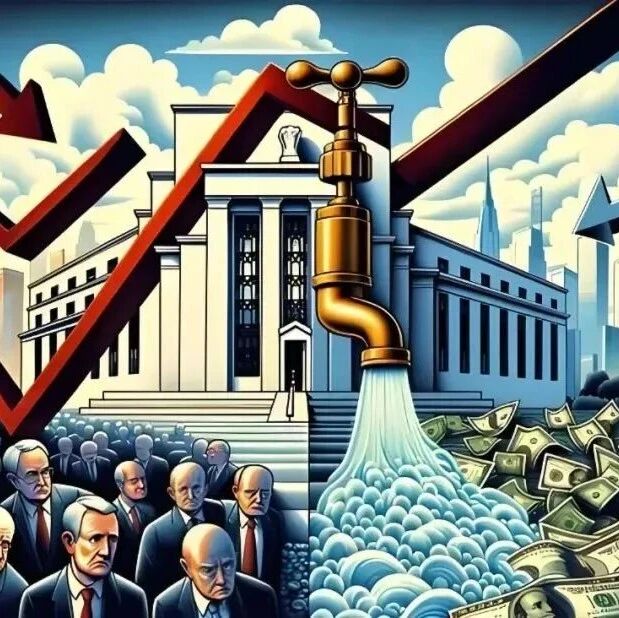
贝森特“敲打”美联储:要有“人民性”,QE仅限紧急时刻,首次点名适度长期利率 (附本森特文章全文)
美股IPO· 2025-09-07 00:17
Core Viewpoint - The independence of the Federal Reserve is derived from public trust, and it must recommit to maintaining the confidence of the American people. The focus should be on three statutory responsibilities: maximum employment, price stability, and moderate long-term interest rates [1][2][14]. Group 1: Critique of Current Policies - The use of unconventional monetary policies since the 2008 financial crisis is described as a dangerous "functional gain" experiment, threatening the independence of the Federal Reserve [2][10]. - The overuse of unconventional policies and the expansion of functions have led to a concentration of wealth among asset owners, exacerbating inequality [4][12]. - The Federal Reserve's actions have created a perception that monetary policy is being used to accommodate fiscal needs, undermining its independence [7][13]. Group 2: Recommendations for the Federal Reserve - The Federal Reserve should return to its narrow statutory mission and reduce economic distortions, focusing on maximum employment, price stability, and moderate long-term interest rates [8][14]. - Unconventional policies like quantitative easing (QE) should only be used in "true emergencies" and in coordination with other government departments [2][8][14]. - A comprehensive, independent, and nonpartisan review of the Federal Reserve's monetary policy, regulation, communication, personnel, and research is necessary [8][13]. Group 3: Market Implications - The statements made by the Treasury Secretary are seen as a precursor to a significant shift in U.S. monetary policy, potentially paving the way for financial repression policies such as QE or yield curve control (YCC) [3][9]. - If such policies are implemented, they could lead to a weaker dollar and benefit commodities like gold, silver, and copper, as well as markets like A-shares and Hong Kong stocks [3][9].

硅谷扛不住了、撬动华尔街,“AI军备竞赛”开始扩散,风险也是!
美股IPO· 2025-09-07 00:17
Core Viewpoint - The article discusses how major tech companies are adopting innovative financial strategies to externalize risks and liabilities in response to unprecedented financial pressures from massive capital expenditures, particularly in AI infrastructure [2][3][4]. Group 1: Financial Strategies - Three innovative financial strategies have emerged among tech giants to externalize risks and costs: joint ventures, syndicated debt, and backstop agreements [4]. - These strategies aim to transfer part of the costs and risks off their balance sheets while maintaining financial health during aggressive expansion [3][4]. Group 2: Meta's Joint Venture - Meta initiated a financing of up to $29 billion for its "Hyperion" data center project in Louisiana, forming a joint venture with Blue Owl Capital, which invested $3 billion in equity, while $26 billion in debt was distributed through bond giant Pimco with Morgan Stanley's assistance [6]. - This structure allows Meta to repay the debt through lease payments, effectively moving the project off its balance sheet and controlling debt levels [6] Group 3: Oracle's Syndicated Debt - Oracle agreed to become a tenant for a 1.4GW data center complex being developed by Vantage Data Centers, which is one of the largest ongoing projects globally [7]. - Vantage is collaborating with a syndicate of six banks, led by JPMorgan and Mitsubishi UFJ Financial Group, to distribute $22 billion in debt for the project, thereby reducing individual risk exposure [7][8]. Group 4: Google's Backstop Agreement - Google's approach involves a complex backstop agreement, providing up to $3.2 billion in backup guarantees for a lease contract between cloud startup Fluidstack and data center owner TeraWulf, while acquiring a 14% stake in TeraWulf [9][10]. - This design allows Google to avoid counting the guarantee as a current liability, as it only triggers if Fluidstack defaults [10]. Group 5: Market Dynamics and Risks - The significant financing needs of tech giants coincide with a cash-rich credit market, with lenders willing to cover 80% to 90% of data center project costs, compared to the historical range of 65% to 80% [12]. - However, this influx of capital raises concerns about market overheating, high concentration risk due to reliance on a few creditworthy tech giants, and leverage risks, particularly highlighted by Oracle's high leverage ratio of 4.3 times [12][13][14].

博通大涨、英伟达下跌,博通能否替代英伟达?“AI芯片”牵动整个美股
美股IPO· 2025-09-06 04:55
Group 1 - Broadcom will design and produce AI chips for OpenAI starting in 2026, leading to a 9.4% increase in Broadcom's stock price [1][6] - Nvidia's stock fell by 2.70% due to concerns over increased competition in the AI chip market, negatively impacting the technology sector [1][6] - AMD's stock dropped by 6.6% and Microsoft's stock fell by 2.6% as a result of Nvidia's decline, indicating a broader impact on tech stocks [6] Group 2 - The U.S. non-farm payroll report showed only 22,000 new jobs in August, significantly below the expected 75,000, raising concerns about economic growth [4][7] - The unemployment rate slightly increased to 4.3%, and previous data was revised to show a contraction for the first time since 2020, intensifying recession fears [7] - Market reactions to potential Federal Reserve interest rate cuts are mixed, with small-cap stocks benefiting while larger economic concerns persist [7] Group 3 - There is a noticeable divergence in market performance, with cyclical companies underperforming and energy and financial sectors both declining over 1.8% [8] - Investors are increasingly seeking safe-haven assets like gold, pushing gold mining stock indices to their highest levels since 2011 [9] - Tesla's stock rose by 3.6% following a proposal for a $1 trillion compensation package for CEO Elon Musk, while Lululemon's stock plummeted by 19% due to lowered earnings outlook [9] Group 4 - The market is set to closely monitor upcoming CPI inflation data and Apple's annual iPhone launch event as key indicators for future trends [10]



盘后交易上涨均超6%!Robinhood、AppLovin被纳入标普500成分股,9月下旬生效
美股IPO· 2025-09-06 04:55
Core Viewpoint - The inclusion of Robinhood, AppLovin, and Emcor into the S&P 500 index marks a significant milestone for these companies, particularly for Robinhood, which has transformed retail trading during the pandemic [2][3]. Group 1: Company Highlights - Robinhood's stock surged over 6% in after-hours trading following the announcement, with a year-to-date increase of 156%, bringing its market capitalization to approximately $90 billion [1][2]. - AppLovin, known for its mobile app marketing platform, was valued at around $165 billion prior to its inclusion, making it the largest U.S. company not previously in the S&P 500 [1][7]. - Emcor's inclusion alongside these companies reflects a broader trend of significant players entering the S&P 500 [2]. Group 2: Financial Performance - Robinhood reported a 45% year-over-year increase in total net revenue for Q2, with net profit more than doubling, exceeding Wall Street expectations [15]. - The company's trading revenue grew by 65% year-over-year, driven by strong performance in cryptocurrency and options trading, with cryptocurrency trading volume more than doubling in July [16][17]. - AppLovin's stock has more than doubled since its low in April, indicating strong market performance [8]. Group 3: Industry Trends - The inclusion of these companies highlights the rapid growth and increasing market position of the mobile advertising technology sector, particularly for AppLovin [9]. - The financial technology sector has gained new recognition, with several tech and fintech companies joining the S&P 500 this year, including Coinbase, Datadog, and Interactive Brokers [19][20][21]. - The market had anticipated the inclusion of MicroStrategy, a major Bitcoin holder, but it did not make the cut, reflecting the challenges faced by companies primarily viewed as cryptocurrency holdings rather than operational businesses [22].
