美股IPO

Search documents
彻底不减支了?特朗普称2027年美军事预算应是1.5万亿美元,较今年暴增50%
美股IPO· 2026-01-08 04:15
Group 1 - The proposed defense budget for the U.S. in 2027 is set to increase to $1.5 trillion, a more than 50% rise from the current record budget of $901 billion [3] - Trump's assertion that tariff revenues have enabled this budget increase, claiming that without these revenues, the budget would have remained at $1 trillion [3][4] - The significant increase in defense spending comes amid Trump's increasing use of military force to achieve foreign policy objectives [3] Group 2 - The Congressional Budget Office (CBO) estimates that the U.S. budget deficit will be 5.5% of GDP this year, which many economists consider unsustainable [5] - CBO projects that while tariffs may help reduce the deficit by $2.5 trillion over the next 11 years, this revenue will fall short of the anticipated $5 trillion increase in defense spending [5][6] - Trump's pressure on defense contractors to accelerate military equipment production, stating that stock buybacks or dividend payments will not be allowed until they comply [7][8]


《经济学人》:制造业的“ChatGPT时刻”已经到来
美股IPO· 2026-01-08 04:15
Core Insights - The article discusses the transformative potential of artificial intelligence in manufacturing, marking a significant shift akin to the "ChatGPT moment" for the industry [1] Group 1: Automation and Robotics - The International Federation of Robotics (IFR) projects that by 2024, approximately 4.7 million industrial robots will be in use globally, with an average of 177 robots per 10,000 manufacturing workers [3] - The annual installation of industrial robots is expected to rise to 619,000 units in 2026, reflecting a recovery in demand for automation equipment [5] - Advances in industrial software are helping to overcome previous challenges in production automation, with generative AI technology poised to revolutionize manufacturing processes [5][11] Group 2: Market Trends and Economic Factors - The market for factory automation equipment has faced challenges due to a slowdown in manufacturing, particularly in Europe, but is expected to see growth driven by structural factors such as subsidies and tariffs encouraging domestic manufacturing [4][5] - Analysts predict that the growth rate of industrial automation equipment sales will increase from 1-2% in 2025 to 3-4% in 2026, maintaining a 6-7% growth rate over the next decade [5] Group 3: Future of Manufacturing - The concept of "smart factories" is emerging, where machines can predict demand and adjust production processes autonomously, reducing reliance on human intervention [12] - The design of factories may shift from large assembly lines to smaller, decentralized production networks, allowing for greater flexibility and reduced risk of crisis from factory failures [13] - Companies like Siemens are investing heavily in AI technologies to enhance manufacturing efficiency and adaptability, indicating a trend towards integrating AI as the "brain" of factories [12][9]

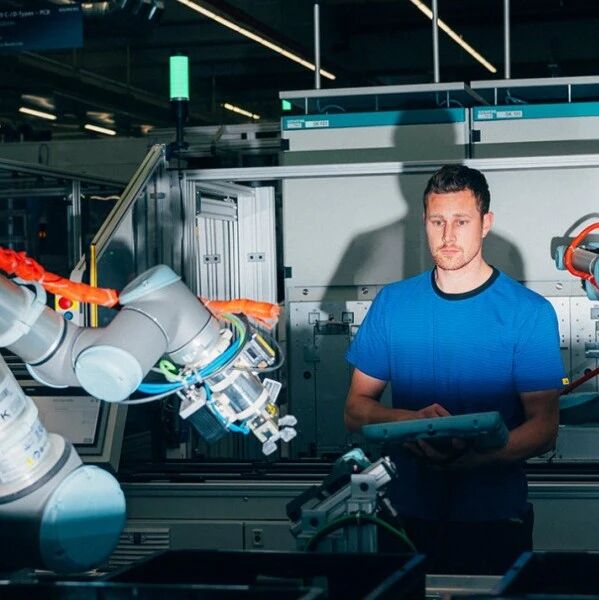
利润翻三倍!三星预计Q4利润20万亿、营收93万亿韩元双创新高,AI引爆存储“失控式”涨价
美股IPO· 2026-01-08 04:15
Core Viewpoint - Samsung Electronics is expected to report record-breaking Q4 earnings, driven by a strong demand for storage chips amid the AI boom, with operating profit projected to reach 20 trillion won (approximately 138 billion USD), a threefold increase year-on-year and a 64% increase quarter-on-quarter [1][2][4]. Financial Performance - Operating profit is anticipated to hit 20 trillion won, reflecting a year-on-year growth of 208% and a quarter-on-quarter surge of 64% [4]. - Sales are projected to reach 93 trillion won, marking a 23% increase year-on-year and an 8% increase quarter-on-quarter [4]. Market Dynamics - The current market is characterized by a significant supply shortage of standard storage chips due to a structural shift in production towards high-end chips to meet the insatiable demand from AI giants like Nvidia [5]. - The average selling price (ASP) of DRAM is expected to rise over 30% quarter-on-quarter, while NAND prices are projected to increase by about 20% [5]. Price Predictions - Wall Street analysts predict a severe supply shortage of storage chips in 2026, with server DRAM prices expected to soar by 144% year-on-year and enterprise SSD prices by 87% [7]. - Citigroup forecasts Samsung's operating profit to reach 155 trillion won in 2026, a staggering 253% increase year-on-year [7]. Competitive Positioning - Samsung is narrowing the gap in the High Bandwidth Memory (HBM) sector, having delivered advanced HBM4 samples to Nvidia for qualification testing, with expectations of mass production in the first half of the year [9]. - If successful, this could reposition Samsung as a key player in the AI supply chain, enhancing its valuation beyond just benefiting from cyclical price increases [9]. Impact on Downstream - The rising prices of storage chips are expected to lead to increased costs for downstream hardware, potentially impacting profit margins for Samsung's consumer electronics division and clients like Apple [10]. - Samsung's mobile business may see a decline in profits due to rising component costs, with DDR5 memory prices projected to increase by 40% in the current quarter and an additional 20% in the next [10]. Upcoming Financial Disclosure - Samsung is set to release its complete financial report, including net profit and detailed segment breakdowns, later this month, expected on January 29 [11].

花旗:AI算力与存储需求爆表 芯片产能扩张启幕! 半导体设备喜迎新一轮牛市
美股IPO· 2026-01-07 16:20
Core Viewpoint - Citigroup's recent report highlights that semiconductor equipment manufacturers, particularly ASML, Lam Research, and Applied Materials, are poised to benefit significantly from the rapid expansion of AI chip and storage chip capacities amid a global AI infrastructure build-out and a "supercycle" in storage chips [2] Group 1: Semiconductor Equipment Market Outlook - The global semiconductor equipment sector is expected to enter a "Phase 2 bull market," with a new bullish trajectory anticipated following a super bull market in 2024-2025 [2] - Citigroup forecasts the global wafer fab equipment (WFE) market to reach approximately $115 billion in 2026, representing a year-on-year growth of 10%, significantly above the average growth rate of the past decade [7] - The three major chip manufacturers—TSMC, Samsung, and Intel—are projected to account for about 59% of the WFE market, with TSMC's capital expenditure (capex) guidance for 2026 expected to be between $46 billion and $48 billion [7] Group 2: Capital Expenditure Trends - Micron Technology has raised its capital expenditure for the fiscal year 2026 from $18 billion to $20 billion, indicating a substantial year-on-year increase of 45%, which may prompt competitors like Samsung and SK Hynix to follow suit [4] - The anticipated strong demand for AI chips and storage solutions is expected to lead to significant increases in capital expenditures from major manufacturers, with TSMC, Samsung, and Intel likely to revise their capex guidance upwards in upcoming earnings reports [2][4] Group 3: AI Infrastructure and Demand - The launch of Google's Gemini3 AI application has led to a surge in AI computing demand, further validating the notion that the AI infrastructure build-out is still in its early stages of supply-demand imbalance [5] - The ongoing construction of large-scale AI data centers by tech giants like Microsoft, Google, and Meta is driving the expansion of advanced process AI chips and storage capacities, reinforcing the long-term bullish outlook for the semiconductor equipment sector [5] Group 4: Semiconductor Market Growth Projections - The global semiconductor market is projected to grow by 22.5% in 2025, reaching a total value of $772.2 billion, with further expansion expected in 2026 to approximately $975.5 billion, marking a year-on-year increase of 26% [9] - The growth is primarily driven by strong demand in the AI GPU-dominated logic chip sector and the HBM storage systems, with both areas expected to achieve robust double-digit growth [12] Group 5: Equipment Demand Surge - The "Phase 2 upcycle" indicates a shift in valuation from "valuation bottom recovery" to "sustained profit upgrades," suggesting that leading semiconductor equipment companies may experience greater profit elasticity than revenue elasticity [13] - The demand for advanced semiconductor manufacturing equipment, particularly in lithography, etching, deposition, and advanced packaging, is expected to surge due to the AI infrastructure and storage supercycle [13][14]
三星警告:内存成本飙升,所有电子产品面临涨价
美股IPO· 2026-01-07 16:20
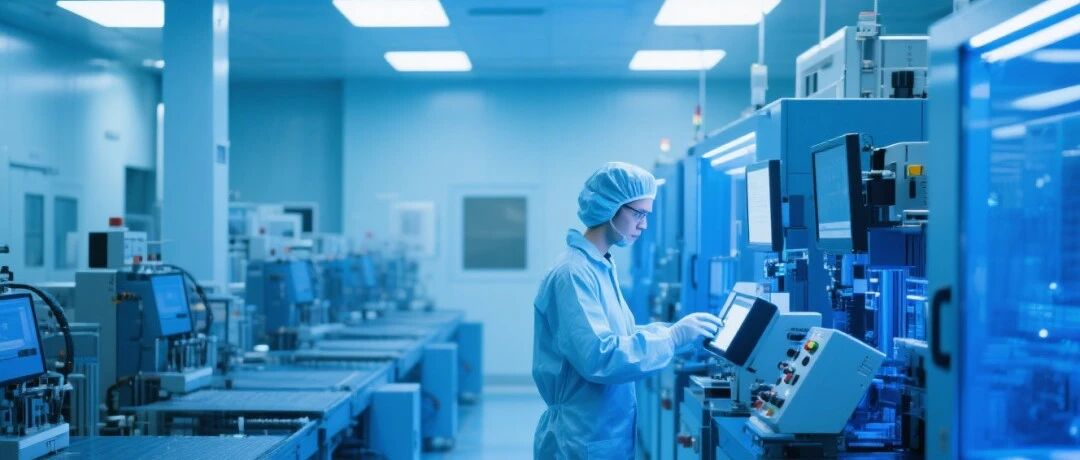
全球最大存储芯片商三星电子总裁警告,半导体供应问题将影响所有人,组件成本正在上涨。尽管三星试图避免转嫁成本,但不得不考虑对全线产品重新定价。这 表明,从智能手机、笔记本电脑到联网家用电器,广泛的电子消费品或将迎来一轮涨价潮。 随着全球内存芯片供应短缺加剧,全球最大的存储芯片制造商三星电子发出警告,成本飙升可能迫使整个电子行业提高产品价格,这一趋势甚至将波及 三星自身的消费电子产品线。 1月7日,据彭博报道,三星电子总裁兼全球营销主管Wonjin Lee在接受采访时明确表示, 半导体供应问题将影响所有人,组件成本正在上涨。 报道称,尽管公司不希望将负担转嫁给消费者,但Lee坦言, 公司已不得不开始考虑重新定价其产品。这表明,从智能手机、笔记本电脑到联网家用电 器,广泛的电子消费品或将迎来一轮涨价潮。 《韩国经济日报》日前援引知情人士消息,三星电子与SK海力士计划在2026年第一季度将服务器DRAM价格较2025年第四季度大幅提升60%至70%, 并向个人电脑与智能手机客户提出了相近幅度的涨价方案。 全行业面临成本压力 来源:华尔街见闻 尽管三星作为全球最大的存储制造商,相比无法为其产品自行制造内存的竞争对手处于 ...

CoWoS产能支撑,摩根大通再次上调TPU预期:今明两年出货量有望达370、500万颗
美股IPO· 2026-01-07 16:20
Core Viewpoint - Morgan Stanley has raised its CoWoS capacity forecasts for 2026 and 2027 by 8% and 13% respectively, driven by TSMC's capacity expansion and strong demand for TPUs [1][2]. Group 1: CoWoS Capacity Forecasts - TSMC's CoWoS capacity is expected to reach 115,000 wafers per month by the end of 2026, with additional capacity from external suppliers (mainly ASE and Amkor) contributing 12,000 to 15,000 wafers per month [2]. - The capacity increase is primarily due to rising demand from the ASIC supply chain, with TSMC focusing on CoWoS-L technology while CoWoS-S supply remains stable [2]. Group 2: TPU Demand and Shipments - Morgan Stanley has raised its TPU shipment forecasts for 2026 and 2027 to 3.7 million and 5 million units respectively, reflecting strong market demand and TSMC's ongoing capacity expansion [3][4]. - To meet TPU demand, Broadcom's CoWoS wafer allocation has been increased to 230,000 wafers in 2026 and 350,000 wafers in 2027, while MediaTek is expected to receive 18,000 and 55,000 wafers in the same years [5]. Group 3: Key Players and Projects - NVIDIA's CoWoS allocation for 2026 remains at 700,000 wafers, with slight adjustments in product mix due to HBM4 readiness issues [6]. - AMD's CoWoS forecasts remain unchanged at 90,000 and 120,000 wafers for 2026 and 2027, with potential delays in the MI450 project [6]. - AWS's Trainium project has seen a slight reduction in 2026 shipment expectations to 2.1 million units, with lifecycle totals unchanged [7]. Group 4: Outsourcing and Equipment Suppliers - Due to TSMC's capacity constraints, smaller projects are being outsourced to packaging factories, with ASE expected to benefit from various CPU and TPU projects [8]. - Equipment suppliers are projected to see a 20% to 30% increase in equipment shipments in 2026, driven by strong demand for CoWoS, WMCM, and FOCoS technologies [9].





2nm芯片制程战火升级!高通(QCOM.US)重返三星 从单押台积电转向双代工链
美股IPO· 2026-01-07 16:20
Core Viewpoint - Qualcomm is likely to utilize Samsung's 2nm chip manufacturing process for its next-generation mobile application processors, marking a return to Samsung after years of reliance on TSMC for advanced chip manufacturing [2] Group 1: Qualcomm and Samsung - Qualcomm is in discussions with multiple foundries, including Samsung, for the adoption of cutting-edge 2nm chip manufacturing processes [2] - The majority of Qualcomm's new core chip designs for PCs, smartphones, and AI data centers have been completed, aiming for large-scale manufacturing and commercialization soon [2] - This potential deal signifies Qualcomm's shift from nearly exclusive reliance on TSMC to Samsung's advanced manufacturing capabilities [2] Group 2: TSMC's Market Position - TSMC's stock surged by 6.9%, reaching a historical high, following Goldman Sachs' significant price target increase of 35% to NT$2330, reflecting strong market confidence in AI-related infrastructure demand [3] - TSMC is the largest contract chip manufacturer globally, benefiting from the booming demand for AI GPUs and ASICs, with major clients like NVIDIA and AMD driving increased orders [4] - TSMC's advanced 2nm process is set to begin mass production in Q4 2025, with performance improvements of 10-15% at the same power consumption or a 25-30% reduction in power consumption for the same performance [5] Group 3: Intel's Challenges - Intel is focusing on 1.8nm technology, skipping the 2nm node, and has announced the upcoming release of its Panther Lake platform based on this process [6] - Qualcomm's decision to return to Samsung for mobile processors poses a significant challenge for Intel, which is trying to attract high-profile clients for its advanced manufacturing capabilities [8] - The success of Intel's 18A and 16A technologies is crucial for its recovery, as it seeks to establish itself in the competitive landscape dominated by TSMC and Samsung [8]

股价暴涨95.31%!优于安进,Alumis治疗斑块型银屑TYK2抑制剂三期获成功!
美股IPO· 2026-01-06 23:16
Envudeucitinib的临床疗效,综合两项试验的数据显示: Alumis 1月6日宣布,其 下一代口服TYK2抑制剂Envudeucitinib (ESK-001)在两项针对中度至重度 斑块状银屑病 的关键性 三期临床试验 (ONWARD1和ONWARD2)中 取得了积极的顶线结果 。数据 表明,该药物在 皮肤清除率方面表现出 Best-in-class 的潜力 ,所有主要终点和次要终点均以极高的统 计学显著性达成。受此消息影响,周二 Alumis股价大涨95.31%,市值近17亿美元。 从机制上看,envudeucitinib作为一种新一代的高选择性口服TYK2抑制剂,能够最大限度地抑制 TYK2,从而阻断IL-23和IL-17这两条关键通路,实现对疾病的全面控制。Alumis首席医疗官 Jörn Drappa博士指出,这种机制转化为了临床上快速的起效时间和高比率的皮肤清除率,其症状 改善程度在口服疗法中名列前茅。在安全性方面,该药物在两项试验中均表现出良好的耐受性, 安全性特征与此前的II期项目一致,未发现新的安全信号。治疗期间出现的不良事件大多为轻度 至中度,最常见的包括头痛、鼻咽炎、上呼吸道感染 ...

股价一度暴跌20%!黄仁勋称无需依赖冷水机组,制冷设备股惨遭市场抛售
美股IPO· 2026-01-06 23:16
Core Viewpoint - Nvidia's CEO Jensen Huang's comments on the next-generation Rubin chip's cooling technology have raised concerns among investors regarding the demand for data center cooling equipment, leading to a significant drop in related stocks [2][3][5]. Group 1: Impact on Cooling Equipment Stocks - Nvidia's announcement that servers with the Rubin chip will utilize liquid cooling instead of traditional chillers has caused a sell-off in cooling equipment stocks, with Johnson Controls experiencing an 11% drop, marking its largest intraday decline since 2022 [2][3]. - Modine Manufacturing's stock fell by approximately 21% before recovering to a 7.44% decline, while Trane Technologies also saw a decrease [2][3]. - Analysts are reassessing the investment logic surrounding AI infrastructure, as companies like Johnson Controls saw a 52% cumulative increase in stock price since last year due to the AI boom [5]. Group 2: Analyst Insights - Analyst Timothy Wojs from Baird highlighted that Huang's comments have raised questions about the long-term role of chillers in data centers, especially with the increasing adoption of liquid cooling technology, which allows systems to operate at higher temperatures [6]. - Barclays analyst Julian Mitchell noted that while Vertiv holds a strong position in the liquid cooling sector and may benefit from the discussed technological advancements, its cooling business could face challenges [6]. - Citi analyst Andrew Kaplowitz described the sell-off in cooling stocks as "overdone," emphasizing that cooling system manufacturers have established partnerships with chip makers and data center operators, making the risks manageable [10]. Group 3: Market Reactions - Huang's statements have also spurred a surge in data storage stocks, with SanDisk's stock rising over 27%, becoming the best performer in the S&P 500 on that day, as demand for memory and storage was highlighted [10].



5000亿营收预测太保守!英伟达CFO称“肯定会更高”,黄仁勋称中国客户需求强劲
美股IPO· 2026-01-06 23:16
Core Viewpoint - Nvidia's CFO Colette Kress expressed increased optimism regarding the company's data center business, projecting that revenue from data center chips will exceed the previously stated $500 billion by the end of 2026 due to strong demand from both AI applications and enterprise data processing needs [2][6]. Group 1: Revenue Projections - Nvidia's projected revenue from existing and future data center chips is expected to surpass the $500 billion mark given in October 2025, with Kress stating that customer interest has been continuously increasing since that forecast [1][6]. - The optimistic outlook for AI applications is driven not only by AI demand but also by the growing need for enterprise data processing, which is anticipated to push overall investment in the sector to trillions of dollars by the end of 2030 [6]. - Goldman Sachs noted that Nvidia's $500 billion revenue forecast is approximately 12% higher than the market consensus of $4.47 trillion and 10% above Goldman Sachs' own estimate of $4.53 trillion [6]. Group 2: Product Developments - Nvidia's new Vera Rubin AI platform has been fully launched, featuring six new chips that significantly enhance inference cost and training efficiency, with initial deliveries expected in the second half of 2026 [8]. - The Rubin GPU is reported to achieve inference performance of 50 PFLOPS and training performance of 35 PFLOPS, marking a fivefold and 3.5-fold increase over the previous Blackwell platform, respectively [10]. - The new platform also addresses memory bottlenecks by adding 16TB of high-speed shared memory per GPU, which is connected via a 200Gb/s bandwidth [10]. Group 3: Market Reactions - Nvidia's announcements have led to significant stock movements, with storage chip giant SanDisk seeing a nearly 27.6% increase in stock price, while data center cooling system manufacturers experienced declines [11][15]. - The comments made by Nvidia's CEO regarding the new Rubin chips' cooling capabilities raised concerns about the long-term positioning of cooling equipment in data centers, impacting stocks of companies like Johnson Controls and Trane Technologies [16].