美股IPO

Search documents
不空Meta、不空微软 “大空头”伯里盯上甲骨文
美股IPO· 2026-01-10 03:34
Core Viewpoint - Notable investor Michael Burry is converting his skepticism about the AI boom into a substantial short position against Oracle Corporation (ORCL.US) [1][3] Group 1: Michael Burry's Position - Burry has disclosed holding put options on Oracle stock, indicating a bearish outlook as the value of these options increases when the underlying asset price declines [3] - He has also directly shorted Oracle over the past six months and previously revealed short positions against AI chip giant Nvidia (NVDA.US) and data company Palantir (PLTR.US) [3] Group 2: Oracle's Financial Situation - Oracle's stock price has experienced significant volatility, having surged 36% in a single day last September due to optimistic forecasts for its cloud business and signals of increased AI demand [4] - However, the stock has since dropped approximately 40% from its September peak by the end of last year, as investor focus shifted to rising capital expenditures and debt associated with data center expansion [4] - The company currently has outstanding debt of about $95 billion, making it the largest corporate bond issuer outside of the financial sector in Bloomberg's high-rated index [4] Group 3: Burry's Investment Strategy - Burry avoids shorting large tech companies with business models extending beyond AI, citing Meta, Alphabet, and Microsoft as examples [5] - He believes these companies will likely manage spending and absorb losses from overcapacity while maintaining dominance in their core businesses [5] - Burry expressed willingness to short OpenAI at a $500 billion valuation, highlighting his broader skepticism regarding the pace and economic viability of AI investments [6]


《经济学人》封面文章丨在特朗普的世界里,强者夺取他们能拿走的一切
美股IPO· 2026-01-10 03:34
In Donald Trump's world, the strong take what they can That will be bad for America—and everyone else 在唐纳德·特朗普的世界里,强者夺取他们能拿走的一切。 这对美国很糟糕,对世界其他地 方也如此。 插图来源:《经济学人》/盖蒂图片社 12年来,尼古拉斯·马杜罗对委内瑞拉实施统治,导致该国GDP暴跌69%。四分之一的人 口被迫流亡海外。这场经济崩溃与人口外逃的严重程度,甚至超过了最血腥内战时期的典型 情况。然而,就在2026年1月3日,他被美国特种部队突袭抓获,就此消失。 这次突袭的意义远超委内瑞拉一国。原因有三:一是行动方式;二是行动动机;三是行动时 机。首先,这是一次硬实力的惊人展示,同时也暴露了其局限性。其次,特朗普并未像以往 美国总统那样以民主或人权为由,而是直言要夺取委内瑞拉的石油,并确立美国在西半球的 主导地位。第三,这一事件发生在旧有国际秩序——联合国决议、国际法和普世价值观—— 加速瓦解之际。当前上演的这场大戏,将深刻影响未来世界秩序的走向。 先看"如何"发生。除美军外,没有任何其他国家的军队能 ...

《纽约时报》专访:特朗普宣称其全球权力仅有一个限制:他自己
美股IPO· 2026-01-09 07:08
Core Viewpoint - The article presents Trump's assertion that his power as Commander-in-Chief is only limited by his own morality, dismissing international law and treaties as constraints on his authority [2][4]. Group 1: Trump's Perspective on Power - Trump claims that any limitations on his power should be determined by himself rather than international law or treaties [2]. - He emphasizes that his moral judgment is the only thing that can restrain him, stating, "I don't need international law" [4]. - Trump expresses a belief that national strength should be the decisive factor in international conflicts, rather than legal frameworks or treaties [5]. Group 2: Military and Foreign Policy - Trump acknowledges the existence of domestic constraints but insists on maintaining an unpredictable reputation to coerce other nations [5]. - He cites his administration's military actions, such as the successful strike on Iranian nuclear facilities and the rapid overthrow of the Venezuelan government, as examples of his decisive leadership [6]. - Trump expresses a desire for Greenland to become part of the U.S., viewing it as strategically important and indicative of his worldview [7][9]. Group 3: International Relations and Alliances - Trump criticizes previous administrations for being overly cautious and not fully utilizing U.S. power to achieve political dominance [6]. - He believes that NATO's effectiveness is diminished without U.S. leadership and insists on increased defense spending from NATO allies [9]. - Trump shows indifference towards the expiration of a major nuclear arms control agreement, suggesting that a better deal could be negotiated later [11][12]. Group 4: Domestic Policy and Legal Constraints - Trump indicates that judges only have the authority to limit his domestic policy agenda in "specific circumstances" and is considering ways to circumvent potential legal challenges [13]. - He expresses willingness to deploy military forces domestically if necessary, although he has not felt the need to do so yet [14].
《纽约时报》:特朗普的多重面孔
美股IPO· 2026-01-09 07:08
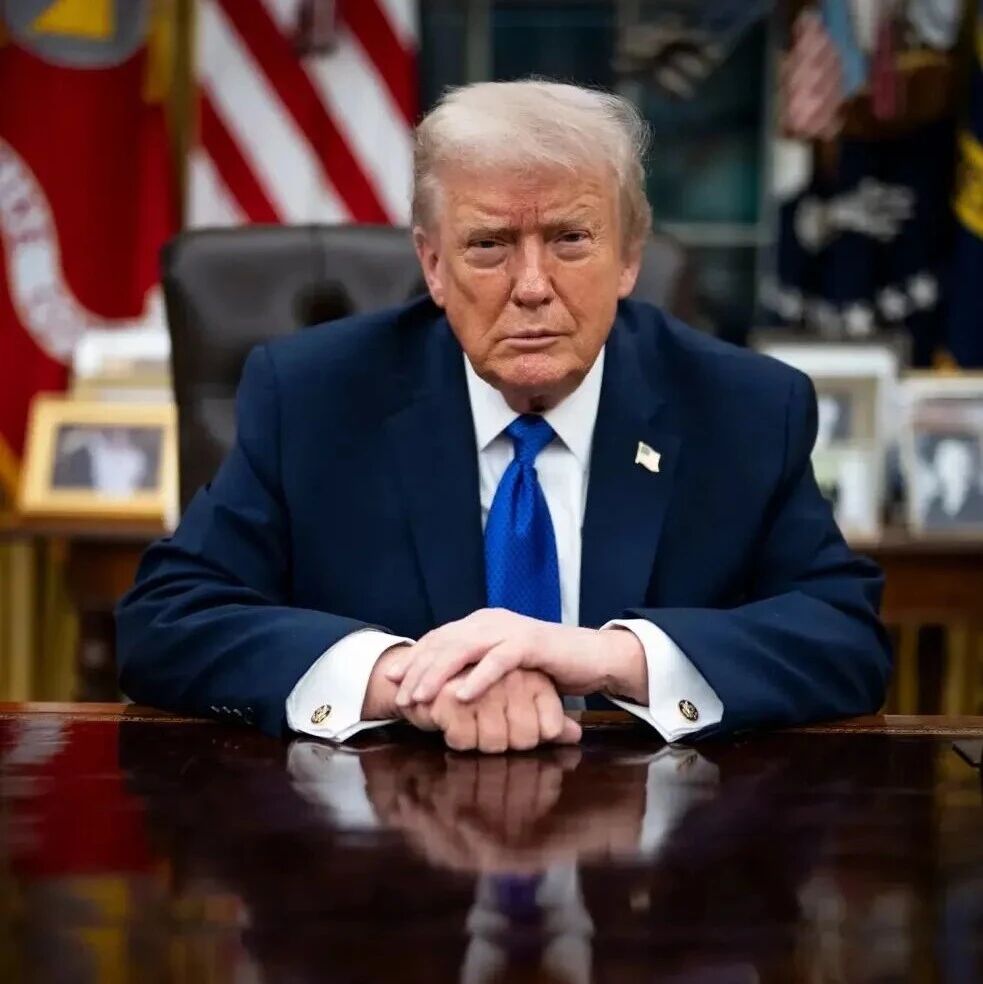
Core Viewpoint - The article provides an in-depth account of an interview with President Trump, highlighting his various personas and his focus on showcasing his achievements and plans for the White House renovation [3][5][12]. Group 1: Interview Insights - Trump expressed feelings of being disrespected by the media, political figures, and the Nobel Committee, indicating a strong desire for recognition [5][29]. - During the interview, Trump showcased his energy and enthusiasm, particularly in discussing his renovation plans for the White House, including a new ballroom and marble flooring [6][8]. - He frequently shifted between different roles, from a world leader to a real estate mogul, reflecting his multifaceted public persona [11][12]. Group 2: Health and Age - Trump claimed to feel as energetic as he did decades ago, despite being close to 80 years old, and mentioned his daily intake of aspirin for health maintenance [19][25]. - He dismissed concerns about his age and health, contrasting himself with President Biden, whom he criticized as the worst example of aging [20][28]. Group 3: Political Context - The interview included a phone call from Colombian President Gustavo Petro, which Trump handled with a sense of authority, reflecting his ongoing engagement in international matters [16][17]. - Trump expressed dissatisfaction with the criticism from New York City Mayor Zohra Mamdani regarding U.S. actions in Venezuela, indicating his sensitivity to public perception and political alliances [29]. Group 4: Renovation Plans - Trump detailed his ambitious $400 million renovation project for the White House, funded by donations and personal funds, emphasizing his identity as a builder and upgrader [32][34]. - He showcased a miniature model of the planned ballroom, highlighting its features and intended use for future presidential events [32][33].
《经济学人》:人工智能将给电子产品消费者带来巨大痛苦
美股IPO· 2026-01-09 07:08
Core Viewpoint - The surge in demand for memory chips driven by artificial intelligence is creating significant supply shortages for consumer electronics manufacturers, leading to increased prices and delayed product deliveries [3][4]. Group 1: Supply and Demand Dynamics - The demand for memory chips, particularly DRAM and high bandwidth memory (HBM), is unprecedented due to the rise of AI-driven devices [3]. - Dell's COO described the current supply-demand imbalance as "unprecedented," with predictions of a 15% to 20% increase in personal computer prices [3]. - IDC estimates that global smartphone shipments could decline by 5% and personal computer sales could drop nearly twice as much if the situation persists [3]. Group 2: Impact on Memory Chip Production - HBM production requires three to four times the silicon wafers compared to standard DRAM, leading to a significant increase in resource consumption [4]. - The global DRAM market is highly concentrated, with SK Hynix, Samsung, and Micron accounting for over 90% of revenue, and these companies are shifting capacity towards HBM [4]. - HBM's profit margins are significantly higher, averaging 50% or more, compared to 35% for standard memory, which has led to a 200% average stock price increase for these companies since early 2025 [4]. Group 3: Price Increases and Market Effects - The price of standard DRAM (DDR4) has surged by 1360% since April 2025, impacting the cost structure of consumer electronics [4]. - Companies like Apple can absorb higher costs due to their pricing power, while others, such as Asus and Xiaomi, are already raising prices and warning of profit margin impacts [5]. - Automotive manufacturers are under the most pressure as the DRAM requirements for vehicles are increasing rapidly due to more electronic components being integrated [5]. Group 4: Future Outlook and Mitigation - Memory manufacturers plan to invest approximately $61 billion in DRAM this year, a 14% increase from 2025, but new capacity will take up to two years to come online [5]. - An estimated 60% to 70% of this investment will be directed towards HBM, limiting the availability of standard DRAM [5]. - The supply shortage may only ease with a decline in the AI frenzy, which could lead to immediate consumer pain [5].



伯恩斯坦拉响警报:流动性泛滥催生“全面泡沫“,AI仅是冰山一角
美股IPO· 2026-01-09 00:22
Core Viewpoint - Richard Bernstein Advisors (RBA) warns that excess liquidity is driving asset prices far beyond fundamental support levels, leading to a "broad-based frenzy" in the market, extending beyond artificial intelligence (AI) [1][3] Group 1: Market Conditions - The current market is described as being in a "full-blown bubble," affecting not only AI but also cryptocurrencies, meme stocks, SPACs, investment-grade bonds, and high-yield bonds [3] - The loose monetary and fiscal policies are identified as the primary causes of this disconnection from fundamental valuations [3] Group 2: Concerns in Credit Investments - The AI boom raises particular concerns for credit investors, as they cannot share in the excess returns if AI succeeds, and will bear losses if it fails [4] - Major tech companies are expected to invest approximately $440 billion in AI infrastructure over the next year, with a 34% increase in capital expenditures [4] Group 3: Investment Strategy Adjustments - RBA has completely exited the corporate bond market, having previously been overweight in this area, due to the relative value proposition no longer being valid when spreads fall below 90 basis points [4] - As of now, the U.S. high-grade credit risk premium has risen to 78 basis points, remaining below 90 basis points since May of the previous year [4] Group 4: Future Outlook - There is a warning that if the Federal Reserve's rate cuts do not meet market expectations, credit spreads may widen further this year [5] - RBA is shifting focus towards collateralized loan obligations (CLOs), mortgage-backed securities (MBS), high-grade floating-rate debt, and European equities, which are seen as more attractive due to fiscal stimulus and supportive monetary policy [5]

盘后大涨17.24%!或超300亿美元!默沙东拟收购Revolution Medicines
美股IPO· 2026-01-09 00:22
Group 1 - Merck is in discussions to acquire Revolution Medicines (RVMD) for a price range of $28 billion to $32 billion, leading to a 17.24% increase in RVMD's stock price after hours, reaching a market capitalization of approximately $24.3 billion [1] - The pharmaceutical industry is undergoing strategic expansion, with Merck's financial position being robust and its profitability strong, indicating a stable market sentiment [2] - The potential acquisition of RVMD by Merck would mark the largest deal in the pharmaceutical industry in nearly three years since Bristol-Myers Squibb's $43 billion acquisition of cancer biotech company Seagen [3] Group 2 - RVMD's RAS inhibitor portfolio is expected to peak in sales exceeding $10 billion, highlighting the potential value of the acquisition for Merck [2] - Other large pharmaceutical companies are also considering acquiring RVMD, indicating competitive interest in the company and that the deal is not yet finalized [3]


股价大涨超130%!flyExclusive与Starlink签署授权经销协议
美股IPO· 2026-01-09 00:22
Core Viewpoint - flyExclusive has signed a distribution agreement with Starlink, becoming an authorized dealer and installation service provider for its aviation high-speed, low-latency internet system, leading to a significant stock price increase of over 81% to $5.7 [1][3] Group 1 - The agreement allows flyExclusive to be the first to deploy Starlink's aviation internet solutions within its own fleet [3] - The Starlink system is expected to provide near-streaming-level internet experience, real-time communication, and stable VPN performance in-flight, enhancing passenger experience and setting new industry standards [3] - As an authorized dealer and installer for Starlink, flyExclusive will also offer sales, installation, and after-sales support services to third-party aircraft owners and operators, expanding its MRO (Maintenance, Repair, and Overhaul) capabilities [3] - This partnership enables private jet customers to receive a one-stop service from a "single trusted partner," covering everything from solution configuration to professional installation, testing, and ongoing support [3]


《经济学人》丨特朗普的赤裸坦率让世界怀念美国以前的虚伪
美股IPO· 2026-01-08 04:15
Core Viewpoint - The article discusses the radical honesty of Donald Trump in American foreign policy, highlighting how his straightforwardness contrasts with traditional political hypocrisy, particularly regarding U.S. interests in Venezuela and the broader implications for international relations [3][4][5]. Group 1: Trump's Political Style - Trump's political charm lies in his brutal honesty, which he uses to justify actions that serve U.S. interests, such as military interventions for oil, without the pretense of promoting democracy [3][4]. - His cynicism acts as a shield against criticism, as he openly admits to prioritizing American interests over moral considerations [3][5]. Group 2: U.S. Foreign Policy Implications - Critics of U.S. foreign policy may find satisfaction in Trump's candidness, as historical interventions in Latin America often prioritized U.S. commercial interests over human rights [5][6]. - Trump's revival of the Monroe Doctrine, now termed "Donroe Doctrine," emphasizes the need for U.S. dominance in the Western Hemisphere, focusing on securing exclusive contracts for American businesses [5][6]. Group 3: Future of International Relations - The article raises concerns about the potential normalization of aggressive, self-serving behavior in international relations, as other nations may follow the U.S. example of blatant self-interest [6][7]. - The erosion of respect for international law could lead to a world where power dynamics overshadow moral obligations, challenging the post-World War II order established by previous U.S. leaders [7].
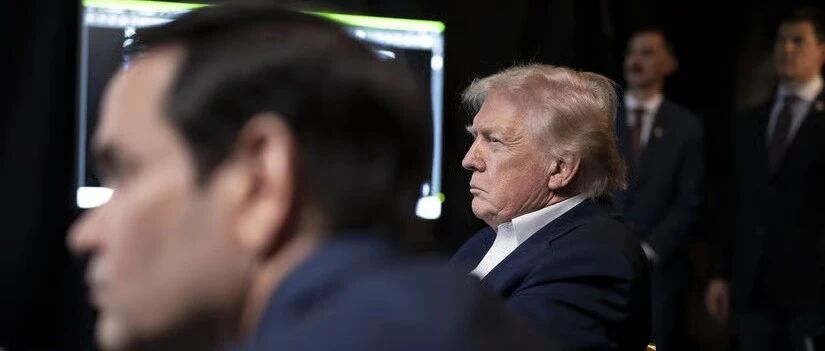
英国金融时报:为什么特朗普真的很想要格陵兰岛
美股IPO· 2026-01-08 04:15
Core Viewpoint - The article discusses how Donald Trump, facing domestic challenges and low approval ratings, is increasingly looking to foreign actions, particularly regarding Venezuela and Greenland, as a means to divert attention and assert control over international affairs [1][3]. Group 1: Foreign Policy Focus - Trump's domestic struggles are prompting him to seek solutions abroad, as he believes that managing foreign conflicts is easier than dealing with domestic legal issues [3]. - The successful operation to capture a fugitive in Venezuela has boosted Trump's confidence in wielding military power without domestic constraints [3][7]. - Trump's fixation on Greenland is portrayed as a strategic move to enhance U.S. security and assert dominance, with implications for NATO and international relations [4][6]. Group 2: Greenland's Strategic Importance - Greenland is seen as an easy target for Trump, allowing him to engage in military actions without risking American lives, thus appealing to his desire for decisive victories [5][6]. - The potential economic benefits of controlling Greenland are highlighted, with interest from Silicon Valley investors in developing the territory [6]. - Trump's actions regarding Greenland could undermine NATO's collective defense agreements, as any aggression towards Denmark could be interpreted as an attack on all NATO members [6][8]. Group 3: Domestic Political Implications - As Trump's political position weakens, there is a concern that he may become more reckless in his foreign policy decisions [8]. - The article suggests that Trump's legal challenges and potential Supreme Court rulings may not significantly limit his actions abroad, contrasting with domestic legal constraints [8]. - Greenland is framed as a tool for Trump to gain attention and achieve his goals, with increasing temptations to pursue aggressive foreign policies [8].