
PDH(600048)

Search documents
2025年二季度主动基金重仓股追踪
ZHONGTAI SECURITIES· 2025-07-24 04:52
1. Report Industry Investment Rating - The report does not explicitly mention the overall industry investment rating 2. Core Viewpoints of the Report - In Q2 2025, the overall market value of A - share holdings of active equity - oriented funds decreased, while that of H - share holdings increased. The industry concentration of the top heavy - stock holdings of equity - oriented funds decreased. The communication, non - bank finance, and media industries saw significant increases in allocation ratios, while the steel, food and beverage, and coal industries had large reduction ratios [4][6]. - The structure of the top heavy - stocks of active equity - oriented funds changed. The overall number of large - market - cap leaders decreased, and the holdings of sub - industry leaders increased. The new high - growth technology stocks related to AI emerged, while traditional large - cap white - horse stocks were significantly reduced [4]. - In terms of industry leaders, the communication, non - bank finance, media, agriculture, forestry, animal husbandry, and beauty care industries were significantly increased, while the steel, coal, real estate, social services, and food and beverage industries were significantly reduced [21]. - The report suggests focusing on four investment themes: communication and hardware upstream under AI diffusion, non - bank finance, new consumption in the Hong Kong stock market, and national defense and military industry [26] 3. Summary by Relevant Catalogs 3.1 2025Q2 Active Fund Heavy - Stock Holding Structure Overview - **A - share and H - share holdings changes**: In Q2 2025, the total market value of active equity - oriented fund heavy - stock holdings was 1736.2 billion yuan, a 1.66% QoQ decrease. A - share holdings decreased by 2.79% QoQ to 1394.8 billion yuan, while H - share holdings increased by 3.20% QoQ to 341.3 billion yuan. Due to the complex macro - economic environment and market volatility, funds faced redemption pressure and tended to reduce large - cap stocks with poor liquidity [6]. - **Industry concentration decline**: From Q1 to Q2 2025, the industry concentration of the heavy - stock holdings of equity - oriented funds decreased. CR3 decreased by 0.56 percentage points to 38.37%, and CR5 decreased by 4.18 percentage points to 51.18%. The top five industries in terms of holding market value remained the same, but the proportion of the electronics industry increased, while the other four industries decreased [4][7]. - **Structural adjustment of industry holdings**: In Q2 2025, 12 industries saw an increase in the total market value of holdings. The communication, non - bank finance, and media industries had large increases in allocation ratios, rising by 75.88%, 64.62%, and 38.37% respectively. The steel, food and beverage, and coal industries had large reduction ratios, decreasing by 46.32%, 26.16%, and 23.99% respectively [9] 3.2 Q2 Active Fund Top Heavy - Stock Tracking - **Change in the structure of top heavy - stocks**: In Q2 2025, the structure of the top 20 heavy - stocks of active equity - oriented funds changed. The large - market - cap leaders decreased, and the sub - industry leaders increased. The market value of the top 20 heavy - stocks accounted for 20.72% of all heavy - stocks, a 2% decrease from Q1 [12]. - **Changes in the top five heavy - stocks**: The top five heavy - stocks remained the same, but the overall holdings decreased. New high - growth technology stocks such as New Fiber Optic Technology and Inphi Corporation quickly rose in the rankings, while traditional large - cap white - horse stocks such as Luxshare Precision Industry, Midea Group, and Contemporary Amperex Technology were significantly reduced [4]. - **Hong Kong stock market adjustment**: In the Hong Kong stock market, AI and Internet media leaders were reduced, while the pharmaceutical and new consumption sectors that performed well in Q2 were significantly increased [18] 3.3 Q2 Industry Leader Heavy - Stock Tracking - **Industry leader allocation changes**: In Q2 2025, the communication, non - bank finance, media, agriculture, forestry, animal husbandry, and beauty care industries were significantly increased, while the steel, coal, real estate, social services, and food and beverage industries were significantly reduced [21]. - **Communication industry focus**: Driven by the booming demand for AI hardware, the communication industry became the focus of funds. The optical module sector, which benefits from the expansion of AI capital expenditure, was the main area for increasing communication heavy - stocks. The profitability of communication equipment is expected to continue to improve in the second half of the year [22]. - **Non - bank finance sector highlights**: The leaders of the non - bank finance sector attracted attention. The holdings of Ping An Insurance and CPIC increased by 55% and 41% respectively, and securities leaders such as Citic Securities and Huatai Securities also saw over 30% increases. The brokerage sector's performance is expected to continue to improve [23] 3.4 Investment Recommendations - **AI diffusion - related communication and hardware upstream**: The significant increase in the holdings of optical module leaders reflects that funds are extending from AI software to computing infrastructure. AI capital expenditure is expected to drive the performance of upstream sectors in the second half of the year [26]. - **Non - bank finance sector**: The concentrated increase in holdings of leaders such as Citic Securities and Ping An Insurance reflects the positive expectations of the market for the profitability improvement of the brokerage and insurance sectors. The non - bank finance sector is expected to achieve a resonance of valuation repair and performance recovery [26]. - **Hong Kong stock new consumption theme**: After the correction in the AI sector, funds refocused on consumption structure highlights, especially in the Hong Kong stock market. Sub - sectors such as pets, toys, and emotional consumption have become important directions for heavy - stock allocation [26]. - **National defense and military industry safety theme**: The significant increase in the holdings of core military stocks reflects the high attention of institutions to the "national security + high - end manufacturing" theme. The military industry has policy support, order growth, and mid - report performance improvement expectations, with medium - term allocation value [27]





上半年A股超10家房企扭亏 保利、滨江利润规模领先
Xin Jing Bao· 2025-07-24 00:23
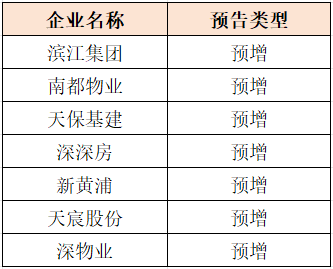
Core Viewpoint - The real estate industry in China is experiencing mixed results in the first half of 2025, with some companies reporting profit increases while others continue to face significant losses [1][10]. Group 1: Profit Increases - Among the listed real estate companies, Poly Developments and Binjiang Group are leading with profit increases, with Binjiang Group expecting a net profit of 1.632 billion to 1.982 billion yuan, marking a growth of 40%-70% due to increased project deliveries [3][2]. - Other companies achieving profit increases include Nandu Property, New Huangpu, Tianchen Shares, Tianbao Infrastructure, Deep Deep Property, and Shen Property [4][5]. Group 2: Profit Turnarounds - Fourteen companies, including Chengjian Development and Daxin City, have successfully turned losses into profits, with Chengjian Development expecting a net profit of 440 million to 654 million yuan [8][9]. - Daxin City anticipates a turnaround with a net profit of 8 million to 12 million yuan, compared to a loss of 364 million yuan in the previous year [8]. Group 3: Continued Losses - Vanke and Huaxia Happiness are among the companies still facing substantial losses, with Vanke projecting a net loss of 10 billion to 12 billion yuan due to decreased project settlements and high financial costs [10][11]. - Huaxia Happiness expects a net loss of 5.5 billion to 7.5 billion yuan, an increase from a loss of 4.849 billion yuan in the same period last year [11]. - Other companies like Jindi Group and Greenland Holdings are also forecasting significant losses, with Jindi expecting a net loss of 4.2 billion to 3.4 billion yuan [11].





消失的房企区域公司
21世纪经济报道· 2025-07-23 15:00
Core Viewpoint - The restructuring of regional companies in the real estate sector is a strategic move by leading firms to enhance efficiency and adapt to changing market conditions, focusing on high-potential cities and reducing management layers [2][6][10]. Group 1: Restructuring of Regional Companies - Several state-owned enterprises have begun to eliminate regional companies, shifting to a two-tier management model where headquarters directly manage city companies [2][4]. - China Resources Land and Vanke are among the firms that have adjusted their management structures to streamline operations and improve efficiency [5][6]. - The trend started with Jinmao, which dissolved five regional companies and restructured into 14 regional companies, indicating a broader industry shift [4][6]. Group 2: Focus on Core Cities - Leading real estate firms are concentrating their investments in first-tier and strong second-tier cities, with a focus on around ten key cities [6][10]. - Jinmao's investment strategy shows that 94.7% of its new saleable area is concentrated in first and second-tier cities, with Beijing and Shanghai being primary targets [6][8]. - Similarly, China Overseas Land's sales in major cities like Beijing and Shanghai accounted for over half of its total sales, highlighting the trend of focusing on core urban markets [7][8]. Group 3: Implications of Organizational Changes - The reduction of regional companies is seen as a defensive measure rather than a sign of stagnation, as these firms remain among the top performers in the industry [6][10]. - The shift to a two-tier management model is viewed as a rational response to the current market environment, where many firms are adopting similar structures to enhance operational efficiency [10][11]. - Analysts suggest that while streamlining operations, firms must balance centralized control with local market sensitivity to maintain competitiveness [11].




消失的房企区域公司
2 1 Shi Ji Jing Ji Bao Dao· 2025-07-23 11:53
Core Viewpoint - The restructuring of regional companies in the real estate sector is a strategic move by leading firms to enhance efficiency and adapt to a changing market environment, shifting from a multi-tier management structure to a more streamlined two-tier model [1][2][4]. Group 1: Company Restructuring - Several major state-owned enterprises have begun to eliminate regional companies, transitioning to a two-tier management model where headquarters directly manage city companies [1][2]. - China Jinmao initiated this trend by dissolving five regional companies and restructuring into 14 regional companies at the beginning of the year [2]. - Other companies like China Merchants Shekou and Poly Developments have followed suit, consolidating their regional operations to improve management efficiency [2][3]. Group 2: Market Focus - Real estate firms are increasingly concentrating their investments in high-tier cities, with a focus on around ten key cities, rendering regional companies redundant [4][5]. - Jinmao's investment strategy highlights this shift, with 37.6% of its new saleable area concentrated in first-tier cities like Beijing and Shanghai [4]. - China Merchants Shekou reported that 90% of its investment was directed towards its "core 10 cities," with 59% of total investment in first-tier cities [5]. Group 3: Strategic Implications - The reduction of management layers is seen as a rational response to the concentration of sales contributions from a limited number of core cities [6]. - Companies like China Overseas Land & Investment have noted that over 60% of their sales come from just four cities, indicating a need for a more centralized decision-making process [6]. - The restructuring is viewed as a proactive measure to enhance operational efficiency and adapt to the shrinking real estate market [7].
房地产市场分化中孕育新动能
Sou Hu Cai Jing· 2025-07-23 08:00
Group 1 - The core viewpoint of the articles indicates that the real estate market is gradually stabilizing after experiencing fluctuations, with new policies aimed at boosting market activity and addressing housing demand [2][3][4] - In the first half of the year, the national new residential sales area decreased by 3.5% year-on-year, a reduction of 15.5 percentage points compared to the same period last year, while the sales amount fell by 5.5%, narrowing by 19.5 percentage points [2][3] - Over 160 cities have implemented more than 340 policies to optimize the real estate market, including expanding the use of housing provident funds and adjusting policies related to housing loans [2][3] Group 2 - The decline in market prices has slowed, with some cities experiencing price increases; first, second, and third-tier cities saw a reduction in new home prices by 0.3%, 0.5%, and 0.3 percentage points respectively [4] - Real estate companies are actively working on debt reduction, with funding for real estate development down by 6.2% year-on-year, but the decline is less severe than in previous years [4] - The concept of "good houses" is being emphasized, with government policies encouraging the construction of high-quality housing to stimulate market demand [5][6] Group 3 - The market is witnessing a clear differentiation among cities, with first-tier cities showing overall growth, second-tier cities remaining stable, and third and fourth-tier cities experiencing declines [7] - The rental market is stabilizing, with demand varying significantly across different city tiers, particularly in new first-tier cities where demand is leading the recovery [8] - The adjustment period for the real estate market is characterized by a shift from quantity to quality, with an emphasis on improving housing quality and addressing the needs of buyers [7][8]



土地市场月度跟踪报告(2025年6月):2025上半年核心30城宅地成交建面及均价同比均上涨23%-20250723
EBSCN· 2025-07-23 05:41
Investment Rating - The industry is rated as "Add" [6] Core Insights - In the first half of 2025, the transaction area of residential land in 100 cities increased by 2% year-on-year, while the average transaction floor price rose by 24% [1][4] - The top 50 real estate companies saw a 48% year-on-year increase in the value of newly acquired land reserves, totaling 521.3 billion yuan [2][82] - The core 30 cities experienced a 23% year-on-year increase in residential land transaction area and price [3][4] Summary by Sections 1. Supply and Demand of Land/Residential Land in 100 Cities - In the first half of 2025, the total supply of land in 100 cities decreased by 12.9% year-on-year, while the transaction area decreased by 5.6% [11] - The supply of residential land in 100 cities decreased by 15% year-on-year, with a transaction area of 93.37 million square meters, up 2.2% year-on-year [20] 2. Transaction Prices of Land/Residential Land - The average transaction floor price for residential land in 100 cities increased by 24.2% year-on-year, reaching 7,479 yuan per square meter [57] - The average transaction floor price in first-tier cities was 38,817 yuan per square meter, up 35.5% year-on-year [67] 3. Acquisition of Land by Top 50 Real Estate Companies - The top 50 real estate companies acquired land worth 5,213 billion yuan in the first half of 2025, a 47.7% increase year-on-year [2][82] - The top three companies in terms of newly acquired land value were China Overseas Land & Investment (506 billion yuan), Poly Developments (502 billion yuan), and Greentown China (443 billion yuan) [91] 4. Transaction Situation of Residential Land in Core 30 Cities - In June 2025, the core 30 cities saw a 44% increase in residential land transaction area, with a total transaction area of 1,423 million square meters [97] - The overall premium rate for residential land transactions in the core 30 cities was 13.5%, up 8.4 percentage points year-on-year [4][101] 5. Investment Recommendations - Focus on stable leading real estate companies with high product reputation and continuous sales ranking improvement, such as Poly Developments, China Merchants Shekou, and China Jinmao [111] - Consider companies with rich commercial real estate resources and strong brand competitiveness, such as China Resources Land and New City Holdings [112] - Look at the long-term development potential of the property service industry, recommending companies like China Merchants Jinling and Greentown Service [112]
2025年6月房企拿地质量报告:核心地块供应继续放缓,中型房企拿地表现更好
Changjiang Securities· 2025-07-23 04:43
Investment Rating - The industry investment rating is "Positive" and maintained [12] Core Insights - In June, the overall land supply volume increased month-on-month, but the pace of core land supply continued to slow down. The overall transaction volume also saw a month-on-month increase, with the premium rate continuing its downward trend since March, while the auction failure rate remained low [2][10] - Major players such as Jianfa, Zhonghai, and Poly were active in the land market in June, with Jianfa, Jinmao, Binhai, and Greentown showing strong land acquisition intensity from January to June. Jianfa, Greentown, and Jinmao achieved better sales performance [2][8] - The quality of land acquired by sample real estate companies in June was higher for Greentown, Jinmao, and Jianfa, reflecting a focus on regional advantages, product strength, and low inventory among leading companies, as well as stable cash flow from leading brokerage, commercial real estate, and state-owned property management companies [2][10] Summary by Sections Supply - In June, the overall land supply volume increased by 38.4% month-on-month compared to May, but the supply of core land decreased compared to April and May. From January to June, the cumulative launched residential land area in 300 cities decreased by 17.3% year-on-year, with first-tier cities seeing a 23.9% increase, while third and fourth-tier cities saw a 23.3% decrease [6][10] Transactions - The transaction volume in June increased by 43.5% month-on-month, with the transaction amount rising by 98.3%. The cumulative transaction area and amount in 300 cities from January to June decreased by 4.3% and increased by 28.0% year-on-year, respectively [7][10] Real Estate Companies - In June, Jianfa, Zhonghai, and Poly were the top three in land acquisition amounts, with total acquisition amounts of 21.9 billion, 11 billion, and 8.9 billion respectively. From January to June, Jianfa, Poly, and Jinmao led in total land acquisition amounts, with 59.2 billion, 50.9 billion, and 49.2 billion respectively [8][10] Investment Recommendations - The report suggests focusing on medium to long-term structural opportunities, emphasizing leading companies with regional advantages, product strength, and low inventory, as well as those with stable cash flow [10]

历时15年,广州“土豪村”1950栋村屋终于拆除清零,周边房价已超10万
Mei Ri Jing Ji Xin Wen· 2025-07-22 11:25
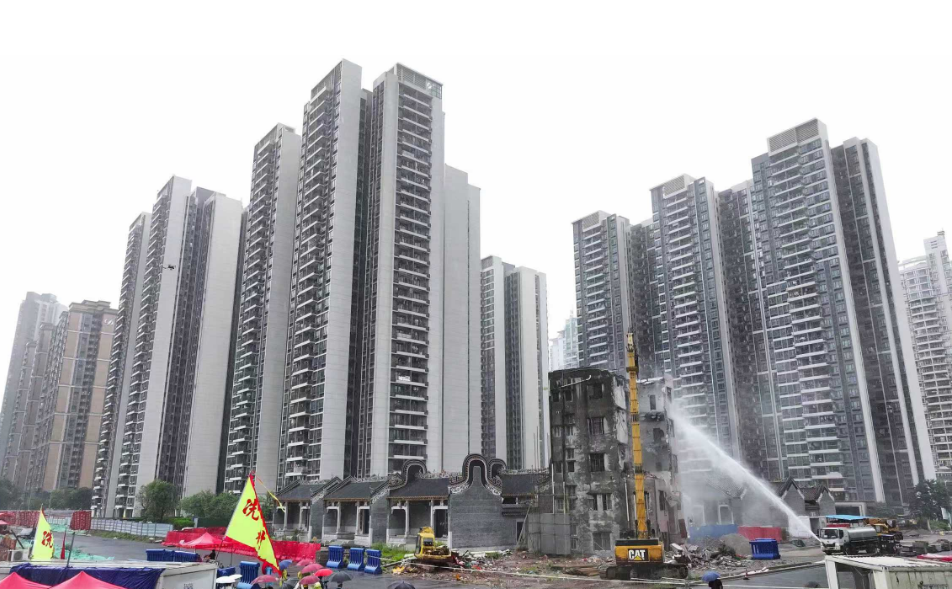
Core Insights - The Xian Village urban renewal project in Guangzhou has reached a significant milestone with the complete demolition of 1,950 village houses after 15 years of efforts, marking a breakthrough in urban renewal initiatives in China [2][3][5] Group 1: Project Overview - The Xian Village urban renewal project was initiated in 2010, inspired by the successful transformation of the nearby Liede Village [3] - The project faced numerous challenges, including high compensation expectations from villagers and negotiation difficulties with a few remaining households, which led to a prolonged stalemate [3][4] - The implementation of the "Guangzhou Urban Village Renovation Regulations" in May 2024 provided a legal framework that facilitated the acceleration of the project [4][5] Group 2: Legal and Policy Framework - The new regulations allow rural collective economic organizations to legally reclaim land use rights, which has been crucial in resolving disputes and expediting the demolition process [4][5] - The project exemplifies a shift in urban renewal strategies in China from interest-based negotiations to legally driven processes [5][6] Group 3: Market Implications - The Xian Village project is located in the core area of Guangzhou's CBD, with anticipated new developments expected to command prices exceeding 18,000 yuan per square meter [7] - The surrounding real estate market features properties listed at over 10,000 yuan per square meter, indicating a strong demand for high-end residential and commercial spaces in the area [7][8] - The project aligns with the broader trend of urban renewal in China, focusing on enhancing existing stock rather than expanding new developments, as the market faces challenges from limited land resources and economic fluctuations [8][11]
上半年55家房企累计交付规模超50万套 “保交付”进入新阶段
Zheng Quan Ri Bao· 2025-07-21 16:43
Core Viewpoint - The real estate industry in China is transitioning from a "guarantee delivery" phase to a new stage of development, with delivery pressures easing as the peak delivery period has passed [1][2]. Group 1: Delivery Performance - In the first half of 2025, 55 real estate companies delivered over 500,000 units, showing a significant decline compared to the same period last year [1]. - The top five companies accounted for approximately 230,000 units delivered, with Poly Developments leading at 65,000 units, followed by Vanke with 45,000 units, and China Overseas Land & Investment with 42,100 units [1]. - Overall, one company delivered over 50,000 units, and 15 companies delivered over 10,000 units, indicating a general decline in delivery numbers compared to the previous year [2]. Group 2: Strategic Shifts - Many companies are now focusing on completing their delivery obligations, with some like Sunac China aiming to deliver over 50,000 units by the end of 2025, having already delivered over 668,000 units from 2022 to 2024 [2]. - Country Garden has also committed to a tailored approach for remaining construction projects, actively communicating with stakeholders to align with current market conditions and financial situations [2]. - Companies that successfully complete their delivery obligations are expected to regain sustainable operational development, rebuild credit, restore financing capabilities, and enhance market share [2].
房地产行业跟踪周报:楼市成交持续调整,推动新型城市基础设施建设-20250721
Soochow Securities· 2025-07-21 15:15
Investment Rating - The report maintains an "Overweight" rating for the real estate sector [1] Core Viewpoints - The real estate market is experiencing a continuous adjustment in transaction volumes, prompting the construction of new urban infrastructure [1] - The central urban work conference indicates a shift in urban development from large-scale expansion to improving existing stock, focusing on seven key tasks [1] Summary by Sections 1. Sector Viewpoints - The current policy environment recognizes the necessity of a stable and healthy real estate market for economic transformation, marking a potential turning point in the current cycle [8] - Recommended companies include state-owned enterprises and quality private firms such as China Resources Land, Poly Developments, and Binjiang Group [8] 2. Real Estate Fundamentals and High-Frequency Data 2.1. Real Estate Market Situation - New home sales in 36 cities decreased by 9.6% week-on-week and 25.0% year-on-year, with cumulative sales of 374.5 million square meters from July 1 to July 18, down 21.6% year-on-year [13] - The second-hand housing market saw a slight decrease of 0.4% week-on-week and 5.8% year-on-year, with cumulative sales of 395.6 million square meters from July 1 to July 18, down 6.7% year-on-year [18] 2.2. Land Market Situation - Land supply in 100 cities from July 14 to July 20 was 1,823.4 million square meters, down 14.0% month-on-month and 27.4% year-on-year [39] - The average land price was 1,067 yuan per square meter, down 27.0% month-on-month and 30.1% year-on-year [45] 2.3. Real Estate Industry Financing Situation - In the week of July 14 to July 20, real estate companies issued 8 credit bonds totaling 7.47 billion yuan, a decrease of 65.5% week-on-week [46] - Year-to-date, real estate companies have issued a total of 326 credit bonds amounting to 269.37 billion yuan, an increase of 14.6% year-on-year [50] 3. Market Review - The real estate sector underperformed compared to the broader market indices, ranking last among 29 sectors with a decline of 2.1% [4] 4. Policy Tracking - The report highlights the government's focus on urban renewal and infrastructure improvements as part of its strategic objectives [1]