SAIC MOTOR(600104)

Search documents
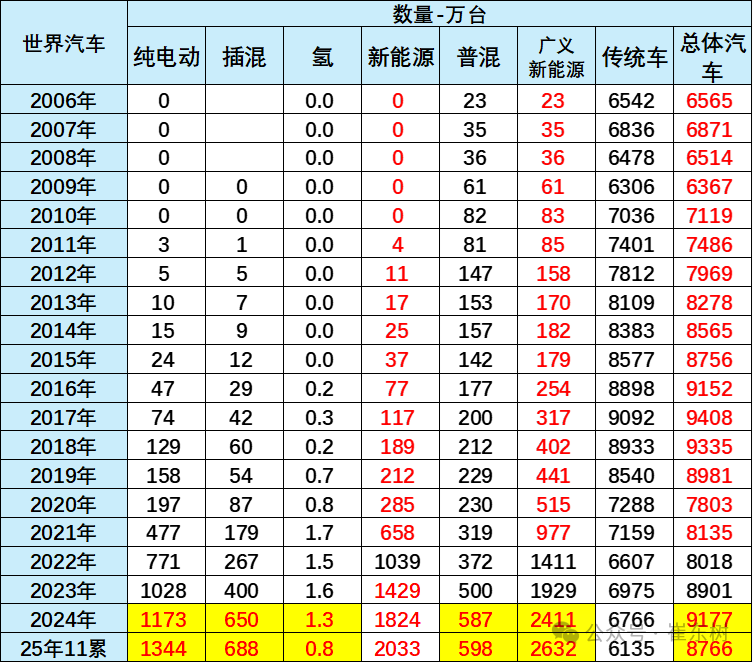
崔东树:2025年11月中国新能源乘用车世界份额高达73.7%
智通财经网· 2026-01-03 08:27
Core Insights - By 2025, China's share of the global new energy passenger vehicle market is projected to reach 68.4%, with November 2025 seeing a peak share of 73.7% [1][31] - In the contribution to global new energy vehicle growth from January to November 2025, China accounts for 68%, Germany for 5%, and India for 4% [1][28] - The global sales of new energy vehicles from January to November 2025 are expected to reach 2,033,000 units, with a year-on-year growth of 30% [10][11] Global New Energy Vehicle Market Performance - In 2025, the global new energy vehicle sales are projected to be 8,766,000 units, with 2,033,000 units being new energy vehicles, indicating a significant increase from previous years [2][10] - The global penetration rate of new energy vehicles is expected to reach 30% in 2025, up from 26.3% in 2024 [4][26] - The sales of new energy passenger vehicles in Europe from January to November 2025 are estimated at 3,320,000 units, a 30% increase year-on-year [24] Regional Market Trends - In the U.S., new energy vehicle sales reached 1.41 million units from January to November 2025, with a growth rate of 6% compared to previous years [22] - The European new energy vehicle market is recovering, with November 2025 sales reaching 338,000 units, a 28% increase year-on-year [24] - The overseas market share of Chinese self-owned new energy vehicles increased from 9.9% in 2024 to 15.4% in 2025 [1][17] Market Dynamics - The U.S. market experienced a decline in November 2025, with sales dropping by 41% year-on-year due to high tariffs and the cancellation of subsidies [22][21] - The growth of new energy vehicles in China is expected to continue, with a strong performance in the first half of 2025, despite a temporary slowdown in early 2025 [8][19] - The global new energy vehicle market is entering a phase of differentiated development, with China strengthening its position while Europe and the U.S. are reducing incentives [27][31]






上汽大众2025年终端销量达106万辆,2026年将密集投放7款全新新能源产品
Ju Chao Zi Xun· 2026-01-03 07:43
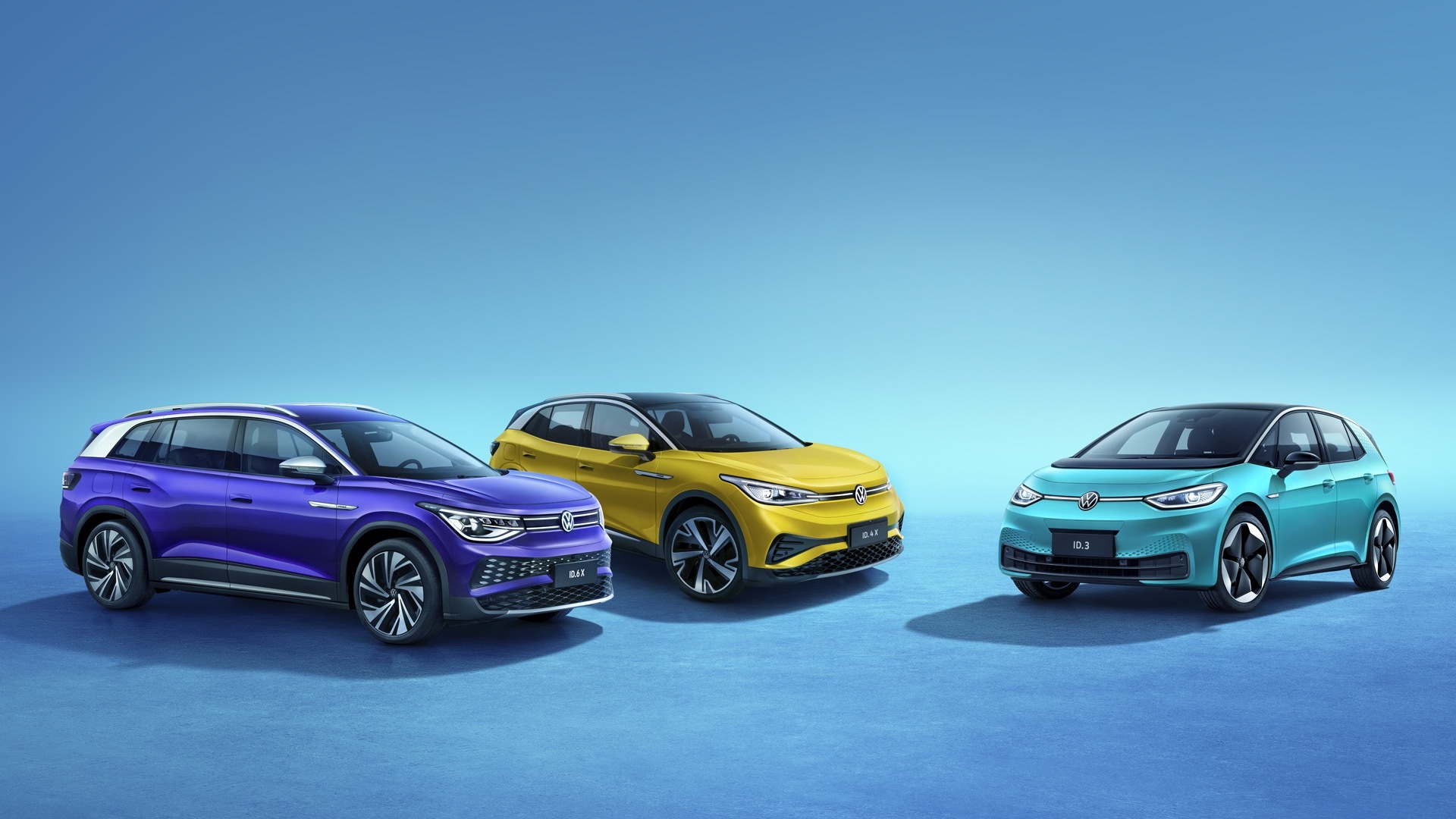
Group 1 - The core viewpoint of the article highlights SAIC Volkswagen's achievement of over 1 million annual sales in 2025, with December sales reaching 96,000 units, a 10.9% increase from the previous month [2] - In 2025, SAIC Volkswagen will accelerate its "oil-electric integration" strategy, focusing on both fuel and new energy vehicles, with a steady increase in market share for fuel vehicles [2] - The company has launched the new SAIC Audi A5L Sportback and successfully introduced the Audi E5 Sportback, marking its entry into the intelligent luxury fuel vehicle market and the smart electric luxury segment [2] Group 2 - Looking ahead to 2026, SAIC Volkswagen plans to intensively launch 7 new energy products, covering pure electric, hybrid, and range-extended vehicles [3] - The second model from the AUDI brand, the Audi E7X, is set to be unveiled at the Beijing Auto Show, while the ID. ERA series will introduce its first "9 series flagship" this month [3]
每10辆就有1辆中国造,中国车企在欧洲卖爆了
创业邦· 2026-01-03 01:13
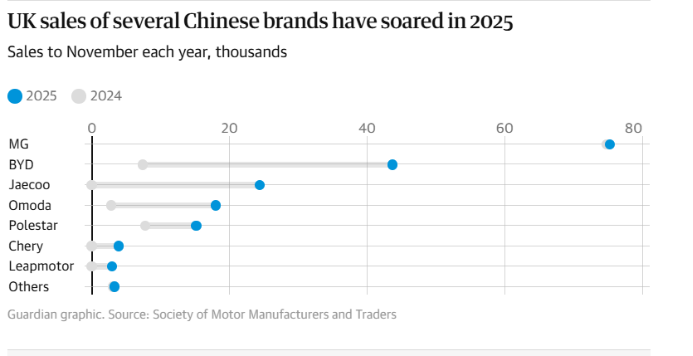
Core Viewpoint - Chinese electric vehicles (EVs) are significantly increasing their market share in Europe, overcoming high tariffs and competition from established local brands, indicating a successful penetration into a historically challenging market [5][7]. Market Performance - In 2025, Chinese brands are projected to capture 12.8% of the European EV market and over 13% in the hybrid vehicle sector, marking a historic high [7]. - In the UK, sales of Chinese automotive brands reached 187,800 units in the first 11 months of the year, doubling from the previous year, with expectations to exceed 200,000 units in 2025 [8][11]. - The average market share of Chinese brands in Western Europe is around 6%, with significant growth in countries like Spain and Norway [11]. Competitive Advantages - Chinese automakers benefit from a mature supply chain for new energy vehicles, allowing for stable supply and cost advantages compared to European manufacturers facing high production costs and battery shortages [13]. - The strategy of localizing production, such as Chery's assembly in Barcelona and BYD's new factory in Hungary, helps avoid tariffs and brings products closer to European consumers [14]. Technological Edge - Chinese companies lead in battery technology, with innovations like BYD's blade battery and CATL's high-energy-density batteries, meeting European demands for longer range and safety [14]. - Advanced smart features in vehicles from brands like XPeng and Leap Motor cater to tech-savvy European consumers [15]. Challenges Ahead - Trade barriers, such as a 45% anti-subsidy tax, and upcoming regulatory requirements pose significant challenges for Chinese automakers [15][17]. - Service and brand recognition remain weak compared to established European brands, with limited service networks and slower response times affecting customer retention [17]. - Adapting to stringent European standards for charging interfaces and carbon footprints adds to the cost of vehicle modifications [17].
上汽商用车2025销量出炉:不止“八连增”!轻客双冠加冕,皮卡出口第二
第一商用车网· 2026-01-02 13:31
Core Viewpoint - SAIC Commercial Vehicle is making significant strides in resource integration, technological upgrades, and green transformation, achieving a sales volume of 245,000 units in 2025, representing an over 18% year-on-year increase, with new energy vehicle sales surging by 85% [1] Group 1: Sales Performance - The company achieved a retail sales volume exceeding 250,000 units, marking eight consecutive months of year-on-year growth [1] - Domestic new energy vehicle sales surpassed 58,000 units, with a monthly penetration rate exceeding 50%, leading traditional commercial vehicle manufacturers [2] - The overseas export volume reached 103,000 units, reflecting a year-on-year growth of over 25%, positioning the company as the second-largest exporter among Chinese automotive brands [1][2] Group 2: New Energy Transition - The new energy transition has entered a comprehensive breakthrough phase, with domestic new energy vehicle sales growing nearly 117% year-on-year [2] - The company has established a full-scenario new energy product matrix, supported by self-developed architectures and strategic cooperation with CATL [2] - The light commercial vehicle segment maintained its industry-leading position, with the Daming light commercial vehicle family achieving total sales of 93,000 units, a 30% increase year-on-year [6] Group 3: Global Expansion - The company has expanded its overseas market presence to over 100 countries and regions, achieving leading market shares in developed regions such as Europe and Australia [2] - The company secured the largest order from global logistics giant DHL in Europe, affirming its recognition in international markets [5] - The light commercial vehicle export volume continues to lead among Chinese brands, while the pickup truck export ranks second [2] Group 4: Product Highlights - The light truck segment saw a remarkable year-on-year increase of nearly 128%, with over 40,000 units sold [9] - The new energy light truck sales surged by 222%, accounting for nearly 57% of total sales, with over 21,000 units delivered [9] - The Daming series and the Yuedong series of vehicles have shown significant market performance, with the Daming V1L model achieving over 3,000 orders in its first month [6][8] Group 5: Future Outlook - The company aims to continue leading the commercial vehicle industry towards high-end, green, and intelligent development, focusing on user-centric innovation [14]
陶海龙:106万辆背后,新上汽大众整装待发
Zhong Guo Qi Che Bao Wang· 2026-01-01 14:32
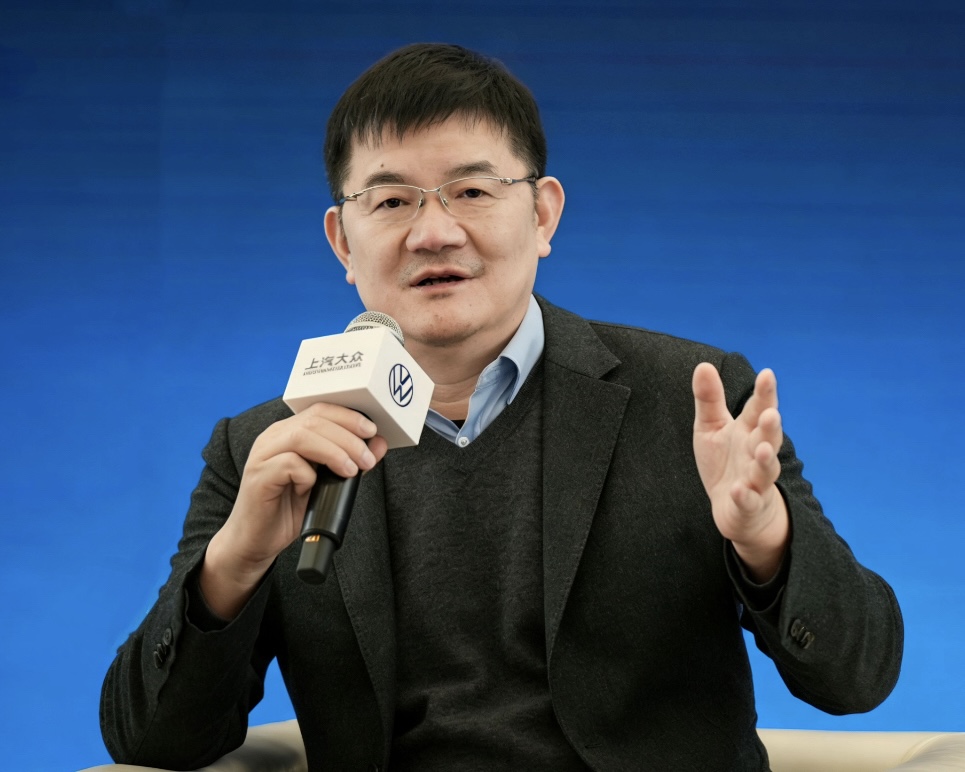
Core Insights - A rational value reconstruction is occurring in the Chinese automotive industry, with SAIC Volkswagen achieving a stable sales figure of 1.06 million units in 2025, maintaining its scale while increasing its market share in fuel vehicles [1][3] - The company has transitioned from "Joint Venture 1.0" to "Joint Venture 2.0," preparing for a new offensive in the new energy sector [1][3] Group 1: Market Position and Strategy - The Chinese automotive industry is shifting from chaotic strategic expansion to a more rational and stable development track, with a focus on value competition [3] - SAIC Volkswagen emphasizes long-termism and sustainable development, viewing 2025 as a crucial period for strengthening its position in the market [3] - The company achieved its sales target of 1.06 million units through strategic decisions that prioritize operational essence, such as avoiding pressure on dealers and refraining from participating in irrational price wars [3][5] Group 2: Product Development and Innovation - SAIC Volkswagen continues to invest in traditional strengths, with a strategy of "oil and electricity advancing together," focusing on intelligent upgrades of its Pro family models [5] - The company plans to maintain a 35% market share for fuel vehicles, ensuring ongoing investment and product launches [5] Group 3: Organizational Transformation - The transition from Joint Venture 1.0 to Joint Venture 2.0 involves significant challenges, particularly in breaking away from traditional technology-driven models [6][8] - SAIC Volkswagen is restructuring its organization and processes by adopting management methodologies from tech companies, aiming for a responsive and agile organizational structure [8] - The company is integrating user demands and market conditions into its R&D and marketing systems, embodying the principle of "in China, for China" [8] Group 4: Brand Renewal and Market Strategy - The year 2025 is seen as a foundational year, while 2026 is anticipated to be a year of offensive strategies, with plans to launch seven new energy products [9] - The brand's core values are defined as "progressive, reliable, and caring," reflecting a commitment to integrating global technology with local innovation [11] - The company aims to reshape its brand image through new product launches, ensuring that user needs are closely aligned with product definitions and service systems [11][12]
每10辆就有1辆中国造,中国车企在欧洲卖爆了
Feng Huang Wang Cai Jing· 2026-01-01 12:51
Core Insights - Chinese electric vehicles (EVs) have significantly increased their market presence in Europe, with total sales nearly doubling despite high tariffs, indicating a successful penetration into a historically challenging market [1][2]. Group 1: Market Performance - In 2025, Chinese brands are projected to capture 12.8% of the European electric vehicle market and over 13% in the hybrid vehicle sector, marking a historic high [2]. - In the UK, sales of Chinese automotive brands reached 187,800 units in the first 11 months of the year, doubling from the previous year, with expectations to exceed 200,000 units in 2025 [2][5]. - Spain and Norway also show strong performance, with one in ten new cars sold being from Chinese brands, and the average market share in Western Europe reaching 6% [6]. Group 2: Competitive Advantages - Chinese automakers benefit from a mature supply chain for electric vehicles, allowing for stable supply and cost advantages compared to European manufacturers facing high production costs and battery shortages [8][9]. - The strategy of localizing production, such as building battery factories in Hungary and utilizing local assembly plants, helps Chinese companies avoid tariffs and connect better with European consumers [10]. - Innovations in battery technology, such as BYD's blade battery and CATL's high-energy-density batteries, meet European demands for longer range and safety in electric vehicles [10]. Group 3: Technological Edge - Chinese brands like XPeng and Leap Motor are investing heavily in R&D, enhancing their vehicles with advanced smart features and autonomous driving capabilities, appealing to tech-savvy European consumers [11]. Group 4: Challenges Ahead - Despite the successes, Chinese automakers face challenges including trade barriers, a 45% anti-subsidy tax, and stringent future regulations on battery certification and compliance, which will require significant investment [12][13].



每10辆就有1辆中国造,中国车企在欧洲卖爆了
凤凰网财经· 2026-01-01 12:37
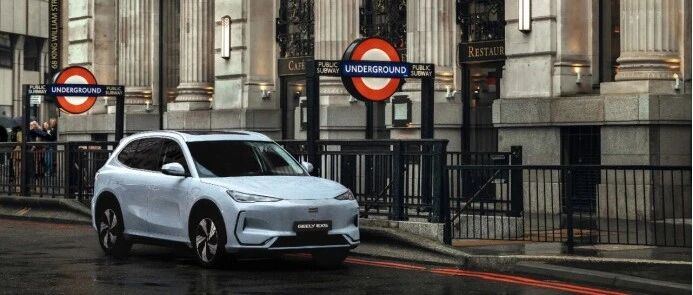
Core Viewpoint - By 2025, Chinese electric vehicles (EVs) will become a common sight on European streets, achieving significant market penetration despite high tariffs and competition from established local brands [1][2][3]. Group 1: European Market Share - Chinese brands are projected to capture 12.8% of the European EV market by 2025, marking a historical high, with hybrid vehicles exceeding 13% market share [6]. - In the UK, Chinese car sales reached 187,800 units in the first 11 months of the year, doubling from the previous year, with expectations to surpass 200,000 units and maintain a 10% market share by 2025 [7][9]. - Spain and Norway also show strong performance, with one in ten new cars sold being from Chinese brands, and the average market share in Western Europe reaching 6% [10]. Group 2: Sales Growth and Performance - SAIC MG registered 274,000 units, a year-on-year increase of 26.1%, while BYD's market share surged to 160,000 units, reflecting a staggering 276% growth [12][13]. - In key markets like Germany and Italy, BYD's sales have even surpassed those of Tesla [14]. - Geely reported a 61.8% year-on-year increase in sales in Europe for the first three quarters of the year [15]. Group 3: Competitive Advantages - Chinese EVs benefit from a mature supply chain that ensures stable supply and cost advantages, contrasting with European manufacturers facing high production costs and battery supply shortages [20][21]. - Chinese companies are strategically localizing production to mitigate tariff impacts, with firms like BYD and Chery establishing assembly operations in Europe [24]. - Innovations in battery technology, such as BYD's blade battery and CATL's high-energy-density batteries, meet European demands for longer range and safety [25][26]. Group 4: Challenges Ahead - Trade barriers, including a 45% anti-subsidy tax, and upcoming regulatory requirements for battery "digital passports" pose significant challenges for Chinese manufacturers [28][29]. - Service and brand recognition remain weaker compared to established European brands, affecting customer retention and service quality [31]. - Adapting to stringent European standards for charging interfaces and carbon footprints adds to the operational costs and complexity for Chinese EVs [33].
逆袭2025,2026剑指5.6万辆!上汽跃进如何打赢轻卡“翻身仗”?| 头条
第一商用车网· 2026-01-01 07:15
Core Viewpoint - SAIC Yuejin has successfully transformed its brand and achieved significant sales growth in 2025, setting ambitious targets for 2026 amidst a competitive light truck market [1][18]. Sales Performance - In 2025, SAIC Yuejin achieved total sales of 40,168 units, representing a year-on-year increase of 127%. Traditional energy vehicles accounted for 17,446 units, while new energy vehicles reached 22,722 units. The market share for the year was 4.0%, up 2.1 percentage points, ranking 8th in the industry, an improvement of 2 positions from the previous year [3][8]. - The market share increased from 1.9% in 2024 to 4.0% in 2025, demonstrating a strong comeback [4]. Competitive Positioning - SAIC Yuejin faced significant pressure from competitors over the past two years but has shown resilience and determination to succeed. The company has made strategic adjustments and navigated supply chain challenges effectively [6]. - The brand achieved five industry-leading positions in 2025: highest sales growth rate, highest growth in new energy logistics vehicles, highest market share among leading modified vehicle manufacturers, highest market share for new energy dedicated chassis, and highest sales among leading B-end enterprises [8]. Future Goals and Market Outlook - For 2026, SAIC Yuejin has set a sales target of 56,000 units, with 29,400 units from traditional energy vehicles and 26,600 units from new energy vehicles. The light truck market is expected to grow slightly, with a total capacity of 900,000 units, a 6% year-on-year increase [10][12]. - The company plans to launch multiple new products in 2026, including five new energy models and two traditional energy models, focusing on product innovation as a key driver for growth [12][14]. Product Strategy - The new models will include the seventh-generation small truck and light truck, designed for various business scenarios, emphasizing lower wind resistance, fuel efficiency, and high cost performance [12]. - New energy vehicles will feature advanced intelligent driving assistance systems to enhance safety and reduce driver fatigue [16]. Marketing and Channel Strategy - SAIC Yuejin will invest several hundred million yuan to support channel expansion and build a sustainable ecosystem, shifting its strategy from broad outreach to precise targeting and from volume-based incentives to multi-dimensional win-win approaches [16].
连续三年稳健增长,上汽奥迪2025年零售同比增长23%
Zhong Guo Qi Che Bao Wang· 2026-01-01 04:10
Core Insights - SAIC Audi achieved a total retail sales of 47,258 units in 2025, marking a year-on-year growth of 23%, and demonstrating a steady increase in annual sales for three consecutive years [3][4] Group 1: Sales Performance - The company reported a robust market development momentum with a significant increase in sales, attributed to an efficient product matrix renewal and precise market positioning [3] - The introduction of two major new models in 2025, including the all-new SAIC Audi A5L Sportback and the Audi E5 Sportback, contributed to the sales growth [3] Group 2: Brand Experience and Customer Engagement - SAIC Audi focused on enhancing brand experience and deepening emotional connections with users through various interactive formats, such as nationwide roadshows and pop-up stores [3] - The launch of the "SAIC Audi Driving Experience" aimed to create a unique event for driving enthusiasts, reinforcing the brand's identity of being "young, technological, and luxurious" [3] Group 3: Service and Channel Development - The company adopted a user-centric approach, upgrading its network to over 200 full-function user centers across more than 100 cities, making it the only luxury brand with a growing network [4] - The exhibition halls have been integrated to provide a seamless experience from brand display to sales service, ensuring a worry-free purchasing and service experience for customers [4] Group 4: Future Growth Prospects - SAIC Audi is poised to enter a new growth cycle in 2026, with the upcoming global debut of the Audi E7X at the 2026 Beijing International Auto Show, further showcasing the brand's forward-looking strategy in the luxury electric SUV market [4]

“懂车更懂你 马上焕新驾”,“2026年上汽新春欢乐购”重磅来袭
Zhong Guo Jin Rong Xin Xi Wang· 2026-01-01 02:33
Core Viewpoint - The Ministry of Commerce and eight other departments have released the implementation details for the 2026 vehicle trade-in subsidy, continuing to support vehicle scrapping and replacement with nationwide subsidies based on a fixed percentage of new car sales prices [1] Group 1: Promotional Activities - SAIC Group has launched the "2026 SAIC Spring Festival Happy Purchase" campaign, offering various differentiated discount packages across multiple brands including Roewe, MG, and Audi, aimed at making car purchases more economical and convenient for consumers [1] - During the promotional period, SAIC Group's dealerships will be decorated with a "Red Gold National Style" theme, creating a festive atmosphere with interactive experience zones and themed gifts for test drivers [4] Group 2: Discounts and Offers - The "2026 SAIC Spring Festival Happy Purchase" campaign features significant cash discounts, with Roewe and MG offering up to 37,000 yuan in cash benefits, along with additional incentives such as store gifts and financial offers [5] - Various brands under SAIC are providing unique promotional offers, including tax subsidies, limited-time bonuses, and exclusive benefits like lifetime warranties and special purchase funds [5]