
KWEICHOW MOUTAI(600519)

Search documents
茅台新增南京、北京发货仓
Xin Lang Cai Jing· 2026-01-24 05:55
贵州茅台表示,近期因平台订单量猛增与冬季天气变化,物流运输速度受到一定影响。茅台在原有贵阳 发货仓的基础上,新增南京与北京两大发货仓。 ...

马年茅台不“香”了? “不好卖 不想卖”酒行不愿进货 专家:生肖酒溢价空间不大|一探
Di Yi Cai Jing· 2026-01-24 04:25
Core Viewpoint - The market response to the newly launched "Year of the Horse" Moutai is lukewarm, with many retailers reluctant to stock or sell the product due to its perceived poor sales potential [1] Group 1: Market Reaction - Retailers in Shenzhen report that several have not stocked or are unwilling to sell the "Year of the Horse" Moutai, citing it as "hard to sell" and "not worth selling" [1] - The initial selling price of the "Year of the Horse" Moutai is approximately 2550 yuan per bottle, which is significantly lower than the speculative prices of three to four thousand yuan seen in previous years [1] Group 2: Future Expectations - Experts suggest that in a more pragmatic consumer environment, future zodiac wines are expected to return to their product essence, indicating a shift away from speculative pricing [1]
年内首批股价翻倍股曝光!27家公司被赋予超50%上涨预期!
Xin Lang Cai Jing· 2026-01-24 04:19
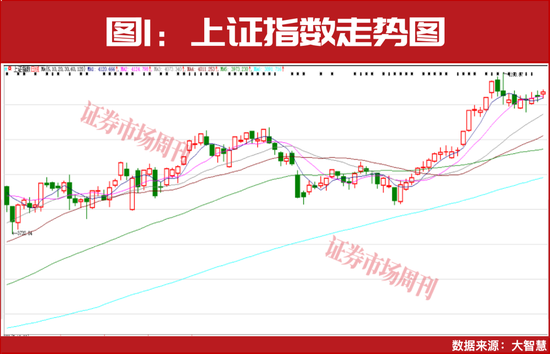
Core Viewpoint - The A-share market has shown positive momentum with major indices rising, driven by sectors such as perovskite batteries, BC batteries, gallium arsenide, non-ferrous zinc, and photovoltaic glass, leading to over a hundred stocks hitting the daily limit up [1][14]. Group 1: Market Performance - Since the beginning of 2026, the A-share index has increased by over 4%, with the early part of the month supported by policy benefits and liquidity easing, breaking through 4100 points within five trading days [2][15]. - The market is currently in a consolidation phase, with pressures from technical adjustments and funding discrepancies, but the mid-term trend remains positive due to liquidity support [2][15]. Group 2: Stock Performance - Several stocks have achieved significant gains, with six stocks doubling in value within the first month of 2026, including Zhite New Materials, which has seen a rise of 256.35% [4][18]. - Zhite New Materials has been associated with hot concepts such as AI for Science, quantum technology, and commercial aerospace, despite the company clarifying that it has not generated related revenue [6][19]. Group 3: Analyst Ratings and Predictions - As of January 23, 430 companies have received "buy" ratings from various brokerages, with 27 companies having over 50% upside potential based on target prices compared to their latest stock prices [20][21]. - Guizhou Moutai has the highest expected upside, with a target price of 2600 CNY per share, representing a potential increase of 94.02% from its closing price [21][22]. Group 4: Sector Insights - The sectors with high upside potential include electric equipment, biomedicine, electronics, automotive, non-ferrous metals, and liquor, particularly focusing on smart driving, innovative drugs, and artificial intelligence [11][23]. - The liquor industry is expected to benefit from the upcoming Spring Festival marketing activities, with analysts predicting stable sales and a gradual recovery trend [25].


马年生肖茅台“错版”包装更换方案出炉 3月起自营门店可更换
Xin Jing Bao· 2026-01-24 01:56
Core Viewpoint - The company has acknowledged a packaging error on the 53-degree 500ml Guizhou Moutai liquor (Bingwu Year) classic edition, where the character "昴" (mǎo) was incorrectly written as "昂". The company has implemented corrective measures and a customer service plan to address the issue [1][2]. Group 1: Error Acknowledgment and Correction - The company confirmed the packaging error after consumer feedback and has taken steps to rectify the mistake, including modifying the packaging and resuming production by January 23, 2026 [1]. - A comprehensive review of the systemic issues behind the error has been conducted, with plans for process optimization and management improvement [1]. Group 2: Customer Service and Replacement Plan - The company will offer a replacement service for the incorrect packaging until December 31, 2026, allowing consumers to exchange their products at Moutai's self-operated stores [2]. - A "pen tool" for correcting the error is being developed, with initial designs in place, although further refinement and testing are required before release [2]. Group 3: Market Response and Pricing - The secondary market has seen listings for the misprinted Moutai classic edition priced between 2,200 to 3,888 yuan per bottle, significantly above the original price of 1,899 yuan [2]. - The wholesale reference price for the classic edition remains stable at 2,180 yuan per bottle, indicating no immediate price fluctuations despite the error [2].
马年生肖茅台“错版”包装更换方案出炉,3月起自营门店可更换
Bei Ke Cai Jing· 2026-01-24 01:49
Core Viewpoint - The company has acknowledged a packaging error on the 53-degree 500ml Guizhou Moutai liquor (Year of the Horse) and has implemented corrective measures, including a replacement service and a tool for consumers to rectify the error themselves [1][2]. Group 1: Error Acknowledgment and Correction - The packaging error involved the character "昴" (mǎo) being incorrectly written as "昂" and was confirmed by the company after consumer feedback [1]. - The company has corrected the packaging and plans to resume production of the product by January 23, 2026, following a thorough review of the systemic issues that led to the error [1][2]. Group 2: After-Sales Solutions - The after-sales solution includes a replacement service available until December 31, 2026, at all Moutai self-operated stores, where consumers can exchange the original product for the corrected version [2]. - A "pen tool" is being developed to allow consumers to fix the error themselves, with the design process ongoing and expected to take time to ensure usability and aesthetic appeal [2]. Group 3: Market Response and Pricing - The secondary market has seen listings for the misprinted Year of the Horse Moutai at prices ranging from 2,200 to 3,800 yuan per bottle, significantly above the original price of 1,899 yuan [2]. - The wholesale reference price for the corrected version remains stable at 2,180 yuan per bottle, indicating no immediate price fluctuations in the wholesale market [2].
酒价内参1月24日价格发布 价格小幅回暖创四日新高
Xin Lang Cai Jing· 2026-01-24 01:10
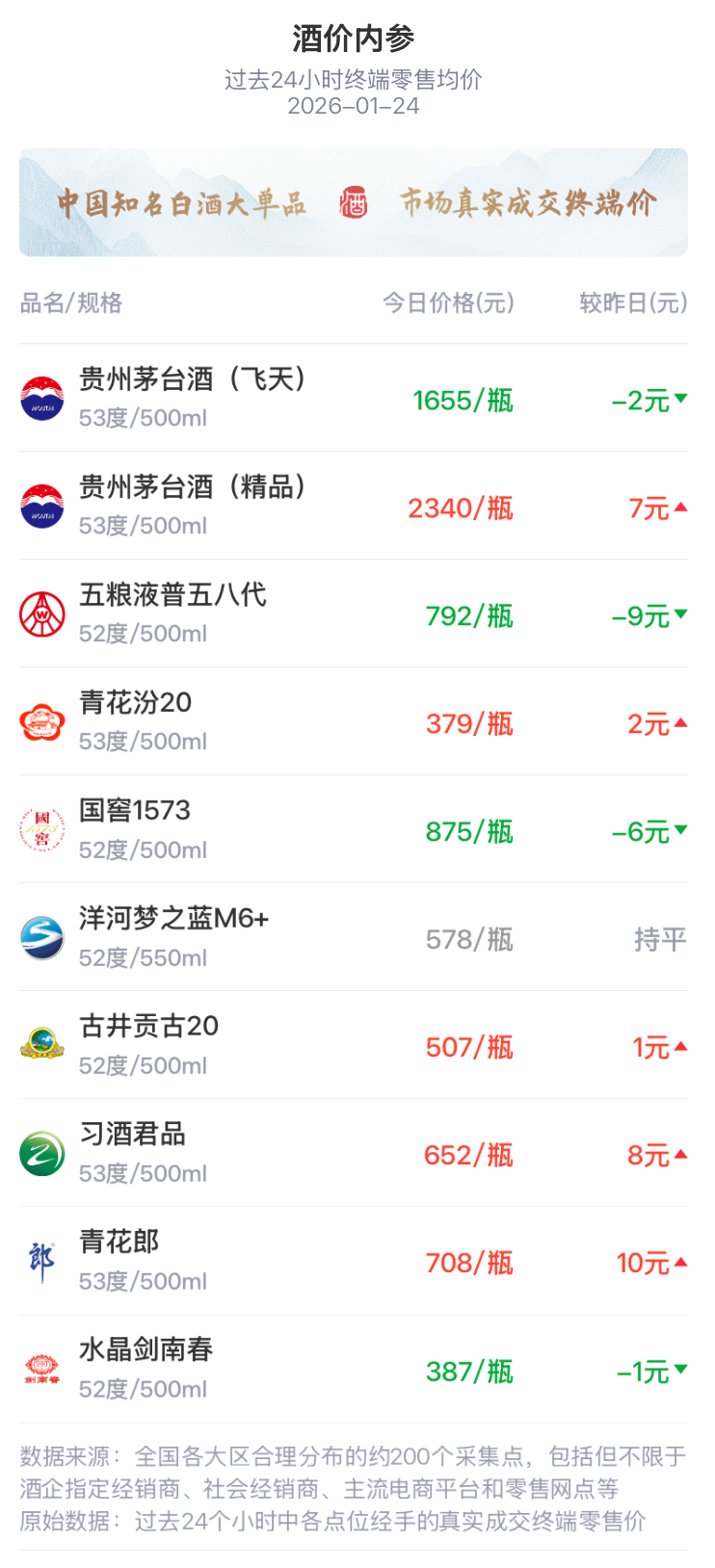
Core Viewpoint - The Chinese liquor market shows signs of a slight recovery in retail prices for the top ten products as of January 24, with an overall average price of 8,873 yuan, an increase of 10 yuan from the previous day. However, the market remains cautious with structural fluctuations dominating the short-term outlook [1]. Price Movements - Among the top ten liquor products, five experienced price increases, four saw declines, and one remained stable. The overall average price remained relatively stable [1]. - The leading price increase was observed in Qinghua Lang, which rose by 10 yuan per bottle. Xijiu Junpin followed with an increase of 8 yuan per bottle, while the price of premium Moutai rose by 7 yuan per bottle [1]. - Other products that saw slight increases include Qinghua Fen 20 and Gujing Gong Gu 20, which rose by 2 yuan and 1 yuan per bottle, respectively [1]. Declining Prices - The product with the largest decline was Wuliangye Pu 58th generation, which fell by 9 yuan per bottle. Guojiao 1573 also saw a decrease of 6 yuan per bottle, and Feitian Moutai dropped by 2 yuan per bottle, primarily due to the continued supply of low-priced goods on the iMoutai platform [1][3]. - Additionally, Shuijing Jian Nan Chun experienced a minor decline of 1 yuan per bottle, while Yanghe Dream Blue M6+ remained unchanged at 578 yuan [1][4].





茅台集团总经理王莉:坚持完善现代企业治理体系
第一财经· 2026-01-23 14:42
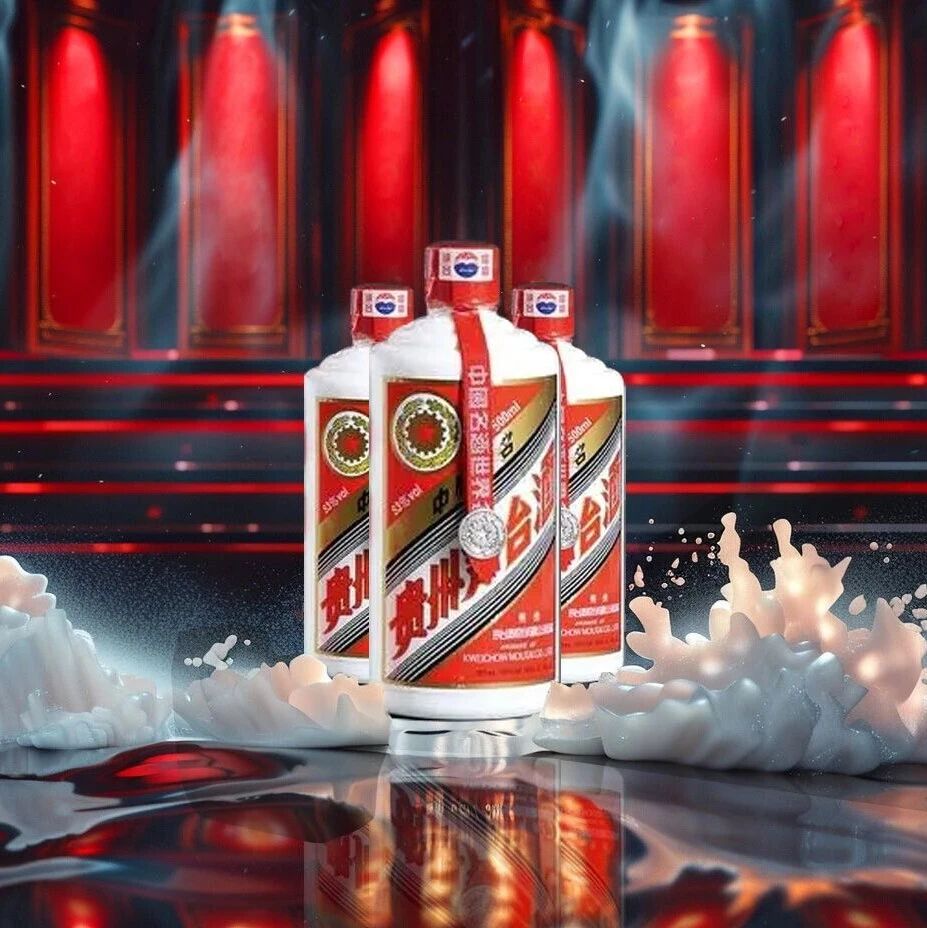
Core Viewpoint - The article emphasizes the commitment of Kweichow Moutai to sustainable development through ESG practices, integrating environmental, social, and governance considerations into its business strategy [3][4]. Group 1: ESG Practices - Kweichow Moutai aims to align its ESG practices with its development, focusing on sustainable growth that benefits customers, employees, shareholders, suppliers, and the community [3]. - The company has set ambitious targets for its carbon and water footprints, aiming for a 20% reduction in carbon emissions and a 30% reduction in water usage across its entire supply chain by 2030 [3]. Group 2: Product Quality and Governance - The company emphasizes the importance of product quality and safety, responsible marketing, and consumer rights protection, ensuring that suppliers adhere to "Moutai standards" for supply chain stability [4]. - Kweichow Moutai is focused on enhancing its governance structure to improve efficiency while balancing tradition and innovation in its operations [4]. Group 3: Future Outlook - The MSCI upgraded Kweichow Moutai's ESG rating from BBB to A in 2025, reflecting recognition of its ESG efforts and raising expectations for future sustainable development [4]. - The company plans to deepen its ESG philosophy and collaborate with partners to create greater value for consumers, the industry, and society [4].
公募基金调仓路线图浮现 中际旭创成头号重仓股
2 1 Shi Ji Jing Ji Bao Dao· 2026-01-23 13:33
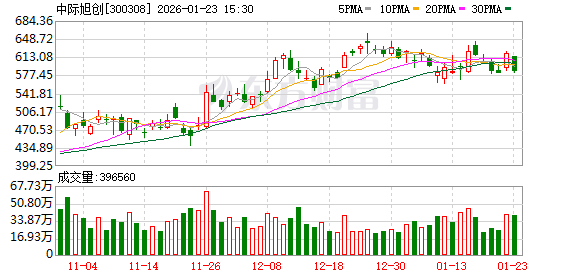
Core Viewpoint - The latest statistics indicate a significant shift in the top holdings of actively managed equity funds, with Zhongji Xuchuang replacing CATL as the largest holding, reflecting changing market dynamics and investment strategies [2][3]. Group 1: Changes in Top Holdings - As of the end of Q4 2025, the top ten holdings of actively managed equity funds are: Zhongji Xuchuang, Xinyi Semiconductor, CATL, Tencent Holdings, Zijin Mining, Alibaba-W, Cambrian Biologics-U, Luxshare Precision, Kweichow Moutai, and Dongshan Precision [3]. - The total market value of these top ten stocks held by actively managed equity funds is 76.8 billion, 63.8 billion, 63 billion, 57.4 billion, 36.8 billion, 31 billion, 29.1 billion, 28 billion, 25.8 billion, and 24.4 billion respectively [3]. - Notable changes from Q3 2025 include Zhongji Xuchuang rising from fourth to first, Xinyi Semiconductor from third to second, and Zijin Mining from eighth to fifth, while CATL and Tencent Holdings dropped to third and fourth respectively [3][6]. Group 2: Sector Allocation Adjustments - In Q4 2025, actively managed equity funds increased their allocations in sectors such as non-ferrous metals, communication, non-bank financials, chemicals, and machinery, while reducing exposure to electronics, pharmaceuticals, media, computers, and power equipment [2][8]. - The overall stock position of actively managed equity funds decreased to 84.4%, down 1.4 percentage points from the previous quarter, indicating a cautious approach amidst market volatility [7]. - The increase in allocation to sectors like non-ferrous metals and chemicals is attributed to supply constraints and recovering demand from new energy and AI applications, while the reduction in electronics and pharmaceuticals is linked to high valuations and weak short-term outlooks [8][9]. Group 3: Market Trends and Insights - The changes in top holdings and sector allocations reflect a shift in market focus towards technology, particularly in the communication sector, driven by the rapid development of the digital economy and AI [4][5]. - The strategic importance of communication infrastructure and chip manufacturing is highlighted, with ongoing policy support for industry upgrades creating new growth opportunities [5]. - The overall market sentiment is characterized by a balance between short-term gains and long-term strategic positioning, influenced by industry prospects and policy environments [9].






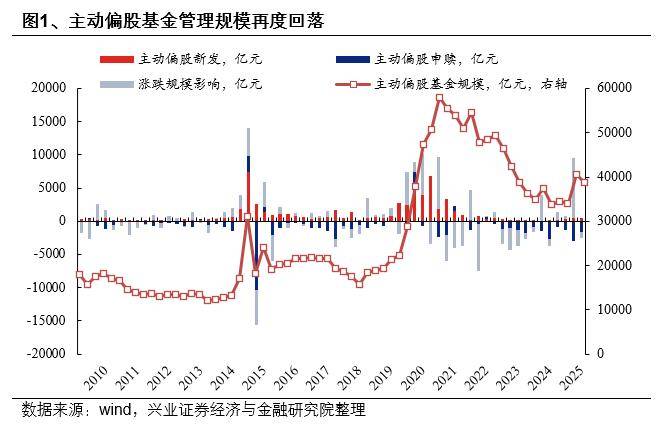
兴证策略:2025年四季度主动权益基金管理规模小幅下降 四季度存量基金的赎回压力仍然较大
Sou Hu Cai Jing· 2026-01-23 12:38
Group 1 - The active equity fund management scale decreased slightly in Q4 2025, primarily due to significant redemption pressure from existing funds, resulting in a net redemption of 165.6 billion yuan [1] - The total management scale of three types of active equity funds (ordinary stock, mixed equity, and flexible allocation) decreased by 189.8 billion yuan, with new active equity fund issuance at 56.2 billion yuan [1] - The active equity fund's position in Q4 2025 decreased by 0.83 percentage points to 86.62%, remaining at the second-highest level in history [2] Group 2 - In terms of sector allocation, the proportion of the ChiNext board increased by 1.24 percentage points to 24.98%, while the main board and Sci-Tech Innovation board saw declines [5][8] - The allocation to the main board decreased by 0.30 percentage points to 58.21%, indicating a further increase in underweight [8] - Active equity funds increased their positions in cyclical and financial real estate sectors while reducing exposure to technology growth and pharmaceuticals [11] Group 3 - The active equity funds increased their allocation in the non-ferrous metals, communication, and non-bank financial sectors, with increases of 2.26 percentage points, 1.85 percentage points, and 0.87 percentage points respectively [13] - The funds reduced their positions in electronics, pharmaceuticals, media, power equipment, and computers, with reductions of 1.72 percentage points, 1.54 percentage points, and 1.16 percentage points respectively [13] - Excluding thematic/sector funds, the active equity funds still increased their positions in non-ferrous metals, communication, and non-bank financial sectors [14] Group 4 - The allocation to the TMT sector slightly decreased in Q4 2025, with the configuration coefficient at 1.48, indicating room for further improvement [29] - Within the TMT sector, active equity funds increased their holdings in communication equipment and components while reducing positions in consumer electronics and semiconductors [32] - The dividend sector's allocation stabilized and increased, with the low-volatility dividend index rising by 1.7 percentage points to 4.3% [37] Group 5 - The top five stocks in active equity funds in Q4 2025 included Zhongji Xuchuang, Xinyi Sheng, Dongshan Precision, China Ping An, and Zijin Mining, with respective increases in holding ratios [43] - The top ten holdings accounted for 4.83%, 4.01%, and 3.97% of the total market value of the funds [46] - The concentration of individual stocks in active equity funds increased slightly, while the concentration of industries showed a mixed trend [49] Group 6 - The Hong Kong stock allocation of active equity funds decreased to 15.98%, down from 19.09%, with a total holding value of 302.9 billion yuan [51] - The funds increased their positions in the healthcare, materials, and energy sectors while reducing exposure to consumer discretionary and information technology sectors [54] - Tencent maintained its position as the largest holding in Hong Kong stocks, with a market value of 57.3 billion yuan [56]




张坤在管基金披露2025年四季报:减持白酒股 加仓阿里巴巴(09988)
Zhi Tong Cai Jing· 2026-01-23 12:24
Core Viewpoint - E Fund's Zhang Kun reported a decline in total assets under management to 48.383 billion yuan as of December 2025, with three A-share focused funds underperforming their benchmarks, while the E Fund Asia Select fund achieved positive returns, significantly exceeding its benchmark [1][2]. Group 1: Fund Performance - As of December 2025, the largest fund, E Fund Blue Chip Select, had a net asset value of 1.8623 yuan, with a report period net asset value growth rate of -8.93%, compared to a benchmark return of -2.63% [1]. - Three main A-share focused funds reported negative quarterly returns and failed to outperform their performance benchmarks [1]. Group 2: Portfolio Adjustments - Zhang Kun reduced holdings in major stocks such as Kweichow Moutai, Wuliangye, Luzhou Laojiao, and Shanxi Fenjiu, while also significantly reducing positions in Focus Media and China Merchants Bank [1]. - The top ten holdings of E Fund Blue Chip Select remained unchanged, including Tencent, Kweichow Moutai, and Alibaba, with notable reductions in Focus Media and increases in Alibaba [2]. Group 3: Market Outlook - Zhang Kun expressed a long-term optimistic view on the macro economy and market, predicting significant improvements in living standards and social security in China over the next decade [2]. - He emphasized the importance of a strong domestic demand market in promoting technological innovation, suggesting that improved consumer environments could enhance subscription revenues and model capabilities [3]. Group 4: Confidence in Business Models - Zhang Kun maintained confidence in the business models, competitive barriers, and cash flow generation capabilities of the companies in the portfolio, asserting that the market's perception of quality companies presents good opportunities for long-term investors [3].