
CMS(600999)

Search documents
招商证券国际:对阿里巴巴-WAI云业务乐观 维持目标价198港元
Zhi Tong Cai Jing· 2025-12-08 04:30
招商证券国际发布研报称,阿里巴巴-W(09988)管理层表示,未来三年无AI泡沫,并拟上调此前2026- 2028财年总计3800亿元人民币的资本开支。该行对阿里云的持续加速保持乐观,预计其2026-2027财年 收入同比增34%及35%。暂维持港股目标价198港元及"增持"评级。 该行预计,阿里巴巴截至12月财季CMR增速将同比放缓至6%,同时预计季度亏损将显著收窄。另预计 集团中国商业整体收入在2026-2027财年分别增12%及9%,2026年经调整EBITDA分别年减37%,2026年 则年增35%。整体而言,该行将阿里巴巴2026-2027财年归母净利润预测上调1-3%,其中云业务收入上 调抵消了国际电商及其他板块的下调。该行继续维持集团为中国互联网首选,保持对其AI领导力、云 业务加速及核心商业稳健前景的积极判断。 ...


头部券商把脉十五五投资主线:新质生产力为核心,AI、航天、创新药成焦点
Xin Lang Cai Jing· 2025-12-08 04:16
Group 1 - The core viewpoint of the news is that the "14th Five-Year Plan" outlines a clear roadmap for the high-quality development of China's capital market, with a strategic opportunity period for deepening capital market reforms and building first-class investment banks and institutions in the next five years [1][10] - The China Securities Regulatory Commission Chairman Wu Qing emphasized the importance of this period for the capital market [1][10] Group 2 - During the "14th Five-Year Plan" period, the securities industry is expected to undergo significant restructuring, leading to the emergence of ten leading comprehensive institutions [2][11] - Regulatory cycles for investment banking, derivatives, futures, and asset securitization are anticipated to gradually improve, allowing securities firms to achieve long-term growth through internal growth and mergers [2][11] - The focus on asset allocation, comprehensive services, and international capabilities will be key differentiators in the industry [2][11] Group 3 - The insurance, securities, and banking sectors are expected to achieve coordinated growth in scale and quality during the "14th Five-Year Plan" [3][12] - By 2030, insurance premium income is projected to reach 8 trillion yuan, with total industry assets expected to exceed 60 trillion yuan [3][12] - The securities industry is likely to see the emergence of several trillion-yuan-level firms, with a more diversified income structure and increased industry concentration [3][12] - The banking sector is expected to maintain stable performance, with a gradual slowdown in asset expansion and improved asset quality [3][12] Group 4 - The focus on technological innovation and future industries is a strong consensus, with significant progress in economic structural adjustments [4][13] - Key industries to watch include digital technology (AI, 6G, quantum technology), space economy (low-altitude economy, commercial aerospace), high-end manufacturing, and healthcare [4][13] - The core themes for investment opportunities are expected to revolve around the AI industry chain and innovative pharmaceuticals [4][13] Group 5 - The Ministry of Industry and Information Technology has proposed advancing future manufacturing, information, materials, energy, space, and health during the "14th Five-Year Plan" [7][16] - Ten key sub-sectors for capital market focus include AI, robotics, aerospace, drones, strategic resource metals, shipping, controllable nuclear fusion, energy storage, brain-computer interfaces, and innovative drugs [7][16] - The market narrative is expected to be driven by confidence, consensus, and structural adjustments, with a focus on technology growth industries [7][16]




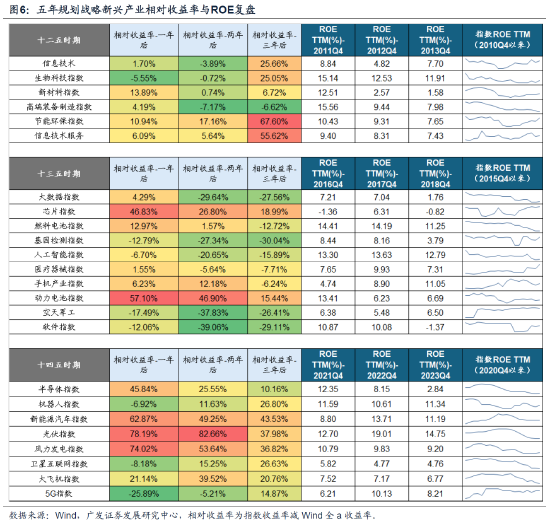
ETF盘中资讯 | 券商股狂欢,兴业证券飙涨8%!高股息蓝筹强势崛起,价值ETF(510030)盘中涨近1%!
Sou Hu Cai Jing· 2025-12-08 02:46
Core Viewpoint - High dividend stocks are showing strong performance, particularly focusing on "high dividend + low valuation" large-cap blue-chip stocks, with the value ETF (510030) experiencing a price increase of nearly 1% during trading [1] Group 1: Market Performance - The value ETF (510030) rose by 0.37% as of the report, indicating a positive market sentiment towards high dividend stocks [1] - Key sectors leading the gains include brokerage and insurance, with notable increases in stocks such as Industrial Securities (up 8.33%) and Huatai Securities (up 4.63%) [1] Group 2: Valuation Insights - As of the last trading day (December 5), the value ETF's underlying index, the 180 Value Index, had a price-to-book ratio of 0.84, which is at a relatively low level compared to the past decade [3] - The current market risk appetite is near the rolling five-year average, suggesting that high dividend sectors, particularly banks and oil, are performing well [3] Group 3: Investment Strategy - The value ETF closely tracks the 180 Value Index, which selects the top 60 stocks based on value factor scores, primarily from the financial sector [4] - The index constituents are characterized by "low valuation + high dividend" attributes, providing defensive qualities in volatile markets [4]




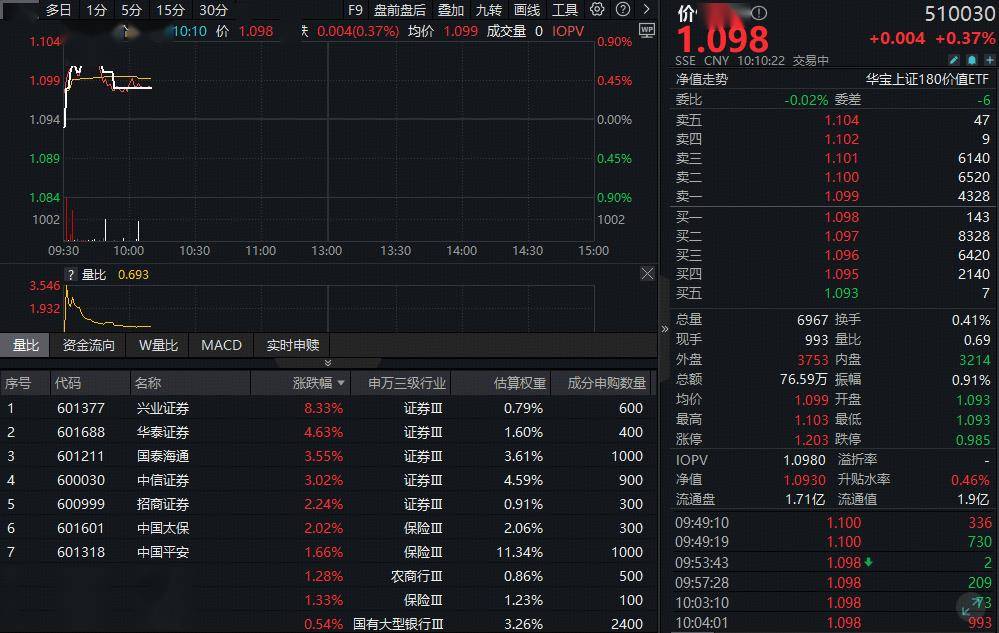
券商股狂欢,兴业证券飙涨8%!高股息蓝筹强势崛起,价值ETF(510030)盘中涨近1%!
Xin Lang Ji Jin· 2025-12-08 02:45
Core Viewpoint - High dividend stocks are showing strong performance, particularly focusing on "high dividend + low valuation" large-cap blue-chip stocks, with the value ETF (510030) experiencing a price increase of 0.37% as of the report time [1]. Group 1: Market Performance - The value ETF (510030) saw an intraday price increase of nearly 1%, closing up 0.37% [1]. - Key stocks in the ETF include securities and insurance companies, with notable gains from firms like Industrial Securities (up 8.33%) and Huatai Securities (up 4.63%) [1]. Group 2: Valuation Insights - As of the last trading day (December 5), the value ETF's underlying index, the 180 Value Index, had a price-to-book ratio of 0.84, which is at a relatively low level compared to the past decade, indicating strong medium to long-term investment value [3]. Group 3: Sector Analysis - The securities industry is expected to experience high-quality development during the 14th Five-Year Plan, playing a core role in serving the real economy and optimizing household wealth allocation [1]. - Policies from the China Securities Regulatory Commission are anticipated to create structural investment opportunities and long-term value reconstruction in the securities sector [1]. - The high dividend sector, particularly banks and oil companies, has shown strong performance, with expectations for market risk preferences to recover in December [4].
保险因子下调,场内稀缺双板块配置工具,保险证券ETF(515630)涨超3%
Xin Lang Cai Jing· 2025-12-08 02:45
Group 1 - The core viewpoint of the news is that the recent regulatory adjustments by the National Financial Regulatory Administration are aimed at encouraging insurance capital to enter the market, which has led to a significant increase in the performance of the securities and insurance sector, as evidenced by the rise in the CSI 800 Securities and Insurance Index by 2.91% [1] - The adjustment of risk factors for insurance companies' long-term holdings in specific indices, including a 10% reduction in solvency risk factors, is expected to slightly improve solvency and reflects a supportive regulatory attitude towards long-term investments [1] - The emphasis on dividend stocks in the notification aligns with the current trend of insurance companies focusing on dividend stock investments, indicating a strategic direction for the insurance industry [1] Group 2 - The CSI 800 Securities and Insurance Index is designed to provide investors with a diversified investment target by selecting securities from the securities and insurance industry based on the CSI 800 Index [2] - As of November 28, 2025, the top ten weighted stocks in the CSI 800 Securities and Insurance Index account for 63.12% of the index, with major companies including China Ping An, Dongfang Wealth, and CITIC Securities [2]



业绩高增 + 政策利好 + 资金流入,证券ETF龙头(159993)涨近4%
Xin Lang Cai Jing· 2025-12-08 02:13
Group 1 - The core viewpoint of the news highlights a strong performance in the securities sector, with the National Securities Leading Index rising by 3.86% and individual stocks like Industrial Securities and Huatai Securities showing significant gains [1] - The Securities ETF Leader has seen continuous net inflows over the past three days, totaling 25.27 million yuan, with a peak single-day inflow of 12.74 million yuan [1] - The China Securities Regulatory Commission (CSRC) plans to enhance classified regulation, easing restrictions for high-quality institutions to improve capital efficiency [1] Group 2 - The report indicates that 43 listed securities firms achieved a year-on-year net profit growth of 64% in the first three quarters of 2025, significantly outperforming the market [1] - The adjustment of margin financing limits by leading brokerages is expected to face leverage constraints, which may impact the expansion of capital intermediary businesses [2] - The CSRC's emphasis on a capital-saving, high-quality development path for securities firms has led to a near halt in equity financing, highlighting the need for flexible capital supply and leverage utilization [2] Group 3 - The National Securities Leading Index closely tracks the performance of quality listed companies in the securities theme, providing investors with diversified index investment tools [3] - As of November 28, 2025, the top ten weighted stocks in the National Securities Leading Index account for 79.05% of the index, with companies like Dongfang Wealth and CITIC Securities among the top [3]


招商证券:10月快递业务量增速放缓 单票价格同比持续修复
智通财经网· 2025-12-08 01:49
Core Viewpoint - The current market valuation of the express delivery industry is considered relatively high compared to the performance expected in 2026, with a focus on growth drivers for performance recovery in 2026 [1] Express Delivery Industry Core Data - In October 2025, the national express delivery volume reached 17.6 billion pieces, showing a year-on-year growth of 7.9%, with a decline of 4.9 percentage points compared to the previous month [1] - The average revenue per delivery piece was 7.48 yuan, reflecting a year-on-year decrease of 3.0%, with a narrowing decline of 1.9 percentage points compared to the previous month [1] - The total revenue from express delivery business amounted to 131.67 billion yuan, representing a year-on-year growth of 4.7%, with a decline of 2.5 percentage points compared to the previous month [1] Consumer Data - From January to October, the total retail sales reached 41.2 trillion yuan, growing by 4.3% year-on-year, with October retail sales at 4.6 trillion yuan, a year-on-year increase of 2.9% [2] - The cumulative online retail sales of physical goods from January to October reached 10.4 trillion yuan, growing by 6.3% year-on-year, with October online retail sales at 1.25 trillion yuan, a year-on-year increase of 4.9% [2] - The e-commerce penetration rate for the first ten months was 25.2%, down by 0.7 percentage points year-on-year, while the October penetration rate was 26.9%, up by 0.5 percentage points year-on-year [2] Listed Express Delivery Companies Core Data - The growth rate of delivery volume varies among companies, with SF Express benefiting from proactive business development, achieving a year-on-year increase of 26.3% in October 2025, while Yunda, Shentong, and YTO experienced changes of +12.8%, -5.1%, and +4.0% respectively [3] - The average revenue per delivery piece for SF Express, YTO, Yunda, and Shentong in October was 13.18, 2.23, 2.11, and 2.18 yuan respectively, with year-on-year changes of -10.0%, -3.5%, +4.5%, and +7.4% [3] - In October, the express delivery revenues for SF Express, YTO, Yunda, and Shentong were 20.1 billion, 6.2 billion, 4.5 billion, and 5.0 billion yuan respectively, with year-on-year changes of +13.7%, +9.0%, -0.9%, and +11.8% [3] - The market share of Yunda and Shentong increased, with their respective market shares in October being 13.3%, reflecting a year-on-year change of -0.5% and -0.1 percentage points [3]



机构研究周报:政策定调预计更积极,人民币临近"破7"
Wind万得· 2025-12-07 22:59
Core Viewpoints - The article emphasizes the expectation of a robust economic start in 2026 driven by proactive macro policies and structural reforms as part of the "14th Five-Year Plan" [1][5] - The appreciation of the RMB is anticipated to improve, nearing the "7" mark against the USD [1][19] Focused Commentary - Wu Qing highlights the importance of enhancing the inclusivity and adaptability of capital market systems during the "14th Five-Year Plan" period, focusing on public fund reforms and aligning investor interests [3] - The article discusses the need for a binding mechanism for public funds to ensure investor profit and loss are core to assessments, promoting the development of equity funds and index investments [3] Equity Market - CITIC Securities predicts a more proactive policy direction in the upcoming Central Economic Work Conference, with a focus on consumption expansion, technological innovation, and real estate risk mitigation [5] - Huaxia Fund suggests that the "spring rally" may start earlier due to key meetings, improved macro liquidity, and easing of funding pressures, recommending a focus on AI, domestic demand recovery, and resource sectors [6] -招商证券 notes that December's market will be influenced by the Federal Reserve's meetings and domestic conferences, with a preference for large-cap stocks and blue-chip dividends [7] Industry Research - Galaxy Securities indicates that the power industry will see opportunities for capacity upgrades during the "14th Five-Year Plan," with a focus on stable profitability in thermal power and growth in nuclear power [12] - Harvest Fund expresses optimism for the energy storage sector, highlighting its transition to a growth phase driven by policy and technological advancements [13] - CITIC Construction Investment Securities sees significant growth potential in the low-altitude economy, predicting a market size exceeding one trillion by 2030 [14] Macro and Fixed Income - Huatai Securities anticipates a gradual appreciation of the RMB, with a forecast of 6.82 against the USD by the end of 2026, driven by strong export growth and seasonal currency settlement peaks [19] - Bosera Fund notes a cautious sentiment in the bond market, with a need for clearer signals of policy easing to boost demand [20] - Guotai Fund believes that the bond market may see a recovery opportunity following recent volatility, suggesting it could be a good time for long-term positioning [21] Asset Allocation - CICC recommends maintaining a "barbell" strategy in asset allocation, combining dividend stocks with technology investments, while adjusting weights based on market conditions [23]

12月8日热门路演速递 | 降息、重估、大宗、资金流,五场连击洞见2026
Wind万得· 2025-12-07 22:59
Group 1 - The article discusses the potential impact of the Federal Reserve's interest rate cuts and the upcoming Central Economic Work Conference on the macroeconomic landscape [2][4] - It highlights the expected changes in dollar liquidity and the reasons behind the recent strength of the Renminbi [4][5] - The article emphasizes the anticipated shift in global liquidity favoring AH shares and the revaluation of Renminbi assets, alongside the potential for a bull-bear transition in the US stock market [7][8] Group 2 - The analysis includes projections for the agricultural product market, questioning whether a global upcycle is beginning and identifying trading opportunities in grains, oils, cotton, sugar, and live pigs [10] - It estimates that the reallocation of household assets could bring approximately 5.4 to 12.0 trillion yuan of incremental funds to the A-share market by 2030 [12] - The potential incremental funds from insurance capital entering the A-share market are projected to be around 6.0 to 9.6 trillion yuan by 2026 [13]


A股趋势与风格定量观察:利好逐步积累,但仍需交易量能回暖
CMS· 2025-12-07 08:10
Quantitative Models and Construction Methods 1. Model Name: Short-term Timing Strategy - **Model Construction Idea**: The model is based on historical data and statistical rules to identify short-term market timing signals, combining macroeconomic, valuation, sentiment, and liquidity indicators to generate a comprehensive timing signal[16][17][19] - **Model Construction Process**: 1. **Macroeconomic Indicators**: - Manufacturing PMI: If PMI > 50, it gives a positive signal; otherwise, a cautious signal. - Credit Pulse: The YoY growth rate of medium- and long-term RMB loans is used, with a higher percentile indicating a positive signal. - M1 YoY Growth Rate: Filtered using HP filter; higher percentiles indicate a positive signal. 2. **Valuation Indicators**: - PE Median Percentile: A higher percentile indicates a cautious signal due to mean reversion. - PB Median Percentile: A higher percentile also indicates a cautious signal due to mean reversion. 3. **Sentiment Indicators**: - Beta Dispersion: Neutral signal if within a certain range. - Volume Sentiment Score: Lower percentiles indicate a cautious signal. - Volatility: Neutral signal if within a certain range. 4. **Liquidity Indicators**: - Money Market Rate: Lower percentiles indicate a positive signal. - Exchange Rate Expectation: A stronger RMB against the USD gives a positive signal. - 5-day average net financing amount: Lower percentiles indicate a positive signal. 5. Combine all signals to generate a comprehensive timing signal[16][17][19] - **Model Evaluation**: The model demonstrates significant improvement over the benchmark strategy, with higher annualized returns, lower maximum drawdown, and better Sharpe ratio[18][21] 2. Model Name: Growth-Value Style Rotation Model - **Model Construction Idea**: The model uses a quantitative economic mid-cycle analysis framework, incorporating profitability, interest rate, and credit cycles to determine the relative attractiveness of growth versus value styles[26][27] - **Model Construction Process**: 1. **Macroeconomic Indicators**: - Profitability Cycle Slope: A steeper slope favors growth. - Interest Rate Cycle Level: Higher levels favor value. - Credit Cycle Strength: A stronger credit cycle favors growth. 2. **Valuation Indicators**: - Growth-Value PE Spread: A higher 5-year percentile indicates a preference for growth. - Growth-Value PB Spread: A higher 5-year percentile also indicates a preference for growth. 3. **Sentiment Indicators**: - Turnover Spread: A higher 5-year percentile indicates a preference for growth. - Volatility Spread: A higher 5-year percentile indicates a balanced preference for both growth and value. 4. Combine all signals to generate a comprehensive style rotation signal[26][27][28] - **Model Evaluation**: The strategy has shown significant improvement over the benchmark, with higher annualized returns, lower maximum drawdown, and better Sharpe ratio. However, in 2025, the strategy underperformed the benchmark slightly[27][29] 3. Model Name: Small-Cap vs. Large-Cap Style Rotation Model - **Model Construction Idea**: The model is based on 11 effective rotation indicators, including liquidity, sentiment, and valuation metrics, to determine the relative attractiveness of small-cap versus large-cap styles[30] - **Model Construction Process**: 1. **Indicators Used**: - Indicators such as R007, financing balance changes, trading volume, and sentiment metrics are analyzed. - For each indicator, a signal is generated to favor either small-cap or large-cap styles. 2. **Comprehensive Signal**: - Combine all individual signals into a comprehensive small-cap or large-cap rotation signal. - The model currently favors large-cap due to weak small-cap indicators such as low trading volume and negative sentiment[30][32] - **Model Evaluation**: The strategy has consistently generated positive annual excess returns since 2014, with a significant improvement over the benchmark in terms of annualized returns and maximum drawdown[31][32] --- Model Backtesting Results 1. Short-term Timing Strategy - Annualized Return: 16.41% - Annualized Volatility: 14.81% - Maximum Drawdown: 14.07% - Sharpe Ratio: 0.9655 - Return-to-Drawdown Ratio: 1.1667 - Monthly Win Rate: 66.24% - Quarterly Win Rate: 60.38% - Annual Win Rate: 78.57%[18][21] 2. Growth-Value Style Rotation Model - Annualized Return: 12.74% - Annualized Volatility: 20.80% - Maximum Drawdown: 43.07% - Sharpe Ratio: 0.5853 - Return-to-Drawdown Ratio: 0.2958 - Monthly Win Rate: 58.33% - Quarterly Win Rate: 59.62%[29] 3. Small-Cap vs. Large-Cap Style Rotation Model - Annualized Return: 19.73% - Annualized Excess Return: 12.67% - Maximum Drawdown: 40.70% - Average Turnover Interval: 20 trading days - Win Rate (per trade): 49.57%[32]