CSEC,China Shenhua(601088)

Search documents
全国电力负荷屡创新高,旺季需求有望驱动煤价加速上涨
Minsheng Securities· 2025-07-19 11:26
Investment Rating - The report maintains a "Buy" rating for several companies in the coal sector, highlighting their stable performance and growth potential [3][12]. Core Insights - National electricity load has reached new highs, with peak season demand expected to drive coal prices upward. The report anticipates that by mid-August, prices may exceed 750 RMB/ton, with a price center around 700 RMB/ton for the second half of the year [2][7]. - Coal supply is decreasing significantly, with June 2025 coal imports down by 11.1% year-on-year, and domestic coal production showing mixed results. The overall capacity utilization rate in the coal mining sector has dropped to 69.3%, the lowest since Q1 2020 [2][21][38]. - The demand side shows a positive trend, with thermal power generation growth turning positive since late May, and electricity consumption reaching record levels due to rising temperatures [2][7][33]. Summary by Sections Investment Recommendations - Recommended stocks include: 1. Huayang Co., Ltd. for stable performance and year-on-year production growth 2. Jinko Coal Industry for high net cash growth potential 3. Industry leaders like Shaanxi Coal and China Shenhua for stable earnings 4. Shanmei International for recovery in production 5. Xinji Energy for coal-electricity integrated growth 6. CGN Mining for benefiting from nuclear power growth [3][12]. Market Performance - As of July 18, 2025, the coal sector has seen a weekly decline of 0.7%, underperforming compared to the broader market indices [13][15]. - Yunnan Coal Energy has shown the highest weekly increase at 4.11%, while Dayou Energy has experienced the largest decline at 10.33% [18][19]. Industry Dynamics - The report notes that coal prices are on an upward trend, with significant increases in both port and production prices. For instance, Qinhuangdao port's Q5500 coal price reached 634 RMB/ton, a weekly increase of 10 RMB/ton [8][10]. - The report highlights the structural tightness in coal supply, with power plants' coal inventories dropping below levels seen in 2023 and 2024 [2][7].





煤炭行业2025年中报业绩前瞻:二季度煤价筑底,看好下半年煤价回升带来煤企业绩修复
Shenwan Hongyuan Securities· 2025-07-19 11:06
Investment Rating - The coal industry is rated as "Overweight" indicating an expectation for the industry to outperform the overall market [3][29]. Core Views - The report anticipates a recovery in coal companies' performance in the second half of 2025, driven by a rebound in coal prices after a bottoming out in the second quarter [3]. - Domestic raw coal production increased by 5.4% year-on-year in the first half of 2025, while coal imports decreased by 11.1% [3][13]. - The average price of thermal coal and coking coal at ports fell significantly in the second quarter of 2025, with thermal coal prices dropping approximately 25.79% year-on-year [3][17]. Supply and Demand Analysis - Domestic raw coal production reached 2.405 billion tons in the first half of 2025, up from 2.266 billion tons in the same period of 2024, with notable increases in Shanxi (10.1%) and Xinjiang (12.4%) [8][9]. - Coal imports totaled 22.2 million tons in the first half of 2025, marking an 11.1% decline compared to the previous year, with negative growth observed since March 2025 [13][18]. - The average price of 5500 kcal thermal coal at ports was approximately 630 CNY/ton in Q2 2025, down from 850 CNY/ton in Q2 2024, reflecting a significant price drop [3][17]. Company Performance Forecast - Companies expected to exceed performance expectations include China Shenhua (EPS 1.24, YOY -16.62%), Electric Power Investment (EPS 1.36, YOY 3.49%), and Xinji Energy (EPS 0.38, YOY -15.78%) [3][20]. - Companies with performance in line with expectations include Shaanxi Coal (EPS 0.86, YOY -21.1%) and Yanzhou Coal (EPS 0.54, YOY -47.24%) [3][20]. - The only company expected to underperform is Shanxi Black Cat (EPS -0.25, YOY -14.61%) [3][20]. Investment Recommendations - The report recommends focusing on stable, high-dividend stocks such as China Shenhua, Shaanxi Coal, and China Coal Energy [3]. - It also suggests considering undervalued stocks with potential for growth, including Shanxi Coking Coal, Huabei Mining, Electric Power Investment, Yanzhou Coal, and Pingmei Shenma [3]. - Attention is drawn to Xinji Energy as a growth stock benefiting from coal-electricity integration [3].


十余家煤企揭晓半年成绩单!产品量价齐跌 利润集体承压
Hua Xia Shi Bao· 2025-07-19 01:13
Core Viewpoint - The coal industry is experiencing significant profit declines across multiple companies due to a sharp drop in coal prices, with many firms reporting losses or substantial reductions in net profit for the first half of 2025 [1][2][3]. Company Performance - Zhengzhou Coal Electricity and Panjiang Coal & Electricity have shifted from profit to loss, with Shanghai Energy forecasting a net profit of 190 million to 230 million yuan, a decrease of 51.27% to 59.75% year-on-year [2]. - China Shenhua, the industry leader, expects a net profit of 23.6 billion to 25.6 billion yuan, down 39 billion to 59 billion yuan compared to the same period last year, representing a decline of 13.2% to 20.0% [2][3]. - Gansu Energy is projected to report a net loss of 180 million yuan, while Jizhong Energy anticipates a profit of 330 million to 400 million yuan, down 60.06% to 67.05% year-on-year [2][3]. - Lanhua Science and Technology expects a net profit of 40 million to 60 million yuan, a decrease of 89.12% to 92.75% [2][3]. - Yongtai Energy forecasts a profit of 120 million to 150 million yuan, down 87.39% to 89.91% year-on-year [2][3]. - Anyuan Coal Industry expects a net loss of 259 million to 310 million yuan, indicating an expanded loss compared to the previous year [2][3]. Industry Trends - The coal industry has been in a downward profit trend for nearly two years, with major companies like China Shenhua and Pingmei Shenma Coal & Electricity reporting consecutive quarterly profit declines [4]. - The decline in profits is attributed to falling coal prices, with the price of 5500 kcal coal at North Port dropping nearly 20% to 620 yuan per ton by June 30, 2025 [1][4]. - The coal market has experienced three significant price fluctuations since the establishment of the socialist market economy, with the current downturn being the most severe [5][7]. - In 2023, coal imports reached a record high of 474 million tons, up 61.8% year-on-year, contributing to the price decline [6][7]. - The overall revenue of the coal mining and washing industry fell by 19.2% year-on-year in the first five months of 2025, with total profits down by 50.6% [7]. Price Dynamics - The price of coal has been on a downward trend since 2023, with analysts suggesting that prices may have entered a reasonable range and could be nearing the bottom [8]. - The price of Q5500 coal at Qinhuangdao Port hit a low of 617 yuan per ton on June 5, 2023, marking a 49.6% drop from the peak earlier that year [4][5].


金十图示:2025年07月18日(周五)富时中国A50指数成分股今日收盘行情一览:银行、保险、酿酒等多数板块全天保持强劲,消费电子板块表现不佳
news flash· 2025-07-18 07:03
Market Overview - The FTSE China A50 Index components showed strong performance in sectors such as banking, insurance, and liquor, while the consumer electronics sector underperformed [1][6]. Banking Sector - Everbright Bank had a market capitalization of 254.068 billion with a trading volume of 609 million, closing at 4.30, up by 0.03 (+0.70%) [3]. Insurance Sector - China Ping An and China Life Insurance had market capitalizations of 1,039.258 billion and 356.818 billion respectively, with trading volumes of 24.93 billion and 6.12 billion. Their stock prices increased by 0.42 (+1.15%) and 0.03 (+0.36%) [3]. Liquor Industry - Kweichow Moutai, Shanxi Fenjiu, and Wuliangye had market capitalizations of 1,805.156 billion, 220.936 billion, and 480.465 billion respectively. Their trading volumes were 59.85 billion, 25.98 billion, and 30.62 billion, with stock price increases of 5.03 (+2.86%), 20.65 (+1.46%), and 1.13 (+0.92%) [3]. Semiconductor Sector - Northern Huachuang, Cambricon Technologies, and Hygon had market capitalizations of 234.658 billion, 243.739 billion, and 318.365 billion respectively. Their trading volumes were 26.40 billion, 29.85 billion, and 16.55 billion, with stock price changes of +6.59 (+2.07%), -1.03 (-0.75%), and +0.22 (+0.04%) [3]. Oil Industry - Sinopec and PetroChina had market capitalizations of 271.538 billion and 705.647 billion respectively, with trading volumes of 8.53 billion and 6.48 billion. Their stock prices increased by 0.09 (+1.57%) and remained unchanged [3]. Coal Industry - China Shenhua and Shaanxi Coal and Chemical Industry had market capitalizations of 743.083 billion and 185.562 billion respectively, with trading volumes of 7.78 billion and 9.61 billion, with stock price increases of 0.27 (+0.73%) and 0.17 (+0.90%) [3]. Automotive Sector - BYD had a market capitalization of 1,808.349 billion with a trading volume of 44.82 billion, closing at 329.11, up by 1.09 (+0.33%) [3]. Shipping and Port Sector - No specific data provided for this sector in the document [4]. Power Industry - No specific data provided for this sector in the document [4]. Securities Sector - CITIC Securities had a market capitalization of 420.014 billion with a trading volume of 18.87 billion, closing at 28.34, up by 0.09 (+0.32%) [4]. Battery Sector - CATL had a market capitalization of 1,236.485 billion with a trading volume of 59.82 billion, closing at 271.20, up by 5.70 (+2.15%) [4]. Consumer Electronics - Industrial Fulian and Luxshare Precision had market capitalizations of 538.390 billion and 280.871 billion respectively, with trading volumes of 35.27 billion and 53.15 billion, with stock price decreases of -0.39 (-1.42%) and -0.67 (-1.70%) [4]. Home Appliances - Haidilao and Gree Electric Appliances had market capitalizations of 268.195 billion and 241.985 billion respectively, with trading volumes of 10.06 billion and 8.44 billion, with stock price changes of +0.32 (+0.67%) and -0.02 (-0.08%) [4]. Chemical and Pharmaceutical Sector - Hengrui Medicine had a market capitalization of 251.506 billion with a trading volume of 38.81 billion, closing at 47.71, up by 1.35 (+2.91%) [4]. Logistics Sector - SF Holding had a market capitalization of 241.541 billion with a trading volume of 11.63 billion, closing at 46.04, up by 0.76 (+1.68%) [4]. Non-ferrous Metals - Mindray Medical had a market capitalization of 273.187 billion with a trading volume of 25.08 billion, closing at 225.32, up by 8.14 (+3.75%) [4].








金十图示:2025年07月18日(周五)富时中国A50指数成分股午盘收盘行情一览:多数板块飘红,消费电子、互联网服务板块下跌
news flash· 2025-07-18 03:33
Group 1: Market Overview - The FTSE China A50 Index components showed a mixed performance with most sectors in the green, while the consumer electronics and internet services sectors experienced declines [1][6]. Group 2: Sector Performance - The banking sector, represented by Everbright Bank, had a market capitalization of 255.25 billion with a trading volume of 392 million, showing a slight increase of 1.17% [3]. - In the liquor industry, Kweichow Moutai led with a market cap of 1,797.53 billion and a trading volume of 3.923 billion, increasing by 1.37% [3]. - The semiconductor sector saw Northern Huachuang with a market cap of 233.94 billion and a trading volume of 1.908 billion, rising by 1.76% [3]. - In the oil sector, Sinopec had a market cap of 703.22 billion with a trading volume of 552 million, increasing by 1.22% [3]. - The coal industry was represented by China Shenhua with a market cap of 743.88 billion and a trading volume of 709 million, rising by 0.83% [3]. - In the automotive sector, BYD had a market cap of 1,793.90 billion with a trading volume of 516 million, but saw a decrease of 0.47% [3]. - The battery sector was led by CATL with a market cap of 4,189.77 billion and a trading volume of 1.153 billion, increasing by 0.88% [4]. - The consumer electronics sector, represented by Hon Hai Precision, had a market cap of 540.97 billion with a trading volume of 2.376 billion, decreasing by 0.74% [4]. - In the home appliance sector, Gree Electric had a market cap of 267.47 billion with a trading volume of 446 million, showing a slight decrease of 0.31% [4]. - The pharmaceutical sector was led by Hengrui Medicine with a market cap of 387.15 billion and a trading volume of 2.654 billion, increasing by 2.36% [4]. - The logistics sector, represented by SF Holding, had a market cap of 240.58 billion with a trading volume of 737 million, increasing by 1.04% [4].





国泰海通:煤炭行业当下处于基本面拐点 推荐中国神华(601088.SH)等
智通财经网· 2025-07-18 02:24
Group 1 - The core concept of the new "anti-involution" supply-side reform differs significantly from the 2016 supply-side reform, focusing on regulating low-price competition rather than eliminating backward production capacity [1] - The "anti-involution" strategy aims to stabilize the price bottom in the coal industry by reducing disorderly competition, which is expected to lead to a more pragmatic bottom in the current market [1][3] - The report recommends leading companies in the coal sector, including China Shenhua (601088.SH), Shaanxi Coal (601225.SH), China Coal Energy (601898.SH), and Jinkong Coal (601001.SH), as they are expected to benefit from the release of performance risks [1] Group 2 - The cement industry serves as a successful case of "anti-involution," where collaborative production cuts have led to a recovery in industry profitability, highlighting the challenges of implementing similar strategies in the coal sector [2] - The coal industry is currently at a fundamental turning point, with over 50% of coal enterprises reporting losses, particularly in coking coal, indicating a need for production cuts to stabilize prices [3] - The supply side has shown a significant decrease in production from April to May, with spontaneous production cuts occurring due to economic pressures, while demand has started to recover, suggesting a potential turning point for electricity consumption growth [3]
中证内地资源主题指数上涨0.29%,前十大权重包含中国海油等
Jin Rong Jie· 2025-07-17 10:42
Core Viewpoint - The China Securities Index for domestic resources has shown positive performance, with a recent increase in value and significant year-to-date growth, indicating a favorable market trend for resource-related stocks [1]. Group 1: Index Performance - The China Securities Index for domestic resources rose by 0.29% to 3511.13 points, with a trading volume of 35.435 billion yuan [1]. - Over the past month, the index has increased by 1.37%, by 5.59% over the last three months, and by 5.12% year-to-date [1]. Group 2: Index Composition - The top ten holdings in the China Securities Index for domestic resources are: Zijin Mining (15.56%), China Shenhua (6.62%), China Petroleum (5.46%), China Petrochemical (4.52%), Northern Rare Earth (4.1%), Shaanxi Coal and Chemical (3.98%), China National Offshore Oil (3.32%), Luoyang Molybdenum (3.07%), China Aluminum (3.06%), and Shandong Gold (2.99%) [1]. - The index is primarily composed of the materials sector (68.47%) and the energy sector (31.53%) [2]. Group 3: Market Structure - The Shanghai Stock Exchange accounts for 78.58% of the index's holdings, while the Shenzhen Stock Exchange represents 21.42% [1]. - The index samples are adjusted biannually, with changes implemented on the next trading day following the second Friday of June and December [2]. Group 4: Related Funds - Public funds tracking the domestic resources index include Minsheng Jianyin China Securities Domestic Resources C and Minsheng Jianyin China Securities Domestic Resources A [3].


中证香港300上游指数报2639.21点,前十大权重包含中煤能源等
Jin Rong Jie· 2025-07-17 09:07
Group 1 - The core viewpoint of the news is that the China Hong Kong 300 upstream index has shown positive performance, with a 0.94% increase over the past month, an 18.02% increase over the past three months, and a 12.03% increase year-to-date [1] - The China Hong Kong 300 upstream index is composed of securities selected based on the China Securities Industry Classification, reflecting the overall performance of various thematic securities listed on the Hong Kong Stock Exchange [1] - The index has a base date of December 31, 2004, with a base point of 1000.0 [1] Group 2 - The top ten holdings of the China Hong Kong 300 upstream index include China National Offshore Oil Corporation (28.76%), PetroChina Company Limited (13.17%), Zijin Mining Group (10.73%), China Shenhua Energy Company (9.47%), Sinopec Limited (9.06%), China Hongqiao Group (4.45%), China Coal Energy Company (3.29%), Zhaojin Mining Industry Company (3.19%), Luoyang Molybdenum Company (2.74%), and Yanzhou Coal Mining Company (2.33%) [1] - The index's holdings are entirely composed of securities listed on the Hong Kong Stock Exchange, with a 100% allocation [1] Group 3 - In terms of industry composition, the China Hong Kong 300 upstream index has a significant allocation to oil and gas at 51.38%, followed by precious metals at 15.91%, coal at 15.56%, and industrial metals at 14.64% [2] - The index samples are adjusted semi-annually, with adjustments occurring on the next trading day after the second Friday of June and December each year [2] - Special circumstances may lead to temporary adjustments to the index, such as delisting of sample companies or corporate actions like mergers and acquisitions [2]


中国神华(601088):2025 年半年报业绩预告点评:行业底部显龙头本色,下行风险充分释放
GUOTAI HAITONG SECURITIES· 2025-07-17 07:05
Investment Rating - The report maintains an "Accumulate" rating for China Shenhua [7][14] Core Views - The company is positioned as a leading beneficiary in the coal sector, with expected capacity increases in the future. The report suggests that the coal market has reached its bottom, with supply and demand expected to improve in Q2 2025, enhancing the investment value of Shenhua [2][14] - The forecast for the first half of 2025 indicates a net profit attributable to shareholders of 23.6-25.6 billion yuan, representing a year-on-year decline of 13.2%-20%. The second quarter's net profit is projected to be around 12.7 billion yuan, showing a quarter-on-quarter increase [14] - The report anticipates a recovery in coal demand and a decrease in costs, which will mitigate the impact of falling prices. In Q2, the company is expected to achieve coal production of 82.9 million tons and sales of 105 million tons, reflecting a 6.3% increase from Q1 [14] Financial Summary - Total revenue for 2023 is projected at 343.074 billion yuan, with a slight decrease of 0.4% year-on-year. The net profit attributable to shareholders is expected to be 59.694 billion yuan, down 14.3% from the previous year [4][15] - Earnings per share (EPS) for 2025 is forecasted at 2.49 yuan, with a gradual increase to 3.25 yuan by 2027. The report adjusts the EPS estimates downward for 2025-2027 [4][15] - The company’s price-to-earnings (P/E) ratio is projected to be 15.04 for 2025, with a target price set at 44.79 yuan, reflecting a slight decrease from previous estimates [14][16] Market Data - The stock has a 52-week price range of 35.35-43.60 yuan, with a total market capitalization of 744.473 billion yuan [8] - The company has a net asset value per share of 21.80 yuan and a price-to-book (P/B) ratio of 1.7 [9]
“反内卷”发酵+用煤旺季,数据告诉你煤炭板块迎来“强支撑”
智通财经网· 2025-07-17 05:42
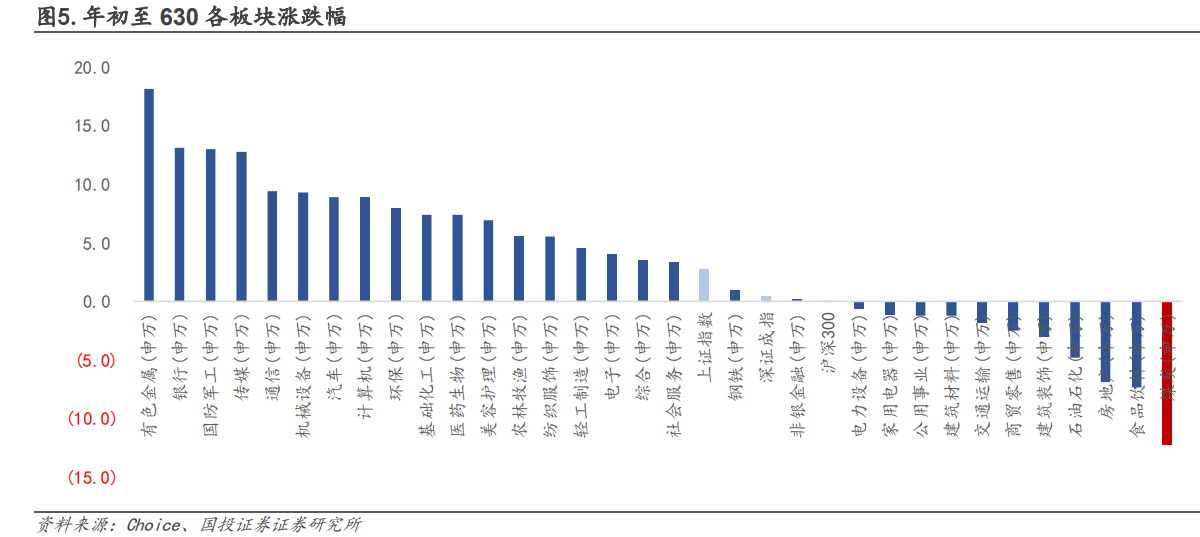
Core Viewpoint - The coal sector has experienced a significant rebound, driven by seasonal demand and the "anti-involution" policy aimed at stabilizing the market and promoting high-quality development [2][8]. Group 1: Market Performance - On July 14, the coal sector in the Hong Kong market rose by 3.79%, with China Shenhua H shares (01088) surging nearly 5% at one point, and related warrants increasing over 60% [1]. - The A shares of China Shenhua (601088.SH) also saw a rise of over 3%, while Zhengzhou Coal Electricity (600121.SH) hit the daily limit up during afternoon trading [1]. - As of June 30, the coal sector (Shenwan) had a decline of 12.29%, underperforming the CSI 300 index and ranking last among Shenwan industries [3]. Group 2: Supply and Demand Dynamics - The coal market is facing a supply-demand imbalance, with the China Coal Transportation and Marketing Association emphasizing the need for coal companies to understand market changes and adhere to long-term contracts [2]. - The average price of Qinhuangdao Q5500 thermal coal fell by 23% year-on-year, while the average price of coking coal at Jing Tang Port dropped by 39% [2]. - As of July 4, the average daily coal consumption of the six major power generation groups increased by 3.75% week-on-week, reaching an average of 84.27 million tons [7]. Group 3: Policy Impact - The "anti-involution" policy aims to reduce chaotic competition in the coal industry, with the government focusing on establishing rules to eliminate local protectionism and market segmentation [7][8]. - The recent meeting of the Central Financial Committee highlighted the need to address "involution-style" competition, which has further stimulated the coal sector's upward momentum [7][8]. Group 4: Investment Opportunities - Analysts suggest that the coal sector's rebound is supported by low valuations, high dividends, and potential transformation premiums, with a focus on companies like China Shenhua (01088, 601088.SH) and China Coal Energy (01898, 601898.SH) [9][10]. - The sector is expected to benefit from seasonal price increases due to rising demand amid supply constraints, with recommendations for stocks such as China Shenhua and Guanghui Energy [10]. - The coal industry is positioned at a triple support level of valuation, policy, and profit, making high-dividend leaders suitable for stable investment [11].