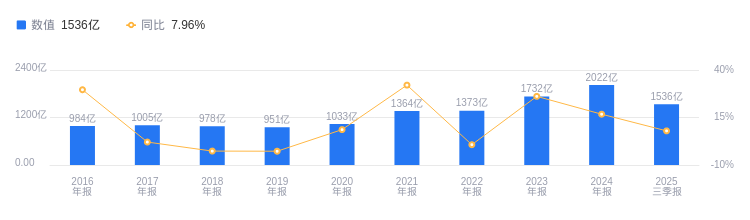
GWMOTOR(601633)

Search documents
周销量榜消失的10月,车圈集体“创新高”
汽车商业评论· 2025-11-01 23:06
Core Viewpoint - The automotive market in October 2025 reached historical sales highs, with multiple companies reporting record monthly sales, indicating a dynamic and competitive landscape in the industry [4][5][21]. Sales Performance - Several companies, including Leap Motor, Xpeng, NIO, and BAIC New Energy, achieved record monthly sales in October 2025, showcasing the effectiveness of their new models and strategies during the peak sales months [4][5]. - NIO delivered 40,397 vehicles in October, marking a 92.6% year-on-year increase, with the new ES8 model contributing significantly to this growth [7][21]. - Li Auto delivered 31,767 vehicles in October, maintaining a steady performance despite facing production and delivery challenges [13][14]. - Leap Motor reported a remarkable 70,289 vehicles delivered in October, a year-on-year increase of 84%, solidifying its position among the top new energy vehicle brands [14][15]. - Xpeng delivered 42,013 vehicles in October, reflecting a 76% year-on-year growth, while Xiaomi's deliveries exceeded 40,000 units, indicating strong market demand [15][17]. Market Dynamics - The competitive landscape is shifting, with the emergence of "big hit" models becoming crucial for brand differentiation and market success, as seen with NIO's ES8 and BAIC's Enjoy S9 [5][21]. - The upcoming implementation of a half-reduction in the new energy vehicle purchase tax starting January 1, 2026, is expected to drive a "cross-year purchase tax subsidy war" among automakers in the last two months of 2025 [6][22][27]. Strategic Adjustments - Companies are actively introducing purchase tax subsidy policies to alleviate consumer concerns and stimulate sales in the final months of the year [22][27]. - BAIC New Energy's sales reached 30,542 units in October, a 112% increase year-on-year, demonstrating the effectiveness of its dual-brand strategy [30]. - Dongfeng's Yipai Technology reported sales of 31,107 units in October, reflecting a 34.9% year-on-year growth, indicating successful integration within its passenger vehicle segment [30]. Innovations and New Models - The launch of new models and innovative strategies is critical for maintaining competitive advantage, as seen with the introduction of the new models from various brands [39][40]. - The automotive industry is witnessing a trend of integrating local technology with global standards, as highlighted by the success of models like the GAC Toyota's Platinum 3X [36][37]. Overall Industry Outlook - The automotive industry is entering a crucial phase as companies prepare for year-end sales targets amidst a backdrop of evolving consumer preferences and regulatory changes [47]. - The focus on quality and innovation remains paramount, as companies strive to balance sales growth with product safety and reliability [42][47].





10月汽车新势力“黑马”成群
Jing Ji Guan Cha Wang· 2025-11-01 16:21
Core Insights - The Chinese automotive market continues to show strong performance in October, particularly in the new energy vehicle (NEV) segment, indicating a shift in industry dynamics and growth logic [2][6] NEV Market Performance - NEVs are becoming the primary growth driver, with companies like Chery achieving over 110,000 NEV sales, Geely experiencing eight consecutive months of growth, and Great Wall Motors reporting a 44% year-on-year increase [2] - BYD remains the leader with over 440,000 units sold, although its growth momentum has slowed, showing a 12% decline compared to October last year [2][3] New Entrants and Competition - New entrants in the market are gaining traction, with Leap Motor surpassing 70,000 units, Xiaopeng achieving 42,000 units in sales, and NIO returning to growth with a monthly sales figure of 40,000 units [3][4] - The competition among new players has shifted from a focus on technology to one centered on production capacity, distribution channels, and after-sales service [4] Traditional Automakers' Strategies - Traditional automakers are experiencing a clear divide, with Geely and Great Wall Motors showing robust growth through diversified brand strategies and product lines [4][5] - SAIC's Roewe and MG brands have seen a 59% increase in NEV retail sales, but overall sales growth remains modest at 3% [4] Export Growth and Challenges - Exports are emerging as a new growth engine for automakers, with Great Wall's overseas sales reaching 57,000 units, a 28% increase year-on-year [5] - However, the risks associated with localization and profit dilution are significant as companies expand internationally [6] Industry Trends and Future Outlook - The industry is approaching a critical juncture, with NEV penetration nearing 60% and a normalization of price competition leading to declining average gross margins [6][7] - The focus is shifting from rapid growth to quality and operational efficiency, as companies must balance efficiency and profitability to succeed in the evolving market landscape [7]


深圳、上海等城市给予新能源皮卡“路权优待” 1—9月新能源皮卡增长440%
Zhong Guo Jing Ying Bao· 2025-11-01 10:19
Core Insights - The pickup truck market in China is experiencing a significant transformation, particularly with the rise of new energy pickups, which have shown remarkable growth in sales and market share [1][2][4] Group 1: Market Performance - In September 2025, the pickup truck market sold 46,000 units, representing a year-on-year decline of 2% but a month-on-month increase of 15%, maintaining a mid-to-high level compared to the past five years [1] - From January to September 2025, total pickup truck sales reached 432,000 units, marking an 11.2% year-on-year increase [1][6] - New energy pickups sold 4,000 units in September 2025, a year-on-year increase of 104% and a month-on-month increase of 31%, with cumulative sales of 54,000 units from January to September, reflecting a staggering growth of 440% [1][2] Group 2: Market Dynamics - The market for new energy pickups is expected to grow rapidly to meet domestic and international demand, driven by government policies that have eased restrictions on urban access for pickups [1][2] - The "one super, three strong" market structure continues to dominate, with Great Wall Motors leading with nearly 50% market share, followed by Jiangling Motors, Zhengzhou Nissan, and Jiangxi Isuzu [4] - The export of pickups has outperformed domestic sales, with exports accounting for 56% of total sales in September 2025, indicating a strong competitive position for Chinese pickups in international markets [6] Group 3: Regional Insights - The Southwest and Northwest regions account for 44.4% of the overall pickup truck demand, with major cities including Chongqing, Chengdu, Shenzhen, Urumqi, Beijing, and Pu'er leading in sales [3] - Different regions show varying preferences for pickup types, with the western regions favoring diesel and traditional pickups, while eastern cities like Shenzhen exhibit strong demand for new energy pickups [2]

上市车企前三季度业绩分化加剧 新能源汽车成破局关键
Zhong Guo Zheng Quan Bao· 2025-11-01 00:09
Core Insights - The overall performance of listed automotive companies in China for the first three quarters of 2025 shows stability, with 14 out of 20 companies reporting profits, indicating a strong recovery in the sector [1] - The automotive industry is transitioning towards a technology-driven development model, as evidenced by the significant increase in R&D expenditures, which exceeded 840 billion yuan [2] Financial Performance - Total revenue for the 20 listed automotive companies reached over 1.75 trillion yuan, reflecting an 8.8% year-on-year growth, while net profit declined by 10.8% to 462.15 billion yuan, indicating a phase of "increased revenue without increased profit" [3] - BYD reported a revenue of 566.27 billion yuan, a 12.8% increase year-on-year, but its net profit fell by 7.6% to 233.3 billion yuan due to rising expenses related to overseas expansion [3] - SAIC Motor Corporation achieved a revenue of 468.99 billion yuan, a 9.0% increase, with net profit rising by 17.3% to 81 billion yuan, supported by strong sales of new energy vehicles [4] - Great Wall Motors reported a revenue of 153.58 billion yuan, an 8.0% increase, but net profit decreased by 16.97% to 86.3 billion yuan due to increased investments in new channels and marketing [4] Sales Performance - In the first nine months of 2025, China's automotive sales reached 24.36 million units, a 12.9% increase, with the top 10 companies accounting for 83.9% of total sales [6] - BYD and SAIC Motor led the sales figures, each exceeding 3 million units, while Geely, FAW, and Changan also surpassed 2 million units [6] - Geely, SAIC, and BYD had the highest sales growth rates, with increases of 46%, 20.53%, and 18.64% respectively [6] Target Completion Rates - Seven companies achieved a sales completion rate exceeding 70%, with XPeng Motors leading at 82%, followed closely by Geely, SAIC, and BYD, all above 70% [7] - Geely adjusted its target to 3 million units, achieving a completion rate of 72.34%, while SAIC and BYD also reported completion rates of 70.96% and 70.87% respectively [7] - The completion rates are seen as a key indicator of performance, with the success of new energy vehicle sales being a critical factor in achieving these targets [7]

汽车行业“千亿元营收阵营”扩容 比亚迪前三季度以5662.66亿元营收稳居首位
Zheng Quan Ri Bao· 2025-10-31 15:59
Core Insights - The automotive industry in China is experiencing a significant transformation, with a total revenue of 3.23 trillion yuan and a net profit of 131.56 billion yuan for the first three quarters of 2023, reflecting a year-on-year growth of 8.19% and 3.36% respectively [1] - The new energy vehicle (NEV) sector continues to drive growth, with NEV production and sales reaching 11.24 million and 11.22 million units, marking a year-on-year increase of 35.2% and 34.9% [2] - The industry is witnessing a pronounced differentiation among companies, with some experiencing significant sales declines while others report substantial growth [3] Industry Performance - The overall automotive production and sales in China for the first three quarters reached 24.33 million and 24.36 million units, showing year-on-year growth of 13.3% and 12.9% respectively [2] - The passenger vehicle market outperformed the commercial vehicle market, with passenger vehicle production and sales at 21.24 million units, reflecting a growth of 13.9% and 13.7% [2] Company Performance - BYD led the industry with sales of 3.26 million units, a year-on-year increase of 18.64%, while SAIC Group followed closely with 3.19 million units, growing by 20.53% [3] - Some companies, such as GAC Group and JAC Motors, reported significant sales declines of 11.34% and 10.66% respectively [3] - BYD's revenue for the first three quarters was 566.27 billion yuan, a 12.75% increase, while SAIC Group reported 461.22 billion yuan, growing by 9.91% [4] Profitability Trends - BYD maintained its position as the industry's profit leader with a net profit of 23.33 billion yuan, although this represented a decline of 7.55% year-on-year [5] - Several traditional automakers, including GAC Group and BAIC Blue Valley, faced losses, indicating challenges during the industry's transition [5] - Commercial vehicle manufacturers like Foton Motor and China National Heavy Duty Truck reported significant profit recoveries, with Foton's net profit increasing by 1764.21% in the third quarter [5] Market Dynamics - The automotive industry is currently characterized by intense competition and price wars, which have pressured profit margins despite rising sales and revenue [6] - The demand for commercial vehicles has surged, contributing to the profitability of commercial vehicle manufacturers [6]

【乘联分会论坛】前三季度MPV市场走势与启示
乘联分会· 2025-10-31 08:39
Core Insights - The article highlights the rapid growth and increasing market acceptance of high-end MPVs in China, driven by their comfort, spaciousness, and suitability for various travel needs [2][14] - The domestic MPV market has shown significant growth, with a total of 878,597 units sold in the first three quarters of 2025, representing a year-on-year increase of 26.3% [3][14] Market Overview - In the first three quarters of 2025, the cumulative sales of domestic MPVs reached 879,000 units, with a year-on-year growth of 26.3%, and exports accounted for 57,000 units, up 16.7% [2][3] - The top 15 MPV models accounted for 78.5% of the market share, indicating a trend towards market concentration [3][4] Top Models Performance - The top-selling model, SAIC-GM Wuling Hongguang, achieved sales of 98,820 units, a staggering increase of 163.6% year-on-year [4][5] - Buick GL8 ranked second with sales of 88,239 units, reflecting a growth of 104.4% [4][6] - BYD's Tengshi D9, ranked third, sold 81,760 units, marking a modest increase of 2.9% [4][7] - The newly launched BYD Xia, positioned below Tengshi D9, sold 61,834 units, showcasing strong market entry [4][8] Emerging Trends - The article notes a shift towards hybrid and electric models, with the Buick GL8's PHEV sales surpassing those of traditional fuel vehicles, indicating a successful transition to new energy vehicles [6][7] - The increasing popularity of high-end MPVs is attributed to changing consumer preferences, particularly among younger families seeking comfort and versatility [14] Competitive Landscape - The competitive landscape is characterized by a mix of established brands and new entrants, with companies like GAC Toyota and Lantu Automotive also making significant strides in the MPV segment [9][10][11] - BYD is expanding its product lineup with models like the M9, aimed at international markets, further enhancing its competitive position [12] Future Outlook - The article concludes that the high-end MPV market is poised for rapid growth, driven by consumer demand for quality travel experiences and the increasing availability of new energy models [14]

他们曾嘲笑我们,如今沉默得震耳欲聋
3 6 Ke· 2025-10-31 02:09
Core Insights - The article discusses the evolution of the global automotive industry, highlighting China's rise as a dominant player in car manufacturing and exports, particularly in the electric vehicle (EV) sector [3][4][12]. Group 1: Historical Context - The automotive industry began in Germany in the mid-1880s, but large-scale commercialization occurred in the early 20th century in the United States, with major manufacturers like Ford and GM emerging [1]. - By 1950, over 75% of the world's cars were produced in the U.S., establishing Detroit as the automotive capital [1]. - Post-World War II, Germany and Japan became significant automotive producers, with Japan surpassing the U.S. in production by 1990 [1]. Group 2: China's Emergence - Since 2000, China has been the primary growth engine for the global automotive industry, contributing nearly all growth in production and sales [3]. - In 2023, China surpassed Japan to become the world's largest car exporter, with exports reaching approximately 5.86 million vehicles [3][4]. - The growth in China's automotive sector is attributed to the production of affordable vehicles and the expansion of electric vehicle exports [3]. Group 3: Globalization and Strategy - The globalization of Chinese automotive companies began in 2008, with a focus on emerging markets like Russia and Africa, using a "rural encirclement of cities" strategy [6][8]. - By 2021, Chinese automotive exports broke the million-unit barrier, marking a significant turning point in their global presence [8]. - Geopolitical factors, such as the Russia-Ukraine conflict, allowed Chinese companies to fill market gaps left by Western brands, leading to a surge in exports [9][11]. Group 4: Quality and Reputation Shift - Historically, Chinese cars were viewed as low-quality and imitative, but significant improvements in design and safety have transformed this perception [12][16]. - Collaborations with international design experts and a focus on quality have helped Chinese brands shed their "copycat" image [16][19]. - Recent performance in international safety tests and racing events has further established Chinese vehicles as competitive in quality and performance [20][22]. Group 5: Technological Leadership - China has developed a comprehensive electric vehicle supply chain, positioning itself as a leader in the EV market [28][30]. - The shift from a trade-focused mindset to a globalized approach has enabled Chinese companies to establish local production and supply chains in various markets [30][32]. - The agility and adaptability of Chinese brands allow them to respond quickly to market changes, enhancing their competitive edge [32][33].
中国银河给予长城汽车“推荐”评级,2025年三季报业绩点评:品牌向上与全球化成效显著,利润短期承压
Mei Ri Jing Ji Xin Wen· 2025-10-30 23:22
Group 1 - The core viewpoint of the report is that China Galaxy has given Great Wall Motors (601633.SH, latest price: 22.71 yuan) a "recommended" rating due to its effective high-end strategy and dual engines of new energy and overseas markets driving up average vehicle prices [1] - In Q3, the average revenue per vehicle reached 173,200 yuan, showing a year-on-year increase of 0.3% and a quarter-on-quarter increase of 3.6% [1] - The report notes that fluctuations in foreign exchange gains and losses have impacted short-term profitability, but the scale effect continues to optimize the period expense ratio [1] - The strong cycle of new products is expected to enhance the company's operational resilience [1] Group 2 - The report highlights risks such as the potential for product sales to fall short of expectations, challenges in smart technology research and development, and intensified market competition [1] - It mentions that the price war in the automotive market this year has led to an inventory turnover of 85 days for the company's fuel vehicles, resulting in increased inventory risks [1]
长城汽车(601633):短期利润承压,不改后续广阔增长空间
Shenwan Hongyuan Securities· 2025-10-30 10:12
Investment Rating - The investment rating for Great Wall Motors is "Buy" (maintained) [1] Core Insights - The company reported a total sales volume of 923,400 vehicles for the first three quarters of 2025, representing an 8% year-on-year increase. Total revenue reached 153.6 billion yuan, also up 8% year-on-year, while net profit attributable to shareholders decreased by 17% to 8.635 billion yuan [4][6] - In Q3 2025, the company achieved a total sales volume of 353,600 vehicles, a 20% year-on-year increase and a 13% quarter-on-quarter increase. Revenue for Q3 was 61.2 billion yuan, up 21% year-on-year and 17% quarter-on-quarter, with net profit of 2.298 billion yuan, down 31% year-on-year and 50% quarter-on-quarter [4][6] Financial Data and Profit Forecast - The projected total revenue for Great Wall Motors is 224.1 billion yuan in 2025, with a year-on-year growth rate of 10.8%. The net profit forecast for 2025 is 12.913 billion yuan, reflecting a slight increase of 1.7% year-on-year [5][8] - The company expects to maintain a revenue forecast of 288 billion yuan in 2026 and 338.1 billion yuan in 2027, with net profits projected at 17.054 billion yuan and 21.094 billion yuan respectively [5][8] Sales and Product Strategy - The company is set to enter a strong new vehicle cycle with the launch of the high-end model, the Great Wall 7, which is expected to convert pre-sale orders into sales. The introduction of new platforms for the Wey brand will further enhance sales [6] - The domestic market is anticipated to see growth driven by the launch of multiple new models and significant upgrades to existing models. The overseas market is also expected to contribute positively, with the new factory in Brazil set to produce key models [6]
长城汽车的前世今生:2025年三季度营收1535.82亿元行业第二,净利润86.35亿元行业居次席
Xin Lang Cai Jing· 2025-10-30 09:48
Core Viewpoint - Great Wall Motors has established itself as a leading automotive manufacturer in China, with strong revenue and profit performance, particularly in the areas of new energy vehicles and international sales [2][6]. Group 1: Company Overview - Great Wall Motors was founded on June 12, 2001, and was listed on the Shanghai Stock Exchange on September 28, 2011, with its headquarters in Baoding, Hebei Province [1]. - The company specializes in the production and sales of automobiles and auto parts, with significant technical research and production capabilities [1]. Group 2: Financial Performance - For Q3 2025, Great Wall Motors reported a revenue of 1535.82 billion, ranking second in the industry, while the industry leader, SAIC Motor, reported 4612.24 billion [2]. - The company's net profit for the same period was 86.35 billion, also ranking second, with SAIC Motor leading at 119.99 billion [2]. - The revenue composition includes 797.51 billion from vehicle sales (86.37%), 61.37 billion from parts sales (6.65%), and 40.76 billion from molds and other income (4.41%) [2]. Group 3: Financial Ratios - As of Q3 2025, Great Wall Motors had a debt-to-asset ratio of 60.88%, which is higher than the industry average of 55.83% [3]. - The gross profit margin for the same period was 18.40%, exceeding the industry average of 9.25% [3]. Group 4: Management Compensation - Chairman Wei Jianjun's compensation for 2024 was 5.6856 million, a decrease of 71,500 from 2023 [4]. - General Manager Mu Feng's compensation for 2024 was 6.1063 million, an increase of 1.6349 million from 2023 [4]. Group 5: Shareholder Information - As of December 31, 2012, the number of A-share shareholders decreased by 82.85% to 12,300 [5]. - The average number of circulating A-shares held per shareholder increased to 24,700, up by 626.15 [5]. Group 6: Market Insights - Long-term growth is expected, with projected net profits of 120.7 billion, 163.0 billion, and 201.7 billion for 2025, 2026, and 2027 respectively [6]. - The company is focusing on new product launches and expanding its export markets, with a notable increase in sales outside of Russia [6].