
VANKE(000002)

Search documents
信用策略宝典之三:以史为鉴,地产债修复路径展望
HUAXI Securities· 2026-02-25 11:53
Group 1 - The report highlights that since November 2025, the Vanke bond extension event has triggered adjustments in the real estate bond market, with high-rated entities showing signs of stabilization while the repair path for real estate bonds is under close market scrutiny [1][2][11] - The Vanke bond price experienced a significant decline followed by a rebound, with the bond yield for lower-rated entities rising more than that of higher-rated ones, indicating a divergence in performance [2][21] - The report outlines two historical phases of credit spread expansion and repair in real estate bonds, emphasizing the core driving factors and characteristics of these repairs to inform future investment strategies [3][26] Group 2 - The first phase of credit spread expansion occurred from mid-May 2023 to January 2024, characterized by a slow expansion followed by a rapid repair, driven by declining sales momentum and external pressures such as interest rate hikes [3][26] - The second phase from August 2024 to July 2025 exhibited a fast expansion and slow repair, influenced by market adjustments and negative sentiment surrounding Vanke, with credit spreads widening significantly during this period [4][34] - The report suggests that the current investment strategy should focus on "short-duration selective layout," emphasizing the importance of analyzing the fundamentals of real estate companies and their debt maturity distribution [6][30]

——2025年信用债违约年鉴:违约率持续走低,关注地产产业链
Huachuang Securities· 2026-02-25 07:11
1. Report Industry Investment Rating No information provided in the given content. 2. Core Views of the Report - In 2025, the number of newly - defaulted credit bond issuers and the scale of defaulted bonds decreased significantly. The default of state - owned enterprises came to an end, while the risks of broad - sense private enterprises continued to be exposed. The scale of default repayment increased, but most real - estate enterprises only paid interest without repaying the principal [1][6][7]. - The overall, non - state - owned marginal and cumulative default rates of credit bonds in 2025 decreased slightly. The net financing scale of non - state - owned enterprises turned positive for the first time since 2018. Industries such as electrical equipment, textile and clothing, real estate, and commercial trade had a cumulative default rate of over 5% [3][19][20]. - Looking forward to 2026, the policy bottom - line is to prevent systemic risks. The overall credit risk is relatively controllable, but the operating pressure of some tail - end entities in certain industries remains, and default risks are still worthy of attention [3][8]. 3. Summary According to the Directory 3.1 2025 Credit Bond Market Default Feature Summary - **Newly - defaulted issuers and bond scale**: The number of newly - defaulted credit bond issuers in 2025 decreased to 4, with 3 from the real - estate industry and its upstream and downstream chains. The scale of defaulted bonds continued to decline, and the extended - term part due to the continuous exposure of default risks from 2022 - 2023 ended by the end of 2024 [1][6]. - **Enterprise nature**: State - owned enterprise defaults ended in 2025, while the risks of broad - sense private enterprises continued to be exposed, especially those in the real - estate industry chain that had not defaulted during the previous strict regulatory period [7]. - **Default repayment**: In 2025, there were 118 cases of default bond repayments, with a total principal repayment of 14.3 billion yuan and interest of 639 million yuan. The real - estate industry repaid 12.1 billion yuan in principal, and 11 out of 17 real - estate enterprises only paid interest without repaying the principal [7]. 3.2 Default Analysis: Continuous Exposure of Broad - sense Private Enterprises and Slight Decline in Cumulative Default Rate 3.2.1 Default Overview - The number of newly - defaulted credit bond issuers decreased to 4 in 2025, all non - state - owned. The total outstanding bonds of defaulted issuers increased significantly year - on - year, mainly due to the extension of Vanke's large - scale bonds. The scale of defaulted bonds decreased by 67% year - on - year [11]. - Industry - wide, since 2014, credit bond default issuers have been widely distributed across 29 Shenwan industries, and in 2025, they were mainly in real estate, building decoration, and power equipment. Regionally, since 2014, default issuers have covered most provinces, and in 2025, they were in Guangdong and Zhejiang [14]. 3.2.2 Default Rate - The overall, non - state - owned marginal and cumulative default rates of credit bonds in 2025 decreased slightly. The non - state - owned net financing scale turned positive for the first time since 2018 to 24.3 billion yuan [19]. - Industries such as electrical equipment, textile and clothing, real estate, and commercial trade had a cumulative default rate of over 5%, with real estate and commercial trade having relatively high default scales, and electrical equipment and textile and clothing having relatively low total bond - issuing scales [20]. 3.2.3 Default Reasons - Macroeconomic policies and market environment continuously affected the credit risks of entities. Entities like Xinjie Holdings, Zhengxinglong Real Estate, and Vanke were greatly affected by the previous strict real - estate regulatory policies, while Shanshan Group's poor performance was due to industry cycle changes [3][25]. 3.3 Default Recovery Situation - The cumulative recovery rate and recovery time of defaulted credit bonds have been decreasing year by year. Since 2020, the annual default recovery rate has been less than 20%, and the average recovery time is within two years, with the decline narrowing in 2025 [30]. - As of 2025, the cumulative default recovery rate of state - owned enterprises was 25.12%, 13 percentage points higher than that of non - state - owned enterprises, and the gap remained basically the same as the previous year [33]. - In 2025, real - estate bond repayments still dominated. The total principal repayment of defaulted bonds was 14.3 billion yuan, with the real - estate industry repaying 12.1 billion yuan. Sunac repaid 9.5 billion yuan in principal, and Shanshan Group among the newly - defaulted issuers in 2025 repaid 267 million yuan in principal [37].
万科A涨2.03%,成交额3.50亿元,主力资金净流入2764.08万元
Xin Lang Cai Jing· 2026-02-25 02:01
Core Viewpoint - Vanke A's stock price has shown fluctuations, with a recent increase of 2.03% and a year-to-date rise of 7.96%, despite a significant decline of 17.16% over the past 60 days [1] Group 1: Stock Performance - As of February 25, Vanke A's stock price reached 5.02 CNY per share, with a trading volume of 3.50 billion CNY and a market capitalization of 598.92 billion CNY [1] - The stock has experienced a net inflow of 27.64 million CNY from major funds, with significant buying activity from large orders [1] - Over the last five trading days, the stock has increased by 2.87%, while it has risen by 4.80% over the last 20 days [1] Group 2: Financial Performance - For the period from January to September 2025, Vanke A reported a revenue of 161.39 billion CNY, reflecting a year-on-year decrease of 26.61% [2] - The net profit attributable to shareholders was -28.02 billion CNY, marking a decline of 56.14% compared to the previous year [2] Group 3: Shareholder Information - As of September 30, 2025, the number of shareholders for Vanke A was 493,200, a decrease of 5.53% from the previous period [2] - The average number of circulating shares per shareholder increased by 5.85% to 19,704 shares [2] - Vanke A has distributed a total of 103.03 billion CNY in dividends since its listing, with 8.06 billion CNY distributed over the last three years [3]
城投控股涨停,南方基金旗下房地产ETF(512200)强势拉升涨超2%,机构研判政策宽松下布局时点已至
Xin Lang Cai Jing· 2026-02-25 01:53
Core Viewpoint - The real estate ETF (512200) has shown a positive trend, with a 2.15% increase as of February 25, 2026, indicating a potential recovery in the real estate market following the Chinese New Year holiday [1]. Group 1: Market Performance - The real estate ETF (512200) recorded a trading volume of 69.0258 million yuan, with significant gains in constituent stocks such as Guangming Real Estate (up 10.07%), Chengdu Investment Holdings (up 9.96%), and I Love My Home (up 4.56%) [1]. - The market experienced a decline in overall trading volume during the previous week due to the Spring Festival holiday, but there was a rebound in market transactions compared to the same period in the previous year [1]. Group 2: Industry Outlook - Guotai Junan Securities suggests that the overall market transaction volume has shown signs of stabilization since the beginning of 2026, indicating a positive outlook for high-quality enterprises in the future [1]. - Huayuan Securities believes that the length and depth of the real estate adjustment in China have reached a relatively sufficient level, with current adjustments nearing historical averages in terms of both magnitude and duration [1]. - The central government's emphasis on "good housing" construction, accelerated REITs pilot programs, and expanded financial support for affordable housing are expected to contribute to the industry nearing the end of its adjustment phase [1]. Group 3: Investment Strategy - Bank of China Securities highlights the importance of early positioning for "policy turning points," while the "fundamental turning point" opportunities may last longer, requiring price stabilization for sustained recovery [2]. - The "policy turning point" may manifest through increased policy enthusiasm on both the supply and demand sides of the real estate market, while the "fundamental turning point" is indicated by a narrowing decline in second-hand housing prices [2]. - Some real estate companies have adequately accounted for impairments in 2025, which may reduce impairment pressure in 2026 and 2027, presenting potential for reversal [2]. - Companies holding commercial real estate have proactively adapted to new business models and consumption trends, positioning themselves to capitalize on opportunities in the new consumption era [2]. Group 4: ETF Composition - The real estate ETF (512200) closely tracks the CSI All Share Real Estate Index, which categorizes sample securities into various industry classifications, providing a comprehensive analysis tool for investors [2]. - The top ten weighted stocks in the index include Poly Developments, China Merchants Shekou, Vanke A, Zhangjiang Hi-Tech, Hainan Airport, Wantong Development, New City Holdings, Quzhou Development, Binhai Group, and Xianlead [2].





春节不打烊,部分购房者提前出手
Mei Ri Jing Ji Xin Wen· 2026-02-24 16:50
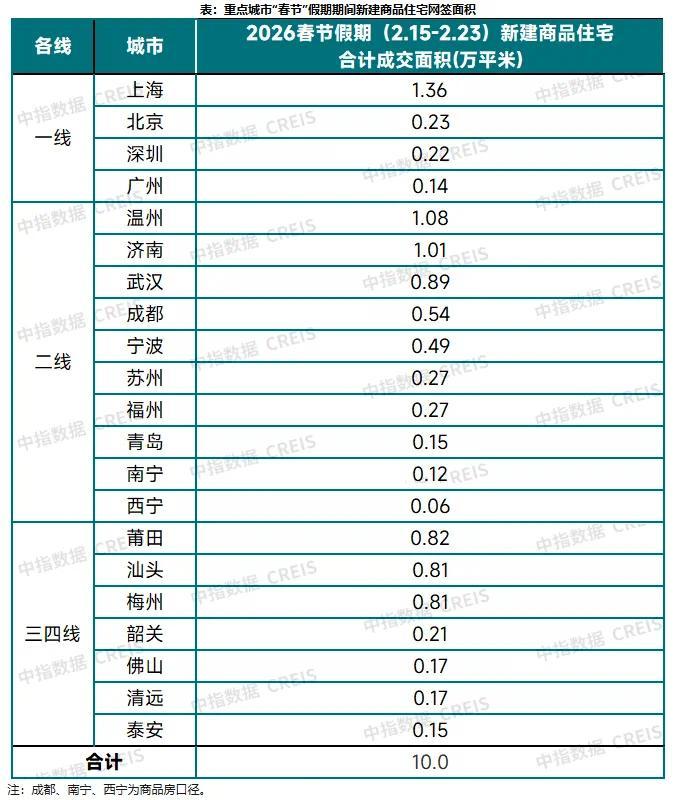
Core Insights - The overall real estate market during the Spring Festival period (February 15-23) exhibited a typical "holiday mode," with both new and second-hand housing transaction volumes in key cities at seasonal lows due to factors such as holiday travel and temporary suspension of online signing in some cities [1][4] - A total of 100,000 square meters of new residential properties were signed in 21 key cities during the Spring Festival, showing a year-on-year stability in daily transaction volume [1][4] - Major cities like Shanghai, Wenzhou, and Jinan led in transaction volumes, while cities like Nanning and Qingdao experienced significant year-on-year growth due to low base effects [1][2] New Housing Market - The new housing market saw a total transaction area of 10,000 square meters during the Spring Festival, with Shanghai at 13,600 square meters, Wenzhou at 10,800 square meters, and Jinan at 10,100 square meters leading the way [2] - Some developers actively promoted sales during the holiday, offering discounts and special offers to attract buyers, which contributed to a slight increase in foot traffic and sales in certain projects [3][4] Second-Hand Housing Market - The second-hand housing market showed signs of recovery in the latter half of the holiday, driven by pent-up demand and promotional activities [3] - The overall sentiment in the core cities suggests a potential "small spring" recovery, with expectations of increased transactions as the holiday effects fade [4] Developer Strategies - Developers are beginning to set performance targets for the new year, with many expected to launch competitive products in March to stimulate sales [5] - The market is anticipated to see a surge in promotional activities as developers respond to the need for improved sales performance following a lackluster start to the year [5] Market Outlook - Analysts predict that 2026 will be a critical year for the real estate market to stabilize, with a focus on policies aimed at controlling supply and reducing inventory [5] - The upcoming "Two Sessions" will bring attention to specific measures that could impact the real estate sector, with a long-term focus on high-quality development as outlined in the 14th Five-Year Plan [5]




2025年地产债市场回顾与2026年展望:风险出清格局重塑,政策聚焦长效发展
Dong Fang Jin Cheng· 2026-02-24 06:40
1. Report Industry Investment Rating No information provided in the document. 2. Core Views of the Report - In 2025, the real estate market continued to adjust, with an accelerated decline in the second half of the year. The prices of second - hand and new houses decreased, and the sales area and investment also declined. The financing environment of real - estate enterprises did not improve substantially, but debt restructuring made progress [4]. - In 2026, real estate policies will remain marginally loose. Demand - side policies aim to lower actual mortgage rates, and supply - side policies focus on controlling increments and reducing inventories to optimize the supply - demand structure. The market will likely continue to adjust, but the adjustment amplitude will narrow. Sales may stop falling and stabilize if mortgage rates can be effectively lowered, and investment decline will also narrow [5]. - In 2026, the bond repayment pressure of state - owned real - estate enterprises is mainly concentrated in the domestic bond market and has decreased compared to previous years. The bond maturity volume of private real - estate enterprises has significantly declined, and the overall repayment pressure is low. The credit risk of real - estate bonds will tend to be stable, but the debt repayment situation of individual private enterprises still needs attention. Debt restructuring of real - estate enterprises will continue to accelerate [6]. 3. Summary According to the Directory 3.1 2025 Real Estate Policy Review - **Accelerating inventory reduction and optimizing supply structure**: Supply - side policies centered on "controlling increments, reducing inventories, and optimizing supply". "Controlling increments" involved matching land and new housing supply as needed and controlling new land use in surplus areas. In 2025, the land supply in third - tier cities contracted rapidly, and 1202.1 billion yuan of land reserve special bonds were used to acquire idle land. "Reducing inventories" aimed to clear market inventories and ensure people's livelihoods through measures such as converting existing commercial housing into affordable housing and urban village renovation. "Optimizing supply" promoted the upgrading of housing quality with the construction of "good houses" [9][11][12]. - **Strengthening the implementation of financing support for housing delivery**: The focus of the "housing delivery guarantee" work shifted from "mechanism establishment" to "financing implementation". By October 2025, the approved loan amount for "whitelist" projects exceeded 7 trillion yuan, but there were challenges such as intensified project qualification differentiation and a time lag between approval and loan disbursement [15]. - **Marginal relaxation of demand - side policies**: Demand - side policies continued to be refined to reduce the cost of home - buying and release rigid and improved housing demand. In 2025, the purchase restrictions in Beijing, Shanghai, and Shenzhen were significantly relaxed, the down - payment ratio was lowered, the provident fund loan interest rate was reduced, and the loan amount was increased [16]. 3.2 2025 Real Estate Market Operation - **Price performance**: Second - hand house prices continued to fall, with the decline first narrowing slightly and then widening significantly. In December, the year - on - year decline in 70 - city second - hand house prices was 6.1%, and first - tier cities showed a "catch - up decline" feature. New house prices also continued to fall, with a 3.0% year - on - year decline in 70 - city new commercial housing prices in December [21][24]. - **Sales performance**: The real - estate sales continued to be deeply adjusted in 2025. The annual commercial housing sales area was 881.01 million square meters, a year - on - year decrease of 8.7%, and the sales volume was 8393.7 billion yuan, a year - on - year decrease of 12.6%. The market activity was low, and the daily average transaction volume in 30 cities was weak [25][30]. - **Investment performance**: Real - estate development investment accelerated its decline in 2025, with the annual investment completion amount of 8278.8 billion yuan, a year - on - year decrease of 17.2%. The sources of development funds decreased by 13.4% year - on - year. New construction, construction, and completion areas all decreased. The land market was cold, with a 14.2% year - on - year decrease in the planned construction area of residential land in 100 large and medium - sized cities [35][36][42]. 3.3 2025 Real - Estate Bond Market Performance - **Issuance and net financing**: In 2025, the total issuance of domestic and overseas real - estate bonds was 796.9 billion yuan, a year - on - year increase of 93.3%. The net financing gap narrowed significantly. Domestic bonds: 83 real - estate enterprises issued 413 domestic real - estate bonds, with a total issuance of 360.95 billion yuan, and the net financing gap was 62.96 billion yuan. Overseas bonds: 74 overseas real - estate bonds were issued, with a total issuance of 61.8 billion US dollars, and the net financing turned positive [49][50][60]. - **Credit risk evolution**: From 2021 to 2025, 65 domestic and overseas bond default and extension entities were added, with 2 in 2025. The event of Vanke's bond extension in 2025 had a significant impact on the market, affecting market confidence, financing environment, and industry differentiation [62][70]. - **Debt resolution of troubled real - estate enterprises**: Since 2024, the debt - resolution strategy has shifted to "substantial debt reduction + structural optimization". In 2025, investors became more accepting of debt reduction, and the debt - resolution approach changed from partial and scattered disposal to overall restructuring. Debt - resolution tools became more diversified. For example, CIFI Group's debt restructuring verified the feasibility of the "substantial debt reduction" plan [72][73][74]. - **Secondary - market price changes and spread fluctuations**: In 2025, the number of abnormal price movements in the secondary market of real - estate bonds decreased. The spread of real - estate bonds showed a trend of "oscillating downward and rising at the end of the year", and was more affected by the overall credit - bond market [77][80]. 3.4 2026 Real Estate Industry and Real - Estate Bond Market Outlook - **Policy outlook**: In 2026, real - estate policies will remain marginally loose. Demand - side policies will focus on guiding the actual mortgage rate to decline, and supply - side policies will continue to control increments and reduce inventories. However, the short - term stimulus policies will not be significantly stronger than in 2025 [87]. - **Market outlook**: The real - estate market will likely continue to adjust in 2026, but the adjustment amplitude will narrow. If the actual mortgage rate can be effectively lowered, the sales may stop falling and stabilize, and the investment decline will also narrow [97]. - **Credit risk outlook**: In 2026, the total maturity scale of domestic and overseas real - estate bonds is 596.4 billion yuan, a year - on - year decrease of 12.9%. The debt repayment pressure of state - owned real - estate enterprises has decreased, and that of private real - estate enterprises is low. The overall credit risk of the real - estate industry will tend to be stable, but the debt repayment of individual private enterprises needs attention [99]. - **Debt - resolution path outlook**: Debt restructuring through substantial debt reduction and diversified innovative debt tools will continue to accelerate in 2026. The market trend and the transformation and development of real - estate enterprises will be the two key variables affecting the debt - resolution process [103].
富普新材更换券商重启IPO:注册资本4.3亿,龙湖、万科是合作伙伴
Sou Hu Cai Jing· 2026-02-24 04:25
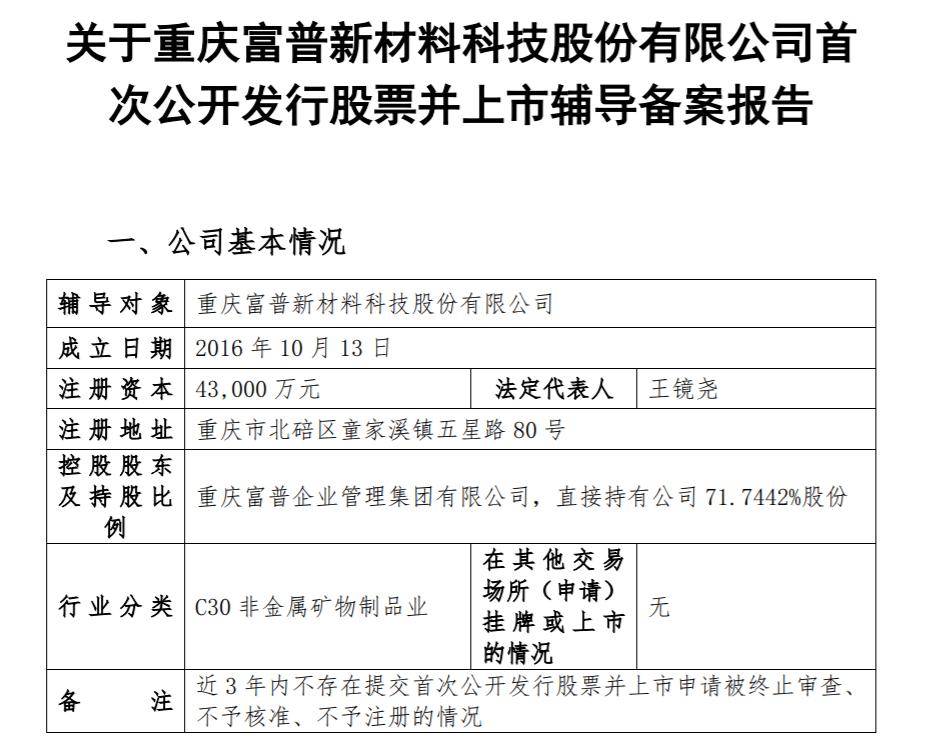
Core Viewpoint - Chongqing Fupu New Materials Technology Co., Ltd. has initiated the listing guidance for A-share IPO with the support of Zheshang Securities, marking a significant step in its growth strategy [1] Company Overview - Fupu New Materials was established in 2016 with a registered capital of 430 million yuan [1] - The company specializes in the production and sales of ready-mixed ordinary and special concrete, prefabricated building components, autoclaved aerated concrete panels and blocks, building mortar, cement, and additives, positioning itself as a comprehensive green building materials manufacturer [1] Financial Performance - In 2022, Fupu New Materials achieved a revenue of 2.85864 billion yuan, ranking 81st among the top 100 private enterprises in Chongqing in 2023 [1] Partnerships - The company collaborates with major state-owned enterprises and real estate firms, including China Merchants Shekou, China National Nuclear Corporation, China Railway Construction Corporation, China Hydropower, Longfor, Vanke, and Jinmao Group [1]
王石曾预测中国未来房地产走向:若无意外,或较大概率又是对的
Sou Hu Cai Jing· 2026-02-19 15:52
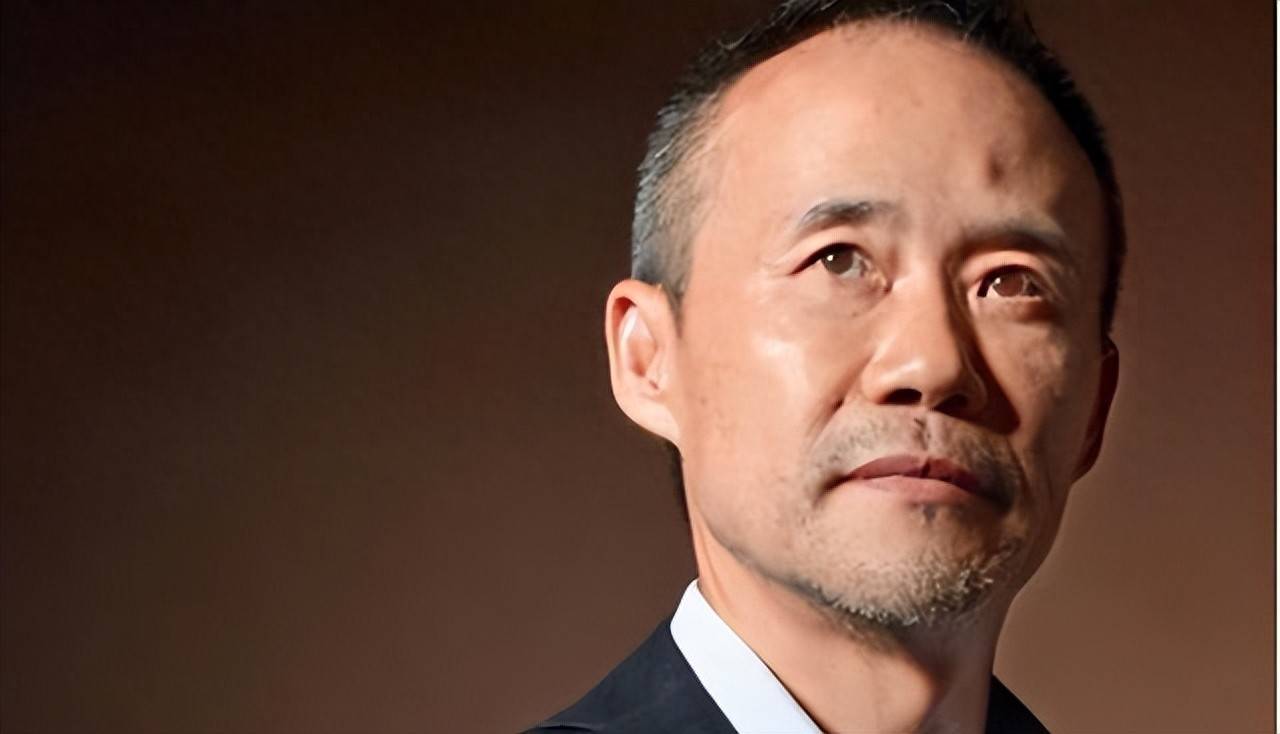
Core Insights - Wang Shi's foresight during the 2008 financial crisis helped Vanke avoid pitfalls by advocating for cash flow management and inventory reduction as housing prices peaked [1] - In 2013, Wang warned of a housing bubble, using Japan's 1990s real estate crash as a cautionary tale, which led Vanke to adjust its strategy and maintain a lower debt ratio [3] - Wang's consistent emphasis on risk management and adapting to market conditions has allowed Vanke to navigate through various market fluctuations successfully [5][7] Group 1 - Wang Shi's early predictions about the housing market helped Vanke maintain stability during the 2008 crisis, as he advised against high leverage and excessive land acquisition [1] - In 2013, he highlighted the risks of a housing bubble, suggesting a shift towards rental business models, which Vanke adopted, keeping its debt levels below the industry average [3] - By 2016, Wang cautioned against irrational price increases, prompting Vanke to focus on quality development and asset sales to ensure financial health [5] Group 2 - Wang's insights into economic cycles have proven accurate, as Vanke consistently outperformed competitors during downturns, maintaining a focus on cash flow and risk control [7] - In 2023, Wang predicted a market adjustment period lasting three to five years, emphasizing the need for companies to reduce debt and adapt to changing policies [9] - The emphasis on sustainable growth and quality products is expected to benefit consumers and lead to a healthier market environment by 2026 [11][13]
2025年房企预亏超2000亿 行业调整进入“深水期”
天天基金网· 2026-02-15 07:30
Core Viewpoint - The A-share listed real estate companies are facing significant losses in 2025, with 74% of the 77 companies that released earnings forecasts expecting to report losses totaling approximately 208.2-209.4 billion yuan, indicating a deep industry adjustment [2][4]. Group 1: Loss Forecasts - Among the companies, Vanke is expected to incur the largest loss of 820 billion yuan, marking the highest loss in A-share real estate history, a 65.7% increase from 2024 [4]. - Other companies with substantial losses include China Fortune Land Development (160-240 billion yuan), Greenland Holdings (160-190 billion yuan), and China Overseas Land & Investment (130-155 billion yuan) [4][5]. - The overall decline in sales volume and prices is reflected in the financial metrics, with a reported 8.7% decrease in new housing sales area and a 12.6% drop in sales revenue [5]. Group 2: Common Challenges - The primary reasons for the losses include weak sales leading to reduced profit recognition, as profits from real estate sales are recognized with a lag [6]. - Despite diversification efforts, companies remain heavily reliant on real estate development, which has been underperforming during the industry downturn, limiting their ability to offset losses from core operations [6]. - Asset impairment provisions have surged due to declining real estate prices, with Vanke reporting over 50 billion yuan in impairments, significantly impacting overall losses [6]. Group 3: Notable Exceptions - Kaisa Group stands out as a positive example, projecting a net profit of 300-350 billion yuan for 2025, primarily due to debt restructuring gains of 680-700 billion yuan [7]. - The company has shifted its focus from traditional real estate development to light asset operations, including property services and commercial management, to enhance resilience against market fluctuations [7]. Group 4: Industry Outlook - The year 2025 is seen as a critical period for the real estate sector, with ongoing adjustments expected to lead to a gradual recovery starting in 2026, supported by favorable policies and market improvements [11][12]. - Regulatory measures are being implemented to stabilize the financing environment and stimulate demand, which may help quality companies regain market share while weaker firms face potential elimination [11][12].



万科2026年迎偿债高峰,特定债券转让安排引关注
Jing Ji Guan Cha Wang· 2026-02-14 11:54
Recent Events - In the second quarter of 2026, the company will face a significant debt maturity peak, totaling approximately 6.5 billion yuan, with the next tranche of RMB bonds maturing in April. This upcoming debt requires the company to secure funding for repayment, indicating ongoing liquidity pressure [1]. Company Status - Certain bonds, such as "21 Vanke 02" and "21 Vanke 04," among seven others, will be transferred as specific bonds starting from February 6, 2026. The pricing method will shift from net price to full price, and the investor scope will be limited to professional institutional investors. This measure is part of the company's debt management strategy aimed at alleviating short-term liquidity pressure [2]. Financial Status - The year 2026 is viewed as a critical year for the company's debt repayment pressure, as it must address the concentrated maturity of public market debts. The ability to mitigate risks will depend on factors such as sales recovery, asset disposal progress, and support from shareholders. Additionally, the company disclosed an expanded loss in its 2025 performance forecast, although its operational service business remains stable. The major shareholder, Shenzhen Metro Group, has provided over 30 billion yuan in loan support. The company has stated it will focus on asset optimization and debt resolution, but operational challenges remain severe [3].