
LZLJ(000568)

Search documents
食品饮料周报(25年第40周):酒类渠道包袱加速去化,大众品品类表现分化-20251105
Guoxin Securities· 2025-11-05 11:16
Investment Rating - The report maintains an "Outperform the Market" rating for the food and beverage sector [4][5][11]. Core Views - The food and beverage sector is currently characterized by "low base, low holdings, and low expectations," indicating potential for stock price increases with any changes in supply and demand dynamics [3][11]. - The report highlights a divergence in performance across categories, with beverages outperforming food and alcoholic beverages [2][11]. - The report suggests that the liquor segment is entering a left-side layout phase, with quality companies expected to gain greater growth opportunities [2][11]. Summary by Relevant Sections Liquor - The liquor sector is experiencing an expanded decline in performance, with Q3 revenue down 18.4% year-on-year and net profit down 22.2% [2][11]. - Recommended companies include Luzhou Laojiao, Shanxi Fenjiu, and Guizhou Moutai, which are expected to benefit from national expansion and pricing power [2][11]. - The report notes that the current inventory clearance pace is similar to the 2013-2014 period, suggesting a potential recovery in the future [11]. Beer - The beer industry is in a healthy inventory position, awaiting demand recovery, with recommendations for Yanjing Beer and China Resources Beer [12][11]. - The report anticipates that the relaxation of consumption regulations will positively impact beer sales [12]. Dairy Products - The dairy sector is seeing a steady recovery in demand, with a recommendation for Yili as a leading company with valuation safety margins [14][11]. - The report indicates that the supply side is gradually clearing, which may lead to improved supply-demand dynamics by 2025 [14]. Snacks - The report emphasizes the importance of strong alpha stocks in the snack sector, particularly focusing on the growth potential of konjac snacks [12][11]. - Leading companies in this category, such as Weidong and Yanjin Pouch, are highlighted for their competitive advantages and strong growth prospects [12]. Food Supply Chain - The food supply chain sector is showing signs of stabilization, with recommendations for leading companies like Yihai International and Haitian Flavoring [13][11]. - The report notes that the overall profitability of the industry is expected to gradually stabilize as companies optimize their expense management [13]. Beverages - The beverage sector continues to show strong performance, with recommendations for Nongfu Spring and Dongpeng Beverage, which are expected to benefit from accelerated operations and national expansion [14][11]. - The report highlights the ongoing growth in the no-sugar tea and energy drink segments, indicating a favorable outlook for leading companies [14].



基金经理减仓白酒?不,其实是加仓
Sou Hu Cai Jing· 2025-11-05 10:51
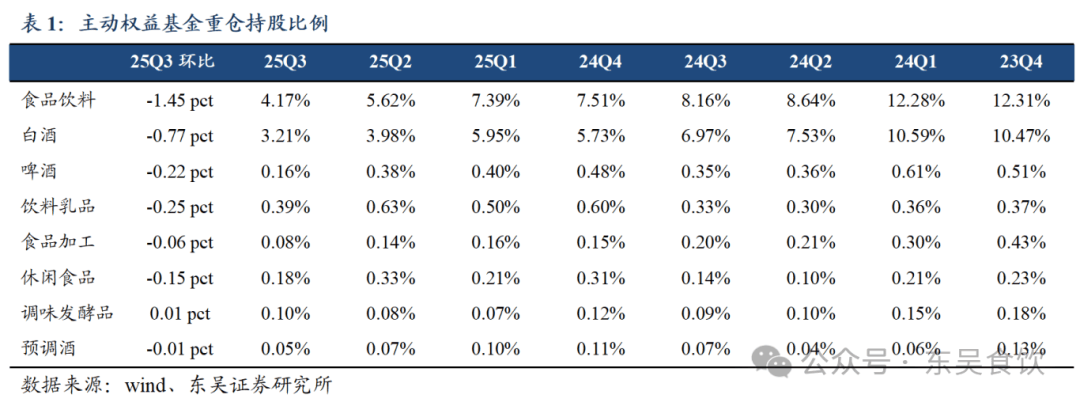
Core Viewpoint - The active funds have continued to reduce their holdings in the liquor sector during the third quarter, influenced by the underperformance of liquor stocks compared to broader indices, leading to a passive decline in their proportion within public fund holdings [2][4]. Group 1: Fund Holdings and Changes - In the third quarter, the number of liquor stocks held by active funds slightly increased from 325 million shares to 328 million shares, indicating no large-scale sell-off [4][6]. - The total number of liquor stocks held by active funds decreased significantly from 501 million shares to 325 million shares in the second quarter, a reduction of 35% [4]. - The total market value of liquor stocks held by active funds in the third quarter was approximately 6.90 billion yuan, with a slight increase in holdings compared to the previous quarter [7]. Group 2: Performance of Liquor Stocks - The China Securities Liquor Index rose by 7.75% in the third quarter, underperforming the CSI 300 Index by 10 percentage points and the "Equity Mixed Fund Index" by 18 percentage points [2]. - The proportion of liquor stocks in the public fund holdings decreased due to their underperformance relative to other sectors [2]. Group 3: Fund Managers' Strategies - Fund manager He Shuai significantly increased his positions in Kweichow Moutai and Luzhou Laojiao, which became part of the top ten holdings in his fund, accounting for a total of 11.4% [9]. - Fund manager Li Xiaoxing also increased his holdings in Luzhou Laojiao and Wuliangye, citing the attractive dividend yield and potential for recovery in consumer stocks [11]. - Fund manager Nie Shilin increased his holdings in Kweichow Moutai by 77% and in Shanxi Fenjiu by 96%, indicating a strong bullish stance on high-end liquor [13]. Group 4: Market Sentiment and Future Outlook - Some fund managers expressed a cautious outlook, suggesting that the domestic consumption and real estate sectors remain under pressure, with a focus on observing policy changes affecting consumer demand [14]. - Fund managers like Zhang Feng have shifted their focus to higher dividend yield sectors, indicating a strategic pivot towards food and beverage stocks, including liquor, due to their potential for recovery [19]. Group 5: Redemption and Fund Flows - The consumer-focused active funds experienced significant redemptions, with total shares dropping from 74.5 billion to 65.5 billion, reflecting a net redemption of 12% [25]. - In contrast, the total shares of ordinary stock and mixed funds saw only a 5% net redemption, highlighting the challenges faced by consumer-focused funds [26].



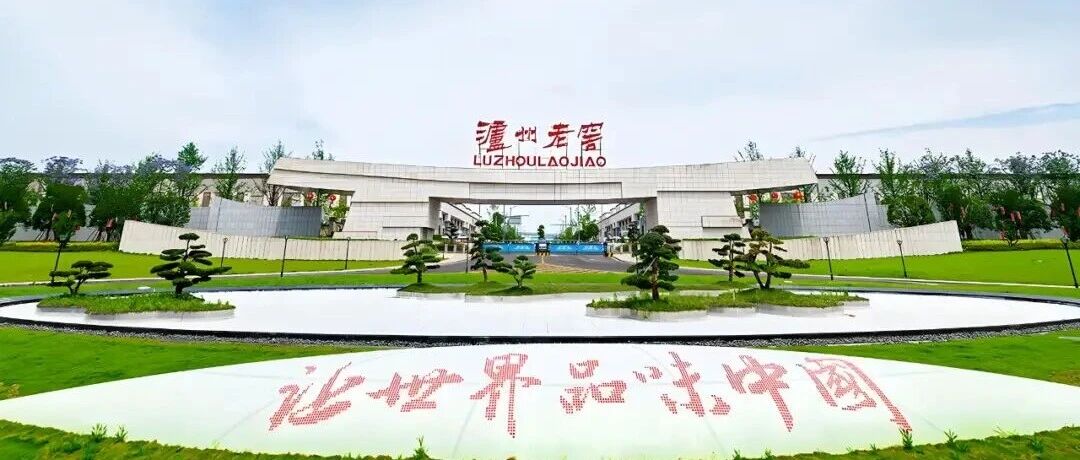
泸州老窖前三季度营收净利双降 国窖1573等中高档酒销量同比下滑10%
YOUNG财经 漾财经· 2025-11-05 10:39
Core Viewpoint - Luzhou Laojiao's revenue and net profit have declined for the first time in 10 years, with significant drops in sales of mid-to-high-end liquor products, particularly the flagship Guojiao 1573 [2][3]. Financial Performance - In the third quarter, Luzhou Laojiao reported a revenue of 6.674 billion yuan, a year-on-year decrease of 9.80%, and a net profit of 3.099 billion yuan, down 13.07% [2]. - For the first three quarters, total revenue was 23.127 billion yuan, a decline of 4.84%, while net profit reached 10.762 billion yuan, down 7.17% [2]. Product Performance - Sales of mid-to-high-end liquor, represented by Guojiao 1573, amounted to 24,119.09 tons, a year-on-year decline of 10.2%, with sales revenue of approximately 21.12 billion yuan, down 1.1% [4]. - Conversely, low-end liquor sales increased to 24,798.63 tons, a growth of 17.3%, with sales revenue of about 1.89 billion yuan, up 16.8% [4]. Strategic Response - Luzhou Laojiao is actively seeking changes in response to shifting consumer preferences, particularly among younger demographics who favor personalized, lower-alcohol, and more casual drinking experiences [4]. - The company plans to continue developing 38-degree products and is researching plans for even lower-alcohol options [4].
晚间公告|11月5日这些公告有看头
Di Yi Cai Jing· 2025-11-05 10:21
Group 1 - Jia Yuan Technology signed a cooperation framework agreement with CATL to expand their business relationship and establish a long-term partnership for the supply and development of copper foil products for new battery applications [3] - Beizhi Technology's application for issuing shares and cash to acquire 100% equity of Suzhou Suike Intelligent Technology Co., Ltd. has been accepted by the Shanghai Stock Exchange [4] - Haiqi Group's general manager Ma Chao resigned due to personal career planning, and the company will expedite the election and appointment of new directors and a general manager [5] Group 2 - Hengyuan Coal Power plans to use 4.4 billion yuan to acquire 100% equity of two companies and assume 1.137 billion yuan in debts, with the transaction approved by the board [6] - *ST Xingguang's stock price deviated significantly, prompting a warning about delisting risks due to underperformance in 2024 [7] - Jishi Media's main business includes smart broadcasting, data services, and digital innovation services, with a reminder for investors to be cautious [8] Group 3 - Luzhou Laojiao plans to invest approximately 1.478 billion yuan in the construction of a historical culture industrial park and museum [9] - Aerospace Hongtu has been suspended from military procurement activities for three years due to alleged violations in a project [11] - Triangle Defense signed a gas turbine project development agreement with Siemens Energy, which is expected to enhance its international market presence [12] Group 4 - Zhenghong Technology reported a significant decrease in sales revenue from live pigs in October 2025, with a 58.93% month-on-month decline [14] - *ST Tianshan achieved a 354.15% year-on-year increase in live livestock sales in October 2025 [15] - Jindi Group's contract signing amount in October 2025 dropped by 65.78% year-on-year [16] Group 5 - Muyuan Foods reported a 22.28% year-on-year decrease in sales revenue from commodity pigs in October 2025 [17] - King Long Automobile's bus production and sales data for October 2025 showed mixed results, with production down slightly but cumulative production up [18] - Wens Foodstuff Group sold 128 million meat chickens in October 2025, with a revenue of 3.633 billion yuan [19] Group 6 - Yongji Co., Ltd. repurchased 0.1278% of its shares for a total of 5.0856 million yuan [21] - Tianzheng Electric's actual controller reduced their shareholding to 40.55% after a 1.29% decrease [22] - Hualan Co. plans to increase its shareholding by 2% through a buyback plan [23] Group 7 - Xiang Teng New Materials' shareholders terminated their share reduction plan early, having reduced 2.91% of shares [24] - Anbiping's shareholders plan to reduce their holdings by up to 1% starting from November 28, 2025 [25] - Jinshiyuan's controlling shareholder increased their stake to 46% through a buyback of 5.4 billion yuan [26] - Sanjiang Shopping's major shareholder plans to reduce their stake by up to 3% due to business arrangements [27]





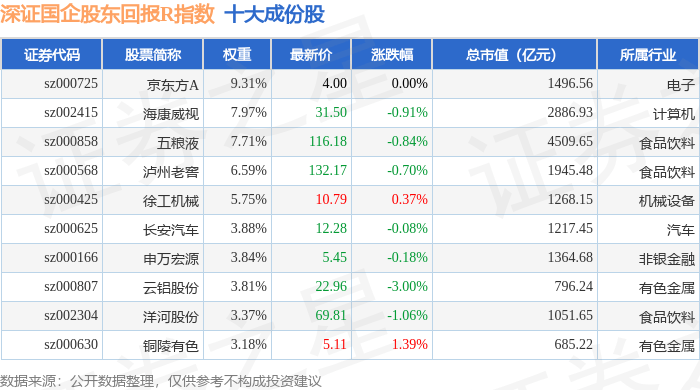
11月5日深证国企股东回报R(470064)指数跌0.32%,成份股云铝股份(000807)领跌
Sou Hu Cai Jing· 2025-11-05 10:15
Core Points - The Shenzhen State-Owned Enterprises Shareholder Return Index (470064) closed at 2257.45 points, down 0.32%, with a trading volume of 24.053 billion yuan and a turnover rate of 0.97% [1] - Among the index constituents, 27 stocks rose while 22 stocks fell, with Beixin Building Materials leading the gainers at 2.45% and Yun Aluminum leading the decliners at 3.0% [1] Index Constituents Summary - The top ten constituents of the Shenzhen State-Owned Enterprises Shareholder Return Index include: - BOE Technology Group (9.31% weight, latest price 4.00 yuan, market cap 149.656 billion yuan) in the electronics sector - Hikvision (7.97% weight, latest price 31.50 yuan, market cap 288.693 billion yuan) in the computer sector - Wuliangye Yibin (7.71% weight, latest price 116.18 yuan, market cap 450.965 billion yuan) in the food and beverage sector - Luzhou Laojiao (6.59% weight, latest price 132.17 yuan, market cap 194.548 billion yuan) in the food and beverage sector - Xugong Machinery (5.75% weight, latest price 10.79 yuan, market cap 126.815 billion yuan) in the machinery equipment sector - Changan Automobile (3.88% weight, latest price 12.28 yuan, market cap 121.745 billion yuan) in the automotive sector - Shenwan Hongyuan (3.84% weight, latest price 5.45 yuan, market cap 136.468 billion yuan) in the non-banking financial sector - Yun Aluminum (3.81% weight, latest price 22.96 yuan, market cap 79.624 billion yuan) in the non-ferrous metals sector - Yanghe Brewery (3.37% weight, latest price 69.81 yuan, market cap 105.165 billion yuan) in the food and beverage sector - Tongling Nonferrous Metals (3.18% weight, latest price 5.11 yuan, market cap 68.522 billion yuan) in the non-ferrous metals sector [1] Capital Flow Summary - The net outflow of main funds from the index constituents totaled 1.125 billion yuan, while speculative funds saw a net inflow of 243 million yuan and retail investors saw a net inflow of 882 million yuan [3] - Detailed capital flow for selected stocks includes: - Tongling Nonferrous Metals: main net inflow of 88.024 million yuan, speculative net outflow of 53.924 million yuan, retail net outflow of 34.100 million yuan - Luzhou Laojiao: main net inflow of 57.790 million yuan, speculative net outflow of 22.566 million yuan, retail net outflow of 35.224 million yuan - Beixin Building Materials: main net inflow of 56.578 million yuan, speculative net outflow of 24.593 million yuan, retail net outflow of 31.985 million yuan [3]




11月5日投资时钟(399391)指数涨0.03%,成份股国城矿业(000688)领涨
Sou Hu Cai Jing· 2025-11-05 09:55
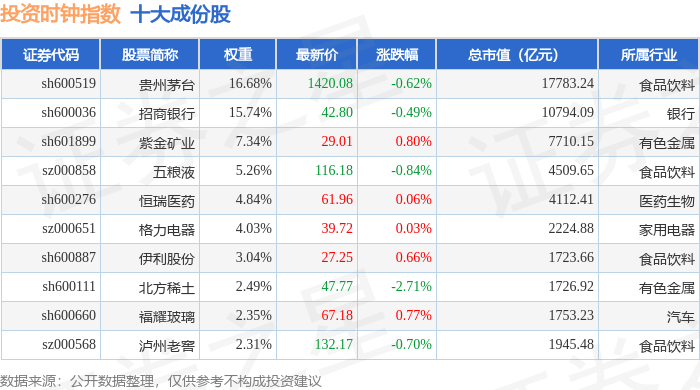
Market Overview - The Investment Clock Index (399391) closed at 3348.13 points, up 0.03%, with a trading volume of 78.792 billion yuan and a turnover rate of 0.81% [1] - Among the index constituents, 71 stocks rose while 28 stocks fell, with Guocheng Mining leading the gainers at a 9.42% increase and Dalian Shengya leading the decliners at a 9.99% decrease [1] Top Constituents - The top ten constituents of the Investment Clock Index are as follows: - Kweichow Moutai (sh600519) holds a weight of 16.68% and closed at 1420.08 yuan, down 0.62% with a market cap of 1778.324 billion yuan [1] - China Merchants Bank (sh600036) has a weight of 15.74%, closing at 42.80 yuan, down 0.49% with a market cap of 1079.409 billion yuan [1] - Yunnan Tin Company (sh601899) has a weight of 7.34%, closing at 29.01 yuan, up 0.80% with a market cap of 771.015 billion yuan [1] - Wuliangye Yibin (sz000858) has a weight of 5.26%, closing at 116.18 yuan, down 0.84% with a market cap of 450.965 billion yuan [1] - Hengrui Medicine (sh600276) has a weight of 4.84%, closing at 61.96 yuan, up 0.06% with a market cap of 411.241 billion yuan [1] - Gree Electric Appliances (sz000651) has a weight of 4.03%, closing at 39.72 yuan, up 0.03% with a market cap of 222.488 billion yuan [1] - Yili Industrial Group (sh600887) has a weight of 3.04%, closing at 27.25 yuan, up 0.66% with a market cap of 172.366 billion yuan [1] - Northern Rare Earth (sh600111) has a weight of 2.49%, closing at 47.77 yuan, down 2.71% with a market cap of 172.692 billion yuan [1] - Fuyao Glass (sh600660) has a weight of 2.35%, closing at 67.18 yuan, up 0.77% with a market cap of 175.323 billion yuan [1] - Jilin Chemical (sz000568) has a weight of 2.31%, closing at 132.17 yuan, down 0.70% with a market cap of 194.548 billion yuan [1] Capital Flow - The net outflow of main funds from the index constituents totaled 677 million yuan, while retail investors saw a net inflow of 708 million yuan [3] - Detailed capital flow for selected stocks includes: - China Zhongjin (601888) saw a main fund net inflow of 36.4 million yuan, while retail funds had a net outflow of 93.414 million yuan [3] - Jiangxi Copper (600362) had a main fund net inflow of 18.2 million yuan, with retail funds experiencing a net outflow of 70.3612 million yuan [3] - Weichai Power (000338) had a main fund net inflow of 13.5 million yuan, while retail funds had a net inflow of 1.60758 million yuan [3] - Giant Network (002558) had a main fund net inflow of 11.8 million yuan, with retail funds experiencing a net outflow of 65.0268 million yuan [3] - China Coal Energy (601898) had a main fund net inflow of 11.7 million yuan, while retail funds had a net outflow of 79.0666 million yuan [3]




泸州老窖:11月5日召开董事会会议
Mei Ri Jing Ji Xin Wen· 2025-11-05 08:46
Group 1 - The core point of the article is that Luzhou Laojiao announced the investment in a historical and cultural industry park, including the Sichuan Chinese Baijiu Museum project, during its board meeting held on November 5, 2025 [1] - As of the first half of 2025, Luzhou Laojiao's revenue composition shows that liquor accounts for 99.66% of total revenue, while other sources contribute only 0.34% [1] - The current market capitalization of Luzhou Laojiao is 194.5 billion yuan [1]
泸州老窖拟建设泸州老窖历史文化产业园暨四川中国白酒博物馆 总投资约14.78亿元
Zhi Tong Cai Jing· 2025-11-05 08:40
Core Viewpoint - Luzhou Laojiao (000568.SZ) has approved the investment in the construction of the Luzhou Laojiao Historical and Cultural Industry Park and the Sichuan China Baijiu Museum project, indicating a strategic move to enhance its cultural presence and tourism appeal [1] Investment Details - The project will have a construction period of approximately 50 months, including preparatory work [1] - The total investment for the project is around 1.478 billion yuan, which includes 420 million yuan already spent on acquiring assets for the Luzhou Laojiao Tianfu Middle School Phoenix Mountain Campus [1] - The required funding for the project will be sourced from the company's own funds [1]
泸州老窖(000568.SZ)拟建设泸州老窖历史文化产业园暨四川中国白酒博物馆 总投资约14.78亿元
智通财经网· 2025-11-05 08:39
Core Viewpoint - Luzhou Laojiao has approved the investment in the construction of the Luzhou Laojiao Historical and Cultural Industry Park and the Sichuan Chinese Baijiu Museum project, indicating a strategic move to enhance its cultural presence and tourism appeal [1] Investment Details - The total investment for the project is approximately 1.478 billion yuan, which includes 420 million yuan already spent on acquiring assets for the Luzhou Laojiao Tianfu Middle School Phoenix Mountain Campus [1] - The construction period for the project is estimated to be around 50 months, including preliminary preparation work [1] Funding Sources - The required funds for the project will be self-raised by the company, indicating a commitment to financing the project internally [1]
泸州老窖:拟投资14.78亿元建设泸州老窖历史文化产业园暨四川中国白酒博物馆项目
Ge Long Hui A P P· 2025-11-05 08:37
格隆汇11月5日|泸州老窖(000568.SZ)公告称,公司第十一届董事会十七次会议审议通过了《关于投资 建设泸州老窖历史文化产业园暨四川中国白酒博物馆项目的议案》。项目建设工期约50个月,总投资约 为14.78亿元,其中含已用于购置泸州老窖天府中学凤凰山校区资产4.2亿元,所需资金为公司自筹。该 项目旨在系统展示和传播中国白酒和泸州老窖历史、文化与发展,提升品牌影响力。 ...