GF SECURITIES(000776)

Search documents
每周研选 | 下一轮“躁动”行情会在何时开启?
Xin Lang Cai Jing· 2025-12-21 13:52
Group 1 - A-share market shows mixed performance with the Shanghai Composite Index being relatively stable while the ChiNext Index is weaker due to a pullback in the technology manufacturing sector [1][11] - The consensus is forming around a potential "rally" in the market as liquidity expectations improve following key overseas events and a positive policy environment from the Central Economic Work Conference [12][13] - The market style is expected to shift towards small-cap and technology growth sectors during the "rally" window from late January to early March 2026, following a period of value-driven performance [12][13] Group 2 - The strong market performance on Wednesday may indicate the start of the 2026 cross-year market trend, supported by significant net subscriptions in stock ETFs [14] - Continued policy support and stable economic growth are anticipated to bolster market confidence and attract various types of capital inflows [14] - The trend of high-net-worth individuals moving their deposits into the stock market is likely to continue, driven by lower expected returns from other asset classes [15] Group 3 - Incremental capital is entering the A-share market through broad-based ETFs, signaling positive market sentiment as investors prepare for the "spring rally" [16] - The technology and small-cap sectors are expected to perform actively as investors increase their positions [16] - The easing of "AI bubble" concerns and the resolution of liquidity uncertainties are providing a recovery opportunity for the market [17] Group 4 - Investment strategies should focus on three key areas: dividend value, high-growth sectors during the upcoming "rally," and active themes driven by policy and technology [18] - In a strengthening RMB environment, sectors such as aviation, gas, and paper are expected to benefit from cost advantages, while upstream resources and consumer goods may see profit margin improvements [20][21] - The non-bank financial sector, particularly insurance stocks, is showing increased elasticity and may outperform if policy catalysts emerge [21]



广发证券:2026年更像是加强版的2025年 居民存款搬家与外资入市更值得期待
Xin Lang Cai Jing· 2025-12-21 11:30
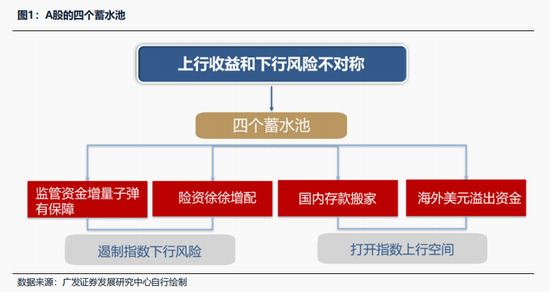
Group 1 - The core narrative for A-share incremental funds in 2025 is "asymmetric upside returns and limited downside risks," supported by regulatory measures and insurance capital to curb index declines, while domestic deposit migration and overseas dollar inflows create upward potential for indices [1][47][169] - Insurance capital's allocation demand for A-shares has increased, with insurance positions reaching 15.5% in Q3 2025, the second highest on record [9][127] - The market's expectation for deposit migration is high, but residents are still in the early stage of risk appetite recovery, showing more willingness to invest in fixed income and index products rather than stocks [11][59][129] Group 2 - Looking ahead to 2026, the trend of deposit migration is expected to strengthen, particularly among high-net-worth individuals, with foreign capital also anticipated to become a significant incremental source [24][188] - Factors supporting resident capital inflow include regulatory and insurance backing that reduces market volatility, a gradual easing of household balance sheet pressures, and a higher degree of liquidity in deposits [25][145][189] - The competition for deposits from high-yield assets is diminishing, which indirectly enhances the attractiveness of the stock market [34][199] Group 3 - The current A-share market is at a turning point in its profit cycle, with expectations for fundamental improvements in 2026, which could attract more foreign capital [42][207] - Global capital availability is expected to increase, driven by downward pressure on the dollar, which will enhance demand for non-dollar asset allocations [40][203] - The recent trend shows that high-net-worth individuals are accelerating their deposit migration, with private equity fund registrations reaching 386 billion yuan from January to October 2025, indicating a return to levels seen in 2021 [38][201]


——非银金融行业周报(2025/12/15-2025/12/19):保险公司资产负债管理即将迈入全新阶段-20251221
Shenwan Hongyuan Securities· 2025-12-21 10:13
Investment Rating - The report maintains a positive outlook on the insurance and brokerage sectors, suggesting an "Overweight" rating for both industries, indicating expected outperformance compared to the overall market [2][66]. Core Insights - The brokerage sector is experiencing a fundamental and valuation mismatch, with a recommendation to focus on leading firms benefiting from improved competitive dynamics [2][5]. - The insurance sector is poised for a systematic value reassessment, with significant regulatory changes expected to enhance asset-liability management practices [2][17]. Summary by Sections Market Performance - The Shanghai Composite Index closed at 4,568.18 with a slight decline of -0.28% over the week, while the non-bank index rose by 2.90% [5]. - The brokerage, insurance, and diversified financial sectors reported gains of 1.01%, 7.03%, and 1.39% respectively [5]. Key Data in Non-Banking Sector - As of December 19, 2025, the average daily trading volume in the stock market was 18,033.77 billion yuan, reflecting a decrease of 15.23% compared to the previous month [41]. - The margin trading balance reached 24,993.66 billion yuan, an increase of 34.0% from the end of 2024 [15]. Brokerage Sector Insights - The report highlights the merger of China International Capital Corporation (CICC) with Dongxing Securities and Xinda Securities, marking a significant consolidation trend in the brokerage industry [2][29]. - The brokerage index's price-to-book ratio (PB) is currently at 1.38, indicating a low valuation compared to historical levels [2]. Insurance Sector Insights - The new asset-liability management regulations are expected to significantly impact the insurance industry, emphasizing the need for effective risk management and alignment of assets and liabilities [2][17]. - The insurance sector index increased by 7.03%, outperforming the Shanghai Composite Index by 7.30 percentage points [2]. Investment Recommendations - For the brokerage sector, the report recommends focusing on top-tier firms such as Guotai Junan, GF Securities, and CITIC Securities, which are expected to benefit from improved competitive conditions [2]. - In the insurance sector, companies like China Life, Ping An, and China Pacific Insurance are highlighted for their potential in the ongoing value reassessment [2].




【广发金工】AI识图关注非银、卫星、化工
广发金融工程研究· 2025-12-21 07:27
Market Performance - The Sci-Tech 50 Index decreased by 2.99% over the last five trading days, while the ChiNext Index fell by 2.26%. In contrast, the large-cap value stocks rose by 1.52%, and large-cap growth stocks declined by 1.39%. The Shanghai Stock Exchange 50 Index increased by 0.32%, and the small-cap index represented by the CSI 2000 dropped by 0.37%. The retail and non-bank financial sectors performed well, while electronics and power equipment lagged behind [1]. Risk Premium and Valuation Levels - As of December 19, 2025, the static PE of the CSI All Share Index indicates a risk premium of 2.79%, calculated as the inverse of the PE minus the yield of ten-year government bonds. The two-standard deviation boundary is at 4.71%. The valuation levels show that the CSI All Share Index's PE TTM is at the 80th percentile, with the Shanghai 50 and CSI 300 at 74% and 73%, respectively. The ChiNext Index is close to 55%, while the CSI 500 and CSI 1000 are at 59% and 60%, respectively, indicating that the ChiNext Index's valuation is relatively at the historical median level [1]. ETF Fund Flows - In the last five trading days, ETF inflows amounted to 72.1 billion yuan, while the financing balance decreased by approximately 7.6 billion yuan. The average daily trading volume across the two markets was 1.738 trillion yuan [2]. Convolutional Neural Network Observations - The analysis utilized convolutional neural networks to model charted price and volume data, mapping learned features to industry themes. The latest thematic allocations include non-bank financials, satellite communications, and chemicals, specifically focusing on the CSI 300 Non-Bank Financial Index, the CSI Commercial Satellite Communication Industry Index, and the CSI Sub-Segmented Chemical Industry Theme Index [2][11]. Index Information - The report includes specific index codes and names, such as the CSI 300 Non-Bank Financial Index, the CSI Commercial Satellite Communication Industry Index, and the CSI Sub-Segmented Chemical Industry Theme Index, among others [3][12]. Market Sentiment and Risk Preference - The report tracks the proportion of market sentiment above the 200-day long-term moving average and monitors the risk preferences between equity and bond assets [14]. Financing Balance - The financing balance data is provided, indicating trends in market leverage and investor sentiment [16]. Individual Stock Performance - Statistics on individual stock performance year-to-date based on return ranges are included, providing insights into market dynamics [18]. Oversold Indices - The report notes instances of oversold conditions in certain indices, which may indicate potential buying opportunities [20].

大消息!科创债二级市场 多家券商银行联手
Zheng Quan Shi Bao Wang· 2025-12-21 04:22
Core Viewpoint - Recent activities in the secondary market for Sci-Tech bonds indicate a significant innovation in trading mechanisms, enhancing liquidity and broadening financing channels for technology enterprises [2][3][4][5]. Group 1: Trading Innovations - GF Securities and Industrial Bank executed the first bond lending transaction for Sci-Tech bonds on the Shenzhen Stock Exchange, totaling 40 million yuan [2]. - CITIC Securities and Everbright Bank successfully completed a repurchase transaction using "National Development Floating Rate Sci-Tech Bonds" as collateral, amounting to 50 million yuan [4]. - Industrial Bank and Dongfang Securities conducted the first buyout repurchase transaction in the interbank market using "National Development Sci-Tech Bonds" as collateral, with a transaction value of 210 million yuan [5]. Group 2: Market Impact - The introduction of these transactions is expected to enrich the variety of Sci-Tech bond trading, increase market activity, and improve the functionality of the secondary market [2][3][4]. - The People's Bank of China and the China Securities Regulatory Commission have issued guidelines to support the issuance of Sci-Tech bonds, encouraging market participants to finance technology innovation and industrial upgrades [2]. - The successful execution of these transactions is seen as a practical example that enhances the liquidity of Sci-Tech bonds and attracts more market participants [3][4]. Group 3: Institutional Responses - GF Securities aims to leverage its expertise in bond trading to enhance the liquidity and financing capabilities of Sci-Tech bonds, thereby attracting more investors [3]. - CITIC Securities plans to continue focusing on the construction of a trading ecosystem to lower financing costs for Sci-Tech enterprises [4]. - Industrial Bank is committed to expanding the asset utilization range for investors and reducing financing costs for technology enterprises through innovative trading mechanisms [5].


广发证券:宏观叙事+基本面+资金面三重因素驱动 长期仍看多黄金
Zhi Tong Cai Jing· 2025-12-20 13:17
1.宏观叙事:债务危机或将重塑全球秩序。疫情以来,美国的债务和基础财政赤字持续扩张,联邦政府 债务水平升至历史最高,且持有者更加分散。美国双赤字的扩大迫使其向外转嫁危机,近年全球经济政 策不确定性和地缘政治风险明显抬头。若债务问题未解决,黄金和科技在中长期将持续获得上涨动力。 广发证券主要观点如下: 近期黄金走势:8月以来伦敦金现货最高冲破4380美元/盎司,衍生品净多头+ETF天量流入是本轮行情 的主要驱动因素。金价10月深度回调后反弹,短期市场情绪已经回暖:(1)衍生品净多头+ETF流入格局 不变;(2)黄金期权隐含波动率已从前期高位回落至近6个月均值附近,超涨压力基本释放;(3)地缘政治 格局呈现"局部缓和与多点升温交织"特征,避险情绪小幅升温。 黄金价格回调但仍长期看多黄金的三大原因: 广发证券发布研报称,金价10月深度回调后反弹,短期市场情绪已经回暖。黄金价格回调但仍长期看多 黄金的三大原因:宏观叙事:债务危机或将重塑全球秩序。美国双赤字的扩大迫使其向外转嫁危机。基 本面:实际利率下降将边际支撑金价。12月美联储降息且表态偏鸽,并开启扩表,货币宽松持续叠加通 胀的回升,金价将受实际利率较强的支撑。资 ...
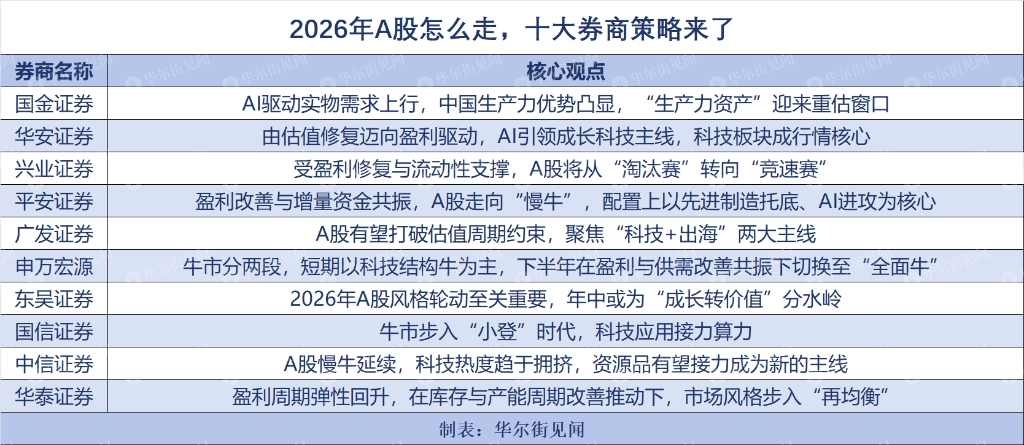
科技领跑、周期接力、慢牛到全面牛……2026年A股怎么走,十大券商策略来了
Hua Er Jie Jian Wen· 2025-12-20 04:57
Core Viewpoint - The A-share market is transitioning from a liquidity and valuation-driven phase to a new stage that emphasizes fundamentals and profit recovery, with a projected double-digit profit growth for the entire A-share market in 2026 [1][2][4]. Group 1: Market Outlook - Most major domestic securities firms believe that the A-share market will remain in a bull market in 2026, with profit recovery being a key variable for market sustainability [1][2]. - The overall profit growth for the A-share market is expected to rise from 8.2% in 2025 to 10.3% in 2026, with the growth rate for non-financial sectors projected at 7.7% [12][64]. - The first half of 2026 is anticipated to maintain market momentum, but a significant transition may occur mid-year, particularly for sectors that have seen substantial gains [1][2][27]. Group 2: Sector Focus - The technology sector remains a consensus direction for 2026, with a shift from infrastructure investment to application and performance realization in AI, focusing on areas like robotics and smart driving [2][21]. - The "anti-involution" policy is expected to drive profit recovery in sectors such as steel, chemicals, and new energy, while resource products may present opportunities as they follow the technology sector [2][27]. - The report highlights four main areas for investment opportunities: AI, new energy, military industry, and innovative pharmaceuticals, with a focus on sectors that are expected to benefit from the "15th Five-Year Plan" [34][40][79]. Group 3: Investment Strategies - The investment strategy should prioritize "manufacturing as a shield and technology as a sword," emphasizing advanced manufacturing and AI as core components [40][44]. - The report suggests a rotation in market style from growth to value, particularly around mid-2026, as the market may shift focus based on liquidity and industry trends [68][69]. - The report emphasizes the importance of identifying high-performance sectors within the "future industries" and suggests a focus on resource security and energy [79][91]. Group 4: Financial Metrics and Predictions - The overall A-share market is expected to see a significant recovery in profitability, with non-financial net profit growth projected to rebound from 6.5% in 2025 to 16.5% in 2026 [33][64]. - The report predicts that the supply-side reforms will lead to a more balanced market, with a focus on sectors that have undergone significant price recovery and demand stimulation [27][92]. - The report indicates that the current market valuation structure remains healthy, with no signs of overheating, suggesting further upward potential [80][89].



广发证券郭磊:中国经济增长存在五大潜在空间
Zhong Guo Zheng Quan Bao· 2025-12-19 20:10
● 本报记者 马爽 12月19日,由中国证券报主办的"财富向善 智理未来"2025财富配置与资产管理大会在深圳举行。广发 证券首席经济学家郭磊在发表主旨演讲时表示,激活经济潜能的关键,在于精准把握蕴含的五大潜在空 间。此外,"十五五"规划建议的相关部署,也为上述潜能释放筑牢了坚实的政策支撑。未来5至10年, 中国经济有望依托三条核心路径,实现供需的动态匹配与均衡发展。 "日前召开的中央经济工作会议提出,'必须充分激活整个经济的潜能',这一表述的背后是中央对当前 经济形势的深刻洞察与精准把握。"郭磊表示,当前经济"供强需弱"矛盾突出,缓解这一矛盾的关键在 于补齐需求短板,而补齐短板的核心抓手正是充分激活经济潜能。基于这一判断,郭磊分别从五个关键 领域详细剖析了经济增长的潜在空间。 "固定资产投资的止跌回升与长效机制构建,成为当前宏观经济调控的重要着力点。"郭磊表示,2025年 中央经济工作会议明确提出推动投资止跌回稳,这释放出强烈的稳投资政策信号。从政策落地节奏来 看,进入四季度后广义财政已率先发力,政策性金融工具重点向经济大省倾斜,这一举措将成为撬动 2026年投资回暖的关键抓手。着眼长远发展,郭磊进一步表示 ...
知名券商首席,加盟招银理财!
Zhong Guo Ji Jin Bao· 2025-12-19 11:48
公开资料显示,戴康,中国人民大学经济学硕士,东北财经大学金融硕士研究生导师、上海国家会计学 院硕士生导师、上海财经大学硕士职业导师。他早年曾在国泰君安证券、华泰证券任职,2017年11月加 盟广发证券,担任首席策略分析师;2024年履新广发证券发展研究中心董事总经理、首席资产研究官, 直至今年11月末离任。 【导读】广发证券原首席资产研究官戴康履新招银理财 12月19日,中国基金报记者从原广发证券发展研究中心董事总经理、首席资产研究官戴康处获悉,他已 于当日正式履新招银理财,担任公司权益投资部总经理一职。 戴康拥有十四年的投资策略研究经验,在广发证券任职期间曾提出不少经典研判。例如,他在2019年初 提出"A股熊牛转换,金融供给侧慢牛开启",在2022年11月高呼"港股天亮了",在2023年提出"杠铃策 略"等。较强前瞻性的研判也扩大了他的行业影响力,2014年至2023年,他连续十年获得"新财富最佳分 析师"称号。 戴康正式加盟的招银理财为头部理财公司。截至今年6月末,招银理财理财产品余额达2.46万亿元,保 持银行理财公司行业前列;总资产达253.63亿元,净资产达244.13亿元;今年上半年实现净利润1 ...

广发证券:11月航空业供需同比增速扩大 中长期复苏趋势不改
Zhi Tong Cai Jing· 2025-12-19 08:17
Core Insights - The aviation industry experienced an expansion in supply and demand growth year-on-year in November, with domestic routes showing significant improvement and international routes surpassing 2019 levels [1][3] - The overall passenger load factor increased by 2.5 percentage points to 85.6%, with domestic routes seeing a 2.1 percentage point increase to 86.6% [1] - Despite short-term demand pressure on China-Japan international routes, the long-term recovery trend remains intact, supported by resilient demand and price elasticity [3] Industry Performance - In November, the total supply and demand for six listed airlines increased by 7.1% and 10.3% year-on-year, respectively, reaching 110.4% and 116.7% of the levels seen in the same month of 2019 [1] - Domestic routes saw supply and demand growth of 4.2% and 6.8%, while international routes experienced a more robust increase of 15.0% and 20.7% [1] - The three major airlines reported a supply and demand increase of 6.7% and 10.3% year-on-year, with Eastern Airlines leading in passenger load factor at 87.4% [2] Airline-Specific Insights - Spring Airlines and Eastern Airlines led in passenger load factors among private carriers, with Spring Airlines achieving a 92.3% load factor [2] - China National Airlines showed the fastest recovery in load factor, increasing by 3.9 percentage points to 83.3% in November [2] - Hainan Airlines and China National Airlines are highlighted as preferred investment choices due to their performance and recovery potential [3]