WLY(000858)

Search documents
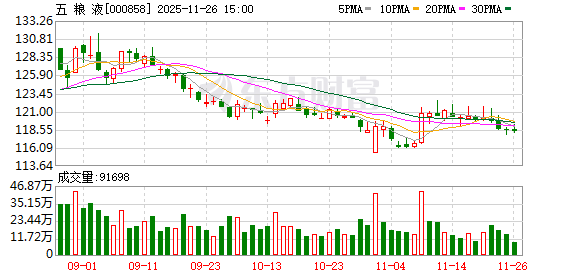
五粮液11月27日现1笔大宗交易 总成交金额202.44万元 溢价率为-0.20%
Xin Lang Zheng Quan· 2025-11-27 09:11
Group 1 - Wuliangye's stock closed down 0.27% at 117.94 yuan on November 27, with a total of 17,200 shares traded in a block trade, amounting to 2.0244 million yuan [1] - The first transaction price was 117.70 yuan for 17,200 shares, resulting in a transaction amount of 2.0244 million yuan, with a premium rate of -0.20% [1] - The buyer and seller for the block trade were both from Everbright Securities Co., Ltd., Ningbo Liuting Street Securities Business Department [1] Group 2 - Over the past three months, Wuliangye has recorded a total of one block trade, with a cumulative transaction amount of 2.0244 million yuan [1] - In the last five trading days, the stock has declined by 1.92%, with a total net outflow of 403 million yuan from main funds [1]

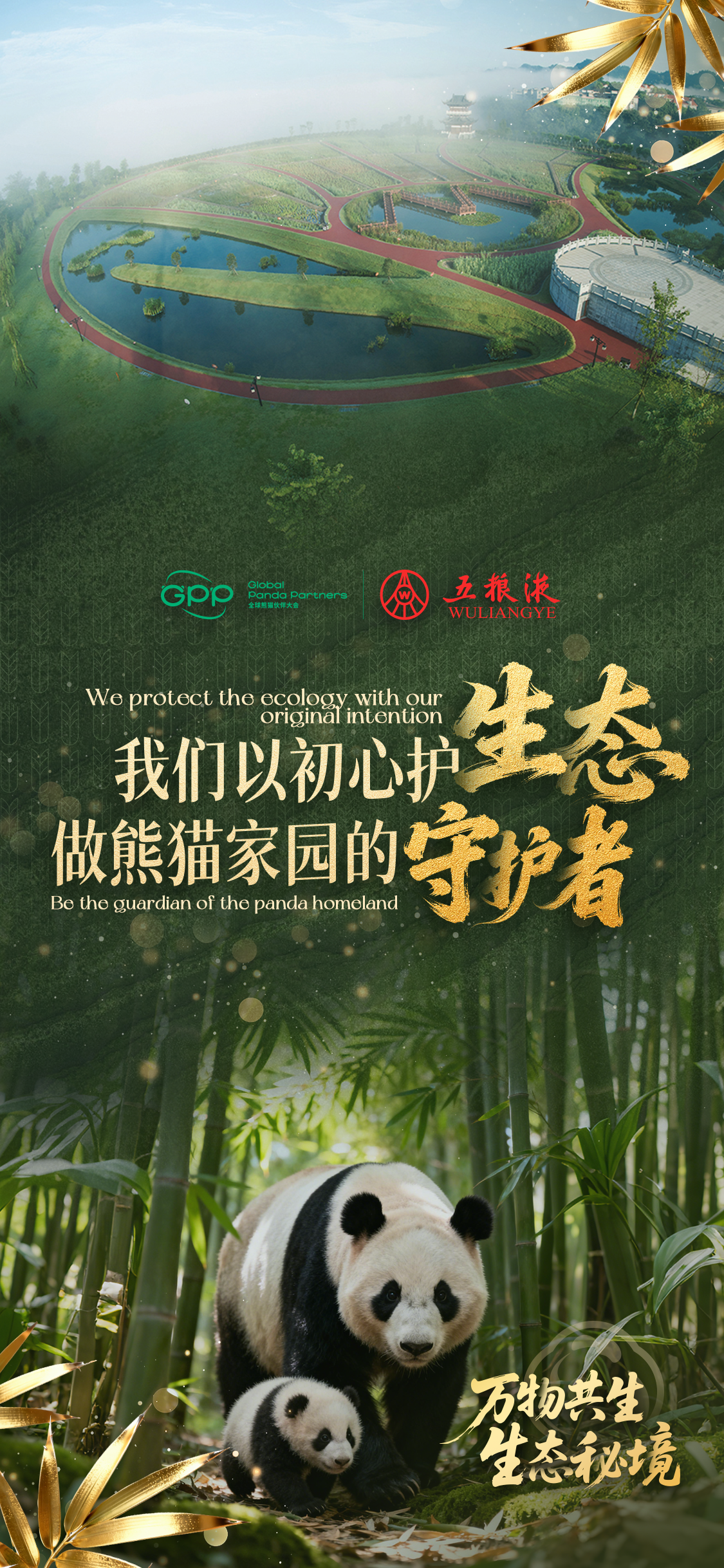
五粮液携手2025全球熊猫伙伴大会共守熊猫家园筑生态新篇
Xin Lang Cai Jing· 2025-11-27 07:37
Group 1 - The article discusses the importance of sustainable development and collaboration among global partners to protect and share resources effectively [6][7]. - It highlights the upcoming Global Panda Partners Conference in 2025, which aims to promote communication and openness among stakeholders [6][7]. - The event is organized by Xinhua News Agency's Sichuan branch, emphasizing the role of media in fostering partnerships for environmental conservation [6][7].

五粮液陈年酒再创百万拍卖价引领老酒市场新风向
Xin Lang Cai Jing· 2025-11-27 07:36
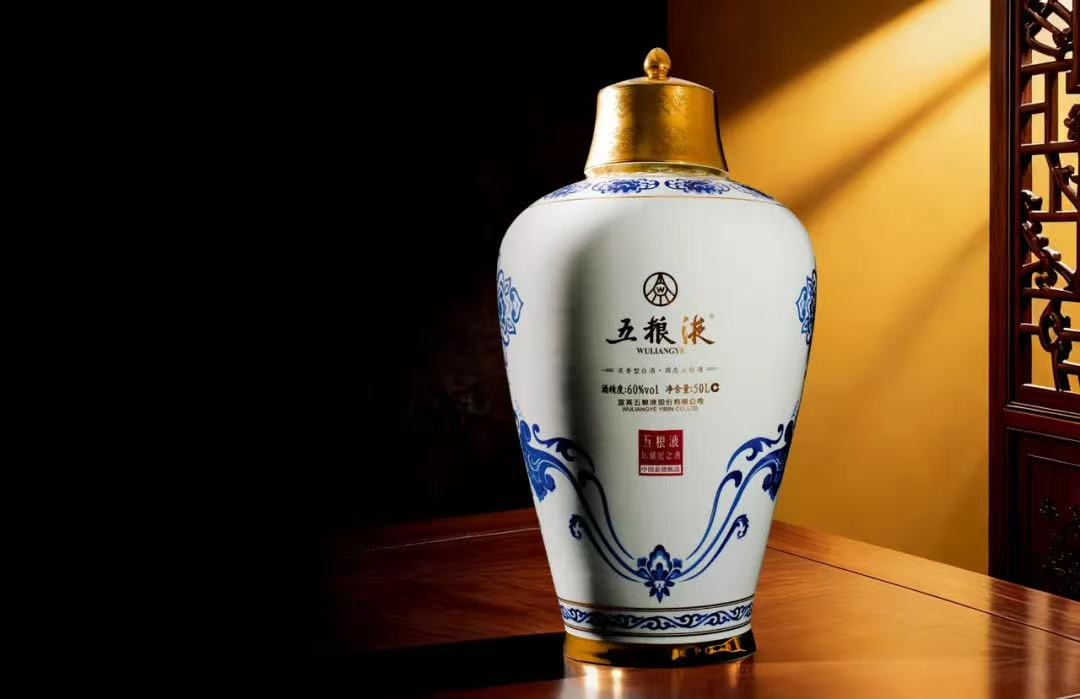
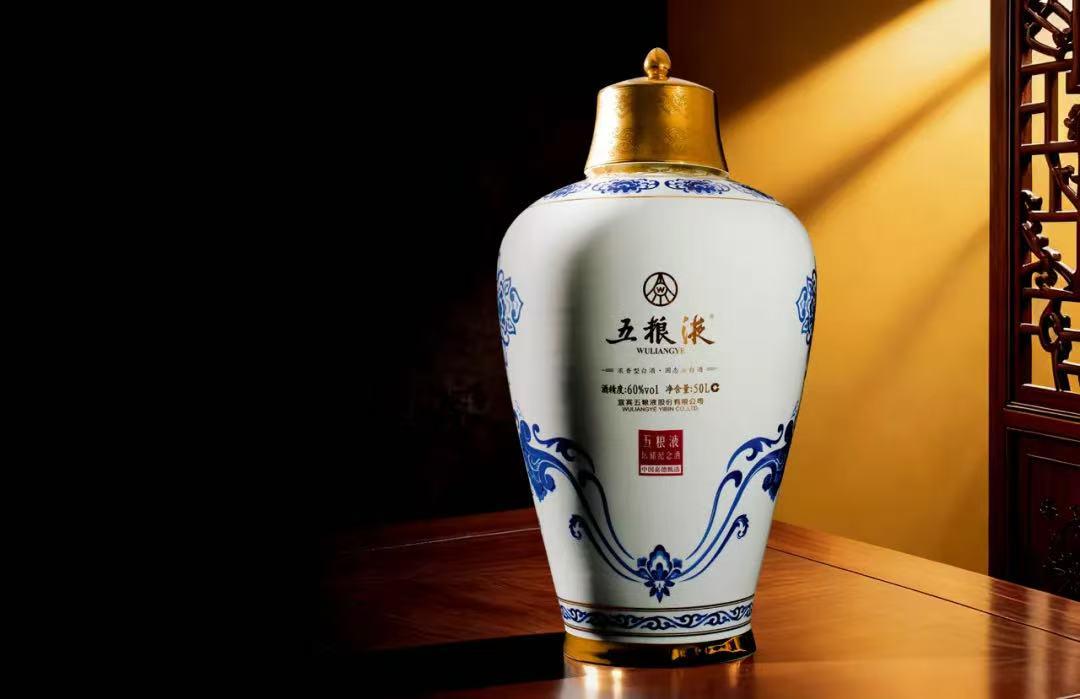
Core Insights - The recent auction of aged Wuliangye liquor in Beijing showcased the strong market demand and collectible value of aged spirits, with a notable bottle fetching over one million yuan, indicating a shift towards a more rational market environment [1][3] Group 1: Auction Highlights - The auction featured 47 sets totaling 948 bottles, including historically significant items like the Wuliangye zodiac commemorative liquor and bottles celebrating Hong Kong and Macau's return to China [3] - The two most sought-after bottles, numbered "001" and "002," started at a bidding price of 600,000 yuan, reflecting the high demand and recognition of their historical significance [3] Group 2: Market Trends - The aged liquor market in China has seen a significant increase, with transaction volumes surpassing 100 billion yuan and projected to exceed 150 billion yuan in the next five years [4] - The price of aged Wuliangye has been consistently rising, with annual growth rates between 10% and 30% [4] Group 3: Strategic Developments - Wuliangye has been actively enhancing its market presence through online and offline initiatives, including the launch of an official flagship store on JD.com and the establishment of dedicated aged liquor sections in major cities [5] - The company is also innovating its value chain through partnerships with industry associations for authentication and certification, reinforcing its leadership in the aged liquor market [7]
五粮液陈年酒再创百万拍卖价 引领老酒市场新风向
Bei Jing Shang Bao· 2025-11-27 06:14
Core Viewpoint - The recent auction of aged Wuliangye liquor in Beijing has demonstrated the strong market appeal and collectible value of aged liquor, signaling a new trend in the old liquor collection market [1][5]. Group 1: Auction Highlights - The auction featured 47 sets totaling 948 bottles of Wuliangye, with a notable thirty-year aged liquor fetching over one million yuan, setting a new auction record [1][4]. - The auction included historically significant products such as the Wuliangye zodiac commemorative liquor and other notable editions, attracting significant interest from collectors [4]. Group 2: Market Trends - The old liquor market has been experiencing a surge, with a growing consensus in the industry that quality aged liquor is highly sought after due to its drinking value and scarcity [2][5]. - The overall scale of the Chinese old liquor market has surpassed 100 billion yuan, with projections to exceed 150 billion yuan in the next five years, indicating robust growth [5]. Group 3: Brand Strategy - Wuliangye has been actively enhancing its presence in the old liquor market through systematic strategies, including establishing an online flagship store and expanding offline distribution [7][9]. - The brand has also focused on innovation and certification, collaborating with industry associations to authenticate its aged products, thereby reinforcing its leadership in the old liquor sector [9].
酒价内参11月27日价格发布:青花汾20价格下跌5元/瓶
Xin Lang Cai Jing· 2025-11-27 01:44
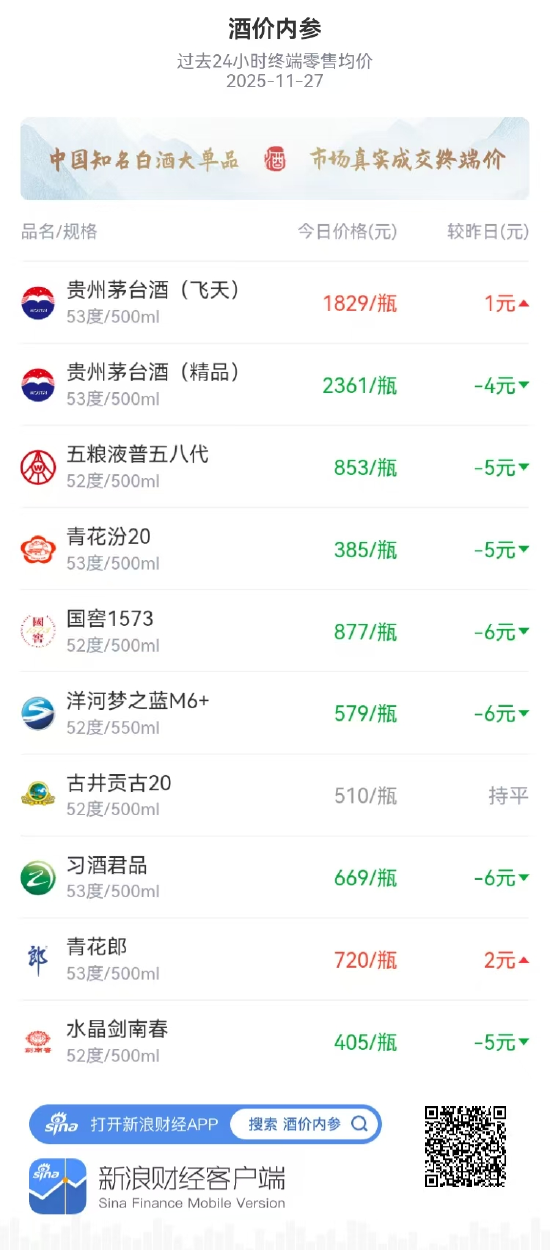
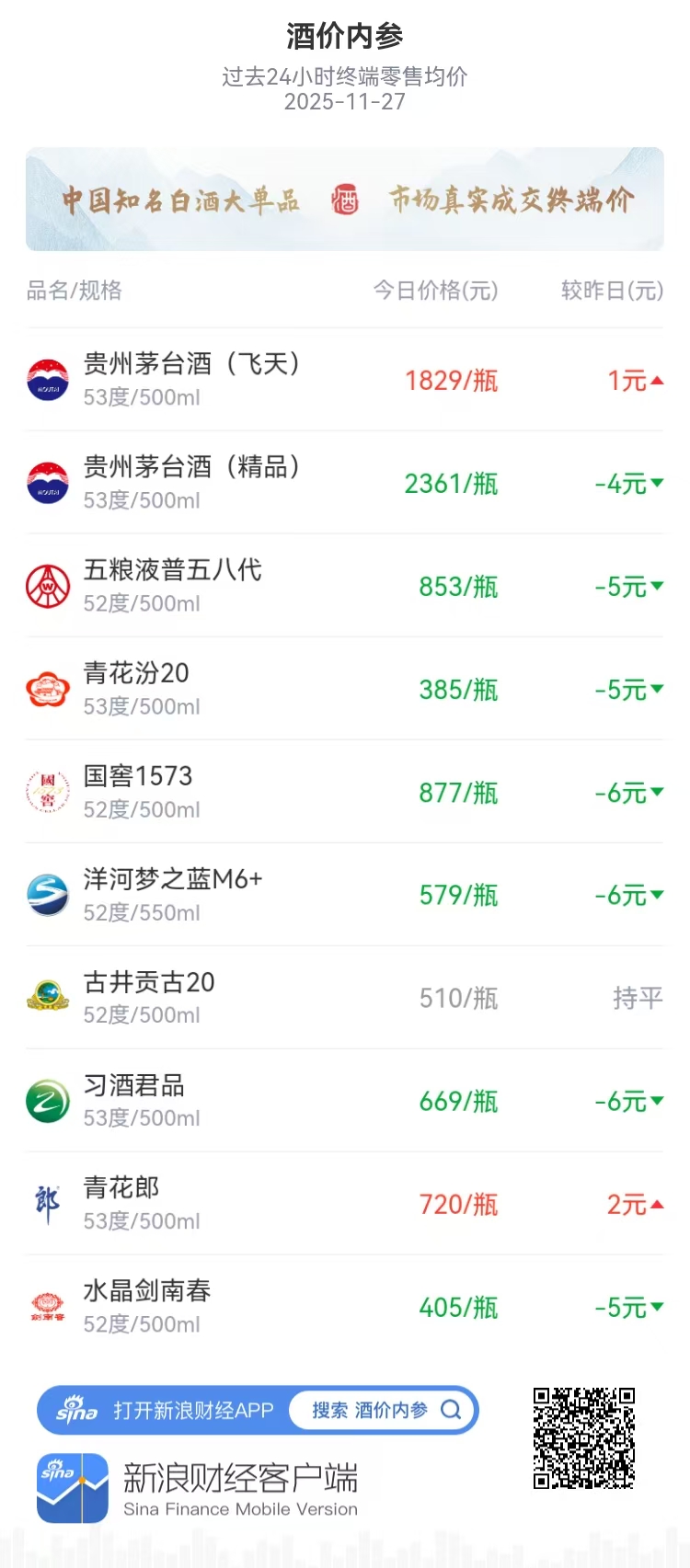
Core Insights - The white liquor market is experiencing a price adjustment, with the average retail price of the top ten products decreasing for the second consecutive day, currently priced at 9188 yuan, down 34 yuan from the previous day [1] - A notable increase in prices was observed for Qinghua Lang, which rose by 2 yuan per bottle, while Feitian Moutai saw a slight increase of 1 yuan per bottle [1] - The chairman of Jinshiyuan expressed optimism about a gradual recovery in the white liquor market next year, despite current challenges such as weak demand and intense competition [1] Price Trends - The average retail price of the top ten white liquor products has decreased, with specific products showing varied price movements: - Feitian Moutai: 1829 yuan, up 1 yuan - Premium Moutai: 2361 yuan, down 4 yuan - Wuliangye: 853 yuan, down 5 yuan - Guojiao 1573: 877 yuan, down 6 yuan - Yanghe Dream Blue M6+: 579 yuan, down 6 yuan - Xijiu Junpin: 669 yuan, down 6 yuan - Qinghua Lang: 720 yuan, up 2 yuan [3][4] Market Outlook - Jinshiyuan's chairman indicated that the company is seeing progress in expanding its market outside the province, which provides some resilience despite a decline in performance in the first three quarters [1] - The industry is believed to be at the bottom of its cycle, with a cautious optimism about future recovery as inventory levels among distributors have peaked [1]





酒价内参11月27日价格发布 市场延续回调多款名酒价格下行
Xin Lang Cai Jing· 2025-11-27 01:10
Core Insights - The retail prices of the top ten Chinese liquor products continue to decline, with an overall drop of 34 yuan, bringing the total price for a bundled package to 9188 yuan, marking the second consecutive day of price reduction [1] - Among the products, Qinghua Lang saw a slight increase of 2 yuan per bottle, while Feitian Moutai rose by 1 yuan per bottle, indicating some resilience in specific brands [1] - Most other products experienced price declines, with notable drops including Guojiao 1573 down by 6 yuan, Yanghe Dream Blue M6+ down by 6 yuan, and Wuliangye Pu 58th generation down by 5 yuan [1][3][4] Price Summary - Feitian Moutai (53°/500ml) is priced at 1829 yuan, up by 1 yuan from the previous day [3] - The price of the premium Moutai (53°/500ml) has decreased significantly by 470 yuan, now at 2361 yuan [3] - Wuliangye Pu 58th generation (52°/500ml) is priced at 853 yuan, down by 5 yuan [3] - Guojiao 1573 (52°/500ml) is now at 877 yuan, down by 6 yuan [3] - Qinghua Lang (53°/500ml) is priced at 720 yuan, with a slight increase of 2 yuan [4] - Xijiu Junpin (53°/500ml) is priced at 669 yuan, down by 6 yuan [4]
2025年第47周:酒行业周度市场观察
艾瑞咨询· 2025-11-27 00:04
Group 1: High-end Baijiu Industry Reflection - The high-end baijiu industry faces short-term challenges, but the core investment logic remains unchanged, with leading companies like Moutai and Wuliangye maintaining long-term investment value due to brand moat, high gross margins (over 85%), and stable cash flow [3][4] - Current inventory pressure is significant, with Moutai's price dropping below 1800 yuan, yet cultural foundations and business models support resilience [3] - Valuations have returned to reasonable levels, with Wuliangye's P/E ratio at 14 times, and high dividends (Luzhou Laojiao's dividend yield exceeds 6%) provide a safety net [3][4] Group 2: Instant Retail and Alcohol - Instant retail is rapidly penetrating the alcohol industry, but manufacturers experience uneven effects, with platforms like Douyin tightening regulations on low-price sales [5] - The online alcohol sales are primarily dominated by beer, with baijiu being less represented, indicating a need for balance between online and offline channels [5] - Challenges include high costs for distributors and risks of counterfeit products, necessitating a differentiated development approach rather than blindly following trends [5] Group 3: Domestic Wine Industry Challenges - The domestic wine industry faces a "bumper harvest but no profit" dilemma due to supply-demand imbalances, homogenization, and competition from imported wines [7] - Low capacity utilization and lack of product differentiation exacerbate the crisis, with high costs and weak industry chains further complicating recovery [7] - Solutions involve focusing on unique terroir characteristics, creating differentiated IP, and embracing new consumption scenarios to drive sustainable development [7] Group 4: E-commerce and Alcohol Market Dynamics - E-commerce platforms are aggressively using subsidies and low-price pre-sales to disrupt offline pricing, leading to conflicts with traditional alcohol distributors [12] - The market is experiencing a "tear and reconstruction" phase, with some distributors forced to supply online, creating a dependency relationship [12] - Future collaboration is essential, with e-commerce expanding breadth and alcohol distributors deepening service to achieve industry chain upgrades centered on consumer needs [12] Group 5: Young Consumer Trends - Young consumers are shifting their purchasing criteria from "value for money" to "worth it," with emotional resonance becoming a key factor in their buying decisions [15][16] - Products like Qingdao White Beer have gained popularity by aligning with emotional and quality expectations, reflecting a broader trend in consumer behavior [15][16] Group 6: Innovations in Alcohol Products - New product launches, such as the "No Rush Sparkling Yellow Wine," signify a shift towards value creation in the yellow wine industry, targeting younger consumers with innovative blends [18] - The introduction of limited-edition products, like the "Bingwu Horse Year Zodiac Wine" by Jianan Chun, highlights the importance of cultural significance and scarcity in appealing to high-end markets [37] Group 7: Industry Resilience and Transformation - The baijiu industry is transitioning from high-speed growth to a focus on quality, with leading brands maintaining their positions while smaller firms face increased pressure [11] - Companies are encouraged to concentrate on product quality, brand building, and operational efficiency to achieve sustainable growth amid industry adjustments [11] - The emergence of new business models, such as "group buying," reflects innovative approaches to address challenges like high inventory and price control [21]


五粮液丙午马年生肖酒开启预售
Xin Lang Cai Jing· 2025-11-26 21:09
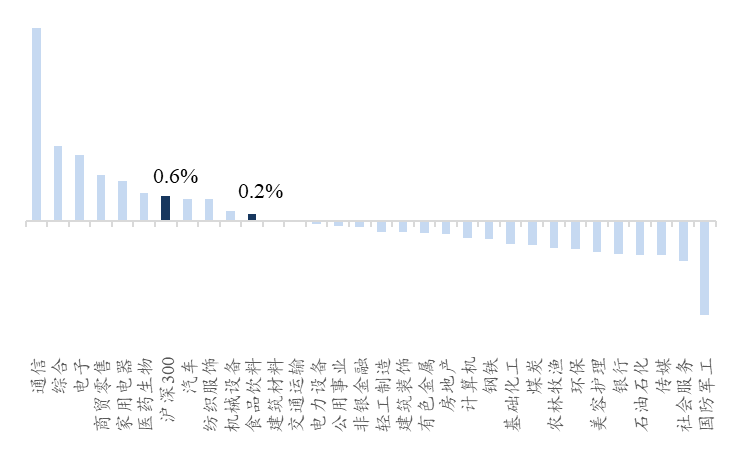
Market Performance - The food and beverage sector increased by 0.2% on November 26, underperforming the CSI 300 index by approximately 0.4 percentage points, ranking 10th among 31 sub-industries in Shenwan [1] - Within the food and beverage sector, snacks (+0.8%), soft drinks (+0.7%), and pre-processed foods (+0.4%) showed relatively strong performance, with companies like Huanlejia, Haiqin Food, and Youyi Food leading in gains [3] Important Announcements - BaiRun Co., Ltd. announced the results of the BaiRun convertible bond repurchase, stating that the repurchase period ended on November 25, 2025 [6] - Yanjinpuzi completed the repurchase and cancellation of 70,000 restricted stocks, which accounts for 0.025% of the total share capital before cancellation [6] Industry News - Hite Jinro announced that its main sparkling wine brand, FiLite, has surpassed 2.6 billion cans in sales as of November 4, 2023 [9] - Wuliangye's limited edition gift box of the Year of the Horse liquor (500ml) began pre-sale on JD Supermarket on November 25, priced at 2,999 yuan per bottle [9]
五粮液为何跌到行业第三?
YOUNG财经 漾财经· 2025-11-26 11:56
Core Viewpoint - The article discusses the significant decline in Wuliangye's performance, leading to its drop to the third position in the A-share liquor market, primarily due to strategic missteps and market conditions [4][5][6]. Industry Overview - The liquor industry is undergoing a deep adjustment, with Wuliangye's revenue in Q3 2025 dropping by 52.66% year-on-year, marking its worst quarterly performance in nearly 20 years [4][6]. - The overall liquor production in China decreased by 9.9% year-on-year in the first nine months of 2025, reflecting a broader industry downturn [6]. Company Performance - Wuliangye's Q3 2025 revenue was 81.7 billion yuan, with a net profit of 20.2 billion yuan, both showing significant declines compared to previous years [4][6]. - In contrast, competitors like Moutai and Shanxi Fenjiu reported revenue growth during the same period, highlighting Wuliangye's underperformance [6][11]. Strategic Adjustments - The company is undergoing a strategic shift aimed at optimizing channels and stabilizing prices, which has led to short-term pain reflected in its financial results [7][12]. - Wuliangye's management has implemented measures such as reducing dealer quotas and controlling supply to stabilize prices, but these efforts have not yet yielded substantial results [12][14]. Management Changes - Frequent changes in Wuliangye's management have led to strategic inconsistencies, impacting the company's ability to respond effectively to market challenges [16][17]. - The restructuring of the sales team aims to improve coordination between brand, channel, and terminal sales, but has also created transitional challenges [17][18]. Product Strategy - Wuliangye's reliance on its flagship product, the "Eighth Generation Pu Wu," which accounts for over 60% of its revenue, poses risks as competition intensifies [19][20]. - The company has struggled to diversify its product offerings, leading to vulnerabilities in both high-end and mid-range markets [20]. Market Sentiment - Despite the poor performance, Wuliangye's stock price showed resilience, indicating that investors may have already adjusted their expectations following previous declines [21][24]. - The company announced a substantial dividend plan, which may help support its market valuation amid ongoing challenges [24]. Institutional Perspectives - There is a divide among analysts regarding Wuliangye's future, with some optimistic about its long-term brand strength and reform efforts, while others express concerns about ongoing operational challenges [25][26]. - The differing views reflect broader uncertainties in the liquor market, particularly regarding demand recovery and the effectiveness of Wuliangye's strategic adjustments [26].

五粮液再度携手全球熊猫伙伴大会 在“共护共建共享”中传递“和美”强音
Xin Hua Cai Jing· 2025-11-26 09:19
Core Viewpoint - The 2025 Global Panda Partner Conference, themed "Co-protect, Co-build, Co-share," is taking place in Chengdu, Sichuan, with Wuliangye as a strategic partner, emphasizing ecological commitment, cultural exchange, and shared vitality [2]. Group 1: Co-protect - The conference gathers experts and representatives to discuss ecological protection and green development, highlighting the connection between Wuliangye and the panda's habitat in the Yangtze River upstream [3]. - Wuliangye adheres to an ecological philosophy that aligns with the conference's green ideals, focusing on protecting water quality and strengthening ecological barriers in the panda's habitat [3][4]. - The company has implemented various green initiatives, including carbon footprint management and the establishment of national-level green factories, aiming for a "zero-carbon" status [4]. Group 2: Co-build - The conference features a panda cultural market showcasing creative products, with Wuliangye presenting unique items like the "Golden Panda" commemorative liquor, attracting attention from international guests [5]. - Wuliangye's cultural initiatives, such as the "He Mei Global Tour" and "He Mei Cultural Festival," aim to promote traditional Chinese culture and facilitate cultural exchanges [6][7]. Group 3: Co-share - The conference emphasizes the importance of sharing opportunities, with Wuliangye participating in a cultural exchange event that highlights Sichuan's tourism and Wuliangye's rich cultural heritage [8]. - The company has been actively involved in international events, showcasing its commitment to global cooperation and cultural confidence, while promoting the story of Chinese liquor [8][9]. - Wuliangye aims to continue its efforts in ecological responsibility and cultural confidence, contributing to sustainable development and the construction of a shared future for humanity [9].