
BYD(002594)

Search documents
2026全球锂电行业十大发展趋势
起点锂电· 2026-02-27 11:19
Core Viewpoint - The global lithium battery market is projected to reach a total shipment of 2.5 TWh by 2026, driven by both energy storage and power batteries, with significant growth in both domestic and overseas markets [3][4]. Market Size - Global lithium battery shipments are expected to reach 2.5 TWh in 2026, a year-on-year increase of 25%. Energy storage batteries will account for 0.8 TWh (+40%), while power batteries will reach 1.5 TWh (+20%) [3]. - In China, total shipments are projected at 1.8 TWh (+30%), with energy storage at 600 GWh (+50%) and new energy vehicle sales at 12 million units, achieving a penetration rate of 55% [3]. - Overseas markets are becoming a core growth driver, with China exporting 4 million new energy vehicles and overseas energy storage demand accounting for 52% of global needs [3]. Domestic Market - The domestic market is seeing structural optimization, with energy storage becoming the primary growth engine, growing at over 50%, surpassing power batteries [4]. - Large-scale energy storage, commercial, and household applications are all increasing, with large capacity (314Ah+) batteries making up over 70% of the market [4]. Overseas Market - The U.S. IRA and the EU's new battery regulations are promoting localization, with Chinese companies' overseas production capacity rising to 25% [4]. - Emerging markets in Southeast Asia, the Middle East, and Latin America are experiencing significant growth, accounting for over 12% of global demand [4]. New Technologies - Solid-state batteries are expected to enter mass production in 2026, with global shipments projected at 50 GWh [4]. - Sodium-ion batteries are also set for large-scale application, with shipments of 27 GWh, primarily in energy storage and commercial vehicles [4]. - High-density LFP batteries are seeing accelerated penetration, with a 30% improvement in cycle life [4]. Capital Operations - Hong Kong IPOs are becoming mainstream, with accelerated mergers and acquisitions in the industry [5]. - Financing is increasingly directed towards technology, globalization, and energy storage projects [6]. Competitive Landscape - The global market for power batteries is highly concentrated, with the top five companies holding an 85% market share [5]. - The second-tier companies are focusing on niche segments, while cross-industry players are entering the market, intensifying competition [5]. Product Prices - Material prices are showing a clear upward trend, with increases of 15% to 30%, leading to a stabilization and recovery in product prices [5]. Upstream Materials - The lithium carbonate price is expected to stabilize around 120,000 to 300,000 yuan per ton, with a supply gap of 200,000 tons anticipated for the year [7]. - The production capacity for phosphoric acid lithium is set to expand by 3 million tons per year from 2025 to 2026 [7]. Equipment and Manufacturing - The industry is moving towards smart, green manufacturing, with domestic equipment replacement rates exceeding 90% [8]. - AI is enhancing production efficiency, reducing research and development cycles by 30% and improving yield rates by over 5% [8].


2026出海人必备的一站式地图
3 6 Ke· 2026-02-27 10:56
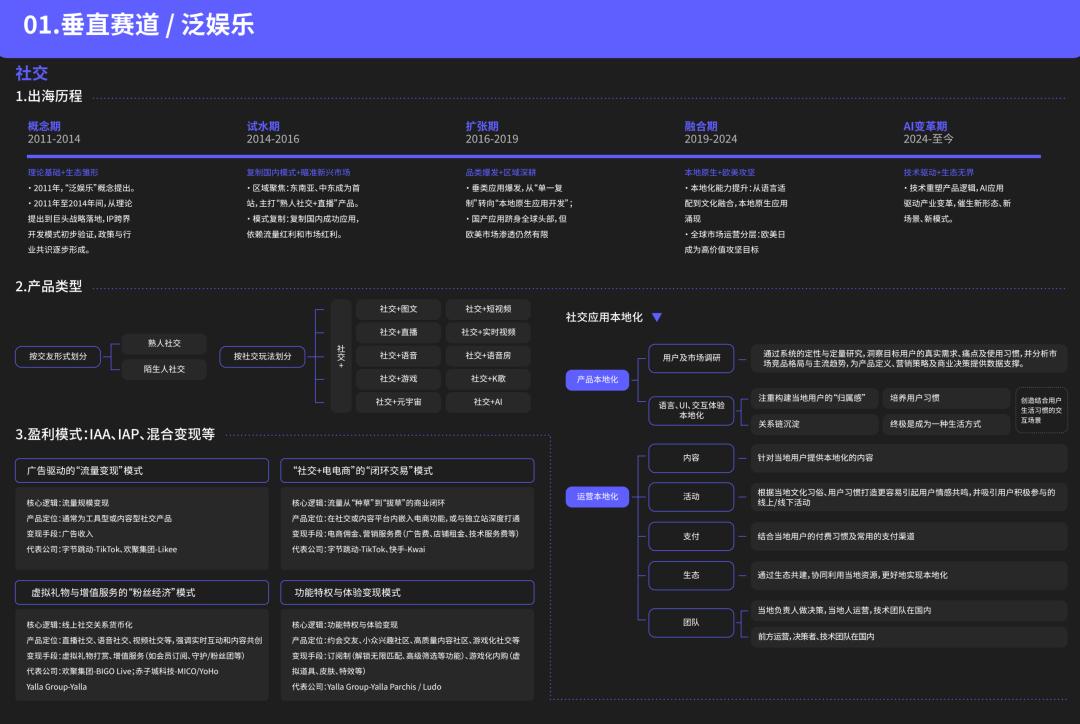
Core Insights - The global industrial system is undergoing reconstruction, and the map for Chinese companies going abroad is being redrawn, marking a significant shift in the global migration of "Chinese capabilities" [1] Industry Insights - The core driving force for the outbound entertainment industry has shifted from simple business model export to deep empowerment through "AI + culture," with the domestic market expected to reach 67.79 billion yuan by 2025, growing 34.4%, while the overseas market is projected to reach 21.07 billion USD, growing 145.7% [12] - In the cross-border e-commerce sector, the era of "barbaric growth" is ending, with a focus on localization and brand strength. By 2025, global e-commerce growth is expected to slow to 8.8%, prompting a shift towards "regional focus" and "brand cultivation" [15] - The artificial intelligence sector is characterized by a dual drive of "hardware-driven" and "application landing," with significant advancements in AI hardware and software leading to a rapid commercialization of AI applications [21] - The new energy sector is transitioning from "product output" to "ecological co-construction," with China's new energy vehicle exports expected to surge to 3.43 million units by 2025, a 70% year-on-year increase [28] Market Insights - North America remains a strategic high ground for outbound enterprises, characterized by high barriers and high returns, with a focus on compliance and localization due to ongoing tariff adjustments [29] - Europe presents a "quality competition arena" under green barriers, where compliance with stringent environmental regulations is essential for market entry [35] - Southeast Asia has evolved from simple trade to comprehensive investment and localized operations, becoming the largest destination for Chinese outbound investment [38] - The Middle East offers opportunities driven by economic diversification initiatives, with significant growth in exports of vehicles and electrical equipment from China [41] - Latin America is characterized by a demand for high-cost performance products, with a focus on affordable smart hardware and the rapid growth of e-commerce platforms [43] Strategy Insights - The approach to selecting target markets and entry paths is shifting from blind expansion to precise coupling, focusing on infrastructure capacity and user ecosystem maturity [45] - The product channel layout and marketing strategies are evolving towards "AI reconstruction and regional differentiation," emphasizing multi-channel integration and technology empowerment [48] - Compliance with regulations and risk avoidance is becoming critical, with a need for systematic compliance frameworks to navigate complex regulatory environments [53] - Organizational and talent development is essential for building agile global teams, with a focus on creating a unified global skills framework to address capability gaps [55] - The transformation of Chinese enterprises going abroad is moving from "product output" to "systemic rooting," emphasizing supply chain resilience and local integration [56]
世界首次五百强断崖:日本149家,美国151家,中国3家,现在呢
Sou Hu Cai Jing· 2026-02-27 09:13
Group 1 - The World’s 500 Strong list reflects the shifts in global economic power, showcasing the rise of China and the decline of Japan over the past three decades [1][3][31] - In 1995, the list was dominated by the US and Japan, with 151 and 149 companies respectively, accounting for nearly 60% of the total [5][9] - By 2026, Japan's representation has drastically decreased to about 40 companies, while China has surged to 133, nearly matching the US's 139 [9][19] Group 2 - The decline of Japan's economic power can be traced back to the Plaza Accord in 1985, which led to a significant appreciation of the yen, adversely affecting Japan's export-driven economy [11][15] - Following the economic bubble burst in 1991, Japan entered a prolonged period of stagnation, with many companies failing to adapt to new technological trends [15][17] - In contrast, China's economic trajectory has been upward since joining the WTO in 2001, becoming a global manufacturing hub and investing heavily in infrastructure [19][22] Group 3 - The rise of Chinese companies is marked by significant advancements in technology and manufacturing, with firms like BYD leading in electric vehicles and Huawei excelling in smartphones [24][26] - The US maintains a strong corporate presence, exemplified by Walmart's annual revenue exceeding $640 billion, but faces challenges such as rising national debt and trade restrictions [26][27] - The global industrial landscape is undergoing a complex reshuffling, with competition now focusing on addressing future challenges like aging populations and technological advancements [27][31]


汽车行业双周报(2026、2、13-2026、2、26):今年春节假期新能源汽车出行创新高-20260227
Dongguan Securities· 2026-02-27 08:59
Investment Rating - The report maintains an "Overweight" rating for the automotive industry, expecting the industry index to outperform the market index by more than 10% in the next six months [47]. Core Insights - The automotive sector has shown resilience, with the Shenyin Wanguo Automotive Index rising by 0.72% over the past two weeks, outperforming the CSI 300 Index by 0.56 percentage points. Year-to-date, the automotive sector has increased by 3.38%, also surpassing the CSI 300 Index by 1.28 percentage points [12][18]. - January saw a stabilization in automotive production and sales, with production at 2.45 million units (flat year-on-year) and sales at 2.436 million units (down 3.2% year-on-year). Exports, however, surged by 44.9% year-on-year to 681,000 units [20][28]. - The report highlights a positive outlook for the domestic automotive market post-Spring Festival, driven by new vehicle launches and government incentives for vehicle trade-ins [41]. Summary by Sections Automotive Industry Trends and Valuation Review - The Shenyin Wanguo Automotive Index has ranked 17th among 31 industries over the past two weeks, with a year-to-date performance ranking of 22nd [12][18]. - The automotive sector's current PE (TTM) stands at 27.05 times, with sub-sectors like automotive services at 33.60 times and automotive parts at 31.43 times [19][16]. Industry Data Tracking - In January, automotive production was 2.45 million units, with sales at 2.436 million units, reflecting a month-on-month decline of 25.7% and 28.3%, respectively. Exports reached 681,000 units, marking a 44.9% increase year-on-year [20][28]. Industry News - The China Association of Automobile Manufacturers reported a 32.1% month-on-month decline in sales of domestic passenger cars in January [28]. - New government policies in Henan and Fujian provide subsidies for vehicle trade-ins, with maximum amounts of 20,000 and 15,000 yuan, respectively [29][30]. - The Spring Festival saw record high usage of new energy vehicles, with charging sessions reaching 602.1 million times [31]. Corporate News - Geely Automobile announced a share buyback of 384,100 shares for approximately 63.12 million HKD [34]. - GAC Group has established a new robotics company, Huijun Technology, focusing on intelligent robotics [35]. - BYD has introduced a financing policy with low-interest rates for its vehicles, enhancing its market competitiveness [36]. Investment Recommendations - The report suggests focusing on companies like BYD and Seres, which are expanding in overseas markets, and those in the intelligent driving supply chain, such as Fuyao Glass and Joyson Electronics [41][42].



【快讯】每日快讯(2026年2月27日)
乘联分会· 2026-02-27 08:36
Domestic News - The Ministry of Commerce announced that Chinese and German companies reached over ten commercial agreements covering sectors such as automotive, machinery, energy, logistics, and finance during German Chancellor Merz's visit to China [5] - Shanghai's Yangpu District has launched its first batch of automotive consumption vouchers for 2026, offering cash discounts of 2000 or 3000 yuan, with a total funding of 10 million yuan [6] - GAC Group has officially established Guangdong Huilun Technology Co., Ltd., focusing on humanoid robots, and plans to begin small-scale trial production of its core product by the end of 2026 [7] - XPeng Motors announced the establishment of a humanoid robot mass production base in Guangzhou, aiming for global mass production of advanced humanoid robots by the end of 2026 [8] - NIO provided battery swap services 2,073,500 times during the Spring Festival, marking a significant increase in service volume compared to the previous year [9] - Xiaomi's automotive report indicated that its cars covered a total distance of 4.05 billion kilometers during the Spring Festival, with 1 billion kilometers attributed to assisted driving features [10] - AITO Wenjie has secured 200 initial orders through a strategic partnership with Abu Dhabi Motors, marking a significant step in its global expansion [11] - Mercedes-Benz China signed a memorandum of understanding with Momenta to enhance cooperation in the field of intelligent driving systems, which will be implemented in new models this year [12] International News - In January 2026, electric vehicles accounted for 19.7% of new car sales in Europe, a significant increase from 16.7% in January 2025, with Volkswagen leading the market [14] - The Philippines is actively promoting foreign investment in the semiconductor and electric vehicle industries, with major companies like Samsung planning to expand their operations [15] - Hyundai plans to invest approximately $6.3 billion to build an AI data center and robotics factory in South Korea [16] - The UK experienced an 8.2% decline in car production in January 2026, attributed to weak demand in major export markets [17] Commercial Vehicles - SHACMAN has successfully entered the high-end logistics market in Southeast Africa, delivering over 100 X6000 trucks and establishing a service network [18] - The age limit for commercial vehicle drivers has been raised to 63 years, effective March 20, 2026, to support the delayed retirement policy [19] - BYD has become the leading exporter of new energy buses in January 2026, capturing a market share of 35.41% [20] - EVE Energy's open-source battery has successfully passed six technical validations in extreme low-temperature conditions, marking a significant advancement in battery technology [21]





3月19-20日 常州!2026锂电关键材料及应用市场高峰论坛
鑫椤锂电· 2026-02-27 08:33
Core Viewpoint - The lithium battery industry is poised for a significant growth cycle in 2026, characterized by strong demand recovery, accelerated global expansion, and disruptive technological advancements, leading to a "spiral rise" in both volume and price [3]. Group 1: Market Predictions - Global lithium battery production is expected to reach 2297 GWh by 2025, with a growth rate of 34.6% in 2026. The shipment growth rate for energy storage cells is projected to be as high as 70%, driven by dual domestic and international demand [5]. - There is a notable supply gap in the effective production capacity of battery cells and various materials, making supply chain stability and efficiency crucial for capitalizing on this growth opportunity [5]. Group 2: Conference Overview - The 2026 Lithium Key Materials and Applications Market Summit will be held on March 19-20, 2026, in Changzhou, Jiangsu, organized by Xinluo Information [4]. - The summit will focus on two main topics: in-depth discussions on cutting-edge technologies and market supply-demand dynamics, and B2B procurement matchmaking to connect top battery manufacturers and material suppliers [6]. Group 3: Key Topics and Participants - The conference will feature specialized forums on lithium carbonate, key materials for power batteries, and energy storage batteries, with participation from industry experts and leading companies [5][6]. - Notable topics include the potential of global lithium resources, the impact of solid-state battery development on lithium salt companies, and strategies for navigating market volatility [7][8][9].


烟台新春第一会系列网评观大势:三个跃升背后的战略清醒
Qi Lu Wan Bao· 2026-02-27 07:31
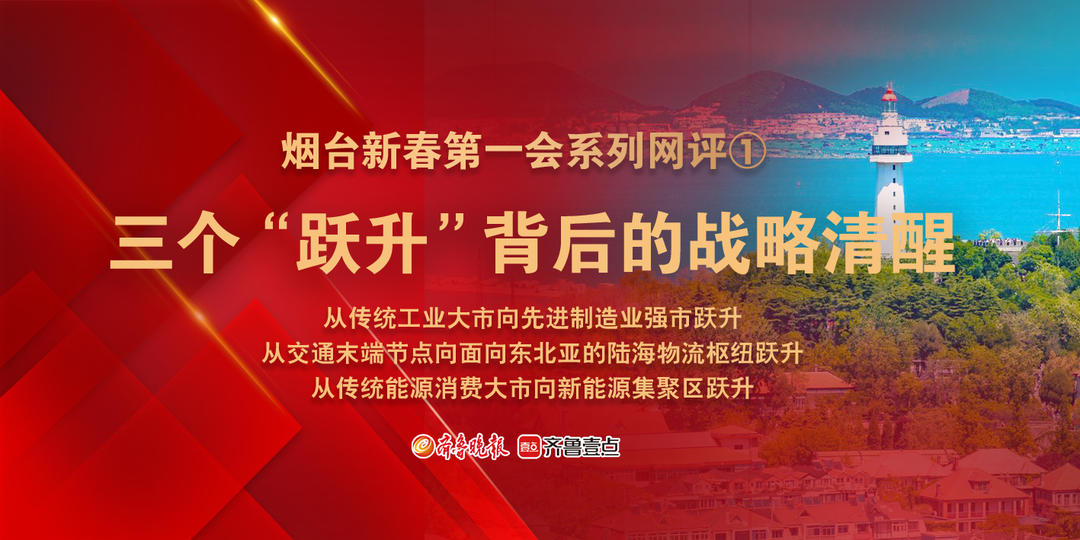
Group 1 - The core viewpoint of the article emphasizes the transition of Yantai from "quantitative leap" during the 14th Five-Year Plan to "qualitative transformation" in the 15th Five-Year Plan, indicating a significant shift in the city's development strategy [1][4] - Yantai aims to evolve from a traditional industrial city to a strong advanced manufacturing hub, a logistics hub facing Northeast Asia, and a center for new energy, reflecting a strategic planning based on industrial characteristics [4][5] - By 2025, Yantai's GDP is projected to grow by 6.1%, exceeding 1.1 trillion yuan, with major economic indicators showing substantial growth, which serves as a testament to the "quantitative leap" and lays the groundwork for the "qualitative transformation" [4][5] Group 2 - The three leaps outlined by the city leadership are part of a strategic path to transition from "changes in scale" to "changes in structure," with a goal of establishing a green, low-carbon, high-quality development demonstration city by the end of the 15th Five-Year Plan [5] - The urgency expressed by the leadership, emphasizing that opportunities and competition do not wait for anyone, reflects a clear awareness of the regional competitive landscape and the need for Yantai to find its precise positioning within the broader context of Shandong's development [5] - The theme for economic work in 2026 focuses on accelerating the development of new productive forces and shaping new advantages for high-quality development, responding to the need for growth that drives structural change rather than mere quantitative increases [5]

高额关税下,中国车企2025年啃下欧洲多少份额?
Sou Hu Cai Jing· 2026-02-27 06:29
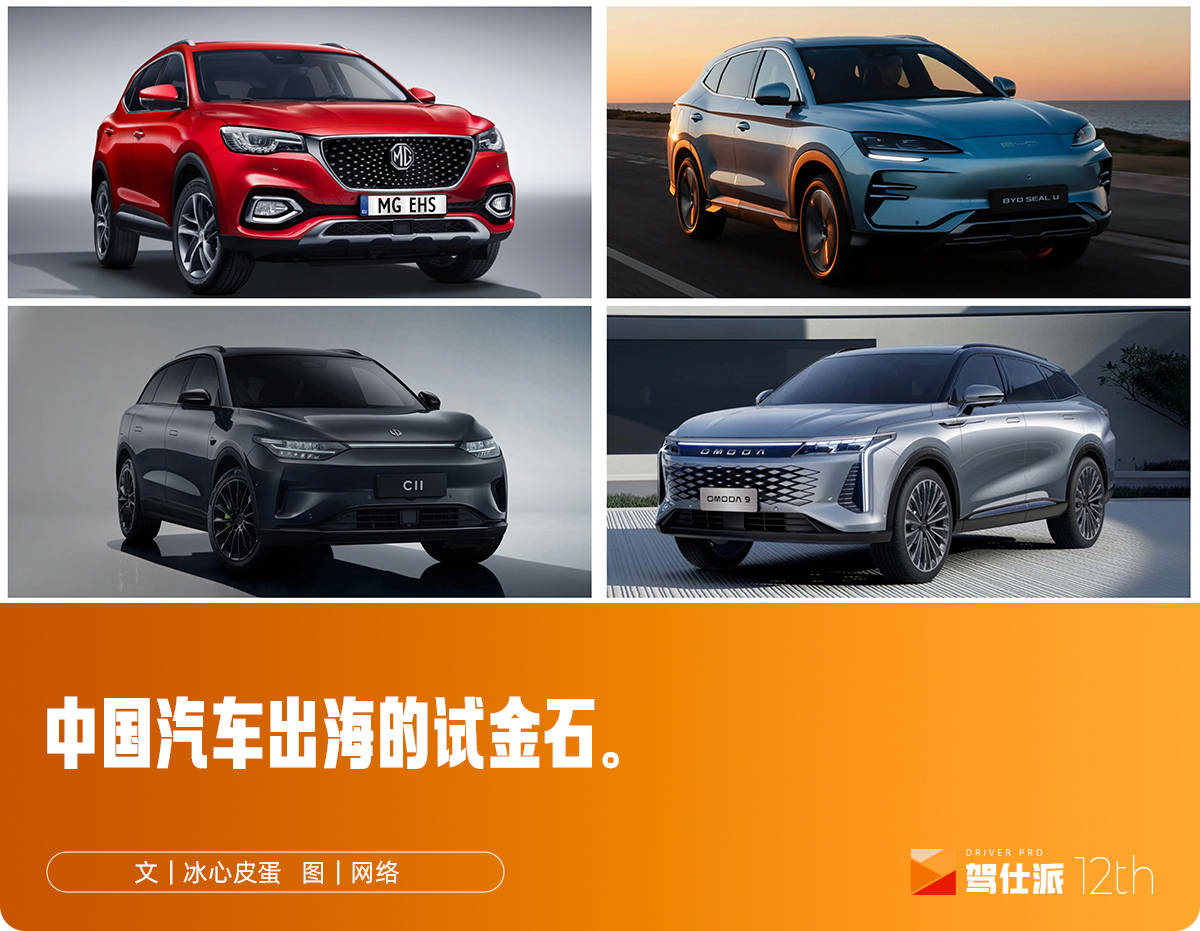
Core Insights - Chinese automotive brands are experiencing growth in Europe, with a total market share of 5.53% in 2025, despite facing high tariffs and trade barriers [8][10][32] - The overall European car market is projected to reach 13.27 million units in 2025, showing a year-on-year growth of 2.4% [3] - Major Chinese brands like MG and BYD are leading the sales, with MG achieving 307,282 units sold, representing 2.32% of the market share [9][10] European Market Overview - The European market includes 32 countries, with a high economic and industrial standard [3] - In 2025, the total new car sales in Europe are expected to reach 13.27 million units, marking a 2.4% increase from the previous year [3] Top Brands in Europe - Volkswagen leads the market with 1.44 million units sold, capturing 10.88% of the market share, followed by Toyota and Skoda [4][5] - Among the top 10 brands, 8 are European, with only Toyota and Hyundai being non-European brands [4] Chinese Brands Performance - Chinese brands collectively sold 734,492 units in Europe in 2025, achieving a market share of 5.53% [10] - MG is the top-selling Chinese brand in Europe, with a sales increase of 26.4% [9][10] - BYD's sales surged by 276.2%, reaching 186,568 units [9][10] Tariff Impact - The EU has imposed temporary anti-subsidy tariffs on Chinese cars, ranging from 17.4% to 37.6%, which significantly affects market entry [7] - The total tax rate for some brands can reach as high as 45.3% when combined with the basic tariff [7] Sales by Country - In Germany, Chinese brands sold 63,603 units, with MG and BYD leading the sales [21][22] - In France, total sales for Chinese brands reached 55,700 units, with MG again being the top performer [26][27] - The UK market saw a total of 196,762 units sold by Chinese brands, with MG achieving a market share of 4.2% [30][31] Model Performance - The best-selling Chinese model in Europe is the MG ZS, with sales of 124,512 units [17] - BYD Seal U also performed well, selling 79,407 units, marking a significant increase [18] Future Outlook - The European market presents both challenges and opportunities for Chinese automotive brands, with potential for rapid growth if trade barriers are reduced [32]

SPIR:2026全球锂电池行业发展白皮书发布!

起点锂电· 2026-02-27 06:25
Core Insights - The article discusses the growth and trends in the global lithium battery industry, highlighting significant increases in battery shipments and the evolving demand structure across various applications [2][3][9]. Group 1: Global Lithium Battery Market Overview - In 2025, global lithium battery shipments reached 2042.7 GWh, marking a year-on-year growth of 46.8% [2]. - The demand structure for lithium batteries in 2025 was dominated by power batteries at 62.2%, followed by energy storage batteries, 3C batteries, and small power batteries [2]. - By 2030, the total demand for lithium batteries is projected to reach 5333.6 GWh, with a decrease in the proportion of power batteries and an increase in energy storage batteries [2]. Group 2: Electric Vehicle (EV) Battery Segment - In 2025, global sales of new energy vehicles (NEVs) reached 24.04 million units, a year-on-year increase of 31.8%, driving EV power battery shipments to 1271 GWh, up 39.9% [2][9]. - The growth in NEV sales is primarily attributed to the rapid increase in plug-in hybrid electric vehicle (PHEV) models [2]. Group 3: Energy Storage Battery Segment - Energy storage batteries have become essential for global energy transition, with 2025 shipments reaching 637 GWh, a significant year-on-year increase of 78.9% [3][13]. - The growth is driven by policy changes and economic factors, allowing energy storage to participate in electricity markets, creating diverse revenue models [3]. Group 4: 3C Battery Segment - The 3C battery segment saw shipments of 70.8 GWh in 2025, with a modest year-on-year growth of 5.8% [4][17]. - The demand is primarily driven by device replacements and hardware upgrades, with emerging markets in AI PCs and AR/VR devices [4]. Group 5: Battery Material Trends - In 2025, the global market for lithium battery cathode materials is expected to reach 479.8 million tons, with lithium iron phosphate (LFP) accounting for 78% of shipments [20]. - The demand for anode materials is projected to reach 272.3 million tons, with artificial graphite dominating the market [25][26]. Group 6: Future Trends and Projections - The lithium battery industry is expected to focus on energy storage, international expansion, and commercial vehicles as core growth engines [45]. - Technological advancements will lead to diverse battery chemistries, including sodium-ion batteries and silicon-based anodes, while the industry will see increased concentration and competition based on technology and compliance [45].

比亚迪:南宁弗迪电池项目规划调整 全球最大单体电池工厂加速扩产
Zhong Guo Qi Che Bao Wang· 2026-02-27 05:55
Group 1 - The core viewpoint of the news is that BYD is accelerating the construction and expansion of its battery production capacity, particularly through the Guangxi Fudi Battery project, which has a total investment of 14 billion yuan and aims for an annual production capacity of 45GWh [1] - The project is part of BYD's strategic focus in the battery sector, showcasing significant investment and rapid construction, with the Nanning base becoming the largest battery production facility globally [1] - BYD's total battery production capacity is expected to increase to 810GWh in the next 1-2 years to meet the growing demand in the new energy vehicle and energy storage markets [1] Group 2 - Despite the lithium battery industry facing a transition from supply shortages to overcapacity and declining prices, BYD is choosing to expand, indicating its confidence in its technology and cost control capabilities [2] - BYD's battery installation volume is projected to reach 194.8GWh by 2025, a year-on-year increase of 27.7%, maintaining its position as the second-largest globally [2] - The company is also advancing in next-generation battery technologies, including solid-state and sodium batteries, which are expected to support its capacity expansion and enhance its competitive edge in the industry [3] Group 3 - The adjustment of the Nanning Fudi Battery project reflects BYD's strategic shift from quantity accumulation to quality enhancement in the battery sector [3] - BYD's significant investment in capacity and early positioning in next-generation battery technologies are creating formidable competitive barriers [3] - The Nanning "super battery factory" symbolizes BYD's ability to transform technological innovation into industrial advantages, crucial for long-term success in a rationalizing market [3]