
BYD(002594)

Search documents
比亚迪方程豹在益阳成立销售公司,注册资本200万
Zhong Guo Neng Yuan Wang· 2026-03-18 06:35
Core Viewpoint - A new company, Yiyang Fangchengbao Automobile Sales Co., Ltd., has been established, focusing on the sale of new energy vehicles and related services [1] Group 1: Company Information - Yiyang Fangchengbao Automobile Sales Co., Ltd. has a registered capital of 2 million RMB [1] - The legal representative of the company is Li Xuan [1] - The company is wholly owned by Shenzhen Fangchengbao Automobile Sales Co., Ltd., a subsidiary of BYD [1] Group 2: Business Scope - The business scope includes the sale of new energy vehicles, retail of auto parts, and motor vehicle repair and maintenance [1]

比亚迪:首次覆盖:技术革新,乘势出海-20260318
Shanghai Aijian Securities· 2026-03-18 06:24
Investment Rating - The report assigns a "Buy" rating for BYD (002594.SZ) as a first coverage [6]. Core Insights - The report highlights that BYD is positioned to lead in the new energy vehicle (NEV) market, with a strong focus on high-end products and continuous technological innovation. The company's overseas sales are expected to grow significantly, enhancing profitability [6]. - The report emphasizes the transition of the NEV market from price competition to a focus on core technology and supply chain resilience, with BYD's vertical integration and R&D investments providing a competitive edge [6]. - BYD is not just an NEV manufacturer but is evolving into a comprehensive energy ecosystem player, integrating solar power, energy storage, and electric vehicles [6]. Financial Data and Profit Forecast - Total revenue projections for BYD are as follows: - 2023: 602.32 billion CNY - 2024: 777.10 billion CNY - 2025E: 851.63 billion CNY - 2026E: 968.98 billion CNY - 2027E: 1,089.33 billion CNY - Year-on-year growth rates are projected at 42.0% for 2023, 29.0% for 2024, and gradually decreasing to 12.4% by 2027 [5][13]. - The net profit attributable to the parent company is forecasted as follows: - 2023: 30.04 billion CNY - 2024: 40.25 billion CNY - 2025E: 34.30 billion CNY - 2026E: 44.75 billion CNY - 2027E: 56.45 billion CNY - The report anticipates a significant increase in net profit growth, with a peak of 80.7% in 2023, followed by a decline in 2025E to -14.8% before recovering [5][6][13]. Market Position and Competitive Landscape - BYD's market share in the NEV sector is substantial, with a reported 23.4% market share in early 2026, leading among competitors [7]. - The report notes that BYD's automotive business revenue will exceed 80% of total revenue, indicating a strong focus on this segment [8]. - The competitive landscape is shifting towards technological advancements and ecosystem building rather than price wars, positioning BYD favorably for future growth [6].
比亚迪方程豹在益阳成立销售公司
Xin Lang Cai Jing· 2026-03-18 06:13
Core Insights - A new company, Yiyang Fangchengbao Automobile Sales Co., Ltd., was established on March 17, with a registered capital of 2 million RMB [1] - The company is fully owned by Shenzhen Fangchengbao Automobile Sales Co., Ltd., a subsidiary of BYD [1] Company Overview - The legal representative of the new company is Li Xuan [1] - The business scope includes sales of new energy vehicles, retail of auto parts, and motor vehicle repair and maintenance [1]
比亚迪(002594):首次覆盖:技术革新,乘势出海
Shanghai Aijian Securities· 2026-03-18 06:06
Investment Rating - The report assigns a "Buy" rating for BYD (002594.SZ) as a first coverage [6]. Core Insights - The report highlights that BYD is leading in the new energy vehicle (NEV) market with a strong sales performance and is gradually expanding its high-end product offerings alongside continuous iterations of core electric technologies. The company's overseas sales are also showing significant growth, which is expected to enhance its profitability [6]. - The report emphasizes the transition of the automotive industry from price wars to competition based on core technology, supply chain resilience, and ecosystem building. BYD's vertical integration and substantial R&D investments provide it with a competitive edge [6]. - The report outlines that BYD is evolving from a traditional automaker to a comprehensive energy ecosystem giant, integrating solar power, energy storage systems, fast-charging stations, and electric vehicles into a closed-loop energy system [6]. Financial Data and Profit Forecast - Total revenue projections for BYD are as follows: - 2023: 602.32 billion CNY - 2024: 777.10 billion CNY - 2025E: 851.63 billion CNY - 2026E: 968.98 billion CNY - 2027E: 1,089.33 billion CNY - The year-on-year growth rates for total revenue are projected at 42.0% for 2023, 29.0% for 2024, 9.6% for 2025, 13.8% for 2026, and 12.4% for 2027 [5][13]. - The net profit attributable to the parent company is forecasted as follows: - 2023: 30.04 billion CNY - 2024: 40.25 billion CNY - 2025E: 34.30 billion CNY - 2026E: 44.75 billion CNY - 2027E: 56.45 billion CNY - The year-on-year growth rates for net profit are expected to be 80.7% for 2023, 34.0% for 2024, -14.8% for 2025, 30.5% for 2026, and 26.1% for 2027 [5][13]. Market Position and Competitive Landscape - BYD's market share in the NEV sector reached 23.4% in the first two months of 2026, maintaining its position as the leading automaker in China [7]. - The report notes that the company is expected to benefit from the release of new models equipped with advanced battery technologies, which could enhance its market share and profitability [6]. Key Assumptions - Revenue growth is anticipated to be approximately 9.6% in 2025, 13.8% in 2026, and 12.4% in 2027, with automotive business revenue growth projected at 10.0%, 15.0%, and 13.0% respectively [6]. - The gross margin is expected to improve gradually, reaching approximately 17.6% in 2025, 18.5% in 2026, and 19.3% in 2027 [6].
乘用车行业月报:2月淡季销量同环比下滑,新车周期有望驱动市场回升
GUOTAI HAITONG SECURITIES· 2026-03-18 05:45
Investment Rating - The report assigns an "Overweight" rating for the automotive sector, indicating a positive outlook for the industry [6][31]. Core Insights - The report anticipates a rebound in automotive sales driven by seasonal demand recovery, the introduction of new products and technologies, and the upcoming Beijing International Auto Show in April [2][23]. - In February 2026, China's passenger car wholesale sales reached 1.518 million units, reflecting a year-on-year decline of 14% and a month-on-month decline of 23% [10][23]. - The wholesale sales of new energy passenger vehicles in February were 723,000 units, down 13% year-on-year and 17% month-on-month [10][23]. Summary by Sections 1. Overall Market Performance - In February 2026, the total wholesale sales of passenger cars in China were 1.518 million units, with a year-on-year decrease of 14% and a month-on-month decrease of 23% [10]. - New energy vehicle sales were 723,000 units, showing a year-on-year decline of 13% and a month-on-month decline of 17% [10]. 2. Key Automotive Companies BYD - In February, BYD delivered 190,000 vehicles, a year-on-year decrease of 41% and a month-on-month decrease of 9% [11]. - The company launched its second-generation blade battery and megawatt charging technology, which significantly enhances charging efficiency [11]. Geely - Geely delivered 206,000 vehicles in February, marking a year-on-year increase of 1% but a month-on-month decrease of 24% [12]. - The company achieved a remarkable 138% increase in new car exports, totaling 61,000 units [12][13]. Changan - Changan's February sales reached 152,000 vehicles, with a month-on-month increase of 13% despite a year-on-year decline of 6% [14]. - The company reported significant growth in its new energy vehicle sales, which reached 42,000 units [14]. Great Wall Motors - Great Wall Motors delivered 73,000 vehicles in February, reflecting a year-on-year decrease of 7% and a month-on-month decrease of 20% [17]. - The company is advancing its high-end product strategy with the introduction of new models [17]. Li Auto - Li Auto delivered 26,000 vehicles in February, showing a year-on-year increase of 1% but a month-on-month decrease of 5% [18]. Leap Motor - Leap Motor's sales reached 28,000 vehicles in February, a year-on-year increase of 11% [19]. Xpeng Motors - Xpeng delivered 15,000 vehicles in February, reflecting a year-on-year decrease of 50% and a month-on-month decrease of 24% [20]. NIO - NIO delivered 21,000 vehicles in February, a year-on-year increase of 58% [22]. 3. Market Outlook - The report suggests that the automotive market is expected to recover in March due to the release of new models and technological advancements [23].


乘用车行业月报:2月淡季销量同环比下滑,新车周期有望驱动市场回升-20260318
GUOTAI HAITONG SECURITIES· 2026-03-18 05:24
Investment Rating - The report assigns an "Overweight" rating for the automotive sector, indicating a positive outlook for the industry [6][25]. Core Insights - The report highlights that the wholesale sales of passenger vehicles in China for February 2026 were 1.518 million units, representing a year-on-year decline of 14% and a month-on-month decline of 23%. However, it anticipates a recovery in sales due to seasonal demand, the introduction of new products and technologies, and the upcoming Beijing International Auto Show in April [2][23]. - Recommended stocks include NIO, Geely Automobile, Leap Motor, BYD, Xpeng Motors, Great Wall Motors, and Changan Automobile [6][23]. Summary by Sections 1. Overall Market Performance - In February 2026, the wholesale sales of passenger vehicles in China were 1.518 million units, down 14% year-on-year and 23% month-on-month. The wholesale sales of new energy passenger vehicles were 723,000 units, also down 13% year-on-year and 17% month-on-month [10][23]. 2. Key Automotive Companies BYD - In February, BYD delivered 190,000 vehicles, a decrease of 41% year-on-year and 9% month-on-month. Overseas sales reached 101,000 units, up 50% year-on-year [11][12]. Geely Automobile - Geely delivered 206,000 vehicles in February, a slight increase of 1% year-on-year but down 24% month-on-month. Export sales reached 61,000 units, up 138% year-on-year [12][13]. Changan Automobile - Changan delivered 152,000 vehicles in February, down 6% year-on-year but up 13% month-on-month. New energy vehicle sales were 42,000 units, up 6% year-on-year [14][15]. Great Wall Motors - Great Wall delivered 73,000 vehicles in February, down 7% year-on-year and 20% month-on-month. New energy vehicle deliveries were 13,000 units [17]. Li Auto - Li Auto delivered 26,000 vehicles in February, a 1% increase year-on-year but a 5% decrease month-on-month. The new model, Li L9 Livis, is set to launch in Q2 2026 [18]. Leap Motor - Leap Motor delivered 28,000 vehicles in February, an 11% increase year-on-year but a 13% decrease month-on-month. The A10 model is set to begin pre-sales [19]. Xpeng Motors - Xpeng delivered 15,000 vehicles in February, a 50% decrease year-on-year and a 24% decrease month-on-month. The 2026 X9 electric version was officially launched [20][21]. NIO - NIO delivered 21,000 vehicles in February, a significant increase of 58% year-on-year but a 23% decrease month-on-month. The penetration rate of intelligent driving features improved [22]. 3. Market Outlook - The report suggests that the automotive market is expected to rebound in March due to the release of new models and technologies, alongside the seasonal demand recovery. Nearly 30 new models are set to be launched or announced in March [23].
日本EV补贴:BYD比丰田少4万人民币
日经中文网· 2026-03-18 03:21
Core Viewpoint - The Japanese government has adjusted the subsidy amounts for electric vehicles (EVs), favoring domestic brands like Toyota, while BYD's models have not seen any increase in subsidies, leading to significant competitive disadvantages for the Chinese manufacturer [2][6]. Group 1: Subsidy Adjustments - The Japanese Ministry of Economy, Trade and Industry has increased the subsidy cap for EVs by 400,000 yen, reaching a maximum of 1.3 million yen (approximately 56,000 RMB) [4]. - The subsidy amounts for BYD's models remain unchanged at 350,000 to 450,000 yen (approximately 15,200 to 19,500 RMB), creating a disparity of up to 1 million yen compared to competitors like Toyota [6][8]. - The adjustments are based on a reassessment of the subsidy amounts starting from April 2025, with the current changes applicable only for the first three months of 2026 [8]. Group 2: Competitive Landscape - Tesla's subsidy has been increased to 1.27 million yen, which is a 400,000 yen increase, positioning the company for significant growth in the Japanese market [9]. - Other manufacturers, such as Hyundai and Audi, have also seen increases in their subsidy amounts, with Hyundai's IONIQ 5 Voyage receiving a 200,000 yen increase to 870,000 yen [9][10]. - The disparity in subsidy amounts has raised concerns among import car manufacturers, who feel that the adjustments favor American and domestic brands over others [9][10]. Group 3: Evaluation Standards - The subsidy evaluation criteria consist of vehicle performance ("model assessment") and the establishment of charging infrastructure and maintenance personnel ("company assessment"), with a total score of 200 points determining the subsidy amount [6][10]. - BYD's president in Japan expressed dissatisfaction with the low scores received, indicating that the company has not been recognized positively despite efforts to improve charging infrastructure [7][10]. - The Japanese government has stated that the evaluation standards remain unchanged, but the results have led to significant disparities in subsidy amounts among different manufacturers [10].

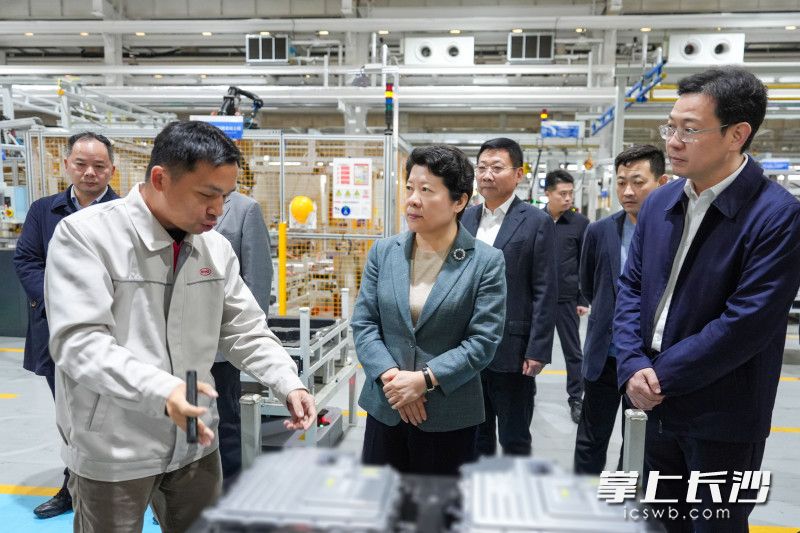
吴桂英调研长沙比亚迪并座谈交流 陈博彰参加
Chang Sha Wan Bao· 2026-03-18 03:04AI Processing
3月17日,省委常委、市委书记吴桂英调研长沙比亚迪汽车有限公司,面对面听取意见建议、了解发展诉求, 为"开门红""开门稳"凝聚政企合力。市委副书记、市长陈博彰参加。 3月17日,省委常委、市委书记吴桂英调研长沙比亚迪汽车有限公司。 吴桂英在座谈中感谢比亚迪在长沙深耕细作,不断扩大投资、扩充产能,在实现自身发展壮大的同时,为推 动长沙高质量发展作出的积极贡献。她表示,今年省委、省政府部署开展企业服务年行动,释放出全力支持民营 经济发展、优化营商环境的鲜明信号。长沙将加强沟通对接,提升服务质效,真心实意解决好企业发展中的堵点 难点痛点问题,助力各类经营主体在长心无旁骛谋发展。在"十五五"开局起步的关键时期,希望比亚迪发挥行业 龙头作用,与长沙同频共振、双向发力,携手塑造产业优势、厚植科创根基,为推动高质量发展作出新的贡献。 市领导周凡参加。 座谈交流现场。 ...
汽车周洞察-新技术创新驱动需求再向上
2026-03-18 02:31
Summary of Conference Call Records Industry Overview - The automotive industry is experiencing a resurgence in demand driven by new technology innovations, particularly in the electric vehicle (EV) sector. [1][2] - The worst point of demand has passed, with new energy vehicle (NEV) sales returning to a growth trajectory, supported by subsidy policies that are pushing the average selling price (ASP) above 160,000 yuan. [1][4] Key Companies and Insights BYD - BYD's flash charging technology addresses critical pain points in energy replenishment, with orders recovering to over 50,000 units last week. [1][2] - The company expects to sell 1.5 million units overseas this year, generating a profit of 35 billion yuan, with a market capitalization target of 1.5 trillion yuan within a year. [1][3] - The flash charging technology allows for 70% charge in just 5 minutes, significantly enhancing user experience and addressing charging network expansion issues. [2][3] - Domestic sales are projected to stabilize at over 4 million units, with a profit margin target of 4-5%, translating to approximately 30 billion yuan in domestic profits. [2][3] Geely - Geely's overseas business is performing strongly, with monthly sales reaching 60,000 units, 50-60% of which are NEVs. [3][4] - The company anticipates contributing around 12 billion yuan in profits from overseas operations this year, with a market capitalization potential of 300-400 billion yuan post-Q1 report. [1][3] - The Zeekr brand is expected to contribute 7-8 billion yuan in profits, with traditional fuel vehicle operations remaining stable. [3] Xpeng Motors - Xpeng's VLA 2.0 technology has significantly improved user experience, leading to a doubling of orders last week. [4][5] - The technology enhances driving efficiency and user experience, particularly in complex driving scenarios. [4] - If successful in expanding into the Robotaxi sector, Xpeng's market capitalization could reach approximately 100 billion yuan with a sales target of 500,000 units this year. [4] Other Investment Opportunities - The automotive sector also presents structural investment opportunities in companies less affected by industry beta, such as Jianghuai Automobile, Seres, and BAIC Blue Valley, especially with the upcoming April auto show. [4][5] - The gas turbine industry is expected to show strong short-term performance, with companies like Weichai Power poised for recovery. [5][6] - The robotics sector is entering a critical production phase in June, with expectations for significant output increases. [5][6] Emerging Trends and Risks - The liquid cooling sector is gaining traction due to rising demand for data center cooling solutions, with companies like Feilong being highlighted. [7] - The Robotaxi sector is also seen as a potential growth area, with various companies positioned to benefit from this trend. [7] Conclusion - The automotive industry, particularly in the NEV segment, is poised for growth driven by technological advancements and favorable market conditions. Key players like BYD, Geely, and Xpeng are well-positioned to capitalize on these trends, while other sectors such as gas turbines and robotics also present viable investment opportunities. [1][2][3][4][5][6][7]


英伟达联手比亚迪、吉利等车企打造L4级自动驾驶汽车
Cai Jing Wang· 2026-03-18 02:22
Core Insights - NVIDIA announced partnerships with leading automotive companies including BYD, Geely, Isuzu, and Nissan to develop L4 autonomous vehicles based on the NVIDIA DRIVE Hyperion platform [1] Group 1 - NVIDIA is collaborating with major automotive manufacturers to enhance the development of Level 4 (L4) autonomous driving technology [1] - The partnerships aim to leverage the NVIDIA DRIVE Hyperion platform for creating advanced autonomous vehicles [1]
