LI AUTO(LI)

Search documents
2025新势力生死局:“鸿零米”颠覆格局,“复活者”困战绝境
2 1 Shi Ji Jing Ji Bao Dao· 2026-01-05 12:27
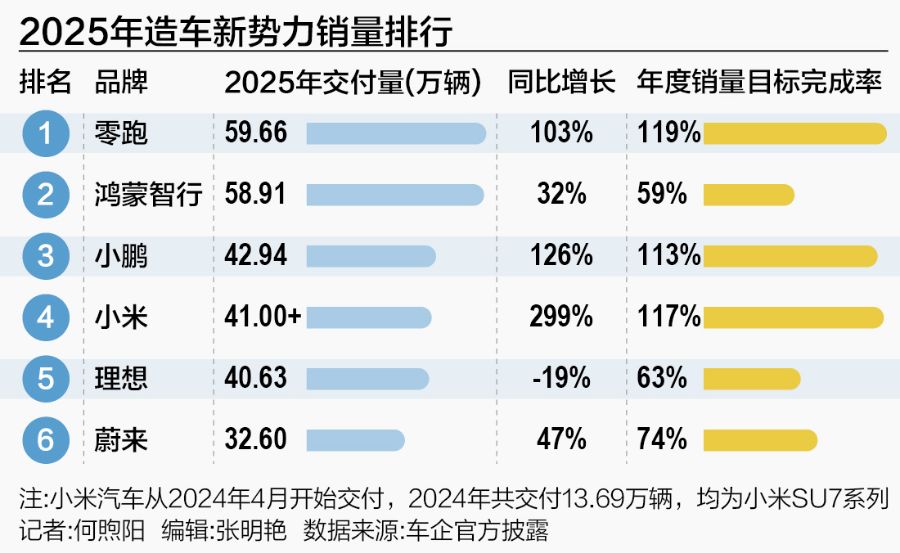
Core Insights - The 2025 new energy vehicle market has shown a stark polarization, with new players like "Honglingmi" (Hongmeng Zhixing, Leap Motor, Xiaomi) rapidly gaining market share while established companies face significant challenges [1][21] - The competition has intensified, leading to a survival battle among companies, with some thriving in the growing market while others struggle in the existing market [1] Group 1: Performance of New Players - "Honglingmi" has collectively disrupted the previous market structure dominated by "Weilai, Xiaopeng, and Ideal," reshaping the competitive landscape [2] - Leap Motor emerged as the biggest dark horse, achieving a delivery volume of 596,600 units in 2025, setting a new record for new energy vehicle sales [2][3] - Xiaomi's automotive division delivered over 410,000 units in its first full year, exceeding its annual target by 117% [4] Group 2: Strategies and Challenges - Leap Motor's success is attributed to its long-term commitment to in-house research and development, achieving a gross margin of 14%-15% while maintaining affordable pricing [3] - Xiaomi's strategy leverages its consumer electronics user base and aims to create an integrated ecosystem, although it faces challenges related to brand perception and safety incidents [6] - Leap Motor plans to achieve a sales target of 4 million vehicles by 2026, marking a significant ambition for future growth [3] Group 3: Struggles of Established Players - The former "big three" of new energy vehicles, "Weilai, Xiaopeng, and Ideal," are undergoing painful transformations, with Weilai and Ideal failing to meet their annual sales targets [7][13] - Xiaopeng has shown resilience, achieving a sales volume of 429,400 units in 2025, becoming the only one among the three to meet its annual target [8] - Weilai has shifted its focus back to core automotive operations, successfully launching popular models like the L90 and ES8 [12] Group 4: Market Exit and Revival Attempts - Neta Auto has faced severe challenges, entering bankruptcy restructuring due to operational failures and market competition [16][17] - WM Motor has announced a five-year restructuring plan but faces skepticism regarding its financial stability and ability to execute its revival strategy [18] - High-end brands like HiPhi and Jidu are struggling with funding and operational challenges, with their revival efforts facing significant obstacles [19][20] Group 5: Future Outlook - The competition in the new energy vehicle market is expected to intensify, with a focus on systemic capabilities becoming crucial for survival [21] - Companies that can balance technology development, product iteration, financial reserves, and operational efficiency will be better positioned in this competitive landscape [21]



2025车市收官:零跑领跑新势力,比亚迪反超特斯拉
Xin Lang Cai Jing· 2026-01-05 11:45
Industry Overview - In October 2025, China's new energy vehicle (NEV) sales reached approximately 1.715 million units, accounting for 51.6% of total new car sales, marking a significant shift in the market dynamics [1][11] - By November 2025, the penetration rate of NEVs further increased to 53.2%, indicating a transition from niche to mainstream consumer choice [1][11] - The automotive market is expected to face challenges as multiple consumer stimulus policies are set to exit, leading to a return to a demand-supply driven seasonal operation [1][12] New Entrants and Performance - Leap Motor emerged as the top new force with 596,600 units delivered, surpassing competitors like NIO, Xiaopeng, and Hongmeng Zhixing [3][14] - Xiaopeng Motors delivered 429,400 units, while Li Auto and NIO delivered 406,300 and 326,000 units respectively, with NIO experiencing a significant sales boost in Q4 due to the new ES8 model [3][14] - Xiaomi Auto achieved over 410,000 units, exceeding its target of 350,000 units, and plans to challenge a target of 550,000 units in 2026 [6][16] Established Brands Performance - BYD sold 4.6024 million vehicles globally, achieving its target and becoming the world's top seller of pure electric vehicles with 2.26 million units sold, a 28% year-on-year increase [7][17] - Geely and Changan both met their sales targets, with Geely selling 3.0246 million vehicles and Changan reaching 2.913 million, with significant growth in their NEV segments [8][18] - Great Wall Motors and Chery reported sales of 1.3237 million and 2.6314 million units respectively, with Chery's sales boosted by its collaboration with Huawei [8][18] Market Dynamics and Future Outlook - The competition among new entrants and established brands is intensifying, with the market expected to undergo significant changes as policy support diminishes [1][12] - The automotive industry is preparing for a challenging 2026, with various companies adjusting their strategies to maintain competitiveness [1][12]



汽车周报:两新补贴正式落地符合预期,看好预期修复下的交易机会-20260105
Shenwan Hongyuan Securities· 2026-01-05 10:44
2026 年 01 月 05 日 两新补贴正式落地符合预期,看好 预期修复下的交易机会 看好 ——2025/12/29-2026/1/4 汽车周报 《补贴落地践行渐进,看好预期修复下的 交易机会——2025/12/22-2025/12/28 汽车周报》 2025/12/29 《L3 智驾车型许可发放,继续看好智能 化、中高端和二手车市场—— 2025/12/15-2025/12/19 汽车周报》 2025/12/22 证券分析师 戴文杰 A0230522100006 daiwj@swsresearch.com 联系人 朱傅哲 A0230524080008 zhufz@swsresearch.com 行 业 及 产 业 证 券 研 究 报 告 请务必仔细阅读正文之后的各项信息披露与声明 本研究报告仅通过邮件提供给 中庚基金 使用。1 行 业 研 本期投资提示: 1.1 新势力月度销量更新 究 / 行 点 业 评 汽车 ⚫ 观点:两新补贴正式落地,计算方式由定额制转向按车价比例计算,结构导向更加清 晰,此前对行业 26 年总量的担心有望得到修复。看好中低端需求为主的比亚迪、吉 利,以及基本面α弹性显著的北汽、江淮 ...
理想汽车旗下一科技公司拟注销
Zhong Guo Xin Wen Wang· 2026-01-05 08:54
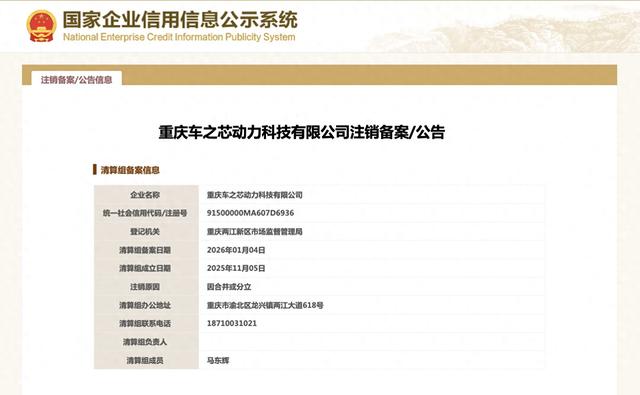
中新网1月5日电(吴家驹)国家企业信用信息公示系统显示,近日,重庆车之芯动力科技有限公司新增一 则注销备案公告,注销原因为:因合并或分立,清算组成立日期为2025年11月5日,清算组备案日期为 2026年1月4日。 图自国家 企业信用信息公示系统 重庆车之芯动力科技有限公司成立于2018年12月,法定代表人为马东辉,注册资本8000万人民币,经营 范围包括:从事动力科技、新能源领域内的技术开发、技术咨询、技术转让、技术服务;新能源汽车、 摩托车、电池、充电桩、电子产品(不含电子出版物)、电源及其零部件的研发、生产、销售及维护;货 物及技术进出口。 重庆车之芯动力科技有限公司由江苏心电互动汽车销售服务有限公司全资持股,后者由理想汽车关联公 司Leading Ideal HK Limited全资持股。(完) ...
元旦新能源车市:购置税正式开收,车企花式“兜底”
第一财经· 2026-01-05 08:26
Core Viewpoint - The article discusses the impact of the new electric vehicle (EV) purchase tax policy and subsidy changes in 2026, highlighting how these changes are prompting car manufacturers to increase promotions to attract buyers during the New Year period [3]. Group 1: Policy Changes - Starting in 2026, the EV purchase tax incentive has been reduced from full exemption to a 50% reduction (5% tax rate) [3][5]. - The "Two New" policy has shifted from fixed subsidies to a percentage-based subsidy based on vehicle price, although the maximum subsidy remains unchanged [3][5]. - The new purchase tax policy is expected to increase the cost of purchasing EVs, with the tax for a vehicle priced at 31.98 million yuan being approximately 14,200 yuan [11]. Group 2: Market Response - Car manufacturers are ramping up promotions to attract hesitant buyers, with many offering cash discounts and trade-in subsidies [5][6]. - For example, Xiaopeng Motors is offering a cash discount of 3,000 yuan and a trade-in subsidy of 3,000 yuan, totaling around 6,000 yuan in discounts [5]. - Li Auto has different discount policies for various models, with the L6 model seeing a price drop of 38,000 yuan [6]. Group 3: Consumer Behavior - There has been an increase in consumer inquiries and test drives during the New Year period, indicating heightened interest due to the policy changes [4][5]. - Many consumers are still in a wait-and-see mode, comparing different brands' promotions before making a purchase decision [6][8]. - Despite the increased costs from the new tax, many consumers are still purchasing vehicles, as seen in the sales performance of brands like NIO and Hongmeng Zhixing [8][11]. Group 4: Sales Performance - NIO's sales during the New Year period were robust, with reports of high foot traffic and test drive requests [7][8]. - In Guangzhou, a store sold over 10 units of the new Aion model in a single day, demonstrating strong demand despite the new tax [11]. - Overall, the article indicates that while the new tax has raised costs, many brands are successfully maintaining sales momentum through strategic promotions and consumer engagement [9][11].
元旦新能源车市:购置税正式开收,车企花式“兜底”
Di Yi Cai Jing· 2026-01-05 07:47
Core Insights - The new policy for electric vehicle (EV) purchase tax has been implemented in 2026, reducing the previous full exemption to a 50% reduction, resulting in a 5% tax rate for consumers [2][4] - The subsidy policy has shifted from fixed amounts to a percentage of the vehicle price, although the maximum subsidy remains unchanged, leading to a decrease in support for lower-priced models [2][4] Group 1: Market Reactions - Car manufacturers and dealerships are increasing promotional efforts to attract hesitant buyers, aiming for a strong start to the 2026 market [2][3] - During the New Year holiday, there was a notable increase in customer inquiries and test drives, with sales staff working in larger numbers to accommodate demand [3][5] - Many dealerships are advertising their sales achievements to draw in more customers, with some offering cash discounts and trade-in subsidies [3][4] Group 2: Specific Company Strategies - Li Auto is offering varying discounts based on model, with significant reductions for popular models like the L6 and L7 [4] - NIO and other new energy brands are implementing "bottom line" measures to offset the increased purchase tax, such as cash subsidies and price reductions [6][7] - Tesla has not introduced any compensatory measures for the new tax policy but continues to see strong customer interest and sales [7] Group 3: Sales Performance - Some dealerships reported high sales volumes during the holiday, with one store selling over 10 new energy vehicles in a single day [8][9] - Despite the increased costs from the new tax, many brands are still experiencing robust sales, indicating strong market demand [8][9] - The introduction of new models and promotional strategies is expected to maintain consumer interest and sales momentum in the coming months [10][11]
小米跻身中国新能源车知名度前四,比亚迪理想同列前五
Xin Lang Ke Ji· 2026-01-05 07:33
Core Insights - Xiaomi ranks 4th in brand awareness among Chinese electric vehicle manufacturers according to the 2025 H2 New Energy Vehicle Brand Health Research by Jielanlu [1][10] - The report highlights the sensitivity of Xiaomi and Li Auto's user base to external opinions, indicating that top brands face not only market competition but also the amplified effects of public sentiment on consumer trust [1] Brand Awareness by Price Segment - In the segment below 200,000 yuan, the top five brands are BYD, Xpeng, Volkswagen, Geely, and Wuling [1][9] - In the 200,000 to 300,000 yuan segment, the leading brands are Tesla, BYD, Li Auto, Xiaomi, and NIO [1][9] - For the segment above 300,000 yuan, the top brands are Tesla, Li Auto, Xiaomi, NIO, and AITO [1][9] Implications for Top Brands - The report emphasizes the need for leading brands to manage consumer expectations and mitigate emotional fluctuations in brand preference due to high public scrutiny [1]

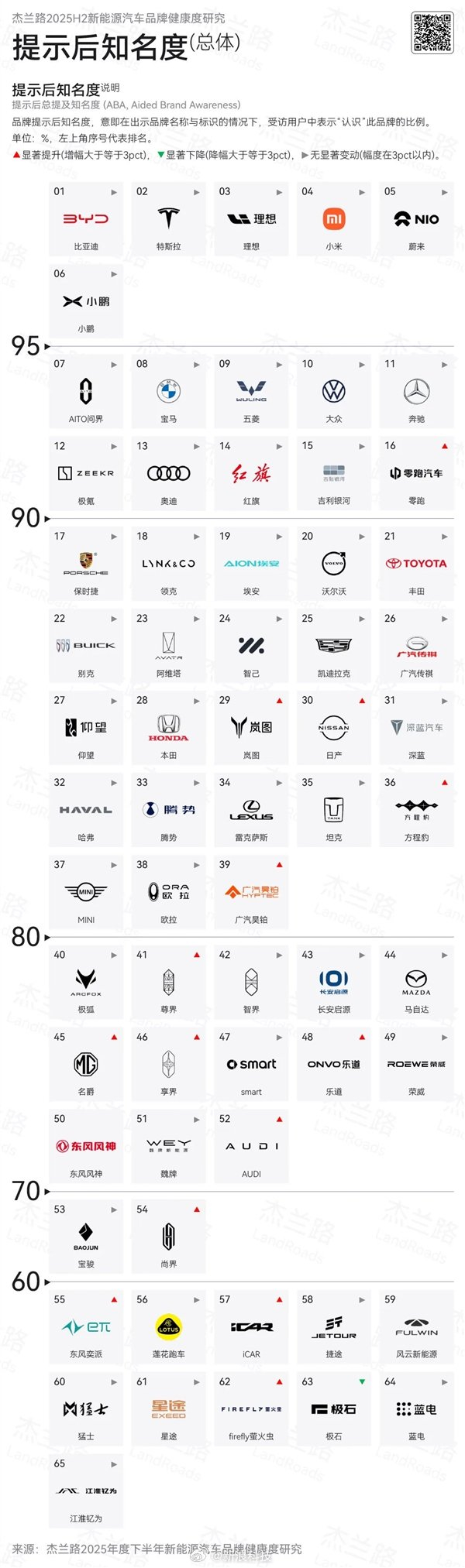
理想汽车产品线大调整,从华为向丰田的转向
晚点LatePost· 2026-01-05 04:47
Core Viewpoint - The article discusses the evolution of Li Auto's organizational structure and product development processes, emphasizing the importance of learning from historical experiences and successful models like Huawei's IPD system and Toyota's CE system [3][25][27]. Group 1: Organizational Changes - In early 2026, Li Auto merged its first and second product lines to enhance efficiency and resource allocation, addressing issues of functional overlap and fragmented decision-making [3]. - By 2023, Li Auto deepened its matrix development organization and shifted from OKR to PBC (Personal Business Commitment) to emphasize results and long-term contributions [4]. - In April 2024, Li Auto transitioned to a 2.0 version of its matrix organization, restructuring product lines to better focus on user value and improve decision-making efficiency [4]. Group 2: Sales Performance - Li Auto achieved a record sales figure of 50,354 vehicles by the end of 2023, reflecting the success of its organizational adjustments and product strategies [4]. - Despite reaching a peak monthly sales of 58,513 units by the end of 2024, the company faced challenges in maintaining growth, with sales fluctuating between 30,000 to 40,000 units in the latter half of 2025 [5]. Group 3: Learning from Industry Leaders - Li Auto's adoption of Huawei's IPD system is rooted in the belief that management and service must be self-created, as highlighted in Huawei's foundational principles [8][9]. - The article draws parallels between Li Auto's organizational evolution and Toyota's CE system, which emphasizes a holistic approach to product development and cross-departmental collaboration [16][25]. Group 4: Product Development Process - The IPD process established by Li Auto includes a structured product development rhythm, with key decision points and committees overseeing product management and commercialization [12][13]. - The development phases outlined in the IPD process include roadmap development, product validation, and lifecycle management, ensuring collaborative efforts across various business modules [13]. Group 5: Market Positioning - Li Auto's three product lines occupy a small segment of the overall market, with the higher-priced segments (above 300,000 yuan) representing only about 30% of the total market [24][25]. - The article suggests that the fragmentation of product lines may lead to resource competition within the company, prompting the need for consolidation [25].
理想汽车旗下重庆车之芯动力科技拟注销
Xin Lang Cai Jing· 2026-01-05 04:16
经营范围涵盖动力科技、新能源技术开发及转让,新能源汽车、摩托车、电池、充电桩、电子产品、电 源及其零部件的研发、生产、销售及维护,并具备货物及技术进出口资质。 免责声明:本文内容与数据由观点根据公开信息整理,不构成投资建议,使用前请核实。 观点网讯:近日,理想汽车旗下重庆车之芯动力科技有限公司发布注销备案公告,注销原因为"因合并 或分立"。 根据公开资料整理,该公司成立于2018年12月,法定代表人为马东辉,注册资本8000万元,由江苏心电 互动汽车销售服务有限公司全资控股。 ...
理想L8:客户试驾后成交率飙升,目标用户是多娃家庭
车fans· 2026-01-05 00:31
Core Viewpoint - The article discusses the current market situation of the Li Auto L8 model, highlighting customer preferences, sales performance, and competitive comparisons with other models in the same segment. Group 1: Customer Insights - In a third-tier city, the average daily foot traffic at the store is over 200, with weekends reaching 500, but only about 2 groups daily are specifically interested in the L8 model [2] - Customers who test drive the L8 have a significantly higher conversion rate, indicating the importance of the test drive experience in the purchasing decision [2] - The primary buyers of the L8 are families looking for an upgrade, particularly those needing a six-seater vehicle, with a wide age range from 30 to over 60 years old [5] Group 2: Sales Performance - Last month, the store delivered a total of 76 vehicles, with only 5 being L8 models, indicating a relatively low sales volume for this model [4] - The L8 model's sales are around 8 units per month, making it the least sold in the L series [9] Group 3: Competitive Landscape - Customers often compare the L8 with other six-seater vehicles, such as the Tengshi N8L and the Wanjie M7, indicating a competitive market [7] - The L8's appeal lies in its spaciousness and comfort, which are the primary demands of customers in this segment [7] Group 4: Customer Feedback - Common feedback includes dissatisfaction with the lighting features and the lack of charging piles provided by the company [12] - There have been reports of noise issues with the front suspension arms, which were addressed through free replacements [12] Group 5: Maintenance and Costs - The maintenance cycle for the L8 is set at 10,000 kilometers or 12 months, with the first service requiring oil and filter changes [13] - Maintenance costs are clearly outlined, with various services and their respective prices available for customer reference [14] Group 6: Pricing and Value Proposition - The L8 is currently offered with a cash discount of 40,000, presenting a competitive value proposition compared to the L9 model [15] - The financing options for the L8 include a total cost of approximately ¥231,000 with a monthly payment of ¥1,833 [11]