华润啤酒

Search documents
食品饮料周报:重点关注软饮料、低度酒精布局机会-20250603
Tianfeng Securities· 2025-06-03 09:13
Investment Rating - Industry Rating: Outperform the market (maintained rating) [6] Core Viewpoints - The report emphasizes investment opportunities in the soft drink and low-alcohol segments due to new products, low base effects, and the upcoming peak season [4][5][15] - The white liquor sector is recommended with a focus on Moutai and Fenjiu, while the yellow wine sector is under observation for data validation [3][18] - The report identifies four key themes in the consumer goods sector: cost control, new consumption trends, potential performance elasticity in Q2, and thematic expectations [18][22] Summary by Sections Market Performance Review - From May 26 to May 30, the food and beverage sector declined by 1.06%, while the Shanghai Composite Index fell by 0.03% [24] - Notable performances included soft drinks (+9.27%), other alcoholic beverages (+7.13%), and beer (+3.22%) [24] White and Yellow Wine - The white liquor sector saw a decline of 2.76%, attributed to recent regulations and seasonal factors [3] - Fenjiu aims for national expansion and product growth, indicating a strategic opportunity during the industry's adjustment phase [3][18] Beer and Beverage - The beer sector increased by 3.22%, supported by seasonal demand and promotional activities [14] - The report highlights the potential in the soft drink and low-alcohol segments, driven by new marketing strategies and upcoming sales events [15][22] Consumer Goods - The report recommends focusing on four main themes: cost control, new consumption logic, potential performance elasticity, and thematic expectations [18][22] - Specific companies to watch include Ximai Foods, Li Ziyuan, and Sanhua Foods, among others [22] Investment Recommendations - Top picks include soft drinks and low-alcohol products such as Li Ziyuan, Chengde Lulou, and Dongpeng Beverage [5][22] - In the white liquor sector, Moutai and Fenjiu are highlighted for their strong alpha and benefits from market concentration [5][22]




“香港智慧低碳发展创新联盟”成立 助力低碳转型发展
Xin Hua Cai Jing· 2025-06-03 06:55
Core Points - The "Hong Kong Smart Low Carbon Development Innovation Alliance" was launched on June 2, aiming to leverage Hong Kong's advantages in innovation and internationalization to promote smart and low-carbon transformation [1][2] - China Resources Power, as a leading integrated energy enterprise, will contribute its experience in renewable energy and integrated energy services [1] - The Hong Kong government aims to position the city as an international center for green finance and technology, encouraging the alliance to promote advanced green technologies globally [1][2] Group 1 - The alliance is initiated by China Resources Group, China Resources Power, and China Resources Science and Technology Research Institute [1] - The alliance aims to explore innovative applications of smart energy and low-carbon technologies to accelerate Hong Kong's green transformation [1][2] - The Hong Kong Financial Secretary emphasized the importance of utilizing the alliance's resources to create a demonstration window for green low-carbon technologies [1] Group 2 - China Resources Group's Chairman highlighted the establishment of the alliance as a strategic component of reshaping the group's business in Hong Kong [2] - The group plans to increase investment in Hong Kong and expand its business scope to contribute to the city's high-quality development [2] - The alliance will focus on integrating government, business, academia, and research to establish Hong Kong as a leading international hub for technological innovation in the smart low-carbon sector [2]


观酒周报|茅台将推多款出海新品;人头马轩尼诗马爹利集体换帅;酱酒新国标实施
2 1 Shi Ji Jing Ji Bao Dao· 2025-06-03 05:40
Company Dynamics - Moutai is set to launch ten new products in five countries as part of its "Going Global" series, with a release planned for the 2025 Osaka World Expo [1] - Meituan has initiated a promotional campaign for Moutai, offering limited-time sales of 1,499 yuan per bottle during the 618 shopping festival [2] - The Moutai Airport initiative to allow passengers to purchase Moutai with a 100% winning chance was announced but subsequently canceled [3] Industry Trends - Tsingtao Brewery has emphasized its "fresh beer" strategy, focusing on key products like classic, pure draft, and white beer to drive growth [4] - China Resources Snow Beer has reported a significant increase in sales, with daily sales of a new product surpassing 40,000 cans [5] - Yingjia Wine has set a revenue target of 7.6 billion yuan for 2025, expecting a 3.49% year-on-year growth [6] Regulatory Changes - A new national standard for sauce-flavored liquor has been implemented, clarifying definitions and production processes to aid consumer understanding [7] Market Performance - JD.com reported a 150% year-on-year increase in sales for premium liquor during the 618 shopping festival, with specific categories seeing even higher growth [8] Executive Changes - Rémy Cointreau has appointed Franck Marilly as the new CEO, replacing Eric Vallat amid declining sales [9] - Pernod Ricard has also made leadership changes in its cognac division, reflecting adjustments in response to market challenges [10] - Shanxi Fenjiu has elected Wu Yuefei as the new vice chairman of its board [11] Corporate Restructuring - Wuliangye has undergone management changes within its sales company, integrating its brand management and sales functions [12] - Chongqing Beer has welcomed a new CFO from PepsiCo, indicating a strategic shift in its financial leadership [13] - Luzhou Laojiao has seen the resignation of a board member, marking a significant change in its governance [14] Market Outlook - CITIC Securities has indicated that the beverage and beer sectors are expected to benefit from seasonal demand and government initiatives to boost consumption [15] - New products from Jiuziyuan are being introduced at competitive prices, aiming to capture market interest during the festive season [16]
社区超市:零售业的新风口
3 6 Ke· 2025-06-03 03:10
Core Insights - The survival status of supermarkets in China is diverging, with large supermarkets struggling while community supermarkets focusing on fresh produce are thriving, indicating a trend towards "supermarket restaurantization" and "restaurant supermarketization" [1] Group 1: Community Supermarkets - Community supermarkets are defined as convenient shopping venues located within residential areas, typically under 1,000 square meters, serving local residents with a focus on fresh food and daily necessities [2] - The rapid expansion of community supermarkets like Aoleqi and Taoxiaopang reflects a significant market opportunity, with Aoleqi achieving a sales scale of 1 billion yuan in 2023 and projecting 2.5 billion yuan in 2024, marking a 150% year-on-year growth [4] - Taoxiaopang has opened six stores in Henan within three years, with projected revenues of 600 million yuan in 2024 and 1 billion yuan in 2025, showcasing impressive growth in a challenging environment [5] Group 2: Comparison with Japanese Supermarkets - The development of community supermarkets in China mirrors the evolution of food supermarkets in Japan, which have become the mainstream retail format, with food sales accounting for 70%-90% of their revenue [2][9] - Japan's food supermarkets have maintained continuous sales growth despite rising living costs, with a reported 3.9% increase in sales for 2024 compared to 2023 [8] - The basic model of Japanese food supermarkets includes fresh product commercialization, standardized processing systems, and a 52-week merchandising strategy, which could serve as a reference for the future direction of Chinese community supermarkets [10] Group 3: Market Trends and Innovations - The trend of community supermarkets becoming a new retail hotspot is evident, with companies like Aoleqi and Fresh Wind Life rapidly expanding and achieving significant sales figures [4][7] - Fresh Wind Life has opened stores that quickly attract large customer bases, with one store accumulating over 30,000 members in just two days [6] - The competitive landscape is evolving, with established players like Yonghui and new entrants like Hema exploring smaller store formats to adapt to changing consumer preferences [7]
这一轮“禁酒令”,白酒行业真要被“灌晕”了?
Sou Hu Cai Jing· 2025-06-03 01:35
Group 1 - The core issue in the Chinese liquor industry is the significant inventory crisis, with approximately 3 million tons of unsold liquor stock, indicating a severe imbalance in supply and demand [8] - The impact of government regulations on alcohol consumption, particularly among public servants, has led to a drastic reduction in high-end liquor sales, with a shift in social drinking habits [4][5] - The younger generation, particularly those born after 1995, is increasingly avoiding traditional strong liquors, favoring lighter and more visually appealing options like fruit wines and craft beers, which are perceived as more enjoyable [12] Group 2 - Innovative products like "sauce-flavored latte" have emerged as potential breakthroughs for the liquor industry, demonstrating a shift towards integrating traditional liquor into new consumption scenarios [15] - Investment trends show that capital is moving towards low-alcohol brands and craft beers, with major players like Kweichow Moutai diversifying into ice cream and coffee to adapt to changing consumer preferences [15] - The current challenges in the liquor industry are seen as a turning point, prompting a necessary transformation from traditional high-alcohol products to lighter, more versatile options that fit modern lifestyles [15]

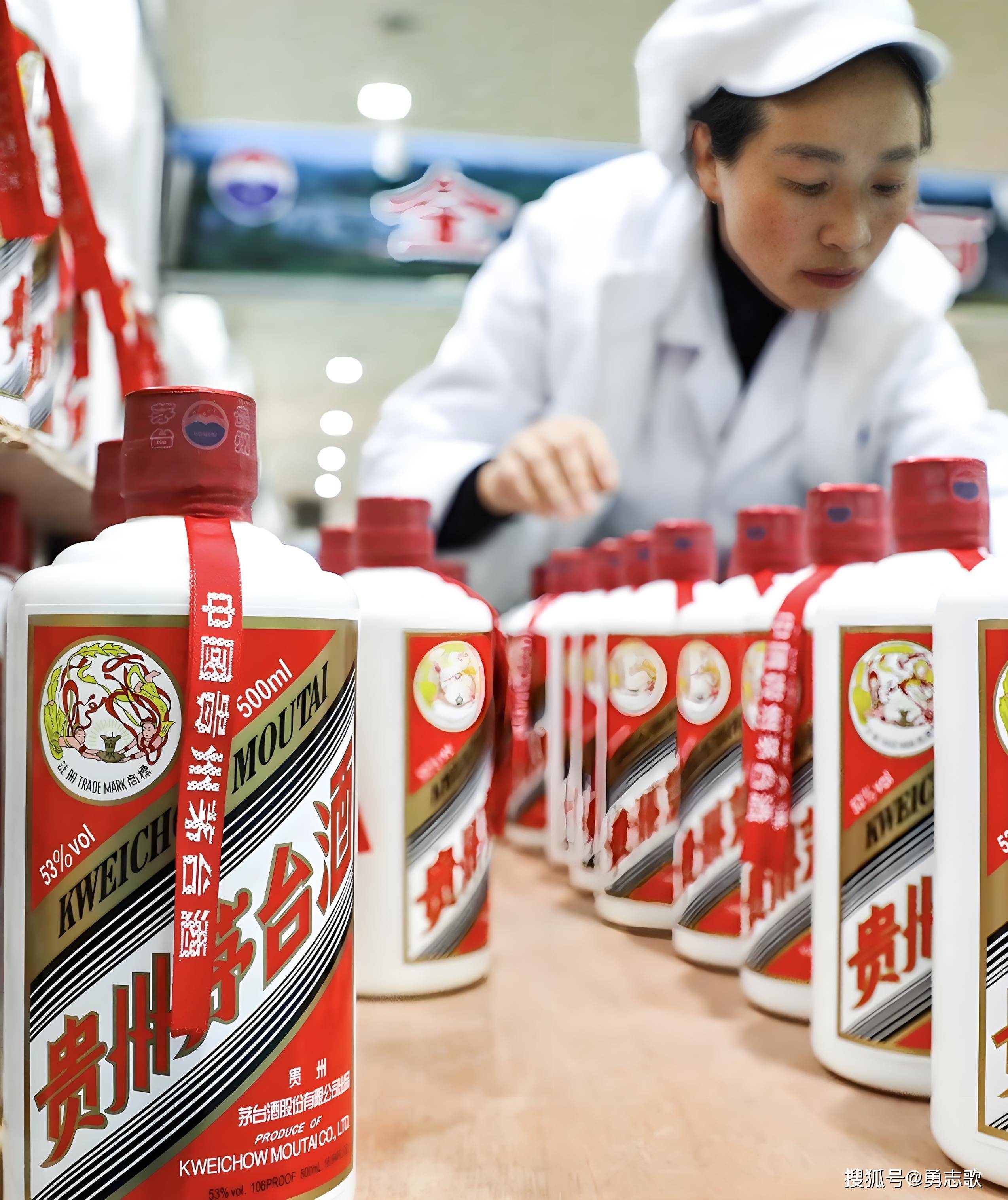
“跷跷板效应”再现!白酒指数周线三连跌,啤酒股却一直“涨不停”|酒市周报
Mei Ri Jing Ji Xin Wen· 2025-06-02 11:58
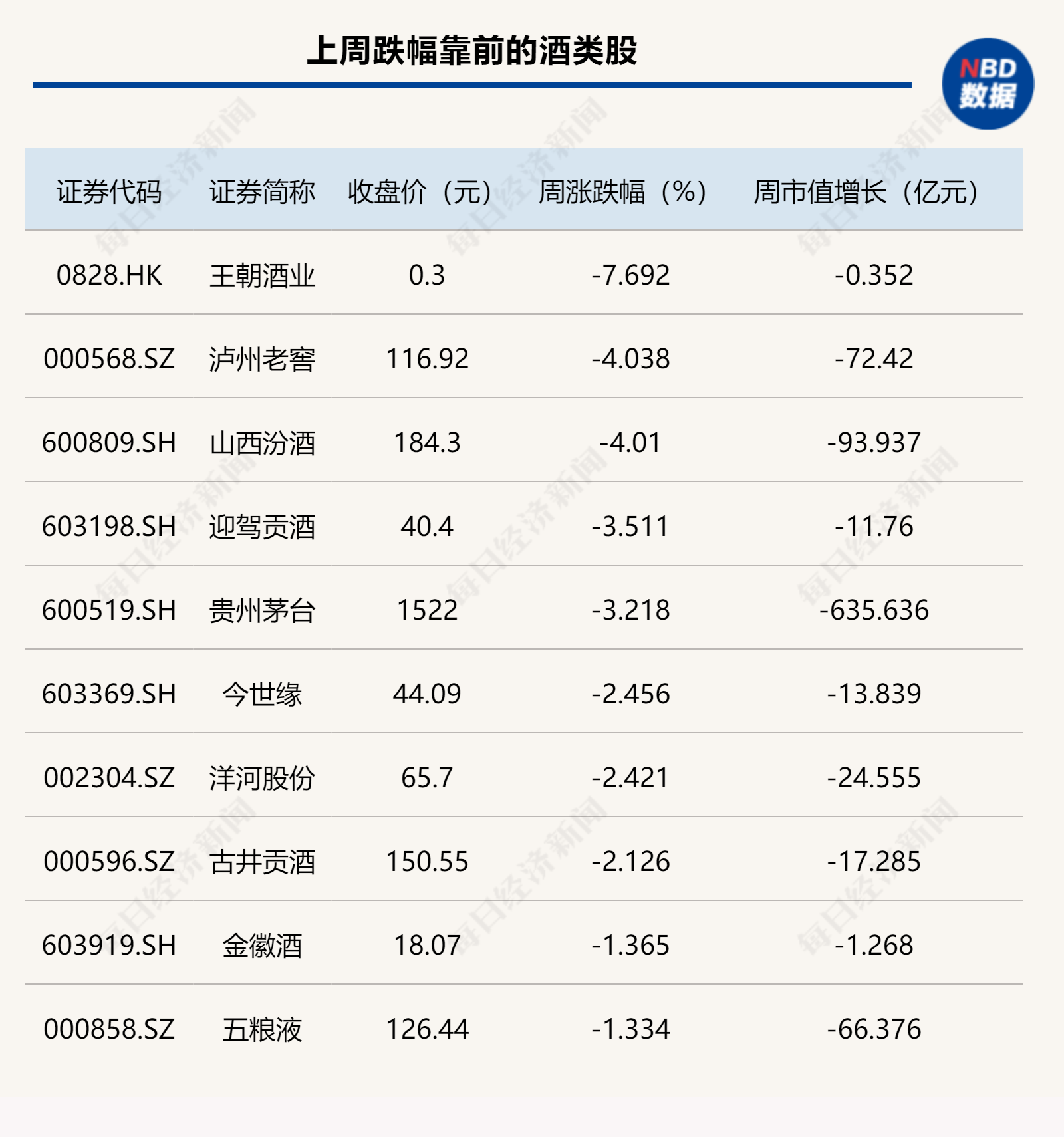
Group 1 - The white liquor sector is experiencing a decline, with the WIND white liquor index showing a weekly drop for three consecutive weeks, while the beer sector is on an upward trend, with all beer stocks achieving gains [1][2] - Major white liquor stocks such as Luzhou Laojiao, Shanxi Fenjiu, and Guizhou Moutai have seen significant weekly declines, with Guizhou Moutai's market value decreasing by 63.6 billion yuan [2][4] - In contrast, the WIND beer index has achieved a four-week winning streak, with a weekly increase of approximately 3.86%, and all beer stocks reporting gains [4][7] Group 2 - The "seesaw effect" between the white liquor and beer sectors has become evident since May, with investors favoring the beer sector during the downturn of the white liquor sector [2][8] - The white liquor index recorded a monthly decline of 2.65% in May, underperforming the food and beverage index, indicating a challenging environment for the white liquor industry [8][9] - High-end liquor companies like Guizhou Moutai and Wuliangye exhibit high gross margins and low marketing expenses, while some regional brands face pressure on profitability due to increased competition and lower brand strength [9]

陈茂波倡议智慧低碳联盟跨界合作 推动香港绿色技术示范与北部都会区发展
智通财经网· 2025-06-02 09:58
Group 1 - The Hong Kong government emphasizes the importance of cross-sector collaboration in advancing green technology and low-carbon development through the establishment of the Hong Kong Smart Low Carbon Development Innovation Alliance [1] - The alliance aims to leverage resources and networks from its members to promote innovation and application of green technologies, contributing to a robust technological ecosystem [1] - Hong Kong's development plans for the Northern Metropolis will focus on green principles and the application of low-carbon technologies [1] Group 2 - The global transition to a low-carbon economy faces significant challenges, particularly in funding and technology gaps, especially in developing countries [2] - The International Energy Agency highlights that the widespread use of artificial intelligence can save approximately 13 million terajoules of energy annually, equivalent to South Korea's yearly energy consumption [2] - Hong Kong aims to position itself as an international hub for green finance and technology, integrating various green tech products with artificial intelligence to drive industrial transformation [2]
高分红A股七朵金花 VS 成长型港股七朵金花
雪球· 2025-06-02 03:59
Core Viewpoint - The article discusses the structural differentiation in the current stock market, highlighting the significant performance gap between A-shares and Hong Kong stocks, driven by foreign capital inflow, the weight advantage of technology stocks, and differing policy expectations [2][3]. A-share High Dividend Portfolio: Stable Foundation for Value Reassessment - Financial Performance and Dividend Capability: In a low-interest and volatile market, high-dividend companies are preferred for their stable cash flow and shareholder returns. The total dividend of central state-owned enterprises is expected to reach 1.17 trillion yuan in 2024, accounting for 50% of the total A-share dividends [4][5]. - Key Companies: China Shenhua is expected to have a dividend yield of over 5.9% in 2024, while Huaneng International plans a dividend payout ratio of at least 50% of distributable profits. Wuliangye and Muyuan Foods are also highlighted for their strong financial performance and dividend potential [4][5][6]. - Competitive Moat: The sustainability of the high-dividend portfolio relies on the companies' competitive advantages, including cost advantages in the energy sector and brand differentiation in consumer goods [6]. - Market Outlook: The core opportunities for the high-dividend portfolio in 2025 include the resonance of declining interest rates and stable growth policies, with specific catalysts in the energy and consumer sectors [7]. Hong Kong Growth Portfolio: Profit Elasticity and Industry Wave Resonance - Financial Performance and Growth Momentum: The Hong Kong portfolio focuses on internet, consumer, and innovative pharmaceutical sectors, benefiting from global liquidity easing and AI breakthroughs. Meituan's revenue is expected to reach 337.6 billion yuan in 2024, with a net profit increase of 158.4% [8][9]. - Competitive Moat: The growth portfolio's moat is derived from network effects, research and development accumulation, and global capabilities, with companies like Tencent and Meituan leveraging their ecosystems [10]. - Market Outlook: The core opportunities for the Hong Kong growth portfolio in 2025 are driven by global liquidity easing and clear industry policy catalysts, particularly in AI applications and innovative pharmaceuticals [11]. Comparison of Portfolios and Investor Preferences - Market Performance and Fund Flows: Investors are currently favoring the Hong Kong growth portfolio due to significant performance differences, with the Hang Seng Index rising 16.1% compared to the -2.41% decline of the CSI 300 [13][14]. - Investor Structure Preference: The high-dividend portfolio attracts conservative investors such as insurance funds, while the growth portfolio appeals to foreign capital and growth-oriented funds [15][16]. - Current Popularity Assessment: The Hong Kong growth portfolio is more favored due to its higher earnings growth rate and alignment with global technology trends, while the high-dividend portfolio remains attractive for risk-averse investors [16][17].




总体方案实施五周年,海南自贸港建设怎么样了?
Xin Hua She· 2025-06-01 03:06
Core Insights - The implementation of the Hainan Free Trade Port's overall plan has led to significant improvements in the business environment and high-level openness, marking a new stage in development [1][2] - The policies have resulted in a robust economic performance, with a focus on tax reductions and streamlined regulations to enhance competitiveness [2][3] Policy and Economic Impact - Since the full implementation of the Hainan Free Trade Port in June 2020, the modern industry has accelerated its upgrade, and the outward-oriented economy has flourished, characterized by "zero tariffs, low tax rates, and simplified tax systems" [2] - As of now, the value of imported goods under the "zero tariff" list has reached 226.9 billion yuan, with tax reductions amounting to 43.2 billion yuan [2] - The cumulative foreign investment attracted since 2018 has reached 17.4 billion USD, surpassing the total of the previous 30 years [3] Infrastructure and Regulatory Readiness - Hainan has completed the core policy documents for customs operations, including import tax lists and regulations for prohibited and restricted goods [4] - The construction of regulatory facilities is complete, with efficient customs operations allowing for cargo clearance in under 2 minutes and passenger clearance in under 1 minute [4] Business Environment Enhancement - The establishment of a market-oriented, law-based, and international business environment is a priority for Hainan, with a dedicated leadership group to optimize the business climate [6] - Over 70% of business entities in Hainan were established after the implementation of the Free Trade Port plan, indicating a vibrant economic landscape [7] - The four leading industries—tourism, modern services, high-tech industries, and tropical agriculture—are projected to account for 67% of Hainan's GDP by 2024, an increase of approximately 12 percentage points since 2019 [7]
减持套现2600万港元背后:侯孝海扎根华润啤酒24载,百亿白酒版图待破局丨十大酒企董事长
Sou Hu Cai Jing· 2025-05-30 03:35
Core Viewpoint - The Chinese liquor industry is entering a deep adjustment period in 2024, with intensified market competition and frequent personnel changes, prompting companies to view "reform" as a key driver for exploring new growth points to meet challenges and seize opportunities [2]. Company Overview - Huaren Beer Chairman Hou Xiaohai has reduced his shareholding in the company twice in May, cashing out over 26 million HKD, which has sparked market speculation [4][6]. - Hou Xiaohai has been with Huaren Beer for 24 years and previously led the company to become the top-selling beer brand in China with the "Brave the World" strategy [4][7]. - The company has invested over 10 billion CNY in acquiring several liquor companies, including Jingzhi Liquor, Jinzongzi Liquor, and Jinsha Liquor, positioning Hou as a key player in the liquor sector [4][10]. Strategic Developments - In the final year of the "3+3+3" strategy, Hou Xiaohai aims for liquor revenue to exceed 10 billion CNY and profits to reach 2 billion CNY, indicating a need for substantial breakthroughs in the "beer and liquor dual empowerment" strategy [5][14]. - The "3+3+3" strategy has led to significant improvements in Huaren Beer’s financials, with gross profit margin rising from 33.71% to 42.36% and revenue increasing from 28.694 billion CNY to 38.635 billion CNY from 2016 to 2024 [8]. Liquor Business Performance - The liquor business currently has a scale of over 4 billion CNY, with a target to exceed 10 billion CNY in the future [17]. - In 2024, the liquor business generated revenue of 2.149 billion CNY, with a slight increase in EBITDA to 807 million CNY [12]. - The other two acquired companies, Jinzongzi and Jingzhi, have faced challenges, with Jinzongzi's revenue declining by 37.04% to 925 million CNY and continuing losses [13]. Future Outlook - The company aims to leverage its capital advantages and nationwide channel capabilities to enhance brand structure and expand nationally, focusing on market promotion and product pricing control [19]. - Experts believe that achieving the 10 billion CNY revenue target will require optimizing product structures and increasing the proportion of mid-to-high-end products [20].