
宝马

Search documents
汽车行业“反内卷”打响第二枪!全国工商联汽车经销商商会呼吁→
证券时报· 2025-06-23 15:01
Core Viewpoint - The automotive dealership association has called for manufacturers to optimize rebate policies and shorten the rebate payment period to alleviate the financial pressure faced by dealerships [1][3]. Group 1: Current Challenges Faced by Dealerships - Dealerships are under significant operational pressure, with a report indicating that while they are meeting sales targets for 2024, losses from new car sales have not improved their survival conditions [1][7]. - A survey revealed that 84.4% of dealerships are experiencing price inversion, with 60.4% facing price inversions exceeding 15%, leading to liquidity issues [7][9]. - The complexity of rebate structures and delayed payments are major concerns for dealerships, impacting their cash flow and operational viability [3][4]. Group 2: Issues with Rebate Policies - The rebate structure from manufacturers is complicated, with a mix of fixed and non-fixed rebates, leading to confusion and uncertainty for dealerships [3][4]. - There is a significant disparity in the rebate payment periods among brands, with some offering payments within 30 days while others extend up to 180 days [4]. - The limitations on how rebates can be used further complicate the situation, with many brands restricting the use of rebates to vehicle purchases or parts, which reduces financial flexibility for dealerships [4][5]. Group 3: Manufacturer Responses - Some manufacturers, including GAC Group and BMW, have committed to shortening the rebate payment period to 60 days, recognizing the importance of dealership stability for customer service [6][7]. - The automotive industry is seeing a slight improvement in manufacturer satisfaction among dealerships due to proactive measures taken by manufacturers, such as offering price discounts and adjusting sales targets [9].

十八届高工锂电峰会 | 亿纬锂能总裁刘建华将作主题演讲
高工锂电· 2025-06-23 11:31
Core Viewpoint - The article highlights the significant growth and strategic advancements of EVE Energy in the lithium battery industry, emphasizing its comprehensive product offerings and global expansion plans. Group 1: Company Performance - In Q1, EVE Energy achieved a revenue of 12.796 billion RMB, marking a year-on-year increase of 37.34% and a net profit of 818 million RMB, up 16.60%, indicating strong profitability [2] - The company plans to issue H-shares and list on the Hong Kong Stock Exchange to support its global expansion, with funds primarily allocated for overseas factory construction and working capital [2] - EVE Energy's cylindrical battery production capacity has reached 70 GWh, with monthly sales surpassing 10 million units [2] Group 2: Product Development - EVE Energy's large cylindrical battery technology has seen over 60,000 vehicles equipped in China, with a record of zero safety incidents and a maximum single-vehicle range of 230,000 kilometers [3] - The production yield for large cylindrical batteries is stable at over 97%, and the company has established partnerships with major automotive brands, including BMW and FAW [4] - The company is developing a high-performance large cylindrical battery with an energy density of 300 Wh/kg, set for mass production by the end of the year, targeting the European high-performance sports car market [4] Group 3: Market Expansion - In the energy storage and commercial vehicle sectors, EVE Energy's battery shipments reached 12.67 GWh in Q1, a year-on-year increase of 80.54%, while power battery shipments were 10.17 GWh, up 57.58% [6] - The company holds over 14% market share in the commercial vehicle sector in China, with its "Open Source Battery" brand covering over 80% of top customers in the new energy commercial vehicle segment [6] - EVE Energy is also exploring emerging markets such as "low-altitude economy" and advanced technologies, developing cylindrical battery platforms for drones, AI robots, and eVTOLs [6] Group 4: Future Goals - The long-term goal for EVE Energy is to enhance battery cell energy density to over 600 Wh/kg, with a clear roadmap for solid-state batteries aiming for production breakthroughs by 2026 [7] - The first generation of solid-state batteries is expected to achieve an energy density of 350 Wh/kg by 2026, with plans for products exceeding 1000 Wh/L by 2028 [7] - These forward-looking strategies position EVE Energy favorably in the competitive landscape of next-generation battery technologies [8]


我为什么支持BBA放弃全面电动化?
Hu Xiu· 2025-06-23 07:41
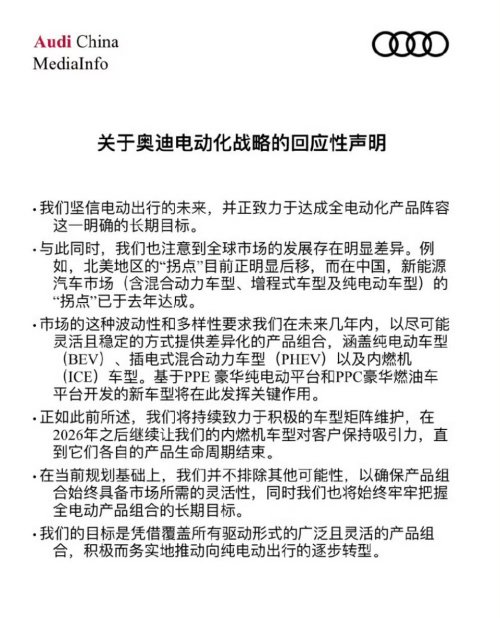
Core Viewpoint - European automotive brands are shifting their strategies regarding internal combustion engine (ICE) vehicles, with Audi confirming it will no longer adhere to its 2033 deadline for phasing out ICE models [2][5]. Group 1: Strategic Shifts - Audi's CEO announced the abandonment of plans to stop developing ICE vehicles by 2026, indicating a broader trend among European manufacturers [2][5]. - Similar confirmations have been made by Mercedes-Benz and Volvo, while BMW has emphasized a coexistence of multiple powertrains without a clear timeline for phasing out ICE vehicles [4][5]. - This strategic shift is largely driven by the poor sales performance of electric vehicles (EVs) from these brands, with even BMW, which has performed best in electrification among the "Big Three" (BBA), not seeing EVs as a significant profit driver [6][10]. Group 2: Market Dynamics - The transition to electrification has disrupted traditional product lines, necessitating a careful balance between developing new EVs and maintaining ICE models [8][10]. - The compromise in product offerings may lead to consumer confusion, as buyers of both ICE and EVs may struggle to find satisfaction in the current offerings [9][10]. - The brands are facing a significant bottleneck in the electrification era, prompting a reevaluation of their product strategies [10]. Group 3: Consumer Perspective - While EVs are perceived as cost-effective in terms of maintenance and energy costs, the rising costs of charging and maintenance are beginning to diminish their advantages [14][18][22]. - The increase in charging costs and the frequency of charging required during certain seasons may lead consumers to reconsider their choices between EVs and ICE vehicles [18][21]. - The emergence of hybrid and range-extended vehicles aims to address the limitations of EVs, but these solutions may not significantly reduce overall maintenance costs [20][22]. Group 4: Future of ICE Vehicles - The rising costs associated with EVs and the convenience issues may lead to a more level playing field between EVs and ICE vehicles in terms of market competitiveness [25]. - ICE vehicles, with their long-standing technological advancements, are still capable of evolving towards greater intelligence and performance, as seen in recent models like the FAW-Volkswagen Tayron [32][33]. - The automotive industry is witnessing a diversification of technology paths, with brands like BMW investing in hydrogen fuel cell technology alongside their electric initiatives [36][37]. Group 5: Industry Collaboration - Major automotive brands are increasingly collaborating with technology companies to enhance their product offerings and adapt to changing market conditions [36][37]. - The ability of established brands to navigate multiple technological pathways allows them to remain competitive without fully committing to a single energy source [34][36].
美国加关税,欧盟强硬反制,这次欧洲为何不忍了?
Sou Hu Cai Jing· 2025-06-23 04:32
Group 1 - The article discusses the escalating trade conflict between the US and the EU, initiated by Trump's announcement of a 25% tariff on €30 billion worth of EU goods, including electric vehicle batteries and solar panels [5][19]. - The EU's response includes tariffs on American products such as whiskey and peanut butter, and threats to limit SpaceX's Starlink services, marking a significant shift from previous passive reactions to US trade policies [5][8]. - The historical context of the trade conflict dates back to 2018 when Trump imposed tariffs on EU steel and aluminum, citing national security, which the EU initially accepted with limited retaliation [8][9]. Group 2 - The EU's previous strategy of compromise revealed its dependency on the US market, particularly in the automotive sector, which limited its ability to respond effectively to US tariffs [9][11]. - The situation escalated with the Biden administration's Inflation Reduction Act, which incentivized US-made products, forcing European automakers to invest in US production facilities to remain competitive [14][15]. - By 2022, the trade deficit between the US and the EU reached €236 billion, with increasing restrictions on technology exports from the US to the EU, further straining relations [18]. Group 3 - The EU's patience reached its limit in 2021, leading to a more aggressive stance against US tariffs, particularly as the economic impact of these tariffs became more pronounced [13][34]. - The article highlights the EU's strategic retaliation, targeting key US industries and products to maximize political impact, such as bourbon from Kentucky and orange juice from Florida [36][37]. - The ongoing trade conflict is characterized by a mutual economic detriment, with both sides suffering from disrupted supply chains and increased costs, illustrating the complexities of global trade relationships [36][38].

机械2025年中投资策略:硬科技与低估值并驾齐驱
2025-06-23 02:09
Summary of Key Points from the Conference Call Industry Overview - The mechanical industry has seen significant growth in the first half of 2025, with a nearly 14% increase, ranking sixth among all A-share sectors [2] - The industry is influenced by themes such as robotics, reducers, and hard technology, with a focus on undervalued assets [1][5] Core Insights and Arguments - **Investment Trends**: The mechanical sector's investment opportunities are concentrated in hard technology (e.g., giant wheel intelligence, controllable nuclear fusion) and undervalued assets [1][5] - **Domestic Demand**: The recovery in domestic demand for engineering machinery is moderate, primarily driven by equipment upgrades. Excavator sales slowed in Q2, but large excavators continue to perform well [1][6][7] - **External Demand**: The external demand for engineering machinery is strong, particularly in Asia, Africa, and Latin America, with potential growth in the European and American markets [1][9] - **Industrial Control Sector**: The industrial control sector reversed its downward trend in Q1 2025, showing a 2.35% year-on-year growth, with rapid growth in HVAC and industrial robots [1][10] Important but Overlooked Content - **Overseas Expansion**: China's manufacturing direct investment abroad has grown from $19.108 billion in 2018 to $27.342 billion in 2023, with a CAGR of 7.43%. ASEAN's share in this investment is increasing [4] - **Market Dynamics**: The mechanical industry is closely tied to the performance of the manufacturing, real estate, and infrastructure sectors, which are currently showing signs of weakness [3] - **Future Outlook**: The second half of 2025 is expected to see a focus on hard technology and high-dividend, low-valuation stocks, particularly in the Hong Kong market due to ample supply and global capital inflow [5][52] Recommendations - **Key Companies**: Recommended companies in the mechanical sector include Haitan International, Sany International, and Jerry Holdings, among others, with a focus on hard technology firms like Aobi Zhongguang and Sikang Technology [53] - **Investment Opportunities**: Investors are advised to pay attention to the controllable nuclear fusion sector, which is expected to see significant investment opportunities in the latter half of 2025 [50][51]





奥迪为何取消全面电动化?
Zhong Guo Qi Che Bao Wang· 2025-06-23 01:23
Core Viewpoint - Audi's CEO confirmed the withdrawal of previous management's plans for a strict timeline on phasing out internal combustion engine (ICE) vehicles, indicating a shift towards a more flexible approach in product offerings [2][4] Group 1: Audi's Strategy Shift - Audi has abandoned its previous plan to stop developing ICE vehicles by 2026 and to cease the sale of new fuel vehicles by 2033, opting instead for a diversified product lineup that includes BEVs, PHEVs, and ICE vehicles [4][10] - The decision reflects a broader trend among luxury brands like Mercedes-Benz, BMW, and Porsche, which have also slowed their electrification efforts in response to market conditions [3][5] Group 2: Market Dynamics - The global market for electric vehicles shows significant regional differences, with North America experiencing a delayed transition, while China has already reached a tipping point in the adoption of new energy vehicles [4][7] - In China, the market share of new energy passenger vehicles exceeded 50% for five consecutive months in the second half of 2024, while in Europe, the combined market share for BEVs and PHEVs was only about 22.7% [7][10] Group 3: Political and Economic Influences - The initial push for aggressive electrification targets was influenced by political factors, particularly in Europe, where green policies were prominent. However, changing political climates and economic pressures have led to a reassessment of these targets [8][10] - The EU's recent relaxation of emissions standards and the introduction of exemptions for synthetic fuels have provided traditional automakers with more leeway, reducing the urgency for a complete transition to electric vehicles [8][10] Group 4: Financial Pressures - Major luxury brands, including Audi, Mercedes-Benz, and BMW, faced declining sales and profitability in 2024, prompting a reevaluation of their electrification strategies [10][11] - Audi's sales dropped by 11.8% in 2024, leading to a historic low operating profit margin of 4.6%, while the parent company Volkswagen also faced significant financial challenges [10][11]

迈凯伦CCO:电动车是外卖,迈凯伦是高档餐厅
汽车商业评论· 2025-06-22 21:45
撰 文 / 刘宝华 设 计 / 琚 佳 世事无常。 上周最大的行业新闻应该是奥迪全球CEO高德诺公开宣布奥迪撤回原定于2033年停止研发和销售内 燃机汽车的计划,不再设定明确终止时间表。 奥迪之前,奔驰、宝马、沃尔沃、福特已经先后调整了全面电动化计划,改为燃油车与电动化双线 并行。 对电动化最保守的丰田成了最大赢家。丰田截至2025年3月31日的2025财年净利润合人民币2364亿 元,相当于比亚迪、上汽集团、长安汽车、广汽集团、吉利汽车、长城汽车、北京汽车7大上市车 企利润总和的3倍。 搞电动车的越搞越穷,不搞电动车的富得流油。 最能赚钱的车企也开始摇摆。也是上周的消息,法拉利原计划2026年推出的第二款纯电动车型被推 迟到最早2028年推出。这已经是这款车第二次推迟时间表。接近法拉利的消息源称"目前高性能电 动车的需求为0"。 这句话有些残酷,但或许揭示了电动车的市场规律——从品牌、车型、价格、性能各个维度,电动 车都在中低端更容易成功,越高端对电动车来说越困难。 以特斯拉为例,中低端车型 Model Y、 Model 3占总销量超过95%,中高端车型 Model X、 Model S 占比不足5%, 当 ...
豪华车行业系列报告:产品力及品牌价值双升,自主豪车将实现品牌向上
Orient Securities· 2025-06-22 13:46
Investment Rating - The report maintains a neutral investment rating for the automotive and components industry in China [6]. Core Insights - The report highlights that the domestic luxury car market is still dominated by foreign brands, but is increasingly impacted by the rise of domestic high-end brands. The market share of domestic luxury brands is expected to gradually increase due to enhanced consumer confidence and recognition of domestic luxury brands [9][35]. - The profitability of luxury car manufacturers is higher and more stable compared to general car manufacturers, with brands like Ferrari showing significantly higher net profit margins [9][54]. - The report suggests focusing on domestic luxury car brands such as Jianghuai Automobile and BYD, which are expected to achieve breakthroughs in the high-end market [3][35]. Summary by Sections 1. Domestic Luxury Car Market Dynamics - The domestic luxury car market is primarily composed of foreign brands, with imported luxury car sales declining from approximately 810,300 units in 2020 to an estimated 589,500 units in 2024, representing a 15.6% year-on-year decrease [14][15]. - In 2023, the sales of high-end luxury models were about 531,800 units, accounting for approximately 2.4% of total passenger car sales, which is projected to drop to 1.9% in 2024 [9][15]. 2. Product Strength and Brand Value Enhancement - The report emphasizes that the improvement in product strength and brand value of domestic luxury brands will drive their upward brand positioning. This is supported by the increasing recognition of brands like BYD and Huawei in the luxury market [35][41]. - The integration of intelligent technology into luxury vehicles is becoming a key competitive advantage for domestic brands, allowing them to gradually catch up with traditional foreign luxury brands [37][40]. 3. Profitability Comparison - Luxury car manufacturers exhibit higher and more stable profitability compared to general car manufacturers. For instance, Ferrari's average net profit margin from 2020 to 2024 is projected to be 19.9%, significantly higher than that of other manufacturers [9][54]. - The report notes that while luxury brands maintain high profit margins, the increasing competition from domestic brands is expected to pressure the profitability of traditional luxury brands [59]. 4. Valuation Comparison - The report indicates that overseas ultra-luxury brands enjoy a valuation premium, with Ferrari maintaining a high price-to-earnings (P/E) ratio of 60-80 in 2024-2025, while other brands like Porsche and Mercedes-Benz have lower P/E ratios due to market pressures [9][54]. - If domestic luxury brands can establish stable sales and profitability, they may also achieve higher valuation levels compared to traditional manufacturers [9][54]. 5. Investment Strategies - The report recommends focusing on domestic luxury car brands that are expected to break into the high-end market, particularly highlighting Jianghuai Automobile and BYD as key players [3][35].


英伟达,将用AI造AI?
财联社· 2025-06-21 08:20
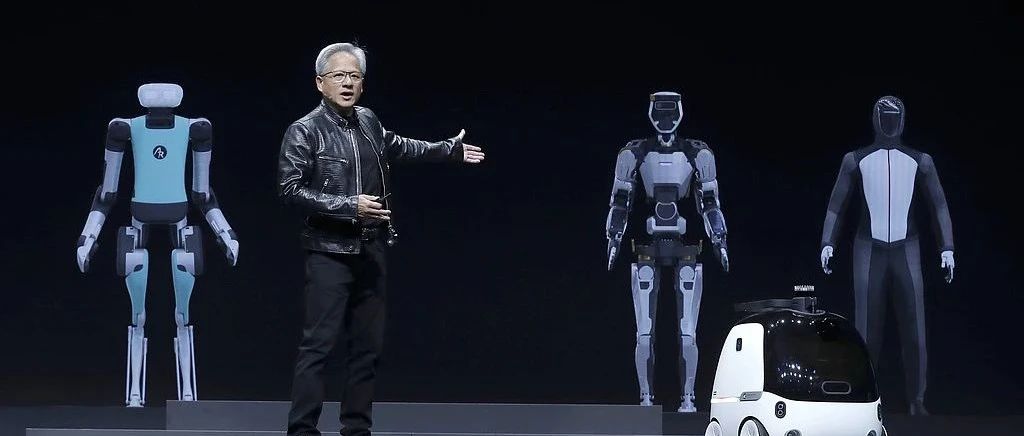
Group 1 - Nvidia is negotiating with Foxconn to deploy humanoid robots in a new factory in Houston, Texas, for the production of Nvidia's AI servers [1] - This will mark the first time Nvidia's products are manufactured with the assistance of humanoid robots on the production line, and it is expected to be Foxconn's first AI server factory utilizing humanoid robots [1] - The deployment is anticipated to be finalized in the coming months, with humanoid robots expected to be operational by the first quarter of next year [1] Group 2 - The introduction of humanoid robots in AI server manufacturing signifies Nvidia's advancement in the field, as the company already provides platforms for building such robots [2] - Major automotive manufacturers like Mercedes and BMW are testing humanoid robots on production lines, and Tesla is also developing its own version [2] - Nvidia's CEO has predicted that widespread application of humanoid robots in manufacturing will be achieved within five years [2]

敏实集团(00425.HK):产能周期视角下经营拐点向上 机器人打开第二增长极
Ge Long Hui· 2025-06-20 18:03
Company Overview - The company, Sensata Technologies, is a global leader in automotive exterior and body structural components, operating in 14 countries with 77 factories and 4 product lines (plastic parts, aluminum parts, metal trims, battery boxes) [1] - It serves over 70 automotive brands, including BMW, Mercedes-Benz, and Tesla, and has undergone three development phases: initial nurturing, lightweight transformation and globalization, and innovative development [1] - In 2020, the company restructured into four major business units and has become one of the largest suppliers of battery boxes and body structural components globally [1] Operational Turning Point - Capital expenditure is slowing down, indicating a clear trend of profit recovery [2] - The traditional main business has solidified its technical and customer advantages [3] - The metal trim segment is projected to generate revenue of 5.49 billion yuan in 2024, with a gross margin of 27.8% [3] New Business Development - The company has formed a strategic partnership with Zhiyuan Robotics, focusing on smart exteriors, electronic skin, integrated joint assemblies, and wireless charging, which may create new revenue growth opportunities [1] Financial Forecast - Revenue is expected to reach 27.1 billion yuan in 2025, 32.1 billion yuan in 2026, and 38.0 billion yuan in 2027, with net profit projected at 2.72 billion yuan, 3.19 billion yuan, and 3.74 billion yuan respectively [2] Capital Expenditure and Profitability - Capital expenditure as a percentage of revenue is expected to drop to 8% in 2024, the lowest in a decade, leading to positive free cash flow of 778 million yuan [3] - Gross margin is forecasted to rise to 28.94% in 2024, with net margin at 10.26% and ROE at 11.97%, benefiting from improved capacity utilization and cost control [3] Business Structure Optimization - Battery box revenue is projected at 5.34 billion yuan in 2024, accounting for 23.1% of total revenue, while traditional businesses (metal trims, plastics, aluminum) will maintain a combined revenue share of 70.3% [3] - The plastic segment is expected to generate 5.87 billion yuan in revenue with a gross margin of 25.1%, expanding into smart exterior integrated products [3] - The aluminum segment is projected to achieve revenue of 4.92 billion yuan with a gross margin of 33.3%, recognized by major clients like BMW and Tesla [3] Key Growth Drivers - The battery box business is expected to experience significant growth, particularly in the European market, with projected revenue of 5.338 billion yuan in 2024, driven by EU carbon emission policies [3] - The company has a competitive advantage in technology with its extrusion molding solution, which offers better airtightness and lower iteration costs compared to integrated die-casting [3] - Domestic market share is expected to rise to 15%-19% in 2023, positioning the company in the first tier, with localized operations reducing costs and fostering deep collaborations with clients like BMW and Daimler [3] - The gross margin for battery boxes is anticipated to improve to 21.43% in 2024, as capacity utilization increases, further enhancing profitability [3]
