
沃尔玛

Search documents
图数室丨一年消失3037家,传统超市正在消亡
Xin Lang Cai Jing· 2025-11-19 08:12
Core Insights - In 2024, 62 major supermarket companies are set to close a total of 3,037 stores, indicating a significant industry downturn affecting giants like CP Lotus, Yonghui, and RT-Mart [2][3] - The traditional supermarket model is losing ground to e-commerce and specialized retail formats, as consumer shopping habits shift towards convenience and efficiency [2][9] Industry Overview - The transition from traditional markets to supermarkets began in the 1990s, but the landscape has drastically changed in just over three decades, with large supermarkets now facing collective closures [3] - According to the latest report from the China Chain Store & Franchise Association, only 25 out of the top 100 supermarkets in China are expanding, while the majority are reducing their store counts [3][6] Store Closures - The most significant closures are attributed to Jibai Holdings, which closed 1,009 stores, accounting for one-third of the total closures in the industry [5][6] - Other notable closures include CR Vanguard with 493 stores, Yonghui with 234 stores, and Lianhua with 205 stores, all reflecting a downward trend in store numbers [5][6] Revenue Trends - Major supermarkets are experiencing substantial revenue declines, with Yonghui's revenue dropping from 48.7 billion to 29.9 billion yuan, and Lianhua's revenue falling from 13.5 billion to 9.5 billion yuan [7][9] Market Share Dynamics - The market share of supermarkets has decreased from 34% to 32% between 2019 and 2024, while hypermarkets have seen a drop from 19% to 13%. In contrast, e-commerce has surged from 22% to 32% [9][11] - The rise of community group buying and specialized stores has further eroded the traditional supermarket's customer base, highlighting a shift in consumer preferences [9][11] Efficiency and Competition - Traditional supermarkets are struggling with high operational costs and inefficiencies compared to smaller, more agile formats like Hema and Costco, which offer better profit margins and customer experiences [11][13] - The traditional model lacks competitive advantages in key areas such as product differentiation, shopping experience, and social engagement, leading to a decline in consumer interest [13][15] Future Outlook - The current wave of store closures is seen as a necessary industry reshuffle rather than a sudden crisis, as the market adapts to new consumer demands for efficiency and value [15] - There remains potential for growth in specialized retail formats that offer unique value propositions, indicating that the retail story is far from over [15]


第八届进博会首设跨境电商专区 全生态赋能外贸新业态
Zhong Guo Zhi Liang Xin Wen Wang· 2025-11-18 04:52
Core Insights - The China International Import Expo (CIIE) has introduced a cross-border e-commerce zone, aiming to enhance global trade and support Shanghai's development as an international trade center [1][2] Group 1: Cross-Border E-Commerce Zone - The cross-border e-commerce zone is designed to integrate various services, addressing the growing demand for comprehensive financial and industrial support in the cross-border e-commerce sector [2] - The zone features a 40-square-meter service area by the Bank of China, showcasing its core capabilities in cross-border finance and promoting its global service brand "Bank of China Cross-Border E-Commerce" [2][3] - The "Bank of China Cross-Border E-Commerce" product line includes sub-products like "Three-Way Pass," "Cross-Border Pass," "E-Commerce Pass," and "Overseas Pass," tailored for the characteristics of small, high-frequency transactions [2] Group 2: Integrated Services and Support - The zone provides a one-stop service ecosystem for global exhibitors, particularly small and medium-sized enterprises, offering comprehensive support from cross-border settlement to policy consultation [3] - Collaboration with customs and tax authorities in the zone aims to facilitate customs processes and provide precise policy guidance, enabling smaller enterprises to enter the Chinese market more easily [3] - The Shanghai branch of the Bank of China is leveraging its local service and global network to transform the zone's experiences into ongoing support for Shanghai's trade center development [4] Group 3: Future Developments - The Shanghai branch has established partnerships with seven domestic and international payment institutions and cross-border e-commerce platforms, enhancing its ability to meet the needs of the cross-border e-commerce ecosystem [4] - Future plans include deepening collaboration with payment institutions and e-commerce platforms to further integrate cross-border financial services with Shanghai's "Silk Road E-Commerce" initiative [4]

零售周报|LVMH旗下多店亮相北京;汉堡王中国83%股权花落CPE源峰
Sou Hu Cai Jing· 2025-11-17 14:45
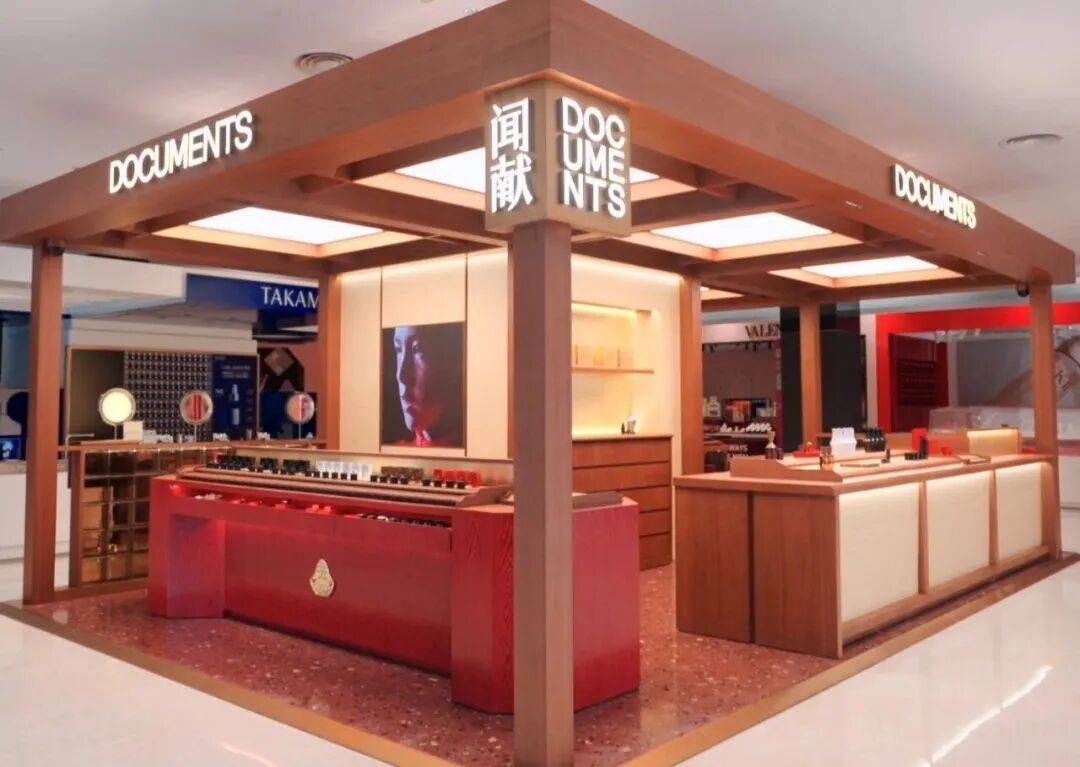
Group 1 - Hainan's new duty-free policy generated over 500 million yuan in sales during its first week, with a year-on-year increase of 34.86% in shopping amount and 3.37% in visitor numbers [1] - The first store of the high-end fragrance brand "Wenxian" opened in Wuxi, featuring a design that integrates local culture and aesthetics [3] - Shanghai Tang opened its first store in South China, showcasing a blend of innovative design and traditional Eastern aesthetics [5] Group 2 - The world's first humanoid robot-themed retail flagship store opened in Shenzhen, featuring interactive robots and a futuristic design [7] - SHEIN opened its first physical store in Paris, with plans to expand to six more locations in France by the end of November [10] - LVMH plans to open several new flagship stores in Beijing in December, marking a significant expansion in the Chinese market [12][13] Group 3 - CPE Yuanfeng acquired an 83% stake in Burger King China, with plans to expand the number of stores from approximately 1,250 to over 4,000 by 2035 [14] - Luckin Coffee's major shareholder is considering a bid for Costa Coffee, which is currently valued at around 1 billion pounds [17] - Haidilao's pizza brand "Xiao Hai Ai Zha" opened its first store in Xi'an, with plans for further expansion [21] Group 4 - Pet food brand "Pet & Fresh" is closing all its stores, with several already marked as closed or paused [22][24] - Sam's Club opened its 60th store in China, located in Yangzhou [26] - Walmart announced a leadership change, appointing John Furner as the new CEO effective February 2026 [27][29] Group 5 - Chaohe Suan NB is expanding nationwide, recruiting for various positions across multiple provinces [31] - JD.com is set to open its first discount supermarket in Beijing, with an area of approximately 5,000 square meters [32] - Richemont reported a 5% increase in total sales, with a significant 17% growth in sales from its four major jewelry brands in the second quarter [33][34] Group 6 - Gao Xin Retail reported a revenue of 30.502 billion yuan for the first half of the fiscal year, with plans to renovate over 200 stores before the next fiscal year [35]

盘前:纳指期货涨0.58% 谷歌涨近6%
Xin Lang Cai Jing· 2025-11-17 12:32
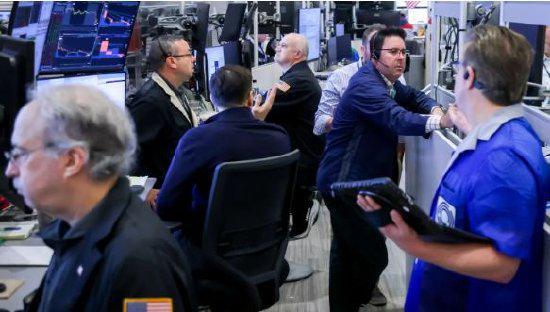
Market Overview - Global stock markets and bond yields remain strong, with the upcoming Nvidia earnings report expected to influence market direction [2][3] - US stock index futures show slight gains, with the Dow futures up 0.12%, S&P 500 futures up 0.33%, and Nasdaq futures up 0.58% [3] - European markets are cautiously rising after a volatile week, with the STOXX 600 index up 0.1% [3] Nvidia's Earnings Report - Nvidia is viewed as a "litmus test" for the tech sector, having seen its stock price surge approximately 1000% since the launch of ChatGPT in November 2022 [4] - The company became the first globally to surpass a market capitalization of $5 trillion last month, with a year-to-date increase of over 40% [4] Economic Data and Federal Reserve Outlook - The delayed US economic data, including the September non-farm payroll report, is expected to confirm a slowdown in the labor market [6] - The Federal Reserve's decision-making may be complicated by the data delays, with some officials expressing skepticism about further rate cuts [6] - Market expectations for a December rate cut have dropped below 50%, impacting high-valuation tech stocks [3][6] Long-term Investment Sentiment - Wall Street strategists maintain a positive long-term outlook for AI investments, viewing recent volatility as profit-taking rather than a fundamental shift [7] - Morgan Stanley's chief US equity strategist predicts a 16% increase in the S&P 500 over the next year, supported by strong corporate earnings [9][11]
国常会部署增强消费品供需适配性;华为将发布AI领域突破性技术
2 1 Shi Ji Jing Ji Bao Dao· 2025-11-16 09:19
Group 1 - The State Council meeting emphasized enhancing the adaptability of supply and demand in consumer goods to further stimulate consumption and promote economic circulation [1] - The meeting highlighted the importance of leading industrial upgrades through consumption upgrades and better meeting diverse demands with high-quality supply [1] - The focus will be on accelerating the application of new technologies and innovative models, particularly in key industries and fields, to develop new products and value-added services [1] Group 2 - The Ministry of Finance plans to strengthen counter-cyclical and cross-cyclical adjustments, determining deficit rates and debt scales based on changing circumstances [2] - The People's Bank of China announced an 800 billion yuan reverse repurchase operation to maintain ample liquidity in the banking system [4] Group 3 - The China Securities Regulatory Commission aims to enhance market resilience and stability, making the system more inclusive and attractive while improving the quality and value of listed companies [3] - The market supervision authority released a draft guideline for antitrust compliance for internet platforms, aiming to protect legal rights and maintain fair competition [5] Group 4 - Multiple smartphone manufacturers, including Xiaomi and OPPO, have paused storage chip purchases due to soaring prices, with some having inventory levels below three weeks [11] - Industrial Fulian denied rumors of order or outlook downgrades, stating that current project progress and delivery schedules are normal [12] - Huawei is set to release breakthrough AI technology that could significantly improve the utilization efficiency of computing resources [13] - Samsung Electronics raised contract prices for server memory chips by up to 60% due to supply shortages driven by the AI data center boom [14]
零售的奔腾年代系列(一):日本商超行业启示录,胖东来模式的逆势成长
SINOLINK SECURITIES· 2025-11-12 14:57
Investment Rating - The report maintains a "Buy" rating for the retail industry [1] Core Insights - The retail transformation presents significant opportunities, making it one of the most aggressive sectors in China's consumption industry, potentially leading to a wave of long-term bullish companies [1][12] - The Japanese supermarket industry has experienced stable market size due to aging population and population decline, impacting consumer preferences and product categories [1][16] - Life Supermarket's success is attributed to its focus on food products, particularly processed foods, which are resilient in an aging society [2][4] Summary by Sections Japanese Supermarket Demand Changes - Population aging and income changes are the two core factors influencing supermarket demand [16] - Japan's aging rate increased from 17.6% in 1990 to 35.7% in 2022, leading to a shift in consumer demographics [16][20] - The total population peaked in 2010 and has been in decline since, suppressing overall supermarket market growth [16][20] Japanese Supermarket Supply Changes - Despite stable market size, the supply side of Japanese supermarkets has shown aggressive growth, with an increase in the number of smaller supermarkets [1][4] - Traditional large-scale supermarkets are decreasing, while food-focused supermarkets are on the rise [1][4] Life Supermarket's Rise - Life Supermarket focuses on food, with processed foods making up 88.74% of its offerings, allowing it to withstand sales declines in traditional categories [2][4] - The supermarket's location strategy involves dense store openings in populous areas, particularly in regions with positive population growth [2][4] - Revenue growth is primarily driven by new store openings rather than same-store sales, with store numbers increasing from 150 in the late 1990s to 314 by 2024 [3][4] Investment Recommendations and Insights - The aging population is a key driver for the growth of food supermarkets in China, with a high certainty of their rise [4] - The competitive landscape differs between Japan and China, with China's developed online market intensifying competition in high-density, high-income areas, while lower-tier markets remain fertile ground for offline supermarkets [4]
可选消费W45周度趋势解析:海内外消费子版块均无共振,内部因素催化股价表现-20251111
Haitong Securities International· 2025-11-11 15:11
Investment Rating - The report assigns an "Outperform" rating to multiple companies including Nike, Midea Group, JD Group, Haier Smart Home, Gree Electric, Anta Sports, China Duty Free, and others [1]. Core Insights - The report highlights that domestic and overseas consumer subsectors are not showing synchronized movements, with internal factors driving stock performance [4][10]. - The performance of various sectors is analyzed, indicating that the U.S. hotel sector has outperformed others, while luxury goods and overseas cosmetics have seen significant declines [10][13]. Sector Performance Summary - **U.S. Hotels**: The sector saw a weekly increase of 7.9%, driven by strong performance from Marriott and Hilton, with Marriott's RevPAR growth meeting market expectations [5][13]. - **Pet Sector**: Increased by 1.1%, with leading brands showing significant growth in GMV despite overall sales being weak [5][13]. - **Gambling Sector**: Rose by 0.7%, with Macau's GGR exceeding expectations, indicating strong future performance [5][13]. - **Retail Sector**: Experienced a slight decline of 0.3%, with China Duty Free benefiting from new tax policies [7][13]. - **Snack Sector**: Fell by 1.9%, with competitive pressures affecting performance [7][13]. - **Gold and Jewelry Sector**: Decreased by 2.5% due to tax reforms impacting profitability [7][13]. - **Overseas Sportswear**: Dropped by 2.8%, facing tariff pressures and concerns over U.S. consumer spending [7][13]. - **Luxury Goods**: Declined by 3.0%, with concerns over upcoming earnings reports affecting stock prices [7][13]. - **Domestic Cosmetics**: Fell by 3.4%, with overall performance weaker than international brands [7][13]. - **Overseas Cosmetics**: Experienced a significant drop of 11.6%, primarily due to ELF Beauty's disappointing earnings [7][13]. Valuation Analysis - Most sectors are valued below their average over the past five years, with specific PE ratios indicating potential undervaluation [8][14]. - **Overseas Sportswear**: Expected PE of 28.6, 54% of the past five-year average [14]. - **Domestic Sportswear**: Expected PE of 14.1, 74% of the past five-year average [14]. - **Gold and Jewelry**: Expected PE of 22.1, 42% of the past five-year average [14]. - **Luxury Goods**: Expected PE of 25.6, 46% of the past five-year average [14]. - **Gambling**: Expected PE of 29.1, 47% of the past five-year average [14]. - **Overseas Cosmetics**: Expected PE of 35.5, 53% of the past five-year average [14]. - **Domestic Cosmetics**: Expected PE of 27.9, 52% of the past five-year average [14]. - **Pet Sector**: Expected PE of 40.3, 55% of the past five-year average [14]. - **Snack Sector**: Expected PE of 26.8, 65% of the past five-year average [14]. - **Retail Sector**: Expected PE of 28.6, 53% of the past five-year average [14]. - **U.S. Hotels**: Expected PE of 31.4, 19% of the past five-year average [14]. - **Credit Card Sector**: Expected PE of 28.9, 55% of the past five-year average [14].
“大空头”点燃估值忧虑,纳指跌超2%,中概股难逃市场拖累
Feng Huang Wang· 2025-11-04 22:40
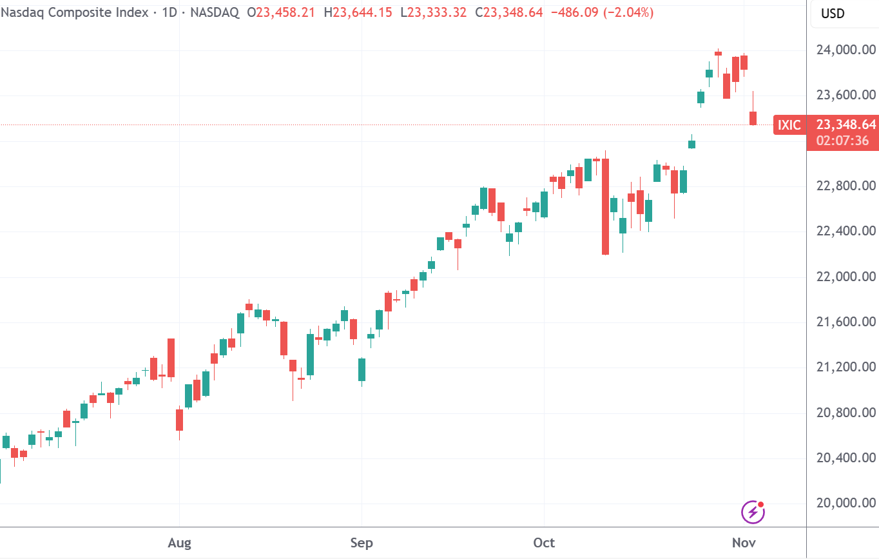
Market Overview - The S&P 500 index fell by 1.17% to 6771.55 points, the Nasdaq Composite dropped by 2.04% to 23348.64 points, and the Dow Jones Industrial Average decreased by 0.53% to 47085.24 points, reflecting concerns over high valuations in the U.S. stock market [1] Company Performance - Palantir, a leading AI stock, reported earnings that exceeded expectations and raised its guidance, yet its stock fell by 7.94%, highlighting its status as a representative of the "AI bubble" after a fourfold increase in the past year [2] - Nvidia's stock declined by 3.96%, while other major tech stocks like Apple and Microsoft saw mixed results, with Apple rising by 0.37% and Microsoft falling by 0.52% [8] - Chinese stocks also faced pressure, with the Nasdaq Golden Dragon China Index dropping by 2.05%, including Alibaba down by 2.02% and JD down by 2.93% [8] Economic Indicators - Goldman Sachs and Morgan Stanley executives expressed concerns about a potential 10% to 20% market pullback over the next 12 to 24 months, which has contributed to investor anxiety [6] - The retail investor sentiment index compiled by Goldman Sachs fell by 3.6%, indicating a significant drop in retail investor confidence [5] IPO and M&A Activity - Beta Technologies, an electric aircraft company, completed its IPO at $34 per share, raising over $1 billion, and saw its stock rise by 5.88% despite the overall market downturn [16] - Pfizer and Novo Nordisk are in a bidding war for Metsera, with Pfizer raising its offer to $8.1 billion and Novo Nordisk offering up to $10 billion, leading to a 20.5% increase in Metsera's stock [12] Corporate Developments - IBM announced plans to lay off thousands of employees in Q4, affecting a low single-digit percentage of its global workforce [15] - Amazon has issued a cease-and-desist order to AI startup Perplexity, demanding it stop using its AI browser for shopping on Amazon's platform [10] - Apple is reportedly preparing to enter the low-cost laptop market to attract consumers currently using Chromebooks and entry-level Windows laptops [11]
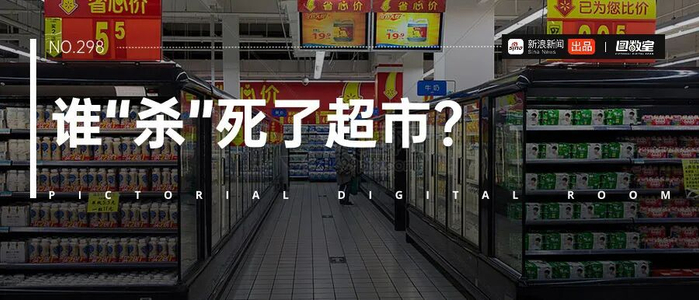
超市“调改”步入深水区
Bei Jing Shang Bao· 2025-11-03 16:24
Core Insights - The supermarket industry is experiencing revenue growth pressure and a divergence in profitability among listed companies, with a need for refined operations and differentiated competition to find breakthroughs [1][3] Revenue Performance - Supermarkets are entering a "stock competition" phase, facing stagnant or declining revenue growth, with significant divergence in net profit performance among companies [3] - Yonghui Supermarket reported a cumulative revenue of 42.434 billion yuan for the first three quarters, a year-on-year decline of 22.21%, with Q3 revenue at 12.486 billion yuan, down 25.55%, and a net loss of 469 million yuan [3] - Zhongbai Group also saw revenue decline, with 6.552 billion yuan for the first three quarters, down 19.41%, and a net loss of 580 million yuan [3] - Hongqi Lianchained reported revenue of 7.108 billion yuan, down 8.48%, but achieved a net profit of 383 million yuan, with a net profit margin increase of 7.21% [3] - Bubu Gao's revenue was 3.194 billion yuan, ranking fifth in the industry with a net profit of 238 million yuan [3] - Sanjiang Shopping reported revenue of 2.988 billion yuan and a net profit of 114 million yuan [3] Industry Transformation - The industry is undergoing a collective transformation with various new models emerging, such as "Fat Donglai model adjustment" and "24-hour cloud service" by Hongqi Lianchained, indicating a shift towards differentiated products and innovative business formats [4][5] - Yonghui Supermarket has completed adjustments in 222 stores, resulting in an average customer flow increase of 80% and over 60% of stores surpassing their highest profitability in the past five years [4] - Bubu Gao's store adjustments have led to increased sales and improved employee benefits, achieving a 90% alignment with the Fat Donglai model [4] E-commerce and Digitalization - Walmart China reported a significant 96% increase in e-commerce net sales in Q3, with Sam's Club membership exceeding 4 million [5] - The transformation in the supermarket industry is systemic, with major players like Wumart also advancing deep transformations [5] - The focus on self-owned brand development, fresh direct sourcing, and regional specialty products is emphasized as a strategy for profit growth [6] Market Demand Response - The core of the transformation lies in enhancing product strength and optimizing supply chains, with companies increasingly relying on operational efficiency and innovative business models [6] - The emergence of membership stores, hard discount stores, and community stores reflects a response to market demand for segmentation [6] - Digital channels such as e-commerce, live streaming, and instant delivery are becoming standard configurations for supermarket operations, with examples from Walmart China and Hongqi Lianchained [6]


靠港费用暴涨3562万,美国船东:我每艘船去中国,我的心都在滴血
Sou Hu Cai Jing· 2025-11-03 12:45
Core Viewpoint - The recent escalation of Sino-U.S. trade tensions has led to the implementation of new port fees by China on U.S. vessels, significantly impacting the shipping industry and increasing operational costs for American shipowners [1][4][7]. Group 1: New Regulations and Their Impacts - On October 14, 2025, China's Ministry of Transport implemented new port fees for U.S.-related vessels, which were a direct response to the U.S. imposing additional port service fees on Chinese vessels [1][4]. - The new fees start at 400 RMB per net ton and will increase to 1120 RMB by 2028, leading to substantial costs for large vessels, such as a 16,000-ton oil tanker incurring fees of 64 million RMB in 2025 and potentially 179 million RMB by 2028 [4][7]. - The U.S. has been conducting investigations into China's maritime and logistics sectors since April 2025, aiming to curb China's dominance in shipbuilding, which accounts for over 60% of global new ship orders [4][7]. Group 2: Reactions from the Shipping Industry - American shipowners are facing severe financial strain due to the new fees, with some reporting losses that could consume nearly half of their annual profits [11][13]. - The shipping industry is experiencing a shift, with companies considering various strategies to mitigate costs, including changing vessel flags and ownership structures to avoid the new fees [13][15]. - Major shipping companies, including Matson and Hapag-Lloyd, have begun rerouting vessels to avoid Chinese ports, leading to increased operational costs and delays [15][17]. Group 3: Broader Economic Implications - The new port fees are expected to increase consumer prices in the U.S., with estimates suggesting a 3% to 5% rise in retail prices due to higher shipping costs being passed on to consumers [15][20]. - The shipping fee conflict has led to a shift in global shipping patterns, with Southeast Asian ports experiencing increased activity as cargo is rerouted away from China [17][20]. - The situation highlights the vulnerabilities in U.S. maritime interests and the potential for increased competition from South Korean and Japanese shipbuilders, who are benefiting from the sanctions against China [18][22].
