
小米汽车

Search documents
车市进入高销量低增长周期,行业从拼价格转向拼价值
Bei Jing Ri Bao Ke Hu Duan· 2026-01-06 00:34
Group 1 - The core viewpoint of the articles highlights the transformation and challenges in the Chinese automotive market, emphasizing a shift from price competition to value-driven growth, with a focus on innovation and technology integration [1][5][8] - In 2025, China's automotive market is expected to achieve record production and sales, driven by policies such as trade-in incentives and tax exemptions for new energy vehicles, indicating sustained consumer demand [1][6] - The competition landscape is evolving, with companies like BYD surpassing Tesla in electric vehicle sales, marking a shift towards systematic competition based on cost, supply chain, and product matrix [2][3] Group 2 - The industry is witnessing a significant shift towards "boundaryless integration," with companies exploring new technologies and markets beyond traditional automotive manufacturing, such as AI and robotics [3][4] - The year 2025 is anticipated to be a turning point for intelligent driving technology, with advancements making high-level autonomous driving features more accessible to the broader market [3][4] - The automotive sector is facing increasing pressure from regulatory changes and market dynamics, leading to a decline in profit margins and a need for companies to focus on value creation through innovation and quality [5][7] Group 3 - The outlook for 2026 suggests a transition to a phase of high sales but low growth, with expectations of stable annual sales around 30 million vehicles, and a significant increase in exports, particularly in the new energy vehicle segment [6][8] - Capital operations within the automotive industry are becoming more active, with several companies successfully listing on stock exchanges, indicating a trend towards consolidation and value reassessment [7][8] - The competitive environment is expected to intensify, with companies needing to accelerate their transition to new energy and global markets to survive the anticipated market shakeout [8]
李弘扬团队最新!SimScale:显著提升困难场景的端到端仿真框架......
自动驾驶之心· 2026-01-06 00:28
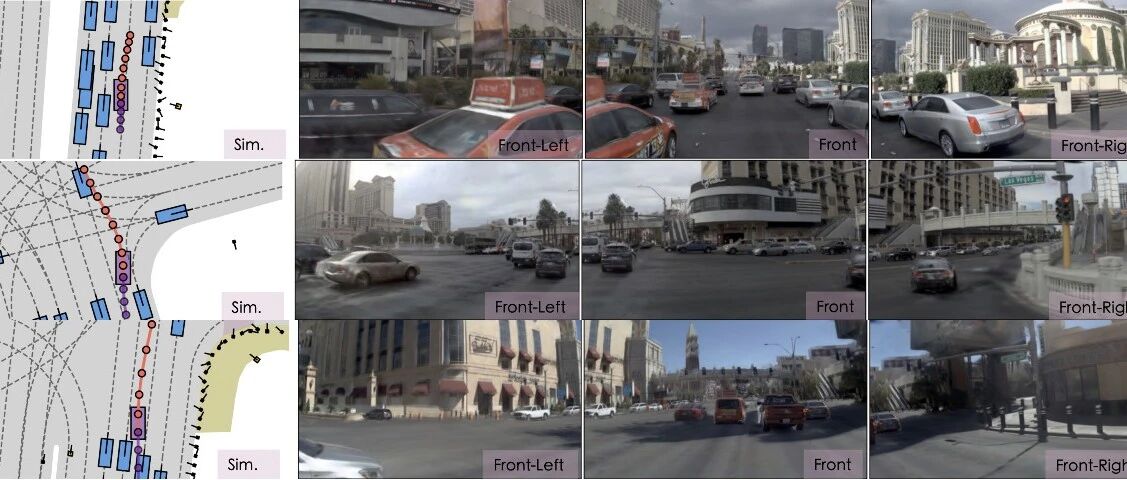
点击下方 卡片 ,关注" 自动驾驶之心 "公众号 戳我-> 领取 自动驾驶近30个 方向 学习 路线 >>直播和内容获取转到 → 自动驾驶之心知识星球 点击按钮预约直播 李弘扬老师团队的新工作 - SimScale,中科院、港大OpenDriveLab和小米汽车联合完成。 近年来,大模型领域背靠 Data Scaling 取得了前所未有的突破,但到了自动驾驶,这套方法却突然失灵了。不是因为模型不够大,而是现实世界根本给 不了足够多的关键场景。 现实道路中的绝大多数驾驶片段都是重复而安全的"常态行为",真正决定策略能力上限的高风险、长尾、极端场景却往 往难以遇见,更难以大规模收集。因此自动驾驶不是缺数据,而是缺"对的"数据,行业亟需一种能系统性生成大量关键 场景、并规模化训练的新路径。 针对这些问题,SimScale应运而生,SimScale探索了在scalable的3DGS交互式仿真下,生成reward、recovery等多种数据, 进行联合训练以最大化现有训练数据的利用效率。 最终在NavSim leaderboard 上取得了新的 SOTA,并在多类主流 E2E planner 上带来了显著提升! 今天自 ...

多家车企补贴购置税!开年车市火爆,销售从早到晚忙到没空吃饭
Mei Ri Jing Ji Xin Wen· 2026-01-05 23:19
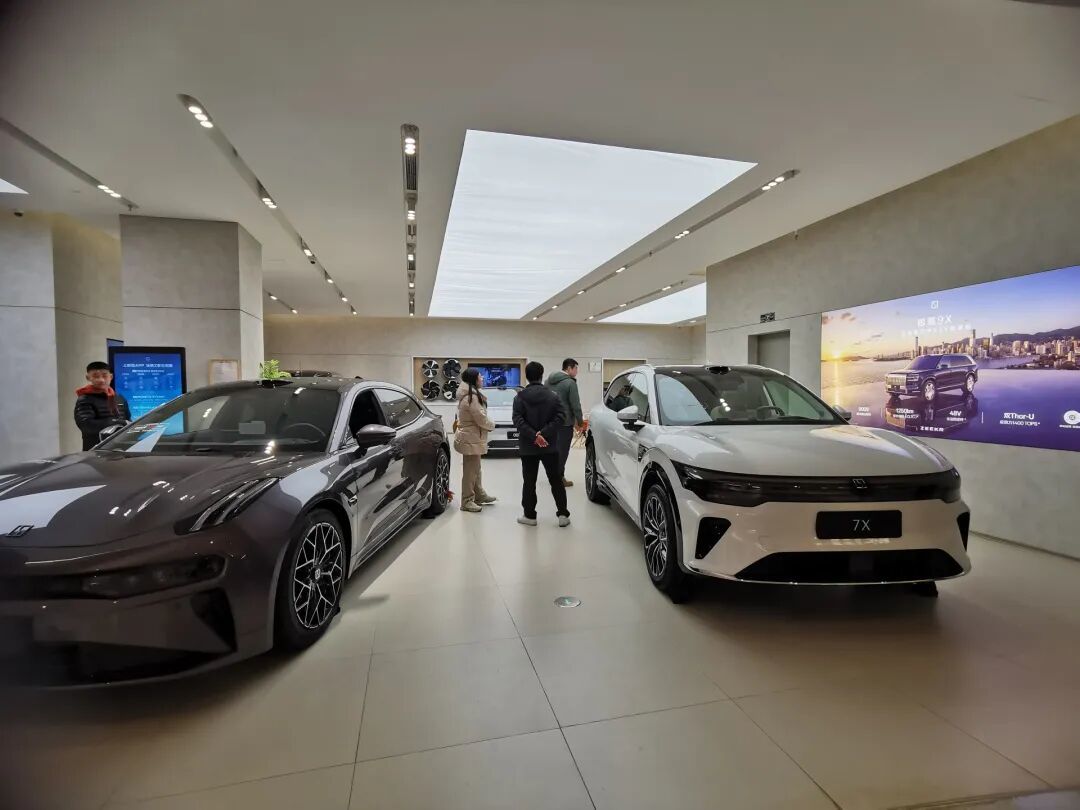
Core Viewpoint - The new "National Subsidy" policy for automobiles was released before the New Year holiday in 2026, prompting various car manufacturers to launch promotional policies, including vehicle purchase tax subsidies and "0% interest" financing options. The changes in the subsidy structure are expected to mitigate market shocks and stimulate car sales in 2026 [1][11]. Group 1: New Policy and Market Response - The new "National Subsidy" policy includes a reduction in the purchase tax for new energy vehicles from full exemption to 5% starting January 1, 2026 [11][12]. - Multiple car brands have introduced promotional policies in response to the new subsidy, with over ten brands offering limited-time promotions affecting more than 70 models [3][4]. - Sales personnel reported a significant increase in customer traffic, with some stores experiencing over a thousand visitors in a single day due to the holiday and new policy [3]. Group 2: Subsidy Details and Consumer Impact - The new subsidy structure shifts from fixed subsidies to percentage-based subsidies, maintaining the upper limits but reducing the effective subsidy for lower-priced models [11][13]. - Consumers can benefit from additional subsidies if they purchase vehicles during the promotional period, with some brands offering up to 12,000 yuan in tax subsidies [6][9]. - The total savings for consumers purchasing a new energy vehicle can reach nearly 52,000 yuan when combining the purchase tax reduction and the "old-for-new" subsidy [14]. Group 3: Regional Implementation and Market Growth - The new subsidy policy has already been implemented in several regions, including Jiangxi and Hebei, with local authorities actively promoting the "old-for-new" program [15][17]. - The "old-for-new" policy has been a significant driver of growth in the automotive market, with over 1.15 million vehicles exchanged under this program in 2025, contributing to over 1.6 trillion yuan in new car sales [18]. - Industry experts predict that the automotive market will experience positive growth in the first quarter of 2026, driven by the new policies [20].
2025造车新势力变局:“鸿零米”改变“蔚小理”格局
2 1 Shi Ji Jing Ji Bao Dao· 2026-01-05 22:31
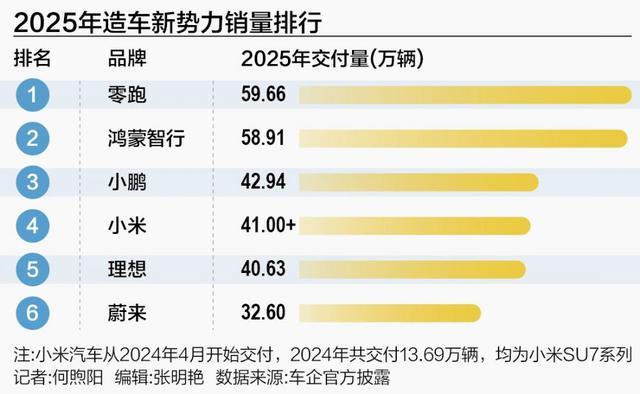
Core Insights - The 2025 new energy vehicle market has shown a stark polarization, with emerging players like "Honglingmi" (Hongmeng Zhixing, Leap Motor, Xiaomi) rapidly gaining market share while established companies like "Weilai, Xiaopeng, and Lixiang" face significant challenges [1][15] - The competition has intensified, with some companies thriving in the growing market while others struggle for survival in a saturated environment [1] Group 1: Emerging Players - "Leap Motor" has emerged as the biggest dark horse, achieving a delivery volume of 596,600 units in 2025, becoming the top seller among new forces and setting a record for annual sales [3] - Leap Motor's success is attributed to its long-term commitment to self-research and development, achieving a half-year delivery of 221,700 units and becoming one of the only two profitable companies in the sector [3][4] - Xiaomi's automotive division delivered over 410,000 units in its first full year, exceeding its annual target by 17% [5] Group 2: Established Players - "Weilai" and "Lixiang" have entered a painful transformation phase, with both companies failing to meet their annual sales targets in 2025 [8] - "Xiaopeng" is the only company among the established players to achieve its annual sales target, delivering 429,400 units in 2025 [9] - Weilai has undergone a significant organizational change, focusing on core automotive operations and achieving notable sales with new models like the L90 and ES8 [12] Group 3: Market Dynamics - The competition has shifted towards a focus on systemic capabilities, with companies needing to balance technology development, product iteration, financial reserves, and operational efficiency to succeed [15] - The market is witnessing a shift where companies like Leap Motor and Xiaomi leverage their unique strengths to disrupt traditional players, while established companies are forced to adapt to survive [7][15]
造车新势力2025生死局:零跑交付59万辆成黑马,蔚小理加速转型
21世纪经济报道· 2026-01-05 14:49
Core Viewpoint - The 2025 new energy vehicle market has shown a stark polarization, with emerging brands like "Honglingmi" (Hongmeng Zhixing, Leap Motor, Xiaomi) rapidly gaining market share while established players like NIO and Li Auto struggle to maintain their positions [1][4]. Group 1: Performance of New Energy Vehicle Brands - Leap Motor emerged as the biggest dark horse in 2025, achieving a delivery volume of 596,600 units, marking a 103% year-on-year growth and completing 1,119% of its annual sales target [2][4]. - Hongmeng Zhixing delivered 589,100 units, a 32% increase, while Xiaomi's deliveries exceeded 410,000 units, achieving a remarkable 299% growth [2][6]. - Li Auto and NIO faced challenges, with Li Auto's deliveries declining by 19% to 406,300 units, and NIO delivering 326,000 units, a 47% increase but still below expectations [2][12]. Group 2: Strategic Shifts and Challenges - Leap Motor's success is attributed to its focus on self-research and development, achieving a gross margin of 14%-15% while maintaining competitive pricing [5][4]. - Xiaomi's strategy leverages its consumer electronics background, achieving a high completion rate of 117% for its annual sales target, but faces challenges related to brand perception and safety concerns [6][7]. - Hongmeng Zhixing is working to diversify its brand portfolio beyond the AITO series, which accounted for over 70% of its sales, to reduce dependency on a single model [7][6]. Group 3: Transformation of Established Players - The former "big three" of new energy vehicles, NIO, Li Auto, and Xpeng, are undergoing significant transformations, with NIO and Li Auto failing to meet their sales targets [9][12]. - Xpeng has successfully pivoted to a more pragmatic approach, achieving 429,400 units sold in 2025, the only one among the three to meet its annual target [10][11]. - NIO has initiated a restructuring process to focus on core operations and has seen success with new models like the L90 and ES8, which have become popular in the market [11][12]. Group 4: Struggles of Other Brands - Neta Motors has faced severe challenges, leading to bankruptcy restructuring due to a lack of core technology and declining sales [15][16]. - WM Motor and HiPhi are also attempting to revive their operations, but face significant financial hurdles and market skepticism regarding their recovery plans [16][18]. - The overall landscape of new energy vehicles is marked by intense competition, with companies needing to balance technology development, product iteration, and operational efficiency to survive [19][20].
12月新能源车销量跟踪:目标兑现度分化,战略选择成关键变量
Haitong Securities International· 2026-01-05 08:42
Investment Rating - The report does not explicitly state an investment rating for the automotive industry but indicates a challenging outlook for the market moving into 2026 due to increasing volatility and structural changes [7]. Core Insights - Major automakers reported December and full-year sales results, with a notable decline in the typical year-end "pull-forward" effect, leading to double-digit month-on-month declines for most OEMs [7][8]. - The fading demand driven by subsidies is expected to put sustained pressure on the automotive market in China, with a forecast of increased volatility and market restructuring [7][8]. - The divergence in target fulfillment among automakers reflects the alignment of corporate strategies with actual market demand, with some companies exceeding targets through effective segmentation and cost efficiency [16]. Summary by Relevant Sections December Sales Performance - BYD sold 420,000 units in December, an 18% year-on-year increase but a 13% month-on-month decline, achieving a full-year target of 4.602 million units [8][9]. - Geely's December sales reached 240,000 units, a 13% year-on-year increase but a 24% month-on-month decline, with a full-year target of 3.025 million units achieved [9]. - Leapmotor delivered 60,000 units in December, a 42% year-on-year increase, surpassing its annual target of 500,000 units ahead of schedule [10]. Strategic Positioning and Market Demand - Companies that effectively matched their strategic positioning with market demand were able to meet or exceed their sales targets, while others that relied heavily on specific products or technologies underperformed [16]. - NIO achieved a record 48,000 units in December, with a full-year delivery total of 326,000 units, reflecting a 74% target achievement rate [15]. - Xiaomi Auto exceeded 50,000 units in December for the first time, achieving over 400,000 units for the full year, aligning with its revised guidance [12]. Future Outlook - The report anticipates intensified competition in the electric vehicle segment, particularly for companies like Li Auto, which aims to maintain its leading position while facing uncertainties in its battery electric vehicle strategy [13]. - The overall market dynamics suggest that companies will need to adapt to changing consumer preferences and competitive pressures as they move into 2026 [16].

元旦新能源车市:购置税正式开收,车企花式“兜底”
第一财经· 2026-01-05 08:26
Core Viewpoint - The article discusses the impact of the new electric vehicle (EV) purchase tax policy and subsidy changes in 2026, highlighting how these changes are prompting car manufacturers to increase promotions to attract buyers during the New Year period [3]. Group 1: Policy Changes - Starting in 2026, the EV purchase tax incentive has been reduced from full exemption to a 50% reduction (5% tax rate) [3][5]. - The "Two New" policy has shifted from fixed subsidies to a percentage-based subsidy based on vehicle price, although the maximum subsidy remains unchanged [3][5]. - The new purchase tax policy is expected to increase the cost of purchasing EVs, with the tax for a vehicle priced at 31.98 million yuan being approximately 14,200 yuan [11]. Group 2: Market Response - Car manufacturers are ramping up promotions to attract hesitant buyers, with many offering cash discounts and trade-in subsidies [5][6]. - For example, Xiaopeng Motors is offering a cash discount of 3,000 yuan and a trade-in subsidy of 3,000 yuan, totaling around 6,000 yuan in discounts [5]. - Li Auto has different discount policies for various models, with the L6 model seeing a price drop of 38,000 yuan [6]. Group 3: Consumer Behavior - There has been an increase in consumer inquiries and test drives during the New Year period, indicating heightened interest due to the policy changes [4][5]. - Many consumers are still in a wait-and-see mode, comparing different brands' promotions before making a purchase decision [6][8]. - Despite the increased costs from the new tax, many consumers are still purchasing vehicles, as seen in the sales performance of brands like NIO and Hongmeng Zhixing [8][11]. Group 4: Sales Performance - NIO's sales during the New Year period were robust, with reports of high foot traffic and test drive requests [7][8]. - In Guangzhou, a store sold over 10 units of the new Aion model in a single day, demonstrating strong demand despite the new tax [11]. - Overall, the article indicates that while the new tax has raised costs, many brands are successfully maintaining sales momentum through strategic promotions and consumer engagement [9][11].



元旦新能源车市:购置税正式开收,车企花式“兜底”
Di Yi Cai Jing· 2026-01-05 07:47
Core Insights - The new policy for electric vehicle (EV) purchase tax has been implemented in 2026, reducing the previous full exemption to a 50% reduction, resulting in a 5% tax rate for consumers [2][4] - The subsidy policy has shifted from fixed amounts to a percentage of the vehicle price, although the maximum subsidy remains unchanged, leading to a decrease in support for lower-priced models [2][4] Group 1: Market Reactions - Car manufacturers and dealerships are increasing promotional efforts to attract hesitant buyers, aiming for a strong start to the 2026 market [2][3] - During the New Year holiday, there was a notable increase in customer inquiries and test drives, with sales staff working in larger numbers to accommodate demand [3][5] - Many dealerships are advertising their sales achievements to draw in more customers, with some offering cash discounts and trade-in subsidies [3][4] Group 2: Specific Company Strategies - Li Auto is offering varying discounts based on model, with significant reductions for popular models like the L6 and L7 [4] - NIO and other new energy brands are implementing "bottom line" measures to offset the increased purchase tax, such as cash subsidies and price reductions [6][7] - Tesla has not introduced any compensatory measures for the new tax policy but continues to see strong customer interest and sales [7] Group 3: Sales Performance - Some dealerships reported high sales volumes during the holiday, with one store selling over 10 new energy vehicles in a single day [8][9] - Despite the increased costs from the new tax, many brands are still experiencing robust sales, indicating strong market demand [8][9] - The introduction of new models and promotional strategies is expected to maintain consumer interest and sales momentum in the coming months [10][11]
明源云生态圈“扩容”,实体产业客户逐步增多
Zheng Quan Shi Bao Wang· 2026-01-05 06:57
Core Insights - Mingyuan Cloud is expanding its business boundaries from real estate to empower various sectors including automotive, consumer manufacturing, and industrial giants, indicating a significant shift in its operational focus [1] Group 1: Strategic Transition - The strategic shift is driven by the natural overflow of core capabilities into adjacent sectors, leveraging its comprehensive digital capabilities developed in real estate [2] - The demand for cost reduction and efficiency in traditional industries has created opportunities for digital service providers like Mingyuan Cloud [2] Group 2: Client Expansion and Industry Impact - Mingyuan Cloud's client base in the industrial sector is rapidly growing, with notable clients including CATL, SF Express, and Shanxi Pengfei Group, utilizing its solutions for smart construction management [3] - In the automotive sector, partnerships with over 20 domestic car manufacturers, including BYD and Xiaomi Auto, highlight Mingyuan Cloud's significant role in transforming sales processes through AI technology [3][4] Group 3: Competitive Advantages - Mingyuan Cloud excels in complex project management, adapting its real estate expertise to the construction of fixed assets in various industries [5] - The integration of AI sales intelligence enhances customer engagement and conversion rates, providing a comprehensive system for managing sales processes [6] - The company is also strong in managing spatial assets, helping enterprises optimize their operational efficiency and asset value [6] Group 4: Future Outlook - The digitalization market for China's real economy presents vast opportunities, but challenges such as industry-specific complexities and the need for customized solutions remain [7] - The ability to translate real estate advantages into cross-industry solutions and maintain technological innovation will be crucial for Mingyuan Cloud's future success [7]
信达国际:维持禾赛-W“买入”评级 目标价200港元
Zhi Tong Cai Jing· 2026-01-05 01:51
Core Viewpoint - The report from Cinda International highlights that Hesai Technology (02525) demonstrates superior profitability and cash flow compared to its peers, justifying a valuation premium with a maintained "Buy" rating and a target price of HKD 200 [1] Group 1: Financial Performance - The company is projected to achieve a compound annual growth rate (CAGR) of 41% in revenue and 321% in adjusted earnings from fiscal years 2024 to 2027 [1] - In Q3, the company reported a net income of RMB 795 million, a year-on-year increase of 47.5%, with a net profit of RMB 256 million, marking a record high compared to a loss of RMB 70.4 million in the same period last year [2] - Cumulative net profit for the first three quarters reached RMB 283 million, exceeding the annual profit target of RMB 200 million to RMB 350 million, leading to an upward revision of the full-year profit guidance to RMB 350 million to RMB 450 million [2] Group 2: Market Position and Product Development - Hesai is the global leader in the lidar market, with significant growth in shipments of advanced driver-assistance systems (ADAS) and robotic lidar, increasing by 190% and 131% year-on-year, respectively [2] - The company has secured over 120 mass production contracts for various vehicle models and has maintained a leading market share of 46% in the automotive lidar sector for seven consecutive months [4] - New products targeting L3-level autonomous driving are expected to be delivered in large quantities between 2025 and 2027, enhancing the company's competitive edge [4] Group 3: Industry Trends - The approval of the first batch of L3-level conditional autonomous driving models in mainland China indicates a clearer regulatory environment, which could boost the valuation of the autonomous driving industry [3] - The expected increase in the number of lidar devices per L3 vehicle (3-6 units) compared to L2 vehicles (1-2 units) suggests a growing demand for lidar technology [4] - The company's JT series lidar products are experiencing strong overseas demand, with total shipments expected to exceed 200,000 units for the year [5]