
地平线

Search documents
毫末倒了,大卓散了……
3 6 Ke· 2025-12-12 02:57
Core Viewpoint - The recent developments in the autonomous driving sector highlight the struggles of traditional automakers in establishing self-research capabilities, leading to a shift towards reliance on suppliers for technology solutions [1][11][14]. Group 1: Company Developments - Great Wall Motors launched the VLA intelligent driving model, showcasing its technological advancements in autonomous driving [1]. - Following the launch, its subsidiary, Haomo Zhixing, announced a complete shutdown, indicating the harsh realities of competition in the commercial sector [1]. - Haomo Zhixing's decline was foreshadowed by its failure to adapt to critical technological shifts, resulting in a significant reduction in workforce from 1500 to around 200 employees [1][3]. Group 2: Industry Trends - The trend among traditional automakers is moving away from self-research towards partnerships with suppliers, with companies like Chery and Great Wall Motors prioritizing manufacturing and sales over autonomous technology development [4][11]. - The autonomous driving industry has seen a significant decline in financing, dropping from 932 billion to 200 billion in three years, reflecting a cautious investment climate [17]. - The shift towards supplier solutions is becoming a standard practice, allowing automakers to focus on vehicle performance and brand identity rather than extensive in-house development [19]. Group 3: Competitive Landscape - New entrants like NIO, Xpeng, and Li Auto are positioned differently, focusing on building competitive advantages without the burden of traditional sales pressures [6]. - The failure of companies like Dazhuo Intelligent highlights the challenges faced by traditional automakers in balancing technological innovation with operational realities [10]. - The integration of external suppliers has become essential for traditional automakers to remain competitive in the rapidly evolving autonomous driving market [14][19].


汽车智能化月报系列三十:9月城区NOA渗透率达16%,小鹏发布第二代 VLA、Robotaxi、全新一代 IRON【国信汽车】
车中旭霞· 2025-12-11 15:03
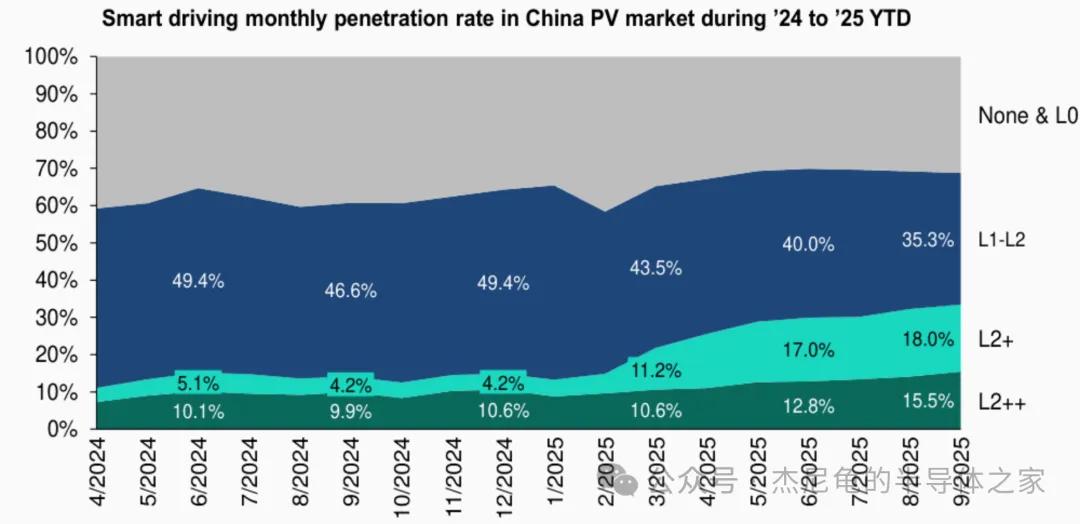
Core Insights - The article highlights the rapid advancements in automotive intelligence, particularly focusing on the penetration rates of various smart driving technologies and the latest developments from key players in the industry. Group 1: Key Developments in Automotive Intelligence - Xiaopeng Motors launched the second-generation VLA, Robotaxi, the new generation IRON, and two flight systems, all with clear mass production plans [10][39] - Pony.ai announced that its fourth-generation autonomous truck family will enter mass production next year [13] - WeRide received a pure unmanned license for its Robotaxi in Switzerland, marking a significant milestone in its global strategy [14] - Horizon Robotics deepened its strategic cooperation with Volkswagen Group to enhance smart driving capabilities [18] - Black Sesame Intelligence introduced the SesameX platform, aiming to revolutionize robotics with comprehensive intelligence [19] - Hesai Technology secured exclusive laser radar supply contracts for Li Auto's new generation of assisted driving platforms [20] - Youjia Innovation is accelerating the large-scale deployment of its unmanned logistics vehicle, the Xiaozhu T5 [21] Group 2: High-Frequency Core Data Updates - As of September 2025, the penetration rate of 800 million pixel cameras in passenger vehicles reached 67.8%, with an increase of 8 percentage points year-on-year [4] - The penetration rate of L2 and above smart driving functions in passenger vehicles reached 34.8%, up 19 percentage points year-on-year [5] - The penetration rate of laser radar in passenger vehicles was 12.2%, reflecting a year-on-year increase of 5.3 percentage points [5] - The penetration rate of OTA (Over-The-Air) updates in passenger vehicles reached 78.1%, with a year-on-year increase of 5 percentage points [6] Group 3: Market Performance and User Engagement - Xiaopeng Motors reported a record high of 42,013 new car deliveries in October 2025, a year-on-year increase of 76% [39] - Li Auto delivered 31,767 new vehicles in October 2025, with a cumulative delivery of 1,462,788 vehicles [42] - The cumulative mileage of Li Auto's assisted driving system reached 55.1 billion kilometers, with significant safety achievements [42][43]



德银深度研究:2026年科技硬件行业七大核心主题与投资机会
Zhi Tong Cai Jing· 2025-12-11 14:19
Group 1: Semiconductor Market Trends - Severe memory shortages are driving a reevaluation of semiconductor equipment targets, with DRAM spot prices soaring by 300%-400% in the past three months, reaching $17 per GB for DDR4 and $13-14 per GB for DDR5 [2] - NAND flash market is experiencing similar trends, with core benchmark products seeing a 200% price increase over the last three months, and contract prices rising by 20%-60% [2] - The memory shortage is expected to continue until at least 2027, leading to significant increases in wafer fab equipment spending, particularly benefiting companies like ASML, VAT Group, and SUSS MicroTec [3][4] Group 2: AI and Component Supply Challenges - AI investments are crowding out supply for non-AI components, leading to potential shortages in memory, passive components, and optical components, which could impact consumer electronics, smartphones, PCs, and automotive electronics [4] - The automotive electronics sector is less affected due to dedicated production lines for automotive-grade products [5] Group 3: Optical and Testing Innovations - AI data centers are driving a surge in bandwidth demand, leading to advancements in optical components and the transition to higher-speed pluggable optical devices [3] - The testing sector is undergoing a structural transformation due to increased chip complexity and rising failure costs, with companies like Technoprobe expanding testing coverage to improve quality [6] Group 4: GaN and Power Semiconductor Opportunities - The shift to 800V architecture in AI data centers, driven by Nvidia, is creating opportunities for GaN technology, similar to the impact of SiC in Tesla applications [8] - AI processor power consumption is projected to grow from 7GW in 2023 to over 70GW by 2030, creating significant market opportunities for suppliers addressing power challenges [9] Group 5: Edge AI and Local Processing - Edge AI is gaining traction, with companies like AMD noting its growth potential, although it remains in the experimental phase [10] - Ambarella anticipates that its defined "edge AI" market will account for 80% of its total revenue by 2025, covering various applications [10] Group 6: Localization of Semiconductor Production in China - There is a significant shift in China's semiconductor capabilities, with local manufacturers facing increased pressure for domestic procurement and improving their scale and quality [11] - The year 2026 is expected to be pivotal as the market recognizes the potential shrinkage of Western companies' market size in China [11][12]
城区辅助驾驶下探至十万级,规模化拐点将至
Guan Cha Zhe Wang· 2025-12-11 13:29
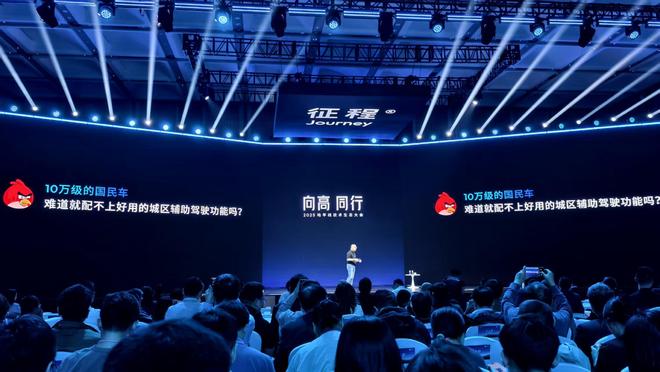
Core Insights - Horizon's unique advantage lies in its "ecosystem" that spans both hardware and software, aiming to make advanced driver assistance systems (ADAS) accessible to a broader market [1][12][20] - The company plans to introduce a city driving assistance solution priced for vehicles in the 100,000 RMB range, targeting mass-market adoption [2][5] Group 1: Market Positioning - Currently, only three models in the 100,000 to 150,000 RMB range support city driving assistance, with two of them utilizing Horizon's HSD solution [2] - Horizon's strategy is to transition high-level ADAS from a technology breakthrough to widespread availability, positioning it as the "automatic transmission of the new era" [2][5] Group 2: Technological Development - Horizon's HSD 600 solution, based on the J6P chip with 560 TOPS, is already in mass production for models priced between 130,000 and 150,000 RMB [7] - The upcoming HSD 300 solution, utilizing two J6M chips with 128 TOPS each, aims to further reduce costs while maintaining city driving assistance capabilities [7][8] Group 3: Industry Dynamics - The automotive market may undergo significant changes if Horizon's HSD systems become prevalent in vehicles priced below 200,000 RMB, as this could democratize access to advanced driving technologies [9] - The transition from highway to city NOA (Navigation on Autopilot) presents challenges for many automakers, requiring substantial investments in data centers and model training [10] Group 4: Collaboration and Ecosystem - Horizon is shifting from a hardware-centric model to a more collaborative approach, offering its HSD Together model to partners, which includes sharing AI technology and model services [12][13] - The company has already partnered with various firms, including a joint venture with Volkswagen, to enhance its ecosystem and expand its market reach [14] Group 5: Broader Applications - Horizon is also expanding into the robotics sector, becoming a major computing platform for consumer robots, which complements its automotive initiatives [16][20] - The company's dual focus on automotive and robotics ecosystems positions it as a foundational capability provider rather than just a chip supplier [20][22]
11月车市基本符合预期,英伟达开源VLA模型
CAITONG SECURITIES· 2025-12-11 13:00
Group 1: Automotive Market Overview - In November, the national retail sales of passenger cars reached 2.225 million units, a year-on-year decrease of 8.1% and a month-on-month decrease of 1.1%, aligning with the initial forecast of a "low start, medium growth, and stable end" trend for the year [5][11][20] - Cumulative retail sales for the year reached 21.483 million units, reflecting a year-on-year growth of 6.1%. The growth rate fluctuated throughout the year, with a notable slowdown in the fourth quarter due to high base effects from the previous year [5][11][20] - The "old-for-new" subsidy policy has been a significant driver for growth, with over 11.2 million applications for subsidies by the end of October, although the average daily subsidy scale dropped to 30,000 units in November due to the suspension of subsidies in various regions [5][11][20] Group 2: Intelligent Driving Developments - NVIDIA has officially open-sourced its new Vision-Language-Action (VLA) model, Alpamayo-R1, marking a significant shift in autonomous driving technology from mere behavior imitation to deeper causal reasoning [6][33] - The model's dataset, approximately 100TB in size, has been uploaded to the open-source community, indicating a move towards more accessible high-end autonomous driving models [6][33] Group 3: Investment Recommendations - The report suggests focusing on companies with strong positions in automotive intelligence and leading software capabilities, including Rui Ming Technology, Dao Tong Technology, Hei Zhi Ma Intelligent, Horizon Robotics, and others [8][39]

地平线:智驾“国产平替芯”,能扳倒英伟达吗?
3 6 Ke· 2025-12-11 11:51
Core Insights - The electric vehicle (EV) industry is facing overcapacity and declining net profit margins as it transitions from electric vehicles to smart vehicles, with user experience upgrades driving the shift towards intelligent driving technology [1] - Horizon Robotics, a key player in the domestic intelligent driving chip market, is set to launch its high-end J6P chip in 2025, aiming to compete with Nvidia [1][2] Market Space for Intelligent Driving Chips - The penetration rate of intelligent driving features in new energy vehicles is accelerating, with only 11% of new cars in China equipped with L2+ level ADAS in 2024, but expected to rise significantly by 2025 [3][4] - The demand for higher computing power in advanced intelligent driving systems is increasing, with current mainstream solutions requiring nearly 500 TOPS, which is 4-5 times that of high-speed NOA [5][9] Competitive Landscape - The intelligent driving chip market is characterized by low domestic production rates, with significant room for domestic replacement [25] - Major competitors include traditional automotive chip companies, consumer electronics chip companies, startup intelligent driving firms like Horizon Robotics, and automakers developing their own chips [25][27] Horizon Robotics' Position - Horizon Robotics is positioned as a leading domestic player in the intelligent driving chip market, with a market share of 30-40% in 2024 [1][36] - The company is focusing on a cost-effective approach with its J6P chip, which is expected to be priced significantly lower than Nvidia's offerings, enhancing its appeal to mass-market automakers [50][53] Future Market Projections - The market for intelligent driving chips is projected to grow at a CAGR of 36% from 2025 to 2030, reaching a market size of 79.3 billion yuan [17] - The average value of chips per vehicle is expected to increase from approximately 716 yuan in 2024 to nearly 3000 yuan by 2030, driven by the rising share of high-performance chips [19][21]
极越汽车发布致债权人通知,未登记、维护车辆应立即停止使用;Waymo明年将在超20城推出网约车业务,包括东京和伦敦丨汽车交通日报
创业邦· 2025-12-11 10:15
Group 1 - Waymo aims to launch ride-hailing services in over 20 cities, including Tokyo and London, by next year, with a cumulative ride volume exceeding 14 million since 2025, projected to surpass 20 million by year-end [2] - Toyota partners with Wolfspeed to integrate silicon carbide devices into its onboard charging systems for electric vehicles [2] - BAIC Group collaborates with Horizon Robotics to develop an urban assisted driving system, utilizing Horizon's chips for a comprehensive city navigation system [2] Group 2 - Lantu Motors launches its flagship sedan, Lantu Zhaiguang L, priced from 279,900 yuan, featuring an 800V intelligent hybrid system and advanced smart driving capabilities [2] - Jiyue Automotive issues a notice to creditors regarding the status of vehicles and equipment, advising immediate cessation of use for unregistered and unmaintained vehicles due to potential legal risks [2][3]




AD智驾的2025年:监管刹车、技术狂飙,“地大华魔”四雄争霸
3 6 Ke· 2025-12-11 09:55
Core Insights - The automotive industry in 2025 has seen a significant shift towards safety and responsibility, moving away from exaggerated claims about autonomous driving technology [1][3] - The Chinese Ministry of Industry and Information Technology has banned the term "autonomous driving," leading to a more realistic portrayal of the technology by car manufacturers [3][5] Industry Developments - The narrative around autonomous driving has changed, with companies now focusing on "assisted driving" and "intelligent driving assistance" instead of "autonomous driving" [3][5] - The industry is characterized by two main trends: advancement in technology and democratization of intelligent driving [5][11] Key Players and Innovations - Xiaopeng Motors has introduced a second-generation VLA model that eliminates the "middleman" in the translation process, allowing for direct machine understanding of physical environments [6][7] - BYD launched the "Tian Shen Zhi Yan" high-level intelligent driving system, targeting the 100,000 yuan market with various versions, including features like highway NOA and automatic parking [11][13] - Geely has also entered the market with its own intelligent driving system, offering multiple versions with varying capabilities [11][13] Competitive Landscape - Tesla's role has evolved, with Chinese companies no longer viewing it as the sole leader in intelligent driving technology [13][14] - Horizon Robotics has gained traction with its end-to-end architecture and aims to make urban NOA widely available, achieving significant market share in the autonomous driving sector [19][21] - DJI's subsidiary, Zhuoyue Technology, has focused on practical applications and has made strides in the European market, showcasing its capabilities in urban NOA [22][24] Strategic Collaborations - Huawei has formed numerous partnerships across the automotive industry, providing comprehensive intelligent driving solutions to various manufacturers [25][28] - Momenta has expanded its collaboration network significantly, working with multiple brands to implement its driving assistance solutions [29][31] Challenges and Future Outlook - Despite advancements, the industry faces challenges related to user trust and the potential for misuse of autonomous driving systems [33][34] - The ongoing evolution of intelligent driving technology is expected to continue, with a focus on making it accessible to a broader market while addressing safety and ethical concerns [35][36]
AI碰到天花板?地平线苏菁再“开麦”:智驾苦日子又要来了
Di Yi Cai Jing· 2025-12-11 09:01
Core Insights - The current generation of deep learning technology may be reaching a bottleneck, leading to a phase of optimization rather than fundamental theoretical breakthroughs in autonomous driving over the next three years [1][3] - The transition from rule-based to data-driven paradigms in autonomous driving is exemplified by Tesla's FSD V12, which integrates perception, decision-making, and control into a single neural network model [2] - The industry is expected to see significant advancements in L2 level assisted driving, with urban driving assistance becoming more common in vehicles priced around 100,000 yuan [2] Group 1 - The sentiment in the autonomous driving industry is mixed, with some experts expressing skepticism about the future potential of AI and AGI in the next three to five years [3] - The cost of developing and testing end-to-end systems is extremely high, with estimates suggesting that a single round of testing could cost around 1 billion yuan, highlighting the financial risks involved [3] Group 2 - The adoption of end-to-end technology in the autonomous driving sector is anticipated to unify methodologies for L2 and L4 levels, enhancing the driving experience while reducing deployment costs [2] - The shift towards more human-like driving systems is expected to create a significant growth period for L2 level assisted driving technologies [2]
对话斯年智驾CEO何贝:L4 智驾公司的宿命,是大集成商或大运营商丨L4十人谈
雷峰网· 2025-12-11 07:00
Core Viewpoint - The future of L4 autonomous driving companies is to become large integrators or major operators like Didi, as indicated by the founder of Sien Intelligent Driving, He Bei [1]. Group 1: Background and Development - He Bei graduated from Tsinghua University and joined Baidu in 2015, where he contributed to the development of autonomous driving technology [2][3]. - The early team at Baidu iV saw many members, including He Bei, leave to start their own ventures, driven by differing views on the future of autonomous driving technology [3][4]. - He Bei's initial focus was on a cost-effective, vision-based approach to autonomous driving, which contrasted with Baidu's emphasis on high-definition maps [4][10]. Group 2: Company Overview and Achievements - Sien Intelligent Driving, founded by He Bei in 2020, has completed eight rounds of financing and aims to achieve profitability by 2025 [4][5]. - The company has established strategic partnerships with two of the world's top three ports, Ningbo-Zhoushan and Qingdao, and has implemented solutions in key port areas [5][6]. - Sien Intelligent Driving's revenue is projected to reach around 500 million yuan in the coming year, with the company currently experiencing a slight loss [24][26]. Group 3: Market Challenges and Opportunities - The primary challenge for autonomous trucks is the difficulty in monetizing services, as clients are often reluctant to pay for autonomous vehicle operations despite the apparent market potential [6][35]. - The autonomous driving industry has experienced various waves of interest, with the current focus shifting towards logistics, ports, and mining [23]. - He Bei believes that the commercial value of autonomous vehicles is clearer in port operations compared to other sectors, as these environments have a more mature level of information technology [15][16]. Group 4: Future Outlook and Strategy - Sien Intelligent Driving plans to focus on delivery, customer acquisition, and expanding into international markets, with potential clients in Singapore, Brazil, and Abu Dhabi [36][37]. - The company aims to become a major player in the L4 commercial vehicle sector, emphasizing the importance of system integration capabilities and deployment efficiency [18][30]. - He Bei envisions Sien Intelligent Driving evolving into a large integrator, potentially diversifying through partnerships and acquisitions rather than solely expanding its own operations [39].
