
荣盛石化

Search documents
能源成本下行-看好商品周期与科技主线需求共振-能源及有色行业2026年度投资策略
2026-01-12 01:41
Summary of Key Points from Conference Call Records Industry Overview - The conference call discusses the energy and non-ferrous metal industries, focusing on commodity cycles and market dynamics in 2026 [1][2]. Core Insights and Arguments - **Commodity Cycle Dynamics**: The acceleration of commodity cycle rotation is influenced by global economic recovery and pandemic impacts, similar to the commodity volatility seen after the collapse of the Bretton Woods system in the 1970s. It is challenging to determine the current cycle position, necessitating a comprehensive analysis of various commodities to identify patterns [1][2]. - **Oil Prices and Commodity Volatility**: Oil prices are highly correlated with overall commodity volatility, serving as a benchmark for energy costs. Gold has started to rise as a leading indicator, but other commodities have not followed suit significantly, likely due to the lack of a clear upward trend in oil prices [1][4]. - **Gold Price Influences**: The price of gold is affected by the transition between the old and new world orders. Currently, gold is viewed as a safe-haven asset amid the remnants of the old world wealth. Historical trends show that after the decoupling of the dollar from gold in 1971, significant price increases in gold and other commodities occurred due to excessive dollar issuance [5]. - **U.S. Treasury Credit and Precious Metals**: The loosening of U.S. Treasury credit post-2009 financial crisis has led to increased market preference for precious metals as a hedge. Despite multiple interest rate cuts by the Federal Reserve, Treasury yields have not significantly decreased, indicating a weakening preference for Treasury securities [6]. - **Future Gold Price Trends**: A long-term downward expectation for the U.S. dollar index, driven by an expanding trade deficit and potential appreciation of the Renminbi, suggests that gold prices may have room to rise [7]. - **Oil Supply and Demand**: Short-term oil supply and demand are heavily influenced by political factors, while long-term demand changes will have a more significant impact on price volatility. Current U.S. inventory increases and stable Chinese supply contribute to short-term price stability, but long-term demand fluctuations could lead to potential volatility [8]. - **U.S. Oil Production and Price Forecast**: U.S. oil production has seen a year-on-year increase of approximately 300,000 barrels, but the number of drilling rigs is declining. The forecast for oil prices in 2026 is expected to fluctuate between $40 and $70 per barrel, with a more stable range of $50 to $70 per barrel if political factors are excluded [9][10]. Additional Important Insights - **Energy Costs in China**: Domestic energy costs are stable, with sufficient supply in coal and natural gas, leading to no significant price increases. Electricity prices are expected to have limited rebound potential due to overall cost constraints [11]. - **Non-Ferrous Metals Market**: The aluminum market is expected to remain in a supply-demand imbalance due to limited domestic production capacity and stable demand growth. Copper prices are projected to range between $11,000 and $15,000 per ton in 2026, driven by increasing demand in power construction and unstable production in major copper mining regions [12][13]. - **Domestic Economic Impact on Metal Demand**: The demand for non-ferrous metals is closely tied to domestic economic development, particularly in sectors like real estate and automotive. A positive GDP outlook suggests continued growth in aluminum demand [14]. - **Global Copper Inventory and Consumption**: As of September 2025, global electrolytic copper inventory was 1.451 million tons, with a consumption increase of 3% year-on-year, indicating a stable demand environment [15]. - **Challenges in the Copper Market**: The domestic copper market faces challenges such as resource scarcity and price increases affecting downstream procurement. Additionally, cyclical patterns in the manufacturing sector impact demand [16][17]. - **Cable Demand in China**: There is strong demand for cables driven by investments in power generation and infrastructure, with a rebound in terminal electrical equipment demand noted [18]. - **Silver Market Dynamics**: The silver market is influenced by financial attributes, with increased speculative demand as gold prices rise. Industrial demand, particularly from photovoltaic and electronics sectors, is expected to support silver prices [19]. - **Rare Earth Industry Development**: The rare earth industry in China is positioned as a competitive sector, benefiting from trends in high-end manufacturing and energy equipment [20]. - **Commodity Market Trends**: The commodity market is experiencing structural demand resonance rather than short-term volatility, with significant implications from U.S. monetary policy and inflation on commodity prices [21]. - **Investment Recommendations**: Suggested investments include resource companies like PetroChina and CNOOC, integrated firms such as Hengli and Rongsheng, and non-ferrous metal companies like Yun Aluminum and Huadong Cable. Additionally, companies in the rare earth sector are noted for their potential [22].
2026年硫磺涨势延续 荣盛石化产能TOP3迎高景气红利
Quan Jing Wang· 2026-01-12 00:59
Core Viewpoint - The sulfur market is experiencing a strong upward trend in prices due to tightening supply and demand dynamics, with significant price increases reported from major exporting countries in the Middle East [1][2]. Supply and Demand Dynamics - The sulfur supply-demand balance in China for 2026 is expected to be tight, with a structural gap continuing to widen, leading to a "tight balance" as the main theme for the year [2]. - Only two new or expanded sulfur production facilities are planned for 2026, adding a total capacity of 500,000 tons per year, with uneven production schedules [2]. - Downstream demand is projected to grow significantly, with 15 new facilities planned, resulting in an additional sulfur consumption capacity of approximately 3.29 million tons per year [2][3]. Price Trends - The latest sulfur prices from Qatar and the UAE for January 2026 are reported at $517 and $520 per ton, respectively, reflecting increases of $22 and $25 per ton from the previous month [1]. - The domestic sulfur price is expected to rise, with predictions that it could exceed 5,000 yuan per ton and potentially reach 6,000 yuan per ton in optimistic scenarios [5]. Market Structure - The sulfur industry in China is highly concentrated, with major players like Sinopec, PetroChina, and Rongsheng Petrochemical dominating the market, collectively holding over 70% of the total production capacity [4]. - The total sulfur production capacity in China has reached approximately 16.79 million tons, but future capacity expansion is limited due to government policies on crude oil processing [4]. Profitability Outlook - The increase in sulfur prices is expected to significantly enhance profits for leading companies, with estimates suggesting that a price increase of 100 yuan per ton could yield billions in profit for top firms [5]. - Rongsheng Petrochemical, with its substantial production capacity and low-cost structure, is projected to achieve a gross profit of around 3.4 billion yuan from its sulfur business [5].





最高增长28倍 投资者回报“浙江样本”这样炼成
Zheng Quan Shi Bao· 2026-01-11 16:55
Core Viewpoint - The capital market serves as a "barometer" for the real economy, with listed companies in Zhejiang actively fulfilling social responsibilities and enhancing investor returns, thereby contributing to a healthy capital market ecosystem [1] Investor Return Initiatives - During the 14th Five-Year Plan (2021-2025), listed companies in Zhejiang achieved significant growth in investor return measures, with total dividends reaching 443.901 billion yuan, a 115.29% increase compared to the previous five-year period [1] - Share buybacks increased dramatically, with 396 companies repurchasing shares worth 74.819 billion yuan, a 28-fold increase from the previous period [1] - Important shareholders in 343 companies increased their holdings by nearly 34.5 billion yuan, a 16.73% rise compared to the previous five-year period [1] Dividend and Buyback Trends - Cash dividends and share buybacks are the most direct ways for listed companies to return value to investors, with Zhejiang companies distributing a total of 443.901 billion yuan in dividends during the 14th Five-Year Plan [2] - The average dividend payout ratio has been increasing annually, reaching 46.71% in 2024, surpassing the national average [2] - By the end of the 14th Five-Year Plan, 111 listed companies had cumulatively paid dividends exceeding their total capital market financing, accounting for nearly one-fifth of the total number of companies in the region [1] Leading Companies and Their Contributions - Notable companies such as Hikvision, Zheshang Bank, and Hangzhou Bank have cumulatively distributed over 100 billion yuan in dividends during the 14th Five-Year Plan [2] - In 2025, the total cash dividends from listed companies in Zhejiang are expected to exceed 1 trillion yuan, nearly doubling from 2020 [2] - Companies like Hikvision have maintained a high actual dividend payout rate of over 50%, with cumulative cash dividends reaching 68.5 billion yuan since its IPO [3] Shareholder Confidence and Buyback Strategies - Important shareholders in 343 companies executed 2,849 buyback transactions, totaling nearly 34.5 billion yuan, indicating strong market confidence [5] - Companies like Rongsheng Petrochemical have initiated significant buyback plans, with total investments nearing 10 billion yuan [5] - Hikvision's share buyback efforts have been complemented by shareholder increases, with significant purchases made by its controlling shareholder [6] Investor Relations Management - Effective investor relations management is crucial for maintaining communication between listed companies and investors, enhancing transparency and governance [8] - Companies in Zhejiang have improved their investor relations frameworks, with the number of companies receiving investor research increasing from 197 to 519 during the 14th Five-Year Plan [8] - Innovative communication methods, such as cloud tours and online meetings, have been adopted to enhance investor engagement [9]
多项产品出口退税政策调整,不改中国产业竞争优势
Orient Securities· 2026-01-11 15:38
Investment Rating - The industry investment rating is maintained as "Positive" [5] Core Viewpoints - The adjustment of export tax rebate policies does not alter the competitive advantage of China's chemical industry. The cancellation of export tax rebates for various chemical products is expected to increase export costs, reflecting China's energy and waste treatment capabilities. Despite theoretical concerns about competitiveness, high energy-consuming products like PVC lack global expansion capacity, and the price increase due to VAT will not significantly change competitive dynamics [2][7] - Market rumors do not change the profit recovery opportunities in the industry. Reports of regulatory discussions regarding monopolistic risks have led to stock price corrections for leading chemical companies. However, the industry is still in a self-rescue phase, with production cuts not aimed at achieving monopolistic profits but rather at facilitating recovery from previous losses [2][7] Investment Recommendations and Targets - Recommended leading companies in the refining industry include Sinopec (600028, Buy), Rongsheng Petrochemical (002493, Buy), and Hengli Petrochemical (600346, Buy). The report also highlights recovery opportunities in various chemical sub-industries, such as MDI leader Wanhua Chemical (600309, Buy) and PVC-related companies like Zhongtai Chemical (002092, Not Rated), Xinjiang Tianye (600075, Not Rated), Chlor-alkali Chemical (600618, Not Rated), and Tianyuan Co., Ltd. (002386, Not Rated). In the phosphoric chemical sector, companies like Chuanheng Co., Ltd. (002895, Not Rated) and Yuntianhua (600096, Not Rated) are noted for their growth potential driven by rapid energy storage growth. In the oxalic acid sector, attention is drawn to Hualu Hengsheng (600426, Buy), Huayi Group (600623, Buy), and Wankai New Materials (301216, Buy) [3]


——基础化工行业周报:多晶硅、丁二烯价格上涨,关注反内卷和铬盐-20260111
Guohai Securities· 2026-01-11 13:03
Investment Rating - The report maintains a "Recommended" rating for the chemical industry [1] Core Insights - The chemical industry is expected to experience an upward cycle due to the implementation of "anti-involution" policies in China and the accelerated exit of some European facilities [29] - The report highlights the potential for domestic substitution of semiconductor materials from Japan due to rising geopolitical tensions, which could benefit various companies in the sector [5] - The chromium salt industry is undergoing a value reassessment driven by increased demand from AI data centers and commercial aircraft engines, with a projected supply-demand gap of 340,900 tons by 2028 [8] Summary by Sections Industry Performance - The chemical industry has shown strong relative performance with a 1-month increase of 10.7%, 3-month increase of 9.6%, and a 12-month increase of 45.1%, outperforming the CSI 300 index [3] Price Trends - Key products such as lithium carbonate and polysilicon have seen significant price increases, supported by policy guidance and industry self-discipline [12] - The price of chromium salts has remained stable, with metal chromium priced at 82,000 CNY/ton as of January 9, 2026 [15] Investment Opportunities - Focus on companies with low-cost expansion capabilities, such as Wanhu Chemical and Hualu Hengsheng, as well as those in sectors with improving market conditions like chromium salts and phosphates [6][9] - High dividend yield opportunities are identified in state-owned enterprises like China Petroleum and China National Chemical [10] Key Company Tracking - Companies such as Dongfang Shenghong and Huabei Yihua are highlighted for their earnings potential, with projected EPS growth for 2026 [30] - The report tracks specific price movements for various chemicals, including a notable increase in the price of ammonium phosphate and a stable price for urea [17][19]



中国上市公司“第一大省”:拥有889家,总市值超过浙江+江苏
Sou Hu Cai Jing· 2026-01-11 06:08
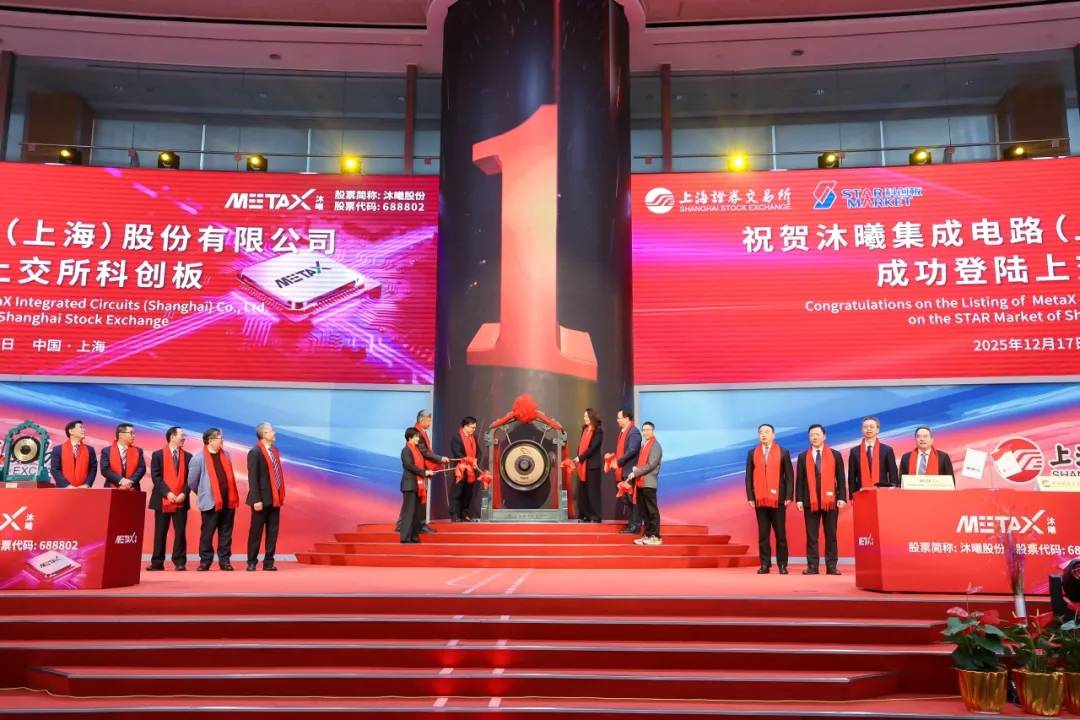
Group 1 - The capital market serves as a "barometer" for China's economy, with listed companies acting as the "locomotive" for economic development. By the end of 2025, there will be 5,469 listed companies in China, with a total market capitalization of 123 trillion yuan. In 2025, 116 new companies are expected to be listed, representing a 16% increase compared to 2024, raising a total of 131.77 billion yuan, primarily in sectors like computer, communication, and electronic equipment manufacturing [1] Group 2 - Shanghai ranks fifth with 452 listed companies, adding 8 new companies last year. Notably, the company Muxi Co., which specializes in high-performance GPU chips, has sold over 25,000 units by the end of March 2025 [3] - Beijing holds the fourth position with 481 listed companies and a total market capitalization of 30.6 trillion yuan, the highest in the country. It has 48 companies with a market value exceeding 100 billion yuan, primarily consisting of state-owned enterprises and large tech and financial firms [3] Group 3 - Jiangsu ranks third with 721 listed companies and a total market capitalization of 8.95 trillion yuan. It added 29 new companies last year, the highest in the country, with a focus on manufacturing and strategic emerging industries [5] - Suzhou has become the leading city for new listings, with 12 new companies, supported by a robust industrial ecosystem and a systematic service mechanism for companies preparing to go public [5] Group 4 - Zhejiang is in second place with 731 listed companies and a total market capitalization of 9.18 trillion yuan. The capital city, Hangzhou, has 231 listed companies, followed by Ningbo with 124 [5] - By the end of last year, Zhejiang had 10 companies with a market value exceeding 100 billion yuan, with four located in Hangzhou [6] Group 5 - Guangdong remains the top province with 889 listed companies and a total market capitalization of 19.32 trillion yuan, reflecting a 29% year-on-year growth. It added 21 new companies last year, including notable firms like Marco Polo and Stone Innovation [8] - Guangdong has 30 companies with a market value exceeding 100 billion yuan, with Industrial Fulian leading at 1.2322 trillion yuan [8] Group 6 - The distribution of listed companies across various exchanges shows Guangdong leading with 32 on the Beijing Stock Exchange, 92 on the Shanghai Stock Exchange's Sci-Tech Innovation Board, and 324 on the Shenzhen Stock Exchange's Growth Enterprise Market [9] - Jiangsu follows with 56 on the Beijing Stock Exchange and 222 on the Shanghai Stock Exchange's main board [9]
大炼化周报:长丝下游清库回款情绪愈发浓厚,终端需求偏弱-20260111
Xinda Securities· 2026-01-11 05:35
Investment Rating - The report does not explicitly state an investment rating for the oil refining industry Core Insights - The downstream demand for polyester filament is weak, leading to increased inventory levels and a heightened sentiment for clearing stock and receivables as the Chinese New Year approaches [2] - The price spread for domestic key refining projects is 2502.21 CNY/ton, with a slight increase of 0.76 CNY/ton (+0.03%) week-on-week, while the price spread for foreign key refining projects is 1152.16 CNY/ton, showing a decrease of 67.70 CNY/ton (-5.55%) [3] - Brent crude oil's average price for the week ending January 9, 2026, is 61.61 USD/barrel, reflecting a week-on-week increase of 0.27% [2] Summary by Sections Refining Sector - The international oil price has fluctuated due to geopolitical tensions, particularly concerning Venezuela and Iran, with Brent and WTI prices rising by 2.59 USD and 1.80 USD per barrel respectively from January 2 to January 9, 2026 [13] - Domestic refined oil prices have slightly decreased, with diesel, gasoline, and aviation kerosene averaging 6405.29 CNY/ton, 7551.57 CNY/ton, and 5258.57 CNY/ton respectively [13] Chemical Sector - Chemical product prices are experiencing fluctuations, with polyethylene prices showing stability while polypropylene prices are under pressure due to increased maintenance of production facilities [2] - The price of EVA has increased slightly, with a current average of 9600.00 CNY/ton, while the price of pure benzene remains stable at 5300.00 CNY/ton [49] Polyester & Nylon Sector - The polyester and nylon industry chain prices are stable, with PTA prices slightly decreasing and the demand for polyester filament continuing to decline [2] - The sentiment for clearing stock is growing stronger as textile market orders are limited, leading to increased inventory levels [2]
25家中国化企上榜全球研发投入2000强(附名单)
Zhong Guo Hua Gong Bao· 2026-01-11 04:33
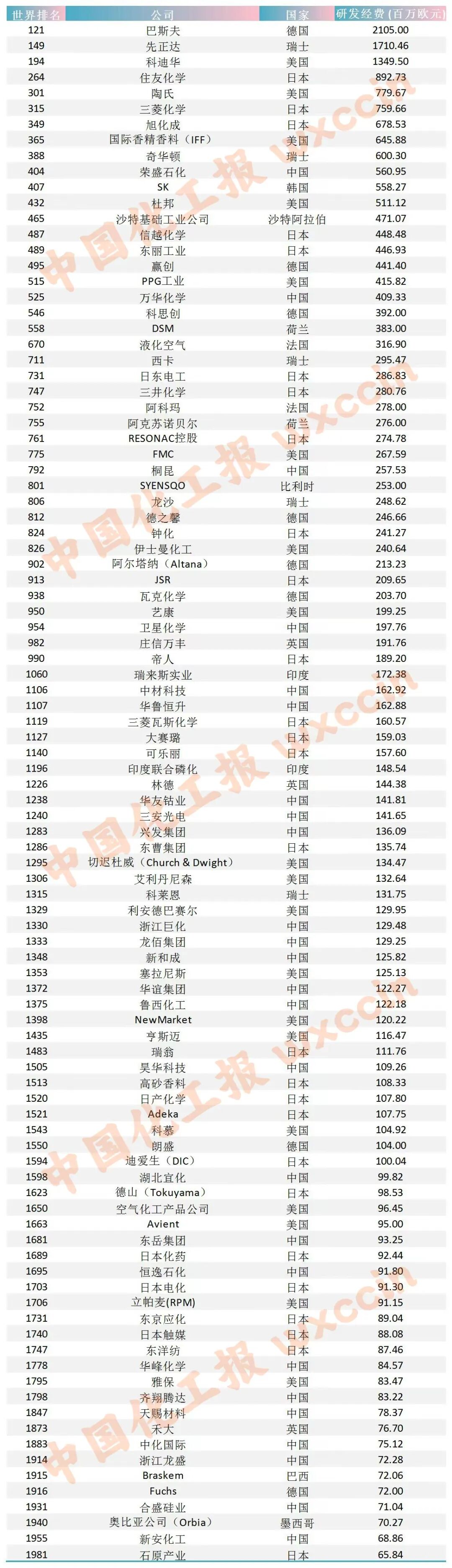
Group 1 - The European Commission's report on the "2025 EU Industrial R&D Investment Scoreboard" reveals that 25 Chinese chemical companies are among the top 2000 global industrial R&D investors for 2025 [1] - Among the top 2000 companies, there are 98 chemical firms, with a total R&D investment of €26 billion in 2024, averaging €1.32 million per chemical company [2] - BASF leads the chemical industry with an R&D investment of €2.1 billion in 2024, ranking 121st overall; Syngenta ranks 149th with €1.71 billion, and Corteva ranks 194th with €1.34 billion [2] Group 2 - By country, Japan has the highest number of companies on the list with 27, followed by China with 25, the USA with 19, Germany with 8, and Switzerland with 5 [3] - The total R&D investment of the top 2000 companies in 2024 is €144.6 billion, accounting for over 90% of global corporate R&D investment [3] - The top ten companies globally include Amazon, Alphabet (Google's parent company), Meta (Facebook's parent company), Microsoft, Apple, Huawei, Samsung Electronics, Volkswagen, Johnson & Johnson, and Intel [4] Group 3 - The detailed list of the top chemical companies includes BASF (Germany), Syngenta (Switzerland), Corteva (USA), and others, with their respective R&D expenditures listed in millions of euros [5][6] - Notable Chinese companies in the list include Rongsheng Petrochemical (ranked 404th with €560.95 million), Wanhua Chemical (525th with €409.33 million), and others [5][6] - The report highlights the competitive landscape of the chemical industry, showcasing significant investments in R&D by various global players [2][3]


硫磺价格在博弈中震荡前行,绿色能源开年内外利好共振
Guotou Securities· 2026-01-11 04:03
Investment Rating - The industry investment rating is maintained at "Outperform the Market - A" [4] Core Views - The sulfur price is experiencing fluctuations due to supply-demand dynamics, with a short-term supply guarantee not fundamentally altering the long-term tight resource situation. The expected global sulfur supply-demand gap for 2026 is projected to be -5.13 million tons, indicating a strategic revaluation of sulfur resources in the long term [2][16] - The recent restructuring between Sinopec and China Aviation Oil is expected to enhance the integration of oil refining and distribution, potentially accelerating the commercial use of Sustainable Aviation Fuel (SAF) in China [3][7] Summary by Sections 1. Core Insights of the Week - The market is witnessing a rebound in oil prices, with Brent crude reaching $63.05 per barrel, reflecting a 3.7% increase. This is driven by geopolitical tensions affecting supply expectations [14] - The chemical sector is gaining attention due to a better-than-expected Producer Price Index (PPI) recovery, indicating potential for upward valuation in the sector [15] 2. Chemical Sector Performance - The basic chemical industry index increased by 3.7% in the week, outperforming major indices like the Shanghai Composite and ChiNext [21] - Among 26 sub-sectors, 25 experienced gains, with the top performers being modified plastics (+9.5%) and inorganic salts (+7.2%) [26] 3. Stock Performance in the Chemical Sector - In the basic chemical sector, 373 out of 424 stocks rose, with notable gainers including Prit (42.6%) and Sanfu (32.3%). Conversely, stocks like Evergrande High-Tech saw declines of 13.1% [28][29] 4. Investment Focus Areas - The report suggests focusing on four main investment lines: 1. Upstream resource assets with strong profit certainty, particularly in phosphorus and sulfur [16] 2. Supply-side optimization under "anti-involution" policies, targeting sectors with high concentration and price elasticity [17] 3. Low-valued leading stocks in the sector, as capital expenditure cycles slow down [18] 4. New productivity investments aligned with green energy and advanced materials [20]
2025年1-11月中国化学纤维产量为7931.8万吨 累计增长5%
Chan Ye Xin Xi Wang· 2026-01-10 02:19
Group 1 - The core viewpoint of the article highlights the growth in China's chemical fiber industry, with a reported production of 7.56 million tons in November 2025, reflecting a year-on-year increase of 6.4% [1] - Cumulative production from January to November 2025 reached 79.318 million tons, marking a cumulative growth of 5% [1] - The article references a report by Zhiyan Consulting, which analyzes the market operation status and investment prospects of the chemical fiber industry in China from 2026 to 2032 [1] Group 2 - The listed companies in the chemical fiber sector include Xinxiang Chemical Fiber, Hengli Petrochemical, Huafeng Superfiber, Rongsheng Petrochemical, Jilin Chemical Fiber, Tongkun Co., Zhongtai Chemical, Nanjing Chemical Fiber, Taihe New Materials, and Aoyang Health [1] - The data source for the production statistics is the National Bureau of Statistics, with the information organized by Zhiyan Consulting [1] - Zhiyan Consulting is described as a leading industry consulting firm in China, providing comprehensive industry research reports, business plans, feasibility studies, and customized services [1]

