极氪

Search documents
摩洛哥跑步进入“黄金五年”,中国企业海外淘金涌入北非明珠
Hua Xia Shi Bao· 2025-12-18 09:45
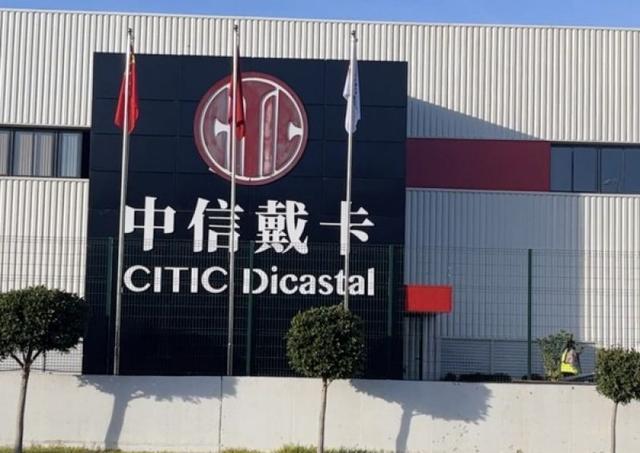
Group 1 - Morocco is positioning itself as a prime investment destination, especially for Chinese companies, due to its unique geographical advantages and upcoming major events like the 2026 Africa Cup and the 2030 World Cup, which are expected to create a "golden five years" of development opportunities [2][5][7] - The Moroccan government has invested over $8 billion in infrastructure over the past decade, enhancing the investment environment and making it attractive for foreign investors [5][7] - The new Investment Charter offers targeted and attractive subsidy schemes, including a 17.5% preferential tax rate for companies registered in specific areas, and significant tax exemptions for companies in industrial acceleration zones [13][14] Group 2 - Morocco's economy is projected to grow at an average rate of 2.5% from 2015 to 2024, with an expected increase to 4.0% in 2025, enhancing its appeal as an investment destination [7][10] - The country has signed free trade agreements with 56 countries, allowing products to bypass trade barriers and directly access both African and European markets [10][12] - The automotive industry is a key sector, with Morocco becoming Africa's largest vehicle manufacturer and the leading exporter of cars to the EU, supported by companies like Renault and Chinese firms such as CITIC Dicastal [16][19] Group 3 - The renewable energy sector, particularly in electric vehicle battery production, is highlighted as a significant opportunity, with Morocco possessing vast phosphate reserves essential for lithium iron phosphate batteries [16][19] - The establishment of industrial zones like the Tangier Tech City, which is a collaboration between Chinese companies and the Moroccan government, aims to attract more Chinese enterprises in sectors such as automotive, textiles, and renewable energy [19][20] - The presence of Chinese companies in Morocco is growing, with numerous firms already operating in various sectors, indicating a strong bilateral economic relationship [17][19]


中国燃油车30年没搞定MPV,这次看新能源了
3 6 Ke· 2025-12-18 07:45
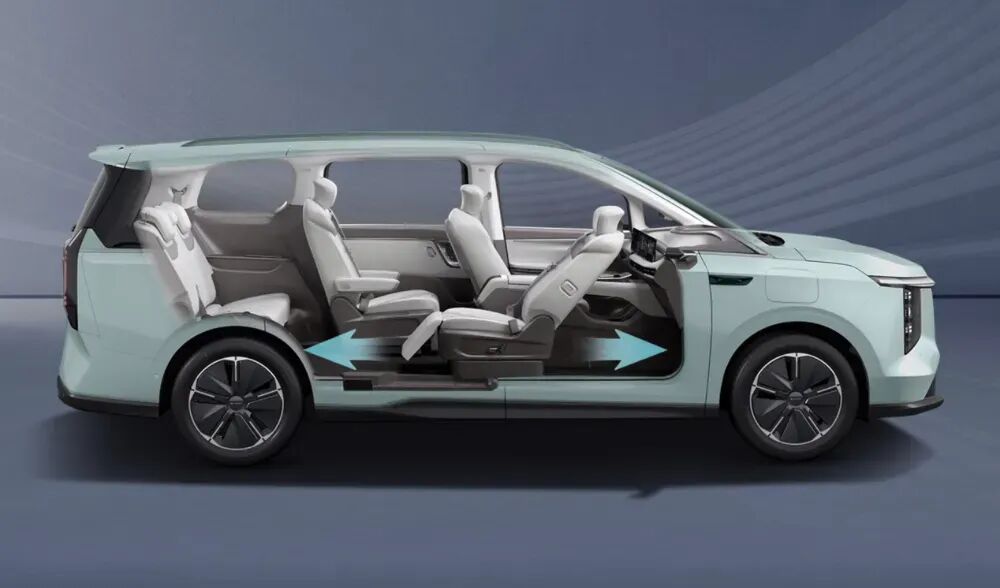
Core Insights - The new energy vehicle (NEV) sector has captured nearly half of the Chinese automotive market this year, posing a significant threat to established giants like Germany's BBA and Japan's Toyota [1] - The MPV (Multi-Purpose Vehicle) segment has seen intense competition, with a notable decline in overall market share, while high-end NEV MPVs are rapidly gaining traction [5][7] Market Overview - In 2016, the Chinese MPV market reached a peak with annual sales of 2.55 million units, holding a market share of 10.5%. However, sales have declined for four consecutive years, dropping to 960,000 units and a market share of 4.1% by 2022 [3] - In 2023, MPV sales slightly rebounded to 1.093 million units, but are projected to fall again to 952,000 units in 2024, lower than 2022 levels [3][4] High-End MPV Market - Despite the overall decline in the MPV market, the high-end segment is expanding rapidly, with models like the Denza D9, Lantu Dreamer, and Wey Mountain quickly capturing market share [5][7] - The high-end MPV market is characterized by luxury features and a focus on quality travel experiences, which contrasts with the declining demand for lower-end models [7] Consumer Behavior and Market Dynamics - The perception of MPVs as symbols of wealth and power persists, particularly in the business context, where models like the Toyota Alphard and Buick GL8 serve as status symbols [10][12] - The Chinese MPV market has been influenced by historical factors, including the one-child policy, which has limited the demand for larger family vehicles compared to other markets [18][19] Future Outlook - The MPV segment in China is at a crossroads, requiring manufacturers to innovate and adapt to changing consumer preferences, particularly in the context of family-oriented features and personal space [28][29] - The demand for MPVs in regions like Hong Kong and Southeast Asia remains strong, highlighting the need for a tailored approach to meet diverse market needs [24][27]
工信部再发文,不再惯着「反人类设计」,新国标专治难用的门把手
3 6 Ke· 2025-12-18 02:23
Core Viewpoint - The Ministry of Industry and Information Technology (MIIT) has released a draft for "Safety Technical Requirements for Automotive Door Handles," which significantly impacts the design of hidden door handles, emphasizing safety and reliability over aesthetics [1][18]. Group 1: Regulatory Changes - The new regulations explicitly prohibit non-traditional handle designs, particularly electronic buttons, unless they are accompanied by permanent markings for user guidance [3][5]. - The regulations require that if the operation of a door handle is not intuitive, a clear instruction must be placed nearby, which could detract from the vehicle's luxury appeal [5][10]. Group 2: Safety Concerns - The MIIT has identified major safety issues with current designs, including insufficient strength, control logic vulnerabilities, and difficulties in identification and operation during emergencies [2][11]. - The new rules mandate that door handles must allow for mechanical release without tools in case of accidents or power failures, ensuring that passengers can exit safely [8][11]. Group 3: Industry Response - Companies like Great Wall Motors have decided to revert to traditional mechanical door handles due to the added weight and complexity of hidden mechanisms, which can compromise vehicle reliability [1][18]. - The industry is already shifting towards more conventional designs, as seen in new models from various manufacturers, indicating a trend away from complex electronic systems [22]. Group 4: Implementation Timeline - New models must comply with the regulations starting January 1, 2027, while existing models have until January 1, 2029, to meet the new standards [18][22].


比亚迪、极氪、小鹏齐发力 中国车企“组团”叩关韩国
Zhong Guo Qi Che Bao Wang· 2025-12-18 01:27
Core Insights - The Korean automotive market, traditionally dominated by local brands like Hyundai and Kia, is becoming a new target for Chinese automakers as they seek to expand internationally [2][10] Group 1: Market Entry Strategies - BYD has officially entered the Korean passenger car market, planning to establish a network of 30 showrooms and 25 service centers by the end of the year [5] - Zeekr, a brand under Geely, has signed agreements with four major Korean dealers to establish a high-end sales network, aiming to leverage their experience in the luxury car segment [3][4] - Xpeng Motors has registered a local entity in South Korea and is preparing to enter the market, indicating a growing interest among Chinese EV manufacturers [6] Group 2: Historical Context and Challenges - The initial entry of Chinese cars into Korea faced challenges due to limited model offerings and low brand recognition, but advancements in technology and the EV sector have improved their market position [4][10] - The Korean automotive market is characterized by high barriers to entry, with local brands holding a significant market share of around 70%, making competition fierce for new entrants [8][11] Group 3: Market Dynamics and Growth Potential - The Korean electric vehicle market is experiencing rapid growth, with a 49% increase in sales of electric vehicles among the top five local manufacturers in the first three quarters of 2025 [10] - The demand for electric vehicles is supported by government policies and increasing consumer awareness of environmental issues, providing a strategic window for Chinese automakers [10] Group 4: Competitive Landscape - Major international brands like Tesla and German automakers dominate the imported vehicle market in Korea, with Tesla's models accounting for a significant share of the electric vehicle segment [9][11] - Chinese automakers must differentiate themselves through product quality and localized services to compete effectively against established brands [11]

2026年各大车企新车规划揭秘
Xin Lang Cai Jing· 2025-12-17 12:59
Core Insights - The Chinese automotive market is expected to face intense competition in 2026, particularly in the new energy vehicle (NEV) sector, following significant developments in 2025 [1][34] - Major automakers are planning to launch new models in response to the anticipated challenges of 2026, with a focus on advanced driving technologies and competitive pricing [1][34] Company Plans Huawei's Hongmeng Zhixing - Hongmeng Zhixing will launch multiple new models in 2026, including the Wanjie M6, a mid-large SUV priced between 250,000 to 300,000 yuan, and the Zhijie V9, Huawei's first MPV [4][37] - The Wanjie M6 is expected to fill the market gap between the Wanjie M5 and M7, with a length of around 5 meters and a wheelbase of approximately 3 meters [4][37] - The company will also introduce a revamped Wanjie M5 and potentially a new Wanjie M9 L model [4][37] Xiaomi - Xiaomi's YU9, its first range-extended model, is anticipated to be a three-row, six-seat SUV over 5.2 meters long, with an expected price around 300,000 yuan [6][40] - The YU9 is likely to feature an 80 kWh battery pack with a pure electric range exceeding 400 km, aiming to compete directly with models like the Wanjie M8 and Li Auto L9 [6][40] Li Auto - Li Auto's L9 will undergo significant upgrades in 2026, focusing on smart driving, smart cockpit, powertrain, and chassis systems [10][42] - The new model is expected to reach a length of 5.3 meters and will include a new self-developed chip and advanced battery systems [10][42] Leap Motor - Leap Motor plans to introduce five new models in 2026, including the D19, a large SUV over 5.2 meters long, and the A10, a small pure electric SUV [14][45] - The D19 will offer both pure electric and range-extended versions, with the latter featuring an 80.3 kWh battery and a pure electric range of 720 km [14][45] XPeng Motors - XPeng will launch over ten models in 2026, including three super range-extended models in the first quarter [16][47] - The highlight will be a new large SUV, G01, featuring a range-extended powertrain and a battery capacity of 63.3 kWh, with a pure electric range exceeding 400 km [16][47] NIO - NIO plans to release two SUVs, the ES9 and ES7, in 2026, with the ES9 being a flagship model larger than the ES8 [19][49] - The ES7 will be a five-seat pure electric mid-large SUV, expected to be priced around 250,000 yuan [19][49] Volkswagen - Volkswagen's ID.ERA series will debut in 2026, featuring multiple pure electric and hybrid models, including a large SUV with a range exceeding 1000 km [21][50] - The Passat ePro will also be launched, utilizing a new PHEV platform with a 30 kWh battery [21][50] Toyota - GAC Toyota's flagship model for 2026 will be the BZ7, a mid-large pure electric sedan equipped with advanced driving systems and priced around 200,000 yuan [25][52] - The BZ7 will feature a battery capacity of 88.13 kWh, offering a range of up to 710 km [26][52] Nissan - Nissan's NX8 will be a significant model in 2026, featuring an 800V high-voltage platform and a range-extended version with a 1.5T engine [28][53] - The NX8 will have dimensions of 4870 mm in length and will include advanced driving systems [28][53] Audi - Audi's E7X, a mid-large pure electric SUV, will be launched in 2026, featuring a 300 kW motor and a range exceeding 700 km [30][55] - The E7X will also include advanced driving technologies and a high-voltage battery system [30][55] Zeekr - Zeekr's 8X is set to launch in early 2026, focusing on performance with a starting price of around 350,000 yuan [32][57] - The model will feature advanced battery technology and a sophisticated suspension system [32][57] Market Outlook - The 2026 automotive market is expected to be challenging, with potential impacts on consumer purchasing behavior due to increased costs associated with new energy vehicle taxes [58] - The market is poised for significant changes as automakers adapt to evolving consumer demands and competitive pressures [58]

车企打响L3冲刺赛
华尔街见闻· 2025-12-17 10:25
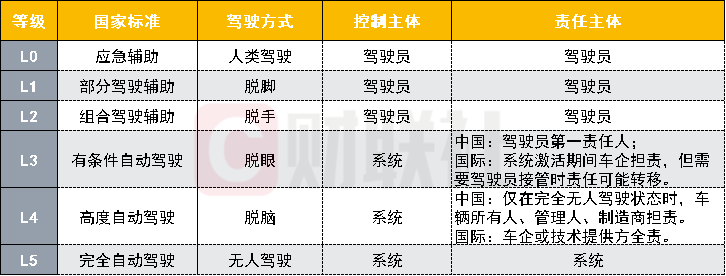
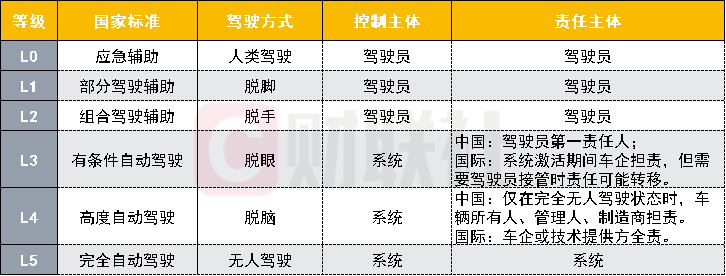
以下文章来源于Auto有范儿 ,作者柴旭晨 就在准入车型公布的同一天,华为车BU发文称极狐阿尔法S采用的是乾坤智驾ADS系统,搭载了 包含三颗激光雷达在内的34颗高性能传感器。这意味着,在华为的托举下,北汽成功入围L3智驾 赛道。 随后,小鹏、理想也先后官宣获得L3级道路测试牌照,后续分别在广州、北京两个城市开展常态 化L3级道路测试;华为的鸿蒙智行以及比亚迪则已联合深圳相关部门开启L3级有条件自动驾驶内 测。小鹏、极氪等品牌也宣布,其市售车型已经为L3级自动驾驶做好了硬件预埋。 显然,车企们已经在高阶智驾的赛道上摩拳擦掌。然而,透过宣发的喧嚣,我们看到的并非技术的 瞬间爆发,而是一场更为谨慎、克制且漫长的马拉松起跑。 根据此次工信部的发文,深蓝SL03和极狐阿尔法S这两款车型将分别在北京和重庆的路段开展L3 测试工作,且有一定的限制。 其中,深蓝SL03的准入场景目前仅限指定路段的交通拥堵环境下高速公路和城市快速路单车道 内,极狐阿尔法S的准入场景目前限定在指定的高速公路和城市快速路单车道内。测试路段主要围 绕机场快速、城市快速等相对封闭且没有行人混杂的路段展开。 Auto有范儿 . 讲述独特的汽车故事。 ...

具身智能产业深度研究(七):新一代“蓝领”:人形机器人如何站上工厂流水线
Haitong Securities· 2025-12-17 06:28
Investment Rating - The report does not explicitly state an investment rating for the industry Core Insights - In industrial scenarios, humanoid robots are primarily suited for handling and quality inspection tasks, with a focus on ROI and the potential for expansion into more processes as their generalization capabilities improve [1][10][11] - The market demand for humanoid robots in China's industrial sectors, including automotive manufacturing, electronics manufacturing, and logistics warehousing, is projected to reach 484,000 units by 2035, with a market space exceeding 48 billion yuan [4][12] Summary by Sections 1. Core Insights - Humanoid robots are best suited for handling and quality inspection tasks, gradually expanding into basic assembly tasks as their capabilities develop [3][11] - The commercial viability hinges on achieving a return on investment (ROI) within two years, necessitating a reduction in robot prices to around 100,000 yuan and efficiency improvements to match human performance [3][11] 2. Industrial Manufacturing Flexibility - The demand for flexibility in manufacturing is increasing, with humanoid robots starting from short-chain tasks and gradually taking on more complex tasks [2][16] - Humanoid robots complement industrial robots, adapting to flexible production needs and enhancing operational efficiency [2][17] 3. Market Potential - The total demand for humanoid robots in the industrial sector is expected to reach 484,000 units by 2035, with a market potential of 48.36 billion yuan [4][12] - Collaboration between automotive companies and robotics firms is crucial for the deployment of humanoid robots in industrial settings, with companies like Tesla and XPeng leading the way [4][12]


16只L3自动驾驶产业链概念股曝光(名单)
2 1 Shi Ji Jing Ji Bao Dao· 2025-12-16 23:20
市场热度背后是中国L3级自动驾驶商业化进程的实质性突破。 12月16日,无人驾驶概念集体活跃,截至午盘,汉鑫科技(920092.BJ)30CM涨停,万集科技 (300552.SZ)、浙江世宝(002703.SZ)、翠微股份(603123.SH)、北汽蓝谷(600733.SH)等涨停, 舜宇精工(920906.BJ)、三友科技( 920475.BJ)等涨超10%。 昨日晚间,工业和信息化部正式公布首批L3级有条件自动驾驶车型准入许可,两款适配城市拥堵与高 速场景的车型将在北京、重庆指定区域开展上路试点,意味着我国L3级自动驾驶从测试阶段向商业化 应用迈出了关键一步。 根据《汽车驾驶自动化分级》国家标准,L3级自动驾驶属于"有条件自动驾驶",即在特定设计运行条件 下,车辆系统可以完全接管动态驾驶任务,允许驾驶员脱手,但驾驶员仍需保持警觉并随时准备接管。 附部分智能驾驶概念股清单(16只): | | | 部分智能驾驶概念股一览 | | | | --- | --- | --- | --- | --- | | 关联类别 | 证券名称 | 总市值 ( 亿元 ) | 年内涨跌幅(%) | 市盈率PE ( TTM ) | | ...


16只L3自动驾驶产业链概念股曝光
2 1 Shi Ji Jing Ji Bao Dao· 2025-12-16 05:45
Core Insights - The news highlights a significant breakthrough in the commercialization of L3-level autonomous driving in China, with the Ministry of Industry and Information Technology officially granting the first conditional licenses for L3 autonomous vehicles [1][3]. Group 1: Market Activity - Several companies in the autonomous driving sector saw their stock prices surge, with Hanxin Technology reaching a 30% limit up, and other companies like Wanjie Technology and Zhejiang Shibao also hitting their daily limits [1]. - The market enthusiasm is driven by the recent regulatory approval for L3-level autonomous vehicles, indicating a shift from testing to commercial application [1]. Group 2: Regulatory Developments - The Ministry of Industry and Information Technology has approved two models for L3-level autonomous driving, which will operate in designated areas of Beijing and Chongqing, marking a critical step towards commercial deployment [1][3]. - The L3-level autonomous driving classification allows vehicles to take over driving tasks under specific conditions, although drivers must remain alert and ready to take control [1][2]. Group 3: Industry Competition - Major automotive companies are competing to establish timelines for mass production of L3 vehicles, with many setting 2025-2026 as a crucial period for development [3][4]. - Companies like GAC Group and Huawei are actively testing their L3 technologies in major cities, preparing for commercial launch [4]. Group 4: Policy and Infrastructure - The recent policy changes have facilitated the expansion of testing areas for autonomous vehicles, with cities like Shanghai and Beijing designating extensive road networks for trials [3]. - The ethical guidelines released by the Ministry of Science and Technology further clarify responsibility in case of accidents, which is essential for the industry's growth [3]. Group 5: Investment Opportunities - The news lists several companies involved in the autonomous driving sector, providing insights into their market capitalization and stock performance, indicating potential investment opportunities [6].


2025年关下的车市 20家车企撒钱补贴,“翘尾效应”为何失灵?
2 1 Shi Ji Jing Ji Bao Dao· 2025-12-15 23:46
Core Viewpoint - The automotive market is experiencing a tug-of-war between the increase in rigid expenses due to the reduction of purchase tax exemptions and the continuation of national subsidy policies like "trade-in" programs, although details remain uncertain [1][14]. Group 1: Tax Policy Changes - Starting January 1, 2026, the purchase tax for new energy vehicles will shift from full exemption to a 50% reduction, with the current tax rate of 10% effectively becoming 5%, and the exemption cap dropping from 30,000 yuan to 15,000 yuan [2][15]. - For a new energy vehicle priced at 300,000 yuan, the purchase tax will be 15,000 yuan, while for a vehicle priced at 500,000 yuan, the tax will be 35,000 yuan after applying the maximum exemption [2][15]. Group 2: Market Reactions and Sales Trends - Despite the proactive measures by over 20 automakers to introduce "tax coverage" policies, the industry remains cautious about the fourth-quarter market outlook, with expectations of no significant "tail effect" as seen in previous years [2][6]. - In December 2023, the retail sales of passenger vehicles dropped to 297,000 units, a year-on-year decrease of 32% and a month-on-month decrease of 8% [3][16]. - The anticipated "tail effect" has turned into a "flat tail," with November retail sales of 2.225 million units showing a year-on-year decline of 8.1% and a month-on-month decline of 1.1% [8][22]. Group 3: Consumer Behavior and Market Dynamics - The uncertainty surrounding the continuation of national and local subsidies has led consumers to adopt a wait-and-see approach, impacting immediate purchasing decisions [7][21]. - The introduction of "tax coverage" policies by automakers has inadvertently altered consumer buying patterns, leading to a decrease in immediate demand for vehicle purchases [6][20]. Group 4: Battery Supply and Demand - The demand for batteries is intensifying, with automakers scrambling to secure supplies due to production constraints caused by battery shortages [9][23]. - The cumulative installed capacity of domestic power batteries reached 578.0 GWh from January to October, reflecting a year-on-year growth of 42.4% [9][23]. - The battery supply is facing pressure from both the automotive sector and the rapidly growing energy storage market, which is diverting production capacity [10][24]. Group 5: Future Market Outlook - The automotive industry is expected to see a growth rate of approximately 3% to 5% for the year, with a cautious consensus forming around the potential for a 3% growth in 2026 as policies gradually phase out [12][26]. - Future opportunities are anticipated to arise from structural adjustments and value exploration, particularly in lower-tier markets and service consumption [13][27].