
可复美

Search documents
食饮吾见 | 一周消费大事件(6.8-6.13)
Cai Jing Wang· 2025-06-13 14:52
Group 1: Company Announcements - *ST Bosen's proposed board election is unrelated to the "Xifeng Liquor backdoor listing" rumors [1] - Anjiu Food Group has passed the listing hearing at the Hong Kong Stock Exchange [2] - Haitian Flavor Industry plans to globally issue 263,237,500 H-shares, with a price range of HKD 35.00 to HKD 36.30 [2] - Unilever (China) has undergone several business changes, with Roland Polaroid Hutabarat becoming the new legal representative [3] Group 2: Industry Developments - Laiyifen has expanded its distribution business to local chain supermarkets in South Korea, Vietnam, and Thailand, increasing its export SKU count to over 30 [1] - Starbucks China has reduced prices on dozens of products, with an average price drop of around 5 yuan for large cups [4] - The average monthly after-tax income for over 8,000 employees at Pang Donglai is approximately 9,000 yuan, with an estimated net profit of 1.5 billion yuan [7] Group 3: Product Testing Results - The collagen content in Kefu Beauty's collagen stick 1.0 was found to be only 0.02%, consistent with previous testing results [6]




小红书启动“拉踩测评”治理:处置账号、限流、给品牌方扣分
Nan Fang Du Shi Bao· 2025-06-03 09:06
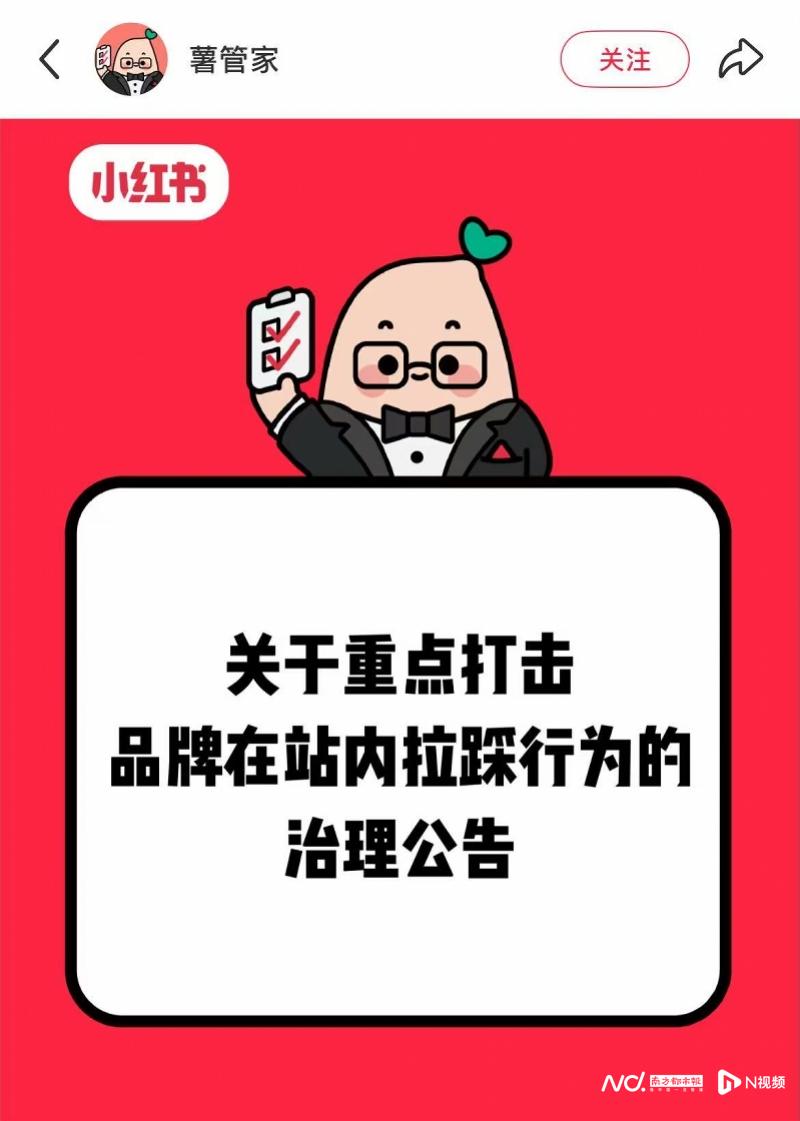
近日,小红书在其官方账号"薯管家"上发布了关于"拉踩测评"的治理公告。公告显示,禁止拉踩的形式包括"竞对 抹黑攻击""误导性对比""非真实舆论引导",对于出现这类"拉踩"内容及水军账号,平台会严格处置内容及背后账 号,同时相关品牌作为利益主体也会被连带限流、扣品牌分。 薯管家 8/00 2 关注 小红书 关于重点打击 品牌在站内拉踩行为的 治理公告 NC Now DN视频 公告显示,小红书定义的"拉踩测评"指通过刻意贬低、恶意对比竞品(如护肤品、母婴用品、数码产品等)的方 式,虚构评测结果或放大产品缺陷,从而达到抬高自身品牌、误导用户决策的内容。 其常见形式包括:一是竞对抹黑攻击,即未对产品做出真实体验及测评,仅在品牌商业合作关系下发布虚假的抹 黑攻击竞对的各类内容。单方面无根据发布多个产品的评分/排行榜/红黑榜,或者对测评产品做出有失公允的负 面评价及贬损。二是误导性对比,即围绕产品外观、使用场景、参数性能、性价比、产品功效等方面,刻意选择 将本品优势与竞对劣势的做不公正局部对比,贬低竞对、同时误导消费者的测评内容。三是非真实舆论引导,即 由测评作者本人或品牌招募水军在测评类笔记评论区做出某品牌的贬低攻击、 ...

寻找消费力 | 直播电商:矛盾型消费倒逼产业带提质
Bei Jing Shang Bao· 2025-05-27 06:07
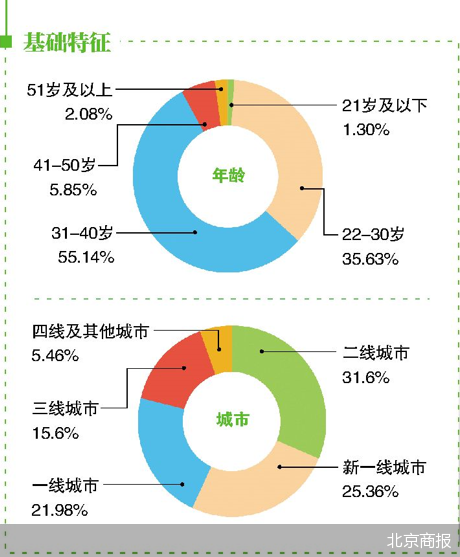
Core Viewpoint - The live streaming industry is experiencing significant changes as consumer demands and perceptions evolve, leading to a more rational approach to purchasing decisions, emphasizing product quality, performance, and price balance [1][4][5]. Group 1: Consumer Behavior Changes - Consumers are becoming more rational and price-sensitive, focusing on product quality and practicality rather than impulsive buying [1][3]. - The age group of 31-40 years constitutes 55.14% of live streaming platform users, indicating that family-oriented consumers are a key audience [3]. - The majority of users on live streaming platforms have a monthly income between 5,000 to 15,000 yuan, with 30.43% earning between 10,000 to 15,000 yuan, suggesting that economic conditions significantly influence their purchasing behavior [3]. Group 2: Quality Expectations - Consumers are increasingly demanding higher quality products in live streaming, leading brands to collaborate with manufacturers to develop proprietary products [4][5]. - The focus has shifted from merely seeking low prices to considering a balance of quality, performance, and price in purchasing decisions [4][5]. Group 3: Impact of Information Transparency - The diversification and transparency of information sources empower consumers to make more informed decisions, as they can access product reviews and feedback from various platforms [9]. - The upcoming implementation of the "Live E-commerce Supervision Management Measures" in 2025 aims to clarify responsibilities within the live streaming ecosystem, enhancing consumer trust [9]. Group 4: Role of Social Media and Word-of-Mouth - Social media and word-of-mouth are becoming increasingly influential in consumer purchasing decisions, with the "grass planting economy" thriving as consumers share experiences and recommendations [10][11]. - Brands are shifting towards "grass planting marketing," collaborating with KOLs and KOCs to showcase product advantages and create emotional connections with consumers [11]. Group 5: Consumer Participation in Product Development - Consumers are becoming key players in product co-creation, with live streaming platforms facilitating real-time communication between brands and consumers [12][13]. - Brands that actively engage with consumers and incorporate their feedback into product development can enhance loyalty and market competitiveness [12][13].
「带妆运动」被嘲,但女孩们值得「既要又要」的选择|营销观察
36氪未来消费· 2025-05-23 08:58
Core Viewpoint - The article discusses the evolving landscape of women's participation in sports and how beauty brands are adapting to this trend by offering smarter solutions for women who incorporate makeup into their athletic routines [2][12]. Group 1: Changing Dynamics in Sports - Social media amplifies beauty anxiety, but the context of sports presents a unique exception where makeup is often questioned [2]. - The 2024 Paris Olympics is highlighted as a pivotal moment showcasing female athletes, with beauty brands playing a significant role in this transformation [2]. - Female viewership in sports is on the rise, with women making up 42% of audiences in traditionally male-dominated sports like football and basketball, a 15% increase since 2018 [4]. Group 2: Impact of Female Athletes - Prominent female athletes in China and abroad are increasingly associated with beauty brands, indicating a shift in marketing strategies within the beauty industry [5][6]. - The choice of female athletes as brand ambassadors is driven by the need for beauty brands to find new growth avenues as traditional marketing methods reach saturation [8]. Group 3: Consumer Behavior and Preferences - Discussions around "sports beauty" are gaining traction, with over 160,000 posts on platforms like Xiaohongshu, indicating a growing interest among consumers [10]. - The target demographic for sports beauty products is urban women who seek efficiency and convenience in their beauty routines while engaging in sports [11]. - Brands are responding to this demand by developing high-performance makeup products that cater to the unique needs of active women, emphasizing portability and multifunctionality [12].

2025年中国护肤品细分矩阵深度解构:精简护肤趋势下,局部专护成新增长点
Tou Bao Yan Jiu Yuan· 2025-05-22 12:05
Investment Rating - The report does not explicitly provide an investment rating for the skincare industry Core Insights - The skincare market is segmented into facial care and body care, with facial care receiving significantly more consumer attention than body care [3][13] - The report highlights the emergence of targeted skincare products, particularly in the neck and chest areas, as new growth points in the body care segment [50][64] Summary by Sections Facial Care - Facial care sets account for over 20% of the market share, with leading brands including L'Oréal, Herborist, and Proya dominating the Taobao market [5][16] - In 2024, facial essence is projected to grow at a rate of 13.2%, becoming a key driver of market growth, with Proya leading sales [27][30] - The top-selling facial care sets on Taobao and Douyin show a significant presence of both international and domestic brands, with domestic brands gaining market share through innovative marketing strategies [23][25] Body Care - Body lotion and cream dominate the body care market, accounting for over 75% of sales, with international brands like L'Occitane and Vaseline leading [56][55] - The neck care segment is identified as the fastest-growing category within body care, with domestic brands like SDX and KAZOO gaining traction [62][64] - The body care market is experiencing a shift towards precision skincare, with targeted products for specific areas like the neck and chest becoming increasingly popular [65][64] Market Trends - The report indicates a trend towards premiumization in certain product categories, such as facial masks, while other segments are seeing a decline in average pricing due to changing consumer preferences [49][45] - The introduction of new products in 2024 is primarily driven by domestic brands, which dominate the market for facial care sets and masks [45][43] - The body care segment is witnessing a diversification of product functions, with consumers increasingly interested in multifunctional products that address various skincare needs [65][66]

新消费重估值?核心推荐观点
2025-05-20 15:24
Summary of Key Points from Conference Call Records Industry Overview Gold and Jewelry Industry - The gold and jewelry industry is undergoing a significant transformation from channel-driven to product-driven, influenced by increased information transparency and consumer sophistication. Brands are innovating in design and craftsmanship to cope with rising gold prices. Valuation varies, with weight-based products valued lower and fixed-price products valued higher, potentially leading to a reevaluation in the context of new consumer sentiment [1][4][7]. - In April 2025, the industry showed decent performance in retail sales data, primarily due to a low base and investment gold's strong influence. However, the beta for jewelry is not ideal, with companies like Changhong Jiahua and Mankalon showing resilience against budget and price pressures [3][4]. - The valuation of the gold and jewelry sector is at historical lows, with weight-based products valued below 15 times earnings and fixed-price products valued around 20 to 30 times. This sector is expected to gain more attention as new consumer sentiment rises [7]. Tea Beverage Industry - The tea beverage industry is shifting from price competition to product innovation, with new products contributing more to revenue and improving average transaction value and gross margins. Leading brands have high market concentration, limiting the survival space for new entrants. Notable performers include Cha Bai Dao and Gu Ming, which excel in product innovation and geographic expansion [1][11][12]. - In Q1 2025, Cha Bai Dao's new product contribution to revenue increased from 10% to 18%, indicating a positive trend in product innovation and pricing strategy [11][13]. - The market share of leading tea brands like Mi Xue Bing Cheng, Gu Ming, and others accounts for approximately 50% of the market, indicating high concentration and competitive dynamics [9][10]. Beauty Industry - The beauty industry is transitioning from channel-driven growth to a focus on comprehensive capabilities. International brands are recovering, and domestic brands are no longer engaging in aggressive price wars. Key areas of interest include collagen restructuring and functional skincare products, with Hong Kong-listed beauty brands valued between 25 to 35 times earnings and expected to grow at a compound annual growth rate of about 30% over the next three years [1][19][20]. - Companies like Shangmei and Mao Ge Ping are adjusting their product lines and expanding into new categories, such as fragrances and body care, to meet urban women's needs [23][24]. Key Companies and Their Strategies Shangmei Co. - Shangmei is leveraging data from Douyin and expanding its product line to seek growth. The brand is transitioning towards a broader market appeal and plans to launch collaborative products with popular IPs [23]. Mao Ge Ping - Mao Ge Ping is restructuring its skincare business and has launched a new fragrance line. The company aims to meet the demands of urban women and is expected to achieve around 30% growth over the next few years [24]. Ke Fu Mei - Ke Fu Mei holds a strong position in the collagen cosmetics sector, with expectations of maintaining approximately 30% growth over the next three years. The company is preparing for medical aesthetics commercialization [25]. Bu Lu Ke - Bu Lu Ke is projected to achieve significant revenue growth, with expectations of reaching 11 to 12 billion yuan in 2025. The company is diversifying its IP portfolio and expanding its market presence [35]. Market Trends and Future Outlook - The overall consumer market is expected to recover, with the beauty sector showing signs of growth despite previous pessimism. The beauty industry is transitioning from a focus on price to product quality and brand-driven growth, with many companies expected to maintain a compound growth rate of around 30% [21][29]. - The medical aesthetics industry is also transitioning from a saturated market to one with growth potential, particularly with upcoming shopping events and new product launches expected to drive performance [32]. Conclusion - The gold and jewelry, tea beverage, and beauty industries are all experiencing significant transformations driven by consumer behavior changes and market dynamics. Companies that adapt to these changes through innovation and strategic positioning are likely to see substantial growth opportunities in the coming years.
618大战打响,淘宝、京东、抖音们有“新招”?
3 6 Ke· 2025-05-20 12:40
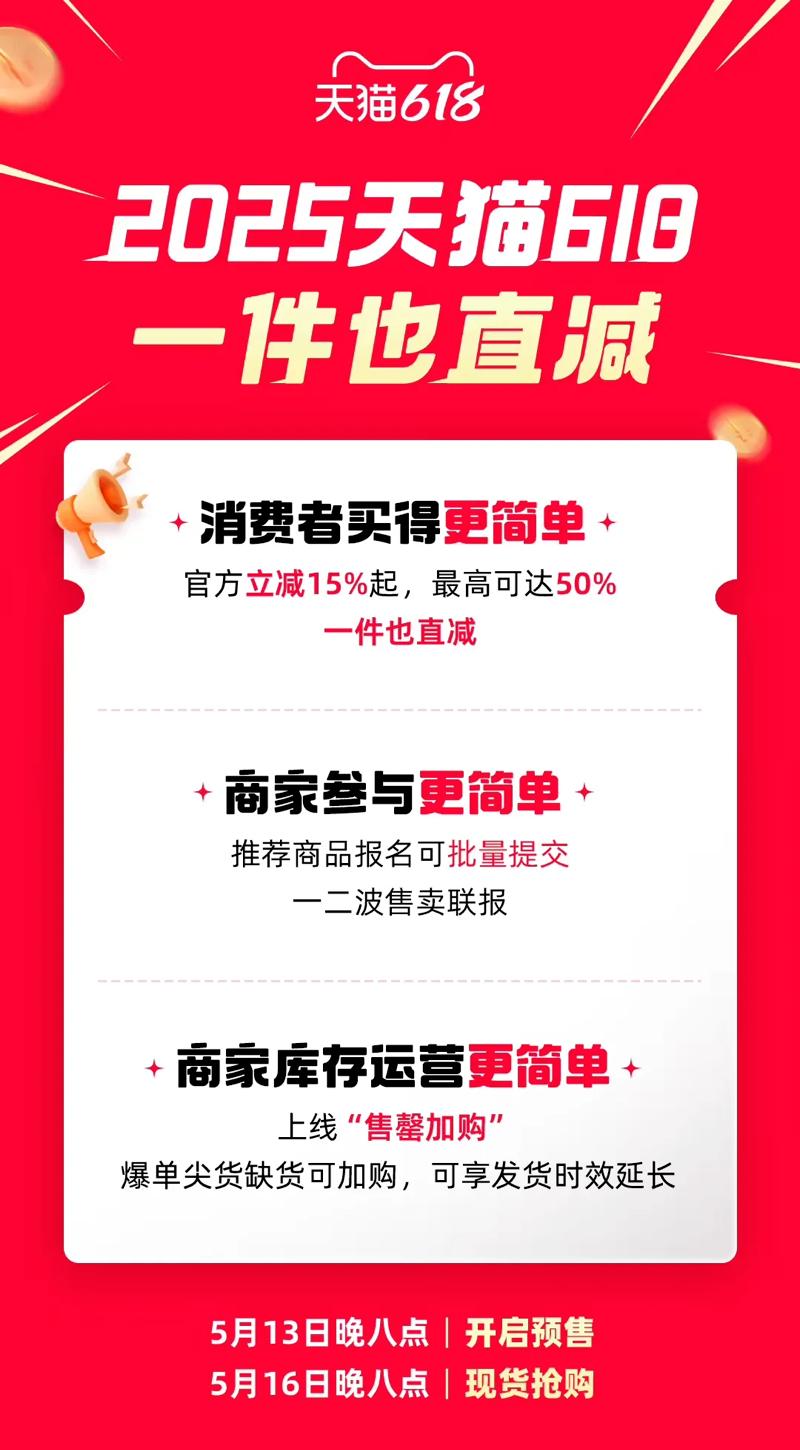
Group 1 - The core viewpoint of this year's 618 shopping festival is a shift from aggressive price competition to simplified promotional strategies, emphasizing collaboration and technology [1][2][10] - The sales performance during the 618 event indicates a rise in consumer rationality, with last year's sales dropping by 7%, marking the first decline in 16 years [1][10] - Major platforms are adopting differentiated strategies, with Taobao and Tmall moving towards direct discounts, while JD.com combines low prices with enhanced services [2][7][10] Group 2 - JD.com has integrated national subsidies with its own promotional resources, allowing consumers to save up to 2000 yuan on select products, while also enhancing service commitments [7][9] - The offline expansion strategy of JD.com includes thousands of self-operated and partner stores participating in the 618 event, aiming for an integrated online and offline shopping experience [9] - Douyin and Kuaishou are also participating in the 618 festival with their own promotional strategies, focusing on live streaming and content-driven sales [10][11] Group 3 - The rise of live commerce and content commerce is evident, with platforms like Taobao, JD.com, and Kuaishou offering significant cash subsidies to boost participation [11][13] - The balance between top influencers and store broadcasts is shifting, with brands increasingly relying on their own channels for sales growth [13][14] - AI tools are being utilized to enhance marketing efficiency, with platforms offering AI-driven insights and digital personas to improve sales performance [14][16] Group 4 - The competition in the food delivery and instant retail sectors has intensified during the 618 period, with major players like JD.com, Meituan, and Taobao engaging in aggressive subsidy strategies [17][18] - Instant retail is emerging as a new growth engine for e-commerce platforms, reshaping traditional retail logic by integrating high-frequency delivery with various product categories [17][18] - The overall competition landscape has evolved from simple subsidies to a multi-dimensional efficiency competition, leveraging instant retail, content commerce, and AI technologies [18]
第一创业晨会纪要-20250520
First Capital Securities· 2025-05-20 05:09
Macro Economic Group - In April, industrial added value increased by 6.1% year-on-year, exceeding WIND's expectation of 5.2%, but down 1.6 percentage points from March. The cumulative year-on-year growth from January to April is 6.45%, which is 0.6 percentage points higher than last year's total [3] - The total retail sales of consumer goods in April nominally grew by 5.1%, lower than WIND's expectation of 5.5%, with a cumulative year-on-year growth of 4.7% from January to April, which is 1.2 percentage points higher than last year [3] - Fixed asset investment cumulative year-on-year growth from January to April is 4.0%, below WIND's expectation of 4.3%, but still 1.0 percentage points higher than last year [3] - The trade surplus for January to April reached USD 368.8 billion, an increase of USD 113.9 billion year-on-year, with a year-on-year growth rate of 44.7% [4] Strategy and Advanced Manufacturing Group - Leap Motor reported a loss attributable to equity holders of RMB 130 million in Q1 2025, significantly reduced from a loss of RMB 1.01 billion in the same period of 2024. Revenue for Q1 2025 was RMB 10.02 billion, a year-on-year increase of 187.1%, driven by a 162% increase in vehicle sales to 87,552 units [7] - The gross margin for Q1 2025 reached a historical high of 14.9%, compared to -1.4% in the same period of 2024 and 13.3% in Q4 2024. The collaboration with Stellantis in Europe provides a competitive advantage for Leap Motor in the European market [7] Consumer Group - In April 2025, the online sales of trendy toys and anime products reached RMB 1.31 billion, with a year-on-year growth rate of 48%, continuing the rapid growth trend from Q1 [10] - Domestic trendy toy brands performed well, with Pop Mart's online sales increasing by 287% year-on-year, and LABUBU series products experiencing a buying frenzy in overseas markets [11] - During the 618 shopping festival, various e-commerce platforms adjusted their promotional strategies, with Tmall starting its campaign earlier and simplifying discount structures, which is expected to significantly reduce return rates [12]
淘天美妆618首轮战况
2025-05-18 15:48
Summary of Conference Call Records Industry Overview - The conference call primarily discusses the beauty and e-commerce industry in China, focusing on the performance of various platforms during the 2025 618 shopping festival, including 淘天集团 (Taotian Group), 京东 (JD.com), 抖音 (Douyin), and 拼多多 (Pinduoduo) [1][2][3]. Key Points and Arguments Performance Metrics - 淘天集团's beauty segment exceeded expectations during the 618 shopping festival, with a GMV growth rate of 10.55% year-on-year, reaching 1,192.3 billion yuan, while the beauty segment specifically achieved a GMV of 98.4 billion yuan, growing 23.15% year-on-year [2][3]. - 京东's overall GMV target for the festival is approximately 2,500 billion yuan, with a growth target of 6.7% [3]. - 拼多多 aims for a GMV of 3,900 billion yuan with a target growth of 23% [3]. - 抖音's target GMV is around 4,800 billion yuan, with a growth target of 30% [3]. Strategic Collaborations and Market Trends - 淘天集团's collaboration with platforms like Tencent, Bilibili, and Xiaohongshu has attracted younger users and high-end consumers, leading to increased average transaction values and purchase frequency [1][4]. - The high-end luxury goods segment saw a sales increase of over 20% year-on-year, indicating a recovery in consumer spending among the middle class and above [4]. - International beauty brands have a higher pre-sale position compared to domestic brands, benefiting from commission reductions [1][5]. Advertising and Cost Management - 淘天集团's customer management fee (CM2) growth rate reached 12%, indicating a decrease in advertising consumption monetization rates, which helps merchants reduce costs [1][3]. - The platform has shifted from a "full reduction" strategy to a "direct reduction" strategy to maintain merchant profit margins while ensuring over 20% growth throughout the shopping period [11]. Sales Performance of Brands - Brands like 珀莱雅 (Proya) and 兰蔻 (Lancôme) reported significant sales, with 珀莱雅 achieving 5.69 billion yuan (12.46% growth) and 兰蔻 reaching 5.39 billion yuan (25.05% growth) [12]. - 国货品牌 (domestic brands) like 可复美 (Cofume) saw a sales increase of 39.62%, reaching 4.51 billion yuan [12][26]. Competitive Landscape - The competition between international and domestic brands is intensifying, with international brands maintaining a conservative pricing strategy to avoid diluting brand value [5][20]. - Domestic brands are leveraging aggressive advertising and competitive pricing to capture market share, with brands like 薇诺娜 (Winona) maintaining good performance through value-for-money strategies [20]. Future Outlook - 淘天集团's annual GMV target is set at 7.8 billion yuan, with a focus on achieving higher growth in Q2 and Q4 [7]. - The DAU (Daily Active Users) target for the platform is 480 million, with an AAC (Average Active Customers) target of 10.4 to 10.9 billion [7]. Additional Important Insights - The shift in promotional strategies, such as the introduction of AI-driven smart coupons, aims to enhance user experience and improve return rates [11]. - The overall market performance has shown significant improvement, with high-end and luxury products outpacing fast-moving consumer goods [5][6]. - The collaboration with influencers like 李佳琦 (Li Jiaqi) continues to play a crucial role in driving sales for both domestic and international brands [12][26]. This summary encapsulates the key insights and metrics from the conference call, highlighting the competitive dynamics and strategic initiatives within the beauty and e-commerce sectors during the 2025 shopping festival.
新消费估值中枢提升,新型烟草&智能眼镜产业迎催化
Xinda Securities· 2025-05-18 08:02
Investment Rating - The industry investment rating is "Positive" [2] Core Viewpoints - The report highlights an increase in the valuation center of new consumption, with new tobacco and smart glasses industries poised for catalysts [2] - The report discusses various sectors including paper, exports, new tobacco, home furnishings, consumer goods, packaging, two-wheelers, gold and jewelry, cross-border e-commerce, IP retail, maternal and child products, beauty care, e-commerce, electrical lighting, and tools, indicating a broad analysis of the light industry [2][3][4][5] Summary by Relevant Sections Paper Industry - As of May 15, the average weekly price of imported needle and broadleaf pulp increased by 1.1% and 0.9% respectively, influenced by overseas supply and easing US-China trade tensions [2] - The report anticipates a gradual recovery in paper prices due to ongoing demand and cost pressures [2] Export Sector - The narrative remains positive with structural growth and overseas capacity as long-term focus areas [2] - Companies like Walmart and YETI reported stable growth, with Walmart's Q1 revenue up by 2.5% year-on-year [2] New Tobacco - The GLO HILO product from British American Tobacco is set to launch in Japan, with expectations for strong performance in 2024 [2] - Sales for various tobacco products are projected to grow, with heated tobacco products (HNB) and nicotine pouches showing significant increases [3] Home Furnishings - The report notes a decline in revenue and net profit for leading companies like Minhua, but anticipates recovery through multi-channel strategies [3] - Companies such as Gujia and Mousse are highlighted for their potential growth in the domestic market [3] Consumer Goods - The report mentions the upcoming 618 shopping festival, with domestic brands showing strong pre-sale performance [3] - Brands like Babycare and Bubululu are noted for their market leadership in specific categories [3] Packaging - Companies like Yongxin and Yutong are performing steadily, with growth in new segments [4] - The report emphasizes the importance of overseas market expansion for these companies [4] Two-Wheelers - Ninebot's cumulative sales have surpassed 7 million units, indicating robust growth in the electric two-wheeler market [4] - New product launches from companies like Niu Electric are also performing well [4] Gold and Jewelry - The report discusses the launch of new product lines and promotional activities by brands like Chao Hong Ji and Lao Feng Xiang [4] - Despite concerns over gold price fluctuations, sales performance remains strong [4] Cross-Border E-commerce - The easing of tariff pressures is seen as a temporary relief for sellers, with a focus on global supply chain strategies [4] - Companies like Anker Innovations and Zhiou Technology are highlighted for their strong global presence [4] IP Retail - The opening of new stores by brands like Pop Mart is expected to attract significant consumer interest [4] - The report notes the potential for increased foot traffic and sales through innovative product launches [4] Maternal and Child Products - The strategic investment by Kidswant in HanSang Technology aims to enhance service ecosystems [5] - The report emphasizes the importance of technology in improving customer experience [5] Beauty Care - Domestic brands are leading in pre-sale rankings for the 618 shopping festival, with significant year-on-year growth in sales [5] - Brands like Proya and Kefu Mei are noted for their strong market presence [5] E-commerce - The report discusses the focus on lower-tier markets and the integration of AI in retail strategies [5] - Companies like Huitongda Network are highlighted for their innovative approaches to market expansion [5] Electrical Lighting - Bull Group is focusing on smart lighting and international expansion, launching new products [5] - The report notes the brand's efforts to enhance its global reputation [5] Tools - The report indicates a recovery in shipments due to easing tariff impacts, with companies like Juxing Technology resuming exports [5] - The ongoing shift in production capacity is noted as a significant trend in the industry [5]