
古茗

Search documents
新茶饮们的“中场战事”,还有 5 大竞赛点
3 6 Ke· 2025-09-22 02:58
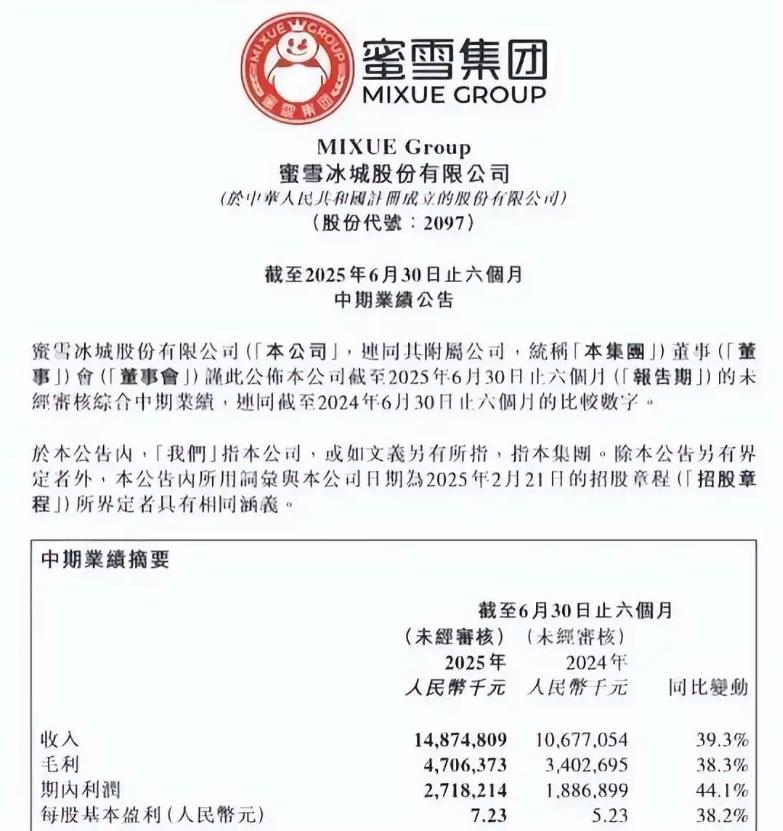
Core Insights - The new tea beverage industry is entering a phase of stock competition as market saturation increases, with six major listed companies reporting a total revenue exceeding 33 billion yuan in the first half of 2025 [1][2][8] Revenue Performance - The total revenue of the six major companies in the new tea beverage sector reached over 33 billion yuan in the first half of 2025, with a significant performance from Mixue Group leading the industry with 14.875 billion yuan in revenue and 2.718 billion yuan in net profit [2][4] - Guming achieved a remarkable net profit growth of 121.5%, with revenues of 5.663 billion yuan and net profits of 1.625 billion yuan [4] - Nayuki's revenue was 2.178 billion yuan, a decrease of 14.4% year-on-year, but its adjusted net loss narrowed significantly by 73.1% [4] Market Dynamics - The industry is experiencing a clear differentiation, with leading brands like Mixue and Guming adapting strategies to navigate intense competition [2][8] - The number of stores has become a crucial revenue driver, with Mixue surpassing 53,000 stores globally, and Guming also crossing the 10,000 store mark [5][8] Product Innovation - Health-focused product innovation is becoming a key differentiator, with brands launching numerous new products aimed at healthier options [9][10] - Nayuki's "No Sugar Natural Nutrition+" initiative and Guming's collaboration with Longjing tea highlight the trend towards integrating health into product offerings [10][16] Cultural Empowerment - Cultural elements are increasingly integrated into product offerings, enhancing brand differentiation and consumer connection [14][18] - Brands like Hushang Ayi and Tea Baidao are leveraging cultural experiences to create unique consumer interactions [16][18] Diversification and Globalization - The new tea beverage brands are diversifying their product lines, with coffee becoming a significant growth area [19][21] - Global expansion is a strategic focus, with brands like Mixue and Bawang Chaji increasing their international presence [22][24][26] Digital Transformation - Digitalization is essential for operational efficiency and product innovation, with brands investing heavily in digital marketing and supply chain management [27] - The competition is shifting towards brands that can effectively utilize data for decision-making and enhance customer experiences [27]

社会服务2025H1中报总结及展望
2025-09-22 00:59
Summary of the Conference Call Records Industry Overview - The social services sector in the first half of 2025 showed uneven recovery, reaching only 79% of 2019 levels. Key areas of growth included K12 training, human resources, and scenic spots, while the travel chain and higher vocational education faced challenges [1][2][26]. Key Points and Arguments K12 Training - K12 training maintained high industry prosperity due to clear policy definitions, contributing positively to the sector's performance [2][3]. Human Resources - The human resources sector experienced significant growth driven by outsourcing and headhunting services, with a reported revenue increase of approximately 30% [3][17]. Scenic Spots - Scenic areas saw both revenue and profit growth, with companies like Xiangyuan Cultural Tourism and Jiuhua Tourism leading the way through asset injections [4][10]. OTA (Online Travel Agency) - The OTA sector, particularly Ctrip, benefited from travel demand, achieving net profit above expectations due to precise overseas spending and strong domestic accommodation and transportation bookings [5][12][26]. Hotel Industry - The hotel sector is nearing a turning point, with average RevPAR down by 4%-5%. However, leading companies like Huazhu and Atour managed to achieve profit growth through operational excellence [5][13][26]. Restaurant and Beverage Sector - The restaurant and beverage industry showed structural highlights despite facing pressures, such as the June alcohol ban. Notable performers included Xiaocaiyuan and Green Tea, with profit growth rates of 35%-36% and 40%, respectively [6][21][23]. Future Outlook - Strong operational companies are expected to outperform in the second half of the year and into 2026. The hotel industry is anticipated to see a supply curve slowdown, indicating a potential turning point. Flight booking data for the upcoming National Day shows a year-on-year increase of 5.7%, suggesting a continued recovery in travel demand [7][8][26]. Xiangyuan Cultural Tourism - Xiangyuan Cultural Tourism is expected to further develop through asset injections and is actively building an online platform to create private traffic [9]. Jiuhua Tourism - Jiuhua Tourism reported a robust performance with a 20% increase in visitor numbers, benefiting from favorable timing and improved transportation access [10]. Challenges and Opportunities in Scenic Areas - Scenic areas face challenges such as increased customer acquisition pressure and rising sales costs. However, those with unique resources, like Jiuhua Mountain and Changbai Mountain, are expected to attract visitors and improve profitability [11]. Investment Recommendations - Investment opportunities are recommended in the OTA sector, particularly Ctrip, and in the hotel sector, with a focus on companies like Shoulv and Huazhu. The restaurant sector also presents potential with companies like Xiaocaiyuan and Green Tea [26][27][29]. Other Important Insights - The duty-free industry is currently in an adjustment phase, with a 9% decline in sales but a 20% increase in average transaction value. The focus is on identifying the turning point in this sector [14][15]. - The professional services industry is embracing AI technology to enhance efficiency and reduce costs, with notable advancements in recruitment and event management [16]. - The education sector is seeing varied performance, with companies like China Oriental Education showing resilience and growth potential through strategic adjustments [18][19][28]. This summary encapsulates the key insights and developments within the social services sector and its sub-industries, highlighting both challenges and opportunities for investors.

抹茶再掀热潮,古茗、奈雪、茶百道抢着推这种“浓”新品
3 6 Ke· 2025-09-22 00:13
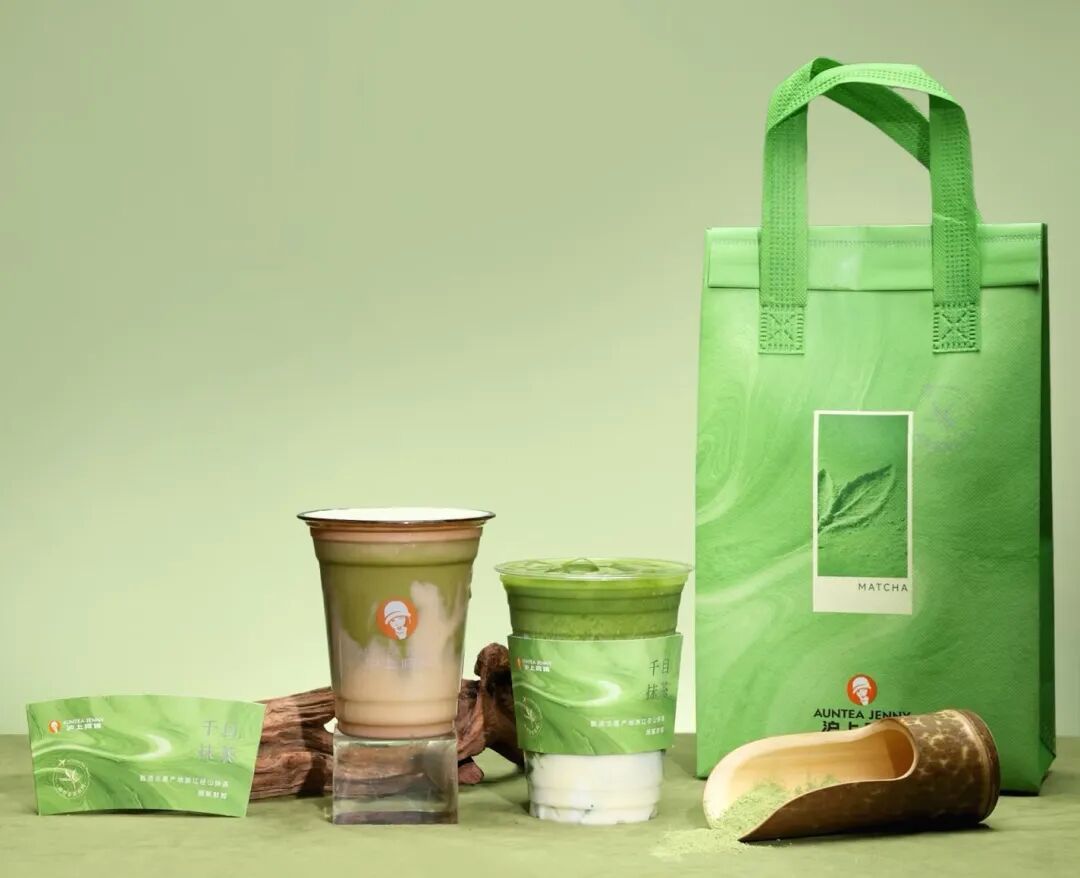
Core Insights - The beverage industry is experiencing a surge in matcha products, with major brands like Mixue Ice City, Nayuki, and others launching new offerings that cater to the autumn and winter seasons, indicating a shift in consumer preferences towards richer flavors [1][3][5] Group 1: Market Trends - Major brands have introduced a variety of matcha products since September, with notable launches including "Thousand Eye Matcha Cheese Rice Cake" and "Thousand Eye Matcha Coconut Daifuku" by Hu Shang A Yi, which combine matcha with unique ingredients to enhance flavor [1][3] - The trend of matcha products has evolved from a refreshing summer offering to a more robust and rich flavor profile suitable for colder seasons, with brands focusing on creating comforting and hearty beverages [7][8] Group 2: Product Innovations - New matcha products are increasingly incorporating ingredients like rice cakes and cheese, moving away from lighter combinations to more indulgent pairings that enhance the overall taste experience [10][12] - The term "Thousand Eye" has become a standard in new matcha products, indicating a focus on quality and refinement, with brands emphasizing the use of finely milled matcha from Zhejiang Jing Mountain [12][14] Group 3: Consumer Preferences - The versatility of matcha allows it to be paired with various ingredients, including fruits and dairy, making it adaptable to different beverage formats and appealing to a broader consumer base [15][17] - The industry is recognizing that matcha's appeal extends beyond seasonal boundaries, with brands actively developing new products that leverage matcha's rich flavor profile for autumn and winter [19]

财信证券晨会纪要-20250922
Caixin Securities· 2025-09-21 23:56
Group 1: Market Overview - The Shanghai Composite Index closed at 3820.09, down 0.30% [1] - The Shenzhen Component Index closed at 13070.86, down 0.04% [1] - The ChiNext Index closed at 3091.00, down 0.16% [1] - The STAR 50 Index closed at 1362.65, down 1.28% [1] - The CSI 300 Index closed at 4501.92, up 0.08% [1] Group 2: Economic Insights - President Xi Jinping held a phone call with US President Trump discussing the stability and development of China-US relations [16][18] - The State Council is researching the implementation of domestic product standards in government procurement [19][20] - The Ministry of Industry and Information Technology is preparing the "14th Five-Year Plan" for the new battery industry to prevent low-level repeated construction [21] Group 3: Industry Dynamics - Gu Ming (1364.HK) reported a 41.2% increase in revenue and a 119.8% increase in profit for the first half of 2025 [26][27] - NVIDIA invested $5 billion in Intel common stock to jointly develop customized data center and personal computing products [28][29][30] - The Chinese smart glasses market saw a 145.5% year-on-year increase in shipments in Q2 2025, with audio and audio capture glasses leading the growth [32][34] Group 4: Company Tracking - Shenghong Technology (300476.SZ) issued shares at a price 113.81% above the base price [35][36] - Huadian Co., Ltd. (002463.SZ) is planning to list on the Hong Kong Stock Exchange [37][39] - Anhui Heli (600761.SH) intends to acquire 51% of Anhui Jianghuai Heavy Engineering Co., Ltd. to enhance its core competitive advantages [40][41]
海外消费周报:海外教育:营利性分类管理条件成熟,市场化改革推动高校扩张,承接增量高教需求-20250921
Shenwan Hongyuan Securities· 2025-09-21 14:43
Group 1: Industry Investment Rating - The report maintains a positive outlook on the overseas education sector, indicating a favorable investment rating due to the maturation of profit-oriented classification management and market reforms driving the expansion of higher education institutions [1][2]. Group 2: Core Insights - The conditions for profit-oriented classification management in private education are gradually maturing, with quality improvement in private schools being a crucial prerequisite for this transition. The report anticipates an acceleration in the implementation of profit-oriented policies for private schools, which will enhance the supply of higher education while ensuring quality [1][9]. - The establishment of profit distribution rights for private schools has led to increased certainty in asset returns. The average profit margin for the six listed private higher education companies is approximately 30.9%, with an average ROE of 12%. This indicates a robust commercial model that seeks to expand scale and revenue [2][10]. - The report highlights a significant mismatch between supply and demand in the higher education sector, with the number of college admissions only increasing from 10.36 million in 2021 to 10.69 million in 2024, while the number of high school graduates entering the college entrance examination has risen from 10.78 million in 2021 to 13.42 million in 2024. This has resulted in a declining college admission rate from 96.1% in 2021 to 79.6% in 2024 [2][10]. - The report suggests that the current quality standards achieved by listed private higher education companies will lay a solid foundation for the reintroduction of profit-oriented choices, which is expected to enhance the valuation of the higher education sector [2][11]. Group 3: Company Focus - The report recommends focusing on several key companies in the overseas education sector, including Yuhua Education, Zhongjiao Holdings, China Kepei, Neusoft Ruixin, Zhonghui Group, New Higher Education, Xijiao International Holdings, and Huaxia Holdings, as they are well-positioned to benefit from the anticipated policy changes [3][11][14].
A股5439家公司半年报:十大高增长行业、十大盈利行业、十大高薪行业……
吴晓波频道· 2025-09-21 00:29
Core Viewpoint - The economic landscape of China in 2025 is becoming clearer through specific data, showcasing resilience in traditional industries, breakthroughs in emerging sectors, meticulous cultivation of domestic demand, and bold positioning in global markets [2]. Market Capitalization - As of September 15, 2025, the total market capitalization of A-shares exceeded 118 trillion yuan, a significant increase of 37% from the end of the previous year, adding 32 trillion yuan, equivalent to 17.4 times the market cap of Kweichow Moutai [3]. - The concentration of industries is increasing, with the top ten industries accounting for 66% of the total market capitalization, indicating a strengthening of the "head effect" [3]. - Among 5,439 companies that disclosed semi-annual reports, 2,909 achieved performance growth, representing 53.5%, while 46.5% have not yet recovered from downturns, illustrating a mixed economic recovery [3]. Revenue and Profit - Total revenue of A-shares reached 34.95 trillion yuan, nearly flat year-on-year, while total profit was 3.2 trillion yuan, a growth of 2.31% [13]. - The top ten industries contributed 45% of total revenue, with traditional sectors like refining and trade, infrastructure, and state-owned banks remaining economic cornerstones [13][14]. - The highest revenue growth industries include wind power equipment (45.6%) and various electronic sectors, while traditional sectors like coal and oil show declines [15][11]. Employment and Salaries - The total number of employees in A-share companies reached 30.87 million, an increase of 284,300 year-on-year, with the passenger vehicle industry leading in employee growth at 20.36% [21]. - Average employee salary across industries was approximately 108,400 yuan, a slight increase of 3.24% from the previous year, with the oil and gas extraction industry leading in salary levels at 478,600 yuan [27][29]. Overseas Revenue - 54.27% of A-share companies reported overseas business income, totaling over 4.5 trillion yuan, indicating a shift towards globalization among Chinese enterprises [33]. - The refining and trade industry topped the list for overseas revenue, with significant contributions from consumer electronics and white goods sectors [35]. Industry Trends - The "specialized, refined, and innovative" enterprises outperformed the overall market with an 8.58% revenue growth and a 13.32% profit growth, highlighting the importance of R&D investment [20]. - The education sector showed a recovery trend with an 11% revenue growth and a 28% profit increase, driven by scale effects and AI integration [56]. - The pet food industry demonstrated strong performance with a total revenue exceeding 6.7 billion yuan, although growth was uneven among companies [45].

当奶茶店变成快消工厂:现制茶饮的效率算法丨晚点小数据
晚点LatePost· 2025-09-20 15:40
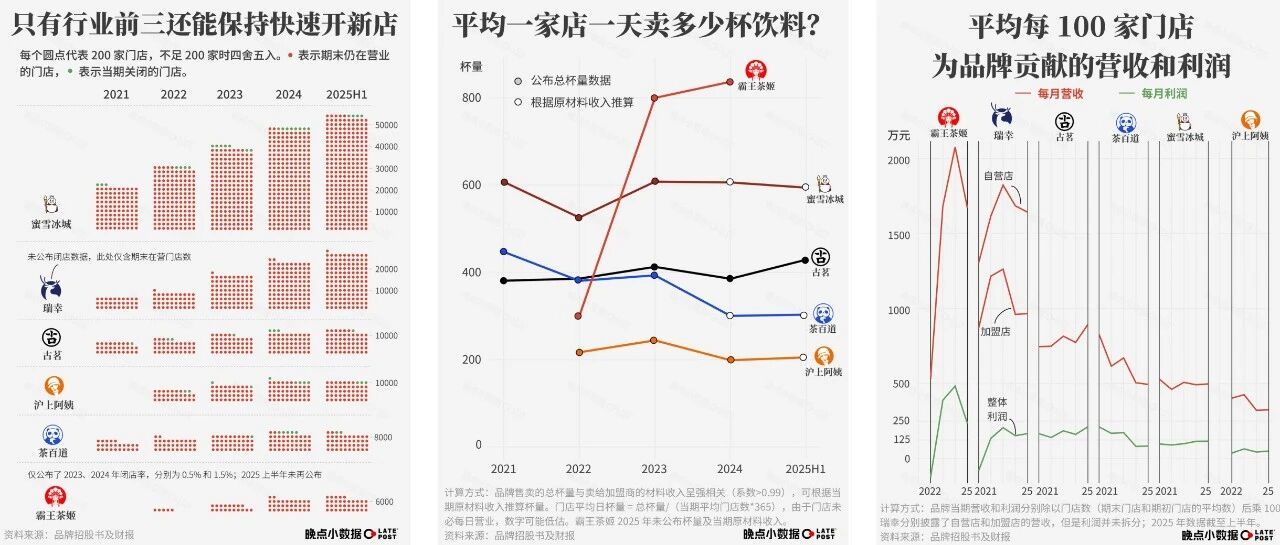
Core Viewpoint - The tea beverage industry has shifted from a brand-centric model to a fast-moving consumer goods (FMCG) approach, emphasizing scale and efficiency over brand loyalty and innovation [1][9][26] Group 1: Industry Trends - The competition in the tea beverage market has intensified, with brands focusing on price and convenience rather than unique offerings [1][9] - The trend of fast consumerization in tea beverages continues, with brands like Gu Ming and Mi Xue Bing Cheng engaging in aggressive pricing strategies [1][4] - The number of stores and operational efficiency have become the core competitive advantages for leading companies in the industry [1][3] Group 2: Franchise and Store Operations - Most major tea brands operate primarily through franchise models, with Luckin Coffee being an exception with a significant number of direct stores [3][4] - Mi Xue Bing Cheng has opened over 6,500 stores in six months, indicating a rapid expansion that could exceed 10,000 stores for the year [7][8] - The average number of stores per franchisee for Mi Xue Bing Cheng is 2.4, compared to less than two for other brands, highlighting its appeal to franchisees [8] Group 3: Financial Performance and Efficiency - The financial performance of leading brands varies significantly, with Ba Wang Cha Ji showing a sharp decline in revenue and profit despite having the highest average revenue per store [15][16] - Mi Xue Bing Cheng and Gu Ming have maintained stable revenue while expanding, while other brands have seen declines [16] - The cost structure for franchisees is heavily influenced by the operational efficiency of the brand, with Mi Xue Bing Cheng having the lowest employee-to-store ratio [19] Group 4: Marketing and Brand Strategy - Marketing expenditures vary widely among brands, with Ba Wang Cha Ji historically spending more on marketing per unit of revenue compared to others [19][22] - The proliferation of stores serves as a form of advertising, with brands like Mi Xue Bing Cheng leveraging their extensive network for promotional activities [22][23] - The boundaries between tea and coffee brands are blurring, as companies diversify their product offerings to capture more market share [26]

古茗(01364) - 2025 - 中期财报
2025-09-19 08:35
[Corporate Information](index=3&type=section&id=Corporate%20Information) This chapter provides basic corporate information for Goodme Holdings Limited, including board members, committee structures, principal places of business in mainland China and Hong Kong, registered office, share registrar, compliance advisor, auditor, legal counsel, company website, stock code, listing date, and principal bankers; the company was listed on the Main Board of the HKEX on February 12, 2025 [Board of Directors and Committees](index=3&type=section&id=Board%20of%20Directors%20and%20Committees) Goodme Holdings Limited's board comprises executive, non-executive, and independent non-executive directors, supported by audit, remuneration, and nomination committees to ensure robust corporate governance - Executive directors include **Wang Yunan** (Founder, Chairman, and CEO), **Qi Xia** (President), **Ruan Xiudi**, **Jin Yayu**, and **Cai Yunjiang**[3](index=3&type=chunk) - The Audit Committee Chairman is Mr. Zhuoyue, the Remuneration Committee Chairman is Mr. Li Jianbo, and the Nomination Committee Chairman is Mr. Wang Yunan[3](index=3&type=chunk)[4](index=4&type=chunk) [Company Details and Listing Information](index=4&type=section&id=Company%20Details%20and%20Listing%20Information) This section details the company's principal operating and registered addresses, along with key listing information including the Hong Kong share registrar, compliance advisor, auditor, legal counsel, company website, stock code, and listing date - The company's principal place of business in China is in Xiaoshan District, Hangzhou, Zhejiang Province, and in Hong Kong is in Hysan Avenue, Causeway Bay[6](index=6&type=chunk)[7](index=7&type=chunk) - The company's stock code is **01364**, and its listing date is **February 12, 2025**[9](index=9&type=chunk)[10](index=10&type=chunk) - Ernst & Young is the company's auditor, and Carey Olsen (Hong Kong) is the Hong Kong legal counsel[9](index=9&type=chunk)[10](index=10&type=chunk) [Financial Highlights](index=6&type=section&id=Financial%20Highlights) Goodme Holdings Limited achieved strong financial growth in H1 2025, with total revenue up 41.2% and profit for the period surging 119.8%; adjusted profit and adjusted core profit also saw significant increases of 42.4% and 49.0% respectively, reflecting robust profitability amid market recovery and expansion strategies Key Financial Data for H1 2025 (RMB thousands) | Metric | H1 2025 | H1 2024 | Change (%) | | :--- | :--- | :--- | :--- | | Revenue | 5,662,904 | 4,009,353 | 41.2 | | Gross Profit | 1,785,968 | 1,266,887 | 41.0 | | Profit for the Period | 1,626,468 | 740,063 | 119.8 | | Profit Attributable to Owners of the Parent | 1,625,473 | 733,807 | 121.5 | | Adjusted Profit (Non-IFRS Measure) | 1,085,748 | 762,476 | 42.4 | | Adjusted Core Profit (Non-IFRS Measure) | 1,135,748 | 762,476 | 49.0 | | Earnings Per Share (Basic, RMB) | 0.72 | 0.39 | 84.6 | | Earnings Per Share (Diluted, RMB) | 0.46 | 0.39 | 17.9 | - Adjusted profit is defined as profit for the period plus fair value changes of financial liabilities at fair value through profit or loss and listing expenses[13](index=13&type=chunk)[14](index=14&type=chunk) - Adjusted core profit further adds back withholding tax on distributable profits of the Group's PRC subsidiaries[13](index=13&type=chunk)[14](index=14&type=chunk) [Management Discussion and Analysis](index=7&type=section&id=Management%20Discussion%20and%20Analysis) This chapter analyzes Goodme Holdings Limited's H1 2025 business performance, outlook, and financial position, highlighting significant progress in store network expansion, GMV growth, product innovation, and supply chain efficiency, alongside detailed explanations of financial metric changes and non-IFRS adjustments [BUSINESS REVIEW](index=7&type=section&id=BUSINESS%20REVIEW) Goodme Holdings Limited, a leading ready-to-drink beverage company in China, expanded its store network, improved performance, and achieved steady growth through effective product and supply chain strategies in H1 2025, focusing on the mass-market tea beverage segment and deepening its presence in lower-tier cities - The company is a leading and fast-growing ready-to-drink beverage company in China, focusing on the mass-market ready-to-drink tea beverage market[15](index=15&type=chunk)[16](index=16&type=chunk) - Total revenue reached RMB **5.6629** billions in H1 2025, a year-on-year increase of **41.2%**; gross profit was RMB **1.7860** billions, a year-on-year increase of **41.0%**[15](index=15&type=chunk)[16](index=16&type=chunk) [Store Network and Store Performance](index=7&type=section&id=Store%20Network%20and%20Store%20Performance) As of June 30, 2025, Goodme's store network expanded to 11,179 locations, a 17.5% year-on-year increase, covering over 200 Chinese cities, with 81% of stores in Tier 2 and below cities and 43% in townships, demonstrating enhanced single-store GMV and cup sales due to effective product and marketing strategies - As of June 30, 2025, the total number of stores reached **11,179**, an increase of **17.5%** compared to the same period in 2024[17](index=17&type=chunk)[19](index=19&type=chunk) Store Count by City Tier (as of June 30) | City Tier | 2025 Store Count | 2025 Share (%) | 2024 Store Count | 2024 Share (%) | | :--- | :--- | :--- | :--- | :--- | | Tier 1 cities | 318 | 3 | 281 | 3 | | New Tier 1 cities | 1,812 | 16 | 1,685 | 18 | | Tier 2 and below cities | 9,049 | 81 | 7,550 | 79 | | **Total** | **11,179** | **100** | **9,516** | **100** | - Stores in Tier 2 and below cities accounted for **81%** of the total, and the proportion of township stores increased from **39%** in 2024 to **43%** in 2025, indicating the company's deep penetration in lower-tier markets[22](index=22&type=chunk)[24](index=24&type=chunk) Key Store Performance Indicators (for the six months ended June 30) | Metric | 2025 | 2024 | | :--- | :--- | :--- | | Total GMV (RMB thousands) | 14,094,001.2 | 10,483,944.5 | | GMV per Store (RMB thousands) | 1,370.5 | 1,136.8 | | Average Daily GMV per Store (RMB thousands) | 7.6 | 6.2 | | Total Cups Sold (thousands of cups) | 816,894.7 | 627,780.6 | | Cups Sold per Store (thousands of cups) | 79.4 | 68.1 | | Average Daily Cups Sold per Store | 439 | 374 | - The acceleration in new store openings is primarily due to the recovery of the ready-to-drink tea market and the company's adjusted expansion strategy and franchisee incentive policies[26](index=26&type=chunk)[27](index=27&type=chunk) [Our Franchisees](index=10&type=section&id=Our%20Franchisees) Goodme primarily operates through a franchise model, fostering mutually beneficial relationships by providing site selection, training, centralized procurement, and logistics support, while monitoring operational standards via in-store cameras and regular visits from store supervisors; as of June 30, 2025, the number of collaborating franchisees increased to 5,875 - The company operates through a franchise model, leveraging franchisees' local knowledge, and providing site selection, training, centralized procurement, and logistics support[31](index=31&type=chunk)[33](index=33&type=chunk) - As of June 30, 2025, the number of collaborating franchisees was **5,875**, an increase from **4,798** in the same period of 2024[32](index=32&type=chunk)[34](index=34&type=chunk) Changes in Franchisee Count (for the six months ended June 30) | Metric | 2025 | 2024 | | :--- | :--- | :--- | | Franchisee Count at Beginning of Period | 4,868 | 4,614 | | New Franchisees Added During Period | 1,338 | 551 | | Franchisees Exited During Period | 331 | 367 | | Franchisee Count at End of Period | 5,875 | 4,798 | [Product Offerings](index=11&type=section&id=Product%20Offerings) Goodme offers fruit tea, milk tea, and coffee beverages, continuously investing in R&D to maintain product appeal; in H1 2025, 52 new products were launched, with significant progress in coffee beverages, as over 8,000 stores were equipped with coffee machines and 16 new coffee drinks introduced, alongside sustained growth in mini-program members and active users - "Goodme" stores primarily sell fruit tea beverages, milk
一大批奶茶店,正陷入倒闭风波
Hu Xiu· 2025-09-19 07:29
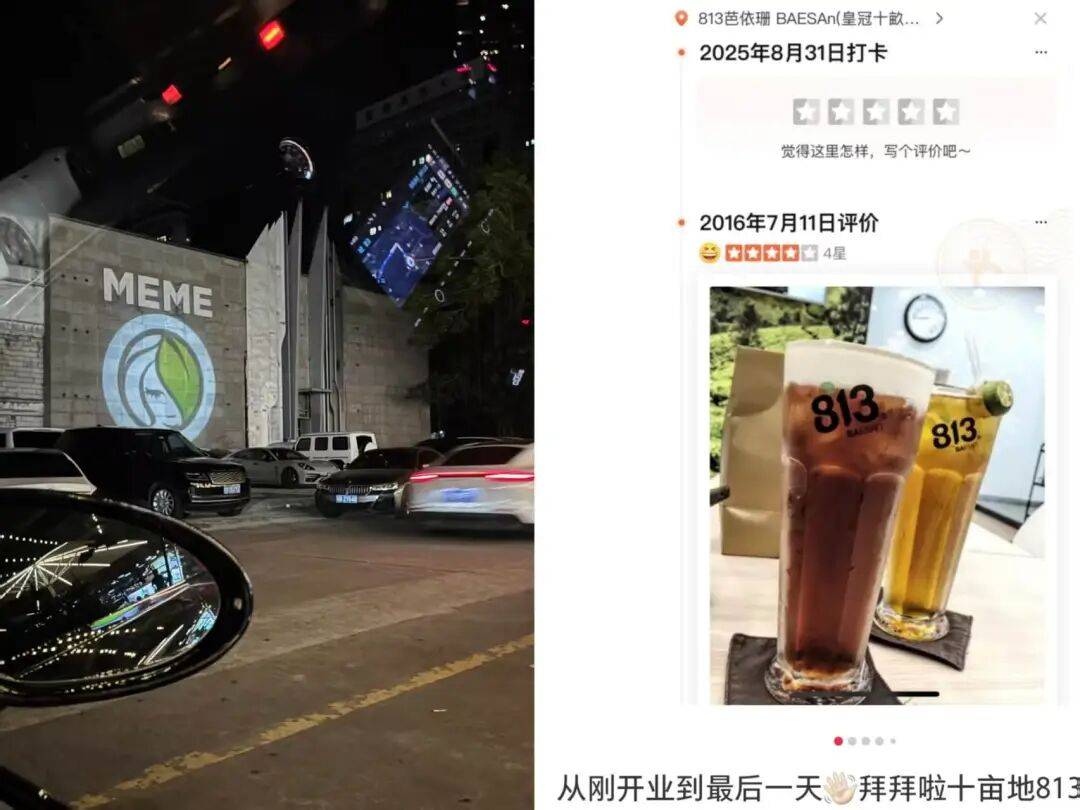
Core Viewpoint - The recent wave of closures among both established and emerging bubble tea brands indicates a significant market reshaping, transitioning from quantity-driven expansion to a focus on quality and operational efficiency [1][18][31]. Group 1: Brand Closures - Numerous bubble tea brands, including the newly popular PinkShake and the long-standing 813 Baishan, have recently closed stores, with PinkShake shutting down all locations just over a year after opening [2][3][4]. - Seven Bus, once a leading brand in Xiamen, has seen its store count plummet from over 400 to fewer than 20, highlighting the rapid decline of even previously successful brands [9]. - OONE CCUP also announced the closure of its Ningbo store just a year after opening, reflecting a broader trend of closures across the industry [10]. Group 2: Market Trends - The bubble tea industry is experiencing a significant contraction, with 15.7 million stores disappearing in the past year, marking the highest closure rate in the sector [17]. - As of mid-2025, the total number of bubble tea stores across 26 major brands has only increased by 858, indicating a stagnation in growth [16]. - The market is shifting from a growth phase to a consolidation phase, with many mid-tier brands facing closure while top brands continue to expand [11][15]. Group 3: Financial Performance - Nayuki Tea reported a revenue of 2.178 billion yuan in the first half of 2025, a 14.4% decrease year-on-year, primarily due to the closure of underperforming stores [13]. - The company closed 160 stores in the first half of 2025, including 132 direct-operated and 28 franchise locations, as part of its restructuring efforts [14]. Group 4: Competitive Landscape - The competitive landscape is increasingly defined by quality and operational efficiency rather than mere expansion, with brands needing to focus on supply chain management and product differentiation to survive [31][32]. - The market is witnessing a shift towards "survival of the fittest," where only brands that can adapt to changing consumer preferences and maintain quality will thrive [18][21].
东方财富证券:国庆中秋出行热度或创新高 出境游预订量持续向好
Zhi Tong Cai Jing· 2025-09-19 07:29
Group 1 - The core viewpoint is that the travel demand is expected to increase significantly during the 2025 National Day and Mid-Autumn Festival holiday, with a search volume increase of over 20% year-on-year [1] - Flight bookings for both domestic and international routes show a notable recovery, with domestic flight bookings exceeding 3.26 million per day, up 26% year-on-year, and international bookings exceeding 1.16 million, up 15% [2] - High-quality hotel bookings are experiencing a surge, with a year-on-year increase of 58% for popular hotels and over 20% for high-quality hotels during the holiday period [3] Group 2 - The outbound travel market is benefiting from visa-free policies, with significant increases in travel to South Korea, the Middle East, and Africa, with outbound travel numbers up 130% year-on-year [4] - Investment recommendations include focusing on OTA sectors such as Tongcheng Travel and Trip.com Group, as well as companies in the ice and snow industry like Changbai Mountain and Dalian Shengya, and tourism retail companies like China Duty Free Group and Wangfujing [5]



