
供给侧改革

Search documents
伏板块更新及行情展望
2025-07-02 15:49
Summary of Key Points from the Conference Call Industry Overview - The conference call primarily discusses the **photovoltaic (PV) industry** and its current market dynamics, particularly focusing on **silicon materials** and **glass segments** [1][3][10]. Core Insights and Arguments - The **National Development and Reform Commission (NDRC)** emphasizes the need for a modern industrial system, aiming to eliminate excessive competition and create a fair market environment, which is expected to support supply-side reforms in the PV industry [1][2]. - The **utilization rate** in the PV industry is currently low, especially in the silicon material segment, indicating an urgent need for supply-side reforms [1][3]. - The **valuation of the PV sector** is at historical lows, presenting potential trading opportunities, particularly in the silicon material and inverter segments [1][4]. - Recent policies, including a **30% reduction in glass production**, are expected to drive price increases in both silicon and glass segments, although high inventory levels remain a challenge [5][9]. - The **supply-side reform** for silicon materials involves two main steps: acquiring outdated production capacity and controlling utilization rates among leading companies to achieve a balance between supply and demand [6][10]. - Investment opportunities in the silicon material segment are significant, with companies like **Daqo and Tongwei** showing notable price increases, although investors are advised to wait for a market correction before entering [7][10]. Additional Important Content - The **high inventory levels** of polysilicon have persisted since Q4 of the previous year, necessitating policy-driven inventory reduction and strict production controls [8]. - The **glass industry** is expected to experience price increases, but this will depend on successful inventory reduction processes [9]. - The **PV sector** is anticipated to benefit from supply-side reforms, particularly in the silicon and glass segments, with a focus on waiting for market corrections before investing [10]. - The **battery cell sector**, especially **BC cells**, presents additional investment opportunities, with companies like **Aiko** showing potential for significant performance improvements [11]. - The **European industrial storage market** has exceeded expectations, with **Aero Energy** reporting shipment data of **490 million** in June, indicating strong demand [13][14]. - The **supply-side reforms** in the second half of the year are expected to focus on price rationalization and the elimination of excessive competition, with the PV industry remaining a core focus [15][16]. - The **future outlook** for the PV industry suggests a potential market rally similar to that seen in the lithium battery sector, driven by increased demand for green electricity amid global energy constraints [17][18].
这一板块,盘中爆发
Zhong Guo Ji Jin Bao· 2025-07-02 13:06
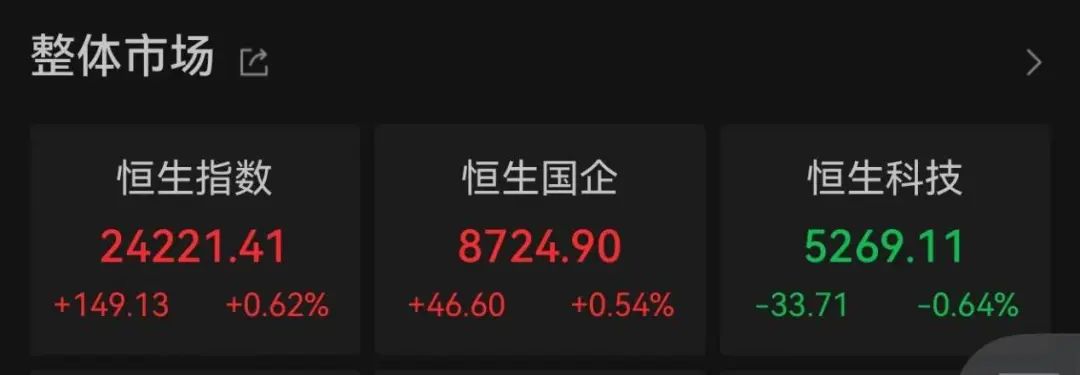
Market Overview - The Hong Kong stock market opened high but closed lower, with the Hang Seng Index rising by 0.62% to 24,221.41 points, while the Hang Seng Tech Index fell by 0.64% to 5,269.11 points, and the National Enterprises Index increased by 0.54% to 8,724.9 points [1][2]. Steel Sector - The steel sector saw significant gains in the afternoon, with Chongqing Steel's stock reaching a peak increase of 135.56% before closing with a 91.11% rise at HKD 1.72 per share. Other companies like Ansteel and China Oriental Group also saw increases of over 10% [5][7]. - A rumor regarding production limits in Tangshan from July 4 to July 15, with a potential reduction in daily output by 30%, has drawn market attention. Current production data indicates a utilization rate of 83%, which could drop to 70% under the new limits [7]. Gold Sector - Gold stocks performed well, with Shandong Gold rising over 5%. Other companies such as Zijin Mining and China National Gold also experienced gains [8][10]. - Macau's gaming revenue for June reached MOP 210.64 billion, a year-on-year increase of 19%, driven by events like concerts [11]. Solar Sector - The solar sector showed strong performance, with companies like Fuyao Glass increasing by over 11%. A collective decision by major solar glass manufacturers to reduce production by 30% is expected to address supply-demand imbalances [12]. Chip and Military Sectors - The chip sector faced declines, with Shanghai Fudan dropping over 4%, and other companies like Huahong Semiconductor and SMIC also experiencing losses [13][14]. - The military sector also saw declines, with China Shipbuilding Defense falling over 4% [15]. Investment Outlook - Analysts from CICC suggest that the macro environment for Hong Kong stocks is characterized by abundant liquidity and structural highlights, leading to index fluctuations. UBS forecasts continued net inflows from mainland investors, with significant buying activity noted earlier in the year [16].


这一板块,盘中爆发!
中国基金报· 2025-07-02 12:31
【导读】 港股高开低走,钢铁板块午后拉升,黄金股、博彩股和光伏股走强,芯片股、军工 股下挫 见习记者 储是 7月2日为港股下半年第一个交易日。 今日,港股高开低走,窄幅震荡。截至收盘,恒生指数上涨0.62%,报收于24221.41点;恒 生科技指数下跌0.64%,报收于5269.11点;国企指数上涨0.54%,报收于8724.9点。 盘面上,大型科网股普遍走高,钢铁板块午后猛拉,黄金股、博彩股和光伏股走强,芯片 股、军工股下挫。 大型科技股多数走高 此外,弘业期货H股跌超13%,A股跌停两连板,累计下跌超19%。 黄金股、博彩股和光伏股走强 今日,山东黄金涨超5%,潼关黄金、紫金矿业、招金矿业、中国黄金国际等纷纷上涨。 涨跌不一 京东集团涨0.08%,小米集团涨0.33%,美团涨0.56%;阿里巴巴跌0.36%,腾讯控股跌 0.3%,网易跌1.33%,快手跌2.76%,哔哩哔哩跌2.21%。 钢铁板块午后拉升 重庆钢铁股份盘中突破130% 午后,港股钢铁板块持续拉升。重庆钢铁股份盘中涨幅一度扩大至135.56%。截至收盘,涨 幅回落至91.11%,报1.72港元/股。该公司A股也于午后快速拉升并封住涨停。此外 ...

新一轮供给侧改革!
Datayes· 2025-07-02 11:22
Core Viewpoint - The steel industry is experiencing a significant price increase due to production cuts driven by environmental regulations and government policies aimed at eliminating outdated capacity. This has led to a reduction in steel output expectations, particularly in Tangshan, where a 30% production cut has been mandated from July 4 to July 15. The market anticipates further impacts on steel production as a result of these measures [1][3]. Group 1: Steel Industry Insights - The recent meeting of the Financial and Economic Committee emphasized the need to push for the elimination of outdated production capacity, directly influencing the steel market [1]. - Tangshan steel mills have received directives for a 30% production cut, which is expected to significantly lower steel inventories and production levels [1]. - The China Iron and Steel Association reported that steel billet exports in the first four months of 2025 have already surpassed the total for 2024, prompting suggestions for export restrictions [1]. - A total of approximately 30 million tons of production cuts have been ordered for the year, coinciding with a seasonal demand lull, which has heightened market expectations for reduced steel output [1]. Group 2: Market Reactions and Trends - Longjiang Securities noted that administrative production cuts could act as a bullish option for the steel sector, particularly in July, which is traditionally a slow season for demand [3]. - The announcement of production cuts in the photovoltaic glass sector has also led to significant price increases in that market, indicating a broader trend of supply-side reforms impacting various sectors [3]. - The steel sector saw a strong rally in stock prices, with companies like Liugang and Chongqing Steel hitting their daily price limits amid these developments [9][10]. Group 3: Broader Economic Context - The overall A-share market experienced a decline, with major indices falling and a significant number of stocks trading lower, reflecting broader economic pressures [9]. - The government is expected to focus on structural adjustments across multiple industries, including steel, refining, and new energy sectors, as part of its economic strategy [7]. Group 4: Investment Trends - Institutional investors have begun to sell off some positions in response to the recent price increases in steel, indicating a cautious approach to the current market dynamics [1][4]. - The market's reaction to production cuts in both the steel and photovoltaic sectors suggests a growing trend towards supply-side management as a means to stabilize prices and manage excess capacity [3].





冠通每日交易策略-20250702
Guan Tong Qi Huo· 2025-07-02 11:06
Report Industry Investment Rating No relevant information provided. Core Views - Copper prices are mainly driven by the tight supply - demand situation caused by cross - regional flow due to the copper tariff, and future price fluctuations will be affected by the Fed's interest - rate cut expectations [10]. - For crude oil, with the easing of Middle - East geopolitical risks and seasonal factors, the supply - demand situation has improved marginally. It is recommended to cautiously buy bearish options [11][12]. - For asphalt, as it enters the peak season, it is recommended to buy the 09 - 12 spread at low prices while operating cautiously [13]. - PP, plastic, and PVC are all expected to be in a low - level oscillation pattern due to factors such as high inventory, weak demand, and falling crude oil prices [15][16][18]. - The upward momentum of soybean oil has weakened, and it is expected to maintain a range - bound oscillation [19]. - For rebar, if the production - restriction rumors continue to ferment or materialize, there is still room for an upward movement, but the risk of a pull - back due to rumor falsification should be watched out for [21]. - For hot - rolled coils, if production restrictions are intensified and demand does not weaken significantly, it may maintain a strong oscillation pattern; otherwise, weak demand may limit its upward space [22]. - For coking coal, although there is a tight supply expectation, the upward space is limited due to weak demand [24]. - For urea, it is mainly in a consolidation phase and still faces downward pressure [25][26]. Summary by Variety Carbonate Lithium - The average price of battery - grade and industrial - grade carbonate lithium has increased. The supply side shows that upstream prices are firm, and the production cost and output of domestic carbonate lithium are rising. The demand side indicates that downstream acceptance of high prices is low, and the overall production capacity is loose. The upward trend is mainly due to market sentiment, and the upward space is limited [3]. Soybean Meal - The main 09 contract of soybean meal closed down 0.57%. Internationally, the new US tax bill may benefit US soybean growers, and the soybean good - to - excellent rate is lower than expected. Domestically, the inventory of imported soybeans and soybean meal has increased. It is expected to show an oscillatory adjustment pattern [4][5]. Copper - The Shanghai copper market showed a strong trend. The US manufacturing PMI has been in contraction for four months. The supply of copper is still increasing, and the inventory in most regions is decreasing. The export demand has increased due to the copper tariff event, but the overall demand is weak. The main logic for the price increase is the tight supply expectation caused by cross - regional flow [9][10]. Crude Oil - After the US military's intervention in Iran, the subsequent retaliatory actions and cease - fire have affected market sentiment. The supply - demand situation has improved marginally, but the Middle - East geopolitical risks still need to be monitored. It is recommended to cautiously buy bearish options [11][12]. Asphalt - The supply side shows that the start - up rate has rebounded, and the expected output in July has increased. The demand side indicates that the start - up rate of downstream industries has fluctuated, and the inventory is at a low level. With the easing of geopolitical risks, it is recommended to operate cautiously and buy the 09 - 12 spread at low prices [13]. PP - The downstream start - up rate has decreased, and the enterprise start - up rate has increased. The inventory pressure is high. With the sharp drop in crude oil prices, it is expected to be in a low - level oscillation [14][15]. Plastic - The start - up rate has decreased, and the downstream start - up rate is at a low level. The inventory pressure is high. With the sharp drop in crude oil prices, it is expected to be in a low - level oscillation [16]. PVC - The start - up rate has decreased, and the downstream start - up rate is low. The export is restricted, and the inventory is high. With the sharp drop in crude oil prices, it is recommended to short at high prices [17][18]. Soybean Oil - The main 09 contract of soybean oil closed up 0.63%. Internationally, the US soybean planting area is slightly lower than expected, and the quarterly inventory is higher. Domestically, the oil - mill start - up rate has increased, and the inventory has accumulated. It is expected to maintain a range - bound oscillation [19]. Rebar - The main contract showed a trend of "bottom - fishing and upward movement". The supply contraction expectation has increased due to production - restriction rumors, but the demand is weak. The raw material prices have rebounded. If the rumors materialize, there is upward space, but there is also a risk of a pull - back [20][21]. Hot - Rolled Coils - The main contract showed an "oscillatory upward and breakthrough" pattern. The supply - demand structure is characterized by "continued inventory reduction and rigid - demand support". The production has slightly increased, the inventory pressure is small, and the demand has improved. It is recommended to focus on production - restriction implementation and policy trends [22]. Coking Coal - The price closed up more than 3%. The supply side is expected to contract due to safety inspections and capacity - clearance expectations. The demand side is relatively weak. The upward space is limited due to weak demand [24]. Urea - The futures price showed a strong oscillation. The supply side has both maintenance and resumption of production, and the daily output fluctuates slightly. The demand side is weak, and the inventory is mainly reduced through exports. It is mainly in a consolidation phase and faces downward pressure [25][26].
多只光伏ETF上涨;上半年近九成基金正收益丨ETF晚报
2 1 Shi Ji Jing Ji Bao Dao· 2025-07-02 10:37
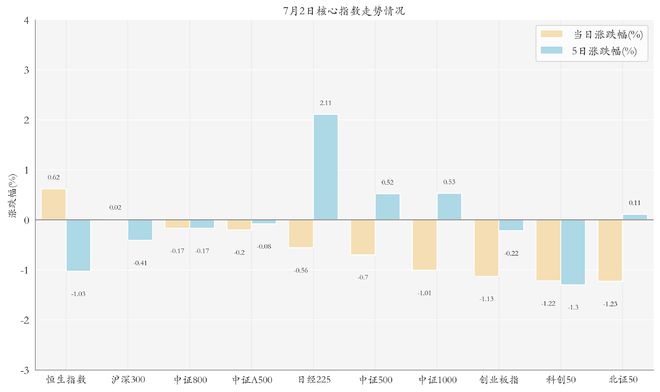
ETF Industry News - The three major indices experienced fluctuations and declines, with the Shanghai Composite Index down 0.09%, the Shenzhen Component Index down 0.61%, and the ChiNext Index down 1.13%. However, several photovoltaic ETFs saw increases, including the Photovoltaic Leader ETF (516290.SH) up 3.37%, the Photovoltaic 50 ETF (516880.SH) up 3.19%, and another Photovoltaic Leader ETF (159609.SZ) up 3.09% [1] - According to Open Source Securities, the supply-side reform in the photovoltaic sector is expected to deepen, as product prices have fallen below cash cost lines, prompting leading photovoltaic glass companies to collectively reduce production starting in July. This aligns with policy directions and aims to improve the supply-demand structure in the industry [1] Public Fund Performance - In the first half of 2025, nearly 90% of public funds reported positive returns, with the best-performing fund achieving a net value growth of 86.48%. The most notable funds were those focused on innovative pharmaceuticals and the Beijing Stock Exchange theme [2] - Analysts suggest that opportunities are expected to increase in the second half of the year, particularly in sectors such as innovative pharmaceuticals and specialized enterprises on the Beijing Stock Exchange. Additionally, technology sectors like humanoid robots may regain momentum, while the previously underperforming liquor sector could see a rebound [2] ETF Scale and Growth - As of the end of the first half of 2025, the total number of ETFs reached 1,209, with a total scale exceeding 4.31 trillion yuan, marking a 15.57% increase from the end of the previous year. The largest growth was seen in bond ETFs and commodity ETFs, which grew by 120.71% and 107.96%, respectively [3] - Eighteen ETFs saw their scale increase by over 10 billion yuan in the first half of the year, with 16 fund companies reporting new total scales exceeding 10 billion yuan [3] Public Fund Dividends - Public funds distributed nearly 1,300 billion yuan in dividends in the first half of the year, with a total of 3,533 distributions, representing a 37.53% increase year-on-year. Bond funds accounted for over 70% of the total dividend amount, with 949.76 billion yuan distributed [4] - ETFs emerged as a new star in dividend distributions, with several ETF products ranking among the top ten in terms of dividend amounts [4] Market Overview - On July 2, 2025, the three major indices collectively declined, with the Shanghai Composite Index closing at 3,454.79 points, the Shenzhen Component Index at 10,412.63 points, and the ChiNext Index at 2,123.72 points. The Hang Seng Index and other major indices showed varied performance [5] - In terms of sector performance, steel, coal, and building materials ranked among the top gainers, while electronics, communications, and defense industries lagged behind [7] ETF Market Performance - The average performance of different categories of ETFs was calculated based on their scale and price changes, with strategy index ETFs showing the best average performance at 0.69%, while theme index ETFs had the worst at -0.68% [9][10] - The top-performing ETFs included the Steel ETF (515210.SH), Photovoltaic Leader ETF (516290.SH), and Photovoltaic 50 ETF (516880.SH), with daily returns of 3.69%, 3.37%, and 3.19%, respectively [12][13] ETF Trading Volume - The top three ETFs by trading volume were the A500 ETF from Huatai-PB (563360.SH) with 3.09 billion yuan, the A500 ETF Fund (512050.SH) with 2.997 billion yuan, and the CSI A500 ETF from Southern (159352.SZ) with 2.820 billion yuan [15][16][17]
突然,暴涨120%!多个板块,集体沸腾!发生了什么?
券商中国· 2025-07-02 08:01
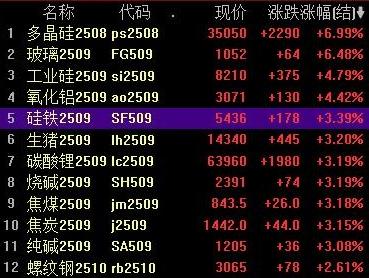
Core Viewpoint - The steel sector in both Hong Kong and A-shares experienced significant gains, driven by policy changes aimed at phasing out outdated production capacity and the abolition of certain regulatory frameworks, which attracted speculative investments [1][5]. Group 1: Steel Sector Performance - Hong Kong steel stocks saw substantial increases, with Chongqing Steel rising over 120%, Ansteel up over 30%, and Maanshan Steel increasing by more than 20% [1][2]. - The A-share steel index surged nearly 4%, with several stocks, including Shengde Xintai and Chongqing Steel, hitting the daily limit [2][3]. - The average daily pig iron output remains high at 2.4229 million tons, and the funding availability rate for construction sites slightly increased to 59.11%, supporting steel demand [6]. Group 2: Policy and Market Dynamics - A recent high-level meeting emphasized the orderly exit of outdated production capacity, and the National Development and Reform Commission abolished several administrative normative documents related to clean production evaluation in industries like steel and nitrogen fertilizer [5][6]. - The steel industry is expected to benefit from improved demand due to supportive real estate policies and stable infrastructure investment, alongside tightening supply conditions [6]. Group 3: Related Sectors - The polysilicon futures contract surged to a limit increase, reaching 35,050 yuan per ton, with a 6.99% rise, while industrial silicon and glass futures also saw significant gains [4]. - The lithium sector is showing signs of recovery, with Ganfeng Lithium indicating that current lithium prices are at a low point, and market demand is expected to improve [7].

ETF市场日报 | 钢铁、光伏相关ETF反弹!创新药板块再回调
Sou Hu Cai Jing· 2025-07-02 07:22
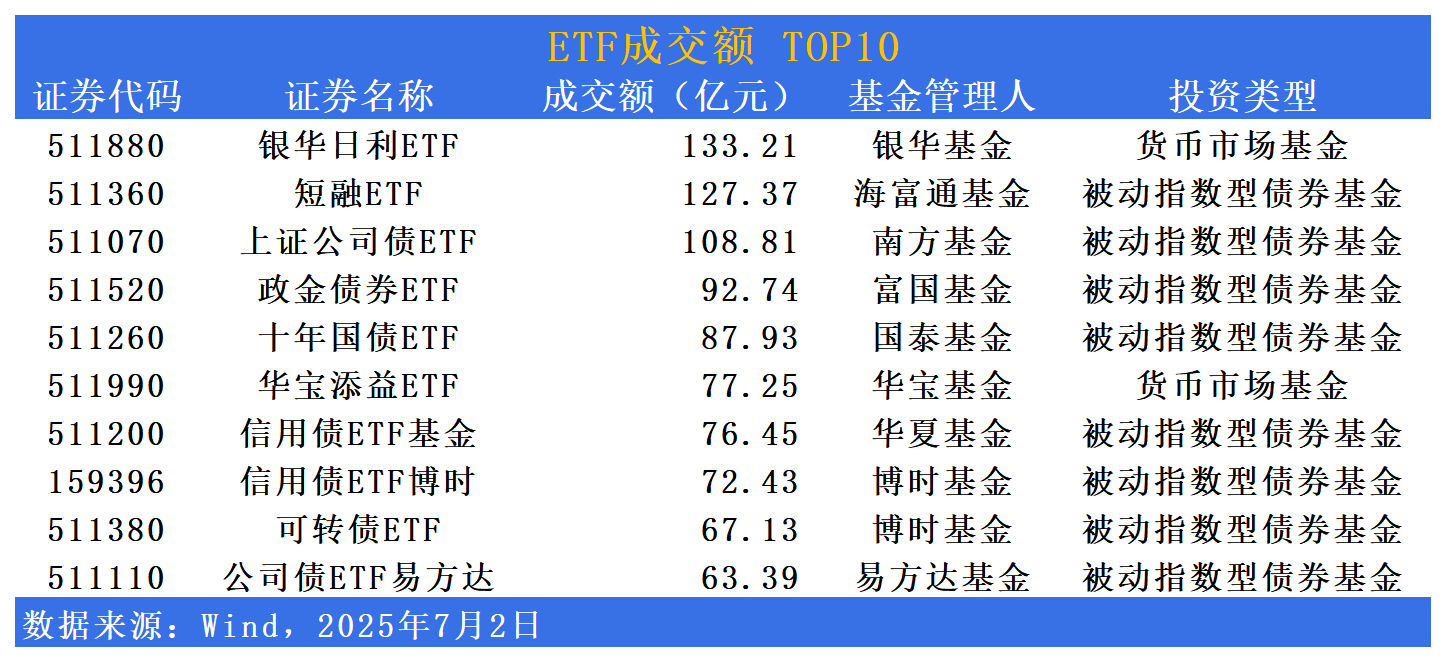
Market Overview - A-shares experienced a collective pullback with the Shanghai Composite Index down 0.09%, Shenzhen Component Index down 0.61%, and ChiNext Index down 1.13% as of the market close on July 2, 2025, with total trading volume reaching 1.377 trillion yuan [1] Sector Performance - The steel and photovoltaic ETFs led the gains, with the steel ETF (515210) rising by 3.69%, and several photovoltaic ETFs, including the leading photovoltaic ETF (516290) and photovoltaic 50 ETF (516880), increasing by over 3% [2] Policy and Industry Insights - The Central Financial Committee's sixth meeting emphasized the orderly exit of backward production capacity, reigniting expectations for supply-side reforms in the steel industry. Stricter emission reduction requirements in Tangshan have weakened raw materials while strengthening steel prices [3] - The photovoltaic sector is buoyed by news of collective production cuts among glass manufacturers, with government media advocating for high-quality development by breaking down "involution" competition. The China Photovoltaic Industry Association is guiding companies to sign voluntary production control agreements to maintain market order and promote sustainable industry development [3] Innovation Drug Market - The innovative drug sector is experiencing a pullback, but the introduction of a multi-tiered medical insurance payment system is expected to expand the innovative drug market. The new commercial health insurance innovative drug directory aims to include high-value innovative drugs beyond basic insurance coverage [4] Credit Bond Market Activity - The credit bond sector is gaining attention, with the top ten ETFs by trading volume led by the Yinhua Daily ETF (511880) at 13.321 billion yuan. Other notable ETFs include the Short-term Bond ETF (511360) and the Shanghai Stock Company Bond ETF (511070), both exceeding 10 billion yuan in trading volume [5] Trading Metrics - The benchmark government bond ETF (511100) recorded the highest turnover rate at 543.16%, with the 5-year local government bond ETF (511060) and the Hang Seng ETF (159312) also showing significant turnover rates [6] New ETF Launch - The Cash Flow ETF Yongyin (159223) is set to launch, closely tracking the National Index of Free Cash Flow. This index focuses on 100 companies with high and stable free cash flow, excluding financial and real estate sectors, and has shown positive returns over the past six years [7]
期货收评:中央定调淘汰落后产能 多晶硅多合约涨停!
news flash· 2025-07-02 07:08
Group 1 - The central government has set the tone for eliminating backward production capacity, leading to a significant increase in commodity prices, with polysilicon contracts hitting the limit up and rising nearly 7% [1] - Polysilicon has formed a "weak reality, strong expectation" pattern, attracting macro funds for increased allocation [1][7] - The main contract for polysilicon has surged, breaking through the 35,000 yuan/ton mark, with a cumulative rebound of over 14% from the bottom [3] Group 2 - Recent price increases in polysilicon are attributed to three main factors: 1. Growing expectations for policy changes aimed at clearing out "involution" competition, with references to the 2015 supply-side reform [5] 2. A significant price drop of about 20% from approximately 38,500 yuan/ton to around 30,400 yuan/ton, leading to a price correction as it fell below some manufacturers' production costs [6] 3. Rising industrial silicon prices, which support the production costs of polysilicon [7] Group 3 - The glass industry has seen a price increase of over 6%, with the main contract currently around 1,048 yuan/ton, as major photovoltaic glass companies plan to collectively reduce production by 30% starting in July [8][10] - This reduction is expected to lead to a rapid decline in domestic photovoltaic glass supply, improving the supply-demand imbalance in the industry [10] - The photovoltaic industry is a key focus for the government's efforts to address "involution" competition, with clear policy directions anticipated to improve the overall industry profitability by 2025 [10]
黑色金属数据日报-20250702
Guo Mao Qi Huo· 2025-07-02 03:34
Group 1: Report Summary of Investment Ratings - There is no information about the industry investment rating in the provided reports. Group 2: Core Views of the Report - In the off - season, market participants worry that the demand for the black sector will decline, and there is no strong rebound driver for the black sector [6]. - Short - term production restrictions have a more obvious impact on steel. If short - term production restrictions cannot be sustained, the positive impact on profits and steel prices will not last long [6]. - The basis of black sector varieties that were previously at a large futures discount has been rapidly repaired recently, with coking coal and coke showing futures premiums and iron ore futures approaching parity [6]. - For coking coal and coke, the short - term disturbances in coal mine production in July have subsided. If the overall situation of coal mine resumption changes little, the phased high of the coking coal and coke futures may have been reached [6]. - The prices of ferrosilicon and silicomanganese mainly fluctuate following coal prices. Ferrosilicon's supply has a slight increase, and demand is okay in the short - term. Silicomanganese's supply continues to rise, and the supply - demand structure is relatively loose [6]. - For iron ore, short - term attention should be paid to the actual impact of production restrictions on molten iron and whether the production restriction wave will spread to other regions. Currently, iron ore is in a shock range [6]. Group 3: Summary by Related Catalogs Futures Market - On July 1st, for far - month contracts, RB2601 closed at 3016 yuan/ton with a decline of 7 yuan (- 0.23%), HC2601 at 3136 yuan/ton with a decline of 4 yuan (- 0.13%), etc. For near - month contracts, RB2510 closed at 3003 yuan/ton with a decline of 6 yuan (- 0.20%), HC2510 at 3136 yuan/ton with an increase of 2 yuan (0.06%) [2]. - The cross - month spreads, spreads/ratios/profits also showed different changes on July 1st. For example, the cross - month spread of RB2510 - 2601 was - 13 yuan/ton, with an increase of 5 yuan [2]. Spot Market - On July 1st, the spot price of Shanghai rebar was 3100 yuan/ton with a decline of 40 yuan, Tianjin rebar was 3130 yuan/ton with a decline of 20 yuan, etc. The spot prices of hot - rolled coils in different regions also had different changes [2]. Industry Analysis - **Steel**: Short - term production restrictions in Tangshan and Shanxi led to a rebound in the virtual profit of the futures market on Tuesday. If the production restrictions cannot be sustained, the positive impact on profits and steel prices will be short - lived. The basis of steel varieties has been rapidly repaired recently [6]. - **Coking Coal and Coke**: The spot trading of coking coal is still good, with most prices rising. The supply of coal mines in July is expected to increase. The futures prices of coking coal and coke fell in the morning and rebounded in the afternoon. The market expects stricter environmental production restrictions in the future. If the coal mine resumption situation changes little, the phased high of the coking coal and coke futures may have been reached [6]. - **Ferrosilicon and Silicomanganese**: Ferrosilicon's price is greatly affected by coal. Its supply has a slight increase, and demand is okay in the short - term. Silicomanganese's supply continues to rise, and the supply - demand structure is relatively loose. Their prices mainly fluctuate following coal and steel [6]. - **Iron Ore**: The news of production restrictions in Tangshan and Shanxi led to an expansion of steel mill profits in the futures market. Short - term attention should be paid to the actual impact of production restrictions on molten iron and whether the production restriction wave will spread to other regions. Currently, iron ore is in a shock range [6]. Investment Suggestions - **Steel**: Stay on the sidelines for single - side trading. Consider entering the market for cash - and - carry arbitrage as the basis approaches the appropriate point. Take profit on short - term long positions in the hot - rolled coil - rebar spread at an appropriate time [6]. - **Coking Coal and Coke**: For single - side trading, set the previous high as the stop - loss point and establish short positions on rebounds. Industrial customers can take advantage of the premium to conduct selling hedging [6]. - **Ferrosilicon and Silicomanganese**: Buy call options at low prices due to their high price elasticity [6]. - **Iron Ore**: Short at the upper edge of the shock range [6].