
GDP增速

Search documents
股指对冲周报-20251024
Guo Tai Jun An Qi Huo· 2025-10-24 12:46
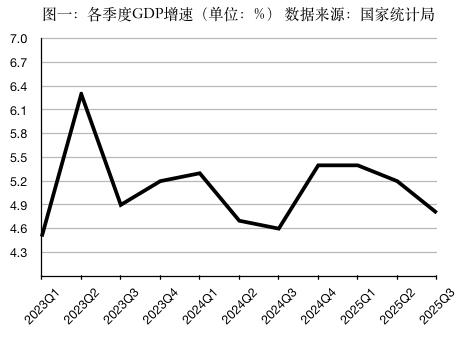
Report Summary 1. Report Industry Investment Rating No information about the report industry investment rating is provided in the content. 2. Core Viewpoints - The market's judgment of international relations tends to swing between extreme optimism and extreme pessimism, causing market sentiment to fluctuate. Market volatility may persist as it overreacts to fast - changing international relations while having relatively well - formed expectations for slow - changing variables like interest rates [4]. - China's Q3 GDP in 2025 grew by 4.8% year - on - year, meeting expectations and laying a good foundation for achieving the annual target. Industrial production rebounded significantly, but consumer spending, real estate, and fixed - asset investment were drags [4]. - After the release of the communiqué of the Fourth Plenary Session of the 20th CPC Central Committee, broad - based indexes rose, and the deepening of the management of local state - owned "three capitals" also boosted market sentiment this week [4]. - A - share trading volume further shrank to less than 2 trillion yuan per day, and the margin balance generally increased, with most of the outflows from last week being replenished. All indexes had similar weekly gains [4]. 3. Summaries by Relevant Catalogs 3.1. Stock Index Futures Basis Situation - **Basis Changes**: This week, the basis of each futures variety fluctuated less, and the overall discount narrowed compared to last week. By the end of this Friday, the annualized discounts of IF, IC, and IM converged to around 2.6%, 8.9%, and 11.4% respectively. The near - month contracts in the term structure moved down slightly, with little change overall, and diversified hedging can be maintained [5]. - **Basis Data Table**: Detailed data on the last week's basis, this week's basis, basis changes, and index - enhanced annualized returns for different contracts of IF, IH, IC, and IM are provided. For example, in the IF contracts, the basis of IF2511 changed from - 18.43 last week to - 12.28 this week, with a change of 6.15 and an index - enhanced annualized return of 4.7% [2]. - **Basis Considering Dividends**: Data on the closing price, basis considering dividends, expected total dividend points, and annualized premium/discount rate for different contracts of IF, IH, IC, and IM are presented. For instance, for the IF2511 contract, the closing price is 4648.40, the basis considering dividends is - 10.88, the expected total dividend points are 1.40, and the annualized discount rate is - 3.04% [6]. 3.2. Hedging Profits and Losses - **Hedging Profit and Loss Data Table**: Data on last week's and this week's hedging profits and losses for different contracts of IF, IH, IC, and IM are provided. For example, the hedging profit of IF2511 last week was 2.00, and this week it was - 6.15 [13]. - **Hedging Profit and Loss Charts**: Charts showing the 60 - trading - day cumulative hedging profits and losses for IF, IH, IC, and IM contracts are presented, visually reflecting the changes in hedging profits and losses [12].
股指黄金周度报告-20251024
Xin Ji Yuan Qi Huo· 2025-10-24 12:32
Report Industry Investment Rating - No information provided Core Viewpoints - In the short term, domestic policy has released positive signals, but corporate profits have not significantly improved. Therefore, the short - term rebound of stock indices should be viewed with caution. As the Fed's October interest rate decision approaches and the expectation of an interest rate cut this year has been digested in advance, and the situation in Russia and Ukraine is unclear, gold is likely to continue high - level volatile adjustments [36]. - In the medium to long term, the valuation of stock indices is mainly dragged down by the decline in corporate profit growth at the molecular end, while the support at the denominator end mainly comes from the recovery of risk appetite, including the intensification of domestic counter - cyclical adjustment policies and the easing of international trade frictions. Stock indices are expected to maintain a wide - range oscillation. With the concerns about the uncertainty of US tariff policies fading, the geopolitical situation in the Middle East easing, and the expectation of an interest rate cut by the Fed this year being fully digested, there is a risk of a deep adjustment in gold [36]. Summary by Relevant Catalogs Domestic and Foreign Macroeconomic Data - In the third quarter of this year, GDP grew by 4.8% year - on - year, 0.4 percentage points slower than in the second quarter. From January to September, fixed - asset investment decreased by 0.5% year - on - year, the first negative growth since September 2020. Industrial added value increased by 6.2% year - on - year, the same as last month. The total retail sales of consumer goods increased by 4.5% year - on - year, 0.1 percentage points slower than last month [4]. Stock Index Fundamental Data - In September this year, the scale of new loans and social financing rebounded, and the gap between M1 and M2 further narrowed, reflecting that financial institutions have continuously increased credit support for enterprises. The A - share market was active, and liquidity remained abundant [17]. - The balance of margin trading in the Shanghai and Shenzhen stock markets slightly decreased to 2426.377 billion yuan. The central bank conducted 867.2 billion yuan of 7 - day reverse repurchase operations this week, achieving a net investment of 78.1 billion yuan [21]. Gold Fundamental Data - The US federal government was in a shutdown, causing some economic data to fail to be released on time. There were differences within the Fed regarding future interest rate policies, and most officials supported a further interest rate cut this year. The yield of the 10 - year US Treasury bond fell below the 4% mark [27][28]. - The warehouse receipts and inventory of Shanghai gold futures continued to soar, reflecting an increase in the demand for physical gold delivery and high market bullish sentiment [34]. Strategy Recommendation - In the third quarter, GDP growth slowed down, and fixed - asset investment continued to decline, mainly dragged down by the expanding decline in real estate investment and the slowing growth of infrastructure and manufacturing investment. With the improvement of weather conditions and the arrival of the peak construction season, industrial production expanded faster. Affected by the high - base effect of the same period last year, the growth rate of consumption slowed down marginally. The foundation for China's economic recovery is not solid, and the characteristics of strong production, weak demand, strong service industry, and weak manufacturing industry are still significant, with insufficient demand remaining the main contradiction [35]. - The communique of the Fourth Plenary Session of the 20th Central Committee was released, proposing the main goals of the 15th Five - Year Plan and requiring continuous and timely strengthening of macro - policies. A new round of China - US economic and trade consultations will be held from October 24th to 27th, and the market expects positive progress in the negotiations. With positive signals from the domestic policy side and eased concerns about China - US trade frictions, risk appetite has significantly rebounded, but the short - term rebound of stock indices should be viewed with caution [35]. - As the Fed's October interest - rate meeting approaches, it is highly likely to cut interest rates by 25 basis points. However, due to the continuous shutdown of the US government, important data such as non - farm employment and core inflation have not been released on time, bringing uncertainty to the Fed's future interest - rate policy. In terms of international geopolitics, the meeting between US and Russian leaders was postponed, the EU imposed a new round of sanctions on Russia, and the prospect of Russia - Ukraine peace negotiations has changed again. The expectation of an interest - rate cut by the Fed this year has been repeatedly digested, and after the rapid rise of gold, some funds have taken profits. Gold may enter a stage of adjustment in the short term [35].
新旧动能切换,债市依然承压:——9月经济数据点评
Shenwan Hongyuan Securities· 2025-10-21 11:19
Economic Overview - In Q3 2025, China's GDP growth rate declined to 4.8%, down 0.4 percentage points from Q2's 5.2%, but the cumulative growth for the first three quarters reached 5.2%, indicating that achieving the annual target of 5.0% is still feasible [1][2] - Fixed asset investment has been a major drag on growth, with a cumulative year-on-year decline of 0.5% in September 2025, marking the first negative growth since 2021 [1][10] Consumption Trends - Retail sales continued to decline in September 2025, with a cumulative year-on-year growth rate of 4.5%, down 0.1 percentage points from August [1][24] - The restaurant sector also saw a slowdown, with a cumulative year-on-year growth rate of 3.3%, down 0.3 percentage points from the previous month [1][28] Industrial Production - The cumulative year-on-year growth rate of industrial added value remained stable at 6.2% in September 2025, with significant differentiation between real estate-related and non-real estate-related industries [1][4] - Real estate-related industries such as glass, cement, and crude steel experienced accelerated production contraction, while non-real estate-related industries showed marginal growth [1][11] Inflation and Price Trends - Inflation remains weak, with the Consumer Price Index (CPI) rising slightly by 0.1 percentage points to 0.1% month-on-month in September, while the year-on-year decline narrowed to -0.3% [1][7] - Core CPI increased to 1.0% year-on-year, marking the fifth consecutive month of growth, driven by rising gold and service prices [1][7] Investment Landscape - Fixed asset investment showed a downward trend across real estate, infrastructure, and manufacturing sectors, with real estate investment down 13.9% year-on-year in September [1][10] - Infrastructure investment grew by 3.3% year-on-year, but this was a decline of 2.1 percentage points from the previous month [1][10] Debt Market Conditions - The debt market remains under pressure, with short-term fluctuations driven by U.S.-China trade news, but lacking strong long-term support [1][18] - The short end of the debt market shows higher certainty, while long-term and ultra-long-term bonds are experiencing increased volatility [1][18]
和讯投顾阮军:重回3900,无量上涨还能涨吗?
Sou Hu Cai Jing· 2025-10-21 10:45
Market Overview - The recent surge in the index is notable, but the lack of trading volume raises concerns about the sustainability of this increase [1][2] - The index has returned to above 3900 points, indicating a potential shift from a fluctuating range to a converging triangle pattern [2] Trading Volume Analysis - Trading volume has significantly decreased, with last week's volume dropping below 20,000, indicating a lack of buying enthusiasm among investors [1][2] - The current trading volume is below 20 billion, suggesting a decline in incremental capital inflow and a cautious market sentiment [2][3] Sector Performance - Key sectors such as engineering machinery, banking, and insurance have shown strong performance, with some stocks reaching new highs [1] - The insurance sector is expected to perform well in the upcoming quarterly reports due to increased stock market investments, despite overall macroeconomic pressures [3] Economic Indicators - The GDP growth rate for the third quarter is anticipated to show a decline, which may impact market expectations for corporate earnings [3] - The completion of GDP targets may lead to a reduction in macroeconomic stimulus measures, affecting overall market sentiment [3]
全年5%增速稳了,专家建议可进一步改善“微观感受”
3 6 Ke· 2025-10-21 02:26
Group 1 - The core viewpoint of the articles highlights that China's GDP growth for the first three quarters of 2025 is 5.2%, showing an acceleration compared to the previous year, with consumption becoming the primary driver of economic growth [1][4][12] - The contribution of final consumption expenditure to GDP growth reached 53.5% in the first three quarters, indicating a significant increase in consumer spending [4][5] - Despite the positive growth, there are concerns about the downward trend in GDP growth rates and the need for macroeconomic policy adjustments to maintain the target of around 5% for the year [2][12] Group 2 - The articles emphasize that consumption has become the main driving force of economic growth, especially in the context of low investment and external trade uncertainties [4][5] - Various macroeconomic policies have been implemented to boost consumption, including significant fiscal measures and support for consumer goods [5][6] - The articles also note that while consumption is strong, there are challenges such as declining retail sales growth and low consumer price index (CPI) growth, which may affect overall economic sentiment [7][8] Group 3 - Experts predict that achieving the annual GDP growth target of around 5% is feasible, but it requires addressing the gap between macroeconomic statistics and microeconomic perceptions [12][13] - The anticipated economic policies include measures to stabilize the real estate market and enhance residents' income, which are crucial for sustaining consumption growth [10][11] - Looking ahead, the "15th Five-Year Plan" period is expected to focus on maintaining a GDP growth target of around 4.5% to 5.3%, with an emphasis on structural reforms and social welfare improvements [14][15]

中金10月数说资产
中金点睛· 2025-10-20 23:50
Core Viewpoint - The article highlights the weakening of domestic demand and the need for increased policy support as the economy faces growing pressure, with GDP growth falling below 5% for the third quarter [2][3][4]. Economic Performance - In Q3, GDP grew by 4.8% year-on-year, a decline of 0.4 percentage points from Q2, indicating increased economic growth pressure [4][5]. - The contribution of capital formation to GDP growth has decreased, while consumption and net exports have increased their contributions [5][6]. - Investment growth has continued to decline, with fixed asset investment showing a cumulative year-on-year decrease of 0.5% for the first nine months [6][7]. Sector Analysis - Industrial production in September saw a year-on-year increase of 6.5%, supported by external demand, while fixed asset investment has turned negative due to a significant drop in construction and installation projects [6][7]. - The real estate sector continues to show weakness, with new housing sales down by 10.5% year-on-year in September, and development investment declining further [8][26][27]. - Retail sales growth slowed to 3.0% in September, influenced by the tapering of the "old-for-new" policy and a higher base from the previous year [8][29]. Investment Outlook - The article suggests that to achieve the annual GDP growth target of around 5%, there may be a need for more robust growth-stabilizing policies in the coming months [4][5]. - The manufacturing sector's investment growth has declined but remains better than that of real estate and infrastructure, supported by export resilience and policy backing [6][7]. - The financial sector is expected to benefit from higher market activity, with non-financial sectors like gold and technology hardware anticipated to be structural highlights [9][11].

【新华解读】5.2%!前三季度我国经济稳的主基调没变
Xin Hua Cai Jing· 2025-10-20 16:12
Core Viewpoint - China's GDP growth in the first three quarters of 2023 reached 5.2%, indicating stable economic performance despite external pressures and internal challenges [1][2]. Economic Performance - The GDP for the first three quarters was 1,015,036 billion yuan, with a year-on-year growth of 5.2%, which is an increase of 0.2 and 0.4 percentage points compared to the previous year and the same period last year, respectively [2]. - The economic increment reached 39,679 billion yuan, which is 1,368 billion yuan more than the previous year [2]. External and Internal Challenges - The global economic environment is characterized by insufficient growth momentum, trade protectionism, geopolitical conflicts, and international trade frictions, which have intensified adverse impacts on China's economy [2][4]. - Despite these challenges, China's economy demonstrated resilience, achieving a growth rate that ranks among the top of major economies [2][4]. Economic Structure and Quality - The proportion of added value from high-tech manufacturing and equipment manufacturing in the industrial sector reached 35.9% and 16.7%, respectively [3]. - Non-fossil energy consumption as a share of total energy consumption increased by approximately 1.7 percentage points year-on-year [3]. - The information transmission, software, and IT service sectors saw an 11.7% growth in added value, accelerating by 1.7 percentage points compared to the previous year [5]. Quarterly Economic Trends - The GDP growth rates for the first three quarters were 5.4%, 5.2%, and 4.8%, respectively, with the decline in the third quarter attributed to complex external conditions and domestic structural adjustments [4][6]. - The total economic output in the third quarter reached 35.5 trillion yuan, surpassing the projected total for the third-largest economy in 2024 [6]. Future Outlook - Experts suggest that achieving the annual economic growth target of around 5% remains feasible, supported by ample policy space and tools available for macroeconomic adjustments [7][8]. - The government is expected to enhance counter-cyclical economic policies, particularly through public investment to stimulate production and consumption [7].
全面解读三季度经济:4.8%的成色
GOLDEN SUN SECURITIES· 2025-10-20 12:19
Economic Overview - Q3 2025 GDP growth is 4.8%, down from 5.2% in Q2, aligning with market expectations[1] - Industrial output in September increased by 6.5%, up from 5.2% in the previous month[1] - Retail sales growth in September is 3.0%, a decline from 3.4% in August[1] Investment Trends - Fixed asset investment from January to September decreased by 0.5%, down from a previous growth of 0.5%[1] - Real estate investment fell by 13.9% year-on-year, worsening from a decline of 12.9%[1] - Broad infrastructure investment grew by 3.3%, down from 5.4%[1] Consumption Insights - Retail sales in September showed a continuous decline, marking the fourth consecutive month of decrease[5] - The impact of the "trade-in" policy is diminishing, contributing to lower consumer spending[5] - September's retail sales growth was below market expectations of 3.1%[5] Future Outlook - To achieve the annual GDP target of 5%, Q4 growth needs to reach at least 4.4%[4] - Short-term policies may increase but are expected to be more supportive rather than transformative[4] - Key areas to monitor include central bank actions, fiscal policy effectiveness, and export performance[4]
全年5%增速稳了,专家建议可进一步改善“微观感受”
经济观察报· 2025-10-20 11:56
Core Viewpoint - Achieving a 5% GDP growth target for the year is not difficult, but the challenge lies in bridging the gap between micro perceptions and macro statistics, with a growth that is felt by micro entities being more meaningful in the long term [1][4]. Group 1: Economic Growth Performance - In the first three quarters of 2025, GDP grew by 5.2%, accelerating by 0.2 and 0.4 percentage points compared to the previous year and the same period last year, respectively [2]. - The contribution rate of final consumption expenditure to economic growth reached 53.5% in the first three quarters, driving GDP growth by 2.8 percentage points, which is a 9% increase compared to the previous year [4]. - The contribution rate of final consumption expenditure in the third quarter was 56.6%, further highlighting its role in economic growth [4]. Group 2: Challenges in Consumption Growth - Despite being the main driver of economic growth, consumption faces challenges, including a decline in the growth rate of social retail sales, which fell to 3.0% in September [9]. - The overall low growth of CPI indicates that consumer prices are not rising significantly, which may affect consumption [9]. - Factors contributing to insufficient consumption include a prolonged adjustment in the real estate market, increased employment pressure, and intensified competition leading to price reductions [10][11]. Group 3: Policy Measures and Future Outlook - The government has prioritized boosting consumption and investment efficiency, with a focus on expanding domestic demand as a key task for 2025 [5]. - A series of macroeconomic policies are expected to be implemented to stimulate consumption, including measures to promote income growth and stabilize the real estate market [12]. - Experts predict that achieving the annual GDP growth target of around 5% is likely, with the fourth quarter GDP growth expected to stabilize within a reasonable range [15][16].

如何解读三季度经济数据?:2025年三季度经济数据点评
EBSCN· 2025-10-20 10:54
GDP and Economic Growth - Q3 2025 GDP growth rate reached 4.8%, aligning with market expectations, while the cumulative growth for the first three quarters was 5.2%[3] - Q3 GDP showed a slight increase in quarter-on-quarter growth to 1.1%, compared to 1.0% in Q2[4] - Export growth improved from 6.1% in Q2 to 6.6% in Q3, driven by strong demand from non-US regions[5] Consumption Trends - Retail sales growth in September was 3.0%, below the expected 3.1% and down from 3.4% in August[8] - The "trade-in" policy's effectiveness is diminishing, impacting consumer spending, particularly in home appliances and office supplies[9] - Restaurant consumption growth fell to 0.9% in September, indicating a decline in outdoor dining demand post-summer[11] Investment Insights - Fixed asset investment saw a significant decline, with a year-on-year drop of 6.1% in Q3, down from 2.1% in Q2[5] - Manufacturing investment continued to experience negative growth, with a decline of 1.9% in September, marking the sixth consecutive month of decrease[22] - Infrastructure investment showed a slight recovery, with narrow declines in September, indicating potential stabilization due to upcoming fiscal policies[23] Real Estate Market - Real estate sales area declined by 11.9% year-on-year in September, while sales revenue fell by 12.4%, though the rate of decline is slowing[28] - New construction and completion areas showed signs of recovery, with completion growth turning positive for the first time since 2024[29] Risks and Outlook - The economic outlook for Q4 remains cautious due to high base effects from last year and potential external economic downturns[32] - Continued fiscal policy support is expected to stabilize infrastructure investment, but the effectiveness of consumer policies remains uncertain[23]