
货币政策

Search documents
如何理解当前物价回升?
GOLDEN SUN SECURITIES· 2026-01-21 09:19
Group 1: Report Industry Investment Rating - No relevant content provided Group 2: Core Viewpoints of the Report - The recent price increase is structural and unlikely to have a trend - setting impact on interest rates. The central bank may keep monetary policy stable or make minor adjustments, and the bond market may recover after a short - term shock [5][16][35] Group 3: Summary Based on Related Content 1. Current Price Situation - In December 2025, CPI increased by 0.1 percentage points year - on - year to 0.8%, rising for 4 consecutive months to the highest level since March 2023. PPI's year - on - year decline narrowed, and its month - on - month figure was at or above zero for 5 consecutive months, reaching the highest level since September 2024 [1][8] 2. Structural Characteristics of Price Increase - **CPI**: Gold price increases have continuously pushed up CPI. The year - on - year growth rate of other supplies and services in CPI rose from 3% - 5% in 2024 to 5% - 17% in 2025, contributing 0.5 percentage points to the year - on - year CPI growth rate in December 2025. In the past two months, vegetable prices have also had a short - term impact, with the contribution to CPI year - on - year growth rising from about - 0.3% to 0.3% and 0.4% in November and December [2][9] - **PPI**: It is mainly driven by the non - ferrous metals industry. From August to December 2025, the cumulative month - on - month increases in PPI of non - ferrous metal mining and dressing and non - ferrous metal smelting and rolling processing industries were 14.9% and 8.7% respectively [2][9] 3. Impact of Price Increase on Interest Rates - **Lack of Impact on Corporate Profit and Financing Demand**: Although PPI has improved, corporate profits have not improved. In November 2025, the total profit of industrial enterprises decreased by about 13% year - on - year, so it is difficult to drive up corporate financing demand [3][17] - **Limited Monetary Policy Response**: The central bank's monetary policy has limited ability to regulate input - driven and industry - concentrated price increases. Referring to the situation of pork prices in 2019, the central bank may not respond significantly [4][17] 4. Historical Cases of Limited Impact of Structural Price Increase on Interest Rates - **2019 Pork Price Case**: In the second half of 2019, pork prices significantly pushed up CPI, but the central bank did not tighten monetary policy. Instead, it kept interest rates stable and even cut the MLF rate by 5bps in November 2019 [4][17] - **2021 Coal Price Case**: In 2021, coal prices soared due to supply - side factors, and PPI rose significantly. The central bank regarded it as a short - term cost shock, maintained normal monetary policy, and did not significantly raise the interest rate center [24][26]
债市日报:1月21日
Xin Hua Cai Jing· 2026-01-21 08:00
Core Viewpoint - The bond market shows a warming trend, with significant strength in long-term bonds and a general decline in yields across various maturities, indicating a positive sentiment in the market [1][2]. Market Performance - The closing prices for government bond futures indicate an upward trend, with the 30-year main contract rising by 0.75% to 112.25, while the 10-year and 5-year contracts also saw slight increases [2]. - The yields on major interbank bonds have generally decreased, with the 10-year government bond yield down by 0.35 basis points to 1.8305% and the 30-year yield down by 2.1 basis points to 2.256% [2]. International Market Trends - In North America, U.S. Treasury yields increased across the board, with the 10-year yield rising by 7.94 basis points to 4.293% [3]. - In Asia, Japanese bond yields fell, with the 10-year yield down by 6.2 basis points to 2.279% [4]. - In the Eurozone, yields on 10-year bonds from France, Germany, Italy, and Spain all increased, reflecting a mixed sentiment in the region [4]. Primary Market Activity - The Ministry of Finance's recent bond auctions showed that the weighted average yields for 91-day and 7-year bonds were lower than market expectations, indicating strong demand with bid-to-cover ratios of 3.11 and 5.91 respectively [5]. - Agricultural Development Bank's financial bonds also saw lower yields than market estimates, with bid-to-cover ratios indicating robust interest [5]. Liquidity and Funding Conditions - The central bank conducted a reverse repurchase operation of 363.5 billion yuan at a rate of 1.40%, resulting in a net injection of 122.7 billion yuan into the market [6]. - The Shibor rates showed mixed performance, with the overnight rate declining while the 7-day and 14-day rates increased slightly [6]. Institutional Insights - According to Everbright Futures, recent changes in the bond market are driven by structural monetary policies and fiscal measures, suggesting a focus on quality and efficiency in policy implementation [8]. - Union Credit noted that the space for comprehensive interest rate cuts is limited, while reserve requirement ratio cuts are more flexible, indicating a cautious approach to monetary policy [8]. - Zheshang Bank observed a shift in market dynamics, with trading-oriented bonds performing strongly, contrasting with the more stable performance of previously favored investment-grade bonds [8].
股债跷跷板下,国债期货全线收涨
Hua Tai Qi Huo· 2026-01-21 05:27
Report Industry Investment Rating - No relevant content provided Core Viewpoints - Affected by the stock market, the Political Bureau meeting signaled loose monetary policy, the LPR remained unchanged, and the Fed's interest - rate cut expectation continued while the uncertainty of global trade increased the uncertainty of foreign capital inflows. Overall, the bond market oscillates between stable growth and loose expectations, and short - term attention should be paid to the policy signals at the end of the month [3] Summary by Related Catalogs I. Interest Rate Pricing Tracking Indicators - Price indicators: China's monthly CPI had a 0.20% month - on - month increase and 0.80% year - on - year increase, while the monthly PPI had a 0.20% month - on - month increase and - 1.90% year - on - year decrease [8] - Monthly economic indicators: The social financing scale was 442.12 trillion yuan, with a month - on - month increase of 2.05 trillion yuan and a growth rate of 0.47%; M2 year - on - year was 8.50%, with a month - on - month increase of 0.50% and a growth rate of 6.25%; the manufacturing PMI was 50.10%, with a month - on - month increase of 0.90% and a growth rate of 1.83% [9] - Daily economic indicators: The US dollar index was 98.55, with a month - on - month decrease of 0.49 and a decline rate of 0.49%; the offshore US dollar to RMB exchange rate was 6.9551, with a month - on - month increase of 0.001 and a growth rate of 0.02%; SHIBOR 7 - day was 1.48, with a month - on - month increase of 0.02 and a growth rate of 1.09%; DR007 was 1.49, with a month - on - month increase of 0.02 and a growth rate of 1.19%; R007 was 1.68, with a month - on - month increase of 0.17 and a growth rate of 11.44%; the 3 - month AAA - rated inter - bank certificate of deposit was 1.60, with a month - on - month increase of 0.00 and a growth rate of 0.13%; the AA - AAA credit spread (1Y) was 0.09, with a month - on - month increase of 0.00 and a growth rate of 0.13% [10] II. Overview of the Treasury Bond and Treasury Bond Futures Market - Relevant charts include the closing price trend of the main continuous contracts of treasury bond futures, the price change rates of various treasury bond futures varieties, the trend of the settled funds of various treasury bond futures varieties, the position - holding ratio of various treasury bond futures varieties, the net position - holding ratio of the top 20 of various treasury bond futures varieties, the long - short position - holding ratio of the top 20 of various treasury bond futures varieties, the spread between China Development Bank bonds and treasury bonds, and the issuance of treasury bonds [11][14][17][20] III. Overview of the Money Market Liquidity - Relevant charts include the trend of Shibor rates, the trend of the maturity yields of AAA - rated inter - bank certificates of deposit, the transaction statistics of inter - bank pledged repurchase, and the issuance of local government bonds [27][28] IV. Spread Overview - Relevant charts include the inter - term spread trend of various treasury bond futures varieties, the spread between the spot - bond term spread and the futures cross - variety spread (4*TS - T), (2*TS - TF), (2*TF - T), (3*T - TL), and (2*TS - 3*TF + T) [32][36][37] V. Two - Year Treasury Bond Futures - Relevant charts include the implied interest rate and the treasury bond maturity yield of the main contract of two - year treasury bond futures, the IRR of the TS main contract and the funding rate, and the three - year basis trend and net basis trend of the TS main contract [39][43][48] VI. Five - Year Treasury Bond Futures - Relevant charts include the implied interest rate and the treasury bond maturity yield of the main contract of five - year treasury bond futures, the IRR of the TF main contract and the funding rate, and the three - year basis trend and net basis trend of the TF main contract [49][54] VII. Ten - Year Treasury Bond Futures - Relevant charts include the implied yield and the treasury bond maturity yield of the main contract of ten - year treasury bond futures, the IRR of the T main contract and the funding rate, and the three - year basis trend and net basis trend of the T main contract [55][56] VIII. Thirty - Year Treasury Bond Futures - Relevant charts include the implied yield and the treasury bond maturity yield of the main contract of thirty - year treasury bond futures, the IRR of the TL main contract and the funding rate, and the three - year basis trend and net basis trend of the TL main contract [61][67]
连平:2026年我国有望实现5.0%左右增长
Guo Ji Jin Rong Bao· 2026-01-21 03:56
Core Viewpoint - The 2026 macroeconomic financial outlook report indicates a moderate global economic slowdown, with growth expected to be around 2.7% to 3.1%, reflecting a "low-speed but stable" characteristic [1] Group 1: Economic Growth Projections - Global geopolitical risks are anticipated to enter a "high volatility period," while the China-US economic relationship may experience a phase of easing [1] - China's fiscal deficit rate is projected to reach 4.0% to 4.2%, with a deficit scale increasing to 6 trillion to 6.25 trillion yuan [1] - The expected growth target for China's economy in 2026 is likely to remain around 5% [2] Group 2: Investment and Consumption - Export growth in China is expected to maintain a rate of 3% to 4%, contributing 20% to overall economic growth, which translates to a 1 percentage point increase in GDP [2] - Fixed asset investment (excluding rural households) is projected to grow by 2.0%, contributing 25% to economic growth and adding 1.25 percentage points to GDP [2] - Social retail sales are expected to grow by around 4%, with consumption contributing approximately 55% to economic growth, an increase of 3 percentage points from 2025 [2] Group 3: Policy Recommendations - Recommendations for enhancing macroeconomic policy include increasing fiscal and credit support for service consumption and exploring an "external capital industry chain empowerment plan" [3] - Emphasis on stimulating private enterprises to engage in technological innovation and addressing local fiscal difficulties is highlighted [3] - The report suggests measures for real estate market regulation and promoting a moderate appreciation of the yuan to support industrial restructuring and financial openness [3]
白银再度跌下94美元 鲍威尔是否“留任”猜测四起
Jin Tou Wang· 2026-01-21 03:24
Group 1 - Current spot silver trading is at $93.57 per ounce, down 1.06% from the opening price of $94.64, with a daily high of $95.48 and a low of $93.48, indicating a bearish short-term trend [1] - The silver market is focusing on the $92.5-$93 range, where bullish momentum is strong, aiming for the $100 mark; however, if it falls below this range, caution is advised regarding bullish risks [3] Group 2 - Trump has been vocal in attempting to influence Federal Reserve decisions, criticizing Chairman Powell and suggesting presidential involvement in interest rate discussions, which may lead to Powell's continued tenure [2] - Current predictions indicate a 70% probability that Powell will not leave his position before August 2026, suggesting that if Trump nominates a replacement, it could lead to Powell's immediate or short-term departure [2]
万腾Vatee:避险需求上升,黄金涨至4780美元新高
Sou Hu Cai Jing· 2026-01-21 03:15
Group 1 - The situation in Greenland has heightened demand for gold, pushing prices to a historic high of $4,780 per ounce, reflecting increasing global economic uncertainty [1] - President Donald Trump's firm stance on acquiring Greenland has intensified geopolitical risk concerns, leading to increased demand for safe-haven assets like gold [3] - The potential for increased tariffs on European countries has further escalated market uncertainty, driving investors towards gold [3] Group 2 - The collapse of the Japanese government bond market has raised concerns about the fiscal health of major economies, prompting investors to seek refuge in gold [4] - A shift towards "devaluation trades" has become a mainstream strategy, with investors reallocating assets to gold as a hard currency amid rising currency devaluation risks [5] - Investors are closely monitoring the upcoming U.S. PCE inflation report, which could significantly influence future Federal Reserve interest rate policies and, consequently, gold prices [6]


2026最新LPR出炉!上海房贷利率…
Sou Hu Cai Jing· 2026-01-21 03:01
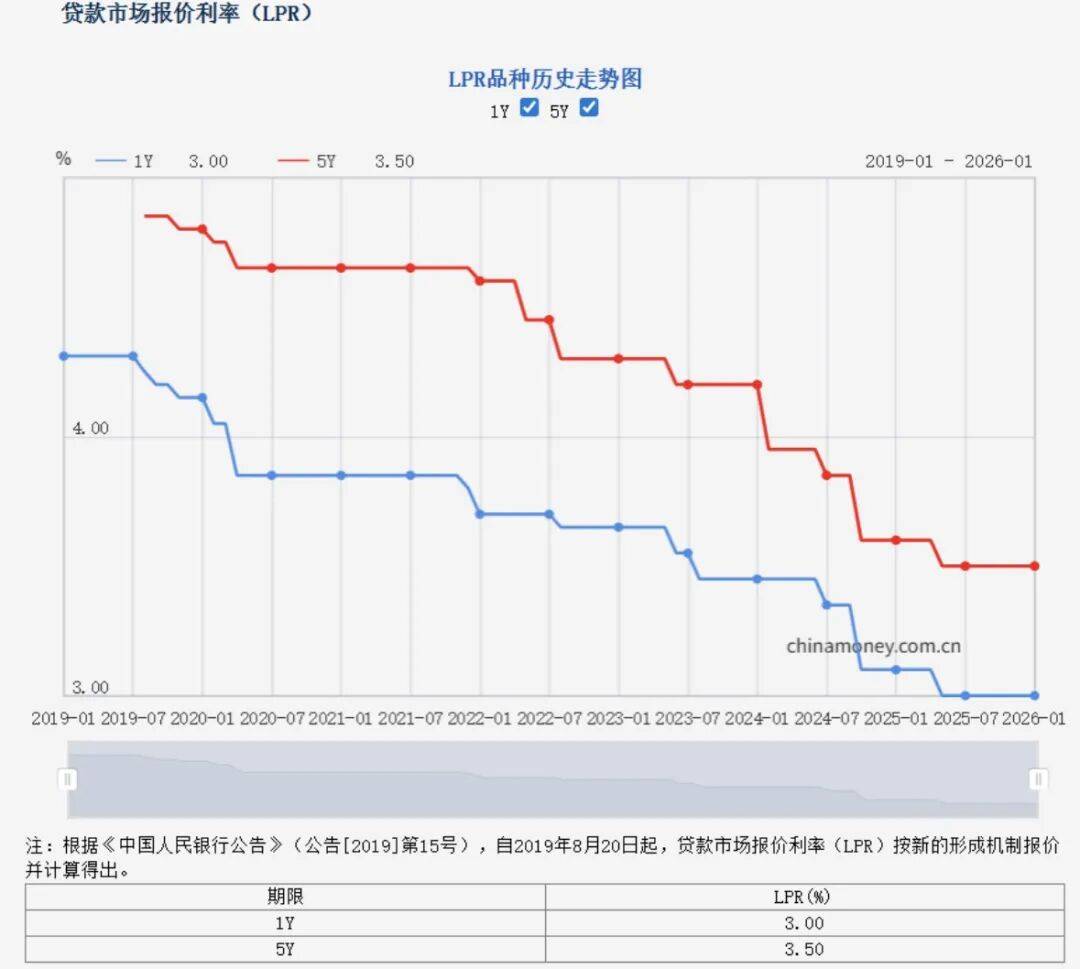
Core Viewpoint - The People's Bank of China (PBOC) has maintained the Loan Prime Rate (LPR) unchanged, with the 5-year rate at 3.5% and the 1-year rate at 3.0%, marking eight consecutive months without a reduction [1][4]. Group 1: Monetary Policy Actions - The PBOC conducted a 7-day reverse repurchase operation amounting to 158.3 billion yuan at a fixed rate of 1.40%, which remains unchanged [4][5]. - Despite the lack of a rate cut, the central economic work conference emphasized the continuation of a moderately loose monetary policy, indicating that rate cuts are not the only tool available [6]. Group 2: Structural Monetary Policy - On January 19, 2026, the PBOC announced its first structural "rate cut" of the year, reducing the re-lending and re-discount rates by 0.25 percentage points to support key sectors of the real economy [6]. - The new rates for re-lending to agriculture and small enterprises are set at 0.95%, 1.15%, and 1.25% for 3-month, 6-month, and 1-year terms, respectively, with the re-discount rate adjusted to 1.5% [6]. - This structural policy aims to lower the cost of funds for banks, encouraging them to provide lower-rate loans to small and micro enterprises, technological innovation, and green transformation, thereby reducing the overall financing costs for the real economy [6].
金融期货早评-20260121
Nan Hua Qi Huo· 2026-01-21 02:19
Report Industry Investment Rating No relevant content provided. Core Views of the Report - Globally, the geopolitical landscape is undergoing adjustments, with the US - EU game as a key variable. The EU's freezing of the US - EU trade agreement approval process has led to a halt in bilateral economic and trade cooperation, triggering panic about a possible $4 trillion US debt sell - off by Europe. The traditional safe - haven status of US debt is challenged, and the financial market has entered a "safe - haven - dominated" stage. The US faces structural dilemmas, and global capital is shifting to diversified allocation. Domestically, in 2025, the economy showed structural differentiation. In 2026, with a GDP growth target of 4.5% - 5%, expanding domestic demand is the core focus. Fiscal and monetary policies are coordinated to support domestic demand, infrastructure investment, consumption stimulation, and industrial upgrading [2]. - For the RMB exchange rate, the appreciation foundation of the RMB against the US dollar is solid, but the appreciation process will be relatively moderate, affected by the strength of the US dollar index and the central bank's regulation [3]. - For the stock index, although there are many external disturbances, the bottom support of the stock index is strong [4]. - For treasury bonds, the short - term upward trend of the bond market is mainly driven by the stock market adjustment, and it is recommended to hold medium - term long positions and wait and see in the short term [6]. - For the container shipping European line, the short - term is expected to continue the volatile pattern, and it is recommended to wait and see [9]. - For lithium carbonate, the spot market may show "off - season not off" characteristics, and the futures are expected to be in a high - level wide - range volatile state. It is recommended to wait for the market risk to be fully released before entering the market [10]. - For industrial silicon and polysilicon, in the short term, the price of industrial silicon is likely to rise, and in the medium - long term, it is recommended to pay attention to the supply side [12]. - For copper, the exchange has strengthened supervision, and the short - term price is under pressure. It is recommended to be cautious when building new positions above 100,000 yuan [16]. - For aluminum, the short - term is affected by emotions and may fluctuate and correct, but there is upward space in the medium - long term; for alumina, it is in an oversupply situation and is expected to be weak; for cast aluminum alloy, it has strong follow - up to aluminum and is recommended to pay attention to the spread [18]. - For nickel - stainless steel, it is expected to be volatile in the short term, and attention should be paid to the quota issuance rhythm [19]. - For oilseeds, the external market of US soybeans is weak, the domestic soybean meal is affected by the reserve release, and the rapeseed meal may return to international pricing if the trade relationship improves [23]. - For oils, they are easy to rise and difficult to fall in the short term [23]. - For fuel oil, the high - sulfur market is still weak, and the low - sulfur cracking is sluggish [26][27]. - For asphalt, it will continue to fluctuate in the short term, and attention can be paid to positive spreads, 03 basis, and cracking long - matching opportunities [29]. - For platinum and palladium, the bull market foundation is still there, but attention should be paid to the opening jump phenomenon [33]. - For gold and silver, gold is strong, and silver is volatile. The overall trend of precious metals is easy to rise, but attention should be paid to the risk of silver's decline [34]. - For pulp - offset paper, the pulp market is relatively bearish, and the offset paper is expected to be neutral. It is recommended to wait and see [39][40]. - For LPG, the supply - demand relationship has weakened, and attention should be paid to geopolitical changes and domestic device maintenance [41]. - For PTA - PX, the short - term is affected by unexpected maintenance rumors, and it is recommended to buy on dips in the long term [41]. - For MEG - bottle chips, the demand side is under pressure, and the over - supply expectation suppresses the valuation [44]. - For methanol, the geopolitical logic continues, but the 05 contract's fundamentals have weakened marginally, and it is recommended to wait and see [45]. - For PP, it is necessary to pay attention to the PDH device dynamics, and the short - term supply - demand pattern is expected to be better than that of PE [48]. - For PE, it is turning to a pattern of increasing supply and decreasing demand and is expected to be weak in the short term [49]. - For pure benzene - styrene, the supply side has new changes, and the styrene price rose at night [49]. - For rubber, it is expected to fluctuate in a wide range and may stabilize in the short term, but external risks should be noted [53]. - For glass and soda ash, the supply - demand expectation is weak [55][56]. - For propylene, the supply - demand relationship has weakened, and attention should be paid to geopolitical and device changes [57]. - For rebar and hot - rolled coil, they are expected to fluctuate at a low level, and the price range is recommended [58][59]. - For iron ore, it is expected to fluctuate in a wide range, and the price is affected by macro expectations [60]. - For coking coal and coke, the disk is weak, and the long - term price may be under pressure if the macro situation changes [62]. - For live pigs, the cold wave has put pressure on the northern pig prices [63]. - For cotton, it is expected to fluctuate, and attention should be paid to downstream imports and orders [65]. - For sugar, it is expected to fluctuate under pressure, and attention should be paid to the production progress in Thailand and India [67]. - For eggs, the price is expected to be stable overall with local adjustments [69]. - For apples, the near - term contracts are affected by weak demand, and the far - term contracts are less affected. Attention should be paid to the stocking situation [74]. - For red dates, the short - term price may fluctuate at a low level, and attention should be paid to downstream procurement [75]. - For logs, although the price has broken through, it does not have the condition to continue to fall sharply. It is recommended to operate in the range of 750 - 795 [76]. Summary by Directory Financial Futures - **Market Information**: The EU has frozen the US - EU trade agreement approval process; the ADP weekly employment report shows an average increase of 8,000 private - sector jobs per week; there are issues related to Greenland; domestic fiscal and financial policies are coordinated to promote domestic demand; the US Treasury Secretary reveals the progress of nominating the next Fed Chairman [1]. - **Core Judgments and Transmission Logic**: Geopolitical changes have led to a "safe - haven - dominated" global financial market. Domestically, expanding domestic demand is the focus in 2026, and fiscal and monetary policies are coordinated to support the economy [2]. - **Exchange Rate Analysis**: The RMB has a solid foundation for appreciation against the US dollar, but the process will be moderate, affected by the US dollar index and central bank regulation [3]. - **Strategy Recommendations**: Export enterprises are recommended to lock in forward settlement at around 7.01, and import enterprises are recommended to adopt a rolling purchase strategy at the 6.93 level [4]. Stock Index - **Market Review**: The stock index closed down collectively, and the trading volume increased slightly [4]. - **Important Information**: The Ministry of Finance has announced policies to support the economy, and there is a global bond - selling wave [4]. - **Market Interpretation**: The stock index was affected by geopolitical factors and short - term capital adjustments but has strong bottom support [4]. Treasury Bonds - **Market Review**: The treasury bond market rose, and the bond yield decreased [5]. - **Important Information**: The LPR remained unchanged, and policies were announced to expand domestic demand [6]. - **Core Views**: The short - term upward trend of the bond market is driven by the stock market, and it is recommended to hold medium - term long positions and wait and see in the short term [6]. Container Shipping European Line - **Market Review**: The container shipping index (European line) futures market closed down, and the trading volume was light [7]. - **Information Sorting**: The core contradiction is the game between the price cut of leading shipping companies and the repeated resumption of navigation. There are both positive and negative factors [8]. - **Trading Judgments**: It is expected to continue to fluctuate in the short term, and it is recommended to wait and see [9]. Commodities New Energy - **Lithium Carbonate** - **Market Review**: The futures price of lithium carbonate rose, and the trading volume increased [10]. - **Industry Performance**: The spot market of the lithium - battery industry chain was average, and the price of lithium ore and lithium salt increased [10]. - **Viewpoint**: The spot market may show "off - season not off" characteristics, and the futures are expected to be in a high - level wide - range volatile state [10]. - **Industrial Silicon and Polysilicon** - **Market Review**: The futures price of industrial silicon decreased, and that of polysilicon increased [11]. - **Industry Performance**: The industrial silicon spot market was average, and the photovoltaic industry spot market improved [12]. - **Viewpoint**: In the short term, the price of industrial silicon is likely to rise, and in the medium - long term, it is recommended to pay attention to the supply side [12]. Non - ferrous Metals - **Copper** - **Market Review**: The copper price continued to adjust, and the basis decreased [14]. - **Industry Information**: The exchange has adjusted the trading margin and price limit, and the inventory has changed [15]. - **Viewpoint**: The exchange has strengthened supervision, and the short - term price is under pressure [16]. - **Aluminum Industry Chain** - **Market Review**: The prices of aluminum, alumina, and cast aluminum alloy changed [17]. - **Core Views**: Aluminum may fluctuate and correct in the short term but has upward space in the medium - long term; alumina is in an oversupply situation and is expected to be weak; cast aluminum alloy has strong follow - up to aluminum [18]. - **Nickel - Stainless Steel** - **Market Review**: The prices of nickel and stainless steel decreased [18]. - **Industry Performance**: The spot market price and inventory of nickel and stainless steel changed [19]. - **Market Analysis**: It is expected to be volatile in the short term, and attention should be paid to the quota issuance rhythm [19]. Oils and Feeds - **Oilseeds** - **Market Review**: The price of rapeseed meal decreased, and the funds in the meal market continued to decline [21]. - **Supply - Demand Analysis**: The supply of imported soybeans may be in short supply in the first quarter, and the supply of rapeseed meal may increase if the trade relationship improves [22]. - **Outlook**: The external market of US soybeans is weak, the domestic soybean meal is affected by the reserve release, and the rapeseed meal may return to international pricing [23]. - **Oils** - **Market Review**: The prices of US soybean oil and Malaysian palm oil rebounded [23]. - **Supply - Demand Analysis**: The export of palm oil increased, and the policies of the US and Indonesia affected the market [24]. - **Viewpoint**: They are easy to rise and difficult to fall in the short term [23]. Energy and Oil and Gas - **Fuel Oil** - **Market Review**: The prices of high - sulfur and low - sulfur fuel oil changed [26]. - **Industry Performance**: The supply and demand of high - sulfur and low - sulfur fuel oil have different characteristics, and the inventory has changed [26]. - **Core Logic**: The high - sulfur market is still weak, and the low - sulfur cracking is sluggish [26][27]. - **Asphalt** - **Spot Situation**: The asphalt price was stable, and the supply and demand in different regions were different [28]. - **Fundamental Situation**: The supply and demand and inventory of asphalt have changed, and the price is affected by geopolitical factors [29]. - **Viewpoint**: It will continue to fluctuate in the short term, and attention can be paid to positive spreads, 03 basis, and cracking long - matching opportunities [29]. Precious Metals - **Platinum and Palladium** - **Market Review**: The prices of platinum and palladium rose [31]. - **Trading Logic**: Geopolitical and tariff issues have injected short - term safe - haven premiums [31]. - **Viewpoint**: The bull market foundation is still there, but attention should be paid to the opening jump phenomenon [33]. - **Gold and Silver** - **Market Review**: Gold rose, and silver fluctuated [34]. - **Trading Logic**: The geopolitical situation has increased the safe - haven demand for gold, and silver is affected by industrial demand and other factors [34]. - **Viewpoint**: Gold is strong, and silver is volatile. The overall trend of precious metals is easy to rise, but attention should be paid to the risk of silver's decline [34]. Chemicals - **Pulp - Offset Paper** - **Market Review**: The futures prices of pulp and offset paper fluctuated [37]. - **Spot Market**: The price of pulp was stable, and the port inventory increased [37][38]. - **Viewpoint**: The pulp market is relatively bearish, and the offset paper is expected to be neutral. It is recommended to wait and see [39][40]. - **LPG** - **Market Dynamics**: The LPG price decreased, and the spread changed [40]. - **Spot Feedback**: The spot price decreased, and the supply and demand and inventory have changed [41]. - **Viewpoint**: The supply - demand relationship has weakened, and attention should be paid to geopolitical changes and domestic device maintenance [41]. - **PTA - PX** - **Fundamental Situation**: The supply and demand of PX and PTA have changed, and the profit has decreased [41]. - **Viewpoint**: The short - term is affected by unexpected maintenance rumors, and it is recommended to buy on dips in the long term [41]. - **MEG - Bottle Chips** - **Inventory**: The inventory of MEG in East China ports has increased [43]. - **Fundamental Situation**: The supply and demand of MEG and polyester have changed, and the profit has been repaired [43]. - **Viewpoint**: The demand side is under pressure, and the over - supply expectation suppresses the valuation [44]. - **Methanol** - **Market Dynamics**: The methanol price changed [45]. - **Spot Feedback**: The basis and inventory of methanol have changed [45]. - **Viewpoint**: The geopolitical logic continues, but the 05 contract's fundamentals have weakened marginally, and it is recommended to wait and see [45]. - **PP** - **Market Dynamics**: The PP price decreased [45]. - **Spot Feedback**: The spot price of PP is different in different regions, and the supply and demand and inventory have changed [46]. - **Viewpoint**: It is necessary to pay attention to the PDH device dynamics, and the short - term supply - demand pattern is expected to be better than that of PE [48]. - **PE** - **Market Dynamics**: The PE price decreased [49]. - **Spot Feedback**: The spot price of PE decreased, and the supply and demand and inventory have changed [49]. - **Viewpoint**: It is turning to a pattern of increasing supply and decreasing demand and is expected to be weak in the short term [49]. - **Pure Benzene - Styrene** - **Market Review**: The prices of pure benzene and styrene changed [49]. - **Spot Feedback**: The spot prices of pure benzene and styrene decreased, and the basis increased [50]. - **Viewpoint**: The supply side has new changes, and the styrene price rose at night [49]. - **Rubber** - **Market Trends**: The rubber price stabilized slightly [52]. - **Related Information**: The LPR remained unchanged, and domestic policies were favorable [52]. - **Core Views**: The rubber price is expected to fluctuate in a wide range and may stabilize in the short term, but external risks should be noted [72]. - **Glass and Soda Ash** - **Soda Ash**: The price decreased, and the inventory decreased [55]. The supply is expected to be high, and the price is restricted by inventory [55]. - **Glass**: The price decreased, and the inventory decreased. The supply and demand are expected to be weak, and attention should be paid to the supply change [56]. - **Propylene** - **Market Dynamics**: The propylene price decreased [56]. - **Spot Feedback**: The spot price of propylene is different in different regions, and the supply and demand have changed [56]. - **Viewpoint**: The supply - demand relationship has weakened, and attention should be paid to geopolitical and device changes [57]. Black Metals - **Rebar and Hot - Rolled Coil** - **Market Review**: They fluctuated and fell, and were relatively resistant to decline compared to furnace materials [58]. - **Core Logic**: The production growth of finished products has slowed
韩国1月出口强势开局!半导体需求强劲抵消汽车关税冲击
智通财经网· 2026-01-21 02:09
Core Insights - South Korea's exports accelerated in the first 20 days of January, primarily driven by strong semiconductor demand, while automotive exports weakened due to increased tariffs in the U.S. [1] - The export growth rate reached 14.9% year-on-year, surpassing the revised 13.3% growth for the entire month of December [1] - Semiconductor exports surged by 70.2%, supported by global AI and data center investment trends, while automotive exports fell nearly 11% [1] Export Performance - The total export value for the first 20 days of January was 14.9% higher year-on-year, with imports increasing by 4.2%, resulting in a trade deficit of $626 million [1] - Wireless communication devices and petrochemical products also saw significant export growth, increasing by 48% and 18% respectively [1] - The decline in automotive exports reflects a slowdown in global demand and the impact of U.S. tariffs, with shipbuilding exports also down by 18% [1] Economic Context - The strong export growth is seen as a key driver for South Korea's economy in 2023, with semiconductor demand expected to offset declines in other sectors [1] - The recent trade agreement with the U.S. set a tariff cap of 15% on imported goods, including automobiles, which has raised concerns about long-term export challenges for the economy [2] - The depreciation of the Korean won against the U.S. dollar has improved price competitiveness for exports but has also increased inflationary pressures [2] Monetary Policy - The Bank of Korea maintained the benchmark interest rate at 2.5% for the fifth consecutive meeting, signaling a neutral stance amid mixed economic growth risks [2] - Core inflation and overall inflation have exceeded the central bank's target of 2%, raising concerns about rising import costs due to a weak won [2] Trade Partner Dynamics - Exports to China and the U.S. grew by 30.2% and 19.3% respectively, while exports to the EU and Japan declined by approximately 15% and 13% [2]
广发早知道:汇总版-20260121
Guang Fa Qi Huo· 2026-01-21 00:59
1. Report Industry Investment Rating No relevant content provided. 2. Core Viewpoints of the Report The report comprehensively analyzes various sectors including financial derivatives, precious metals, shipping, and multiple commodity futures. It points out the supply - demand situations, price trends, and investment strategies for each sector. For instance, in the financial derivatives sector, A - share markets are expected to be volatile, and investors are advised to control risks; in the commodity futures sector, different commodities face different supply - demand pressures and price trends, and corresponding investment strategies are proposed accordingly [2][3][4]. 3. Summary by Directory 3.1 Daily Selections - **Alumina**: The market is in a surplus situation with supply increasing and demand weakening. The price lacks upward momentum and is expected to fluctuate between 2600 - 2900 yuan/ton [2]. - **Ethylene Glycol**: Seasonal inventory accumulation is expected, and the price in January is under pressure. Strategies such as EG5 - 9 anti - arbitrage are recommended [3]. - **Coking Coal**: The spot price is strong before the Spring Festival, but the futures price has over - anticipated the increase. After the festival, the market is expected to be loose, and the price is expected to fluctuate between 1000 - 1150 [4]. - **Palm Oil**: Driven by export growth, it attempts to break through resistance levels. Domestically, it may try to break through 8750 yuan and may briefly reach 9000 yuan [5]. - **Gold**: Geopolitical conflicts boost safe - haven demand, and the price is expected to be strong in the long - term. Hold long positions above the 20 - day moving average [6]. 3.2 Financial Futures 3.2.1 Stock Index Futures - **Market Situation**: A - share major indices declined, and the four major stock index futures contracts also fell. The market is divided, and small and medium - sized indices corrected [7][8]. - **News**: The government will implement more active fiscal and monetary policies to promote economic growth and price recovery [8]. - **Funding**: Trading volume increased slightly, and the central bank had a net capital withdrawal. - **Operation Suggestion**: Control portfolio risks, reduce long positions, and wait for re - entry opportunities [9]. 3.2.2 Treasury Bond Futures - **Market Performance**: Treasury bond futures rose, and bond yields generally declined [10][11]. - **Funding**: The central bank had a net capital withdrawal, and the inter - bank market liquidity was generally stable [11]. - **Policy**: The fiscal policy in 2026 will be more active to support economic stability [11]. - **Operation Suggestion**: The bond market may fluctuate in the short - term. Adopt range - bound operations and pay attention to basis - widening strategies [12]. 3.3 Precious Metals - **Market Review**: Geopolitical and trade conflicts led to the selling of US and Japanese bonds, a decline in the US dollar and US stocks, and the precious metals market remained strong [13][14][15]. - **Outlook**: Gold is expected to be strong in the long - term due to geopolitical and trade risks. Silver is expected to have a rising price center, and platinum and palladium will follow gold with narrowed fluctuations [15][16]. 3.4 Shipping Index (European Line) - **Index**: The SCFIS European line index and the SCFI composite index declined [17]. - **Fundamentals**: Container shipping capacity increased, and the demand in the eurozone and the US showed different trends [17]. - **Logic**: The futures price is under pressure from the downward trend of spot prices [17]. - **Operation Suggestion**: Expect short - term fluctuations [17]. 3.5 Non - ferrous Metals 3.5.1 Copper - **Spot**: The spot discount widened, and the inventory continued to accumulate [18][21]. - **Macro**: The US is promoting negotiations on key minerals, which affects the tariff expectations for copper [19][22]. - **Supply**: The copper concentrate TC decreased, and the electrolytic copper production showed different trends in December and is expected to decline slightly in January [19]. - **Demand**: The downstream copper processing industry's operating rate was low, and the terminal demand was weak [20]. - **Logic**: The copper price may return to fundamental pricing, and attention should be paid to the CL premium and LME inventory changes [22]. - **Operation Suggestion**: Wait and observe, and enter long positions after adjustment. Pay attention to the support at 97500 - 98500 [23]. 3.5.2 Alumina - **Spot**: The spot price declined, and the inventory increased weekly by 7.9 tons [23][24]. - **Supply**: The production may decrease slightly in January due to some enterprises' losses [24]. - **Logic**: The market is in surplus, and the price lacks upward momentum. It is expected to fluctuate between 2600 - 2900 yuan/ton [25]. - **Operation Suggestion**: Short at high prices within the range of 2600 - 2900 [25]. 3.5.3 Aluminum - **Spot**: The spot price declined, and the transaction was cold [25]. - **Supply**: The production is expected to increase slightly, and the aluminum - water ratio may continue to decline [26]. - **Demand**: The downstream processing industry's operating rate was low, and the demand was weak [26]. - **Logic**: The price is expected to fluctuate widely between 23000 - 25000 yuan/ton in the short - term [28]. - **Operation Suggestion**: Do not chase high prices. Enter long positions after a pullback within the range of 23000 - 25000 [29]. 3.5.4 Aluminum Alloy - **Spot**: The spot price declined, and the market maintained rigid demand [29]. - **Supply**: The production is expected to decline slightly in January due to raw material shortages [29][30]. - **Demand**: The demand is in a mild recovery, but the terminal demand transmission is not smooth [30]. - **Logic**: The price is expected to fluctuate between 22000 - 24000 yuan/ton in the short - term [31]. - **Operation Suggestion**: Long AD03 and short AL03 for arbitrage within the range of 22000 - 24000 [31]. 3.5.5 Zinc - **Spot**: The spot price declined, and the transaction was general [32]. - **Supply**: The zinc ore supply is tight, and the refined zinc production decreased in December [33]. - **Demand**: The downstream processing industry's operating rate declined, and the demand was weak [34]. - **Logic**: The price is expected to fluctuate, and attention should be paid to the zinc ore TC and refined zinc inventory changes [35][36]. - **Operation Suggestion**: Pay attention to the support at 23800, and hold long positions in the long - term. Hold cross - market anti - arbitrage [36]. 3.5.6 Tin - **Spot**: The spot price increased, and the transaction was general [36]. - **Supply**: The tin ore and tin ingot import and export showed different trends in December [37]. - **Demand**: The downstream tin - soldering industry's operating rate declined, and the terminal demand was divided [38]. - **Logic**: The price is affected by market sentiment and is expected to be volatile. Consider low - buying after the sentiment stabilizes [39]. - **Operation Suggestion**: Wait and observe [39]. 3.5.7 Nickel - **Spot**: The spot price increased, and the transaction was weak [39]. - **Supply**: The refined nickel production increased, and the market supply was sufficient [40]. - **Demand**: The demand in different sectors showed different trends, and the stainless - steel demand was general [40]. - **Logic**: The price is expected to fluctuate widely between 138000 - 148000 [42]. - **Operation Suggestion**: Conduct range - bound operations [42]. 3.5.8 Stainless Steel - **Spot**: The spot price was stable, and the basis declined [43]. - **Raw Materials**: The prices of nickel ore and ferronickel increased, and the price of ferrochrome was firm [43]. - **Supply**: The production is expected to increase in January, and the supply is relatively loose [44]. - **Logic**: The price is expected to fluctuate between 13800 - 14600, and attention should be paid to the ore news and downstream inventory [45]. - **Operation Suggestion**: Operate within the range of 13800 - 14600 [46]. 3.5.9 Lithium Carbonate - **Spot**: The spot price increased, and the market sentiment was boosted [46][47]. - **Supply**: The production is expected to decline in January due to pre - holiday maintenance [47]. - **Demand**: The demand is expected to be optimistic, but the 1 - month demand may decline [48]. - **Logic**: The futures price increased sharply due to supply - side speculation. The price is expected to be strong in the short - term [49]. - **Operation Suggestion**: Wait and observe in the short - term, and enter long positions at low prices in the medium - term [50]. 3.5.10 Polysilicon - **Spot Price**: The spot price increased slightly [50]. - **Supply**: The production is expected to decline in January and the first quarter of 2026 [50]. - **Demand**: The demand may be improved by export demand, and the silicon wafer inventory decreased [51]. - **Logic**: The price is expected to be supported at 48000 yuan/ton. Wait and observe and consider hedging [52]. - **Operation Suggestion**: Wait and observe at high - level fluctuations [52]. 3.5.11 Industrial Silicon - **Spot Price**: The spot price was stable [53]. - **Supply**: The production is expected to decline in January and February [53]. - **Demand**: The demand is expected to decline in January, and attention should be paid to the polysilicon production [53]. - **Logic**: The price is expected to fluctuate between 8200 - 9200 yuan/ton, and attention should be paid to the demand changes [55]. - **Operation Suggestion**: Wait and observe at low - level fluctuations and pay attention to the production cut [55]. 3.6 Ferrous Metals 3.6.1 Steel - **Spot**: The spot price declined, and the basis of rebar strengthened [56]. - **Cost and Profit**: The cost decreased, and the profit increased. The profit order is billet > hot - rolled coil > rebar [56]. - **Supply**: The production is expected to decline seasonally [56][57]. - **Demand**: The demand declined seasonally, and the post - holiday demand elasticity is limited [57]. - **Logic**: The steel price may decline due to cost reduction. The rebar and hot - rolled coil are expected to fluctuate within certain ranges [57]. - **Operation Suggestion**: Exit long positions on the steel - ore ratio at high prices and hold long positions on the hot - rolled coil - rebar spread [57]. 3.6.2 Iron Ore - **Spot**: The spot price declined [58]. - **Supply**: The global iron ore shipment decreased, and the port inventory increased [58][59]. - **Demand**: The steel mill's demand was weak, and the iron - making production declined [58]. - **Logic**: The price is expected to be weak, and attention should be paid to the pre - holiday restocking [59]. - **Operation Suggestion**: Conduct range - bound operations within the range of 770 - 830 [60]. 3.6.3 Coking Coal - **Spot**: The Shanxi coal price increased more than it decreased, and the Mongolian coal price declined [61][63]. - **Supply**: The coal mine production increased slightly, and the port inventory decreased slightly [63]. - **Demand**: The steel mill's demand for replenishment increased, and the coking plant's profit declined [63]. - **Logic**: The price is expected to be weak after the holiday, and the price is expected to fluctuate between 1000 - 1150 [63]. - **Operation Suggestion**: Consider short - term weakness and operate within the range of 1000 - 1150 [63]. 3.6.4 Coke - **Spot**: The mainstream coke enterprises started to raise prices, and the port price declined [64][65]. - **Supply**: The production decreased slightly, and the coking plant's profit was under pressure [64][65]. - **Demand**: The steel mill's demand increased, and the iron - making production increased [65]. - **Logic**: The price is expected to be weak after the holiday, and the price is expected to fluctuate between 1600 - 1750 [65]. - **Operation Suggestion**: Consider short - term weakness and operate within the range of 1600 - 1750 [65]. 3.6.5 Ferrosilicon - **Spot**: The spot price was stable [66]. - **Cost and Profit**: The cost was stable, and the profit was negative [66]. - **Supply**: The production decreased slightly, and the output was at a low level [66][67]. - **Demand**: The demand from the steel industry and non - steel industries declined [67]. - **Logic**: The price is expected to fluctuate between 5300 - 5800, and attention should be paid to macro and policy factors [67]. - **Operation Suggestion**: Wait and observe and pay attention to the price range of 5300 - 5800 [67]. 3.6.6 Manganese Silicon - **Spot**: The spot price declined slightly [69]. - **Cost**: The cost was relatively high, and the profit was negative [69]. - **Supply**: The production decreased slightly, and the output was at a low level [70][71]. - **Demand**: The demand from the steel industry declined, and the inventory was high [71]. - **Logic**: The price is expected to fluctuate between 5600 - 6000, and attention should be paid to macro and policy factors [71]. - **Operation Suggestion**: Wait and observe and pay attention to the price range of 5600 - 6000 [71]. 3.7 Agricultural Products 3.7.1 Meal - **Spot Market**: The soybean meal price was stable, and the rapeseed meal price increased [72]. - **Fundamentals**: Brazilian soybean production and export are affected by weather and other factors [73]. - **Outlook**: The domestic soybean and soybean meal supply is sufficient, and the price is expected to fluctuate around 2700 [74]. 3.7.2 Live Pigs - **Spot Situation**: The spot price declined slightly [75]. - **Market Data**: The breeding profit improved, and the slaughter weight increased [75]. - **Outlook**: The market is in a game between supply and demand, and the price is expected to fluctuate at the bottom [76]. 3.7.3 Corn - **Spot Price**: The price was stable in most areas [77]. - **Fundamentals**: The grain inventory in Guangzhou Port increased [78]. - **Outlook**: The price is supported by supply shortage and pre - holiday demand but limited by policy supply. It is expected to fluctuate at a high level [79]. 3.7.4 Sugar - **Analysis**: The international sugar supply is sufficient, and the domestic market is in the pre - holiday stocking period. The price is expected to be weak [80]. - **Fundamentals**: The Indian sugar production increased, and the Brazilian sugar production decreased [80]. - **Operation Suggestion**: Wait and observe in the short - term [80]. 3.7.5 Cotton - **Analysis**: The ICE cotton price is under pressure, and the domestic cotton supply is sufficient. The price is expected to be adjusted [82]. - **Fundamentals**: The US cotton inspection progress is behind, and the domestic cotton commercial inventory is increasing [82]. - **Outlook**: The price is expected to continue to be adjusted [82]. 3.7.6 Eggs - **Spot Market**: The price was stable in most areas, and the supply and demand were balanced [84]. - **Supply**: The inventory of laying hens is stable, and the inventory pressure is relieved [84]. - **Demand**: The trader's purchasing is cautious, and the inventory has increased [84]. - **Outlook**: The price is expected to fluctuate within a range [84]. 3.7.7 Oils - **Analysis**: The palm oil price is boosted by exports, and the soybean oil and rapeseed oil prices are affected by multiple factors. The prices are expected to fluctuate [85][87][88]. - **Fundamentals**: The Malaysian palm oil export and reference price change, and the US soybean oil supply is sufficient [86][88]. - **Outlook**: The palm oil may break through resistance levels, and the