
产能出清

Search documents
中金:水泥等建材淡季需求延续弱势 关注行业格局优化机遇
Zhi Tong Cai Jing· 2025-09-16 07:33
Group 1: Cement Industry - The average national cement shipment rate in August 2025 was 45.2%, down from 48.8% in the same period last year, with a year-on-year decrease in cement production of 6.2% to 148 million tons [1][2] - The average price of cement from July to September 2025 was 338 yuan/ton, showing a slight rebound from the low point in August, with a month-on-month increase of 2 yuan/ton [2] - Companies to watch include Conch Cement (600585), Shangfeng Cement (000672), and China Resources Cement Technology (01313) due to potential marginal improvements in demand as the peak season approaches [2] Group 2: Glass Industry - From January to August 2025, the area of completed housing decreased by 17% year-on-year to 27.7 million square meters, indicating significant pressure on glass demand due to ongoing real estate downturn [3] - The daily melting capacity of float glass was 15.9 million tons as of September 2025, remaining stable compared to the end of last year, with high inventory levels of 55 million boxes [3] - Companies to focus on include Xinyi Glass (00868) and Qibin Group (601636) as the industry may see improvements in structure due to supply contraction [3] Group 3: Steel Industry - In August, both supply and demand in the steel sector weakened, with crude steel production at 77.37 million tons, a year-on-year decrease of 0.7%, and apparent domestic consumption at 68.39 million tons, down 0.8% year-on-year [4] - Anticipated production adjustments in the fourth quarter may improve industry supply and demand dynamics, leading to a potential recovery in the profitability cycle [4] - Key companies to monitor include Hualing Steel (000932) as the industry’s core assets are currently undervalued [4]



协鑫科技获54.46亿港元融资 发力技术迭代
Zheng Quan Ri Bao· 2025-09-16 07:10
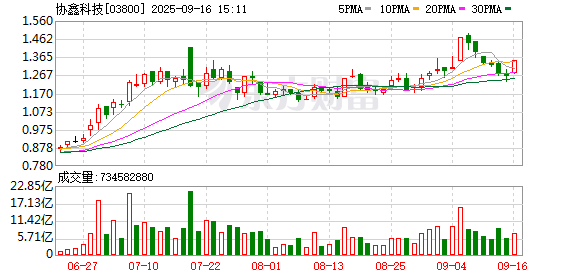
Core Viewpoint - GCL-Poly Energy has announced a strategic financing agreement with InfiniCapital, raising approximately HKD 54.46 billion (around USD 7 billion) through a private placement of about 4.736 billion shares, aimed at strengthening its equity structure and funding growth initiatives [2][3]. Group 1: Financing Details - The financing will be primarily allocated to three areas: enhancing cash reserves for structural adjustments in polysilicon production, strengthening the second growth curve through increased production of silane gas, and optimizing the company's capital structure [2][3]. - The strategic partnership with InfiniCapital, which has a diversified investment portfolio, is expected to provide GCL-Poly with significant support for its growth in high-tech sectors [3]. Group 2: Market Context and Implications - The polysilicon industry is currently undergoing market adjustments, with a rapid increase in demand for silane gas, positioning GCL-Poly to capitalize on this trend [2][3]. - Analysts believe that this financing will enhance GCL-Poly's competitive advantage and allow it to effectively penetrate both domestic and international high-end markets, converting carbon emission advantages into pricing power [3]. Group 3: Future Plans and Financial Performance - GCL-Poly plans to establish a specialized industry fund with InfiniCapital to consolidate inefficient excess capacity in the industry, aiming to promote high-quality production and mitigate chaotic price competition [4]. - Financial projections indicate that GCL-Poly's EBITDA for the first half of 2025 is expected to reach approximately CNY 3.8 billion, a year-on-year increase of 325.8%, while maintaining a competitive cash production cost of CNY 25.31 per kilogram [4].


玻璃:市场情绪转好 旺季关注现货市场情绪
Jin Tou Wang· 2025-09-16 03:09
Market Overview - The average transaction price of glass in the Shihe region is around 1140 yuan per ton [1] Supply and Demand - As of September 11, 2025, the national float glass daily production is 160,200 tons, an increase of 0.38% compared to four days prior. The total float glass production for the week (September 5-11, 2025) is 1,121,200 tons, showing a week-on-week increase of 0.38% but a year-on-year decrease of 4.49% [2] - The total inventory of sample enterprises for float glass is 61.583 million heavy boxes, a decrease of 1.467 million heavy boxes or 2.33% from the previous period, and a year-on-year decrease of 14.94%. The inventory days are 26.3 days, down by 0.6 days from the last period [2] Analysis - The overall sentiment in the glass market has improved, with industrial products stabilizing and rebounding. Glass is sensitive to macroeconomic fluctuations, leading to significant price rebounds. Last week saw good transaction volumes in the spot market and a reduction in inventory [3] - News regarding the transition to clean energy production lines in the Shihe region has triggered price increases, although the specific timeline for this transition is yet to be determined. The expected downtime is limited, and there are plans for some production restarts in the future [3] - Current inventory levels among manufacturers in the Shihe region are rising, and there has been no significant reduction in midstream inventory. Although there is a seasonal improvement in deep processing orders, demand remains weak, and the low operating rates persist without clear signs of peak season characteristics [3] - In the medium to long term, the industry is at the bottom of the real estate cycle, with a decrease in completions. The industry will need to clear excess capacity to resolve the current overcapacity issue. Monitoring the implementation of regional policies and the performance of downstream stocking ahead of the peak season is essential [3] Operational Recommendations - The current recommendation for the glass market is to adopt a wait-and-see approach [4]
短期行业供应过剩格局难以扭转 纯碱反弹沽空
Qi Huo Ri Bao· 2025-09-16 01:32
Core Viewpoint - The Chinese government is taking measures to promote high-quality development in the photovoltaic and lithium battery industries while addressing issues of low-price competition in the photovoltaic sector [1] Supply Side Pressure - The soda ash industry is entering an adjustment period starting in 2024 due to significant capacity expansion driven by high profits, with nearly 10 million tons of new capacity added in the last three years, accounting for over 20% of total capacity [2] - As of mid-September 2025, domestic soda ash production reached 20.06 million tons, a year-on-year increase of approximately 5% [2] - The domestic soda ash operating rate was 87.29%, with a weekly production of 761,100 tons, reflecting a 1.25% increase [2] - New capacity additions in the second half of 2025 and 2026 are expected to maintain supply pressure, with significant new capacities planned by various companies [2] Downstream Demand - The demand for float glass has significantly declined due to the real estate cycle, leading to a noticeable downturn in industry prosperity [3] - As of mid-September 2025, the daily melting volume of float glass was 160,200 tons, a year-on-year decrease of 4.81%, while photovoltaic glass was in a loss state with a daily melting volume of 88,800 tons, down 12.27% year-on-year [3] - The float glass operating rate was 76.01%, reflecting a year-on-year decrease of 4.79 percentage points [3] Inventory Trends - The continuous addition of new capacity and declining demand for both heavy and light soda ash have exacerbated the oversupply issue, leading to increased inventory levels [4] - As of mid-September 2025, soda ash enterprise inventory stood at 1.7975 million tons, a year-on-year increase of 33.1% [4] - The industry is expected to continue facing inventory accumulation, pressuring capacity clearance [4] Profit Decline - The production processes for soda ash include ammonia-soda, joint-soda, and natural soda, with respective capacity shares of 29%, 50%, and 21% [5] - The cost structure varies significantly among these processes, with raw material and fuel costs being substantial in ammonia-soda and joint-soda methods [5] - As of mid-September 2025, both joint-soda and ammonia-soda processes were operating at a loss, with profits of -36.3 yuan/ton and -54.5 yuan/ton, respectively [6] Industry Outlook and Strategy - The soda ash industry is expected to undergo a cyclical transition over the next 1-2 years, with an anticipated increase in industry concentration and a potential rise in the share of natural soda capacity [7] - Short-term trading strategies for soda ash contracts may face challenges, with strong support expected in the 1250-1300 yuan/ton range [7] - Key factors to monitor include the recovery of coal production and the implementation of policies to eliminate outdated capacity and restrict overproduction, which could alter the oversupply expectations [7]
中国光伏最惨两年,仍有公司市值翻倍 | 巴伦精选
Tai Mei Ti A P P· 2025-09-11 07:54
Core Viewpoint - The photovoltaic industry is facing significant risks, with a recommendation to expedite the elimination of outdated production capacity due to a stark decline in performance metrics compared to previous years [1] Industry Overview - The revenue of nearly 80 listed photovoltaic companies dropped from 476.01 billion RMB to 414.39 billion RMB year-on-year, marking a doubling of the decline rate, while net losses surged from 1.4 billion RMB to 8.95 billion RMB [1] - The number of loss-making companies increased from 33 to 42, and the industry's gross profit margin fell from 11.3% to 9.4% [1] - The peak performance period for the industry was in mid-2023, with a revenue growth rate close to 60% and a net profit of 70.2 billion RMB, where only 8 companies reported losses [1] Market Dynamics - The photovoltaic equipment sector saw a significant price drop of over 60% from its historical high in August 2022 until early 2024, followed by a recovery of approximately 37% since June 2023 [2] - The largest photovoltaic ETF experienced a 48% decline over three years but rebounded with a 36% increase in the past year, contributing about 35% of its gains since June [2] - Market interest in photovoltaics has been rekindled due to expectations surrounding capacity consolidation and measures to limit low-price bidding, alongside a post-policy-driven "installation rush" leading to unexpected price rebounds [2] Company Performance - Yangguang Electric, the leading global photovoltaic stock, saw its market value rise from around 130 billion RMB to approximately 284.7 billion RMB, achieving a two-year increase of about 110% [3] - The company reported a 40.3% year-on-year revenue growth in the first half of 2024, with a net profit growth of 56% and a gross profit margin of 34.4% [4] - The storage business significantly contributed to Yangguang Electric's growth, with a 127.78% increase in revenue and a gross margin of 39.92% [4] Competitive Landscape - DeYe shares, which also focus on photovoltaic inverters and storage, saw its market value rise from 33 billion RMB to over 67 billion RMB, with a revenue growth rate nearing 50% and net profit growth exceeding 65% [5] - Jiejia Weichuang, a supplier of production equipment for photovoltaic manufacturers, experienced a market value increase from below 15 billion RMB to nearly 35 billion RMB, with a revenue growth of 26.4% [6] - Aishuo shares, which adopted a non-mainstream approach, saw its market value rise from below 14 billion RMB to nearly 30 billion RMB, benefiting from a growing market share in BC products [7] Conclusion - Despite some companies experiencing significant rebounds in market value, many still lack stable performance support, and the industry is not yet at a true turning point [7]

行业景气观察:8月PPI同比降幅收窄,集成电路出口金额同比增幅扩大
CMS· 2025-09-10 13:04
Core Insights - The report highlights a narrowing decline in PPI and an expansion in the year-on-year growth of integrated circuit exports, indicating a potential recovery in manufacturing and technology sectors [1][2][11] - The overall CPI turned negative at -0.4% in August, while the PPI's decline reduced to -2.9%, suggesting a mixed economic environment with pressures on consumer prices but some stabilization in production prices [11][22] Industry Overview Economic Indicators - August's core CPI showed a year-on-year increase of 0.9%, marking a continuous recovery over four months, while the PPI's decline was less severe than expected, indicating improvements in certain sectors [11][22] - The report notes that the decline in CPI was primarily driven by falling prices in food categories such as vegetables and eggs, while core CPI improvements were supported by rising prices in household appliances and services [13][14][22] Information Technology Sector - The Philadelphia Semiconductor Index and Taiwan Semiconductor Industry Index both saw increases, with the former rising by 3.82% to 5819.82 points, indicating a positive trend in the semiconductor market [24][25] - Global semiconductor sales in July experienced a year-on-year growth, further supporting the optimistic outlook for the technology sector [24] Midstream Manufacturing - Prices for polysilicon and silicon wafers have increased, reflecting a positive trend in the photovoltaic industry, while the sales of excavators showed a year-on-year increase [22][23] - The report indicates that the demand for construction machinery remains strong, with loader sales showing significant growth [22] Consumer Demand - Prices for fresh milk and pork have risen, while the prices of sugar and certain vegetables have decreased, reflecting mixed trends in consumer goods [16][22] - The report highlights that the demand for household appliances and clothing has improved, driven by government policies promoting consumption [14][22] Resource Sector - The report notes an increase in the price index for glass and a rise in construction steel prices, indicating a recovery in the resource sector [22][23] - The prices of coal and other energy resources have shown fluctuations, with some prices declining while others have increased, reflecting a complex supply-demand dynamic [22][23] Financial and Real Estate Sector - The report indicates a rise in land transaction premium rates, while the volume of transactions in the real estate market has decreased, suggesting a cooling in the property sector [22][23] - The A-share market has seen a decline in turnover rates and daily transaction volumes, indicating reduced investor activity [22][23] Public Utilities - The report notes a decrease in natural gas ex-factory prices in China, while UK natural gas futures prices have increased, reflecting divergent trends in energy markets [22][23] - The average daily power generation of key power plants has shown a narrowing year-on-year increase, indicating potential challenges in the energy supply [22][23]
动力电池扭转叙事 市值何以五成增长
2 1 Shi Ji Jing Ji Bao Dao· 2025-09-10 11:53
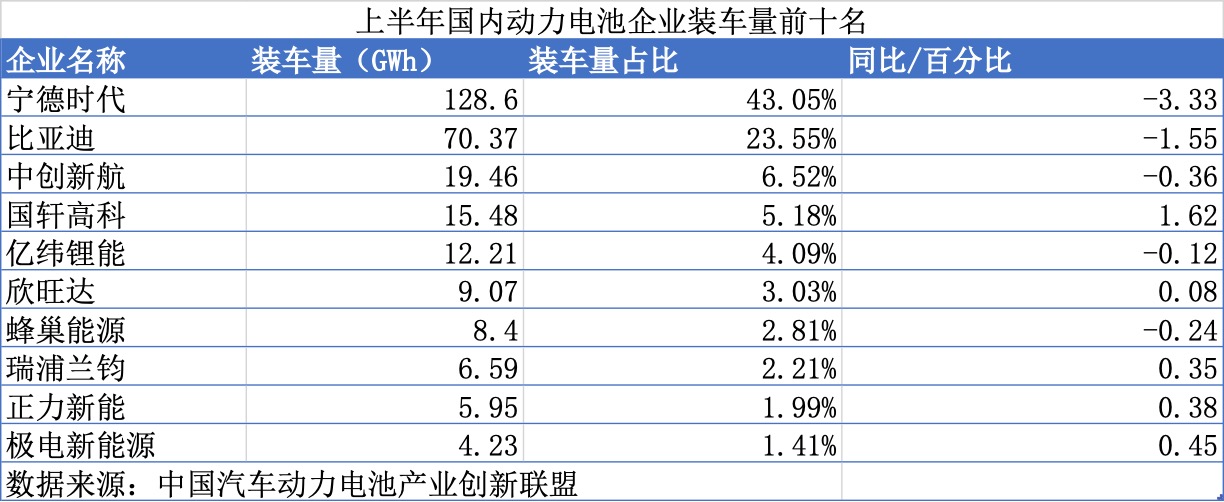
Core Viewpoint - The domestic power battery industry is experiencing a significant recovery, driven by the increasing demand for electric vehicles and energy storage, despite previous concerns about overcapacity [2][3]. Group 1: Market Performance - The top ten domestic power battery companies in terms of installed capacity in the first half of the year are led by CATL with 128.6 GWh, accounting for 43.05% of the market share, followed by BYD with 70.37 GWh (23.55%) [1]. - The total power battery sales in China reached 485.5 GWh in the first half of the year, representing a year-on-year growth of 51.6% [3]. - CATL and BYD together hold 66% of the market share, maintaining a strong duopoly in the industry [3]. Group 2: Company Developments - CATL achieved a net profit of 30.485 billion yuan in the first half of the year, a 33.33% increase year-on-year, with a gross margin of 22.41% [3]. - BYD's market share for power batteries is 23.55%, with a focus on its own vehicles and the introduction of the second-generation blade battery technology [3][4]. - Guoxuan High-Tech plans to invest in new production bases in Nanjing and Wuhu, totaling no more than 4 billion yuan, aiming to increase its market share [4]. Group 3: Industry Trends - The competition among battery manufacturers is intensifying, with a notable shift towards technology upgrades rather than mere capacity expansion [4][5]. - The rise of lithium iron phosphate (LFP) batteries is significant, with their market share reaching 81.4% and a year-on-year growth of 73% [6]. - Solid-state batteries are seen as a key future technology, with many companies announcing timelines for mass production, although significant challenges remain [6][7]. Group 4: International Expansion - Domestic battery manufacturers are increasingly focusing on overseas markets, with exports reaching 81.6 GWh in the first half of the year, a 26.5% increase year-on-year [8]. - CATL is expanding its international presence with factories in Hungary and Spain, enhancing its local supply capabilities [8][9]. - The competition in the international market is intensifying, with companies needing strong capital support to adapt to local production requirements and regulations [9].




动力电池扭转叙事 销量何以五成增长
2 1 Shi Ji Jing Ji Bao Dao· 2025-09-10 11:52
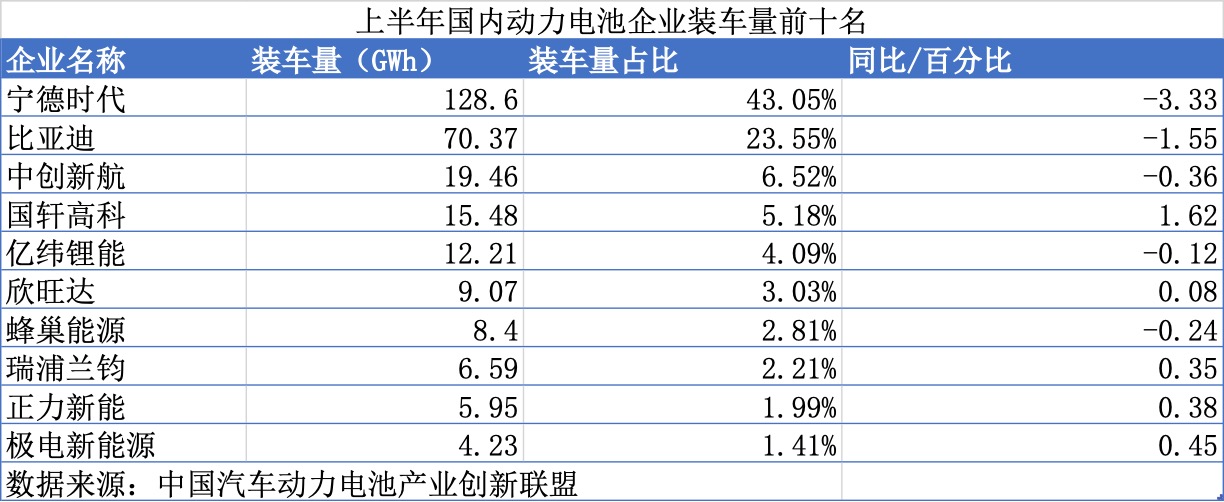
Core Viewpoint - The domestic power battery industry has experienced significant growth in the first half of the year, with a sales increase of over 50%, driven by the rise of second-tier manufacturers and new opportunities in solid-state batteries and international markets [1][4]. Group 1: Market Performance - The cumulative sales of power batteries in China reached 485.5 GWh in the first half of the year, representing a year-on-year growth of 51.6% [4]. - CATL and BYD maintained a strong duopoly, accounting for 66% of the market share, with CATL achieving a net profit of 30.485 billion yuan, a 33.33% increase year-on-year [4]. - The top ten domestic power battery manufacturers by installation volume include CATL (128.6 GWh, 43.05%), BYD (70.37 GWh, 23.55%), and others, with significant growth observed in second-tier manufacturers [2][4]. Group 2: Stock Market Trends - Recent stock performance of power battery-related companies has been robust, with companies like Guoxuan High-Tech seeing a nearly 50% increase in stock price over nine trading days [3]. - Despite concerns about potential overcapacity, the demand for electric vehicles and energy storage has led to a recovery in the battery industry [3][4]. Group 3: Technological Developments - The rise of lithium iron phosphate (LFP) batteries has contributed significantly to the market, with LFP batteries accounting for 81.4% of total installation volume, showing a year-on-year growth of 73% [9]. - Solid-state batteries are viewed as a critical technology for future advancements, although mass production is still several years away [10][11]. Group 4: Expansion and Investment - BYD plans to invest 5 billion yuan in expanding its battery production line in Zhengzhou, while Guoxuan High-Tech is investing up to 4 billion yuan in new manufacturing bases [5]. - The trend of overseas expansion is accelerating, with companies like CATL establishing factories in Hungary and Spain to enhance local supply capabilities [12]. Group 5: Future Outlook - The upcoming "golden September and silver October" sales season is expected to boost market demand for power batteries, further stimulating the industry [13].

德邦证券:乙酰丙酮涨价 看好PVC环保助剂景气反转
智通财经网· 2025-09-10 08:30
Core Viewpoint - The report from Debang Securities indicates that the prices of acetylacetone and acetylacetone calcium have increased significantly from their recent lows, suggesting a potential rebound in the PVC environmental additives market due to supply concentration and ongoing environmental policies [1][4]. Price Trends - As of September 9, the prices for acetylacetone and acetylacetone calcium are 17,000 and 19,000 yuan per ton, respectively, marking an increase of 4,000 and 6,000 yuan per ton from their seven-year lows of 13,000 yuan per ton [1][4]. - Current prices are at historical percentiles of 11.94% and 14.86%, with potential upside of approximately 29,500 and 31,000 yuan per ton compared to their highest prices of 46,500 and 50,000 yuan per ton [1][4]. Industry Dynamics - The acetylacetone industry is experiencing supply disruptions alongside steady demand growth, with a notable decline in prices since 2021 leading to some companies exiting the market [3]. - Major domestic producers include Zhejiang Weirong, Jianbang Co., Xinhua Pharmaceutical, and Guangxi Jinyuan, while BASF is a key overseas supplier [3]. - The global acetylacetone market was valued at approximately 338 million USD in 2018 and is projected to grow to 445 million USD by 2025, driven by expanding application areas [3]. Supply and Demand Outlook - The PVC environmental additives market is expected to improve as supply becomes more concentrated and traditional stabilizers face replacement due to environmental regulations [5]. - The industry is likely to undergo a consolidation phase as high-cost capacities exit the market, leading to a potential price rebound for key products [5]. Company Focus - Companies to watch include Jianbang Co. (603285.SH) with acetylacetone salt capacity of 4,240 tons and ongoing projects, Xinhua Pharmaceutical (000756.SZ) with a capacity of 10,000 tons, and Jiaxian Co. (920489.BJ) with DBM/SBM capacities of 7,000 and 3,000 tons, respectively [5][6].
华东重机离场光伏:80亿豪赌终成“梦碎”样本
Xin Lang Cai Jing· 2025-09-10 08:24
Core Viewpoint - The announcement of bankruptcy restructuring for Huadong Guangneng Technology (Xuzhou) Co., Ltd. marks the failure of Huadong Heavy Machinery's ambitious investment of 8 billion yuan in the photovoltaic industry, serving as a cautionary tale for capital markets regarding blind pursuit of trends [1] Group 1: Aggressive Expansion - In 2023, Huadong Heavy Machinery initiated aggressive expansion into the photovoltaic sector, investing a total of 8 billion yuan, including 2 billion yuan for a 10GW solar cell production base and an additional 6 billion yuan for a 10GW N-type cell project [2] - Despite a revenue increase from 0.77 million yuan in 2023 to 2.96 million yuan in 2024, the photovoltaic business suffered a gross margin of -15.75%, becoming a significant drag on overall performance [2] Group 2: Debt Crisis - The failure of the photovoltaic business triggered a debt crisis, leading to the court's acceptance of a bankruptcy restructuring application for Huadong Guangneng Technology (Xuzhou) Co., Ltd. in April 2025 [3] - The total debt amount for Huadong Guangneng and its parent company reached 11.3 billion yuan, with the reported debt claims amounting to 6.08 billion yuan for Huadong Guangneng alone [3] - In the first half of 2025, the company's operating cash flow turned negative at -1.89 million yuan, a decline of 169.92% year-on-year [3] Group 3: Transformation Challenges - Huadong Heavy Machinery's ongoing struggles reflect a long-standing issue of cross-industry dependency, having attempted four major transformations since 2016, including a failed acquisition of a film company and a significant write-off of its machine tool business [4] - Following the photovoltaic failure, the company shifted focus to the GPU chip sector, acquiring Ruixin Tuxin at a nearly 70-fold premium, yet this segment generated only 12,400 yuan in revenue in the first half of 2025, with ongoing net losses [4] Group 4: Future Prospects - After divesting from the photovoltaic business, Huadong Heavy Machinery returned to its core business of container handling equipment, achieving 3.62 million yuan in revenue in the first half of 2025, accounting for 99.4% of total revenue with a gross margin of 26.17% [5] - The company faces uncertainty in overcoming technological barriers in the chip sector and finding acquisition opportunities post-photovoltaic industry cycle [5] - The conclusion of this 8 billion yuan gamble may signify a rational return for capital markets as the photovoltaic industry enters a new phase of capacity clearing and policy constraints [5]
