
美联储降息预期

Search documents
黄金ETF持仓量报告解读(2025-12-4)美元难支撑 黄金保持向上
Sou Hu Cai Jing· 2025-12-04 06:19
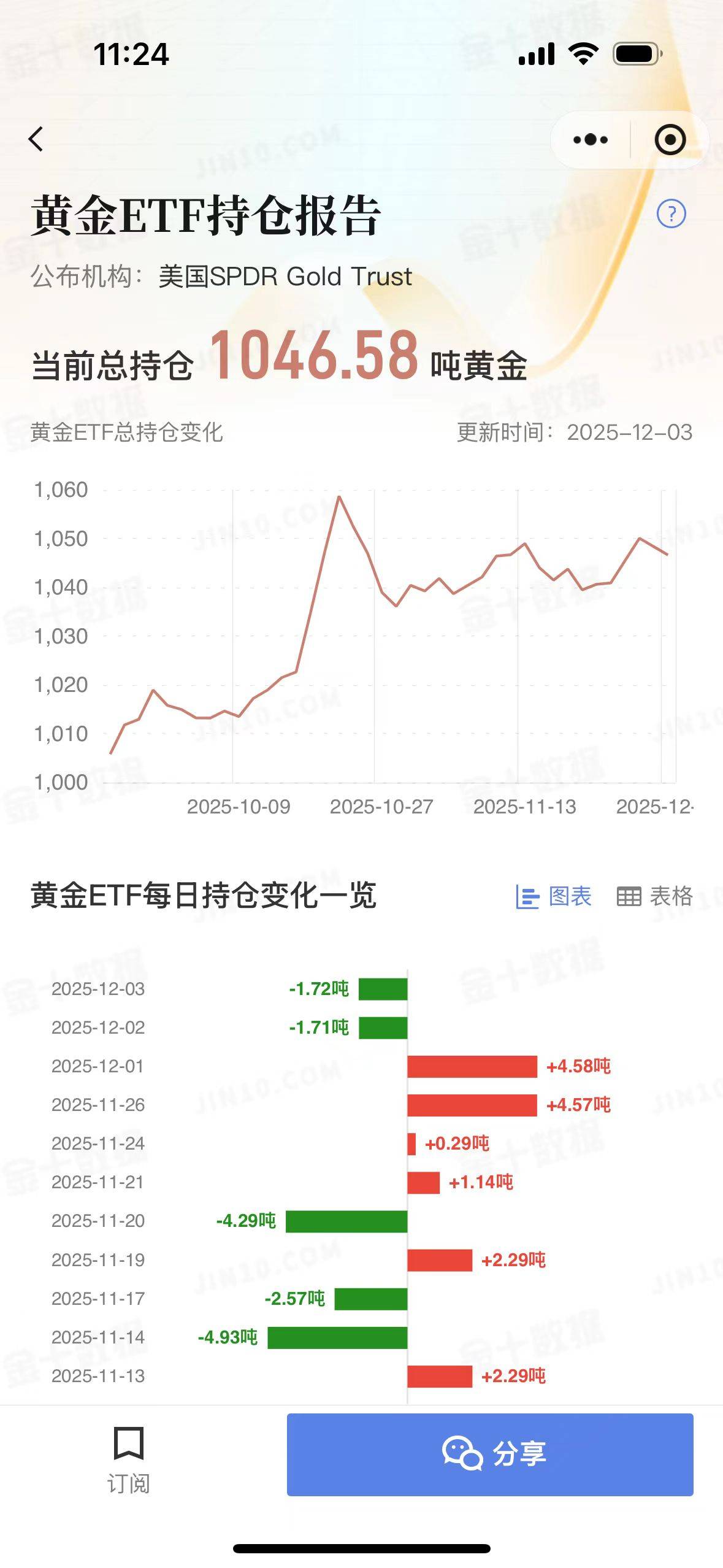
黄金ETF每日持仓变化一览 11:24 黄金ETF持仓报告 公布机构:美国SPDR Gold Trust 当前总持仓 1046.58 吨黄金 黄金ETF总持合变化 更新时间:2025-12-( 1,060 1.050 1,040 1.030 1,020 1,010 1,000 2025-10-27 2025-11-13 2025 -- 2025-10-09 与此同时,金价走势还受到央行购金的支持。世界黄金协会12月2日发布的报告显示,各国央行10月加速购金,净增持53吨,创下自2023年11月以来的最强 月度增幅,较9月增长36%。 从技术面来看,黄金4200美元关口至关重要,日收盘价跌破则将增加测试更低水平可能性。日线图显示,相对强弱指数(RSI)虽处于看涨区域,但近期转为 平缓,显示市场进入盘整,交易员正等待新的催化剂。4小时图也显示,RSI在从超买区域回落后处于中性水平,短期基调偏中性。 |= 图表 謂表 ( 截至12月3日,全球最大的黄金ETF SPDR Gold Trust持仓量为1046.58吨,较前一个交易日减少1.72吨。12月3日,尽管"小非农"ADP意外下滑一度推升金价, 但是现货黄金整体 ...

贵金属日评20251204:美联储未来降息预期支撑贵金属价格-20251204
Hong Yuan Qi Huo· 2025-12-04 06:13
1. Report's Industry Investment Rating - Not provided in the given content 2. Core View of the Report - The expected future interest rate cuts by the Federal Reserve support the prices of precious metals. Economic and employment data are mixed, which disturbs the probability of a December interest rate cut by the Fed, but the probability remains above 80%. Fiscal easing policies in multiple countries, central banks' continuous gold purchases, and geopolitical risks will support precious metal prices in the long - term. The supply - demand expectations for platinum and rhodium in 2025 - 26 are tight and may shift from tight to loose respectively, and their prices may be adjusted due to various factors [1] 3. Summary by Relevant Catalogs Precious Metals Market Data - **Gold**: On December 3, 2025, the closing price of the futures active contract was 956.70, with a decrease of 1.72 compared to the previous day. The trading volume was 273,359, a decrease of 13,624 from the previous day. The inventory (in ten - gram units) remained at 90,873. For spot Shanghai gold T+D, the closing price was - 5.15, the trading volume was 26,942, and the holding weight was 220,396. The spread between the near - month continuous and far - month active contracts was - 3.32, and the basis (spot - to - futures price difference) was - 3.73. In the international market, the closing price of COMEX gold futures was 4,133.80, the trading volume was 169,613, and the inventory (in troy ounces) was 36,573,657.72. The price of London gold spot was 4,210.30 [1] - **Silver**: On December 3, 2025, the closing price of the futures active contract of Shanghai silver was 13,536, the trading volume was 984,592, and the holding weight was - 53,754. The spread between the near - month continuous and far - month active contracts was - 7.00, and the basis was - 21.00. In the international market, the closing price of COMEX silver futures was 58.93, the trading volume was 107,261, and the inventory (in troy ounces) was 455,933,737.28. The price of London silver spot was 58.37 [1] Important Information - Bessent downplayed the Federal Reserve Chairman's control over interest rates and proposed setting a residence limit for regional Fed presidents, stating that tariffs could be reconfigured. The US ADP employment in November unexpectedly declined, with a decrease of 32,000 jobs, the largest drop since March 2023, while the US ISM services PMI expansion rate was the fastest in nine months, the price index was at a seven - month low, and the employment index was at a six - month high [1] Multi - and Short - Side Logic and Trading Strategies - **Gold and Silver**: The multi - side logic includes mixed economic and employment data disturbing the Fed's December interest rate cut probability, but the probability remaining above 80% due to some Fed officials' support. Fiscal easing policies in multiple countries, central banks' continuous gold purchases, high London silver lease rates, and geopolitical risks support precious metal prices in the long - term. The trading strategy is to mainly lay out long positions when prices decline. For London gold, focus on the support level around 3,800 - 4,000 and the resistance level around 4,300 - 4,600; for Shanghai gold, focus on 890 - 920 and 970 - 1,000. For London silver, focus on 49 - 54 and 59 - 63; for Shanghai silver, focus on 11,500 - 12,500 and 14,000 - 15,000 [1] - **Platinum**: The supply - side factors include high deep - mine mining costs, unstable power supply, and aging production equipment affecting production, and slow growth in recycled platinum production. The demand - side factors include increased demand from traditional fuel and hybrid cars due to higher emission standards and positive demand expectations from industries like hydrogen production, fiberglass, and jewelry investment. The 2025 - 26 global platinum supply - demand is expected to be tight. However, the expected interest rate cut by the Fed in December, the expected interest rate hike by the Bank of Japan, and high platinum prices suppressing downstream demand may lead to price adjustments. The trading strategy is to hold previous long positions cautiously or take profits at high prices, or consider the "long platinum, short silver" arbitrage opportunity. For London platinum, focus on the support level around 1,300 - 1,500 and the resistance level around 1,800 - 2,000; for domestic platinum, focus on 335 - 385 and 465 - 516 [1] - **Rhodium**: On the supply side, deep - mine mining, power shortages, labor disputes, and lower ore grades affect production, but an increase in recycled rhodium supply is expected due to the car scrapping cycle in China and globally. On the demand side, demand from cars is expected to decline due to higher emission standards and the development of new energy vehicles, and the demand elasticity in the industrial and medical fields is low. The 2025 - 26 global rhodium supply - demand is expected to shift from tight to loose. The expected interest rate cut by the Fed in December, the expected interest rate hike by the Bank of Japan, and the supply - demand shift may lead to price adjustments. The trading strategy is to hold previous long positions cautiously or take profits at high prices. For London rhodium, focus on the support level around 1,190 - 1,390 and the resistance level around 1,600 - 1,800; for domestic rhodium, focus on 305 - 357 and 415 - 465 [1]
铁矿石:价格高位震荡,关注宏观驱动
Hua Bao Qi Huo· 2025-12-04 05:16
晨报 铁矿石 铁矿石: 价格高位震荡 关注宏观驱动 从业资格号:F03127144 投资咨询号:Z0020161 电话:021-20857653 整理 逻辑:昨日黑色系延续窄幅震荡,成材价格难以突破上行对铁矿石形成抑制,突破上方价 格仍需宏观增量加持。近期铁矿石盘面价格相对强势,港口现货价格基本持平,基差继续收缩, 主要由盘面向现货回归。现货能维持高位主要原因是成材库存持续去化,市场对淡季负反馈预 期减弱,国内铁水季节性下滑但下降斜率尚未超预期,另一方面现货贸易限制对中低品价格形 成支撑,普氏价格在淡季不降反升,对盘面价格形成带动。 投资咨询业务资格: 证监许可【2011】1452 号 负责人:赵 毅 供应方面:外矿发运周度环比升,其中澳洲小幅回升,巴西发运回升显著。从季节性规律 以及今年主流矿山发运目标来看,外矿供给高峰期或已过,后期供给压力或环比回落。 成 材:武秋婷 需求方面:国内需求延续环比回落走势,需求季节性回落以及高炉盈利率大幅下滑,将限 制价格上方高度。据我的钢铁网调研,本期新增 10 座高炉检修,3 座高炉复产,高炉检修主要 发生在南方地区,主要因亏损范围扩大叠加需求走弱,对高炉进行年检,除个 ...
锡产业期现日报-20251204
Guang Fa Qi Huo· 2025-12-04 05:05
1. Investment Ratings The provided reports do not mention any industry investment ratings. 2. Core Views Tin - Considering the strong fundamentals, maintain a bullish view on tin prices. Hold existing long positions and consider buying on dips. Monitor macro - level changes and supply - side dynamics [1]. Alumina - The oversupply situation of alumina continues to suppress prices. Expect prices to remain in a bottom - oscillating pattern, with the main contract's reference operating range shifting down to 2600 - 2800 yuan/ton. Observe actual production cuts and inventory inflection points [3]. Aluminum - Expect short - term aluminum prices to remain strong, with the main SHFE aluminum contract's reference operating range at 21500 - 22200 yuan/ton. Focus on the latest Fed monetary policy and domestic inventory drawdown sustainability [3]. Aluminum Alloy - The casting aluminum alloy market is supported by cost and demand. Short - term prices are expected to be relatively strong, with the main contract's reference operating range at 20700 - 21400 yuan/ton. Monitor scrap aluminum supply improvement and inventory drawdown [5]. Polysilicon - In December, there is an oversupply situation, and each link has inventory build - up expectations. The market is in a state of a strong futures market with low warehouse receipts and a weak spot market with oversupply. Adopt a wait - and - see trading strategy [7]. Industrial Silicon - Maintain the previous expectation of low - level oscillations in industrial silicon prices, with the main price fluctuation range at 8500 - 9500 yuan/ton. Pay attention to end - of - year export demand decline and the impact of warehouse receipts flowing into the spot market [8]. Zinc - In the short term, the downward space of zinc prices is limited, but the fundamentals provide limited elasticity for continuous upward movement. Prices are likely to oscillate. Monitor the inflection point of TC and changes in refined zinc inventory, with the main contract's reference range at 22200 - 23000 [11]. Copper - The medium - to - long - term supply - demand contradiction supports the upward shift of the copper price's bottom center. Focus on overseas interest - rate cut expectations and smelting - end production cuts, with the main contract's support at 88500 - 89500 [13]. Lithium Carbonate - Expect short - term wide - range oscillations in the lithium carbonate market, with the main contract's reference range at 92000 - 95000. Pay attention to the sustainability of year - end demand and the progress of large - scale plant复产 [16]. Nickel - Expect short - term range - bound oscillations in nickel prices, with the main contract's reference range at 116000 - 120000. Monitor macro - level expectation changes and Indonesian industrial policy news [19]. Stainless Steel - Expect short - term weak oscillations in stainless steel prices, with the main contract's reference operating range at 12300 - 12700. Focus on steel mills' production cut implementation and nickel - iron prices [20]. 3. Summary by Directory Tin Price and Spread - SMM 1 tin price rose 1.51% to 309300 yuan/ton; LME 0 - 3 spread fell 38.67% to 92 dollars/ton; import loss decreased 13.91% to - 16070.31 yuan/ton; some month - to - month spreads changed significantly [1]. Fundamental Data - In October, tin ore imports increased 33.49%, SMM refined tin production increased 53.09%, refined tin imports decreased 58.55%, and exports decreased 15.33%. Inventory increased, with SHEF inventory rising 2.09% and social inventory rising 2.23% [1]. Market Analysis - Macro: US ADP data decline strengthens Fed rate - cut expectations. Supply: Tin ore supply is tight, with limited improvement expected this year. Demand: Tin solder enterprises in South China are more resilient than those in East China [1]. Alumina Price and Spread - SMM A00 aluminum price rose 0.41% to 21800 yuan/ton; electrolytic aluminum import loss decreased 77.1 yuan/ton to - 1929 yuan/ton; month - to - month spreads remained unchanged [3]. Fundamental Data - In November, alumina production decreased 4.44%, domestic electrolytic aluminum production decreased 2.82%, and overseas electrolytic aluminum production decreased 3.50%. Some开工 rates increased slightly, and domestic electrolytic aluminum social inventory decreased 2.77% [3]. Market Analysis - Supply: Some enterprises cut production, but overall supply is still abundant, and imports increase supply pressure. Inventory: Domestic visible inventory is accumulating. Cost: Cost support may decline. Price: Expected to oscillate at the bottom [3]. Aluminum Price and Spread - SMM A00 aluminum price rose 0.41% to 21800 yuan/ton; electrolytic aluminum import loss decreased 77.1 yuan/ton to - 1929 yuan/ton; month - to - month spreads remained unchanged [3]. Fundamental Data - In November, domestic electrolytic aluminum production decreased 2.82%, and overseas electrolytic aluminum production decreased 3.50%. Some开工 rates increased slightly, and domestic electrolytic aluminum social inventory decreased 2.77% [3]. Market Analysis - Macro: Fed rate - cut expectations boost market sentiment, but Japanese central bank's potential rate hike increases volatility. Domestic: Lower aluminum prices stimulate downstream procurement, and inventory decreases [3]. Aluminum Alloy Price and Spread - SMM aluminum alloy ADC12 prices remained unchanged; some scrap - to - refined aluminum price spreads increased. Month - to - month spreads changed [5]. Fundamental Data - In November, recycled aluminum alloy ingot production increased 5.74%, and primary aluminum alloy ingot production increased 5.84%. Some开工 rates increased, and recycled aluminum alloy social inventory decreased 1.59% [5]. Market Analysis - Supply: Scrap aluminum supply is tight, and cost support is strong. Demand: Automobile parts orders support demand. Price: Short - term prices are expected to be strong [5]. Polysilicon Price and Spread - Polysilicon spot prices stabilized, and futures prices oscillated higher. The main contract rose 1115 yuan/ton to 57430 yuan/ton. Some month - to - month spreads changed significantly [7]. Fundamental Data - Weekly and monthly polysilicon and silicon wafer production decreased. Polysilicon imports increased, and exports decreased. Inventory increased, with polysilicon inventory rising 3.69% and silicon wafer inventory rising 4.17% [7]. Market Analysis - The market is in a state of a strong futures market with low warehouse receipts and a weak spot market with oversupply. In December, downstream production is expected to decline significantly, and polysilicon may face inventory build - up pressure [7]. Industrial Silicon Price and Spread - East China oxygen - enriched SI5530 industrial silicon spot price fell 0.52% to 9500 yuan/ton; futures price oscillated lower. Some month - to - month spreads changed [8]. Fundamental Data - In November, national industrial silicon production decreased 11.17%, and some regional production and开工 rates decreased. Organic silicon DMC production increased 3.82%, and industrial silicon exports decreased 35.82%. Inventory increased slightly [8]. Market Analysis - Supply: Production is expected to decline slightly, but demand may also decrease. Inventory: Warehouse receipts will flow into the spot market, increasing supply pressure. Price: Expected to oscillate at a low level [8]. Zinc Price and Spread - SMM 0 zinc ingot price rose 0.22% to 22790 yuan/ton; import loss decreased 326.75 yuan/ton to - 5143 yuan/ton; some month - to - month spreads changed [11]. Fundamental Data - In November, refined zinc production decreased 3.56%. In October, imports decreased 16.94%, and exports increased 243.79%. Some开工 rates were stable, and LME inventory increased 1.87% [11]. Market Analysis - Supply: TC decline compresses smelting profits, and export space opens, reducing supply pressure. Demand: Some improvement in demand structure, but terminal demand is stable. Price: Expected to oscillate [11]. Copper Price and Spread - SMM 1 electrolytic copper price rose 0.36% to 88980 yuan/ton; some spreads changed. Arbitrage loss decreased 28.61 yuan/ton to - 1433 yuan/ton [13]. Fundamental Data - In November, electrolytic copper production increased 1.05%. In October, imports decreased 15.61%. Some开工 rates decreased, and domestic social inventory decreased 11.96% [13]. Market Analysis - Macro: Rate - cut expectations boost copper prices. Supply: Concerns about supply shortages persist, and CSPT may cut production. Demand: High copper prices still see spot premiums and stable processing - end开工 rates [13]. Lithium Carbonate Price and Spread - SMM battery - grade lithium carbonate average price fell 0.05% to 94350 yuan/ton; month - to - month spreads changed [16]. Fundamental Data - In November, lithium carbonate production increased 3.35%, demand increased 5.11%, imports increased 21.86%, and exports increased 63.05%. Inventory decreased, with total inventory decreasing 23.36% [16]. Market Analysis - Price: The futures market fell. Supply: A new lithium mine project approval stirs the market. Demand: Demand is optimistic, but concerns remain about the sustainability of year - end demand [16]. Nickel Price and Spread - SMM 1 electrolytic nickel price rose 0.08% to 120000 yuan/ton; LME 0 - 3 spread rose 3.53% to - 195 dollars/ton; import loss decreased 39.64% to - 874 yuan/ton [19]. Fundamental Data - Chinese refined nickel production decreased 9.38%, and imports decreased 65.66%. SHFE inventory increased 2.48%, and LME inventory decreased 0.51% [19]. Market Analysis - Macro: Market expects Fed rate hike, and Sino - US call eases sentiment. Supply: Refined nickel spot transactions are average, and nickel ore prices are under pressure. Demand: Stainless steel demand is weak, and nickel sulfate demand is expanding [19]. Stainless Steel Price and Spread - 304/2B stainless steel prices remained unchanged; some month - to - month spreads changed [20]. Fundamental Data - Chinese 300 - series stainless steel crude steel production decreased 0.72%, and Indonesian production increased 0.36%. Imports increased 3.18%, and exports decreased 14.43%. 300 - series social inventory increased 1.92% [20]. Market Analysis - Macro: Fed rate - hike expectations and Chinese fiscal policies. Supply: Nickel - iron production increases, and supply pressure remains. Demand: It is the off - season, and demand is weak. Price: Expected to oscillate weakly [20].
美联储,大消息!金价,涨了
Sou Hu Cai Jing· 2025-12-04 04:30
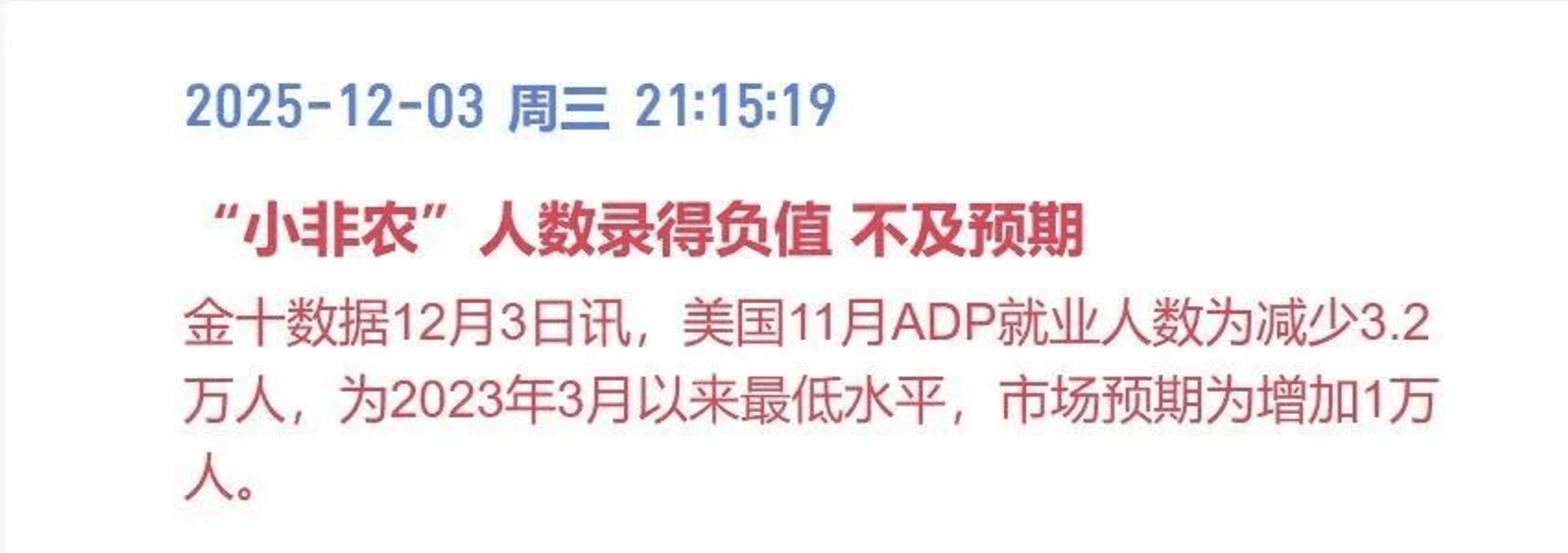
Group 1: Employment Data and Market Reaction - The U.S. private sector employment unexpectedly decreased by 32,000 in November, significantly lower than the previous month's increase of 47,000 and below market expectations of a 20,000 increase [1] - Following the employment data release, the probability of a 25 basis point rate cut by the Federal Reserve this month rose to 89%, boosting investor optimism and leading to a rotation in the stock market [1] - All three major U.S. stock indices closed higher, with the Dow Jones up 0.86%, the S&P 500 up 0.30%, and the Nasdaq up 0.17% [1] Group 2: Financial Sector Performance - Investor expectations of a rate cut are anticipated to stimulate loan demand, resulting in a broad rally in financial stocks, with Wells Fargo and Citigroup both rising over 3% [5][7] - Wells Fargo's stock price reached a record closing high, while Morgan Stanley, Goldman Sachs, and American Express all saw increases of over 2% [7] Group 3: Semiconductor Industry Developments - The semiconductor industry is experiencing a severe shortage of storage chips due to a global surge in AI data center construction, prompting several manufacturers to raise prices this year [7] - Micron Technology announced plans to exit the "key consumer business" by the end of February 2026, shifting its focus to data center server storage chips, which led to a 2.23% decline in its stock price [7] - Other semiconductor companies involved in storage chip business saw significant stock price increases, with Microchip Technology rising over 12%, Marvell Technology up over 7%, and NXP Semiconductors up over 5% [7] Group 4: International Oil Prices - International oil prices saw an increase due to ongoing tensions between the U.S. and Venezuela, with prices rising over 1% at one point [12] - However, an increase in U.S. crude oil inventories indicated continued weak consumption demand, which limited the rise in oil prices [12] - As of the close, light crude oil futures for January delivery settled at $58.95 per barrel, up 0.53%, while Brent crude for February delivery settled at $62.67 per barrel, up 0.35% [12]
逆水行舟,黄金扫荡,空头待发力!
Sou Hu Cai Jing· 2025-12-04 04:21
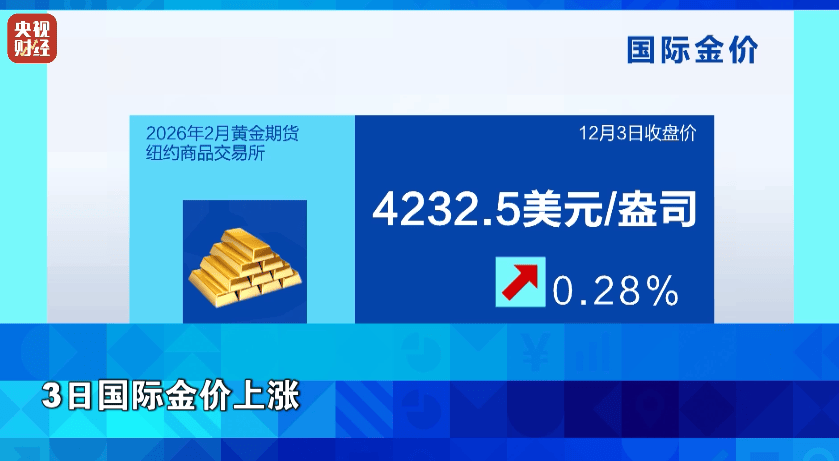
本文黄金、白银等产品行情分析,以国际报价为基准;今日换算系数,国际金价/4.412≈国内金价。 行情如逆水行舟,不进则退。昨天我们强调黄金先看区间震荡,然后关注突破情况;实际走势而言,昨天亚欧盘黄金是空头偏强,一直被压制在4230之下; 欧洲盘尾盘4200下方止跌走了反弹。美盘时段受ADP数据爆冷的影响,快速拉高,仅仅刺破4230,走了十来个美元便迎来快速地下跌,一直到收盘都在低位 运行,日线以十字线收盘。 白银,中长线我们观点很明确,就是12月3日视频分析的观点。短期而言,每次新高或逼近新高,都会不同程度的下跌调整,说明短线不宜过分看涨,倾向 于调整,关注回撤54-55或上涨趋势支撑再涨!参考制定交易策略 个人观点,仅供参考! 今天的话,关注空头能否破局,最近反复扫荡,4200成了马路。下方重点是10日线和本周低点4165区域,一旦下破空头将发力,下破前还要反复折腾,还要 扫荡。上方的话,关注一下今天早盘高点4215-7区域压力,重点是4230-40以及周内高点压制;如果弱势那么早盘高点难上,强势则昨天和周内高点测试再 下。 最近,黄金走势相对于白银明显弱;银子不断新高,金子离新高还一大截,说明当前上涨动力 ...
黄金基金ETF(518800)飘红,市场聚焦美联储降息预期与地缘局势
Sou Hu Cai Jing· 2025-12-04 03:57
Group 1 - The core viewpoint of the article highlights that short-term factors such as U.S. economic data, changes in Federal Reserve interest rate expectations, and the Russia-Ukraine situation will significantly impact gold prices [1] - The expectation of a rate cut by the Federal Reserve in December has increased, suggesting that gold prices may experience high volatility in the short term [1] - If the Federal Reserve continues to signal a dovish stance, U.S. inflation data declines, and geopolitical conflicts in the Middle East and Ukraine escalate, gold prices may find support [1] Group 2 - In the long term, central bank gold purchases, the weakening of the U.S. dollar's global currency status, and the ongoing trend of "de-globalization" in the world economy and politics are expected to enhance the attractiveness of gold [1] - The medium to long-term outlook suggests that the price of gold is likely to rise, and investors may consider participating in future pullbacks and gradually accumulating positions [1] - The article recommends focusing on direct investments in physical gold and tax-exempt gold fund ETFs (518800), as well as gold stock ETFs (517400) that cover the entire gold industry chain [1]
日度策略参考-20251204
Guo Mao Qi Huo· 2025-12-04 03:36
| II CTERER | | | 十度市临参考 | | --- | --- | --- | --- | | 行业板块 | 品种 | 趋势研判 | 逻辑观点精粹及策略参考 | | | | | 预计年内市场分歧将在股指震荡调整过程中逐步消化,后续有望 | | | | | 随着新主线的出现推动股指进一步上行。与此同时,中央汇金的 | | | | | 托底作用为市场提供了一定缓冲,指数下行风险整体可控。从策 | | 宏观金融。 | DXJE | | 略角度看, 近期市场的调整为明年股指进一步上行提供了布局机 | | | | | 会,交易者可考虑在市场调整阶段逐步建立多头头寸,并借助股 指期货的贴水结构提升长线投资的胜率。 | | | 国债 | 震荡 | 资产荒和弱经济利好债期,但短期央行提示利率风险,压制上涨 | | | | | 图间。 美联储降息预期升温,市场情绪向好,叠加产业面存在支撑,铜 | | | | | 价偏强运行。 | | | | 有为说 | 近期产业面驱动有限,而宏观情绪向好,铝价回升。 | | | 氧化铝 | | 国内氧化铝产量及库存继续双增,基本面维持偏弱格局,价格承 压下行,关注矿端价格变化。 ...
贵金属数据日报-20251204
Guo Mao Qi Huo· 2025-12-04 03:25
Group 1: Report Industry Investment Rating - No relevant content provided Group 2: Core Viewpoints of the Report - In the short - term, silver is expected to enter a high - volatility and wide - range oscillation. It's recommended to wait and see for silver, while gold can still be bought on dips as the gold price may be supported by the expectation of the Fed's December rate cut [6]. - In the long - term, the center of gravity of gold is likely to continue to move up due to factors like the Fed's interest - rate cut cycle, global geopolitical uncertainties, etc. Long - term investors are advised to mainly adopt a strategy of buying on dips [6]. Group 3: Summary by Related Catalogs 1. Price Tracking - On December 3, 2025, compared with December 2, London gold spot was at $4208.38/ounce (-0.1%), London silver spot was at $58.00/ounce (1.5%), COMEX gold was at $4238.80/ounce (-0.1%), COMEX silver was at $58.66/ounce (1.5%), AU2512 was at 953.38 yuan/gram (-0.2%), AG2512 was at 13575.00 yuan/kg (1.2%), AU (T + D) was at 951.28 yuan/gram (-0.2%), and AG (T + D) was at 13559.00 yuan/kg (1.0%) [3][5]. - Regarding price spreads/ratios on December 3, 2025, compared with December 2, the gold TD - SHFE active price spread was -2.1 yuan/gram (16.0%), the silver TD - SHFE active price spread was -16 yuan/kg (-300.0%), etc. [5]. 2. Position Data - As of December 2, 2025, compared with December 1, the gold ETF - SPDR was 1048.29 tons (-0.16%), the silver ETF - SLV was 15863.15021 tons (0.38%), and there were changes in COMEX non - commercial long and short positions of gold and silver [5]. 3. Inventory Data - On December 3, 2025, compared with December 2, SHFE gold inventory was 90873.00 kg (0.00%), SHFE silver inventory was 626633.00 kg (5.38%), COMEX gold inventory was 36281915 troy ounces (0.00%), and COMEX silver inventory was 455933737 troy ounces (-0.01%) [5]. 4. Interest Rate/Exchange Rate/Stock Market - On December 3, 2025, compared with December 2, the US dollar/Chinese yuan central parity rate was 7.08 (-0.06%), the US dollar index was 99.32 (-0.09%), the 2 - year US Treasury yield was 3.51% (-0.85%), etc. [5]. 5. Market Review - On December 3, the main contract of Shanghai gold futures closed down 0.55% to 956.7 yuan/gram, and the main contract of Shanghai silver futures closed up 0.67% to 13582 yuan/kg [5]. 6. Analysis of Influencing Factors and Short - term Outlook - For silver, due to large cumulative gains and profit - taking pressure, and the continuous 5 - day increase in SHFE silver inventory, the B40K structure depth of domestic silver futures inter - month spreads continues to weaken, and the silver transfer fee of the Gold Exchange is again "short pays long". It's expected to enter high - volatility wide - range oscillation, and the December silver delivery in New York needs attention [6]. - For gold, the lower - than - expected US November ADP employment number strengthens the Fed's December rate - cut expectation, so the gold price may be supported. Attention should be paid to US economic data and the Fed's tone [6]. 7. Medium - and Long - term Viewpoints - In the medium and long term, the Fed is in an interest - rate cut cycle, and factors like global geopolitical uncertainties will increase the long - term risk of the US dollar's credit. The center of gravity of gold is likely to move up, and long - term investors are advised to buy on dips [6].
冠通期货早盘速递-20251204
Guan Tong Qi Huo· 2025-12-04 03:24
早盘速递 2025/12/4 热点资讯 1.美国11月"小非农"创两年半来最大降幅,美联储降息预期进一步升温。最新公布的ADP就业数据显示,11月私营企业减少 3.2万个工作岗位,为2023年3月以来最大降幅,远不及市场预期的增加1万个。据CME"美联储观察",美联储12月降息25个基 点的概率接近90%。 2.据硅业分会,展望12月,根据各企业排产计划,国内多晶硅产量预计仍将维持在12万吨以内,环比小幅回升,增量主要来自 通威等企业的检修复产以及其他企业的复产爬坡。 冠通期货研究咨询部 王 静,执业资格证号F0235424/Z0000771 联系方式:010-85356618 第 3 页,共 3 页 板块表现 重点关注 尿素、沪铜、碳酸锂、沪锡、PVC 夜盘表现 -2.00 -1.50 -1.00 -0.50 0.00 0.50 1.00 1.50 2.00 板块涨跌幅(%) -10.0% -5.0% 0.0% 5.0% 10.0% 15.0% 20.0% 25.0% -2.00% -1.00% 0.00% 1.00% 2.00% 3.00% 4.00% 5.00% 商品期货主力合约夜盘涨跌幅 涨跌幅 增仓 ...