
反内卷

Search documents
11月CPI同比涨0.7%,PPI同比降2.2%,扩内需待加码
Sou Hu Cai Jing· 2025-12-10 21:24
Group 1 - The core viewpoint indicates that despite a return to positive growth in CPI over the past two months, overall demand remains weak, suggesting the need for more proactive fiscal policies and further monetary easing to stimulate investment demand [2][6][9] Group 2 - In November, the Consumer Price Index (CPI) rose by 0.7% year-on-year, an increase of 0.5 percentage points from the previous month, while the Producer Price Index (PPI) fell by 2.2%, a decline of 0.1 percentage points from October [2][4] - Factors contributing to the CPI increase include tight supply of vegetables and fresh fruits due to adverse weather conditions, alongside rising transportation and preservation costs, while pork prices continued to decline due to weak terminal demand [4][6] - In November, food and tobacco prices rose by 0.3%, contributing approximately 0.09 percentage points to the CPI increase, with fresh vegetable prices up 14.5% and pork prices down 15.0% [4][6][7] Group 3 - The PPI decline is attributed to falling prices in most industrial products, with significant decreases in glass, coking coal, and coke prices, while only aluminum and copper prices saw slight increases [6][7] - The overall industrial producer price level was affected by a 2.4% drop in production material prices, which contributed approximately 1.79 percentage points to the overall decline [7] Group 4 - The "anti-involution" policy is showing signs of stabilizing prices in certain industries, with nine out of twelve key industries experiencing a year-on-year reduction in capacity in the third quarter [8] - The photovoltaic industry is witnessing a significant reduction in losses, with the net loss for leading companies reaching the lowest level since the second half of the previous year, indicating a potential recovery in profitability [8] Group 5 - Future strategies for advancing the "anti-involution" approach include implementing more aggressive fiscal policies, utilizing the Federal Reserve's interest rate cuts to further lower rates, and boosting demand in the real estate sector [9] - Emphasis is placed on increasing infrastructure investment in urban renewal and old community renovations to stimulate traditional industry demand, alongside efforts to enhance consumer spending [9]

2026债市,或比预期好一点
Xin Lang Cai Jing· 2025-12-10 13:52
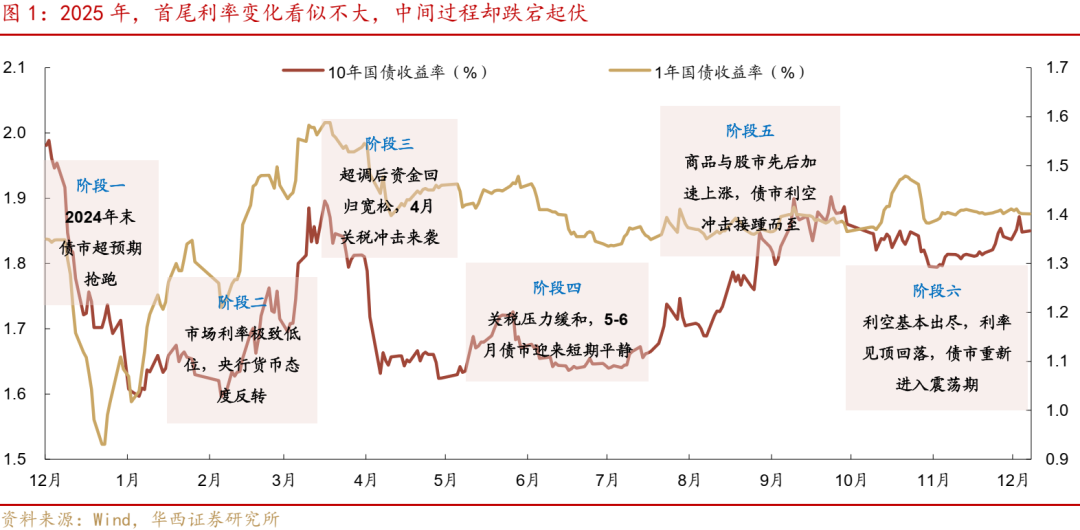
Group 1 - The core viewpoint of the articles indicates that the bond market in 2025 is expected to face significant challenges, transitioning from a "bullish long, bearish short" to a "bullish short, bearish long" market, making it increasingly difficult to generate returns [1][38] - Key variables affecting the bond market include "expansive fiscal policy," "stable monetary policy," "strong risk appetite," "strict regulation," and "weak reality," which are expected to shape the market dynamics in 2026 [1][38] - The fiscal deficit for 2025 is projected to increase by 2.9 trillion yuan compared to 2024, reaching a historical high since 2021, with a total deficit of 5.66 trillion yuan [1][39] Group 2 - The "expansive fiscal policy" is likely to continue into 2026, with a projected broad fiscal deficit of 15.1 to 15.9 trillion yuan, although the contribution to economic growth may be more stable than in 2025 [2][50] - The monetary policy in 2025 acted more as a supporting role, with expectations for 2026 to potentially see a shift towards a more expansive monetary policy, which could exceed market expectations [3][55] - Regulatory measures in 2025 have led to stricter behaviors among institutions, impacting the bond market, with asset management institutions likely to maintain lower bond allocation ratios [4][56] Group 3 - The macroeconomic indicators have shown marginal weakening since early 2025, but have not significantly influenced asset pricing, as the bond market has been more closely tied to equity market performance [5][38] - The bond market is expected to experience a "slow start, fast finish" rhythm in 2026, with potential for significant movements in the second and third quarters as monetary policy evolves [6][38] - The overall sentiment in the bond market is anticipated to remain cautious, with the need to monitor macroeconomic events that could trigger changes in monetary policy [6][55]
林平发展IPO,“优等生”的经营韧性,正是业绩率先复苏的起点
Xin Lang Cai Jing· 2025-12-10 13:37
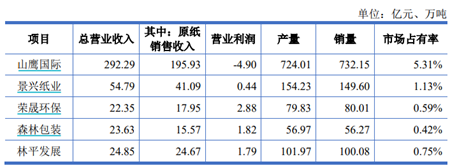
来源:基本面力场 最近有一家公司正在申请IPO,公司全称是安徽林平循环发展股份有限公司,股票简称林平发展,保荐 机构是国联民生证券。 林平发展的核心业务是纸制品的制造和销售,主要产品为瓦楞纸和箱板纸,瓦楞纸的销售占比约在30% 左右,箱板纸的销售占比超70%,且近年来箱板纸产品的销售占比呈现小幅提升的趋势。 客观来说,当前造纸行业整体经营形势并不是很乐观,产能过剩、需求不足等问题长期存在,且部分企 业为了争夺市场份额,不惜采取低价竞争策略,甚至在低于成本价的情况下销售,导致行业"内卷"严 重。有数据统计,2024年造纸全行业营业收入高达1.46万亿元,但利润总额仅为520亿元,利润率低至 3%。 在此背景下,林平发展的IPO能够走到审核阶段,想必是"有两把刷子"的。从这家公司的业绩数据来 看,力场君就很能感受到其经营韧性,正是一家行业内"优等生"该有的品质。 这种韧性首先体现在即便遭遇不利因素,营业利润仍稳得住。这一点突出体现在2024年,在行业内卷严 重、业内头部公司出现较大亏损的宏观背景下,加之受台风"贝碧嘉"影响致萧县厂区被洪水浸泡、生产 经营收到较大影响的微观不利因素,林平发展仍能收获1.79亿元营业 ...
CPI释放内需回暖信号,国际机构密集上调中国经济增速
Di Yi Cai Jing· 2025-12-10 12:49
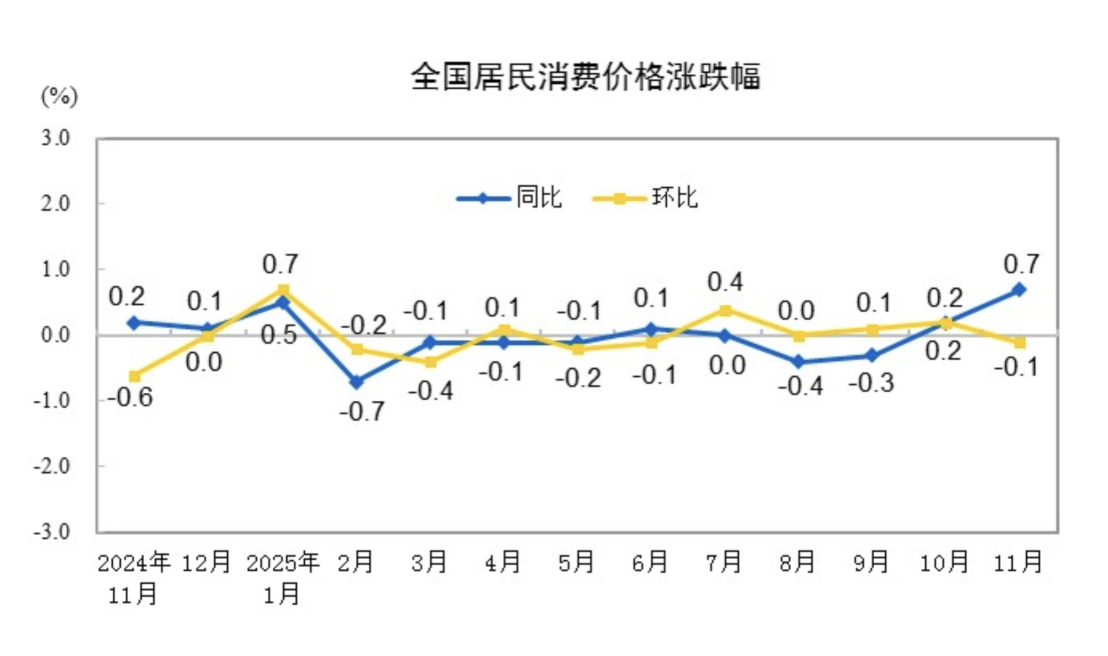
Group 1: Consumer Price Index (CPI) Trends - The Consumer Price Index (CPI) increased by 0.7% year-on-year in November, the highest since March 2024, with a month-on-month decline of 0.1% [3][4] - Core CPI, excluding food and energy, rose by 1.2% year-on-year, maintaining a growth rate above 1% for three consecutive months [5][6] - The rise in CPI is attributed to a turnaround in food prices, particularly fresh vegetables, which saw a significant increase of 14.5% year-on-year after nine months of decline [4][5] Group 2: Producer Price Index (PPI) Insights - The Producer Price Index (PPI) increased by 0.1% month-on-month for two consecutive months, but year-on-year it decreased by 2.2%, with the decline slightly widening [3][8] - Seasonal demand increases in certain industries, such as coal and gas, contributed to the month-on-month rise in PPI [7][8] - The overall PPI trend reflects a positive change in pricing due to ongoing macroeconomic policies and a reduction in "involution" competition in key industries [8][10] Group 3: Economic Outlook and Policy Measures - The International Monetary Fund (IMF) projects China's economic growth rate to reach 5% in 2025, an upward revision from previous forecasts [3] - The Chinese government is intensifying policies to boost domestic demand, with a focus on optimizing the supply structure of consumer goods by 2027 [11][12] - Various local governments are implementing plans to enhance domestic demand, emphasizing the importance of consumer-driven economic growth [12]
交通运输行业2026年投资策略:聚焦反内卷受益板块及高确定性个股
Dongxing Securities· 2025-12-10 12:28
Investment Summary - The transportation industry has shown a significant underperformance compared to the broader market, ranking among the lowest in terms of growth within the Shenwan primary industry indices as of December 8, 2025 [15][16] - The implementation of anti-involution policies has positively impacted the fundamentals of certain segments within the transportation sector, particularly benefiting the aviation and express delivery sectors [26][30] 2026 Outlook - The focus for 2026 remains on sectors benefiting from anti-involution policies and high-certainty stocks, with a long-term impact expected from these policies on stock price movements [5][34] - Key sectors to watch include aviation, express delivery, and regional shipping, while high-dividend and low-debt companies are expected to attract more investor interest in weaker cyclical areas [5][34] Express Delivery Sector - The express delivery industry has seen a recovery in profitability driven by rising single-package prices, with major companies like YTO Express and Shentong Express showing significant improvements [6][35] - The trend of price competition has been curtailed, leading to a decrease in package volume growth as companies focus on maintaining service quality and profitability [6][38] - The competitive strategies among companies have diverged, with YTO and Shentong performing strongly, while Yunda has struggled with profitability and market share [42][53] Aviation Sector - The aviation sector has experienced a notable improvement in performance since Q2 2025, with major airlines reporting increased profitability compared to the previous year [63][64] - The focus for 2026 will be on the transition from high passenger load factors to higher ticket prices, supported by controlled supply and strong demand [69][87] - Major airlines are expected to maintain cautious procurement strategies, with a projected fleet growth of around 5% in 2026 [69][80] Highway Sector - The highway sector has faced significant adjustments in stock prices, leading to a more rational market approach towards high-dividend investments [8][4.1] - Following substantial adjustments, the attractiveness of highway stocks has improved, with a focus on companies with high dividend ratios and low debt levels [8][4.3]






兴业证券:历年经济工作会议如何指引次年主线方向?
Xuan Gu Bao· 2025-12-10 11:07
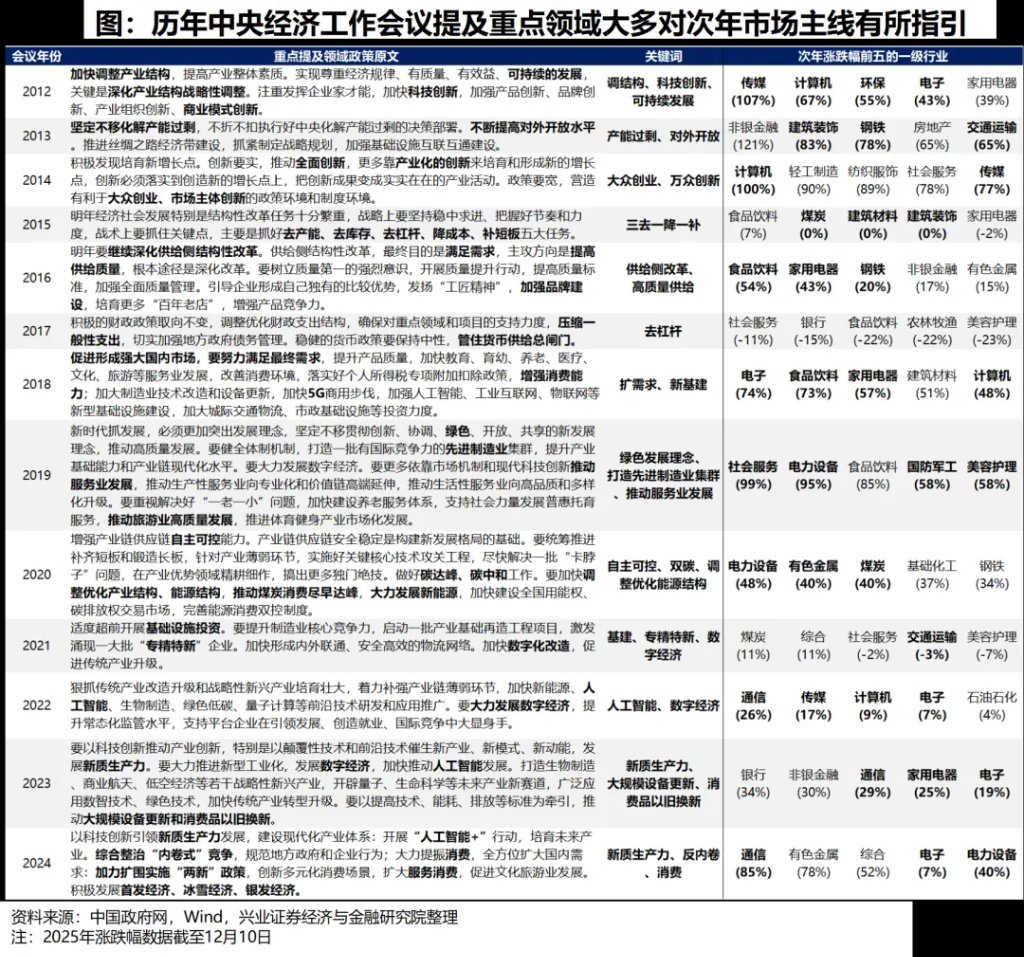
Group 1 - The upcoming Central Economic Work Conference is expected to provide guidance on key areas that will influence the market trends for the following year [1] - Historical experiences show that the themes emphasized in past conferences have significantly impacted economic expectations and risk preferences, with notable examples including "structural adjustment" and "supply-side reform" [1] - The key themes from last year's conference, "new quality productivity" and "anti-involution," have emerged as the two most important market lines for this year in the A-share market [1] Group 2 - The table outlines the key areas of focus from various years of the Central Economic Work Conference, highlighting the corresponding keywords and the top-performing sectors in the following year [2] - For instance, in 2012, the focus was on deepening structural adjustments, leading to significant growth in sectors like media and computer technology, with a performance increase of 107% and 67% respectively [2] - In 2023, the emphasis is on developing new quality productivity and promoting large-scale equipment updates, which is expected to impact sectors such as banking and electronics, with projected growth rates of 34% and 30% respectively [2]

多晶硅收储平台真的来了?通威等光伏巨头联手“反内卷”
Nan Fang Du Shi Bao· 2025-12-10 10:17
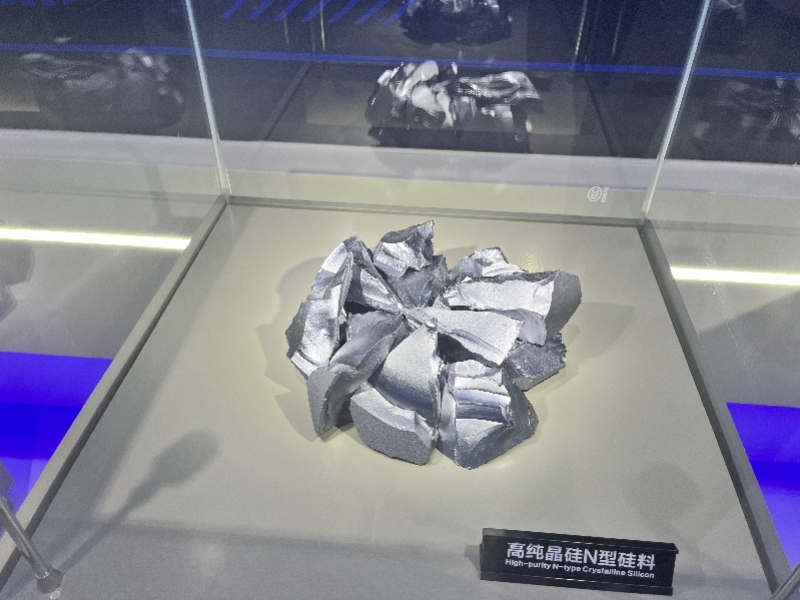
Core Viewpoint - The establishment of Beijing Guanghe Qiancheng Technology Co., Ltd. with a registered capital of 3 billion yuan is seen as a significant move towards creating a "polysilicon storage platform" in the photovoltaic industry, backed by major players and the China Photovoltaic Industry Association [1][5][10]. Group 1: Company Formation and Shareholders - Guanghe Qiancheng Company was registered on December 9, with a capital of 30 billion yuan and is located in Chaoyang District, Beijing [1]. - The company has 10 shareholders, including major polysilicon and photovoltaic firms such as Tongwei, GCL, Daqo Energy, and Xinte Energy, indicating strong industry backing [2][3]. - The shareholding structure reveals that Tongwei holds 30.35%, GCL 16.79%, and other significant shares are distributed among leading companies in the polysilicon sector [3][5]. Group 2: Industry Context and Price Trends - Polysilicon prices have dramatically decreased from a peak of 300,000 yuan per ton in 2022 to around 35,000 yuan per ton, causing financial strain on many companies [7]. - As of December 3, 2025, polysilicon prices have stabilized around 50,000 yuan per ton, with N-type reconstituted material averaging 53,200 yuan per ton [7][8]. - The industry is experiencing a "反内卷" (anti-involution) movement aimed at stabilizing prices and ensuring that sales do not fall below production costs [7][11]. Group 3: Strategic Initiatives and Concerns - The polysilicon storage plan involves major companies forming an operational entity to manage capacity and stabilize market prices, although there are concerns from downstream companies about potential price increases [10]. - Industry leaders emphasize the need for capacity integration to balance supply and demand across the photovoltaic supply chain, which is heavily concentrated in China [11].



东海期货11月宏观数据观察:CPI同比超预期回升,PPI降幅有望收窄
Xin Lang Cai Jing· 2025-12-10 09:38
Group 1 - In November, China's CPI increased by 0.7% year-on-year, matching expectations, and up from 0.2% in the previous month [1][19] - The PPI decreased by 2.2% year-on-year, slightly worse than the expected decline of 2.0% and a previous decline of 2.1% [1][19] - The rise in CPI was driven by a significant rebound in food prices, while PPI's decline was influenced by high base comparisons from the previous year and ongoing supply-demand structural optimization in certain industries [20][21] Group 2 - The overall improvement in domestic supply-demand relationships is expected to lead to a gradual narrowing of PPI declines, supported by ongoing capacity governance in key industries [20][21] - International commodity prices have generally risen, while domestic demand remains weak, but some industries are experiencing price increases due to improved supply-demand fundamentals [20][21] - The core CPI maintained a high year-on-year growth rate of 1.2%, with non-food prices rising by 0.8%, indicating effective consumer demand policies [20][21] Group 3 - Food prices shifted from a decline of 2.9% last month to an increase of 0.2%, significantly impacting the CPI [20][21] - Energy prices fell by 3.4% year-on-year, contributing to the overall inflationary pressure [20][21] - The service sector saw price increases, with notable rises in household appliances and clothing prices, reflecting the effectiveness of domestic demand expansion policies [20][21]

2025年12月政治局会议联合点评
Zhong Xin Qi Huo· 2025-12-10 08:32
Report Industry Investment Rating The report maintains a moderately optimistic view on certain equity and commodity assets [3][10][15]. Core Viewpoints The Political Bureau meeting held on December 8, 2025, set a relatively positive tone for the economic work in 2026. The meeting outlined five key points, including a new work tone, loose and proactive fiscal and monetary policies, emphasis on key tasks in the 15th Five - Year Plan, understanding of internal risks, and special arrangements for low - carbon transformation. These may have potential impacts on major assets such as equity indices, interest rates, exchange rates, and commodities [4][5][6]. Summary by Directory 1. Macro Economy - The meeting set the core tone for 2026 economic work, with specific arrangements to be made at the Central Economic Work Conference [14]. - Five key focuses: new work tone of coordinating domestic and international economic affairs; potentially loose and proactive fiscal and monetary policies; emphasis on 15th Five - Year Plan tasks like expanding domestic demand and innovation; awareness and arrangements for internal risks; and special work for low - carbon transformation [15][16][17]. 2. Equity Index - The meeting's policy is supportive, emphasizing domestic demand and technological innovation. In the stock market, take a long - term view, wait for the "spring rally" window, and focus on technology and the price - increase chain. At the end of the year, the market consolidates to release capital crowding, and pullbacks are opportunities to add positions. Short - term focus on price - increase chain and high - dividend stocks, and medium - term on innovation and IC sectors [20][21][22]. 3. Bond and Forex - Fiscal policies will be more proactive, and monetary policies will be moderately loosened in 2026. Short - term caution on the long end of government bonds, and medium - term the bond market may be strong and volatile. The RMB exchange rate in 2026 may show a stable and rising trend with an operating range of 6.8 - 7.2 [27][30][31]. 4. Commodities - The meeting's policies are conducive to stabilizing the macro - expectations on the demand side of the commodity market. Traditional domestic demand areas will receive support, and green transformation will create incremental demand for new - energy - related commodities. The meeting will restrain excessive price fluctuations of key varieties and boost market confidence [33][35][36].
中欧基金邓欣雨:低利率时期“固收+”的稳健增强逻辑
Xin Lang Cai Jing· 2025-12-10 06:51
Group 1 - The core viewpoint of the article emphasizes the importance of understanding the investment logic and focus areas for 2026, particularly in the context of the technology sector, cyclical industries, and structural transformations [1][6] - The investment strategy meeting highlighted the need for a systematic approach to research and investment, aiming to convert systematic capabilities into sustainable value for investors [1][6] - The fixed income investment manager noted the increasing difficulty of achieving stable high returns in a low-interest-rate environment, which is a central goal of "fixed income plus" strategies [1][6] Group 2 - The recent stock market rally has been primarily driven by valuation expansion, with technology expected to be the main strategic focus for the upcoming year [2][7] - Three key lines of inquiry for identifying quality assets include: the anticipated dominance of technology in the market, the global expansion of outstanding Chinese companies, and opportunities arising from high prosperity sectors and potential reversals in cyclical industries [2][7] - High prosperity sectors to watch include computer equipment, marine equipment, batteries, and power grid equipment, while cyclical reversals may be found in sub-industries within chemicals, new energy, and consumption [2][7] Group 3 - Different asset classes present varying investment opportunities, with pure debt assets likely to remain in a low-interest-rate environment and limited upside potential [3][8] - Stock assets are expected to experience increased volatility, with limited valuation uplift and a positive performance driven by earnings [3][8] - Convertible bonds are viewed as overvalued, with a focus on structural opportunities and swing trading as key strategies moving forward [3][8]