
供需格局

Search documents
聚酯链日报:成本支撑弱化叠加累库压力,PX及PTA延续弱势运行-20251009
Tong Hui Qi Huo· 2025-10-09 11:13
Report Industry Investment Rating No relevant information provided. Core Viewpoints - PX and PTA continue to operate weakly due to weakened cost support and inventory accumulation pressure [1] - The price center of the polyester industry chain may shift downward, with POY potentially performing stronger due to low inventory [4] - Considering the supply, demand, and inventory situation, PX and PTA prices may continue to face downward pressure unless there is a sustained improvement in demand or supply - side maintenance and production cuts [38] Summary by Directory 1. Daily Market Summary PTA & PX - On September 30, the PX main contract closed at 6,570 yuan/ton, down 1.5% from the previous trading day, with a basis of - 97 yuan/ton; the PTA main contract closed at 4,594 yuan/ton, down 1.25% from the previous trading day, with a basis of 6 yuan/ton [2] - On the cost side, on September 30, the Brent crude oil main contract closed at 66.77 US dollars/barrel, and WTI closed at 63.18 US dollars/barrel; on the demand side, the total transaction volume of Light Textile City was 1.23 million meters, and the 15 - day average transaction was 865,670 meters [2] - The supply of PX and PTA is generally loose. The continuous weakening of the PX basis reflects the current oversupply pressure in the spot market. Although some domestic PX plants have short - term shutdowns and overhauls, the overall operating rate remains relatively high. For PTA, low processing fees have increased the factory's willingness to cut production, but the reduction of some plants under high inventory is insufficient to reverse the supply - demand pattern, and the supply pressure will continue with future new plant commissioning plans [2] - Downstream polyester demand shows signs of marginal weakening. The single - day trading volume of Light Textile City is mainly driven by short - term factors such as pre - holiday restocking. The 15 - day average trading data is still lower than the normal level in the peak season, and the terminal weaving orders show seasonal weakening signs. The polyester sector maintains rigid demand, but there is a risk of a decline in the operating rate under increasing inventory pressure, and the procurement demand for PTA may weaken marginally [3] - The PTA inventory structure continues the inventory accumulation trend. The current inventory days of PTA factories are flat month - on - month but still at a high absolute level, and the continuous accumulation of social inventory reflects the loose supply - demand pattern. Considering the incremental pressure brought by the commissioning of the new Fengming plant in October and the uncertainty of the sustainability of downstream restocking, the inflection point of inventory reduction has not appeared, and high inventory will continue to suppress the spot price and futures valuation [3] Polyester - On September 30, the short - fiber main contract closed at 6,276 yuan/ton, down 0.95% from the previous trading day. The spot price in the East China market was 6,405 yuan/ton, down 30 yuan/ton from the previous trading day, with a basis of 129 yuan/ton [4] - The MA15 trading volume of China Light Textile City has continuously climbed from 760,000 meters to 865,670 meters. The inventory days of polyester staple fiber (6.36 days), polyester filament DTY (29.5 days), and FDY (25.7 days) are all higher than the average of the past 5 years, while the inventory days of POY (18.8 days) are lower than the 5 - year average of 20.4 days, indicating inventory reduction pressure for staple fiber and some filament varieties. Overall, driven by the downward trend of oil prices at the PX - PTA cost end and the slow recovery of demand, the price center of the polyester industry chain may shift downward, and POY may perform stronger due to low inventory [4] 2. Industrial Chain Price Monitoring - PX futures: The main contract price decreased by 1.50% to 6,570 yuan/ton, the trading volume increased by 5.68% to 189,612 lots, and the open interest decreased by 17.48% to 68,124 lots [5] - PX spot: The CFR price at the main Chinese port and the FOB price in South Korea remained unchanged at 816 US dollars/ton and 792 US dollars/ton respectively [5] - PTA futures: The main contract price decreased by 1.25% to 4,594 yuan/ton, the trading volume increased by 2.27% to 593,958 lots, and the open interest decreased by 2.50% to 964,348 lots [5] - PTA spot: The CFR price at the main Chinese port remained unchanged at 613 US dollars/ton [5] - Short - fiber futures: The main contract price decreased by 0.95% to 6,276 yuan/ton, the trading volume decreased by 1.21% to 183,370 lots, and the open interest decreased by 19.97% to 93,016 lots [5] - Short - fiber spot: The mainstream price in the East China market decreased by 0.47% to 6,405 yuan/ton [5] - Other industrial chain prices such as Brent crude oil, WTI, CFR Japanese naphtha, ethylene glycol, polyester chips, polyester bottle chips, polyester POY, polyester DTY, and polyester FDY remained unchanged [5] - Processing spreads: The processing spreads of PTA increased by 1.13% to 189.3 yuan/ton, while others remained unchanged [6] - Light Textile City trading volume: The total trading volume increased by 17.93% to 1.23 million meters, with long - fiber fabric trading volume at 927,000 meters and short - fiber fabric trading volume at 304,000 meters [6][9] - Industrial chain load rates: The load rates of PTA factories, polyester factories, and Jiangsu and Zhejiang looms remained unchanged at 75.86%, 89.42%, and 63.43% respectively [6] - Inventory days: The inventory days of polyester staple fiber, POY, FDY, and DTY decreased by 11.05%, 8.74%, 10.76%, and 6.35% respectively [6] 3. Industrial Dynamics and Interpretation Macroeconomic Dynamics - On September 30, gold broke through 3,830 US dollars, reaching new highs, and the value of the US gold reserve exceeded 1 trillion US dollars [7] - New York Fed President Williams supported interest rate cuts at the previous meeting due to signs of labor market weakness, estimating the real neutral interest rate at 0.75%; this year's voting member, St. Louis Fed President Musalem, is open to future interest rate cuts but advocates caution, expecting inflation to remain high in the next two to three quarters; Cleveland Fed President Hamerak continues to advocate a hawkish stance, saying that tight monetary policy needs to be maintained to curb inflation [7] - Switzerland plans to invest in the US gold refining industry in exchange for Trump's tariff reduction [7] - Trump announced a 20 - point plan to end the Gaza conflict, with Israel to withdraw troops in stages, not occupy or annex Gaza; a peace committee chaired by Trump will be established, and Israel has accepted the plan while Hamas will review it [7] - On September 29, Richmond Fed President Barkin said that upcoming data will determine whether the Fed should further cut interest rates; Fed Governor Bowman strongly supports the Fed holding only treasury bonds and believes it is appropriate to ignore the one - time impact of tariffs [7] - The National Bureau of Statistics reported that in August, the profits of industrial enterprises above designated size increased by 20.4% year - on - year, turning from a 1.5% decline in the previous month; from January to August, the year - on - year increase was 0.9% [7] Supply - Demand - Demand - On September 30, the total trading volume of Light Textile City was 1.23 million meters, a month - on - month increase of 17.93%, with long - fiber fabric trading volume at 927,000 meters and short - fiber fabric trading volume at 304,000 meters [9] 4. Industrial Chain Data Charts - The report includes charts such as PX and PTA main futures and basis, PTA futures monthly spreads, short - fiber futures monthly spreads, PTA processing profits, industrial chain load rates, polyester product inventory days, etc [10][12][14] 5. Appendix: Big Model Inference Process - On September 30, PX and PTA main contracts declined by 1.5% and 1.25% respectively. The decline in crude oil prices may affect upstream costs. The trading volume of Light Textile City on that day was 1.23 million meters, with a 15 - day average of 865,670 meters, indicating possible fluctuations in recent demand [37] - On the supply side, the negative PX basis may indicate sufficient spot supply or inventory accumulation pressure, and there may be some plant restarts. For PTA, the basis has turned from negative to positive, but the inventory has not changed significantly, and the supply pressure may increase as factories maintain high operating rates under low profits. Attention should be paid to new plant commissioning or overhaul plans [37] - On the demand side, the sudden increase in the trading volume of Light Textile City, but with a daily average of 865,000 meters, may show short - term restocking or temporary order increases in the downstream, but the overall improvement of the textile industry is uncertain. If the polyester operating rate remains high, it may support PTA demand; otherwise, there may be inventory accumulation risks [37] - In terms of inventory, the PTA factory inventory days are at a medium level, but the social inventory has increased compared with last week. If downstream demand cannot be sustained, inventory may continue to accumulate, especially if the supply side maintains a high operating rate. Attention should be paid to inventory changes in the next few weeks [38] - Overall, the decline in crude oil prices may reduce the costs of PX and PTA, but PX supply is sufficient and PTA supply pressure is high; the short - term demand is strong but its sustainability is uncertain; inventory has begun to accumulate. Therefore, PX and PTA prices may continue to be under downward pressure unless there is a continuous improvement in demand or supply - side overhauls and production cuts [38]
PTA季度报:远期供应压力较大聚酯链维持偏弱震荡
Zhe Shang Qi Huo· 2025-09-30 12:29
Report Industry Investment Rating No relevant information provided. Core Viewpoints of the Report - PX and PTA are in a downward oscillation phase, with their future price centers expected to decline. The demand data during the peak season is mediocre, and the supply pressure in the fourth quarter is significant. The overall supply - demand pattern is weak, and factors such as tariffs may affect medium - and long - term terminal consumption exports [2]. - The polyester chain is expected to maintain a weak oscillation due to large long - term supply pressure. The current valuation of polyester is low, but there is inventory accumulation during the peak season, and the long - term supply pressure is high. Unilateral strategies are difficult to implement [8]. Summary by Directory 1. Fundamental Overview and Strategy - **Supply Side**: Three TA devices were put into production this year, and one more is waiting at the end of the year. The upstream supply has large long - term pressure. In the fourth quarter, there are few planned maintenance schedules [8]. - **Demand Side**: Polyester demand data during the peak season is mediocre. The load recovery is slow, with only about 90% currently. Inventory has accumulated to a high level, and terminal orders have not recovered well [8]. - **Valuation**: PX is around 200 US dollars per ton, and the spot processing fee of TA is around 180 yuan per ton. The industry chain valuation is at a low level, and the supply - demand balance has shifted to an inventory accumulation cycle [8]. - **Strategy**: Wait for the 01 contract to reach a low level and then focus on the long - position opportunity of the 05 contract next year. For arbitrage, pay attention to the PX1 - 5 reverse arbitrage opportunity when liquidity increases [8]. 2. Market Review - The PTA market in the third quarter followed the cost of crude oil, oscillating at a high level and then declining. Due to over - capacity pressure, high polyester inventory, and concerns about the impact of pre - peak exports, the price continued to be compressed during the peak season, and the valuation continued to weaken [9]. 3. Production Capacity Situation - **PTA**: In 2025, there are many PTA device production plans, with over 10 million tons expected to be put into production throughout the year. The production capacity is expected to continue to grow steadily in the future, and the over - capacity pattern is difficult to change [23]. - **Polyester**: In 2024, the new polyester production capacity was about 4.5 million tons, with a growth rate of about 5.5%. In 2025, the planned production is the lowest in recent years, with only 2.05 million tons of production capacity put into operation so far, and the expected annual new production capacity growth rate is about 5% [26]. 4. PX Supply Side - **Production**: The cumulative PX production in the first three quarters was about 28 million tons, almost the same as the previous period. The supply is relatively balanced, and there is no severe over - capacity situation like PTA [32]. - **Domestic Device Load**: The average PX load in the third quarter was about 80%, a decrease of about 4 percentage points compared to the previous period [34]. - **Korean Device Load**: The load of Korean devices in the third quarter was not high. Although the logistics volume to the US was almost zero, the import from Korea was normal, and the aromatics import is expected to increase slightly in the future [34]. 5. PTA Supply Side - **Production**: From January to August, the total PTA production was about 48.5 million tons, an increase of 1.7 million tons compared to the previous year. The short - term supply - demand situation is still acceptable [79]. - **Load**: The average daily effective load of PTA in the third quarter was about 77%, a decrease of 7 percentage points compared to the previous period. Thanks to the new device production, the supply output increased instead [79]. - **Export**: From January to August, the total PTA export was 2.53 million tons, a decrease of about 500,000 tons compared to the previous year [87]. 6. Polyester Supply Side - **Production**: From January to August, the total polyester production was about 52.5 million tons, an increase of about 4 million tons compared to the previous year. New devices have been put into production, and the load performance in the off - season was relatively good [91]. - **Benefit and Inventory**: The benefits of various polyester products are poor. The overall polyester inventory accumulation exceeds expectations, and most of the inventory is accumulated in polyester factories, with terminal inventory also reaching a high level this year [92]. - **Export**: From January to August, China's polyester export was about 9.6 million tons, an increase of 1.25 million tons compared to the previous year, with a growth rate of over 15%. The increase was mainly in bottle chips [99]. 7. Terminal Weaving - **Weaving Start - up**: The terminal start - up data is mediocre. After the holiday, the load only reached the historical median level. The actual situation is poor, and the order situation is average [118]. - **Terminal Raw Material Stockpiling**: The terminal raw material and finished product stockpiles have reached a high level this year, which is one of the reasons for the high polyester inventory. The future situation is not optimistic [119]. 8. Supply - Demand Balance Sheet - **PX Supply - Demand Balance Sheet**: It shows data such as production, import, apparent consumption, and inventory changes from January to December, along with their year - on - year growth rates [148]. - **PTA Supply - Demand Balance Sheet**: It includes data on apparent consumption, production, export, polyester consumption of PX, and inventory changes, as well as their year - on - year growth rates. It also provides production and import - export projections [148]. 9. Basis and Spread - **Basis**: The basis reflects the strength of the spot market relative to the futures market. When the basis is negative, the spot market is weak [150]. - **Inter - monthly Spread**: The spread sometimes provides arbitrage opportunities and can avoid unilateral risks [150]. - **Open Interest and Trading Volume**: Open interest can reflect the ratio of real to virtual positions and may affect delivery. Trading volume reflects the activity of the main contract [150].
终端需求改善,钢矿震荡回升:钢材&铁矿石日报-20250925
Bao Cheng Qi Huo· 2025-09-25 09:42
Report Summary 1. Report Industry Investment Rating No relevant content provided. 2. Core Views of the Report - **Rebar**: The main contract price recovered from its low, with a daily increase of 0.32%, and both trading volume and open interest decreased. Before the holiday, rebar demand is rising while production remains stable, and the supply - demand situation has improved slightly. However, downstream performance is still sluggish, and the fundamentals are unlikely to improve substantially. The upward momentum is weak, but cost support is a positive factor. It is expected that rebar prices will continue to fluctuate before the holiday, and attention should be paid to changes in open interest [4]. - **Hot - rolled coil**: The main contract price fluctuated, with a daily increase of 0.24%, trading volume decreased, and open interest increased. Currently, the fundamentals of hot - rolled coils are weak due to the situation of weak supply and demand, and the high - supply pressure persists, putting pressure on prices. The positive factor is the rising cost. It is expected to continue to fluctuate before the holiday, and attention should be paid to demand performance [6]. - **Iron ore**: The main contract price fluctuated, with a daily increase of 0.25%, and both trading volume and open interest decreased. Currently, ore demand is decent, supporting the ore price. However, demand is expected to weaken, while supply is rising, and the supply - demand situation is expected to deteriorate. The high - valued ore price has limited upward momentum, and it will continue to fluctuate at a high level before the holiday. Attention should be paid to changes in open interest [6]. 3. Summary by Directory 3.1 Industry Dynamics - The OECD raised the global growth forecast for this year to 3.2% from 2.9% in June, but warned of tariff and inflation risks. The forecast for 2026 remains at 2.9%, both lower than the 3.3% growth rate in 2024. Global exports to the US face a maximum tariff rate of 50%, and some countries are negotiating new trade frameworks [8]. - The Ministry of Housing and Urban - Rural Development announced that in 2025, the plan is to start the renovation of 25,000 old urban residential areas. From January to August, 21,700 such projects have started. Regions like Hebei, Liaoning, and others have completed all planned projects [9]. - South Korea imposed temporary anti - dumping duties on carbon and alloy steel hot - rolled coils from China and Japan on September 23, 2025. The duty rate for Chinese exporters is 33.10%, and for Japanese exporters, it ranges from 31.58% to 33.57%. The measure is valid for four months until January 22, 2026, with some product exclusions [10]. 3.2 Spot Market - The spot prices of rebar (HRB400E, 20mm) in Shanghai, Tianjin, and the national average are 3,260, 3,230, and 3,306 respectively. For hot - rolled coils (Shanghai, 4.75mm), the prices in Shanghai, Tianjin, and the national average are 3,400, 3,330, and 3,439 respectively. The price of Tangshan billet (Q235) is 3,030, and Zhangjiagang heavy scrap (≥6mm) is 2,160. The coil - rebar price difference is 140, and the rebar - scrap price difference is 1,100 [11]. - The price of 61.5% PB powder at Shandong ports is 796, and Tangshan iron concentrate (wet basis) is 798. The ocean freight from Australia is 10.82 and from Brazil is 25.21. The SGX swap (current month) is 105.70, and the Platts index (CFR, 62%) is 106.50 [11]. 3.3 Futures Market | Variety | Active Contract | Closing Price | Daily Increase (%) | High | Low | Volume | Volume Difference | Open Interest | Open Interest Difference | | --- | --- | --- | --- | --- | --- | --- | --- | --- | --- | | Rebar | - | 3,167 | 0.32 | 3,175 | 3,152 | 883,015 | - 322,137 | 1,870,449 | - 11,775 | | Hot - rolled coil | - | 3,358 | 0.24 | 3,362 | 3,343 | 337,428 | - 130,346 | 1,369,716 | 1,955 | | Iron ore | - | 805.5 | 0.25 | 808.0 | 799.5 | 191,183 | - 11,238 | 529,740 | - 9,319 | [13] 3.4 Related Charts - The report provides charts on steel inventories (including rebar and hot - rolled coil inventories), iron ore inventories (including 45 - port and 247 - steel mill inventories), and steel mill production (including blast furnace operating rates, electric furnace operating rates, and steel mill profitability) [15][20][30]. 3.5 Market Outlook - **Rebar**: The supply - demand situation has improved marginally. Rebar production increased slightly week - on - week, but due to poor profitability, the short - term production increase momentum is weak. Demand has improved, but high - frequency trading is weak, and both supply and demand are at low levels compared to previous years. Before the holiday, demand is rising, supply is stable, but downstream performance is still sluggish. The fundamentals are unlikely to improve substantially, and the upward momentum is weak. Cost support is a positive factor. It is expected to continue to fluctuate before the holiday, and attention should be paid to changes in open interest [39]. - **Hot - rolled coil**: The supply - demand situation remains weak, with increasing inventories. Production decreased slightly week - on - week, and the supply pressure is still high. Demand is losing its resilience, with a slight week - on - week decline in apparent demand and a drop in high - frequency trading. Although the production of the main downstream cold - rolled products has increased significantly, industrial contradictions persist, and external demand improvement is limited. The positive factor is the rising cost. It is expected to continue to fluctuate before the holiday, and attention should be paid to demand performance [40]. - **Iron ore**: The supply - demand situation has changed. Steel mill production is stable, and ore consumption has continued to rise, with daily pig iron production and imported ore consumption of sample steel mills increasing slightly week - on - week. Pre - holiday restocking has supported the ore price. However, steel market contradictions are accumulating, and steel profits are shrinking, so demand resilience will weaken. At the same time, port arrivals in China have increased significantly, overseas shipments have decreased slightly but remain at a relatively high level, and domestic ore supply has recovered, increasing supply pressure. It is expected to continue to fluctuate at a high level before the holiday, and attention should be paid to changes in open interest [40].
能源化策略日报:俄罗斯炼?持续受袭,地缘短期提振能化-20250925
Zhong Xin Qi Huo· 2025-09-25 07:12
1. Report Industry Investment Rating Not provided in the content 2. Core Views of the Report - The energy and chemical sector may continue to rebound in the short - term due to geopolitical disturbances. Many chemical products are at a difficult stage, with compressed valuations and heavy profit pressures on chemical enterprises in the fourth quarter. Oil prices are affected by geopolitical concerns and supply pressures, showing an overall trend of weakening oscillations. Each sub - sector has different performances and trends, mainly affected by factors such as geopolitical situations, supply - demand relationships, and cost changes [1][2] 3. Summary by Relevant Catalogs 3.1 Market Outlook - Energy and chemical products may continue to be affected by geopolitical disturbances in the short - term and continue to rebound. Many chemical products are approaching their darkest moments, with compressed valuations. The days of chemical enterprises in the fourth quarter will still be difficult [1][2] 3.2 Variety Analysis 3.2.1 Crude Oil - **View**: Geopolitical concerns resurface, and supply pressure persists. - **Main Logic**: The EU plans to impose tariffs on Russian oil, and Ukrainian drones attack Russian energy facilities. EIA data shows a slight decline in US crude oil and refined oil inventories last week. In the context of OPEC+ accelerating production increases, crude oil faces the dual pressures of refinery start - up peaking and falling and OPEC+ accelerating production increases. Geopolitical factors dominate the fluctuation of geopolitical premiums. - **Outlook**: Consider oil prices to be in a weakening oscillation, and pay attention to short - term geopolitical disturbances [7] 3.2.2 Asphalt - **View**: The asphalt - fuel oil price difference is rapidly declining. - **Main Logic**: Saudi Arabia promotes OPEC+ to continue increasing production, the US may impose tariffs on Russia, and Russia may stop exporting diesel, causing oil prices to rise sharply while asphalt futures prices increase slightly, compressing profits. The asphalt - fuel oil price difference is rapidly falling, and the planned asphalt production in October increases by 19% year - on - year. - **Outlook**: The absolute price of asphalt is overestimated, and the asphalt monthly spread is expected to decline as warehouse receipts increase [8] 3.2.3 High - Sulfur Fuel Oil - **View**: Geopolitical disturbances drive a sharp increase in fuel oil futures prices. - **Main Logic**: Saudi Arabia promotes OPEC+ to continue increasing production, the US may impose tariffs on Russia, and Russia may stop exporting diesel, causing fuel oil futures prices to rise sharply. Geopolitical disturbances may cause the expected Russian fuel oil exports to decline significantly. With the increase in refinery start - up, the demand for fuel oil processing is gradually increasing, but the demand for gasoline in the US is weak, and the demand for residue processing is sluggish. - **Outlook**: Geopolitical escalation will only cause short - term price disturbances. Pay attention to changes in the Russia - Ukraine situation [9] 3.2.4 Low - Sulfur Fuel Oil - **View**: Low - sulfur fuel oil fluctuates and rises following crude oil. - **Main Logic**: Low - sulfur fuel oil follows the rise of crude oil, but the resistance level of 3500 is temporarily effective. Low - sulfur fuel oil has strong product attributes and faces negative factors such as a decline in shipping demand, green energy substitution, and high - sulfur substitution. Fundamentally, the reduction of domestic refined oil export tax rebates and the cancellation of UCO export tax rebates increase the supply pressure of domestic refined oil, and the pressure of reducing oil and increasing chemicals is likely to be transmitted to low - sulfur fuel oil. - **Outlook**: Low - sulfur fuel oil is subject to green fuel substitution and limited high - sulfur substitution demand space, but its current valuation is low and it fluctuates with crude oil [10] 3.2.5 Methanol - **View**: The port inventory has decreased, and methanol futures prices fluctuate. - **Main Logic**: On September 24, methanol futures prices fluctuated. The shipping price in northern Ordos, Inner Mongolia increased slightly, mainly supported by the start - up of olefin plants, transportation restrictions, and pre - holiday stockpiling. The port inventory decreased, but there is still a large pressure on the near - month port inventory, and there is a contradiction between the near and far months. Considering the high certainty of overseas shutdowns in the far - month, there may still be opportunities to go long at low levels from September to October. - **Outlook**: Short - term oscillation [23] 3.2.6 Urea - **View**: The pattern of loose supply and demand is difficult to change. After the futures prices have been under long - term pressure along the cost line, they rebound briefly. - **Main Logic**: On September 24, the daily production and start - up rate of the supply side remained at a high level, and there was insufficient support on the demand side, but the export expectation improved due to policy and macro news, causing the futures prices to rebound briefly. - **Outlook**: The fundamental supply - demand situation remains loose. If the policies such as export windows and batches and changes in Indian tenders are true, they may bring considerable benefits, but currently be vigilant about unimplemented information. Urea is expected to oscillate and sort out, waiting for other positive factors [24] 3.2.7 Ethylene Glycol (EG) - **View**: The shipment performance is average, and it fluctuates with cost and sentiment. - **Main Logic**: Before the festival, the overall shipment performance was average, and the port inventory of ethylene glycol was rising from a low level. The increase in oil prices during the day slightly repaired the commodity sentiment, and ethylene glycol stopped falling and rebounded. Fundamentally, there are limited variables, and there is an expectation of inventory accumulation around the National Day. The supply - demand situation is in a marginally weakening pattern, and the price mostly fluctuates with cost and sentiment, with a limited rebound height at a low level. - **Outlook**: The short - term price stops falling slightly, but the rebound height is limited. Operate within a range [18][19] 3.2.8 PX - **View**: Cost supports the price, but the supply - demand side is relatively under pressure, and profits are compressed. - **Main Logic**: The rebound of crude oil prices drives the increase of naphtha prices, strengthening cost support. Driven by sentiment, the sales of polyester products increase, further supporting the increase of PTA prices. There are frequent rumors of device disturbances in the market, increasing sentiment - side disturbances. Before specific device changes, the overall supply - demand pattern remains in a weakly oscillating pattern, and PX profits are still under pressure in the short term. - **Outlook**: The marginal weakening of supply - demand and cost support compete, and it oscillates in the short term [12] 3.2.9 PTA - **View**: The basis continues to weaken, and the willingness to hold goods is low. - **Main Logic**: The futures prices rebound following the cost side. Some polyester filament manufacturers have different mentalities, and some offer promotions, leading to an increase in the sales of polyester filaments. However, the spot basis still runs weakly, and the number of warehouse receipts increases sharply. It is expected that the basis will still be under pressure in the short term. Although there is a certain reduction in supply, the strong willingness of mainstream manufacturers to ship goods limits the overall repair of processing fees. It is expected that the short - term price will oscillate under the game between its own supply - demand and cost. - **Outlook**: Oscillate following the cost, and pay attention to the TA01 - 05 reverse arbitrage [13][14] 3.2.10 Short - Fiber - **View**: The sentiment of the upstream to stop falling has improved slightly, and the downstream demand has improved slightly. - **Main Logic**: The upstream polyester raw materials stop falling and rebound, and short - fiber prices follow the increase. The downstream demand has improved slightly, and the downstream stockpiling behavior has improved slightly with the improvement of upstream sentiment. However, the sustainability of the overall situation is still worthy of attention. - **Outlook**: The absolute value of short - fiber fluctuates with the raw materials, and it oscillates in the short - term at the bottom [20][21] 3.2.11 Bottle - Chip - **View**: Typhoons in South China affect the operation of plants. - **Main Logic**: The upstream polyester raw material futures rise slightly, and polyester bottle - chip factories follow the increase. The cost has a certain supporting effect. It is expected that the price will still fluctuate following the upstream in the short term. - **Outlook**: Oscillate, and the absolute value fluctuates with the raw materials [21][22] 3.2.12 PP - **View**: The chemical sentiment turns slightly warmer, and PP should pay attention to the support strength of the previous low. - **Main Logic**: On September 24, the PP main contract rebounded slightly. Oil prices oscillate, and geopolitical concerns dominated by the Russia - Ukraine situation still have a fermenting trend, supporting the bottom of the range. The downstream trading volume still increases after the short - term decline of PP futures prices. With the approaching of the "Golden September and Silver October" and the double festivals of the National Day and Mid - Autumn Festival, although the downstream start - up improvement is still slow, considering the current low absolute price, there is still some willingness of downstream manufacturers to replenish stocks. However, the PP supply side is still under pressure, and the inventory of the upper and middle reaches still exists. - **Outlook**: Short - term oscillation [27][28] 3.2.13 Propylene (PL) - **View**: Fluctuate following PP, and PL oscillates and falls in the short term. - **Main Logic**: On September 24, the PL main contract oscillated and fell. The mentality in the market was slightly boosted, and the willingness to continue to offer discounts was not strong, but the market still had a bearish expectation for the future, so the operation was cautious. The price fluctuated, and the downstream maintained rigid demand for replenishment, with general overall trading. The PP - PL price difference oscillated around 500, and the volatility of PL may increase marginally compared with before. - **Outlook**: PL oscillates weakly in the short term [28] 3.2.14 Plastic - **View**: Oil prices rebound, and downstream manufacturers still have stockpiling demand before the festival, so plastic oscillates. - **Main Logic**: On September 24, the plastic main contract rebounded slightly. Oil prices rebound, and geopolitical concerns dominated by the Russia - Ukraine situation still have a fermenting trend, supporting the bottom of the range. The downstream trading volume still increases after the short - term decline of plastic futures prices. Entering the "Golden September and Silver October", although the downstream start - up improvement is still slow, considering the current low absolute price and the fact that downstream manufacturers still have some willingness to replenish stocks before the double festivals of the National Day and Mid - Autumn Festival, the demand may still have a certain support. However, the plastic's own fundamentals are still under pressure, the daily production is still at a high level, and the inventory is gradually decreasing from a high level, and the supply side still has a certain pressure. - **Outlook**: The fundamentals have limited support, and it oscillates in the short term [26] 3.2.15 Pure Benzene - **View**: The disturbances of crude oil and anti - involution reappear, and pure benzene rebounds. - **Main Logic**: At the beginning of the week, the inventory in East China ports decreased. Near the double festivals, downstream industries had a certain demand for replenishment. The news of Zhejiang Petrochemical's maintenance boosted the sentiment of pure benzene and styrene. The expectation of consumption stimulus policies also made the futures market stronger. Later, with the realization of the interest rate cut benefit, as well as the delay of pure benzene maintenance and import transactions, the prices of pure benzene and styrene declined. According to the current maintenance and production - start plans of pure benzene, it will be difficult to reduce the inventory before the end of the year, and the import pressure in October is relatively large, with the most obvious inventory accumulation. - **Outlook**: If the styrene maintenance is implemented from September to October, the supply of pure benzene will exceed the demand again, and the inventory will accumulate [14][15] 3.2.16 Styrene - **View**: The disturbances of crude oil, anti - involution, and plants reappear, and styrene rebounds after a decline. - **Main Logic**: At the beginning of the week, the news of Zhejiang Petrochemical's maintenance boosted the sentiment of styrene. The expectation of consumption stimulus policies also made the futures market stronger. Later, with the realization of the interest rate cut benefit, as well as the delay of pure benzene maintenance and import transactions, the styrene price declined. The current contradiction of styrene is that the high inventory of upstream and downstream industries is difficult to reduce. Although styrene is in a de - stocking pattern from September to October, it has limited effect on the current high inventory, and it will return to the end - of - year inventory - accumulation cycle from November to December, with insufficient positive support. In addition, the increase of pure benzene imports in the far - month also drags down the styrene price. - **Outlook**: The profit has reached a low level. You can try to widen the styrene profit. The idea of short - selling on rebounds remains unchanged [17] 3.2.17 PVC - **View**: The market sentiment warms up, and PVC oscillates. - **Main Logic**: At the macro level, the domestic anti - involution policy is yet to be implemented, and overseas countries have entered an interest - rate cut cycle, so the market sentiment is prone to fluctuations. At the micro level, the PVC fundamentals are under pressure, and the cost increase slows down. Specifically, the autumn maintenance of upstream plants increases in mid - September, reducing PVC production; the downstream start - up rate improves month - on - month, and the low - price procurement volume increases; the PVC order - signing situation improves this week; the impact of power rationing on the start - up of calcium carbide plants is short - term, and the pre - festival stockpiling of PVC enterprises is coming to an end, so the increase of calcium carbide prices may slow down; supported by the stockpiling of alumina, the caustic soda spot price stabilizes, and the static cost of PVC increases to 5280 yuan/ton, and the dynamic cost may remain stable. - **Outlook**: PVC oscillates. The pressure comes from the long - term weakening of fundamentals, and the support comes from the increase of dynamic cost and the warming of market sentiment [30] 3.2.18 Caustic Soda - **View**: Strong expectation and weak reality, and the futures market oscillates. - **Main Logic**: At the macro level, the domestic anti - involution policy is yet to be implemented, and overseas countries have entered an interest - rate cut cycle, so the market sentiment is prone to fluctuations. At the micro level, the caustic soda fundamentals still have pressure, but the demand expectation is good. The pressure is manifested in the high receiving volume of caustic soda by Weiqiao and the reduction of the receiving price; the non - aluminum start - up rate remains stable, and the pre - festival stockpiling enthusiasm is average; the maintenance in October decreases, and the caustic soda production will increase. The support comes from the strong expectation of stockpiling caustic soda for the production of 4.8 million tons of alumina in Guangxi in Q1 2026, and the stable rebound of the price of 50% caustic soda in Shandong. - **Outlook**: Oscillate in the long - term. The spot price stabilizes weakly before the festival, and the futures market may still rebound due to the strong expectation of stockpiling for alumina production in Q4 [31] 3.3 Variety Data Monitoring 3.3.1 Energy and Chemical Daily Indicator Monitoring - **Cross - Period Spread**: Provides the latest values and changes of cross - period spreads for various varieties such as Brent, Dubai, PX, PTA, etc. [32] - **Basis and Warehouse Receipts**: Lists the basis, changes, and warehouse receipt numbers of various varieties such as asphalt, high - sulfur fuel oil, low - sulfur fuel oil, etc. [33] - **Cross - Variety Spread**: Presents the latest values and changes of cross - variety spreads such as 1 - month PP - 3MA, 1 - month TA - EG, etc. [34] 3.3.2 Chemical Basis and Spread Monitoring - Not detailed in the provided content, only lists the names of varieties such as methanol, urea, styrene, etc. [35][48][60] 3.4 Commodity Index - **Comprehensive Index**: The comprehensive index of commodities increased by 0.56% on September 24, 2025. - **Characteristic Index**: The commodity 20 index increased by 0.54%, the industrial products index increased by 0.72%, and the PPI commodity index increased by 0.35%. - **Sector Index**: The energy index increased by 1.93% on September 24, 2025, decreased by 1.22% in the past 5 days, increased by 0.37% in the past month, and decreased by 2.06% since the beginning of the year [277][278]
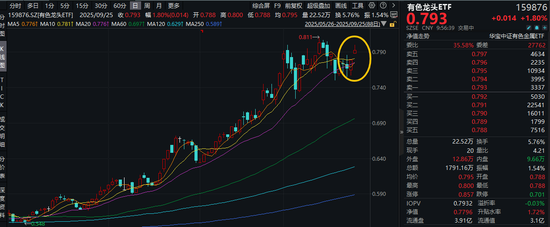
铜业重磅!全球第二大铜矿,因事故停产!洛阳钼业登顶A股吸金榜,有色龙头ETF(159876)跳空大涨2.7%
Xin Lang Ji Jin· 2025-09-25 02:13
Core Viewpoint - The non-ferrous metal sector is leading the market, with the non-ferrous metal ETF (159876) experiencing a significant jump, reflecting strong performance since its low point in April 2023, outperforming major indices like the Shanghai Composite and CSI 300 [1][3] Group 1: Market Performance - The non-ferrous metal ETF (159876) saw a peak intraday increase of 2.7% and is currently up 1.8% [1] - Since the low on April 8, 2023, the ETF has risen by 55.21%, significantly outperforming the Shanghai Composite (24.45%) and CSI 300 (27.21%) [1] - The top six constituents of the CSI Non-Ferrous Metal Index are all copper industry leaders, with notable gains from Northern Copper and Luoyang Molybdenum [1][3] Group 2: Supply and Demand Dynamics - A landslide at the Grasberg copper mine, the world's second-largest, has halted production, with Freeport estimating a 35% drop in copper and gold output for 2026 and a return to pre-accident production levels not expected until 2027 [3] - Short-term factors such as tariff suspensions and supply disruptions are expected to support copper prices, while long-term demand from home appliance subsidies and increased investment in power grids may further elevate price levels [3] Group 3: Investment Recommendations - Huabao Fund suggests increasing allocation to the non-ferrous sector, as the economic recovery's impact on cyclical goods has yet to be fully realized [3] - CITIC Construction anticipates that domestic policies aimed at optimizing production factors will enhance profitability across the supply chain, benefiting metal prices [3] Group 4: Sector Composition - The non-ferrous metal ETF (159876) and its linked funds provide diversified exposure to various metals, with copper, aluminum, rare earths, gold, and lithium comprising 25.3%, 14.2%, 13.8%, 13.6%, and 7.6% of the index, respectively [5]


宝城期货螺纹钢早报-20250925
Bao Cheng Qi Huo· 2025-09-25 01:54
Group 1: Report Industry Investment Rating - No relevant content found Group 2: Core Viewpoints of the Report - The supply - demand pattern of rebar has changed, and the steel price will continue to fluctuate. The short - term, medium - term, and intraday trends of rebar 2601 are fluctuating, fluctuating, and weakly fluctuating respectively. Attention should be paid to the support at the MA20 line [2][3] Group 3: Summary by Relevant Catalogs 1. Variety Viewpoint Reference - For rebar 2601, the short - term trend is fluctuating, the medium - term trend is fluctuating, and the intraday trend is weakly fluctuating. The reference view is to pay attention to the support at the MA20 line. The core logic is that the supply - demand pattern has changed and the steel price continues to fluctuate. There are also explanations for the calculation of price changes and definitions of different trends [2] 2. Market Driving Logic - The supply - demand pattern of rebar has changed. The production of construction steel mills has weakened, and the weekly output has continued to decline, but the inventory is relatively high, so the positive effect on the supply side is not strong. Thanks to pre - holiday restocking by downstream industries, rebar demand has improved, with high - frequency indicators rising from low levels, but it is still at a low level in the same period in recent years, and the downstream industry has not improved, so the peak season is lackluster. Overall, due to the improvement in demand, the supply - demand pattern has improved, providing support for the steel price, but the weak downstream performance and demand concerns remain, so the upward driving force is not strong. It is expected that the steel price will maintain a fluctuating trend before the holiday, and attention should be paid to the production and sales data released by Steel Union today [3]
新能源及有色金属日报:进口增长较多,碳酸锂盘面震荡运行-20250923
Hua Tai Qi Huo· 2025-09-23 02:12
Report Summary 1. Report Industry Investment Rating No investment rating information is provided in the given content. 2. Core View of the Report The current short - term supply - demand pattern of the lithium carbonate market is favorable, with inventory continuously decreasing and the futures market having certain support. It is expected that the short - term futures market will fluctuate. However, after the resumption of production at the mining end and the weakening of consumption, the market may decline [3]. 3. Summary by Related Content Market Analysis - On September 22, 2025, the opening price of the lithium carbonate main contract 2511 was 74,580 yuan/ton, and the closing price was 73,420 yuan/ton, a change of - 0.05% compared to the previous day's settlement price. The trading volume was 396,645 lots, and the open interest was 271,624 lots, a decrease of 9,640 lots from the previous trading day. The current basis was 430 yuan/ton, and the number of lithium carbonate warehouse receipts was 38,909 lots, a decrease of 575 lots from the previous trading day [1]. - According to SMM data, the price of battery - grade lithium carbonate was 73,200 - 74,500 yuan/ton, an increase of 350 yuan/ton from the previous trading day. The price of industrial - grade lithium carbonate was 71,000 - 72,200 yuan/ton, also an increase of 350 yuan/ton. The price of 6% lithium concentrate was 833 US dollars/ton, an increase of 3 US dollars/ton from the previous day. Downstream material factories were cautiously waiting and seeing, with the overall market trading activity remaining stable. As it was the peak demand season, downstream material factories had certain inventory - building needs before the National Day and were more willing to purchase at relatively low prices [1]. - In August, China imported 22,000 tons of lithium carbonate, a month - on - month increase of 58% and a year - on - year increase of 25%. Among them, 15,600 tons were imported from Chile, accounting for 71% of the total imports, and 4,000 tons were imported from Argentina, accounting for 19%. From January to August, China's cumulative imports of lithium carbonate were 153,000 tons, a cumulative year - on - year increase of 3.5% [1]. - In August, China's lithium spodumene imports were about 619,000 tons, a month - on - month decrease of 17.5%, equivalent to 56,000 tons of lithium carbonate equivalent (LCE). From Australia, Nigeria, and Zimbabwe, the combined import volume accounted for 70.2%, with some showing significant decreases: Australia's imports were 212,000 tons, a month - on - month decrease of 50.5%; Nigeria's imports were 105,000 tons, a month - on - month decrease of 9.6%; Zimbabwe's imports were 118,000 tons, a month - on - month increase of 84%. Imports from Mali and Brazil increased significantly, with 73,000 tons and 18,000 tons respectively, due to concentrated shipments [2]. Strategy - Futures market: It is expected that the short - term market will fluctuate. After the resumption of production at the mining end and the weakening of consumption, the market may decline. For unilateral trading, short - term range operations can be carried out, and selling hedging can be done at high prices. There are no strategies for options, inter - delivery spread, cross - variety, and spot - futures operations [3][4].
国投期货化工日报-20250919
Guo Tou Qi Huo· 2025-09-19 11:44
Report Industry Investment Ratings - Urea: ☆☆☆ (indicating a short - term relatively balanced state with poor operability on the current trading floor) [1] - Methanol: ★★★ (indicating a clearer long - position trend with relatively appropriate investment opportunities) [1] - Pure Benzene: ★★★ [1] - Styrene: ★★★ [1] - Polypropylene: ☆☆☆ [1] - Plastic: ☆☆☆ [1] - PVC: ☆☆☆ [1] - Caustic Soda: ☆☆☆ [1] - PX: ★★★ [1] - PTA: ★★★ [1] - Ethylene Glycol: ☆☆☆ [1] - Short Fiber: ★★★ [1] - Glass: ☆☆☆ [1] - Soda Ash: ☆☆☆ [1] - Bottle Chip: ☆☆☆ [1] - Propylene: ☆☆☆ [1] Core Viewpoints - The overall performance of the chemical industry is weak, with different products showing varying trends in supply, demand, and price [2][3][5] - Some products may have short - term price fluctuations due to factors such as changes in supply and demand, seasonal factors, and cost pressures [2][5][6] Summary by Category Olefins - Polyolefins - Olefin futures main contracts continued to decline. Propylene demand improved as prices dropped, but market supply showed an increasing trend [2] - Polyolefin futures main contracts had a narrow decline. Polyethylene demand increased as downstream factory operating rates rose, and supply decreased due to many domestic maintenance enterprises. Polypropylene supply may slightly shrink, but downstream procurement enthusiasm was restricted [2] Pure Benzene - Styrene - Pure benzene continued its weak trend, with a slight decline in weekly开工 and low - level fluctuations in processing margins. The domestic pure benzene market supply - demand may improve in the third quarter, but high import volume expectations suppressed market sentiment [3] - Styrene futures main contracts declined. Supply had unplanned reductions, but demand entered a dull period, and there may be low - price promotions by northern enterprises before the National Day [3] Polyester - PTA price was under pressure, and the PTA - PX spread continued to rebound. The short - term market was weak, but there was an expectation of downstream stocking before the festival [5] - Ethylene glycol returned to the bottom of the range. Domestic开工 increased slightly, and the market was expected to be weak, but the actual supply pressure was not large [5] - Short - fiber futures prices declined. Near - month short - fiber could be allocated more on the long side, and positive spreads could be bought at low prices [5] - Bottle chip operating rate slightly declined, with a slight reduction in inventory and a small repair in processing margins, but the long - term pressure of over - capacity limited the repair space [5] Coal Chemical Industry - Methanol main contracts showed a strong - side shock. Short - term supply - demand difference was expected to narrow, and long - term attention should be paid to the actual implementation of overseas gas restrictions [6] - Urea main contracts continued to decline. The domestic urea market remained in a state of loose supply - demand, with the market oscillating at a low level [6] Chlor - Alkali - PVC remained in a state of loose supply - demand, with large inventory pressure. It may have an oscillating and weak trend [7] - Caustic soda showed regional differentiation. The futures price may oscillate [7] Soda Ash - Glass - Soda ash had inventory accumulation again. In the short - term, it was expected to fluctuate with the macro - sentiment, and the long - term supply surplus pattern remained unchanged [8] - Glass continued the pattern of high supply and weak demand. The futures price was expected to fluctuate with the macro - sentiment [8]
广发期货《能源化工》日报-20250919
Guang Fa Qi Huo· 2025-09-19 07:05
1. Report Industry Investment Rating There is no information about the industry investment rating in the provided reports. 2. Core Views of the Reports Polyester Industry - PX: In the fourth quarter, PX supply - demand is expected to weaken, and PXN may be compressed. The absolute price is expected to fluctuate weakly in the short - term. PX11 can be treated as fluctuating between 6600 - 6900 [2]. - PTA: New device commissioning is postponed, and some device maintenance plans are announced, which boosts PTA in the short - term. In the medium - term, the supply - demand is expected to be weak, and the absolute price follows raw materials. TA can be treated as fluctuating between 4600 - 4800, and TA1 - 5 can be rolled in reverse arbitrage [2]. - Ethylene Glycol: The supply pattern is strong in the near - term and weak in the long - term. In September, it is expected to be good, but in the fourth quarter, it will enter the inventory accumulation period. EG can be observed unilaterally, and EG1 - 5 can be in reverse arbitrage [2]. - Short Fiber: The short - term supply - demand is weak. The short - fiber price has support at low levels but weak rebound drive, and the rhythm follows raw materials [2]. - Bottle Chip: In September, supply increases slightly, demand may decline, and inventory is expected to increase slowly. PR follows the cost side, and the processing fee has limited upside space [2]. Urea Industry The urea futures are running weakly due to increasing supply and lack of demand growth. The short - term futures are expected to run weakly [6]. PVC and Caustic Soda Industry - Caustic Soda: After a rebound, it retraces. The supply may decline due to maintenance, and the demand support is limited. The spot price may stabilize, and the decline space of the futures price is limited [12]. - PVC: After a rebound, it retraces. The supply is expected to decrease due to maintenance, and the demand shows a marginal improvement. The cost provides bottom support. It can be short - sold at high prices [12]. Methanol Industry The mainland supply is at a high level, and the inventory pattern is relatively healthy, which supports the price. The demand is weak, and the port inventory is accumulating. The overall valuation is neutral. The market sways between high inventory and overseas gas - restriction expectations, and the inventory inflection point should be followed [22]. Pure Benzene and Styrene Industry - Pure Benzene: Supply may be higher than expected, and demand is weak. The short - term price is affected by geopolitical and macro factors. BZ2603 follows styrene to fluctuate [26]. - Styrene: Supply is relatively sufficient, and demand support is average. The port inventory is falling but still high. EB10 can be bought at low levels, and the spread between EB11 and BZ11 can be widened at low levels [26]. Crude Oil Industry The overnight oil price fluctuates in a range. The tight refined oil market supports the price, but the macro - economic slowdown restricts the upside. The oil price may fluctuate in a range in the short - term. It is recommended to wait and see unilaterally, and look for opportunities to widen the spread on the option side [28]. Polyolefin Industry For PP, the profit is suppressed, there are many unplanned maintenance, and the inventory decreases. For PE, the maintenance is high, the basis rises, and the inventory is reduced. The demand has few new orders, and the market shows "supply decrease and demand increase" [33]. 3. Summaries According to Related Catalogs Polyester Industry - **Upstream Prices**: Brent crude oil (November) decreased by 0.8%, WTI crude oil (October) decreased by 0.7%, CFR Japan naphtha decreased by 1.6%, etc. [2]. - **Downstream Polyester Product Prices and Cash Flows**: POY150/48 price decreased by 0.4%, FDY150/96 price remained unchanged, etc. [2]. - **PX - related Prices and Spreads**: CFR China PX decreased, PX spot price (RMB) decreased, and PX basis (11) decreased by 39.0% [2]. - **PTA - related Prices and Spreads**: PTA East China spot price increased by 0.2%, TA futures 2601 decreased by 1.0% [2]. - **MEG - related Prices and Spreads**: MEG East China spot price decreased by 0.3%, EG futures 2601 decreased by 0.7% [2]. - **Polyester Industry Chain Operating Rates**: Asian PX operating rate increased by 2.5%, China PX operating rate increased by 4.9%, etc. [2]. Urea Industry - **Fertilizer Market**: The prices of some fertilizers such as ammonium sulfate and sulfur decreased slightly, while others remained unchanged [6]. - **Supply - demand Overview**: Domestic urea daily output increased by 1.82%, coal - based urea daily output increased by 1.97%, etc. [6]. PVC and Caustic Soda Industry - **Prices**: Shandong 32% liquid caustic soda converted to 100% price decreased by 2.4%, East China calcium carbide - based PVC market price decreased by 0.4% [12]. - **Overseas Quotes and Export Profits**: FOB East China port caustic soda increased by 1.3%, and the export profit increased by 120.2% [12]. - **Supply (Chlor - alkali Operating Rate and Industry Profit)**: PVC overall operating rate increased by 4.2%, and the profit of externally purchased calcium carbide - based PVC decreased by 12.8% [12]. - **Demand**: Alumina industry operating rate increased by 1.5%, and Longzhong sample pipe operating rate increased by 12.3% [12]. - **Inventory**: Liquid caustic soda Shandong inventory increased by 17.0%, and PVC upstream factory inventory decreased by 1.8% [12]. Methanol Industry - **Prices and Spreads**: MA2601 closing price decreased by 1.26%, and the spread between MA9 and MA1 changed by - 360.00% [22]. - **Inventory**: Methanol enterprise inventory decreased by 0.61%, and methanol port inventory increased by 0.48% [22]. - **Upstream and Downstream Operating Rates**: Domestic upstream enterprise operating rate decreased by 0.12%, and downstream externally - purchased MTO device operating rate increased by 8.72% [22]. Pure Benzene and Styrene Industry - **Upstream Prices and Spreads**: CFR China pure benzene decreased by 0.5%, and pure benzene - naphtha spread increased by 4.5% [26]. - **Styrene - related Prices and Spreads**: Styrene East China spot price decreased by 1.1%, and EB futures 2510 decreased by 1.1% [26]. - **Inventory**: Pure benzene Jiangsu port inventory decreased by 6.9%, and styrene Jiangsu port inventory decreased by 9.9% [26]. - **Industrial Chain Operating Rates**: Asian pure benzene operating rate increased by 1.4%, and domestic pure benzene operating rate decreased by 0.1% [26]. Crude Oil Industry - **Crude Oil Prices and Spreads**: Brent decreased by 0.75%, WTI decreased by 0.05%, and the spread between Brent M1 and M3 increased by 4.55% [28]. - **Refined Oil Prices and Spreads**: NYM RBOB increased by 0.13%, NYM ULSD increased by 0.02%, and ICE Gasoil decreased by 0.39% [28]. - **Refined Oil Crack Spreads**: US gasoline crack spread decreased by 0.51%, European gasoline crack spread decreased by 2.44% [28]. Polyolefin Industry - **Prices**: L2601 closing price decreased by 0.79%, PP2601 closing price decreased by 0.80% [33]. - **Inventory**: PE enterprise inventory increased by 5.57%, PP enterprise inventory increased by 8.06% [33]. - **Upstream and Downstream Operating Rates**: PE device operating rate increased by 2.97%, PP device operating rate decreased by 2.5% [33].
X @外汇交易员
外汇交易员· 2025-09-18 00:58
Industry Capacity Adjustment - China's domestic polysilicon effective capacity is projected to decrease to approximately 240 million tons per year, a 164% decrease compared to the end of 2024 [1] - The polysilicon supply and demand pattern is expected to improve substantially with the strict implementation of new energy consumption standards [1] Regulatory Environment - The draft standard released this week is currently open for public comment and is expected to be implemented within 12 months [1]