关税调整

Search documents
广发早知道:汇总版-20251107
Guang Fa Qi Huo· 2025-11-07 05:29
Report Industry Investment Rating - Not provided in the given content Core Viewpoints of the Report - The A-share market showed a strong upward trend on November 6, 2025, with the technology sector leading the way. The market is expected to experience some short - term fluctuations but has limited downside risks. For the bond market, there are opportunities for appropriate long - positions and positive arbitrage strategies. In the precious metals market, there is a long - term bullish outlook, but short - term oscillations are expected. Different commodities in the futures market have their own supply - demand situations and price trends, with corresponding trading suggestions provided for each [3][5][7][10] Summary by Relevant Catalogs Financial Derivatives - Financial Futures Stock Index Futures - **Market Situation**: On November 6, the A - share market rose across the board, with the Shanghai Composite Index up 0.97% at 4007.76 points. The four major stock index futures contracts also closed higher, and the basis discounts of the main contracts were repaired. The semiconductor industry chain rebounded strongly, while the consumer industry corrected [3][4] - **News**: Domestically, the Ministry of Commerce held talks with the US agricultural trade delegation. Overseas, the US Supreme Court debated the legality of Trump's large - scale tariff collection [4] - **Funding**: The trading volume of the A - share market increased by over 300 billion yuan, with a total turnover of 2.06 trillion yuan. The central bank conducted 92.8 billion yuan of 7 - day reverse repurchase operations, resulting in a net withdrawal of 249.8 billion yuan [5] - **Operation Suggestion**: It is recommended to mainly observe as the market may experience a slight callback after reaching a high and is waiting to stabilize [5] Treasury Bond Futures - **Market Performance**: Most treasury bond futures contracts closed lower, and the yields of major interest - rate bonds generally rose [6] - **Funding**: The central bank conducted 92.8 billion yuan of 7 - day reverse repurchase operations, with a net withdrawal of 249.8 billion yuan. However, the inter - bank liquidity remained loose [6][7] - **Operation Suggestion**: It is recommended to take appropriate long - positions in the unilateral strategy and pay attention to positive arbitrage opportunities in the spot - futures strategy [7] Financial Derivatives - Precious Metals - **Market Review**: US labor market contraction signals emerged in October, and the UK central bank paused interest rate cuts. Precious metals prices first rose and then fell. The international gold price closed at $3975.88 per ounce, down 0.07%, and the international silver price closed at $47.983 per ounce, up 0.02% [8][9][10] - **Outlook**: In the long - term, precious metals may enter a bull market, but in the short - term, the international gold price is expected to oscillate between $3900 - $4030, and the silver price between $47 - $49 [10] - **Funding**: ETF funds have flowed out due to the recent price fluctuations, and investors' attitudes are cautious [12] Financial Derivatives - Container Shipping Index (European Line) - **Spot Quotation**: As of November 4, the freight quotes for Shanghai - Europe routes from different shipping companies showed certain ranges [13] - **Container Shipping Index**: As of November 3, the SCFIS European line index decreased by 7.92% month - on - month, while the US - West route index increased by 14.43% [13] - **Fundamentals**: As of November 4, the global container shipping capacity increased by 7.34% year - on - year, and the demand in different regions showed different characteristics as reflected by PMI data [14] - **Logic**: The futures market declined, and the main contract is expected to oscillate between 1800 - 2000 points [14] - **Operation Suggestion**: It is recommended to buy the December contract at low prices in the short - term [14] Financial Derivatives - Commodity Futures - Non - ferrous Metals Copper - **Spot**: As of November 6, the average price of SMM electrolytic copper increased, and downstream demand showed a short - term recovery [14] - **Macro**: The US market liquidity tightened, the manufacturing PMI was lower than expected, and the Trump tariff case was being heard, which may affect copper prices [15] - **Supply**: The copper concentrate spot TC remained low. The electrolytic copper production in October decreased slightly, and it is expected to decline slightly in November [16] - **Demand**: The weekly operating rate of copper rod processing increased, and downstream demand showed strong resilience [16][17] - **Inventory**: LME, domestic social, and COMEX copper inventories all increased [17] - **Logic**: The copper price is expected to show an upward trend in the long - term due to supply - demand contradictions, but short - term price increases may suppress demand [18] - **Operation Suggestion**: Pay attention to the support at 84000 and the resistance at 86500 [18] - **Short - term View**: Oscillation [18] Alumina - **Spot**: On November 6, the spot prices of alumina in different regions showed different trends, with a shrinking north - south price difference [18] - **Supply**: In October, the production of metallurgical - grade alumina increased, and the operating rate decreased slightly. In November, the supply is expected to remain in surplus, but the situation may improve [19] - **Inventory**: Alumina inventories in ports, plants, and warehouses all increased [19] - **Logic**: The alumina price is expected to remain weakly oscillating, with the main contract ranging from 2750 - 2900 yuan/ton [20] - **Operation Suggestion**: The main contract is expected to operate between 2750 - 2900 yuan/ton [20] - **View**: Weakly oscillating [20] Aluminum - **Spot**: On November 6, the average price of SMM A00 aluminum increased, and the spot premium decreased [22] - **Supply**: In October, domestic electrolytic aluminum production increased, and it is expected to decline slightly in November due to environmental protection restrictions [22] - **Demand**: Downstream processing industries entered the peak season, but the weekly operating rate declined [22] - **Inventory**: Domestic mainstream consumer area inventories increased slightly, while LME inventories decreased [23] - **Logic**: The price increase of the main contract was driven by overseas news, but the fundamentals are not optimistic. The price is expected to fluctuate between 20500 - 21500 yuan/ton [24] - **Operation Suggestion**: The main contract is expected to operate between 20800 - 21600 yuan/ton [25] - **View**: Wide - range oscillation [25] Aluminum Alloy - **Spot**: On November 6, the average price of SMM aluminum alloy ADC12 remained unchanged [25] - **Supply**: In October, the production of recycled aluminum alloy ingots decreased, and the supply of raw materials remained tight [25] - **Demand**: The demand showed a mild recovery, but the order volume did not increase significantly [26] - **Inventory**: The social inventory increased slightly, and the absolute inventory remained high [26] - **Logic**: The ADC12 price is expected to remain strongly oscillating, with the main contract ranging from 20400 - 21000 yuan/ton [27] - **Operation Suggestion**: The main contract is expected to operate between 20400 - 21000 yuan/ton. Consider the arbitrage strategy of going long on AD01 and short on AL01 when the spread is above 550 [28] - **View**: Wide - range oscillation [28] Zinc - **Spot**: On November 6, the average price of SMM 0 zinc ingots remained stable, and downstream procurement was mainly for rigid demand [28] - **Supply**: The zinc concentrate processing fees decreased, and the zinc production from January to October increased. The subsequent supply increase may be limited [29] - **Demand**: The operating rates of primary processing industries were relatively stable, and the overall demand did not exceed expectations [30] - **Inventory**: Domestic social inventories decreased, while LME inventories were basically stable [30] - **Logic**: The zinc price is expected to oscillate strongly in the short - term but may remain range - bound. Upward or downward breakthroughs depend on demand improvement or inventory changes [31] - **Operation Suggestion**: The main contract is expected to operate between 22300 - 23000 yuan/ton [31] - **Short - term View**: Oscillation [31] Tin - **Spot**: On November 6, the price of SMM 1 tin increased, and the market trading was mainly for rigid demand [31] - **Supply**: In September, the domestic tin ore and tin ingot imports showed different trends. The supply from Myanmar improved slightly, but the overall supply remained tight [32] - **Demand and Inventory**: In September, the solder operating rate increased, but the traditional consumer electronics and other fields had weak demand. The LME inventory increased, while the domestic inventory decreased [33] - **Logic**: The market sentiment improved, and the fundamentals were strong. It is recommended to hold long positions at low prices and buy on dips [34] - **Operation Suggestion**: Hold long positions at low prices and buy on dips [34] - **Near - term View**: Wide - range oscillation [34] Nickel - **Spot**: As of November 6, the average price of SMM1 electrolytic nickel decreased [34] - **Supply**: In October, the domestic refined nickel production decreased, but the overall production remained at a high level [35] - **Demand**: The demand for electroplating and alloys was relatively stable, the demand for stainless steel was weak, and the demand for nickel sulfate was supported in the short - term but faced challenges in the medium - term [35] - **Inventory**: Overseas inventories remained high, while domestic social inventories decreased slightly, and bonded area inventories declined [35] - **Logic**: The macro - environment was weak, but the cost was supported. The price is expected to oscillate between 118000 - 124000 yuan/ton [36] - **Operation Suggestion**: The main contract is expected to operate between 118000 - 124000 yuan/ton [37] - **Short - term View**: Range - bound oscillation [37] Stainless Steel - **Spot**: As of November 6, the prices of 304 cold - rolled stainless steel in Wuxi and Foshan remained stable [38] - **Raw Materials**: The nickel ore price was firm, the nickel iron price decreased, and the chromium iron market was weak [38] - **Supply**: In September and October, the domestic stainless steel production increased. The supply pressure remained [39] - **Inventory**: The social inventory decreased slightly, and the warehouse receipt quantity declined [39] - **Logic**: The macro - driving force weakened, and the fundamentals were under pressure. The price is expected to oscillate weakly between 12500 - 13000 yuan/ton [40] - **Operation Suggestion**: The main contract is expected to operate between 12500 - 13000 yuan/ton [41] - **Short - term View**: Weakly oscillating [41] Lithium Carbonate - **Spot**: As of November 6, the prices of battery - grade and industrial - grade lithium carbonate decreased, and the trading was mainly for rigid demand [41] - **Supply**: In October, the lithium carbonate production increased, and last week's production also showed a slight increase [42] - **Demand**: The demand was optimistic, and the production schedules of iron - lithium and ternary materials were expected to increase [42] - **Inventory**: The overall inventory decreased last week [43] - **Logic**: The price was supported by strong fundamentals in the short - term. However, the trading logic has switched, and the price is expected to oscillate between 78000 - 82000 yuan/ton [45] - **Operation Suggestion**: The main contract is expected to operate between 78000 - 82000 yuan/ton [46] - **Short - term View**: Oscillation adjustment [46] Financial Derivatives - Commodity Futures - Black Metals Steel - **Spot**: The spot price was stable, the basis of rebar weakened, and the basis of hot - rolled coil was slightly stronger [46] - **Cost and Profit**: The cost of iron elements had weak support, while the cost of carbon elements had support. The profit order was billet > hot - rolled coil > rebar > cold - rolled coil [46] - **Supply**: From January to September, the iron element production increased. In October and November, the molten iron production decreased, and the five major steel products' production also declined [46] - **Demand**: Domestic demand was weak, exports were high, and the apparent demand decreased [47] - **Inventory**: The inventory of the five major steel products decreased, the rebar inventory decreased, and the hot - rolled coil inventory increased [47] - **View**: The steel market was slightly stronger, and it is recommended to continue holding the strategy of going long on coking coal and short on hot - rolled coil [48][49] Iron Ore - **Spot**: As of November 6, the prices of mainstream iron ore powders increased slightly [50] - **Futures**: The iron ore futures prices increased slightly, and the 1 - 5 spread weakened [50] - **Basis**: The basis of different iron ore products was provided [50] - **Demand**: As of November 6, the daily molten iron production decreased, and the demand for iron ore weakened [50] - **Supply**: Last week, the global iron ore shipment decreased, but the port arrivals increased significantly [51] - **Inventory**: The port inventory increased, the daily port clearing volume increased slightly, and the steel mill's imported iron ore inventory increased [51] - **View**: The iron ore price is expected to oscillate weakly. It is recommended to short at high prices and use the strategy of going long on coking coal and short on iron ore [51] Coking Coal - **Futures and Spot**: As of November 6, the coking coal futures rebounded, the Shanxi coal - coke price was strong, and the Mongolian coal price was high [52] - **Supply**: The production capacity utilization rate of sample coal mines decreased slightly, and the production and inventory showed different trends [52][53] - **Demand**: The production of coke by independent coking plants and steel mills decreased, and the demand for coking coal weakened [54] - **Inventory**: The total inventory of coking coal increased slightly [55] - **View**: The coking coal price is expected to rise in the fourth quarter. It is recommended to go long on coking coal 2601 at low prices and use the strategy of going long on coking coal and short on coke [56] Coke - **Futures and Spot**: As of November 6, the coke futures rebounded. The third - round price increase of coke was implemented, and there is still an expectation of a further increase [57][61] - **Profit**: The average profit per ton of coke in independent coking plants was negative [58] - **Supply**: The daily production of coke decreased, and the cost was supported by the rising coking coal price [59][61] - **Demand**: The iron water production decreased, and the steel price was weak, which suppressed the coke price increase [60][61] - **Inventory**: The total inventory of coke decreased slightly, and the supply - demand was tight [61] - **View**: The coke price is expected to rise in the fourth quarter. It is recommended to go long on coke 2601 at low prices and use the strategy of going long on coking coal and short on coke [62] Financial Derivatives - Commodity Futures - Agricultural Products Meal - **Spot Market**: On November 6, the domestic soybean meal price was stable or decreased, and the rapeseed meal price increased. The trading volume of soybean meal decreased [63] - **Fundamentals**: China adjusted the tariff on US imports, and there were various news about the soybean production and trade in the US, Brazil, and Argentina [63][64] - **Market Outlook**: The US soybean price fell sharply. The domestic soybean and soybean meal inventories were high, but the cost support was strong, and the soybean meal price was expected to be supported [64][65] Live Pigs - **Spot Situation**: The spot price of live pigs oscillated, and the national average price increased slightly [66] - **Market Data**: The inventory of breeding sows decreased in October, and the profit of live pig farming decreased [66][67] - **Market Outlook**: The live pig price is expected to oscillate. It is recommended to continue holding the 3 - 7 reverse spread strategy and be cautiously bullish on the unilateral position [67] Corn - **Spot Price**: On November 6, the corn price in Northeast China and North China was relatively stable, and the port price was slightly weak [68] - **Fundamentals**: The corn inventory in northern ports and Guangdong ports showed different trends, and the inventory of feed and deep - processing enterprises also changed [68][69] - **Market Outlook**: The corn
油脂市场情绪好转,等待利多因素发酵
Zhong Xin Qi Huo· 2025-11-07 01:22
1. Report Industry Investment Rating No relevant content provided. 2. Core Views of the Report - The sentiment in the oil and fat market has improved, and it is waiting for the fermentation of bullish factors. The protein meal market has seen a decline with reduced positions and light trading. The corn/starch market has shown stable to weak spot prices and an increase in positions on the futures market. The hog market is experiencing price fluctuations due to farmers' reluctance to sell at low prices. The natural rubber market has rebounded strongly, and its sustainability needs attention. The synthetic rubber market has seen a temporary improvement in sentiment as raw material prices have stabilized. The cotton market is fluctuating within a narrow range with limited upside and downside potential. The sugar market is testing its lower support in the short term. The pulp market has continued to rise, and the enthusiasm for futures - cash arbitrage has increased. The double - glue paper market has strengthened following the pulp market. The log market is oscillating at the bottom [1][6]. 3. Summary by Relevant Catalogs 3.1 Oil and Fats - **View**: The market sentiment has improved, waiting for bullish factors to ferment. The outlook is that palm oil, rapeseed oil, and soybean oil will oscillate. - **Logic**: Optimistic trade sentiment led to the rise of US soybeans on Wednesday, and domestic oils stopped falling and rose yesterday, with palm and rapeseed oils being relatively strong. The US government is in a "shutdown," and the market doubts the Fed's further interest rate cuts this year. US crude oil inventories increased unexpectedly. From an industrial perspective, US soybean data updates are suspended. The US soybean harvest is nearly over, and the market expects a high probability of a decline in US soybean yield. China's tariff adjustment policy boosts the export demand for US soybeans. Brazilian soybean planting is going smoothly. The arrival of imported soybeans in China may be at a relatively high level, and the de - stocking of domestic soybean oil is expected to be slow. In October, the production of Malaysian palm oil increased month - on - month, and the probability of inventory accumulation is high. Indonesia's palm oil inventory remains low due to increased consumption in biodiesel. India's vegetable oil imports may decline seasonally. With the large - scale listing of Russian rapeseed, the supply of domestic rapeseed oil is expected to increase [2][6]. 3.2 Protein Meal - **View**: The market has seen a decline with reduced positions and light trading. The outlook is that soybean meal and rapeseed meal will oscillate. - **Logic**: Internationally, US soybeans are oscillating at a high level, and the positive impact of China's purchases has been gradually digested. Attention should be paid to the US soybean yield and the growth of South American soybeans. The export volume of old - crop Brazilian soybeans in October decreased, but the discount is more favorable than that of the US. Brazilian soybeans will enter a critical growth period in November, and the impact of La Nina should be monitored. CBOT US soybeans are approaching a reasonable valuation, and new bullish factors are needed for an upward movement. Domestically, in the short term, the import and crushing profit of the January futures contract is still in the red, and profit margins need to be provided to stimulate ship purchases. In the medium term, the quantity of China's US soybean purchases will be gradually realized. The South American weather and the strength of the fourth - quarter consumption season will determine the upward potential of soybean meal. In the long term, there is expected to be no gap in soybean supply and demand in the fourth quarter of 2025 and the first quarter of 2026. The demand for soybean meal is expected to be stable or increase slightly, and rapeseed meal may follow the trend of soybean meal [6]. 3.3 Corn/Starch - **View**: Spot prices are stable to weak, and the futures market has increased positions and risen. The outlook is for oscillation. - **Logic**: The domestic corn price is generally stable with local fluctuations. In the Northeast, farmers are reluctant to sell as the temperature drops, and the supply pressure has eased. However, there are bottlenecks in transportation capacity, leading to increased freight costs and a slow - to - resolve shortage in the sales area. In November, the market is still under the pressure of new grain listing. The expected increase in production in the Northeast will drag down prices. Feed - using enterprises are mainly replenishing inventory based on rigid demand, and there is insufficient upward driving force for prices before large - scale inventory building occurs [7][8]. 3.4 Hogs - **View**: Farmers are reluctant to sell at low prices, and prices are oscillating. The outlook is for a weak oscillation. - **Logic**: The supply and demand are loose, but farmers' reluctance to sell at low prices after the price weakens has led to a low - level oscillation of hog prices. In the short term, the utilization rate of second - fattening pens has increased, but the rebound in hog prices has suppressed the enthusiasm for second - fattening. In the medium term, the number of sows capable of reproduction was at a high level in the first half of 2025, and the number of newborn piglets increased from January to September. It is expected that the hog slaughter volume will continue to increase in the fourth quarter. In the long term, the capacity of sows capable of reproduction has started to decline. With the dual drivers of "policy + losses," the reduction of sow production is expected to accelerate in the fourth quarter, and the supply pressure will gradually ease in the second half of 2026. The demand has increased slightly as the temperature drops. Group farms are actively selling, and the average weight has decreased. The enthusiasm for second - fattening has weakened [8]. 3.5 Natural Rubber - **View**: The market has rebounded strongly, and its sustainability needs attention. The outlook is for oscillation. - **Logic**: The rebound of the natural rubber market is in line with the rebound rhythm of commodities. The fundamental situation can provide some bottom support. The RU warehouse receipts have been continuously cancelled, and the new rubber registration progress is slow, with a lower valuation compared to NR. The import pressure in November may be relatively large, which will put pressure on the upside of NR. The short - term spread between RU and NR may be repaired. The recent price fluctuations are mainly affected by the macro - environment. If there is no further macro - driving force, the rubber price may face downward adjustment pressure. However, as it enters November, there may still be room for speculation about domestic rubber - cutting suspension and RU warehouse receipts, so the downside space is relatively limited [9][11]. 3.6 Synthetic Rubber - **View**: Raw material prices have stabilized, and sentiment has temporarily improved. The outlook is for oscillation. - **Logic**: The BR main contract has switched to the January contract and continued to rebound, returning to the level before Tuesday's decline. The improvement in sentiment is due to the better trading volume and temporary stabilization of butadiene prices, along with a strong rebound in the overall commodity market. The price of butadiene dropped rapidly last week to a record low this year. The supply - demand contradiction in the market has intensified, and the cautious attitude of downstream buyers has led to poor trading volume. Although the downstream buyers have gradually entered the market after the price dropped to a low level, and the supply side of butadiene intends to stop the price decline, buyers are still cautious. In the short term, attention should be paid to whether the improvement in trading sentiment can continue to support the butadiene price. In the medium term, the supply - demand of butadiene will remain in surplus in the next two months before the end of the year, and the price may decline further [12]. 3.7 Cotton - **View**: The market is fluctuating within a narrow range with limited upside and downside potential. The short - term outlook is for the January contract to oscillate within a range, and the long - term outlook is for a bullish oscillation. - **Logic**: The increase in the new - season Xinjiang cotton production is less than expected, and the purchase cost has increased, which supported the cotton price to oscillate strongly in October. The improvement in Sino - US trade relations and the reduction of import tariffs on US cotton are expected to promote US cotton exports to China and China's textile exports next year, but the short - term impact is limited. With the listing of new cotton, the supply has increased, and the cotton price is under pressure. At the same time, the profit from hedging has gradually emerged, and there is hedging pressure on the upside of the cotton price. The upper pressure on the January contract is 13,600 - 13,800 yuan/ton, and the lower support is 13,300 - 13,400 yuan/ton [13]. 3.8 Sugar - **View**: The market is testing its lower support in the short term. The long - term outlook is for a weak oscillation. - **Logic**: In the international market, the peak of Brazil's bi - weekly sugar production has ended, and the export volume in October has decreased, which may marginally improve the loose international trade flow. However, as the Northern Hemisphere enters the peak crushing season, the supply of new sugar will increase, and the downward pressure on international sugar prices remains. Brazil's cumulative sugar production has increased slightly year - on - year, and the market's expectation of Brazil's production increase has not changed. Thailand and India are expected to increase production in the new season. In the domestic market, the demand from August to September was average, and the industrial inventories in Guangxi and Yunnan have increased year - on - year. Although the tightening of import controls on syrups and premixes and the expected exhaustion of import licenses have made the domestic market relatively strong, there is still downward pressure on the domestic market as the southern sugar enters the peak crushing season [14][15]. 3.9 Pulp - **View**: The market has continued to rise, and the enthusiasm for futures - cash arbitrage has increased. The outlook is for oscillation. - **Logic**: The recent rise is due to the expected increase in the price of downstream paper driven by the increase in packaging paper prices and the improvement in the tender demand for cultural paper, as well as the increase in wood chip prices. From a medium - term perspective, the previously traded bearish factors have not completely ended. Although the bullish factors in downstream demand may bring short - term bullishness, the upward space is expected to be limited. On the fundamental side, the demand for softwood pulp has been low due to formula adjustments in recent years. There is export pressure from overseas to China, and the import price in US dollars remains weak. The hardwood pulp market has an obvious surplus situation. Although the demand has increased seasonally, it is difficult to support the price above the production cost. The futures main contract price is approaching the prices of some brands, and it is difficult for the futures to have a premium under the weak supply - demand background. The large number of expiring warehouse receipts this year will also put pressure on the futures price. However, there are also some bullish factors, such as the obvious increase in the price of packaging paper, the increase in the cost of hardwood imports, and the expected marginal improvement in cultural paper demand in November and December. The paper pulp futures market is inclined to a wait - and - see attitude [16]. 3.10 Double - Glue Paper - **View**: The market has strengthened following the pulp market. The outlook is for oscillation. - **Logic**: The price of double - glue paper in Shandong has remained stable. The market supply is abundant, and the consumption - side support is insufficient. The supply - demand relationship is still weak, and the support from wood pulp is limited. The new production facilities are operating stably, and the paper supply surplus is still severe. The demand side has seen the start of publishing tenders, but the social orders have not improved significantly, and the overall downstream consumption is still weak. Some factories are facing greater production and sales pressure. Although some paper enterprises have announced price increase plans in early November, the market is waiting and seeing, and most prices will remain stable at the end - of - month settlement. The publishing tenders have not yet started intensively, and the demand side has no obvious positive factors. The upstream wood pulp price is under pressure, and the cost support for double - glue paper is limited. The price of double - glue paper is expected to stabilize [17]. 3.11 Logs - **View**: The market is oscillating at the bottom. The outlook is for a weak oscillation. - **Logic**: The log market has remained weak and stable this week. On the one hand, traders are actively selling, and the decline in the sales volume of laminated wood has put pressure on the price of sawn timber, leading to downward pressure on the spot market. On the other hand, New Zealand log suppliers have adjusted their quotes, and there will be a greater pressure of blue - stained timber on the arrival of ships in the future, which will also put pressure on the spot market. The log peak season is gradually ending, and the port outbound volume will decline. After the peak season in mid - fourth quarter, the log inventory may accumulate again. Although the market has a short - term bearish sentiment, the log valuation is not high, and the inventory in the Jiangsu market is relatively low, so the downward space is limited. The speculative side is advised to wait and see [19].
中方发文已按时履约,美国代表来北京,李成钢当面划下底线
Sou Hu Cai Jing· 2025-11-06 20:11
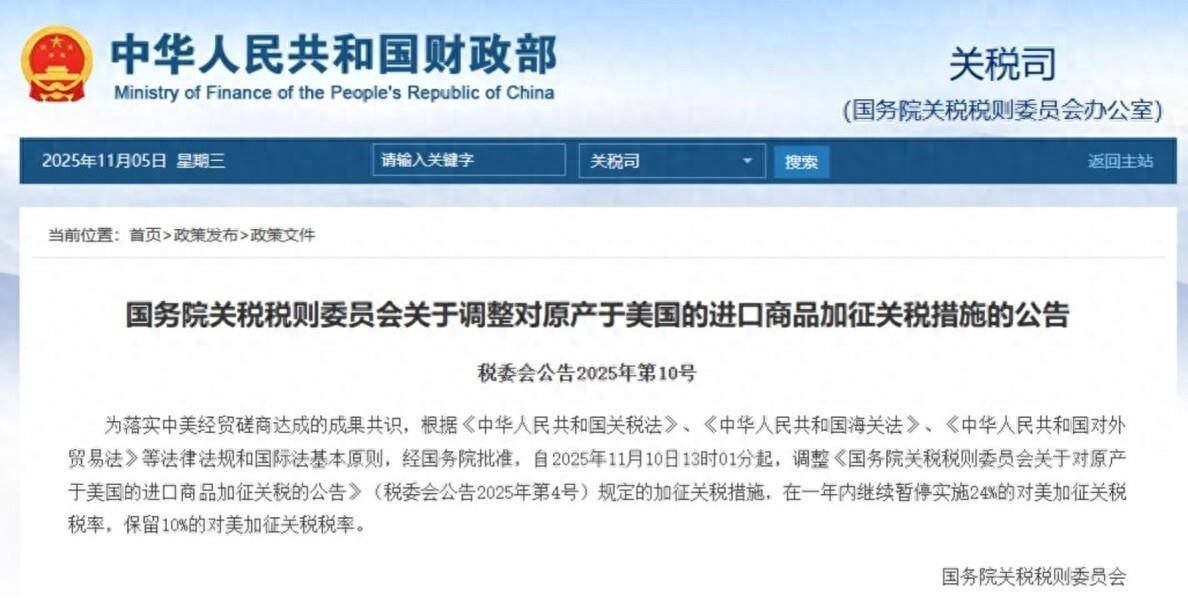
Core Points - The Chinese Ministry of Finance announced adjustments to tariffs on U.S. goods, effective November 10, signaling a "dual cooling" in the ongoing trade war that has lasted seven years [1][4] - The adjustments include the complete cessation of 15% tariffs on U.S. agricultural products like chicken, wheat, and corn, and a 10% tariff on soybeans and pork, while maintaining a 10% baseline tariff on other goods [4] - The timing of the tariff adjustments aligns precisely with U.S. actions, indicating a strategic and technical demonstration of compliance [4] Group 1: Tariff Adjustments - The Chinese announcement covers approximately $380 billion in bilateral trade, potentially reducing U.S. companies' tariff costs by 19% and decreasing compliance costs for Chinese exports by 1.27 billion yuan [4] - The U.S. has framed its tariff pauses as a "Christmas gift," with a 1% decrease in tariffs saving about $780 million in import costs during the holiday season [8] - The U.S. Trade Representative's office is preparing a "compliance assessment" that could trigger additional tariffs if performance falls below 80% [8] Group 2: Diplomatic Engagements - Chinese Vice Minister of Commerce Li Chenggang highlighted that fluctuations in U.S.-China agricultural trade stem from unilateral U.S. tariff measures, aiming to leverage internal U.S. political dynamics [6] - China has committed to purchasing 12 million tons of U.S. soybeans this crop season, with a total of 75 million tons over three years, although specific figures were not discussed in the meeting [6] - The meeting with the U.S. agricultural delegation was seen as an opportunity for China to emphasize the complementary nature of U.S.-China agricultural trade [6] Group 3: Market Reactions - The announcement of synchronized tariff reductions led to significant market movements, with the offshore yuan rising 1.2% against the dollar and the Hang Seng Tech Index increasing by 4.7% [8] - The International Monetary Fund raised its global growth forecast for 2025 by 0.2 percentage points, citing the positive impact of improved trade relations [8] - Supply chain companies remain cautious due to previous instances of abrupt policy changes from the U.S. that disrupted market optimism [8] Group 4: Ongoing Tensions - Despite the tariff adjustments, key issues remain unresolved, including the retention of a 10% baseline tariff by the U.S. and China's refusal to comply with real-time data sharing requests [11] - The U.S. has added 23 Chinese companies to its export control "entity list," indicating ongoing tensions despite the tariff agreement [11] - The dual approach of signing agreements while imposing restrictions reflects deeper contradictions in U.S. policy towards China [11] Group 5: Broader Implications - The trade adjustments are viewed as a strategic maneuver within the broader context of reshaping global trade dynamics [12] - The ongoing negotiations and adjustments signal a temporary pause in hostilities rather than a definitive resolution to trade conflicts [12]

会否撤销对美光公司的禁售?商务部回应
Sou Hu Cai Jing· 2025-11-06 16:01
Core Viewpoint - The Chinese Ministry of Commerce has not indicated any plans to lift the ban on Micron Technology, while also addressing recent trade discussions with the U.S. [2] Group 1: Ban on Micron Technology - The Ministry of Commerce was asked whether China would revoke the ban on U.S. company Micron Technology [2] - No formal statement has been made regarding the potential lifting of the ban [2] Group 2: Trade Discussions and Agreements - The Ministry of Commerce announced recent outcomes from the China-U.S. economic and trade consultations held in Kuala Lumpur, covering various topics including fentanyl tariffs, agricultural trade, and maritime logistics [2] - Official documents regarding tariff adjustments have been released by both sides [2] - The Ministry expressed willingness to work with the U.S. to implement the agreements reached during the meetings [2]

国投期货农产品日报-20251106
Guo Tou Qi Huo· 2025-11-06 12:28
Report Investment Ratings - **Beans 1**: ★★★ (Predicted trending up) [1] - **Soybean Oil**: ☆☆☆ (Predicted trending down) [1] - **Palm Oil**: ☆☆☆ (Predicted trending down) [1] - **Soybean Meal**: ★★☆ (Holding long, clear upward trend) [1] - **Rapeseed Meal**: ★★☆ (Holding long, clear upward trend) [1] - **Rapeseed Oil**: ☆☆☆ (Predicted trending down) [1] - **Corn**: ☆☆☆ (Predicted trending down) [1] - **Pigs**: ☆☆☆ (Predicted trending down) [1] - **Eggs**: ★★★ (Predicted trending up) [1] Core Views - The market for high - protein soybeans is optimistic due to tight supply and government procurement. The overall soybean and soybean meal market is affected by import costs and trade policies. Palm oil may stage a temporary stabilization. The strategy for rapeseed meal is bullish, and the view on rapeseed oil shifts to neutral. Corn prices are in a weak bottom - range oscillation. Pig prices are likely to have a second bottoming next year. Egg futures' near - term contracts are strong, waiting for short - selling opportunities in Q4. [2][3][4][5][6][7][8] Section Summaries **Beans 1** - Beans 1 showed strong performance, breaking through previous highs. Cofco's soybean procurement and the tight supply of high - protein soybeans due to adverse weather have led to an optimistic market outlook. Short - term focus is on policy guidance. [2] **Soybeans & Soybean Meal** - US soybeans led the decline in the domestic market. The import tax rate for US soybeans is 13%, making commercial imports unprofitable. The current soybean meal price is driven by rising import costs and expected destocking in Q1 next year. Attention should be paid to the resumption of USDA reports and potential long - entry opportunities after Sino - US trade eases. [3] **Soybean Oil & Palm Oil** - Palm oil rebounded, with the oil - tank ratio and soybean - palm oil spread changing. After recent declines, palm oil's downward momentum has eased. The market will focus on USDA reports. There is a possibility of short - term stabilization for palm oil. [4] **Rapeseed Meal & Rapeseed Oil** - Rapeseed meal prices rose, and the strategy remains bullish. Rapeseed oil's view shifted from bearish to neutral, with a focus on changes in imports. The market is watching Australian rapeseed arrivals and Canadian trade policies. [5] **Corn** - Dalian corn futures rose 0.75% at the end of the session. Northeast corn supply growth has slowed, while Shandong's supply has increased. The import tax rate for US corn has changed. The market should watch for new Sino - US trade agreements and changes in Northeast farmers' selling enthusiasm. [6] **Pigs** - Pig spot prices are weakly stable, and futures are consolidating. The number of breeding sows decreased in October, but the later supply is still increasing. The second - round fattening will increase future supply pressure. Pig prices are likely to have a second bottoming next year. [7] **Eggs** - Egg futures' near - term contracts hit new highs, and spot prices rose slightly. The October laying - hen inventory decreased slightly, and chick replenishment was low. The market is waiting for short - selling opportunities in Q4. [8]
瑞达期货铝类产业日报-20251106
Rui Da Qi Huo· 2025-11-06 09:10
1. Report Industry Investment Rating No relevant content provided. 2. Core Viewpoints of the Report - The alumina market is expected to be in a stage of slightly converging supply and relatively stable demand. It is recommended to conduct light - position short - term long trades at low prices, controlling the rhythm and trading risks [2]. - The Shanghai aluminum market may be in a stage of slightly increasing supply and boosted demand. The option market sentiment is bullish. It is recommended to conduct light - position short - term long trades at low prices, controlling the rhythm and trading risks [2]. - The cast aluminum alloy market may face a situation of slowing supply and increasing demand. It is recommended to conduct light - position trades with a slightly bullish trend, controlling the rhythm and trading risks [2]. 3. Summary by Relevant Catalogs 3.1 Futures Market - **Prices and Positions**: The closing price of the Shanghai aluminum main contract is 21,630 yuan/ton, up 235 yuan; the closing price of the alumina futures main contract is 2,787 yuan/ton, up 15 yuan. The main - contract positions of Shanghai aluminum and alumina both increased [2]. - **Spreads and Ratios**: The main - to - second - contract spread of Shanghai aluminum is - 70 yuan/ton, down 15 yuan; the main - to - second - contract spread of alumina is - 40 yuan/ton, up 1 yuan. The Shanghai - London ratio is 7.60, up 0.14 [2]. - **Inventories**: LME aluminum inventory decreased by 2,125 tons to 550,450 tons; Shanghai aluminum inventory decreased by 4,594 tons to 113,574 tons; alumina inventory increased by 8,704 tons to 248,311 tons [2]. 3.2 Spot Market - **Prices**: The average price of Shanghai Non - ferrous A00 aluminum is 21,360 yuan/ton, up 60 yuan; the alumina spot price in Shanghai Non - ferrous is 2,790 yuan/ton, down 50 yuan [2]. - **Basis**: The basis of cast aluminum alloy is 255 yuan/ton, down 455 yuan; the basis of electrolytic aluminum is - 270 yuan/ton, down 175 yuan; the basis of alumina is 3 yuan/ton, down 15 yuan [2]. 3.3 Upstream Situation - **Production and Demand**: Alumina production increased by 7.42 tons to 799.90 tons, while demand decreased by 21.49 tons to 704.31 tons. The supply - demand balance of alumina increased by 18.12 tons to 46.85 tons [2]. - **Imports and Exports**: Alumina exports increased by 7 tons to 25 tons, and imports decreased by 3.44 tons to 6 tons. The import of aluminum scrap decreased by 17,195.97 tons to 155,414.40 tons, and the export increased by 15.31 tons to 68.54 tons [2]. 3.4 Industry Situation - **Supply - side**: The total production capacity of electrolytic aluminum is 4,523.20 tons, unchanged. The production of electrolytic aluminum is expected to increase slightly due to the commissioning and resumption of previous capacity replacement and technological transformation projects [2]. - **Demand - side**: The production of aluminum products increased by 35.18 tons to 590 tons, and the production of regenerated aluminum alloy ingots increased by 2.06 tons to 65.65 tons. The demand for downstream aluminum products is boosted by the development of new energy vehicles and other fields [2]. 3.5 Downstream and Application - **Production**: The production of automobiles increased by 47.42 million to 322.65 million. The production of aluminum alloy is 177.60 tons, unchanged [2]. - **Indices**: The National Housing Prosperity Index is 92.78, down 0.27 [2]. 3.6 Option Situation - The purchase - to - put ratio of Shanghai aluminum options is 1.43, down 0.072 compared to the previous period, and the implied volatility decreased slightly [2]. 3.7 Industry News - In October, the retail sales of new - energy passenger vehicles in China reached 1.4 million, a year - on - year increase of 17% and a month - on - month increase of 8%. The penetration rate of new - energy retail sales in the passenger vehicle market is 58.7% [2]. - The US government shutdown has entered its 36th day, which may reduce the economic growth rate in the fourth quarter by up to 2 percentage points [2]. - China will continue to suspend the implementation of the 24% tariff on US - imported goods for one year, retaining a 10% tariff [2].

中国是否会撤销对美国美光公司的禁售?商务部回应:中方愿与美方相向而行
Ge Long Hui· 2025-11-06 08:52
Core Viewpoint - The Chinese Ministry of Commerce held a regular press conference discussing potential actions regarding the U.S. company Micron Technology and the inclusion of certain South Korean companies in the unreliable entity list, as well as comments on the U.S. Supreme Court's questioning of the legality of Trump's tariff policies [1] Group 1 - The Ministry of Commerce has recently released information regarding the outcomes of the China-U.S. economic and trade consultations held in Kuala Lumpur, which include agreements on fentanyl tariffs and enforcement cooperation, agricultural trade, and U.S. maritime logistics and shipbuilding industry measures [1] - Both China and the U.S. have issued official documents regarding tariff adjustments, indicating a willingness from China to work with the U.S. to implement the agreements reached during the leaders' meeting and the Kuala Lumpur consultations [1]

银河期货每日早盘观察-20251106
Yin He Qi Huo· 2025-11-06 03:08
1. Report Industry Investment Ratings The report does not provide industry investment ratings. 2. Core Views of the Report - The A - share market showed resilience despite external shocks. The stock index futures market is expected to remain in a high - level shock in the short term, while the bond market has limited upward space. - In the agricultural products market, the prices of different varieties vary. For example, the price of soybean meal is affected by trade relations and supply - demand, and the international sugar price is in a downward trend. - The black metal market is in a state of shock. Steel prices are in a range - bound state, and the double - coke market is expected to be strong after a callback. - The non - ferrous metal market has different trends for each variety. Precious metals are in a range - bound arrangement, and the prices of some metals are affected by factors such as supply - demand and cost. - The energy and chemical market also shows different trends. For example, the price of crude oil has support, while the price of asphalt is under pressure. 3. Summary by Relevant Catalogs Financial Derivatives - **Stock Index Futures**: The market was affected by the overnight decline of US stocks but quickly rebounded. The short - term market will maintain a high - level shock. It is recommended to buy at low levels near 3930 points of the Shanghai Composite Index and reduce positions at high levels above 4000 points. Also, consider IM\IC long 2512 + short ETF cash - and - carry arbitrage and bull spread options at low levels [18][19]. - **Treasury Futures**: The treasury futures closed mostly lower on Wednesday. It is recommended to take appropriate profit - taking. In the future, short - term long positions can be tried on the TL contract, and pay attention to short - term spread and term spread arbitrage opportunities [22][23]. Agricultural Products - **Soybean Meal**: Trade relations are beneficial to US soybeans, but the international soybean supply is abundant. The price of domestic soybean meal is supported in the near - term but under pressure in the long - term. It is recommended to short the far - month contracts [25][26]. - **Sugar**: The international sugar price is in a downward trend due to increased production in major producing areas. The domestic sugar price is expected to be in a range - bound state. It is recommended to operate in the range and short the international sugar while going long on Zhengzhou sugar [29][30][31]. - **Oilseeds and Oils**: The palm oil inventory in Malaysia is expected to gradually decrease after accumulating in October, and the domestic palm oil inventory is increasing. It is recommended to wait for the market to stabilize and then consider going long at low levels [33][34][35]. - **Corn/Corn Starch**: The US corn is expected to be in a narrow - range shock. The domestic corn price has a short - term decline space. It is recommended to go long on the 12 - month US corn on dips, wait and see for the 01 - month contract, and wait for a callback for the 05 and 07 - month contracts [37][38]. - **Pigs**: The pressure of pig slaughter continues, and the price remains low. It is recommended to short a small amount [39][40][41]. - **Peanuts**: The peanut spot price is rebounding, and the 01 - month contract is in a short - term bottom shock. It is recommended to go long lightly on the 01 and 05 - month contracts [42][43][44]. - **Eggs**: The number of culled chickens has increased, and the egg price has stabilized. It is recommended to close out previous short positions and wait and see [45][46][47]. - **Apples**: The market is expected to fluctuate greatly with the release of warehousing data. It is recommended to wait and see [50][51][52]. - **Cotton - Cotton Yarn**: The cotton harvest is at its peak. The supply is expected to increase, and the demand is in the off - season. The price is expected to be slightly stronger in a shock. It is recommended to wait and see [55][56][57]. Black Metals - **Steel**: The iron - making output is shrinking, and the steel price is in a range - bound state. It is recommended to go long on dips and continue to hold the long position of the coil - screw spread [60][61]. - **Double - Coke**: The market is in a high - level shock. It is recommended to wait for a callback and then go long [62][63][64]. - **Iron Ore**: It is recommended to take a bearish view. The price is expected to be in a high - level bearish operation [65][66]. - **Ferroalloys**: The valuation is at a low level, and previous short positions can be reduced. It is recommended to sell out - of - the - money straddle option combinations [68]. Non - Ferrous Metals - **Precious Metals**: Multiple factors are intertwined, and the precious metals market is in a range - bound arrangement. It is recommended to operate in a band [71][72][74]. - **Copper**: The downstream purchasing sentiment has improved. It is recommended to wait and see and continue to hold the inter - market cash - and - carry arbitrage [75][76][77]. - **Alumina**: The supply - side production reduction has not been implemented, and the price is in a bottom - grinding state. It is recommended to wait and see [78][80][81]. - **Electrolytic Aluminum**: The demand is resilient, and the price is expected to rise on dips. It is recommended to go long on dips and consider long Shanghai aluminum and short LME aluminum arbitrage [82][84][85]. - **Cast Aluminum Alloy**: The seasonal peak season is coming, and the price is expected to rise on dips. It is recommended to go long on dips [86][87][89]. - **Zinc**: It is recommended to wait and see. The price is expected to be strong in the short - term, and previous long positions can take partial profit [90][91][92]. - **Lead**: It is recommended to hold short positions. The price may have a downward space. Be vigilant about the impact of funds on the price [94][95]. - **Nickel**: The supply - demand is loose, the cost support is weakening, and the price is expected to decline in a shock [96].
中美将互降关税 CBOT大豆上涨收复部分失地
Jin Tou Wang· 2025-11-06 02:30
Core Viewpoint - The Chicago Board of Trade (CBOT) soybean futures experienced a mild increase due to the U.S. government's decision to lower tariffs on certain products for one year, with the benchmark contract rising approximately 1.2% [1] Group 1: Tariff Adjustments - The U.S. White House announced two presidential executive orders on November 4, stating that from November 10, 2025, the 10% "fentanyl tariff" on Chinese goods will be eliminated, and the 24% "reciprocal tariff" on Chinese goods will be suspended for an additional year [1] - The State Council Tariff Commission confirmed that starting from November 10, 2025, at 1:01 PM, the additional tariff measures on imports from the U.S. will be adjusted, maintaining the 10% tariff while suspending the 24% tariff for one year [1] Group 2: Soybean Inventory and Market Conditions - As of October 31, the national major oil mills had an imported soybean inventory of 7.65 million tons, which decreased by 430,000 tons week-on-week and 470,000 tons month-on-month, but increased by 1.53 million tons year-on-year, surpassing the three-year average by 3.09 million tons [1] - The European Commission reported that as of November 2, the EU's soybean import volume for 2025/26 was 3.81 million tons, down from 4.59 million tons the previous year [1] Group 3: Market Influences - According to Everbright Futures, a strong U.S. dollar has also pressured the market [1] - The weekly export inspection report indicated that U.S. soybean export inspection volume was 965,000 tons, aligning with market expectations [1] - Brazilian soybean premiums have decreased, making near-month contracts more cost-effective compared to U.S. soybeans, which has further suppressed U.S. soybean prices [1]
帮主郑重:“关税+AI”中长线核心标的清单(附逻辑+关注节点)
Sou Hu Cai Jing· 2025-11-06 02:09
Group 1: Tariff Beneficiary Directions - Midea Group is positioned as a leading home appliance manufacturer with over 40% of its revenue from overseas markets, benefiting from potential tariff reductions that could lower export costs and enhance market share in white goods and small appliances, especially as its current valuation is at a historical low [3] - Fuyao Glass, a leader in automotive components, holds over 25% of the global automotive glass market and is well-positioned to benefit from tariff relaxations in the U.S. automotive sector, with strong demand for high-end glass driven by the increasing penetration of electric vehicles [4] - Kuka Home, a leader in light industry exports, has nearly 50% of its revenue from overseas, primarily targeting the U.S. and European markets, and stands to gain from reduced tariffs that would enhance net profits, supported by a mature overseas distribution network and rapid growth in cross-border e-commerce [5] Group 2: AI Long-term Directions - Zhongji Xuchuang is a key player in optical modules, with a strong position in the global market for 800G/1.6T optical modules, essential for AI computing centers, and has seen a 30%+ decline in valuation from the peak of AI hype, making it a compelling investment opportunity [6] - iFlytek is a leader in AI applications, focusing on To B/To G applications in education, healthcare, and industrial quality inspection, with significant commercial success and stable order flow supported by government policies favoring domestic AI development [7] - Industrial Fulian is the largest AI server manufacturer globally, supplying major companies like Nvidia and Microsoft, with over 30% of the global AI server market share, and is experiencing growth driven by surging demand for computing power, while maintaining a low valuation and stable dividend yield [8]