
库存去化

Search documents
《特殊商品》日报-20250915
Guang Fa Qi Huo· 2025-09-15 07:59
Group 1: Rubber Industry Investment Rating Not provided Core View The fundamentals of natural rubber have changed little. The upstream cost side still provides support, while downstream users are resistant to high - priced raw materials. The reference range for the 01 contract is 15,000 - 16,500. Future focus should be on raw material output during the peak production season in the main producing areas and whether the La Nina phenomenon affects the supply. If raw material supply is smooth, consider shorting at high prices; if supply is restricted, rubber prices are expected to remain high [1]. Summary by Directory - **Spot Price and Basis**: On September 12, the price of Yunnan Guofu standard rubber (SCRWF) in Shanghai was 14,950 yuan/ton, up 50 yuan or 0.34% from the previous day. The basis of whole - milk rubber was - 870 yuan/ton, up 135 yuan or 13.43%. The price of Thai standard mixed rubber was 14,950 yuan/ton, down 50 yuan or - 0.33%. The FOB mid - price of cup rubber in the international market was 52.20 Thai baht/kg, down 0.35 Thai baht or - 0.67%, and the FOB mid - price of glue was 56.20 Thai baht/kg, up 0.20 Thai baht or 0.36% [1]. - **Monthly Spread**: The 9 - 1 spread was - 1010 yuan/ton, up 75 yuan or 6.91%; the 1 - 5 spread was - 20 yuan/ton, up 20 yuan or 50.00%; the 5 - 9 spread was 1030 yuan/ton, down 95 yuan or - 8.44% [1]. - **Fundamental Data**: In July, Thailand's output was 414.90 (unit not clear), down 6.70 or 1.61% from the previous month; Indonesia's output was 176.20 (ten tons), down 21.30 or 12.09%; India's output was 45.00, down 1.00 or - 2.17%; China's output was 101.30, down 1.30. The weekly operating rate of semi - steel tires for automobiles was 73.46%, up 5.99 percentage points; the weekly operating rate of all - steel tires was 65.59%, up 5.81 percentage points. In July, domestic tire production was 94.364 million units, down 8.385 million units or - 8.16%; tire export volume was 66.65 million units, up 6.34 million units or 10.51%. The total import volume of natural rubber in July was 47.48 (unit not clear), up 1.15 or 2.47% [1]. - **Inventory Change**: The bonded area inventory (bonded + general trade inventory) was 602,295 (unit not clear), down 3908 or - 0.64%; the factory - warehouse futures inventory of natural rubber on the SHFE was 45,964, down 605 or - 1.30%. The inbound rate of dry rubber in the bonded warehouse in Qingdao was 5.03%, up 0.95 percentage points; the outbound rate was 5.98%, up 1.79 percentage points [1]. Group 2: Polysilicon Industry Investment Rating Not provided Core View In the short term, the market is more focused on the expectation of policy implementation in September, and the futures market is prone to rise and difficult to fall. Fundamentally, in September, although there is production reduction on the supply side, there are also factory resumptions to make up for the supply, so the overall supply reduction is not obvious. On the demand side, the polysilicon wafer production schedule has increased slightly month - on - month. There may be a slight inventory accumulation pattern in September. The price increase of polysilicon has been gradually accepted by downstream users, and the spot transmission mechanism is relatively smooth. In the future, the market pays less attention to fundamentals and more to policy expectations, with high price volatility risk. It is recommended to pay attention to the self - discipline meeting of polysilicon enterprises next week [2]. Summary by Directory - **Spot Price and Basis**: On September 12, the average price of N - type re - feedstock was 51,550 yuan/ton, unchanged from the previous day; the average price of N - type granular silicon was 48,500 yuan/ton, unchanged. The N - type material basis (average price) was - 2060 yuan/ton, up 100 yuan or 4.63% [2]. - **Futures Price and Monthly Spread**: The main contract price was 53,610, down 100 or - 0.19%. The spread between the current month and the first - continuous contract was - 53,845, down 25,580 or - 3203.46%; the spread between the first - continuous and the second - continuous contract was 235, up 105 or 80.77% [2]. - **Fundamental Data (Weekly)**: Silicon wafer production was 13.88 GW, up 0.10 GW or 0.73%; polysilicon production was 3.12 million tons, up 0.10 million tons or 3.31% [2]. - **Fundamental Data (Monthly)**: Polysilicon production was 13.17 million tons, up 2.49 million tons or 23.31%; polysilicon import volume was 0.11 (unit not clear), up 0.03 or 40.30%; polysilicon export volume was 0.22 (unit not clear), up 0.01 or 5.96%; the net export volume of polysilicon was 0.11 million tons, down 0.02 million tons or - 14.92%. Silicon wafer production was 56.04 GW, up 3.29 GW or 6.24%; silicon wafer import volume was 0.06 million tons, down 0.01 million tons or - 15.41%; silicon wafer export volume was 0.61 million tons, up 0.06 million tons or 11.37%; the net export volume of silicon wafers was 0.55 million tons, up 0.07 million tons or 15.56%. The demand for silicon wafers was 58.62 GW, up 0.08 GW or 0.14% [2]. - **Inventory Change**: Polysilicon inventory was 21.90 million tons, up 0.80 million tons or 3.79%; silicon wafer inventory was 16.55 GW, down 0.30 GW or - 1.78%. The polysilicon contract volume was 7820 (unit not clear), up 130 or 1.69% [2]. Group 3: Industrial Silicon Industry Investment Rating Not provided Core View From the cost side, raw material prices are rising. In September, the prices of Xinjiang caking coal and charcoal have increased significantly, with monthly increases of 400 yuan/ton and 200 yuan/ton respectively. The electricity price in the southwest region will gradually rise during the dry season, and the cost center of industrial silicon will move up in the future. Although the current production of industrial silicon has increased month - on - month, there are also news of capacity clearance, and small furnaces may be shut down. The cost side of industrial silicon provides strong support. Considering the possible impact of the polysilicon enterprise self - discipline meeting next week and the expected increase in downstream inventory replenishment demand before the National Day, industrial silicon prices may rise slightly. It is recommended to try long positions at low prices. However, it should be noted that with the increase in production, inventory and warehouse receipt pressure are emerging. The main price fluctuation range is expected to be between 8000 - 9500 yuan/ton [3]. Summary by Directory - **Spot Price and Main Contract Basis**: On September 12, the price of East China oxygen - passing S15530 industrial silicon was 9200 yuan/ton, unchanged from the previous day; the basis (based on oxygen - passing SI5530) was - 5 yuan, down 5 yuan or - 1.09%. The price of East China SI4210 industrial silicon was 9200 yuan/ton, unchanged, and the basis (based on SI4210) was - 45 yuan, down 5 yuan or - 12.50%. The price of Xinjiang 99 - grade silicon was 8600 yuan/ton, unchanged, and the basis (in Xinjiang) was 655 yuan, down 5 yuan or - 0.76% [3]. - **Monthly Spread**: The spread between 2510 - 2511 was - 8725 yuan/ton, unchanged; the spread between 2511 - 2512 was - 20 yuan/ton, down 5 yuan or - 33.33%; the spread between 2512 - 2601 was - 365 yuan/ton, down 5 yuan or - 1.39% [3]. - **Fundamental Data (Monthly)**: National industrial silicon production was 38.57 million tons, up 4.74 million tons or 14.01%; Xinjiang's industrial silicon production was 16.97 million tons, up 1.94 million tons or 12.91%; Yunnan's production was 5.81 million tons, up 1.70 million tons or 41.19%; Sichuan's production was 5.37 million tons, up 0.52 million tons or 10.72%. The national operating rate was 55.87%, up 3.26 percentage points or 6.20%; Xinjiang's operating rate was 60.61%, up 8.02 percentage points or 15.25%; Yunnan's operating rate was 47.39%, up 14.50 percentage points or 44.09%; Sichuan's operating rate was 44.29%, up 7.33 percentage points or 19.83%. The production of silicone DMC was 22.31 million tons, up 2.33 million tons or 11.66%; polysilicon production was 13.17 million tons, up 2.49 million tons or 23.31%. The production of recycled aluminum alloy was 61.50 million tons, down 1.00 million tons or - 1.60%. The export volume of industrial silicon was 7.40 million tons, up 0.57 million tons or 8.32% [3]. - **Inventory Change**: Xinjiang's factory - warehouse inventory (weekly) was 12.17 million tons, up 0.23 million tons or 1.93%; Yunnan's factory - warehouse inventory (weekly) was 2.94 million tons, up 0.08 million tons or 2.62%; Sichuan's factory - warehouse inventory (weekly) was 2.28 million tons, unchanged. Social inventory (weekly) was 53.90 million tons, up 0.20 million tons or 0.37%; contract inventory (daily) was 25.00 million tons, down 0.05 million tons or - 0.19%; non - warehouse receipt inventory (daily) was 28.90 million tons, up 0.25 million tons or 0.86% [3]. Group 4: Log Industry Investment Rating Not provided Core View The current log market presents an oscillating pattern of "weak supply and demand, stable prices, and slightly decreasing inventory". The core contradiction in the market lies in the game between weak demand and fluctuating supply. Prices are temporarily stable under cost support. Future attention should be paid to whether the shipment volume improves significantly during the seasonal peak season. Currently, new registered warehouse receipts have been added to the 09 contract, and buyers' willingness to take delivery is poor, increasing pressure on the spot market. The spot market is weakening, and traders' enthusiasm for imports is decreasing. The arrival volume remains low, and the total inventory is low, with continuous inventory reduction for several weeks to below 3 million tons. Demand remains above 60,000 cubic meters, showing no obvious improvement trend. Currently, the valuation of the futures market below 800 is at a discount. Considering the peak - season expectations, it is recommended to go long at low prices [4]. Summary by Directory - **Futures and Spot Prices**: On September 12, the price of log 2509 was 763.0 yuan/cubic meter, down 3.5 yuan or - 0.46%; the price of log 2511 was 798.0 yuan/cubic meter, down 6.5 yuan or - 0.81%; the price of log 2601 was 819 yuan/cubic meter, down 35.0 yuan. The 9 - 11 spread was - 38.0 yuan/cubic meter; the 9 - 1 spread was 3.5 yuan/cubic meter. The basis of the 09 contract was - 13.0 yuan/cubic meter; the basis of the 11 contract was - 54.5 yuan/cubic meter; the basis of the 01 contract was - 62.5 yuan/cubic meter. The price of 3.9A small radiata pine at Rizhao Port was 710.0 yuan/cubic meter, unchanged; the price of 3.9A medium radiata pine was 750 yuan/cubic meter, unchanged; the price of 3.9A large radiata pine was 850 yuan/cubic meter, unchanged. The price of 4A small radiata pine at Taicang Port was 720 yuan/cubic meter, unchanged; the price of 4A medium radiata pine was 770 yuan/cubic meter, unchanged; the price of 4A large radiata pine was 820 yuan/cubic meter, unchanged. The price of spruce 11.8 at Rizhao Port was 1150 yuan/cubic meter, unchanged. The new round of FOB quotes has loosened to the range of 114 US dollars/JAS cubic meter [4]. - **Cost: Import Cost Calculation**: On September 12, the RMB - US dollar exchange rate was 7.116, unchanged. The import theoretical cost was 797.71 yuan/cubic meter, down 13.81 yuan or - 2% [4]. - **Supply**: As of August 31, the port shipment volume from New Zealand to China, Japan, and South Korea was 173.3 million cubic meters, down 6.7 million cubic meters or - 3.87% from July 31. The number of departing ships from New Zealand to China, Japan, and South Korea was 44.0, down 3.0 or - 6.38% [4]. - **Inventory**: As of September 5, China's log inventory was 294.00 million cubic meters, down 3.0 million cubic meters or - 1.01%; Shandong's inventory was 181.30 million cubic meters, down 5.4 million cubic meters or - 2.89%; Jiangsu's inventory was 91.54 million cubic meters, up 0.6 million cubic meters or 0.67% [4]. - **Demand**: As of September 5, the average daily outbound volume of logs in China was 61,200 cubic meters, down 800 cubic meters or - 1% [4]. Group 5: Glass and Soda Ash Industry Investment Rating Not provided Core View Soda Ash The futures market has been oscillating narrowly recently, lacking a main trading logic. The fundamental oversupply problem still exists. Although inventory did not accumulate this week, it has actually been transferred to the middle and lower reaches, and trade inventory continues to rise. The previously reduced production units have resumed, and the weekly production has returned to the high level of 750,000 tons. In the medium term, there is no expectation of a significant increase in downstream production capacity, so the overall demand for soda ash will continue the previous rigid - demand pattern. After the traditional summer maintenance season in the soda ash industry, supply is at a high level. Without actual capacity withdrawal or production reduction, inventory will face further pressure. Track the implementation of policies and the production adjustment of soda ash plants. The overall supply - demand pattern is bearish, and it is advisable to short on rallies [5]. Glass The spot market had good transactions last week, and inventory decreased. At the beginning of the week, news about the conversion of coal - fired gas production lines to clean energy in the Shahe area triggered a rise in the futures market. The specific conversion time of the production lines is undetermined, and the expected shutdown time is limited. There are still some plans for复产 and ignition in the future. Currently, the inventory of manufacturers in the Shahe area is gradually increasing, and the inventory in the middle reaches has not decreased significantly. In terms of industry supply - demand
纺织服饰周专题:制造商8月营收公布,期待核心品牌商改善带动对应订单修复
GOLDEN SUN SECURITIES· 2025-09-14 10:05
Investment Rating - The report maintains a "Buy" rating for several key companies in the textile and apparel industry, including Anta Sports, Li Ning, and Xtep International, with respective 2025 PE ratios of 18x, 18x, and 12x [11][39]. Core Insights - The textile and apparel industry is experiencing a shift in export dynamics due to changes in U.S. tariff policies, leading to a decline in imports from China and an increase from Southeast Asian countries [2][25]. - Major apparel manufacturers reported mixed revenue results for August 2025, with declines for companies like Yuanyuan Group and Ruo Hong, while Feng Tai showed month-on-month improvement [1][16]. - The report anticipates a recovery in orders for upstream manufacturers if the operational performance of core brands like Nike improves, particularly in the Greater China market [3][32]. Summary by Sections Industry Overview - The textile and apparel sector has seen a decline in U.S. imports from China, with a 23% year-on-year drop from January to July 2025, while imports from Vietnam, India, Bangladesh, and Cambodia increased by 18%, 16%, 22%, and 24% respectively [2][25]. - China's apparel exports from January to August 2025 totaled $102.8 billion, down 1.7% year-on-year, while textile yarn and fabric exports increased by 1.6% to $94.51 billion [2][25]. Company Performance - Nike's revenue for FY2025 showed significant declines across all quarters, with a drop of 10.4% in Q1 and 12.0% in Q4, but the company expects a narrowing of revenue decline in FY2026 [3][32]. - Key manufacturers like Shenzhou International and Huayi Group reported revenue growth of 15% and 10% respectively for the first half of 2025 [10][33]. Market Trends - The report highlights a cautious consumer environment, with the sports footwear segment expected to outperform the overall apparel market, maintaining a healthy inventory turnover ratio of 4-5 [3][36]. - The jewelry sector is also noted for its focus on product differentiation and brand strength, with companies like Chow Tai Fook and Chao Hong Ji recommended for their improving product and channel efficiencies [4][38]. Investment Recommendations - The report recommends Shenzhou International for its low exposure to U.S. business and strong profitability, with a 2025 PE of 13x, and Huayi Group for its expanding international capacity, with a 2025 PE of 18x [38]. - In the sportswear segment, Anta Sports and Li Ning are highlighted for their robust operational capabilities, both with a 2025 PE of 18x [39].




新能源及有色金属日报:库存继续降低,短期消费端仍有支撑-20250912
Hua Tai Qi Huo· 2025-09-12 05:24
Report Industry Investment Rating - Not mentioned in the provided content Core View of the Report - The short - term consumption side of the lithium carbonate market still has support, with the current consumption peak season and downstream rigid procurement needs. The market in September shows a situation where supply and demand increase simultaneously, but the demand growth rate is faster, and there may be a temporary supply shortage. The short - term futures market is expected to fluctuate, and may decline after the mine resumes production and consumption weakens [1][3] Summary by Relevant Catalogs Market Analysis - On September 11, 2025, the lithium carbonate main contract 2511 opened at 70,960 yuan/ton and closed at 71,000 yuan/ton, with a 1.25% change in the closing price compared to the previous day's settlement price. The trading volume was 426,041 lots, and the open interest was 323,456 lots (the previous day's open interest was 340,814 lots). The current basis is 2,130 yuan/ton. The lithium carbonate warehouse receipts were 38,391 lots, a change of 290 lots from the previous trading day [1] - According to SMM data, the battery - grade lithium carbonate is quoted at 71,000 - 74,700 yuan/ton, a change of - 600 yuan/ton from the previous trading day; the industrial - grade lithium carbonate is quoted at 70,000 - 71,200 yuan/ton, also a change of - 600 yuan/ton. The price of 6% lithium concentrate is 800 US dollars/ton, a change of - 5 US dollars/ton from the previous day. Downstream material factories' price - setting and trading enthusiasm are still relatively high. As it is the industry's peak demand season, downstream material factories have rigid procurement needs and strong procurement willingness at relatively low prices [1] - Lithium carbonate produced from spodumene accounts for over 60% of the market supply, while that from lithium mica has dropped to 15%. In September, the market shows a situation where supply and demand increase simultaneously, but the demand growth rate is faster, and a temporary supply shortage is expected [1] - According to the latest weekly data, the weekly output increased by 544 tons to 19,963 tons. The outputs from spodumene, mica, and salt lakes all increased slightly. The weekly inventory decreased by 1,580 tons to 138,512 tons. The downstream inventory continued to increase, while the inventory in the intermediate links and smelters decreased significantly, and the downstream restocking willingness is good [2] Strategy - The futures market fluctuates in the short term. With the weakening of mine - end disturbances, the peak consumption season provides some support. The short - term supply - demand pattern is good, and the inventory continues to decline, providing some support to the market. It is expected that the market will fluctuate in the short term and may decline after the mine resumes production and consumption weakens [3] Trading Recommendations - Unilateral: Short - term range trading, and sell - hedging can be carried out on rallies [5] - Inter - period: None [5] - Cross - variety: None [5] - Spot - futures: None [5] - Options: None [5]
建信期货聚烯烃日报-20250912
Jian Xin Qi Huo· 2025-09-12 01:35
Report Summary 1. Report Information - Report Title: Polyolefin Daily Report [1] - Date: September 12, 2025 [2] 2. Core Viewpoints - The cost - end demand expectation is poor, the medium - and long - term operating center is declining, the cost support is loosening, and the demand at the initial stage of recovery is insufficient to support raw materials, so the market is oscillating at the bottom. Attention should be paid to the actual improvement of consumption in September [6]. 3. Summary by Directory 3.1 Market Review and Outlook - **Plastic Futures**: The opening prices of plastic 2601, 2605, and 2509 were 7222, 7235, and 7142 yuan/ton respectively, with closing prices of 7209, 7220, and 7145 yuan/ton, and price drops of - 0.33%, - 0.32%, and - 0.28% respectively. The trading volume of plastic 2601 was 218,000 lots, and the positions increased by 16,282 lots to 533,469 lots [5][6]. - **PP Futures**: The opening prices of PP2601, 2605, and 2509 were 6952, 6977, and 6773 yuan/ton respectively, with closing prices of 6939, 6961, and 6805 yuan/ton, and price drops of - 0.17%, - 0.17%, and - 0.40% respectively. The positions of PP2601 increased by 9293 lots to 624,200 lots [5][6]. - **Supply and Demand Analysis**: For PP, the impact of maintenance is weakening, new production capacity is continuously released, and the supply pressure is increasing. The downstream is in the transition stage between peak and off - peak seasons, and the overall recovery trend is not good. For PE, the supply - demand contradiction is not obvious, the short - term maintenance loss is increasing, the new supply is slow, and the downstream agricultural film is expected to drive social inventory reduction [6]. 3.2 Industry News - **Inventory**: On September 11, 2025, the inventory level of major producers was 655,000 tons, a decrease of 20,000 tons from the previous working day, a decline of 2.96%. The inventory in the same period last year was 790,000 tons [7]. - **PE Market**: The PE market prices were partially weakly adjusted. The LLDPE prices in North China, East China, and South China were 7120 - 7450, 7200 - 7650, and 7350 - 7750 yuan/ton respectively [7]. - **Propylene Market**: The mainstream price of propylene in the Shandong market was 6680 - 6720 yuan/ton, an increase of 25 yuan/ton from the previous working day. The downstream product cost pressure increased, the market trading atmosphere was average [7]. - **PP Market**: The PP market continued to be weakly adjusted. The mainstream prices of North China, East China, and South China were 6700 - 6870, 6720 - 6940, and 6700 - 6930 yuan/ton respectively [8]. 3.3 Data Overview - The report presented figures on L basis, PP basis, L - PP spread, crude oil futures main contract settlement price, two - oil inventory, and two - oil inventory year - on - year increase/decrease rate, with data sources from Wind and the Research and Development Department of CCB Futures [14][15][16]
聚烯烃月报:宏观情绪回暖,基本面出现分化-20250905
Wu Kuang Qi Huo· 2025-09-05 12:43
1. Report Industry Investment Rating No relevant content provided. 2. Core Viewpoints of the Report - Capital market sentiment is relatively hot, chemical stock valuations are being repaired upwards, and crude oil prices are oscillating at a low level. The overall profit of polyolefins has declined, and the high inventory in the upstream and midstream has started to decrease. The main contradiction in the polyolefin fundamentals lies in the divergence in the supply side of the 2601 contract. Polyethylene only has a planned production capacity of 400,000 tons, while polypropylene faces greater pressure with a planned production capacity of 1.45 million tons. With the approaching of the seasonal peak season, it is expected that the LL - PP price difference will continue to strengthen in an oscillating manner [17]. - The recommended strategy is to go long on the LL - PP price difference at low levels [17]. 3. Summary According to the Directory 3.1 Monthly Assessment and Strategy Recommendation - **Valuation**: Capital market sentiment is hot, chemical stock valuations are being repaired upwards, and crude oil prices are oscillating at a low level. Polyolefin overall profit declines, and upstream and midstream high - level inventory starts to decrease [17]. - **Cost**: WTI crude oil dropped by - 1.83% this month, Brent crude oil dropped by - 0.06%, coal price dropped by - 1.72%, methanol dropped by - 6.02%, ethylene dropped by - 6.92%, propylene rose by 7.37%, and propane rose by 12.52%. Oil prices are oscillating at a low level, and the impact on the cost side is small. This month's trading logic in the futures market is strongly influenced by macro - sentiment [17]. - **Supply**: PE capacity utilization rate is 81.09%, a month - on - month decrease of - 4.05%, a year - on - year increase of 2.08%, and a decrease of - 11.00% compared with the five - year average. PP capacity utilization rate is 80.02%, a month - on - month increase of 3.04%, a year - on - year increase of 5.78%, and a decrease of - 5.99% compared with the five - year average. There is a divergence in the supply side of the polyolefin 2601 contract. Polyethylene only has a planned production capacity of 400,000 tons, while polypropylene has greater pressure with a planned production capacity of 1.45 million tons [17]. - **Import and Export**: In July, domestic PE imports were 1.107 million tons, a month - on - month increase of 15.40% and a year - on - year decrease of - 14.78%. PP imports were 177,200 tons, a month - on - month decrease of - 12.73% and a year - on - year decrease of - 12.73%. On the export side, it declined in the off - season. In July, PE exports were 101,700 tons, a month - on - month increase of 5.03% and a year - on - year increase of 76.67%. PP exports were 236,100 tons, a month - on - month increase of 12.73% and a year - on - year increase of 65.78% [17]. - **Demand**: The downstream operating rate of PE is 40.5%, a month - on - month increase of 3.53% and a year - on - year decrease of - 5.86%. The downstream operating rate of PP is 49.90%, a month - on - month increase of 2.04% and a year - on - year decrease of - 0.12%. The seasonal peak season is approaching, but the overall operating rate is lower than that of previous years, with PP performing better than PE [17]. - **Inventory**: PE production enterprise inventory is 450,800 tons, with a destocking of - 12.53% this month and a stockpiling of 2.11% compared with the same period last year. PE trader inventory is 58,500 tons, with a destocking of - 4.36% compared with last month and a destocking of - 2.07% compared with the same period last year. PP production enterprise inventory is 581,900 tons, with a destocking of - 0.89% this month and a stockpiling of 10.17% compared with the same period last year. PP trader inventory is 193,000 tons, with a stockpiling of 3.04% compared with last month and a stockpiling of 50.43% compared with the same period last year. PP port inventory is 58,500 tons, with a destocking of - 4.26% compared with last month and a destocking of - 13.59% compared with the same period last year [17]. - **Next - Month Forecast**: The reference oscillation range for polyethylene (L2601) is (7,200 - 7,500); the reference oscillation range for polypropylene (PP2601) is (6,900 - 7,200) [17]. - **Strategy Recommendation**: Go long on the LL - PP price difference at low levels [17]. 3.2 Futures and Spot Market - Due to the mismatch in the production plans of the 2601 contract, go long on the LL - PP price difference at low levels [65]. 3.3 Cost Side - Crude oil prices are oscillating downward. The prices of various raw materials such as WTI crude oil, Brent crude oil, coal, methanol, ethylene, propylene, and propane have different trends. The profit from ethylene - based PE production has declined significantly. The import freight of LPG oscillates upward seasonally [85][93][119]. 3.4 Polyethylene Supply Side - The production raw materials of PE include oil - based, coal - based, methanol - based, and light - hydrocarbon - based, with different proportions. In 2025, multiple PE production projects have been put into operation, with a total of 4.63 million tons of production capacity put into operation and 400,000 tons yet to be put into operation. The capacity utilization rate of PE shows certain fluctuations, and there are also corresponding maintenance plans [142][148][154]. 3.5 Polyethylene Inventory and Import - Export No detailed analysis content is provided in the text, only the figures of total inventory and production enterprise inventory are mentioned [158].
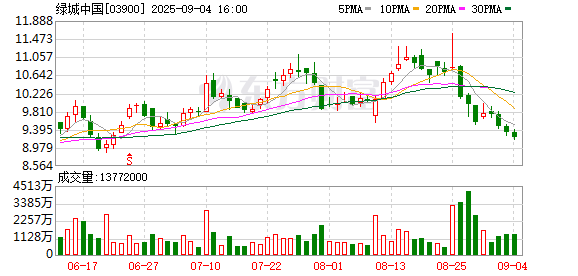
股东应占溢利创同期最低纪录 “地王收割机”绿城中国加速存量项目库存去化
Zhong Guo Jing Ying Bao· 2025-09-04 13:52
Core Viewpoint - Greentown China Holdings Limited reported a significant decline in profits for the first half of 2025, with total revenue dropping to 53.368 billion yuan, a year-on-year decrease of 23.28%, and net profit falling to 210 million yuan, down 89.74%, marking the lowest figure in the company's 19-year history since its listing [2][3]. Financial Performance - Total revenue for the first half of 2025 was 53.368 billion yuan, a decrease of 23% year-on-year [3]. - Gross profit stood at 7.159 billion yuan, down 21% year-on-year [3]. - Net profit was reported at 1.211 billion yuan, reflecting a 64% decline [3]. - Shareholder profit was only 210 million yuan, a drop of 89.74% compared to the previous year [3]. Reasons for Decline - The decline in revenue was attributed to an uneven delivery schedule in the first half of 2025, leading to a 22.7% decrease in recognized area [2]. - The company recorded an asset impairment loss of 1.933 billion yuan, impacting shareholder profit [2]. - Non-financial asset impairment losses were 1.717 billion yuan, a 20.7% increase from the previous year, due to the need for inventory reduction [4]. Sales and Market Position - Greentown China achieved total contract sales of approximately 122.2 billion yuan in the first half of 2025, ranking second among national real estate companies [2][4]. - The sales structure has become more focused, with sales in first and second-tier cities accounting for about 86%, an increase of 6 percentage points year-on-year [5]. - The company completed inventory reduction of approximately 19 billion yuan from 2021 and earlier [4]. Land Acquisition Strategy - Greentown China actively acquired land in major cities, adding 35 new projects in the first half of 2025, with an expected new value of 90.7 billion yuan [2][6]. - The company has a total of 158 land reserve projects, with a total construction area of approximately 27.24 million square meters [6]. - The company has been successful in acquiring high-value land parcels, becoming the "land king" in several cities, including a recent acquisition in Wuhan for approximately 665 million yuan [6][7]. Future Outlook - The company anticipates a sales conversion rate of 55% for new projects launched in the same year, ensuring liquidity [7]. - Greentown China plans to maintain a cautious approach in third and fourth-tier cities, focusing on acquiring quality land parcels when opportunities arise [8].

《能源化工》日报-20250904
Guang Fa Qi Huo· 2025-09-04 03:29
Industry Investment Ratings No information provided regarding industry investment ratings. Core Views Polyester Industry - PX supply is expected to increase due to the restart of maintenance devices and good short - process benefits. Demand has some support but limited upside. PX11 is under observation, with support around 6600 and attention on oil price trends [2]. - PTA supply - demand is near a tight balance in September. Although the device maintenance execution is not as expected, the low absolute price is supported, but the driving force is limited. TA is under observation, paying attention to the support around 4600 and oil price trends [2]. - Ethylene glycol has a "strong reality, weak expectation" supply - demand pattern. Short - term futures have limited downside, but the fourth - quarter supply - demand is weak. Attention is paid to the support of EG2601 around 4300 [2]. - Short - fiber supply - demand is expected to improve in September, but the destocking amplitude is limited. It follows raw material fluctuations, with the disk processing fee oscillating between 800 - 1100 [2]. - Bottle - chip supply and procurement may both decrease in September, with inventory expected to increase. PR follows the cost - end fluctuation, and the processing fee has limited upside [2]. Urea Industry - Urea futures prices fell due to weak demand and high - supply pressure. Domestic agricultural and industrial demand is weak, and export demand is also under pressure. The market supply is sufficient, and the futures price may be under pressure. Attention is paid to the recovery of industrial demand in North China after the parade [8]. Methanol Industry - Methanol supply is expected to increase with the return of inland maintenance devices and high - level imports in September. Traditional downstream demand is weak. The market is under pressure due to significant inventory accumulation, and attention is paid to the inventory digestion rhythm [10][11][12]. Crude Oil Industry - Overnight oil prices fell due to concerns about increased OPEC+ supply in the fourth quarter. The disk may run weakly, with support levels for WTI at [62, 63], Brent at [65, 66], and SC at [470, 480]. Options can wait for opportunities to expand after increased volatility [19]. Polyolefin Industry - PE supply pressure is relatively limited in the short - term, and PP shows a "supply - demand double - increase" situation. Downstream industry开工率 has increased, but new orders have limited support. In September, the market shows a "supply - decrease, demand - increase" pattern, and it is recommended to hold the expanding position of the LP01 contract [23]. Chlor - alkali Industry - Caustic soda market is supported by rigid demand, with low inventory in Shandong. The spot price may remain firm, and the disk callback space is limited. Attention is paid to downstream purchasing rhythm and device fluctuations [48]. - PVC supply - demand remains oversupplied. Supply is expected to increase in September, while demand remains weak. It is expected to continue weak and volatile, with cost - end support [48]. Pure Benzene and Styrene Industry - Pure benzene supply is expected to remain high, while demand support is weak. Short - term absolute price is under pressure, but the downward space is limited if oil prices do not fall deeply [53]. - Styrene supply is high in the short - term, with weak driving force. However, there is an expectation of supply - demand improvement later. EB10 can be lightly long at low positions, and mainly short on rebounds later [53]. Summary by Directory Polyester Industry - **Prices and Spreads**: On September 3, WTI crude oil (October) was at 63.97 dollars/barrel, down 1.62 dollars or 2.5% from the previous day. Various polyester product prices and spreads changed, such as PTA, MEG, and different polyester fiber prices [2]. - **Inventory and Expected Arrival**: MEG port inventory was 44.9 million tons on September 1, down 10.2% from August 25, and the expected arrival was 4.4 million tons, up 122.7% [2]. - **Industry开工率**: Asian PX开工率 was 75.6% on August 29, down 0.7% from August 22; PTA开工率 was 70.4%, down 1.2% [2]. Urea Industry - **Futures and Spot Prices**: On September 3, the 01 - contract futures price was 1714 yuan/ton, down 1.83% from the previous day. Spot prices in different regions had different changes [7][8]. - **Supply and Demand**: Domestic urea daily output was 18.80 million tons on September 5, down 0.93% from September 4. Factory inventory increased slightly, and order days decreased [8]. Methanol Industry - **Prices and Spreads**: On September 3, MA2601 closed at 2382 yuan/ton, up 0.42% from the previous day. There were also changes in various price spreads and regional price differences [10]. - **Inventory**: As of Wednesday, methanol enterprise inventory was 34.1083%, up 2.31%; port inventory was 142.8 million tons, up 9.88% [11]. - **开工率**: Upstream domestic enterprise开工率 was 72.19% on Thursday, down 1.12% from the previous value; downstream MTO device开工率 was 78.56%, up 2.13% [12]. Crude Oil Industry - **Prices and Spreads**: On September 4, Brent was at 67.39 dollars/barrel, down 0.31% from the previous day; WTI was at 63.75 dollars/barrel, down 0.34% [19]. - **Refined Oil**: NYM RBOB was at 200.90 cents/gallon on September 4, down 0.15% from the previous day. Refined oil cracking spreads had different changes [19]. Polyolefin Industry - **Prices and Spreads**: On September 3, L2601 closed at 7247 yuan/ton, down 0.07% from the previous day. There were also changes in price spreads and basis [23]. - **Inventory and开工率**: PE enterprise inventory on Wednesday was 45.1 million tons, up 5.57%; PP装置开工率 on Thursday was 80.2%, up 2.6% [23]. Chlor - alkali Industry - **Prices and Spreads**: On September 3, Shandong 32% liquid caustic soda equivalent - to - 100% price was 2718.8 yuan/ton, unchanged from the previous day. PVC prices and price spreads also had changes [48]. - **Supply and Demand**: Caustic soda industry开工率 was 85.4% on August 29, down 0.8% from August 22; PVC total开工率 was 73.3%, down 2.3% [48]. Pure Benzene and Styrene Industry - **Prices and Spreads**: On September 3, CFR China pure benzene was at 734 dollars/ton, up 0.8% from the previous day. Styrene - related prices and spreads also changed [53]. - **Inventory and开工率**: Pure benzene Jiangsu port inventory was 1.10 million tons on September 1, up 8.0% from August 25; domestic pure benzene开工率 was 79.2% on August 29, up 0.2% from August 22 [53].
供给扰动再起,价格高位整理
Hong Yuan Qi Huo· 2025-09-02 10:04
Report Summary 1. Report Industry Investment Rating No relevant content provided. 2. Core Views - The fundamentals of industrial silicon show both supply and demand increases, but the inventory pressure remains high. In the short - term, affected by macro - sentiment fluctuations and the driving force of polysilicon, the silicon price is expected to remain at a high level, with an operating range of 8,000 - 10,000 yuan/ton [3]. - The fundamentals of polysilicon present a situation of strong supply and weak demand. However, due to anti - involution and supply reform, the quotes of holders are firm, and the bullish sentiment is still strong. In the short - term, the price is expected to maintain a high - level consolidation, with an operating range of 44,000 - 55,000 yuan/ton [3]. 3. Summary by Relevant Catalogs 3.1 Industry Chain Price Review - **Industrial Silicon**: From August 22 to August 29, 2025, most industrial silicon prices showed a downward trend. For example, the industrial silicon futures main - contract closing price decreased by 355 yuan/ton, a decline of 4.06%. The prices of different types of industrial silicon in various regions also decreased to varying degrees [10]. - **Polysilicon**: The prices of N - type dense materials, N - type re - feeding materials, etc. remained unchanged during this period, while the prices of some silicon wafers, battery cells, and components showed small fluctuations [10]. - **Organic Silicon**: The average price of DMC remained unchanged, while the average price of 107 glue decreased by 0.86% and the average price of silicone oil decreased by 0.38% [10]. - **Silicon Aluminum Alloy**: The average price of ADC12 increased by 300 yuan/ton, an increase of 1.47%, while the average price of A356 remained unchanged [10]. 3.2 North - South Increase, Continuous Increment in Supply - **Industrial Silicon Supply**: In the week of August 28, the number of silicon - enterprise furnaces in operation increased by 12 compared with the previous week. The production in Xinjiang, Yunnan, and other regions also increased to varying degrees. For example, Xinjiang's production increased by 1,980 tons, and its operating rate increased from 58.48% to 62.57% [39]. - **Polysilicon Supply**: In July, some polysilicon enterprises increased production, with the monthly output reaching about 110,000 tons. In August, it is expected to increase to about 130,000 tons. Last week, the polysilicon output was 31,000 tons, a week - on - week increase of 1,900 tons [3][68]. 3.3 Improved Transactions, Reduction in Polysilicon Inventory - As of August 28, the total polysilicon inventory decreased to 213,000 tons, a decrease of 36,000 tons. Multiple upstream and downstream enterprises completed procurement and shipments before the end of August, resulting in a significant increase in the trading volume of the polysilicon market and a relatively obvious decline in inventory [3][68]. 3.4 Peak - Season Demand Not Yet Apparent, Weak Organic Silicon Prices - **Supply**: In August, the DMC operating rate was 75.63%, a month - on - month increase of 7.9 percentage points, and the output was 223,100 tons, a month - on - month increase of 23,300 tons. Last week, due to anti - involution in the industry, some local devices reduced their loads for maintenance, resulting in a slight decline in weekly production [97]. - **Demand and Price**: The organic silicon prices weakened. As of August 29, the average DMC price remained unchanged, the average 107 glue price decreased by 0.86%, and the average silicone oil price decreased by 0.38%. Downstream demand was mainly for rigid procurement, and new orders were weak [103]. 3.5 Aluminum Alloy Operating Rate with Minor Fluctuations - **Operating Rate**: In the week of August 28, the operating rate of primary aluminum alloy was 56.4%, a week - on - week decrease of 0.2 percentage points, while the operating rate of recycled aluminum alloy was 53.5%, a week - on - week increase of 0.5 percentage points [111]. - **Price**: The aluminum alloy prices rebounded. As of August 29, the average ADC12 price increased by 1.47%, and the average A356 price remained unchanged [114]. 3.6 High Inventory Pressure - **Industrial Silicon Inventory**: As of August 28, the industrial silicon social inventory (social inventory + delivery warehouse) was 541,000 tons, a week - on - week decrease of 2,000 tons. The total factory inventory in Xinjiang, Yunnan, and Sichuan was 173,500 tons, a week - on - week decrease of 1,600 tons. As of August 29, the exchange - registered warehouse receipts were 50,453 lots, equivalent to 252,300 tons of spot [124]. - **Monthly Supply - Demand Balance**: The industrial silicon supply - demand balance showed different situations in different months. From January 2024 to July 2025, the supply - demand balance fluctuated, with some months having a surplus and some having a deficit [125].
黑色建材日报:阅兵限产增加,首轮提降开启-20250902
Hua Tai Qi Huo· 2025-09-02 06:19
Group 1: Report Industry Investment Ratings - Glass: Oscillating weakly [2] - Soda Ash: Oscillating weakly [2] - Ferromanganese: Oscillating [4] - Ferrosilicon: Oscillating [4] Group 2: Core Views of the Report - The glass market has weak demand and high inventory, with insufficient decline in production, leading to continued supply - demand contradictions and weak prices. The soda ash market may see increased production after the end of summer maintenance, and with new capacity coming online in the second half of the year, demand is expected to weaken further, intensifying the supply - demand imbalance [1]. - The ferromanganese and ferrosilicon markets are both in a situation of over - supply. They need to suppress production through losses, and their prices will follow the fluctuations of the sector [3]. Group 3: Summary by Related Catalogs Glass and Soda Ash - **Market Analysis** - Glass: The glass futures market fell sharply yesterday. Downstream procurement is cautious, mainly for rigid demand [1]. - Soda Ash: The soda ash futures market opened low and moved lower yesterday. Downstream demand is mainly for rigid restocking, and prices have generally declined [1]. - **Supply - Demand and Logic** - Glass: Demand remains weak with no significant improvement, high inventory has great pressure to reduce, and production decline is insufficient due to remaining production profits in non - natural gas production lines, resulting in continued supply - demand contradictions and weak prices [1]. - Soda Ash: After the end of summer maintenance, production may gradually recover. With new capacity coming online in the second half of the year, demand is expected to weaken further, intensifying the supply - demand imbalance. The market needs to suppress capacity release through losses, and the premium in the futures market further suppresses prices [1]. - **Strategy** - Glass: Oscillating weakly [2] - Soda Ash: Oscillating weakly [2] Ferromanganese and Ferrosilicon - **Market Analysis** - Ferromanganese: The sentiment in the ferromanganese futures market continued to cool yesterday. The main contract closed at 5,736 yuan/ton, a decline of 0.97%. The spot market has a strong wait - and - see sentiment, with average trading volume [3]. - Ferrosilicon: The ferrosilicon futures market continued to fall yesterday. The main contract closed at 5,532 yuan/ton, a decline of 0.61%. The spot market sentiment is average, and prices have been slightly adjusted downward [3]. - **Supply - Demand and Logic** - Ferromanganese: Production and sales have increased month - on - month, inventory has continued to decline, and costs have slightly decreased. However, the industry still has obvious over - supply, and production needs to be suppressed through losses [3]. - Ferrosilicon: Production and sales have increased, and factory inventory has decreased, but the absolute inventory is still high, suppressing prices. The industry also has obvious over - supply and needs to suppress production through losses [3]. - **Strategy** - Ferromanganese: Oscillating [4] - Ferrosilicon: Oscillating [4]
纯碱、玻璃期货品种周报-20250901
Chang Cheng Qi Huo· 2025-09-01 07:35
1. Report Industry Investment Rating No information provided in the report 2. Core Views - The overall trend of soda ash futures is in a volatile phase, with supply slightly contracting and downstream demand remaining weak. High inventory levels are being slowly reduced, and the market is expected to continue to fluctuate in the short term. It is recommended to remain on the sidelines [6]. - The glass futures market is also in a volatile trend. The spot market has seen a slight increase in some areas, with inventory decreasing slightly in some regions due to downstream replenishment. However, high inventory levels are restricting price increases. The futures market is expected to continue to fluctuate weakly in the short term, and it is recommended to hold an empty position and wait and see [27]. 3. Summary by Directory Soda Ash Futures 3.1 Mid - term Market Analysis - Mid - term trend: Soda ash futures are in a volatile phase [6]. - Trend logic: The domestic soda ash spot market remained weak last week, with both light and heavy soda ash prices at low levels. Supply slightly contracted, but downstream demand was weak. High inventory was slowly reduced, and the futures market first rose and then fell, with insufficient rebound momentum [6]. - Strategy suggestion: It is recommended to remain on the sidelines [6]. 3.2 Variety Trading Strategy - Last week's strategy review: The soda ash market continued to be weak last week, with prices under pressure. The supply - demand imbalance in the futures market remained unchanged, and it was expected to maintain a narrow - range volatile and weak pattern. The operating range of Soda Ash 2601 was 1300 - 1450, and it was advisable to remain on the sidelines [9]. - This week's strategy suggestion: The domestic soda ash market remained weak last week, with prices at low levels. The futures market first rose and then fell, and it is expected to continue to fluctuate in the short term. The operating range of Soda Ash 2601 is 1300 - 1450, and it is advisable to remain on the sidelines [10]. 3.3 Relevant Data - The data includes China's weekly soda ash开工率,产量,轻质库存,重质库存,基差, and ammonia - alkali production cost in North China [11][14][16] Glass Futures 3.1 Mid - term Market Analysis - Mid - term trend: Glass is in a volatile trend [27]. - Trend logic: The domestic float glass market was stable with slight local increases last week. Inventory digestion and peak - season expectations drove downstream replenishment, but high inventory restricted price increases. The futures market first rose and then fell, and it is expected to continue to fluctuate weakly in the short term [27]. - Strategy suggestion: It is recommended to hold an empty position and wait and see [27]. 3.2 Variety Trading Strategy - Last week's strategy review: The domestic float glass market declined weakly last week, with prices generally falling. The futures market also weakened, and it was expected to remain weak in the short term. The expected operating range of Glass 2601 was 1150 - 1300, and it was advisable to hold an empty position and wait and see [30]. - This week's strategy suggestion: The domestic float glass spot market was stable with slight local increases last week. The futures market first rose and then fell, and it is expected to continue to fluctuate weakly in the short term. The expected operating range of Glass 2601 is 1150 - 1300, and it is advisable to hold an empty position and wait and see [31]. 3.3 Relevant Data - The data includes China's weekly float glass产量,开工率, production cost and production profit of the float process using natural gas as fuel,基差, and期末库存 [32][35][38]