
货币宽松

Search documents
帮主郑重:金饰克价破1200元!一天涨25块,现在买还是等?
Sou Hu Cai Jing· 2025-10-15 03:27
Core Viewpoint - The recent surge in gold prices is attributed to global geopolitical tensions and expectations of monetary easing, leading to increased demand for gold as a safe-haven asset [3][4]. Price Movement - On the 14th, spot gold prices rose nearly $15, reaching $4,130 per ounce for the first time, prompting domestic gold jewelry prices to follow suit [3]. - Major brands like Chow Tai Fook and Chow Sang Sang saw significant price increases, with Chow Tai Fook's gold price rising to 1,215 yuan per gram, an increase of 25 yuan in just one day [3][4]. Market Dynamics - The current market environment is characterized by a fear of currency devaluation, driving consumers to purchase gold, which is perceived as a stable asset [4]. - The demand for gold jewelry is influenced by cultural practices, such as weddings and gifting, which remain strong despite rising prices [4][5]. Investment Considerations - For personal use, it is advised to wait for slight price corrections before purchasing gold jewelry to save costs [4]. - For investment purposes, gold jewelry is not recommended due to hidden costs like craftsmanship and brand premiums; alternatives like gold bars or ETFs are suggested for better investment returns [4][5]. Long-term Outlook - The current gold price increase is not seen as a temporary spike but rather a reflection of ongoing global economic conditions, making gold a reliable long-term investment [5]. - Caution is advised against buying at peak prices, with recommendations to wait for price stabilization before making purchases [5][6].


三大指数涨跌不一 黄金盘中触及历史新高
Zhi Tong Cai Jing· 2025-10-14 22:21
美国总统特朗普周二美股尾盘时在社交媒体上发文,称其政府正在考虑"终止与中国有关食用油的商业 往来"。受此消息影响,三大指数跳水,纳指、标普500指数最终收跌。 【美股】截至收盘,道指涨202.88点,涨幅为0.44%,报46270.46点;纳指跌172.91点,跌幅为0.76%, 报22521.7点;标普500指数跌10.41点,跌幅为0.16%,报6644.31点。博通(AVGO.US)跌3.5%,英伟达 (NVDA.US)跌4.4%,纳微半导体(NVTS.US)涨26%。纳斯达克中国金龙指数跌1.95%,阿里巴巴 (BABA.US)跌超2%。 【欧股】德国DAX30指数跌120.72点,跌幅0.50%,报24254.56点;英国富时100指数涨8.38点,涨幅 0.09%,报9451.25点;法国CAC40指数跌14.64点,跌幅0.18%,报7919.62点;欧洲斯托克50指数跌 12.74点,跌幅0.23%,报5555.45点;西班牙IBEX35指数涨45.21点,涨幅0.29%,报15583.51点;意大利 富时MIB指数跌83.59点,跌幅0.20%,报42084.00点。 IMF称央行需对货币宽 ...
会议纪要揭示澳洲联储暂停降息主因:担忧通胀再度抬头
智通财经网· 2025-10-14 03:59
这种谨慎立场与其新西兰同行形成对比。新西兰央行上周将利率下调50个基点,进一步扩大其激进宽松 力度,以应对当地经济疲弱。美国方面,美联储上月同样降息,而费城联储主席安娜·保尔森(Anna Paulson)则表示,她倾向于在今年再降息两次,每次25个基点。 另一方面,商业信心的回升也显示出经济可能出现上行迹象。澳大利亚国民银行(NAB)周二发布的调查 显示,9月企业信心上升。澳洲国民银行首席经济学家莎莉·奥尔德(Sally Auld)表示:"9月调查在主要指 标上继续显示积极结果。企业信心与经营状况似乎在2025年年中改善后,正在稳步巩固在略高于长期平 均水平的位置。" 智通财经APP获悉,澳洲联储表示,在劳动力市场仍"略显紧张"的情况下通胀存在可能加速的风险,是 其上月决定维持利率不变的关键原因。澳洲联储重申,未来的政策决策将继续保持谨慎,并依赖数据指 引。 会议纪要显示,澳洲联储在9月29日至30日的会议上决定将现金利率维持在3.6%。此前连续两个月消费 者物价指数(CPI)月度数据上升,暗示通胀可能高于央行工作人员最近的预测。澳洲联储指出,尽管月 度CPI数据"具有局部性和波动性",但住房及市场服务价格的 ...
国际金价突破4000美元,500质量成长ETF(560500)盘中涨超1%
Xin Lang Cai Jing· 2025-10-14 02:36
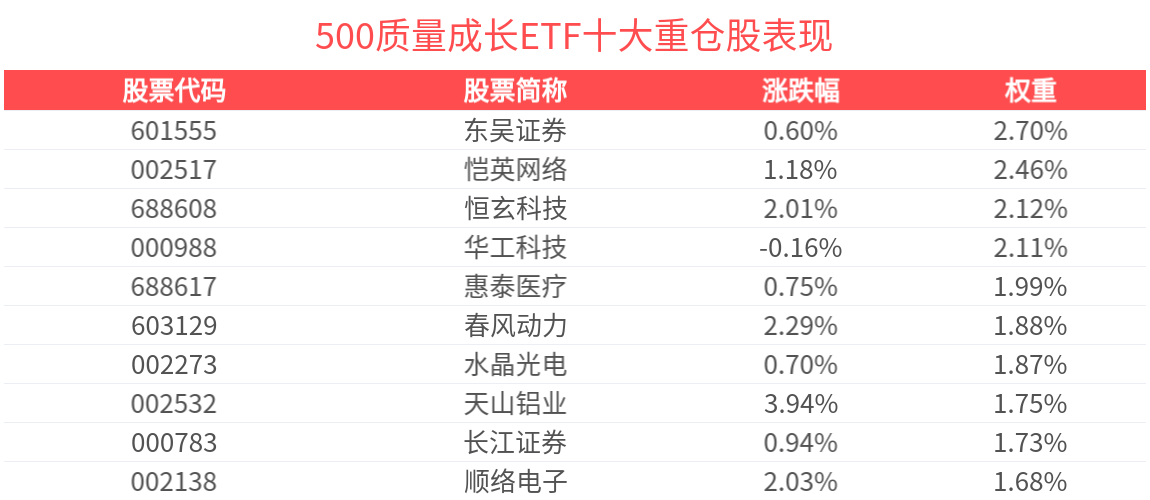
Group 1 - The core viewpoint of the news highlights the performance of the CSI 500 Quality Growth Index and its constituent stocks, with notable increases in stock prices for companies like Baiyin Nonferrous and Liugong [1][2] - The CSI 500 Quality Growth ETF has seen a significant scale increase of 14.62 million yuan over the past three months, indicating strong investor interest [2] - The CSI 500 Quality Growth Index is composed of 100 high-profitability, sustainable profit, and cash-rich companies selected from the CSI 500 Index, providing diverse investment options for investors [3] Group 2 - Recent developments in the gold market are influenced by renewed US-China tariff issues, leading to increased market risk aversion and a rise in gold prices, which have surpassed the 4000 USD mark [2] - The copper market is facing supply constraints due to accidents at major mines, including Escondida and Grasberg, with production levels expected to decline significantly until 2027 [2] - The top ten weighted stocks in the CSI 500 Quality Growth Index account for 22.61% of the index, with companies like Huagong Technology and Kaiying Network being prominent [3][5]






基金研究周报:双创板块迎调整,价值风格显韧性(10.6-10.10)
Wind万得· 2025-10-11 22:33
Market Overview - The A-share market showed resilience despite a divergence between growth and value styles, with the ChiNext index falling by 3.86% and the CSI 300 index rising by 0.37% [2] - The value style, represented by the CSI Dividend Index, performed well, increasing by 1.79%, indicating a preference for high dividend and low valuation stocks amid rising overseas uncertainties [2] - The average weekly increase for Wind's first-level industry was 0.15%, with 55% of sectors yielding positive returns, particularly in non-ferrous metals, coal, and steel, which rose by 4.44%, 4.41%, and 4.18% respectively [2] Fund Issuance and Performance - A total of 4 funds were issued last week, including 2 equity funds, 1 bond fund, and 1 FOF fund, with total issuance of 1.13 billion units [3][4] - The Wind All Fund Index decreased by 0.62%, with the ordinary equity fund index down by 1.58% and the mixed equity fund index down by 1.52% [3][7] Global Asset Review - Global equity markets experienced significant divergence, with major U.S. indices declining due to supply chain issues and government shutdowns, while Asian markets showed mixed results [4] - Gold prices reached a historical high, surpassing $4000 per ounce, while energy commodities showed weaker performance [4][5] Domestic Fund Market Review - The average weekly increase for Wind's first-level industry was 0.15%, with the public utility sector leading with a 3.69% increase, reflecting demand for stable cash flow and low valuation amid uncertainty [13] - The healthcare sector saw a decline of 1.21% for the week and 3.22% over the past month, attributed to internal sector differentiation and short-term sentiment [13] Bond Market Review - The bond market showed mixed performance, with long-term government bonds underperforming while mid-term bonds remained stable [15] - The 10-year government bond yield was recorded at 1.846%, reflecting a slight decrease of 1 basis point from the previous week [17]

10月债市:枕戈待旦
Xinda Securities· 2025-10-10 06:05
1. Report Industry Investment Rating No information regarding the industry investment rating is provided in the report. 2. Core Viewpoints of the Report - The panic in the bond market in September has been largely released, and the official version of the redemption fee new rule is unlikely to be implemented in the short - term. The current fundamental environment remains weak, and the certainty of loose liquidity is relatively high. Without special unexpected events, the market's room for further adjustment is limited. However, for interest rates to break through the current trading range, the market needs to reach a new consensus on the weakening fundamentals forcing monetary easing. Given the possible further slowdown of economic data in Q4 and the potential restart of central bank bond purchases in October, this consensus may form in October [2][6]. - Since 2022, due to insufficient endogenous power, the economy has shown a pattern of short - term improvement after the implementation of stimulus policies and weakening again during the observation period. This pattern may continue until the real estate market clears. Future fiscal and monetary policies may need to work together to stabilize demand, and the low - interest - rate environment may persist for a long time [2][37]. - The central bank maintained a relatively loose attitude in September. In October, the exogenous disturbances to the capital market mainly come from the tax period and the large - scale maturity of policy tools. As long as the central bank's attitude remains unchanged, the impact of tool maturity is limited. There is still a possibility of RRR cuts and interest rate cuts in Q4, and liquidity loosening may be the greatest certainty for the current bond market [2][3][49]. 3. Summary According to the Table of Contents 3.1 Domestic Holiday Travel Rebounds but Has Limited Impact on Consumption; Overseas Market Sees Coexistence of Risk - Aversion Sentiment and Soft - Landing Expectations - In September, economic data continued to decline. The manufacturing PMI in September rebounded slightly but remained below the boom - bust line, with demand recovery still weak [7]. - During the holiday, domestic travel numbers increased, but the growth rate of travel spending was relatively slow, and the overall impact on consumption was uncertain. New home sales during the National Day holiday were weak, while second - hand home sales improved slightly compared to previous years. Port freight and container freight volume growth rates were generally stable [12]. - Overseas, the U.S. government shutdown during the National Day holiday increased risk - aversion sentiment, leading to a rise in gold prices. However, the U.S. stock market was not significantly affected, and the U.S. bond yields declined slightly. The co - rise of stocks, bonds, foreign exchange, and commodities in the U.S. market reflects the combination of short - term risk - aversion sentiment and medium - term economic soft - landing expectations. The future direction of asset prices depends on the Fed's balance between the economy and inflation, which is difficult to determine in the short term [25][27]. 3.2 The Pattern of Fundamental Weakening During the Policy Observation Period May Persist; Future Fiscal and Monetary Policies Need to Collaborate to Stabilize Demand - Since 2022, the economic cycle pattern has changed. Although real estate sales have declined significantly, the debt accumulated by residents, developers, and urban investment platforms during the real estate up - cycle still exists. If housing prices do not turn upward, the adjustment of the asset - liability structure of relevant entities may still put pressure on short - term demand [28]. - From 2024Q4 to 2025Q1, the economy expanded due to fiscal policy and large - scale credit expansion. However, since Q2, economic momentum has gradually declined, and the anti - involution policy has also brought new pressure. To break this pattern before the real estate market clears, continuous fiscal stimulus to boost consumption may be required [34]. - Although policies have increasingly emphasized consumption, the current measures are relatively limited compared to previous large - scale investments. With the marginal weakening of the "trade - in" policy, consumption may face greater downward pressure in Q4. Future policies may maintain a "support without over - stimulation" tone, and the pattern of short - term improvement after policy implementation and subsequent weakening may continue [37]. 3.3 Liquidity Loosening May Be the Greatest Certainty for the Bond Market - In September, investors were more sensitive to the capital market and the central bank's operations. Although the central bank did not continuously increase net investment when capital prices rose, the average values of DR001 and DR007 in September were still slightly lower than 1.4% and 1.5%, indicating that the central bank maintained a relatively loose attitude, which may be related to exogenous disturbances and tool - positioning adjustments [38]. - This year, the central bank's policy tool investment has been at a historically high level, mainly to offset exogenous factors such as government deposits, central bank bond maturity, and resident cash withdrawals. Since Q3, the central bank has shifted to using longer - term tools, and may have relaxed control over short - term capital market fluctuations [40][41]. - In October, the exogenous disturbances to the capital market mainly come from the tax period and the large - scale maturity of policy tools. However, the reduction in government bond supply in October may ease the tax - period disturbances. There is still a possibility of RRR cuts and interest rate cuts in Q4, and the central bank may need to observe the situation. The central values of DR001 and DR007 in October are expected to be slightly lower than 1.4% and 1.5%, with a higher downward risk [49]. 3.4 The Bond Market in October: Be Prepared - The adjustment of the bond market in September was mainly due to the panic of trading desks caused by concerns about institutional liabilities. The spreads of policy - financial bonds, credit bonds, and perpetual bonds widened significantly. However, the adjustment was not due to liquidity pressure but rather the panic of trading desks. The scale of institutions such as wealth management remained stable [51]. - During the selling process of trading desks, the net buying of allocation - oriented institutions such as insurance companies, large banks, and wealth management companies increased, stabilizing interest rates. The weak sentiment of non - bank institutions and the decline in their leverage willingness have released potential risks to some extent [54]. - Since a large amount of trading capital has a cost around 1.75% - 1.8%, the market may experience fluctuations during the recovery process. For interest rates to break through the current trading range, a new consensus on the weakening fundamentals forcing monetary easing is needed. It is recommended to maintain a certain level of leverage in October, use 2 - 3 - year medium - and high - grade credit bonds as the core portfolio, retain some 10 - year treasury bond positions, and increase positions after clear signals. Short - term trading can also target the recovery of over - adjusted perpetual bonds, while the operation of ultra - long - term bonds needs to observe the trend of the equity market [57].
日元走进“高市交易”,在主要7种货币中最弱
日经中文网· 2025-10-10 03:27
Core Viewpoint - The Japanese yen is experiencing significant depreciation, with predictions that it will be the weakest week since September 2024, primarily due to market reactions to political changes and monetary policy expectations in Japan [1][5]. Exchange Rate Trends - As of October 9, the yen's exchange rate fluctuated around 153 yen per dollar, marking a depreciation of approximately 4% compared to the rate before the ruling party's presidential election on October 3 [3][5]. - The yen's depreciation is more pronounced than that of other major currencies, such as the euro and New Zealand dollar, which have also seen declines of 1.6% and 1.5% respectively [5]. Market Sentiment and Speculation - UBS has indicated that speculative positions in the yen are leading to further selling pressure, with a potential temporary drop to 155 yen [5]. - Market participants are testing the bottom of the yen's exchange rate, with Forex.com suggesting it may be a good opportunity to reduce yen holdings [5]. Political and Economic Factors - The political landscape in Japan remains uncertain, with discussions about coalition governance and the selection of a new finance minister potentially influencing market dynamics [6]. - A report from Bank of America highlights that individual investors' foreign exchange asset investments and ongoing corporate overseas direct investments are contributing to increased selling pressure on the yen [6].

资金疯狂加仓!单日吸金1.17亿元再创规模新高,有色龙头ETF(159876)盘中实时净申购超6300万份
Sou Hu Cai Jing· 2025-10-10 02:03
Core Viewpoint - The A-share core indices experienced a pullback after a significant surge, with the non-ferrous metals sector seeing a decline of over 3% in early trading, despite continued strong capital inflow into the sector [1] Group 1: Market Performance - The non-ferrous metals sector's leading ETF (159876) saw its decline narrow to 1.2% after an initial drop [1] - On October 9, the non-ferrous metals leading ETF (159876) attracted 117 million yuan in a single day, raising its total fund size to 493 million yuan, a new historical high [1] - As of the report, the non-ferrous metals leading ETF (159876) received real-time net subscriptions exceeding 63 million units [1] Group 2: Investment Opportunities - CITIC Securities suggests focusing on investment opportunities within the non-ferrous metals sector, highlighting the recent surge in gold prices during the holiday period [1] - The rise in international gold prices is attributed to short-term fluctuations caused by the U.S. government shutdown, political changes in Japan, ongoing expectations of interest rate cuts by the Federal Reserve, and global central banks' continued gold purchases [1] - Copper prices have also strengthened recently due to supply shortages and the logic of computational revolution [1] Group 3: Future Outlook - Looking ahead, CITIC Securities indicates that the monetary easing from the Federal Reserve's interest rate cuts, along with domestic initiatives to optimize production factors and improve profitability across various sectors, will facilitate the transmission of rising metal prices to downstream markets [1] Group 4: Sector Diversification - Different non-ferrous metals exhibit varying degrees of market conditions, rhythms, and driving factors, leading to inevitable differentiation [2] - A diversified approach through the non-ferrous metals leading ETF (159876) and its linked fund (017140) allows for better capture of the sector's beta performance, with the index weights for copper, gold, aluminum, rare earths, and lithium at 27.6%, 14.5%, 13.1%, 10.4%, and 8.4% respectively [2] - This diversified strategy helps mitigate risks compared to investing in a single metal sector [2]
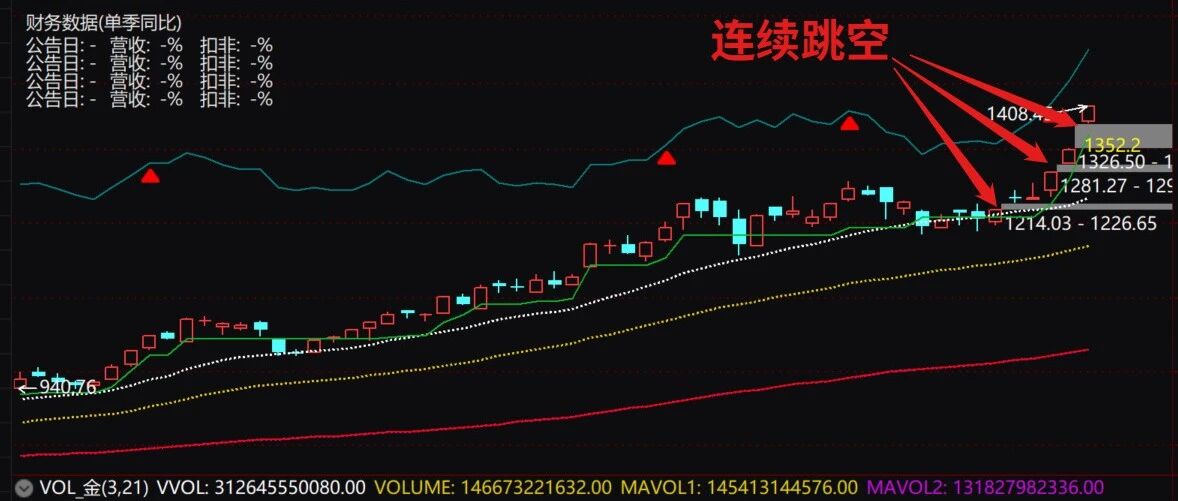
跳空加速,注意风险
猛兽派选股· 2025-10-09 04:03
Core Viewpoint - The article discusses the cyclical nature of the metals and chemicals industry, emphasizing that these sectors typically perform well during the second phase of a bull market, driven by monetary easing and inflation expectations, as well as demand growth from economic recovery [4]. Group 1: Industry Performance - The metals and chemicals sectors are identified as strong cyclical industries that usually do not miss out on bull markets, particularly during the second phase of such markets [4]. - Recent financial reports indicate a recovery in performance for many companies within these sectors, suggesting a positive trend in earnings [4]. Group 2: Market Behavior - Retail investors are cautioned against impulsive buying during market peaks, as this can lead to increased stress and potential losses [3]. - The article highlights the importance of reflecting on missed opportunities, particularly during initial entry points and during low-volume pullbacks [4]. Group 3: Market Dynamics - The article notes that the main themes in the market are likely to continue evolving, with fluctuations and rotations occurring within established themes rather than new ones emerging [4]. - It suggests that the current market phase is characterized by residual momentum, indicating that while there may be opportunities, they are part of a broader cyclical pattern [4].
国债月报:10月债市利空仍存而利多不足-20251009
Jian Xin Qi Huo· 2025-10-09 01:46
Report Overview - Report Title: Treasury Bond Monthly Report - Report Date: October 9, 2025 - Research Team: Macro Financial Research Team - Researchers: He Zhuoqiao, Huang Wenxin, Nie Jiayi [3] 1. Investment Rating - No investment rating for the industry is provided in the report. 2. Core Viewpoint - In October, the bond market may still face more negatives than positives. Although the economic data announced in September showed marginal weakness, it had limited impact on the market. With the stock market remaining strong, the impact of new public - fund regulations, and the resurgence of anti - involution expectations, bond market sentiment remained weak. In October, potential negatives include the 14th Five - Year Plan and fiscal stimulus boosting credit expansion expectations, the intensification of anti - involution, and market waiting for the official implementation of the new public - fund regulations. Potential positives may be the slowdown of economic data boosting easing expectations, lower - than - expected incremental fiscal strength, and the central bank restarting bond purchases, but monetary easing is difficult to materialize. Overall, October may be a window period for risk clearing after the negatives are realized, and the bond market may stabilize. However, the rally phase may need to wait for the resurgence of easing expectations, which may be triggered by factors such as weakening fundamentals or deteriorating trade negotiations. It is recommended to patiently wait for better bond - market allocation opportunities, which may appear in the middle or late fourth quarter [8][67]. 3. Summary by Section 3.1 9 - Month Market Review 3.1.1 Domestic Bond Market - In September, the domestic bond market fluctuated widely under the influence of the stock market, regulatory policies, and the expectation of the central bank restarting bond purchases. Treasury futures ended the month lower. At the beginning of the month, the stock market's decline boosted bond market sentiment, but the new public - fund regulations issued on September 5 caused a significant correction in the bond market in the early part of the month. In the middle and late parts of the month, the expectation of the central bank restarting bond purchases increased, but the bond market still fluctuated due to stock - market and anti - involution disturbances. The 30 - year Treasury futures had the largest adjustment, while the 5 - year Treasury futures had the smallest adjustment [11]. - The interest - rate curve steepened further in September. The long - end yields increased more, mainly due to the stock - market pressure, while the short - end was mainly affected by the new public - fund regulations, with the 2 - year variety being the most affected [14]. - The basis of Treasury futures narrowed in September. The short - end varieties were stable due to the loose funds, while the long - end basis continued to narrow, indicating that futures adjusted less than the spot [15]. 3.1.2 Overseas Market - In September, the Fed cut interest rates by 25bp as expected, and there may still be 50bp of cuts within the year, but there were differences among Fed members regarding the future path. The market also had a large divergence from the Fed's official view. Further interest - rate cuts may not lead to a significant decline in long - term US Treasury yields unless the US economy deteriorates significantly or Trump challenges the Fed's independence [18]. 3.1.3 Funding Situation - In September, the net injection of MLF and outright reverse repurchases was the same as last month, and short - term reverse repurchases were increased to support the funds. The central bank restarted 14 - day reverse repurchases at the end of the month to support cross - quarter funds [23]. - The funding rates increased seasonally at the end of the month but were not tight. The DR007 increased compared to the beginning of the month but was lower than the same period in previous years. The inter - bank certificate of deposit rates remained stable, and the overall funding situation was stable [23]. 3.2 Bond Market Environment Analysis 3.2.1 Fundamental Situation - In August, domestic economic activities further slowed down. In terms of credit expansion, the willingness of the real economy to borrow was still weak. The new social financing in August was 256.68 billion yuan, a year - on - year decrease of 46.55 billion yuan, mainly due to the decline in on - balance - sheet RMB loans. The M1 growth rate increased for five consecutive months, indicating an improvement in the activation of existing funds [34][36]. - In terms of real - economy activities, in August, the national economic activity data further slowed down. The characteristics of "supply better than demand, external demand better than domestic demand" were still obvious. Domestic demand was weak and showed marginal slowdown. Export growth slowed down, import growth declined, inflation remained at a low level, consumption continued to weaken, and investment in manufacturing, infrastructure, and real estate all declined significantly [40][43]. - In September, the leading indicators continued to improve, but there were still concerns. The official manufacturing PMI increased by 0.4 percentage points to 49.8%, but the new - order index representing demand increased the least. The non - manufacturing business activity index decreased by 0.3 percentage points to 50.0%, and the construction and service industries' prosperity declined [49]. - High - frequency indicators showed that in September, there was a supply - demand divergence. Production indicators continued to rise, while domestic - demand indicators were weak, and external demand showed resilience [52]. 3.2.2 Policy Aspect - In the short term, the possibility of additional monetary - policy easing is low. The central bank is likely to focus on implementing existing policies. Attention should be paid to the possibility of fiscal - end stimulus and the central bank restarting bond purchases, especially the possibility of issuing special Treasury bonds in the fourth - quarter NPC Standing Committee meeting [58]. 3.2.3 Funding Aspect - In October, the funding situation is expected to remain stable and loose. The seasonal pressure on the funding side is weaker than in September. The main risk is the possible additional issuance of government bonds, but the central bank is likely to provide hedging [60][63]. 3.3 Next - Month Market Outlook 3.3.1 Market Logic and Outlook - In October, the bond market may still face more negatives than positives. After the negatives are realized, the bond market may stabilize, but the rally may need to wait for the resurgence of easing expectations [67]. 3.3.2 Arbitrage Strategy Outlook - **Cash - and - Carry Arbitrage**: Currently, there are no obvious positive - arbitrage opportunities, and reverse arbitrage should be participated in with caution. Some non - CTD bonds of 30 - year and 10 - year bonds have reverse - arbitrage space, but there is a risk of non - convergence at maturity [68]. - **Basis Strategy**: Focus on going long on the basis of short - end contracts. As the short - end varieties may return from a premium state to a normal discount state, and the current basis is at a relatively low level in the same historical period, there may be more room for upward regression [68]. - **Calendar - Spread Strategy**: It is not recommended to participate due to the poor liquidity of the next - quarter 03 contracts [69]. - **Inter - Commodity Spread Strategy**: In the short term, focus on steepening the yield curve. In October, the funding situation is expected to be stable, but the possibility of monetary easing is low, and more credit - expansion policies may lead to an increase in long - end yields [69].