
市场供需平衡

Search documents
“吴清六条”说的是什么?
Xin Lang Cai Jing· 2025-12-05 07:08
Core Viewpoint - The article by Wu Qing, Chairman of the China Securities Regulatory Commission, emphasizes the need to enhance the inclusiveness and adaptability of the capital market system, focusing on cultivating more high-quality listed companies [2][11]. Summary by Relevant Sections Context and Framework - The article should be viewed within the context of the "Suggestions for Formulating the 15th Five-Year Plan for National Economic and Social Development," which has been published as a guidebook. Wu Qing's article is part of this broader narrative and is found on pages 284 to 290 of the publication [2][12]. Key Tasks and Measures - The article outlines six key tasks: 1. **Promote Direct Financing**: This includes developing diverse equity financing, supporting quality enterprises in issuing shares, and advancing private equity and venture capital funds, as well as green bonds and real estate investment trusts [5][15]. 2. **Cultivate High-Quality Listed Companies**: The focus is on identifying and evaluating quality enterprises, emphasizing the importance of transparency in information [5][15]. 3. **Create an Attractive Long-Term Investment Environment**: This involves aligning the interests of funds with those of investors and establishing long-term assessment mechanisms [5][15]. 4. **Enhance Regulatory Effectiveness**: The article stresses the use of modern technologies like big data and AI for effective risk identification and the importance of grassroots feedback in regulation [5][15]. 5. **Expand High-Level Institutional Opening**: Wu Qing advocates for a gradual approach to opening up the capital market, promoting efficient capital flow and mutual learning between onshore and offshore markets [5][15]. 6. **Foster a Vibrant Capital Market Ecosystem**: Emphasizing the need for a collaborative environment to ensure the capital market functions effectively [5][15]. Market Principles - The article underscores the importance of maintaining a balance between supply and demand in the market, suggesting that this principle should guide reforms and governance [6][16].

铜冠金源期货商品日报-20251205
Tong Guan Jin Yuan Qi Huo· 2025-12-05 06:41
Report Industry Investment Rating No relevant information provided. Core Viewpoints of the Report - Overseas employment data is mixed, with the yen rising due to expectations of a Bank of Japan rate hike, and the market focusing on subsequent rate - hike magnitudes; in the domestic market, A - shares are in a weak shock, and the bond market is accelerating its decline [2][3]. - Silver prices are in a high - level correction and are expected to continue to adjust in the short term; copper prices remain strong; aluminum shows a bullish trend; alumina is still searching for a bottom; casting aluminum has a good fundamental outlook; zinc prices are oscillating strongly; lead prices are oscillating strongly; tin prices are consolidating at a high level; industrial silicon prices are oscillating narrowly; steel prices are oscillating; iron ore prices are under pressure; double - coke prices are oscillating weakly; bean and rapeseed meal prices are oscillating; palm oil prices are oscillating within a range [4][6][8][11][12][15][24] Summary by Related Catalogs Macroeconomics - Overseas: US November Challenger layoffs were 71,000, with the year - on - year growth rate slowing to 24%, but the scale was the highest for the same period since 2022. The latest initial jobless claims dropped to 191,000, the lowest since September 2022. The yen rose due to expectations that the Bank of Japan would raise interest rates in December, and long - term bond yields soared to multi - decade highs. The US dollar index rebounded to 99, the 10Y US Treasury yield rose to 4.10%, the US stock market was flat, oil prices rose by more than 1%, and gold and copper prices slightly declined [2]. - Domestic: A - shares on Thursday had a shrinking - volume shock and significant structural differentiation, with the ChiNext and STAR Market performing better, and the micro - cap and dividend styles falling significantly. More than 3,800 stocks in the two markets closed down, and the trading volume dropped to 1.56 trillion yuan, the lowest since August. The bond market accelerated its correction, and the 30 - year Treasury bond futures (TL) hit a new low this year. The 10Y and 30Y yields rose to 1.85% and 2.25% respectively [3]. Precious Metals - COMEX gold futures rose slightly, while silver futures fell 1.86% to $57.53 per ounce, and platinum and palladium futures also declined. Silver prices corrected due to investors taking profits, but gold prices were still supported by safe - haven demand. The latest US employment data did not affect the expectation of an interest - rate cut this month. It is expected that silver prices will continue to adjust in the short term [4][5]. Copper - On Thursday, the main Shanghai copper contract oscillated around 91,000 yuan, and LME copper oscillated around $11,500. The domestic near - month C structure narrowed. The spot market trading of electrolytic copper was weak. LME inventory remained at 163,000 tons, while COMEX inventory increased to 436,000 tons. Glencore plans to restart its Alumbrera copper mine in Argentina by the end of next year and lowered its 2026 copper production guidance from 930,000 tons to 810,000 - 870,000 tons. It is expected that copper prices will remain strong in the short term [6][7]. Aluminum - On Thursday, the main Shanghai aluminum contract closed at 22,115 yuan/ton, up 0.8%. LME aluminum closed at $2,887.5/ton, down 0.33%. The end - of - year energy - storage consumption expectation is rising, and the aluminum ingot social inventory has not entered the accumulation cycle during the traditional consumption off - season. The long - position sentiment in the market continues, and Shanghai aluminum is expected to maintain a bullish trend [8][9]. Alumina - On Thursday, the main alumina futures contract closed at 2,615 yuan/ton, down 1.17%. The national average spot price of alumina was 2,851 yuan/ton, down 4 yuan/ton. At the end of the year when long - term contracts are negotiated, the willingness to cut production is still weak. There have been extremely low spot transaction prices in recent days, and alumina is expected to continue to search for a bottom [10]. Casting Aluminum - On Thursday, the main casting aluminum alloy futures contract closed at 21,070 yuan/ton, down 0.17%. The shortage pattern of scrap aluminum in the raw material end is difficult to change, and the cost support is rising. The end - of - year rush - volume demand still supports the industry's resilience. Overall, the fundamentals of casting aluminum are healthy, and the price outlook is positive [11]. Zinc - On Thursday, the main Shanghai zinc 2601 contract rose after an intraday high and then fell back, and oscillated strongly at night. LME zinc closed up. The market supply of zinc is still tight, and the premium is strengthening. The overall situation is that both macro and micro factors are favorable in the short term, supporting zinc prices to oscillate strongly, but the negative feedback of high prices is emerging in the consumption off - season, and it is expected that the contract price will fluctuate around the integer level [12]. Lead - On Thursday, the main Shanghai lead 2601 contract oscillated strongly during the day, and the center of gravity continued to rise at night. LME lead closed up. The social inventory decreased by 7,100 tons compared with Monday. It is expected that lead prices will oscillate strongly in the short term [13][14]. Tin - On Thursday, the main Shanghai tin 2601 contract rose after an intraday high and then fell back, and oscillated narrowly at night. LME tin moved sideways. It is expected that tin prices will mainly consolidate at a high level in the short term [15]. Industrial Silicon - On Thursday, industrial silicon oscillated narrowly. From the supply side, the supply is converging; from the demand side, the supply - demand contradiction in the fundamentals is not prominent recently. It is expected that the contract price will maintain an oscillating trend in the short term [16][17]. Steel (Screw and Coil) - On Thursday, steel futures oscillated. The supply and demand of steel are both weak, and the supply and demand of rebar have improved, while the supply and demand of hot - rolled coils have not changed much. Overall, the supply - demand drive is not strong, and it is expected that steel prices will oscillate [18][19]. Iron Ore - On Thursday, iron ore futures oscillated. The supply of iron ore is expected to be loose, and the demand is weak. It is expected that the contract price will oscillate under pressure [20]. Double - Coke (Coking Coal and Coke) - On Thursday, double - coke futures oscillated. The supply of coking coal and coke is strong, and the demand is weak. The expectation of a coke price cut is strong. It is expected that the contract price will oscillate weakly [21]. Bean and Rapeseed Meal - On Thursday, the bean meal 01 contract rose 0.03%, and the rapeseed meal 01 contract rose 0.62%. Brazil's precipitation conditions are good, while Argentina's precipitation is lower than normal. It is expected that the Dalian Commodity Exchange bean meal will oscillate in the short term [22][23]. Palm Oil - On Thursday, the palm oil 01 contract fell 0.80%. Indian refineries cancelled 70,000 tons of soybean oil orders for the December - January shipment period. It is expected that palm oil will oscillate within a range in the short term [24].
有机硅行业交流及展望
2025-11-26 14:15
Summary of Organic Silicon Industry Conference and Outlook Industry Overview - The conference was led by Luxi Chemical in November 2025 to address the oversupply of organic silicon monomer capacity through production cuts, with an initial decision to limit production by 30% starting December 1, 2025, potentially adjusting to 20% based on market conditions [1][4] - A price ceiling of 15,000 RMB was set to stabilize the market and prevent new capital influx that could disrupt supply and demand balance [1][4] Key Points and Arguments - **Cost Disparities**: The cost of production varies significantly among companies, with most companies having a tax-inclusive cost of around 11,000 RMB/ton. Hengsheng Silicon has a lower cost of under 10,000 RMB/ton due to energy advantages, while some state-owned enterprises report costs exceeding 13,000 RMB/ton, making a selling price of 12,000 RMB potentially unprofitable for them [1][6] - **Technological Maturity**: The technology for organic silicon is mature, allowing new entrants to start production quickly if they have the necessary capital, talent, and facilities. The conference emphasized controlling price increases to maintain market stability and prevent new entrants from causing supply-demand imbalances [1][7] - **Global Operating Rates**: The global operating rate for the organic silicon industry is generally between 75% and 85%. European rates have declined due to high energy costs, while the U.S. plans to close a factory in the UK by 2026, which accounts for about 5.2% of global market share [1][8] - **Domestic DMC Growth**: The actual growth rate for domestic DMC (Dimethyl Chloride) in 2025 is projected at 4.2%, significantly lower than the previous year's 16.7%, primarily due to export impacts [1][12] Additional Important Insights - **Inventory Levels**: The inventory levels in the organic silicon industry are challenging to assess comprehensively due to the vast number of downstream enterprises. Generally, upstream companies maintain inventory levels not exceeding 10-15 days of production, with downstream companies keeping low inventory due to price fluctuations [1][13] - **Emerging Demand**: The demand for organic silicon in the electric vehicle sector is expected to grow at 15%-20%, while the solar energy sector's growth is anticipated to be below 10% due to increased use of alternative materials [1][11] - **Investment in New Facilities**: Establishing a new 200,000-ton organic silicon facility requires an investment of 1.5 to 1.6 billion RMB, with a profit margin of approximately 2,000 RMB per ton, leading to a total profit of around 200 million RMB and an investment return rate of about 5% [1][20] - **Export Competitiveness**: Chinese organic silicon companies benefit from cost advantages and export tax rebates, maintaining competitiveness in international markets, particularly in Southeast Asia, despite rising shipping costs [1][3][17] This summary encapsulates the critical discussions and insights from the organic silicon industry conference, highlighting the current state, challenges, and future outlook of the industry.
黑色金属日报-20251113
Guo Tou Qi Huo· 2025-11-13 11:47
Report Industry Investment Ratings - Thread Steel: ★★★ [1] - Hot-rolled Coil: ★★★ [1] - Iron Ore: ★★★ [1] - Coke: ★☆☆ [1] - Coking Coal: ★☆☆ [1] - Silicomanganese: ★☆☆ [1] - Ferrosilicon: ★☆☆ [1] Core Viewpoints - The steel market is expected to continue its oscillatory pattern in the short term, with the demand outlook remaining pessimistic but the downside supported by moderately loose macro policies [2]. - Iron ore is predicted to oscillate mainly, as the market starts to trade the reality of a marginally looser fundamental situation [3]. - Coke and coking coal prices are likely to show a moderately strong oscillatory trend, given the ample supply of carbon elements and the weakening downstream demand [4][5]. - Silicomanganese has strong support at the price bottom, despite the continuous decline in hot metal production and the slow accumulation of inventory [6]. - Ferrosilicon prices are expected to be more likely to rise than fall, considering the cost increase and the resilient overall demand [7]. Summary by Related Catalogs Steel - Today's steel futures market was mainly oscillatory, with thread steel slightly stronger than hot-rolled coil [2]. - This week, the apparent demand for thread steel decreased slightly, production declined synchronously, and inventory continued to fall [2]. - The demand for hot-rolled coil stabilized, production continued to decline, and the pace of inventory accumulation slowed down [2]. - Hot metal production dropped from its high level, and the downstream's ability to absorb the output was insufficient [2]. - Real estate investment continued to decline significantly, and the growth rates of infrastructure and manufacturing investment continued to fall [2]. - Steel exports declined from their high level, and the overall domestic demand remained weak [2]. Iron Ore - Today's iron ore futures market oscillated, and the basis has been relatively high recently [3]. - Globally, iron ore shipments were slightly stronger than the same period last year, and the Simandou extension mine officially started production, but the short-term production capacity was limited [3]. - The domestic arrival volume remained at a high level for the same period, port inventory continued to increase, and there were some structural changes in Australian ore inventory [3]. - In the off-season, steel demand declined, steel mills' losses intensified, and there was room for further reduction in hot metal production [3]. Coke - Coke prices oscillated during the day, and the downstream's acceptance of the fourth round of price increases was poor [4]. - Coking profits were average, and daily production decreased slightly [4]. - Coke inventory decreased slightly, with downstream buyers purchasing on a small scale as needed [4]. - Traders' purchasing willingness was average [4]. Coking Coal - Coking coal prices oscillated during the day, and the daily import volume from Mongolia remained high [5]. - The production of coking coal mines decreased slightly, and the spot auction transactions were normal with stable prices [5]. - Terminal inventory increased slightly, and the total coking coal inventory increased slightly compared to the previous period [5]. Silicomanganese - Silicomanganese prices oscillated during the day, and the first-round inquiry price from a large steel mill in the north was 5,750 yuan/ton, compared with the October tender price of 5,820 yuan/ton [6]. - Hot metal production continued to decline, and the weekly production of silicomanganese decreased slightly but remained at a relatively high level [6]. - Silicomanganese inventory was slowly accumulating, and the Comilog's forward manganese ore quotation increased slightly compared to the previous period [6]. Ferrosilicon - Ferrosilicon prices oscillated during the day, and hot metal production continued to decline [7]. - Export demand rose to around 40,000 tons, with a marginal impact [7]. - The production of magnesium metal increased month-on-month, and the secondary demand increased marginally, with overall demand remaining resilient [7]. - Ferrosilicon supply remained at a high level, and the on-balance-sheet inventory continued to decline [7].
美国高粱出口提速,大豆出口低迷,中国新增巴西20船订单
Sou Hu Cai Jing· 2025-11-11 05:11
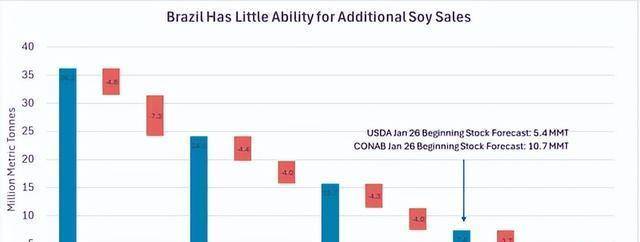
Core Insights - The article discusses the impact of tariff adjustments on the U.S. soybean market, highlighting the decline in China's tariff from 34% to 13% but noting that this has not yet translated into increased purchases from U.S. farmers [1][8] - The resumption of qualifications for three U.S. companies by Chinese customs is seen as a potential opportunity, yet the market remains competitive with Brazilian exports continuing to rise [3][4] - The article emphasizes the ongoing challenges faced by U.S. soybean farmers, including high inventory levels and limited processing capacity, which are exacerbated by low market prices [5][8] Tariff Adjustments - China's reduction of tariffs on U.S. soybeans from 34% to 13% has created a ripple effect in the market, but actual buying activity has not yet materialized [1][8] - The resumption of qualifications for U.S. companies CHS, Louis Dreyfus, and EGT by Chinese customs is a significant development, potentially opening new avenues for trade [3][4] Market Dynamics - Brazilian soybean exports are increasing, with statistics showing higher export volumes compared to the previous year, indicating strong competition for U.S. soybeans [3][5] - The price differential between U.S. and Brazilian soybeans is a critical factor in determining market orders, with U.S. prices still holding a premium [4][7] Supply Chain Challenges - U.S. soybean farmers are facing pressure from high inventory levels, with processing capacity having increased by 14%, yet the market is unable to absorb the excess supply [3][5] - The demand for soybean products like biodiesel has not kept pace with production increases, leading to a supply-side constraint [5][8] Information Asymmetry - There is a notable disconnect between optimistic reports from U.S. media regarding Chinese purchases and the lack of confirmation from Chinese buyers, creating uncertainty in the market [7][8] - The article highlights the complexities of global supply chains, where pricing and timing are critical in determining market outcomes [8]
黑色板块日报-20251110
Shan Jin Qi Huo· 2025-11-10 01:04
Group 1: Report Industry Investment Rating - No information provided Group 2: Core Viewpoints of the Report - For the steel sector, the apparent demand for rebar decreased week - on - week, rebar production declined, and inventory continued to fall. Hot - rolled coil inventory has far exceeded the same - period level after a significant increase and continued to rise this week. Coke and coking coal prices showed signs of weakness, and iron ore prices hit a recent low. Future steel mills are expected to cut production, which may trigger a negative feedback cycle. [2] - For the iron ore sector, the sample steel mills' hot - metal production continued to decline week - on - week, and it is expected to continue to fall this week. With the decline in steel mills' profits and the end of the consumption peak season, steel mills will continue to cut production, suppressing raw material prices. The global iron ore shipment has declined from its high, and the port inventory increase during the consumption peak season and slow inventory depletion of steel products are suppressing the market sentiment. The futures price faces a correction pressure. [4] Group 3: Summary of Each Section 1. Rebar and Hot - Rolled Coil - **Supply and demand**: Rebar's apparent demand, production, and inventory all decreased. Hot - rolled coil inventory increased. Coke and coking coal supported costs, but steel mills' profit decline may lead to production cuts. [2] - **Technical analysis**: The futures prices of rebar and hot - rolled coil have fallen below the 10 - day moving average and are currently supported by the lower Bollinger Band. [2] - **Operation suggestion**: Maintain a wait - and - see attitude, do not chase up or sell down, and wait patiently to go long at low prices after stabilization for mid - term trading. Do not short when the price is low. [2] - **Related data**: Include prices, basis, spreads, production, inventory, and trading volume data. For example, the rebar main contract closing price was 3034 yuan/ton, down 0.10% from the previous day and 2.32% from last week. [2] 2. Iron Ore - **Demand**: The sample steel mills' hot - metal production decreased, and steel mills will continue to cut production, suppressing iron ore prices. [4] - **Supply**: Global iron ore shipment declined from its high, and it is expected that the arrival volume will decrease after some time. [4] - **Technical analysis**: The 01 - contract futures price has fallen below the middle Bollinger Band and the 10 - day moving average, hitting a three - month low, and is currently mainly supported by the lower Bollinger Band. [4] - **Operation suggestion**: Maintain a wait - and - see attitude and wait patiently to go long at low prices after price stabilization. [5] - **Related data**: Include prices, basis, spreads, shipment, arrival volume, inventory, and other data. For example, the DCE iron ore main contract settlement price was 760.5 yuan/dry ton, down 4.94% from last week. [5] 3. Industry News - Mysteel statistics show that the total inventory of imported iron ore at 45 ports was 14898.83 tons, a week - on - week increase of 356.35 tons. The average daily port clearance volume was 335.55 tons, an increase of 4.33 tons. [7] - The blast furnace operating rate of 247 steel mills was 83.13%, a week - on - week increase of 1.38 percentage points. The average daily hot - metal output was 234.22 tons, a week - on - week decrease of 2.14 tons. [7] - The total urban inventory of steel was 933.32 tons, a week - on - week decrease of 3.09 tons. [8]
Clearwater Paper(CLW) - 2025 Q3 - Earnings Call Transcript
2025-10-28 22:02
Financial Data and Key Metrics Changes - Adjusted EBITDA for Q3 2025 was $18 million, at the high end of the guidance range of $10 million-$20 million, with year-to-date adjusted EBITDA from continuing operations at $87 million, up from $26 million in the same period last year [4][14] - Net sales reached $399 million, a 1% increase year-over-year, driven by a 3% increase in paperboard shipment volumes, partially offset by lower market pricing [13][14] - Net loss from continuing operations was $54 million, or $3.34 per diluted share, primarily due to a $48 million non-cash goodwill impairment [13][14] - The company generated $34 million in cash from operations and approximately $3.5 million in free cash flows during the quarter [15] Business Line Data and Key Metrics Changes - The company successfully completed all three planned major maintenance outages for 2025, with the Lewiston outage costing $24 million and the Augusta outage costing $16 million [4][5] - Fixed cost reduction initiatives are tracking to around $50 million in savings for the year, exceeding the original estimate of $30 million-$40 million [5] Market Data and Key Metrics Changes - The industry is facing margin pressure due to low utilization rates, projected to be in the low 80% range by year-end, significantly below the normalized average of 90%-95% [7] - RISI forecasts a net capacity reduction of approximately 350,000 tons in the first half of 2026, which could drive utilization rates above 90% [8][18] Company Strategy and Development Direction - The company is exploring adding CUK swing capability to one of its SBS machines, with an estimated capital requirement of $50 million and a projected return of over 20% [11][12] - The company aims to maintain its market share and defend its SBS mills while focusing on a strong balance sheet [19] Management's Comments on Operating Environment and Future Outlook - Management remains optimistic about the long-term fundamentals of the paperboard market, citing strong demand for sustainable packaging solutions [19] - The company expects adjusted EBITDA for Q4 2025 to be between $13 million and $23 million, anticipating slightly lower paperboard shipments due to seasonality [16][18] Other Important Information - The company has ample available liquidity of $455 million and a net leverage ratio of 2.7x, indicating a stable debt level despite the current industry down cycle [15] - The company repurchased $2 million of shares, bringing the total to $20 million against a $100 million authorization [15] Q&A Session Summary Question: Decision to hold the CUK swing capacity project - Management confirmed the decision to hold the project is due to prioritizing a strong balance sheet and market conditions, targeting a leverage ratio in the 1%-2% range [23] Question: Market outlook for SBS and import relief - Management noted that while RISI forecasts a capacity reduction, it is uncertain how the industry will respond, but there are signs of reduced European imports [25] Question: Maintenance schedule for 2026 - Management indicated that costs for maintenance in 2026 would be similar to 2025, with schedules to be finalized and shared in February [27] Question: Incremental strength in shipments and product categories - Management observed strong performance in food service and noted that import relief may be contributing to stronger demand [33] Question: Variability in Q4 guidance - Management highlighted that energy costs and production levels would significantly impact Q4 earnings, with production changes having a substantial effect on earnings [36]

头部企业将减产,多晶硅高位震荡
Hong Ye Qi Huo· 2025-10-27 11:19
1. Report Industry Investment Rating - There is no information provided regarding the report industry investment rating in the given content. 2. Core Viewpoints of the Report - For industrial silicon, the current supply is relatively balanced with an increase in the north and a decrease in the south, and the overall supply will gradually decline in November. The demand in the polysilicon segment will weaken after November due to the dry - season and quota production, and there is still pressure to reduce inventory. It is expected that the short - term market will remain range - bound, and market sentiment changes should be monitored [6]. - For polysilicon, the current supply and demand are both weak, and the inventory is slightly accumulating. However, it is supported by industrial policies and market expectations, and it is expected to remain in high - level oscillation in the short term. Attention should be paid to the implementation of policies [7]. 3. Summary by Related Catalogs Industrial Silicon - **Price**: As of October 24, 2025, the spot price of Xinjiang industrial silicon 553 oxygen - passed was 8800 yuan/ton, unchanged from last week. The futures main contract rebounded slightly, closing at 8920 yuan/ton on October 24 [6]. - **Supply**: Xinjiang's output increased due to newly ignited silicon furnaces, while the start - up in the northwest (Qinghai, Ningxia, Gansu) changed little. Yunnan had a small reduction in production under high - cost pressure, and the start - up rate is expected to decline further in November. Sichuan's start - up decreased gradually during the dry season. Overall, the output increased slightly this month and is expected to decline next month [6]. - **Demand**: Polysilicon production decreased slightly, reducing the consumption of industrial silicon. The start - up of organic silicon was basically stable, and a small amount of monomer production capacity under maintenance will resume next week. The start - up rate of aluminum alloy enterprises remained stable, with primary aluminum alloy running stably and recycled aluminum alloy restricted by the tight supply of scrap aluminum. In September, the export of industrial silicon was 70200 tons, an 8% decrease from the previous month and an 8% increase year - on - year [6]. - **Cost**: The cost of industrial silicon remained stable this week [6]. - **Inventory**: As of October 23, the national social inventory of industrial silicon was 559000 tons, a decrease of 3000 tons from last week [6]. Polysilicon - **Price**: As of October 24, 2025, the spot price of N - type dense material was 50000 yuan/ton, unchanged from last week. The futures main contract fluctuated and declined, closing at 52305 yuan/ton on October 24 [7]. - **Supply**: Three enterprises resumed production and increased output in October, and the production is expected to increase slightly this month. According to the fourth - quarter production plans of each enterprise, some production capacity in the southwest region is expected to be gradually shut down for maintenance during the dry season in November, and the production will gradually decline from November to December [7]. - **Demand**: Terminal demand is weak, and component and cell manufacturers have a weak willingness to purchase. Downstream purchasing enterprises are mainly waiting and watching, and no actual transactions have been made. A new round of transactions is expected to be carried out in batches next week. In September, the import volume of polysilicon was 1291.8 tons, a 28% increase from the previous month; the export volume was 2149.5 tons, a 28% decrease from the previous month [7]. - **Cost**: The cost of polysilicon remained stable this week [7]. - **Inventory**: The inventory is on the rise, and the purchasing pace of crystal - pulling factories has slowed down [7]. Price and Spread - **Industrial Silicon Price**: As of October 24, 2025, Xinjiang industrial silicon 553 oxygen - passed was 8800 yuan/ton, and 421 oxygen - passed was 9100 yuan/ton, both unchanged from last week [10]. - **Industrial Silicon Spread**: As of October 24, 2025, the spread between Yunnan industrial silicon 553 oxygen - passed and 421 oxygen - passed was 400 yuan/ton, and the spread between Xinjiang industrial silicon 553 oxygen - passed and 421 oxygen - passed was 300 yuan/ton, both unchanged from last week [14]. - **Polysilicon Price**: As of October 24, 2025, the price of N - type dense material was 50000 yuan/ton, P - type dense material was 33000 yuan/ton, and P - type cauliflower material was 30500 yuan/ton, all unchanged from last week [18]. - **Polysilicon Spread**: As of October 24, 2025, the premium of N - type dense material over P - type dense material was 17000 yuan/ton, and the premium over P - type cauliflower material was 19500 yuan/ton, both unchanged from last week [22]. Cost - **Silicon Coal and Silica Stone**: As of October 24, 2025, the delivered price of Ningxia silicon coal was 1140 yuan/ton, and Xinjiang silicon coal was 1700 yuan/ton, both unchanged from last week. The delivered price of Hubei silica stone was 340 yuan/ton, Xinjiang was 320 yuan/ton, and Yunnan was 290 yuan/ton, all unchanged from last week [26]. - **Petroleum Coke and Electricity Price**: As of October 24, 2025, the price of Shandong port Saudi petroleum coke was 1555 yuan/ton, a 50 - yuan increase from last week. The electricity price in Xinjiang was 0.375 yuan/kWh, Sichuan was 0.325 yuan/kWh, and Yunnan was 0.33 yuan/kWh, all unchanged from last week [30]. - **Wood Chips and Graphite Electrodes**: As of October 24, 2025, the price of Yunnan wood chips was 490 yuan/ton, Yunnan charcoal was 2450 yuan/ton, and Jiangsu high - power graphite electrodes were 12750 yuan/ton, all unchanged from last week [34]. Downstream Products - **Silicon Wafers**: As of October 24, 2025, the average prices of N - type M10 - 182(130µm), N - type G10L - 183.75(130µm), N - type G12R - 210R(130µm), and N - type G12 - 210(130µm) were 1.34, 1.34, 1.365, and 1.69 yuan/piece respectively, a decrease of 0.01 yuan/piece from last week. Due to weak terminal demand, second - tier and tail enterprises actively lowered prices [37]. - **Batteries**: As of October 24, 2025, M10 single - crystal TOPCon, G10L single - crystal TOPCon, G12R single - crystal TOPCon, and G12 single - crystal TOPCon were quoted at 0.315, 0.315, 0.285, and 0.31 yuan/watt respectively, with decreases of 0.003, 0.003, 0.002, and 0 yuan/watt respectively from last week. Overseas market demand has declined, and export order support has weakened [41]. - **Components**: As of October 24, 2025, 182 single - sided TOPCon, 210 single - sided TOPCon, 182 double - sided TOPCon, and 210 double - sided TOPCon were quoted at 0.68, 0.7, 0.68, and 0.7 yuan/watt respectively, unchanged from last week. Terminal demand has not improved significantly, and cost pressure has increased [45]. Other Related Products - **Organic Silicon**: As of October 24, 2025, the price of organic silicon DMC in East China was 11300 yuan/ton, unchanged from last week. The start - up was stable, and the price remained stable [49]. - **Aluminum Alloy**: As of October 24, 2025, the price of Shanghai aluminum alloy ingot ADC12 was 20800 yuan/ton, a 100 - yuan increase from last week. Aluminum alloy enterprises maintained stable start - up, the primary aluminum sector was relatively stable, and recycled aluminum alloy was restricted by scrap aluminum supply [53].

West Fraser(WFG) - 2025 Q3 - Earnings Call Transcript
2025-10-23 16:30
Financial Data and Key Metrics Changes - West Fraser Timber Co. Ltd. reported an adjusted EBITDA of negative $144 million for Q3 2025, indicating continued operation within an extended cycle trough [3][4] - The lumber segment's adjusted EBITDA was negative $123 million, a significant decline from $15 million in Q2 2025, primarily due to lower pricing and a $67 million duty expense [6][8] - Cash flow from operations was $58 million, with a net cash balance of $212 million, down from $310 million in the previous quarter [9] Business Line Data and Key Metrics Changes - The North America EWP segment posted negative $15 million in adjusted EBITDA for Q3 2025, down from $68 million in Q2, driven by lower OSB pricing [6] - The pulp and paper segment reported negative $6 million in adjusted EBITDA, compared to negative $1 million in Q2, largely due to a maintenance shutdown [7] - The Europe business generated $1 million in adjusted EBITDA, similar to the $2 million reported in the previous quarter [8] Market Data and Key Metrics Changes - U.S. housing starts averaged 1.31 million units annually through August, reflecting stable but uninspiring levels of new home construction [4] - The company noted subdued demand in repair and remodeling, continuing a trend observed in previous quarters [4] Company Strategy and Development Direction - The company has removed 820 million board feet of capacity, approximately 12% of its lumber capacity, to optimize its asset portfolio and create a more resilient business [11][12] - West Fraser aims to maintain a flexible operating strategy to meet customer needs while focusing on cost reduction and safety [12][13] - The company plans to continue a balanced capital allocation strategy, investing in value-enhancing projects and pursuing opportunistic growth [13] Management's Comments on Operating Environment and Future Outlook - Management acknowledged the challenges posed by macroeconomic conditions and shifting trade policies but expressed confidence in the company's strong financial position to navigate these difficulties [11] - The company remains optimistic about the long-term prospects for the industry despite a challenging year-to-year outlook [16] Other Important Information - The U.S. Department of Commerce announced final combined duty rates of 26.5% for softwood lumber, with West Fraser having the lowest duty rate in the Canadian industry [10] - The company confirmed its 2025 capital expenditure guidance range of $400 to $450 million [9] Q&A Session Summary Question: Approach to managing production in a tough market - Management emphasized actions taken early in the cycle, including mill closures and adjustments to shift configurations, to remain nimble in production management [18][19] Question: Implied Q4 operating rate for OSB - The implied operating rate for OSB in Q4 is expected to be around 80%, with maintenance shutdowns strategically scheduled during this weaker seasonal period [20][21] Question: M&A opportunities in the current down cycle - Management reiterated a quality-first approach to M&A, emphasizing the importance of asset quality and the company's flexibility to pursue growth opportunities [22][24] Question: Federal support for the lumber industry - Management noted ongoing discussions with the government regarding support measures for the lumber industry, but specific details were not disclosed [28][29] Question: Inventory levels in the U.S. channel - Management indicated that their own inventory levels are intentionally lean, but they do not have visibility into customer inventory levels [30][32] Question: Conditions in the Canadian market - The Canadian market remains competitive, but it does not drive demand as significantly as the U.S. market [44][45] Question: Capital expenditures outlook for 2026 - Management indicated that they will provide 2026 capital expenditure guidance in February, noting that they have been busy with major projects [47] Question: State of the Caribou Pulp facility - The Caribou Pulp facility has been repaired and is back up and running after a recent incident [48]

能源化工周报:低位震荡-20251021
Hong Yuan Qi Huo· 2025-10-21 09:38
1. Report Industry Investment Rating No relevant content provided. 2. Core Viewpoints of the Report - The price of ethylene glycol continued to decline this week. Although the fundamentals of ethylene glycol have not undergone significant adjustments, the intensification of Sino - US trade frictions has led to a significant increase in market risk - aversion sentiment. Polyester demand shows no outstanding performance, with stable operation and neutral pick - up. Yulong Petrochemical's supply has gradually entered the market, resulting in sufficient on - site spot liquidity. - Next week's prediction: On the cost side, the bearish fundamentals of crude oil will continue to suppress price performance and limit the rebound and repair space, with overall fluctuations. On the supply side, the operation rate remains high, but as coal prices rise and squeeze profits, the coal - based operation rate may decline later. On the demand side, the domestic market demand remains strong, but the issuance of new export orders is slow, and the weaving market lacks confidence in the future market. In terms of port inventory, there are more ethylene glycol vessel arrivals this month, the polyester operation rate is relatively stable, and the downstream pick - up volume from ports remains neutral. - Overall, it is expected that ethylene glycol will operate at a low level, in the range of 3950 - 4100 yuan/ton, and it is recommended to stay on the sidelines [6]. 3. Summary by Relevant Catalogs 3.1盘面及现货情况 (Disk and Spot Conditions) - **Disk Trend**: Continued to decline. This week, the trading volume was 751,900 lots, and the open interest was 340,400 lots (- 87,000 lots). The closing price of the MEG main contract on October 20 was 4003 yuan/ton, a decrease of 108 yuan/ton compared to the closing price of 4111 yuan/ton on October 13, with an overall change of - 2.63%. The settlement price on October 20 was 4030 yuan/ton, a decrease of 82 yuan/ton compared to the settlement price of 4112 yuan/ton on October 13, with an overall change of - 1.99% [8][12][14]. - **Spot Market**: For domestic spot, the higher transaction price was 4196 (October 13), and the lower transaction price was 4071 (October 17). From October 12 - 18, the weekly price data showed that in Fujian it was 4171 yuan/ton (- 59), in Zhangjiagang it was 4130.5/ton (- 27.83), and in Dongguan it was 4171 yuan/ton (- 59). The foreign - market price was 488.2 US dollars/ton (- 3.47). This week's average basis was 91 yuan/ton, compared with last week's average of 90.33 yuan/ton. The domestic and foreign markets of ethylene glycol remained inverted, with an overall level of 70 - 100 US dollars/ton [15]. 3.2 MEG装置、库存及生产利润情况 (MEG Device, Inventory, and Production Profit Situation) - **Device Operation Rate**: The overall operation rate from October 14 - 20 was 70.93%, compared with 70.22% from October 9 - 13. The oil - based operation rate was 76.31%, the coal - based operation rate was 62.95%, and the methanol - based operation rate was 62.43%. There were various device changes during the week, including maintenance of Zhonghai Shell and Tongliao Jinmei devices, restart of Satellite, Tianye, Guoneng Yulin, and Meijin devices, and Yulong Petrochemical's device resumed operation after a short - term shutdown. Hengli and Far Eastern Union slightly increased their device loads [19][22][24]. - **Production Profit**: Due to the significant rebound in thermal coal prices, the profit of coal - based ethylene glycol production has dropped significantly. The current profits of MTO, coal - based, and ethylene - based production routes are - 1687.74 yuan/ton, 90.26 yuan/ton, and - 124.34 US dollars/ton respectively, compared with the previous period's - 1607.16 yuan/ton, 261.94 yuan/ton, and - 122.23 US dollars/ton [31][33]. - **Port Inventory**: As of October 16, the MEG port inventory was 475,500 tons, an increase of 70,000 tons compared with the previous period, with a month - on - month change of 15.51%. Among them, Zhangjiagang had 194,500 tons (an increase of 9,000 tons), Jiangyin had 60,000 tons (an increase of 10,000 tons), Taicang had 136,000 tons (an increase of 71,000 tons), Ningbo had 82,000 tons (an increase of 2,000 tons), and Shanghai and Changshu had 3,000 tons (a decrease of 22,000 tons). The polyester operation load was generally stable, and the port pick - up was neutral [35][37][38]. 3.3 Fundamental Analysis - **Cost Side**: Oil prices still lack substantial positive factors, and the bearish fundamentals will continue to suppress price performance and limit the rebound and repair space. The polyester operation rate has a narrow fluctuation range, and there is no new production capacity in the market, so the market supply is mostly stable [44][46]. - **Polyester Product Situation**: The average weekly load of polyester factories was 89.38%, and the average weekly load of Jiangsu and Zhejiang looms was 68.22%. The market average prices of semi - bright POY150D/48F, DTY150D/48F, and FDY150D/96F were 6571 yuan/ton, 7804 yuan/ton, and 6754 yuan/ton respectively, down 1.47%, 0.82%, and 1.13% compared with the previous period. The average price of polyester staple fiber in the East China market this period was 6326 yuan/ton, down 93 yuan/ton or - 1.45% compared with the previous period. The negotiation range of polyester bottle chips in the East China region was 5600 - 5730 yuan/ton, with an average price of 5710.00 yuan/ton this week, down 2.14% compared with the previous period [48]. - **Weaving Market**: New export orders are issued slowly, and the weaving market lacks confidence in the future market. With the drop in temperature in the north, the online sales of autumn and winter textile and clothing have accelerated, driving the sales of thick fabrics such as autumn and winter fleece and woolen fabrics. The operating rates of warp - knitting enterprises have steadily increased. As of October 16, the operating rates of water - jet looms in Wujiang, Changxing, Xiaoshao, and the warp - knitting operating rates in Haining and Changshu have shown different changes [52][54]. - **Polyester Downstream**: The raw material inventory of polyester downstream is at a low level, and the rigid demand is gradually increasing. From October 13 - 17, the average weekly polyester sales were estimated to be 70%. The filament production enterprises have continued to accumulate inventory, and the end - of - month shipment pressure is gradually increasing. As of October 16, the filament inventory decreased, with the average inventory days of POY, FDY, and DTY being 16.80 days, 26.10 days, and 31.50 days respectively [55][57][59].

