沃什交易

Search documents
东吴证券晨会纪要2026-02-03-20260203
Soochow Securities· 2026-02-03 01:23
Macro Strategy - The report suggests a balanced ETF allocation in domestic equities, indicating a cautious approach due to macroeconomic uncertainties and geopolitical risks affecting market visibility and risk premiums [1][14][19] - The Hang Seng Tech Index is expected to experience a sideways trend in February 2026, with potential for recovery driven by seasonal market dynamics, but caution is advised regarding the impact of a strengthening US dollar [1][17] Financial Products - The Nasdaq 100 Index showed a monthly increase of 1.20% in January 2026, with fluctuations driven by macroeconomic data and political uncertainties, particularly surrounding inflation and Federal Reserve policies [2][4][18] - The report highlights the Nasdaq 100 ETF's high valuation, with a PE ratio of 36.15, indicating a reliance on interest rate environments and earnings confirmations [4][18] Industry Insights - The AI and semiconductor sectors are identified as key drivers of earnings support, contributing to a perceived "profit bottom" despite macroeconomic policy risks [2][4] - The report emphasizes the importance of upcoming earnings reports from major tech companies to validate market valuations and growth narratives, particularly in AI capital expenditures [4][18] Company Analysis - Keg Precision Machinery is projected to see significant profit growth due to increased demand for high-end solder paste printing equipment, with expected net profits of 1.9 billion, 4.0 billion, and 6.0 billion for 2025-2027 [8] - Juchip Technology anticipates a 41.44% increase in revenue for 2025, driven by AI-enabled audio chip sales, with net profit expected to reach 2.04 billion, reflecting a 91.40% year-on-year growth [9][10] - China Ping An is highlighted for its strong insurance business growth, with a low valuation and high weight in major indices, suggesting significant investment potential [12]
“沃什交易”催化市场调整,?银延续回落
Zhong Xin Qi Huo· 2026-02-03 01:21
Report Summary 1. Report Industry Investment Rating - Not provided in the given content. 2. Report's Core View - Gold's short - term price may continue to adjust, but its long - term upward logic remains unchanged. Silver also enters a short - term adjustment period with high volatility risks, and its long - term upward support is still strong. The "Wash trade" is a short - term catalyst for the market adjustment, but it is difficult to cause a trend - based negative impact on precious metals [1][2][3]. 3. Summary by Related Sections Gold Analysis - **View**: Short - term enters an adjustment period after overheating, while the long - term upward logic remains intact [2]. - **Logic**: The sharp decline in gold prices is mainly due to technical adjustments caused by overcrowded long - positions and the "Wash trade". Kevin Warsh, a former Federal Reserve governor, was nominated as the next Fed chair on January 30, and his hawkish stance (supporting rate cuts but also advocating balance - sheet reduction) led to market concerns. However, his nomination is unlikely to cause a long - term negative impact on precious metals [2]. - **Outlook**: Gold's long - term upward trend is still supported [2]. Silver Analysis - **View**: Short - term enters an adjustment period, and high - volatility risks should be watched out for [3]. - **Logic**: The sharp decline in silver prices is due to technical corrections caused by over - buying and crowded trading, and the "Wash trade" has intensified the adjustment. The decline in the London silver spot leasing rate and the reduction in global silver ETF holdings also slow down the bullish drivers on the spot side [3]. - **Outlook**: Silver still has strong long - term bullish support [3]. Market Indexes - **Special Indexes**: On February 2, 2026, the commodity index was 2420.95, down 3.75%; the commodity 20 index was 2773.66, down 4.55%; the industrial products index was 2312.70, down 2.62% [45]. - **Precious Metals Index**: On February 2, 2026, the precious metals index was 4447.17, with a daily decline of 11.27%, a 5 - day decline of 10.91%, a one - month increase of 16.29%, and a year - to - date increase of 16.29% [47].
国泰海通证券每日报告精选-20260203
GUOTAI HAITONG SECURITIES· 2026-02-03 01:20
Group 1: Macroeconomic Insights - The Federal Reserve's recent policy statement reflects a slightly hawkish stance, leading to adjustments in asset prices, with the dollar index rising and U.S. stocks declining[6] - Kevin Warsh's nomination as the next Fed Chair has caused significant market reactions, with expectations of a more independent Fed and a potential shift in monetary policy direction[7] - The manufacturing PMI for January 2026 is reported at 49.3%, indicating a decline of 0.8 percentage points from the previous month, suggesting a contraction in manufacturing activity[17] Group 2: Market Performance - Global asset prices showed mixed results, with the Hang Seng Index rising by 2.38% and the S&P 500 increasing by 0.34%, while the Shanghai Composite Index fell by 0.44%[8] - Commodity prices experienced divergence, with IPE Brent crude oil futures rising by 6.65% and COMEX copper increasing by 0.51%, while London gold prices decreased by 2.03%[8] - The market anticipates two rate cuts in 2026, with the Federal Funds futures market reflecting limited expectations for aggressive rate reductions following Warsh's nomination[7] Group 3: Sector Analysis - The new economic landscape shows a significant shift towards emerging technologies, with sectors like AI and electric vehicles driving growth, while traditional industries lag behind[28] - The financial sector is expected to benefit from increased asset management demand, with insurance and securities firms poised for growth in a low-interest-rate environment[30] - The construction and real estate sectors are experiencing marginal improvements, but overall demand remains weak, necessitating further policy support[19]
东吴证券:新美联储主席沃什真的鹰派吗?
Xin Lang Cai Jing· 2026-02-03 00:26
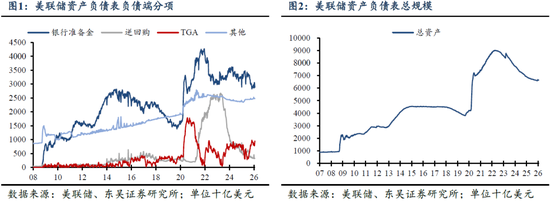
Core Viewpoint - The market's hawkish interpretation of Warsh's nomination is seen as a misconception, as he has shifted to a dovish stance on monetary policy. It is expected that he will implement more rate cuts than the market anticipates, with a forecast of 75-100 basis points of cuts throughout the year, starting in June [1][10]. Latest Perspective - Warsh's monetary policy stance has transitioned to dovish since 2025, believing that AI-driven productivity gains will not lead to inflation. He argues that the current large balance sheet of the Fed is outdated and can be significantly reduced, allowing for further rate cuts to support households and small businesses [3][12]. Nomination Reason - Trump's primary consideration in selecting a Fed chair is the ability to quickly lower interest rates. Warsh's close personal ties with Trump, including connections through significant financial support, suggest he will align closely with Trump's monetary policy goals [4][13]. Hawkish Feasibility - The current liquidity environment does not support the Fed's balance sheet reduction. Warsh's previous calls for balance sheet reduction are seen as opposition to past Fed policies. The recent implementation of a light balance sheet expansion indicates a need to avoid liquidity crises, making immediate balance sheet reduction risky [5][14]. Future Outlook - Warsh's nomination requires Senate approval, and there are concerns about Powell's potential influence post-tenure. Maintaining an image of independence will be crucial for Warsh to secure his position and ensure effective policy implementation. The market is expected to reassess Warsh's stance after his official appointment [6][15][16].


有色板块遭遇“抛售潮”!分析人士:市场波动加剧 需谨慎交易
Qi Huo Ri Bao· 2026-02-03 00:19
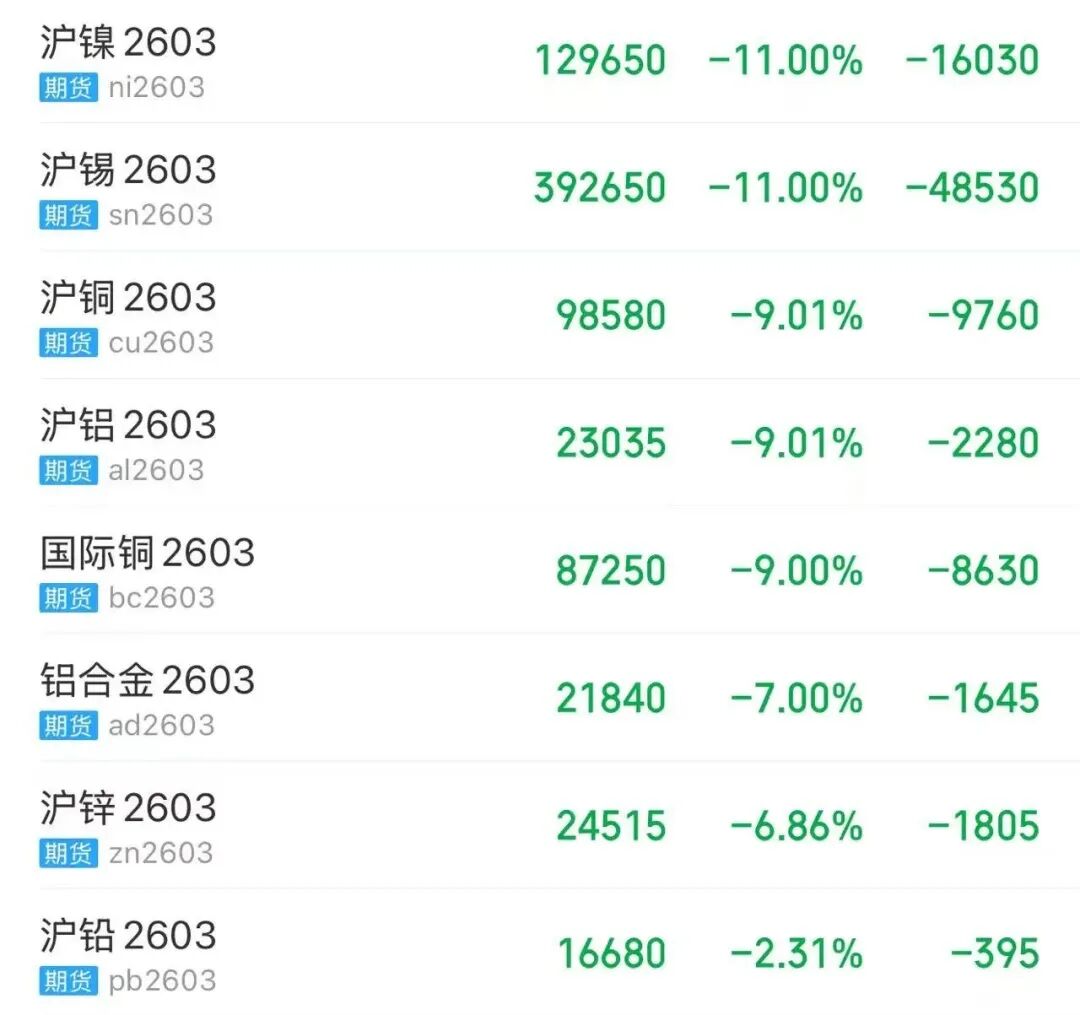
Core Viewpoint - The non-ferrous metal sector is experiencing a significant sell-off, driven by falling gold and silver prices, with major futures contracts hitting their daily limit down [1] Group 1: Market Performance - As of the close on Monday, major futures contracts for copper, aluminum, tin, nickel, and aluminum alloy have all hit their daily limit down, with other varieties also experiencing declines [1] - The trading volume in the non-ferrous metal sector reached a recent high last Friday but saw a decline on Monday, although it remained at elevated levels [2] Group 2: Price Movements - In the night trading session, international copper futures fell by 1.11%, while domestic copper futures dropped by 1.01%. Other metals like aluminum and nickel also saw declines of 2.12% and 2.83%, respectively [3] - The absolute inventory of copper globally exceeds 1.3 million tons, indicating significant downward pressure on prices, while domestic aluminum inventory has reached 1 million tons, reflecting a weaker supply-demand structure compared to previous years [4] Group 3: Analyst Insights - Analysts suggest that the nomination of Kevin Walsh as the new Fed Chair has strengthened expectations for tighter monetary policy, leading to a stronger dollar and increased pressure on non-ferrous metals [3] - The market is currently observing marginal changes in Fed policy, with high volatility in related commodities likely to continue. However, there is a long-term positive outlook for copper and aluminum demand [3][4] Group 4: Seasonal Factors - The demand for basic metals is expected to be suppressed around the Spring Festival, leading to seasonal inventory accumulation that may put further pressure on prices [5] - After the Spring Festival, if downstream recovery progresses better than expected, along with effective domestic growth policies and clearer Fed policy expectations, the non-ferrous metal sector may stabilize and rebound by early March [4]
有色板块遭遇“抛售潮”!分析人士:市场波动加剧,需谨慎交易
Qi Huo Ri Bao· 2026-02-02 23:56
Core Viewpoint - The non-ferrous metal sector is experiencing a significant sell-off, driven by falling gold and silver prices, with major futures contracts hitting their daily limits down [1] Group 1: Market Performance - As of the close on Monday, major contracts for copper, aluminum, tin, nickel, and aluminum alloy all hit their daily limit down, with other varieties also experiencing declines [1] - The trading volume in the non-ferrous metal sector reached a recent high last Friday but saw a decline on Monday, although it remained elevated compared to previous days [2] Group 2: Price Movements - During the night trading session, international copper futures fell by 1.11%, while domestic copper futures dropped by 1.01%. Other metals like aluminum and nickel also saw declines of 2.12% and 2.83%, respectively [3] - Year-to-date, absolute inventories of copper, aluminum, and nickel are significantly higher than in previous years, indicating weak price support from supply-demand dynamics [4] Group 3: Analyst Insights - Analysts suggest that the nomination of Kevin Warsh as the new Federal Reserve Chair has strengthened expectations for tighter monetary policy, leading to a stronger dollar and increased pressure on non-ferrous metals [3] - The market is currently observing marginal changes in Federal Reserve policy, with high volatility in related commodities likely to continue [3][5] Group 4: Inventory and Demand - Global copper inventories exceed 1.3 million tons, indicating upward pressure on prices, while domestic aluminum inventories have reached 1 million tons, reflecting weaker supply-demand dynamics compared to previous years [4][5] - Seasonal demand suppression is expected around the Chinese New Year, which may lead to price pressure due to seasonal accumulation [6] Group 5: Future Outlook - Post-Chinese New Year, if downstream production resumes faster than expected and domestic growth policies take effect, the non-ferrous metal sector may stabilize and rebound by early March [5] - The precious metals sector is anticipated to wait for clearer signals from the Federal Reserve's March meeting before determining its trajectory [5]

过年杀猪啦
Datayes· 2026-02-02 12:10
Market Overview - The A-share market experienced a collective decline on February 2, with the Shanghai Composite Index falling by 2.48%, the Shenzhen Component Index by 2.69%, and the ChiNext Index by 2.46% [12] - The total trading volume across the three markets was 26,069.20 billion, a decrease of 2,558.2 billion from the previous day, with over 4,600 stocks declining [12][14] - The smart grid sector showed resilience, with several stocks such as Tongguang Cable and Baobian Electric reaching their daily limit [12] Sector Performance - The white wine sector rebounded, driven by rising consumption and increasing prices, with Moutai's wholesale price rising by 160 yuan to 1,770 yuan per bottle [12] - The commodity futures market saw significant declines, with precious metals and energy sectors experiencing sharp drops, including a more than 15% decline in gold [13] - The electronic industry faced the largest net outflow of funds, with Zhongji Xuchuang leading the outflow [25][26] Investment Insights - The current market conditions suggest a potential shift in investment styles, with discussions around inflation recovery and corporate profit recovery gaining traction [11] - The relative PE-TTM ratio of the CSI 1000 compared to the CSI 300 is at 3.55, indicating a high valuation level [11] - The market is characterized by crowded trades in certain sectors, necessitating significant fundamental changes for excess returns, while less crowded sectors may yield better returns with minor improvements [11] Key Stocks and Funds - Notable net inflows were observed in the electric power equipment, banking, and food and beverage sectors, while the electronic and non-ferrous metal sectors saw significant outflows [26] - Major stocks with net inflows included Xinye Technology and West Materials, while Zhongji Xuchuang and Zhaoyi Innovation faced the largest outflows [26][30]






“沃什交易”下市场快速降温
Tebon Securities· 2026-02-02 11:45
Market Analysis - The A-share market experienced a significant decline, with the Shanghai Composite Index falling by 2.48% to close at 4015.75 points, marking a substantial drop below the 4100-point level [2] - The Shenzhen Component Index dropped by 2.69%, reaching its largest single-day decline since January, while the ChiNext Index fell by 2.46% [2] - Over 4600 stocks in the market declined, with more than 100 stocks hitting the daily limit down, indicating a sharp decrease in market risk appetite [2] Sector Performance - Resource stocks faced heavy losses, with declines of 7.63% in non-ferrous metals, 5.65% in steel, and 5.43% in coal and oil sectors, reflecting concerns over industrial demand as the manufacturing PMI fell to 49.3 [5] - Defensive sectors such as food and beverage, and banking showed resilience, with increases of 1.15% and 0.13% respectively, attracting risk-averse capital [5] - The high-voltage power sector surged by 3.84%, driven by policy catalysts from the National Development and Reform Commission and the National Energy Administration [5] Commodity Market - The commodity index saw a significant drop of 4.37%, with most commodities declining sharply, while only a few chemical products showed gains [7] - Precious metals like gold and silver experienced steep declines, with silver dropping by 17.00% and gold by 15.73%, reflecting a market shift away from high-volatility assets [7][8] - The market exhibited extreme differentiation, with only a few products like caustic soda and PVC showing upward movement amidst widespread declines [7] Bond Market - The government bond futures market showed mixed results, with the 30-year contract rising by 0.18% while shorter-term contracts experienced slight declines [10] - The central bank's net withdrawal of 755 billion yuan indicates a stable liquidity environment, with expectations of continued monetary easing supporting bond market sentiment [10] - The overall market liquidity remains stable ahead of the upcoming Spring Festival, with a focus on the central bank's liquidity tools [10] Investment Strategy - The report suggests a shift from a previous bullish trend to a more volatile market environment, recommending a focus on sectors like photovoltaic, commercial aerospace, and precious metals for medium to long-term investments [12] - The commodity market is expected to undergo a period of consolidation after rapid declines, with potential for upward movement in precious metals in the medium to long term [12] - The report emphasizes the importance of monitoring macroeconomic indicators and policy developments to identify investment opportunities [12]
每周宏观经济和资产配置研判:大宗商品风暴如何应对-20260202
Soochow Securities· 2026-02-02 07:59
Group 1: Macro Insights - The report highlights that the recent volatility in gold and silver prices is primarily driven by market momentum reversals, with silver attracting high leverage and speculative funds since November 2025 [2][5] - The report anticipates that after the appointment of the new Federal Reserve Chairman, there will be more interest rate cuts than the market expects, with short-term U.S. Treasury yields likely to decline [2][4] - The report notes that the recent decline in the manufacturing PMI does not indicate a weakening economy, as it reflects a temporary fluctuation rather than a downward trend [10] Group 2: Commodity Market Analysis - The report indicates that the recent crash in silver prices has led to liquidity risks that may spread to other commodities, particularly in the non-ferrous metals sector [5][6] - It emphasizes the importance of monitoring the support levels for gold prices, particularly the 60-day moving average, which is currently at $4,400 per ounce [5] - The report suggests that the Shanghai Futures Exchange has implemented measures to manage the risk of a one-sided market in silver futures [5] Group 3: Equity Market Outlook - The report predicts a rebound in the A-share market following the Spring Festival, driven by positive sentiment from performance forecasts and new developments in sectors like AI applications and commercial aerospace [6][10] - It advises a balanced ETF allocation in domestic equities, reflecting a cautious yet optimistic outlook for the market [11] Group 4: Bond Market Perspective - The report notes that the bond market is expected to see increased buying activity due to risk aversion and expectations of monetary easing, with 10-year yields projected to decline to around 1.80% [7][10] - It highlights that the recent adjustments in risk appetite have created trading opportunities in government bonds as a hedge against stock market volatility [4][7]



金价暴跌原因找到了,但黄金的故事远未结束
Xin Lang Cai Jing· 2026-02-02 04:02
炒股就看金麒麟分析师研报,权威,专业,及时,全面,助您挖掘潜力主题机会! 智通财经记者 | 刘婷 上周四以来,黄金持续调整,特别是周五Comex黄金期货主力合约大跌8.35%,创近40年来最大单日跌 幅。分析人士认为,短期来看,"沃什交易"的演绎以及获利回吐的压力或使黄金处于震荡行情,但支撑 金价上涨的长期叙事本质上并没有改变,震荡之后有望迎来新一轮上涨。 上周前半段,黄金继续高歌猛进,1月29日再创历史新高:伦敦金现货最高触及5598.75美元,Comex主 力合约最高摸至5626.8美元,但当天两者即双双回调,周五迎来大跌。分析人士指出,造成此次金价回 调有多方面的原因,包括获利盘止盈平仓、美联储新主席人选公布等。 宏源期货分析师王文虎对智通财经表示,倘若沃什计划实施的"降息+缩表"策略成功,那么美国经济将 保持强劲增长,美元走强,黄金则将转入熊市。倘若该策略未能成功,那么美国经济可能出现衰退,美 国未偿公共债务膨胀将削弱美元信用,或使黄金价格先弱后强。 不过,分析师认为,沃什胜选只是黄金大跌的一个导火索,更主要的原因还是在于获利了结压力较大, 加上交易所上调保证金引发的高杠杆资金平仓,导致抛压集中释放。 ...