Workflow
流动性
icon
Search documents
金属周期品高频数据周报(2025.12.22-12.28):热卷库存处于5年同期最高水平-20251228
EBSCN· 2025-12-28 13:09
Investment Rating - The report maintains an "Overweight" rating for the steel and non-ferrous metals sectors [5] Core Insights - The report highlights that hot-rolled inventory is at its highest level for the same period in five years, indicating potential supply chain pressures [41] - The liquidity environment is characterized by a historical high in gold prices, with the London gold spot price reaching $4,533 per ounce [11] - The report notes a decline in construction activity, with national real estate new starts down 20.50% year-on-year for the first 11 months of 2025 [20] Summary by Relevant Sections Liquidity - The BCI small and medium enterprise financing environment index for December 2025 is at 47.15, down 10.19% month-on-month [11] - The M1 and M2 growth rate difference was -3.1 percentage points in November 2025, a decrease of 1.10 percentage points month-on-month [18] - The current London gold price is $4,533 per ounce, reflecting a 4.41% increase from the previous week [11] Infrastructure and Real Estate Chain - Hot-rolled inventory is at the highest level for the same period in five years, with rebar prices down 1.20% this week [41] - The national high furnace capacity utilization rate is at 85%, unchanged from the previous week [10] - The cement price index has decreased by 0.49% this week, with a national cement utilization rate of 30.14%, down 0.9 percentage points [59] Industrial Chain - The national semi-steel tire operating rate is at 72.05%, up 0.66 percentage points week-on-week [2] - The price of tungsten concentrate has reached a new high since 2012, at 460,500 yuan per ton, up 6.35% from last week [2] - The price of electrolytic aluminum is 22,060 yuan per ton, reflecting a 1.01% increase week-on-week [10] Price Relationships - The price difference between hot-rolled and rebar has turned positive, with the current difference at 10 yuan per ton [3] - The price ratio of rebar to iron ore is 4.02 this week [3] - The price of stainless steel hot-rolled and electrolytic nickel has a ratio of 0.10 [3] Export Chain - The new export orders PMI for China in November is 47.60%, an increase of 1.7 percentage points month-on-month [3] - The CCFI composite index for container shipping rates is at 1,146.67 points, up 1.95% week-on-week [3] - The U.S. crude steel capacity utilization rate is at 75.30%, down 1.20 percentage points from the previous week [3] Valuation Metrics - The CSI 300 index increased by 1.95%, with the chemical sector performing best at +4.23% [4] - The PB ratio for the steel sector relative to the CSI 300 is currently at 0.50, with a historical high of 0.82 [4] - The report suggests that the steel sector's supply may be reasonably constrained, leading to potential recovery in profitability to historical average levels [4]
周观:如何看待2026年1月的流动性情况?(2025年第50期)
Soochow Securities· 2025-12-28 11:35
1. Report Industry Investment Rating No information provided in the content. 2. Core Views of the Report 2.1 Liquidity in January 2026 - The yield of the active 10 - year Treasury bond rose 0.05bp to 1.8355% from 1.835% last Friday. The yield fluctuated during the week due to various factors such as LPR expectations, government bond issuance concerns, and policy news [1][11]. - Five factors affect the super - reserve ratio. In January 2026, foreign exchange funds are expected to decrease by about 63 billion yuan; the central bank is expected to maintain reasonable and sufficient liquidity through various means and there is a possibility of a reserve requirement ratio cut; fiscal deposits are expected to increase by about 62 billion yuan; M0 is expected to increase by about 78 billion yuan; and required deposit reserves are expected to increase by about 50 billion yuan. The liquidity gap is about 190 billion yuan, which can be adjusted through open - market operations and reserve requirement ratio cuts [15][16][21]. - In the bond market, institutions may pay more attention to institutional behavior. It is expected that the allocation power of banks and insurance will strengthen at the beginning of next year, and interest rates may decline [21]. 2.2 US Economic Data and Fed Policy - Spot gold prices exceeded $4,500 per ounce, and it is expected to continue to play an important role in different asset portfolios. The RMB - US dollar exchange rate once exceeded 7. The long - term RMB value is systematically undervalued, but in the medium - term, the role of macro - policies in the transition from exogenous to endogenous growth needs to be considered [22][23]. - US economic data shows that inflation pressure is easing, economic expansion momentum is weakening, the labor market is stable, and the Fed is in a "data - dependent" mode. It is likely to keep interest rates unchanged in the short term, but if economic data weakens, it may resume gradual interest rate cuts from January to April [23][26]. 3. Summary by Relevant Catalogs 3.1 One - Week Views 3.1.1 Liquidity in January 2026 - **Weekly review**: The yield of the 10 - year Treasury bond fluctuated during the week. The reasons included LPR non - adjustment, concerns about government bond issuance, and policy news [12]. - **Weekly thinking**: Analyze the five factors affecting the super - reserve ratio and predict the liquidity situation in January 2026. The overall liquidity gap is about 190 billion yuan, and the central bank may use various means to maintain liquidity [15][16][21]. 3.1.2 US Economic Data and Fed Policy - **Gold and exchange rate**: Gold prices are expected to continue to rise. The RMB - US dollar exchange rate is affected by fiscal deficit and fiscal monetization [22][23]. - **US economic data**: The December PMI initial values were lower than expected, the November CPI and core CPI were lower than expected, the unemployment rate rose to 4.6%, and the labor participation rate was stable. The Fed's policy is focused on "liquidity guarantee and prudent policy balance" [23][24][26]. 3.2 Domestic and Overseas Data Summaries 3.2.1 Liquidity Tracking - **Open - market operations**: From December 22 - 26, 2025, the central bank's open - market operations had a net investment of 6.52 billion yuan [38]. - **Interest rates**: Various interest rates such as money market rates, bond yields, and futures prices are presented in figures and tables, showing their trends and changes [39][40][42] 3.2.2 Domestic and Overseas Macroeconomic Data Tracking - **Commodity prices**: Steel prices declined, and LME non - ferrous metal futures prices increased. The prices of other commodities such as coal, oil, and vegetables also had corresponding changes [59][61]. - **Financial market data**: Data on various financial market indicators such as stock indices, bond yields, and exchange rates in the US and other countries are presented [71][73][76] 3.3 Local Bond One - Week Review 3.3.1 Primary Market Issuance Overview - This week, 6 local bonds were issued with an amount of 2.037 billion yuan, a repayment of 5.211 billion yuan, and a net financing of - 3.174 billion yuan. The bonds were mainly issued by Shenzhen, Hunan, and Inner Mongolia [85][87]. - No local special refinancing bonds for replacing hidden debts were issued this week. Since January 1, 2025, a total of 2.199521 trillion yuan of such bonds have been issued [90]. 3.3.2 Secondary Market Overview - The local bond stock was 54.6 trillion yuan, the trading volume was 362.073 billion yuan, and the turnover rate was 0.66%. The top three active trading provinces were Guangdong, Xinjiang, and Jiangsu, and the top three active trading terms were 30Y, 10Y, and 15Y [101]. 3.3.3 This Month's Local Bond Issuance Plan The issuance plan of Beijing from December 29, 2025, to January 2, 2026, is presented in a figure [106]. 3.4 Credit Bond Market One - Week Review 3.4.1 Primary Market Issuance Overview - This week, 211 credit bonds were issued with a total issuance of 254.432 billion yuan, a total repayment of 213.649 billion yuan, and a net financing of 40.783 billion yuan, which decreased by 16.672 billion yuan compared with last week [108]. - Specifically, the net financing of urban investment bonds was - 261 million yuan, and that of industrial bonds was 4.1044 billion yuan. By bond type, short - term financing had a net financing of - 4.4152 billion yuan, medium - term notes had 8.0004 billion yuan, enterprise bonds had - 719 million yuan, corporate bonds had 1.5045 billion yuan, and private placement notes had - 292 million yuan [109][112]. 3.4.2 Issuance Interest Rates The actual issuance interest rates and their changes of various bond types such as short - term financing, medium - term notes, and corporate bonds are presented in a table [119]. 3.4.3 Secondary Market Transaction Overview The trading volume data of credit bonds in different ratings and types are presented in a table, with a total trading volume of 626.442 billion yuan [120]. 3.4.4 Yield to Maturity The yield to maturity and its changes of various bonds such as government - backed development bonds, short - term financing, medium - term notes, enterprise bonds, and urban investment bonds are presented in tables [120][121][122] 3.4.5 Credit Spreads The credit spreads of short - term financing, medium - term notes, enterprise bonds, and urban investment bonds showed a differentiated trend, and their changes are presented in tables and figures [124][125][128] 3.4.6 Rating Spreads The rating spreads of short - term financing, medium - term notes, enterprise bonds, and urban investment bonds generally widened, and their changes are presented in tables and figures [135][137][139] 3.4.7 Trading Activity The top five most actively traded bonds of each type are presented in a table, and the industrial sector had the largest weekly trading volume of bonds [143][144] 3.4.8 Issuer Rating Changes The issuer rating or outlook improvement information of two companies, Wenzhou Transportation Development Group Co., Ltd. and Guangxi Energy Group Co., Ltd., is presented in a table [146]
联储扩表的流动性影响
2025-12-25 02:43
联储扩表的流动性影响 20251224 摘要 联储扩表通过改善总量流动性利好各类资产,尤其优化美债市场供需, 预计 2026 年美债供给压力显著下降,利好美债收益率。每月 400 亿美 元的短期国库券购买计划,旨在缓解 2026 年可能出现的短期供给压力。 扩表对风险资产估值的支撑作用需进一步评估,取决于扩表节奏与美国 基础货币缺口的关系。在全球央行政策趋紧背景下,美联储扩表为全球 流动性提供积极因素,有助于支撑风险资产价格。 美国财政部和联储政策共同优化长端美债供需格局。财政部调整中长期 国债发行,中长期国债净供给压力将在 2026 年显著下降,类似于 QE, 对长端收益率构成压低作用。 2026 年美国国债市场供给压力将明显下降,需求端的市场消化压力也 会降低,这对美债来说是非常利好的。美联储在需求端做出干预,对长 短期国债都有利。 美联储扩表对风险资产和流动性有显著影响,流动性改善有助于提升市 场情绪,并推动商品和美股估值上升。需衡量商业银行超额准备金比例 或现金资产比例是否满足正常经营活动来判断是否带来超额流动性的改 善。 Q&A 联储重启扩表对市场流动性有何影响? 联储重启扩表的决定将对市场流动性产 ...
12月份MLF延续净投放 保持流动性充裕
Zheng Quan Ri Bao· 2025-12-24 23:11
中信证券首席经济学家明明表示,尽管净投放规模有所缩减,但中国人民银行呵护流动性适度宽松取向 并未改变。考虑到资金跨年压力临近,不排除中国人民银行通过抬升国债买入规模,对冲月底流动性季 节性波动的可能性。 值得一提的是,中国人民银行10月份恢复了公开市场国债买卖操作,当月净投放200亿元,11月份净投 放规模扩大至500亿元。 本报记者 刘 琪 12月24日,中国人民银行发布2025年12月份中期借贷便利(MLF)招标公告显示,为保持银行体系流 动性充裕,12月25日,中国人民银行将以固定数量、利率招标、多重价位中标方式开展4000亿元MLF 操作,期限为1年期。 Wind资讯数据显示,12月份有3000亿元MLF到期,因此中国人民银行开展4000亿元MLF操作后,将实 现净投放1000亿元,这也是中国人民银行连续第10个月加量续做MLF。此外,中国人民银行本月还通 过买断式逆回购净投放2000亿元。这意味着12月份中期流动性净投放3000亿元。 东方金诚首席宏观分析师王青对《证券日报》记者表示,12月份资金面存在一定扰动,中国人民银行通 过MLF和买断式逆回购向银行体系持续注入中期流动性,既能保持资金面处于较 ...
国内高频指标跟踪(2025 年第 50 期):内需有待继续修复
Consumption - Domestic demand is recovering, with service consumption potential being significant, as evidenced by high visitor numbers at Shanghai Disneyland and ongoing winter tourism demand in Hainan[3] - Automotive sales show a slight decline, with retail and wholesale volumes at near-average levels for recent years[6] - Food and beverage prices are rising due to pre-holiday stocking, with agricultural product wholesale prices reaching recent highs[6] Investment - Real estate sales are showing marginal improvement, with new home transaction area declines narrowing from 33.7% to 23.4% year-on-year[18] - Infrastructure investment is supported by improved fiscal spending, although November's spending remains below last year's levels[18] - Land transaction area has seasonally increased, but the land premium rate has dropped to 1.8%, indicating ongoing price competition[18] Trade and Export - Port operations are showing marginal improvement, with an increase in the number of outbound vessels compared to the previous week[24] - Domestic export freight rates have risen by 0.6%, with Ningbo and Shanghai seeing increases of 3.2% and 3.1% respectively[24] - The Baltic Dry Index (BDI) has dropped by 12.9% due to excess shipping capacity and seasonal factors affecting international trade[24] Production - Production rates are showing divergence across sectors, with high operating rates in formaldehyde and lithium iron phosphate, while polyester and lithium battery demand support production[26] - Steel and photovoltaic industries are experiencing mixed performance, with upstream and downstream sectors showing different trends[26] Prices and Inflation - Industrial product prices are declining, with the Consumer Price Index (CPI) showing structural differentiation in price movements across categories[42] - The Producer Price Index (PPI) continues to decline, with coal prices dropping and Brent oil prices also decreasing, reflecting weak winter demand[42] Liquidity - The Renminbi continues to strengthen, with the exchange rate against the US dollar improving from 7.0554 to 7.0410[46] - The 10-year government bond yield has decreased by 0.9 basis points to 1.83%[47]
贵金属行情火热,权益等待春季行情——市场环境因子跟踪周报(2025.12.19)
华宝财富魔方· 2025-12-24 09:35
Market Overview - A-shares remain stable with controllable risks, suggesting opportunities for low-cost investments in high-prosperity sectors. The macro strategy team indicates that market enthusiasm for chasing high prices is still weak, but the index remains relatively stable, expected to maintain a fluctuating structure with controllable risks. Signs of market stabilization have become more apparent since December, particularly in high-prosperity sectors that have shown resilience. It is recommended to preferentially invest in industries with upward trends in prosperity and patiently await the upcoming spring market [1][4][6]. Stock Market Factors - Last week, market style shifted slightly towards large-cap stocks, with a value-oriented approach gaining traction compared to the previous week. The volatility of both large-cap and value-growth styles remained low. The dispersion of excess returns among industries and the speed of industry rotation have reversed, showing an increase, while the proportion of rising constituent stocks has decreased. The trading concentration of the top 100 stocks remained stable, with a slight decline in the trading concentration of the top five industries [6][8]. Commodity Market Factors - In the commodity market, all sectors except for the black metal sector showed an upward trend in strength. The efficiency coefficients for precious metals, non-ferrous metals, and agricultural products remained high. The basis momentum for precious metals saw a significant decline, while the basis momentum for energy and black metal sectors increased. Volatility increased in all sectors except for precious metals and agricultural products, and liquidity decreased in the energy and agricultural sectors, while other sectors saw a slight increase [20][21]. Options Market Factors - The implied volatility of the Shanghai Stock Exchange 50 and the CSI 1000 rebounded from low levels last week. In terms of volatility skew, both call and put options for the Shanghai index decreased, while the put option skew for the CSI 1000 continued to rise, indicating that the market has experienced some risk release, with small-cap styles still accumulating risks [29]. Convertible Bond Market Factors - The convertible bond market stabilized and showed signs of recovery last week. The valuation of bonds reached a new high for the year in terms of the premium rate for conversion at 100 yuan, maintaining a trend of oscillation and increase. The pure bond premium rate for debt-type groupings saw a slight increase, while the proportion of low premium conversion bonds continued to decline, remaining at a low level. Market transaction volume rebounded, surpassing the historical median for the past year [31].
市场风险偏好和流动性回升 金价维持高位震荡运行
Jin Tou Wang· 2025-12-24 08:40
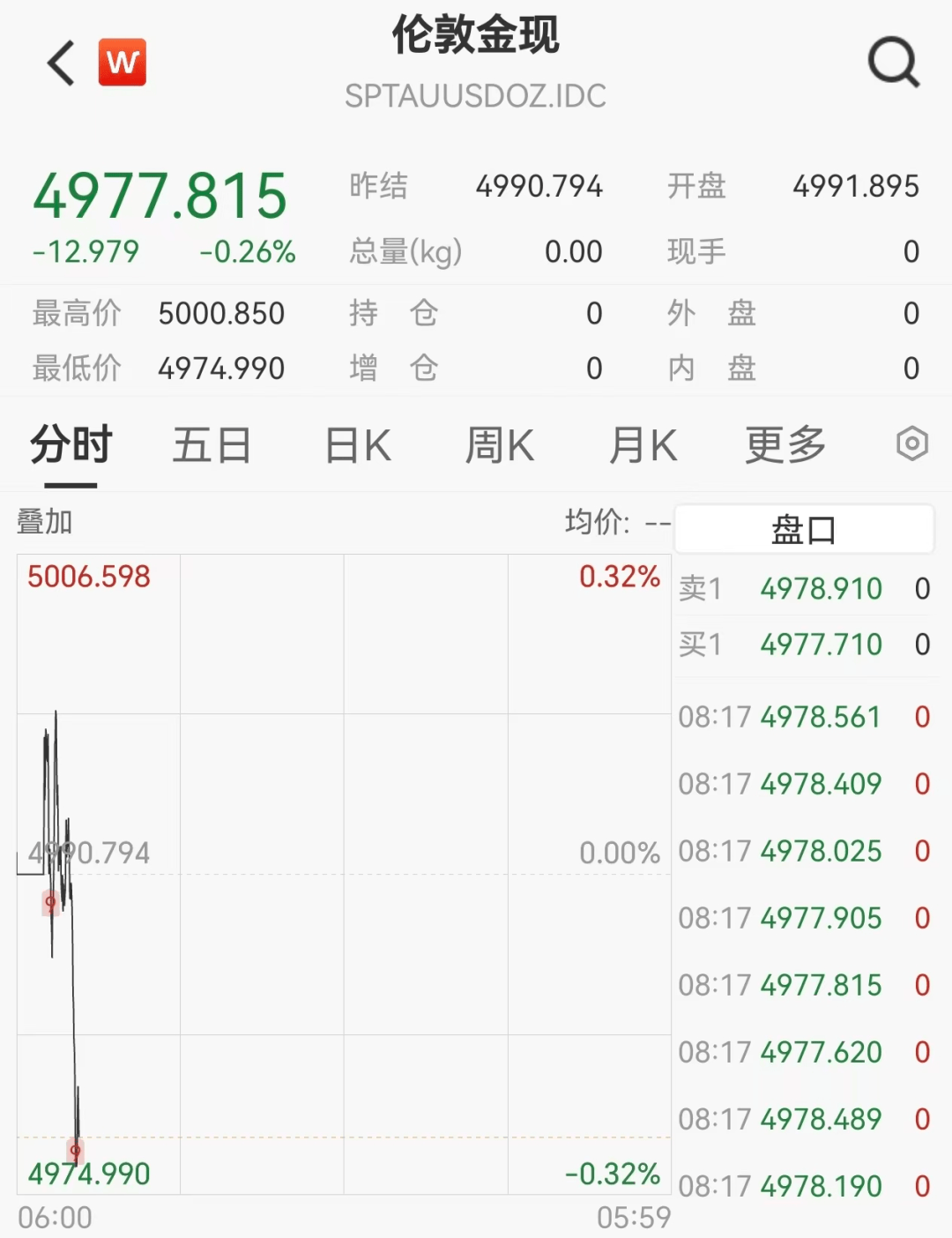
数据显示,12月24日上海黄金现货价格报价1012.00元/克,相较于期货主力价格(1014.68元/克)贴水2.68 元/克。 12月23日芝加哥商业交易所(CME):黄金期货成交量为272816手,较上个交易日增加43878手。未平仓 合约为500555手,较上个交易日增加1363手。 12月24日,上期所沪金期货仓单录得93711千克,较上一交易日持平;最近一周,沪金期货仓单累计增 长1989千克,增长幅度为2.17%;最近一个月,沪金期货仓单累计增长3285千克,增长幅度为3.63%。 分析观点: 宝城期货研报:昨日金价强势上行,纽约金和伦敦金先后站上4500美元关口,沪金站上1000元关口。短 期推动金价上行的主要因素是宏观共性的,这主要体现在近期无论是有色还是贵金属均出现明显上行趋 势,尤其是白银和铂钯,涨幅明显。我们认为本轮上行的主要推力来自于美日两大央行的货币政策,12 月上旬美联储降息落地,表现偏鸽,市场风险偏好和流动性均回升,12月中旬,市场对日元加息预期较 强,短期流动性下降,市场承压,随着12月19日日元加息落地,市场表现为靴子落地的情形,资产普遍 再度重拾涨势。拉长周期来看,自10月 ...
汹涌澎湃:流动性充裕后的滞胀潜伏
Dong Zheng Qi Huo· 2025-12-24 07:43
1. Report Industry Investment Ratings - The report is bullish on Europe, bearish on the US dollar, and expects the Japanese yen to appreciate [2][5][8]. 2. Core Views of the Report - In 2026, it will be a year dominated by liquidity. Ample liquidity and loose monetary policies lead to the spill - over of US dollar liquidity, rising asset prices, but the problem of de - globalization remains unsolved, and the pressure of long - term stagflation intensifies [4]. - The US economy is in a weak recovery during the interest - rate cut cycle, with a significant increase in potential stagflation pressure. The eurozone economy has stabilized, and the euro will maintain an upward trend. The Japanese yen is expected to appreciate in 2026 [1][2][3]. - The Fed's aggressive interest - rate cut policy and the expansion of US dollar liquidity will be the most important trends in 2026. The US dollar index is expected to continue to weaken significantly, dropping to around 90, with a larger decline in the second half of the year. Commodities, especially precious metals and non - ferrous metals, will continue to rise [5]. 3. Summary According to the Table of Contents 3.1 US: Accelerated Liquidity Injection and Hidden Stagflation Pressure 3.1.1 Labor Market: Accelerated Weakening Trend - In 2026, the US labor market will trend towards a significant weakening. The "inflection point" of the labor market has appeared, and the unemployment rate is expected to rise. The decline in the labor market is a gradual process, and the "atypical recession" of the labor market will continue. The problem of structural imbalance in the labor market caused by the expulsion of illegal immigrants may keep wage growth relatively high [14][16]. 3.1.2 Economic Recovery or Hidden Stagflation - In 2026, due to the mid - term elections, the Trump administration will maintain the current tariff level. US inflation is mainly driven by inflation inertia, wage growth expectations, and marginal liquidity. Liquidity injection is likely to be a neutral factor for inflation in 2026, and the overall inflation center in the US is expected to remain at around 3% year - on - year. The economy will experience a process of weakening and then slow recovery, and the real estate sector may be boosted [23][34]. 3.1.3 US Dollar: Continued Weakness - In 2026, the US dollar index will continue to weaken. The Fed is expected to cut interest rates rapidly, which will improve the liquidity within the system and relieve the government's debt pressure. Although inflation can remain relatively stable, the US dollar index will remain weak, and the real interest rate is expected to approach 0%. The Fed may face potential pressure to expand its balance sheet to maintain a relatively flat yield curve [37][45]. 3.2 Eurozone and Japan 3.2.1 Eurozone: Economic Strength and Currency Appreciation - The eurozone economy is in a continuous recovery state, with stable inflation and rising consumer and business confidence. Even if the Russia - Ukraine conflict reaches a cease - fire agreement, the EU will continue to expand its fiscal deficit. Fiscal policy is more important than monetary policy. The euro and European stocks performed strongly in 2025, and the current economic model of fiscal expansion and monetary stability is beneficial to the eurozone economy [46][58]. 3.2.2 Japan: Continued Appreciation of the Yen - Japan's economy is in a positive cycle, with rising GDP growth, inflation, consumer confidence, and corporate loan growth. The Bank of Japan will continue to raise interest rates. Although the expansion of fiscal deficit exerts downward pressure on the yen, the Fed's interest - rate cuts and the Bank of Japan's interest - rate hikes will lead to a rapid decline in the US - Japan interest - rate differential, which will cause the yen to appreciate. The expansion of US dollar liquidity is expected to offset the contraction of yen liquidity [61][83]. 3.3 Global Macroeconomy: From Loose to Ample Liquidity, from Simple to Complex Situation - In 2026, global market liquidity will shift from loose to ample, and asset prices will continue to rise. The weak US dollar will lead to the spill - over of US dollar liquidity and the rise of non - US assets. However, loose liquidity does not solve the problem of de - globalization, and more radical policies may be introduced in 2027. The Russia - Ukraine conflict is unlikely to end in the short term, and the risk premium of safe - haven assets will continue to exist. The influence of fiscal policy on the global market is increasing, which will lead to long - term and irreversible inflation [84][91]. 3.4 Investment Recommendations 3.4.1 Weak US Dollar as the Main Trend in 2026 - The Fed's aggressive interest - rate cut policy and the expansion of US dollar liquidity will cause the US dollar index to continue to weaken significantly in 2026, dropping to around 90, with a larger decline in the second half of the year [93]. 3.4.2 Obvious Opportunities in Commodities - The accelerated injection of liquidity and the potential increase in inflation pressure will boost commodities, especially precious metals and non - ferrous metals, which will continue to rise in 2026 [94].
一切皆涨,但解释权已经用完
Jin Rong Jie· 2025-12-24 05:56
来源:华尔街情报圈 又涨了。 - 美国股市全线上涨,道琼斯指数涨0.16%,标普500指数涨0.46%,纳斯达克指数涨0.57%; - 黄金、白银和铜均创下历史新高,金价盘中高点距4500仅差1美元; - 油价也延续涨势,连续第三个交易日上涨。 这是一轮"没人反对",而不是"大家同意"的上涨。 第一,现在对市场来说,没有消息就是好消息,这是年底最典型的状态。这种上涨,最大的特征 是"涨,但没人兴奋;创新高,但讨论度不高"。对应的不是顶部,而是叙事空窗期。 第二,黄金、白银、铜一起涨,并同步创下历史新高——这是一个极不寻常的组合,但不是一个"方向 信号",而是一个状态信号。 黄金:为不确定性定价 第四,VIX暴跌,创年内新低(短线交易者在"卖恐慌"),但 VIX 曲线极度陡峭(长线资金在"买不确 定性")——VIX 的结构,比点位本身重要一百倍。换句话说,现在的平静,是用未来的价格换来的。 这不是上涨的终点,但已经是"上涨理由"的终点。短期市场仍旧偏向上涨,但"为什么涨",已经越来越 难讲清楚。而一旦市场需要"讲清楚理由",往往就离变盘不远了。 美股频道更多独家策划、专家专栏,免费查阅>> 责任编辑:栎树 白银 ...
金融市场流动性与监管动态周报:岁末年初市场风格特征如何?-20251223
CMS· 2025-12-23 10:36
Market Style Characteristics - The market style during the year-end and beginning of the year shows a clear defensive characteristic, with large-cap value style prevailing while the small-cap style represented by the CSI 1000 is under pressure [1][3][8] - Institutional investors tend to adopt a conservative investment behavior due to annual performance assessments and settlements, leading to a significant reduction in risk appetite [3][8] - As the market enters the peak period for annual performance forecasts in January, uncertainty regarding earnings becomes a major concern, causing funds to flow towards more stable large-cap blue-chip stocks [3][8] Monetary Policy and Interest Rates - The central bank conducted a net injection of 219 billion yuan in the open market during the week of December 15-19, with upcoming reverse repos and MLF totaling 8.775 billion yuan [3][17] - Money market interest rates are declining, with the R007 rising by 0.7 basis points and the DR007 falling by 2.8 basis points, indicating a widening interest rate spread [3][17] Supply and Demand of Funds - The net inflow of funds in the secondary market has expanded, with a net buy of 34.2 billion yuan in financing and a net inflow of 560.8 billion yuan in ETFs [3][30] - The issuance of new equity public funds increased by 68.5 million units, while the net reduction by major shareholders rose to 121.9 billion yuan [3][30][34] Market Sentiment - The trading activity of financing funds has weakened, with the proportion of financing transactions in the A-share market decreasing to 11.3% [3][39] - The VIX index has declined, indicating an improvement in market risk appetite, while the focus on style indices and major industries has shifted towards consumer staples and discretionary sectors [3][41][45] Industry Preferences - The electronic, communication, and power equipment sectors received significant net inflows, with net inflows of 121.5 billion yuan, 67.2 billion yuan, and 47.6 billion yuan respectively [3][49] - The defense industry experienced net outflows, while the financing funds showed a net buy of 34.2 billion yuan, with the electronic sector leading the net buy [3][49]