
关税调整

Search documents
LME期铜上涨,受乐观贸易情绪提振
Wen Hua Cai Jing· 2025-08-12 03:21
Group 1: Market Reactions - LME copper prices increased by 0.30% to $9,761 per ton, driven by the consensus between China and the U.S. to continue the suspension of 24% tariffs [1] - The SHFE September copper contract remained stable at ¥78,940 per ton, reflecting positive sentiment in the commodity market due to the tariff suspension agreement [2] Group 2: Supply Dynamics - Expectations of increased copper supply are suppressing price gains, with Codelco reporting a 17% year-on-year increase in copper production to 120,200 tons in June [3] - The approval for the resumption of operations in unaffected areas of the El Teniente copper mine alleviated supply concerns, impacting copper prices [3] Group 3: Other Metals Performance - LME aluminum prices rose by 0.39% to $2,598 per ton, while nickel prices fell by 0.10% to $15,335 per ton [4] - In Shanghai, aluminum prices remained stable at ¥20,680 per ton, with nickel prices increasing by 0.79% to ¥122,590 per ton [4]
中美会谈联合声明:即日起中美再次暂停实施24%关税90天
Nan Fang Du Shi Bao· 2025-08-12 02:15
Core Points - The joint statement from the China-U.S. Stockholm economic talks announced a 90-day suspension of a 24% tariff on goods from both countries starting August 12, 2025 [1][2] - The agreement is based on previous discussions held during the Geneva and London talks in 2025, indicating ongoing negotiations between the two nations [1][2] Summary by Sections U.S. Actions - The U.S. will modify the implementation of the 24% tariff on Chinese goods, including those from Hong Kong and Macau, starting August 12, 2025, while retaining a 10% tariff on these goods [1] - The U.S. actions are part of the commitments made under the Geneva joint statement [1] China Actions - China will also suspend the 24% tariff on U.S. goods for 90 days starting August 12, 2025, while keeping a 10% tariff in place [2] - Additionally, China will take necessary measures to suspend or cancel non-tariff countermeasures against the U.S. as agreed in the Geneva joint statement [2] Meeting Details - The Stockholm economic talks were held under the framework established by the Geneva joint statement, with representatives from both countries participating [2] - The Chinese delegation was led by Vice Premier He Lifeng, while the U.S. delegation included Treasury Secretary Scott Bessenet and U.S. Trade Representative Jamison Greer [2]
中美斯德哥尔摩经贸会谈联合声明
Hua Er Jie Jian Wen· 2025-08-12 00:01
Group 1 - The United States will continue to modify the implementation of the tariff increase on Chinese goods, including those from Hong Kong and Macau, as per Executive Order No. 14257, by suspending the 24% tariff for 90 days starting from August 12, 2025, while retaining the remaining 10% tariff [1] - China will also modify the implementation of the tariff increase on U.S. goods as per Announcement No. 4 of 2025, by suspending the 24% tariff for 90 days starting from August 12, 2025, while retaining the remaining 10% tariff [1] - Additionally, China will take or maintain necessary measures to suspend or cancel non-tariff countermeasures against the U.S. as agreed in the Geneva Joint Statement [1]
约旦工业协会回应美方加税:成衣业受影响,进口汽车价格或将下调
Shang Wu Bu Wang Zhan· 2025-08-09 03:25
Core Viewpoint - The recent decision by the United States to impose a 15% tariff on certain Jordanian exports, which previously enjoyed zero tariffs, significantly impacts the garment industry, particularly knitwear. The food industry, with its local resource base and growth potential, should be prioritized for future development [1] Group 1: Impact on Industries - The garment industry is the most affected sector due to the new 15% tariff on exports to the U.S. [1] - The food industry is highlighted as having local resource advantages and growth potential, suggesting a shift in focus for future investments [1] Group 2: Trade Relations - Jordan primarily imports cars, chemicals, and pharmaceuticals from the U.S. [1] - Future U.S.-Jordan trade negotiations are expected to cover various aspects of imports, which may lead to a decrease in the prices of American cars in the Jordanian market [1]
一周热榜精选:黄金成关税新目标?美联储迎来鸽派新理事
Jin Shi Shu Ju· 2025-08-08 13:43
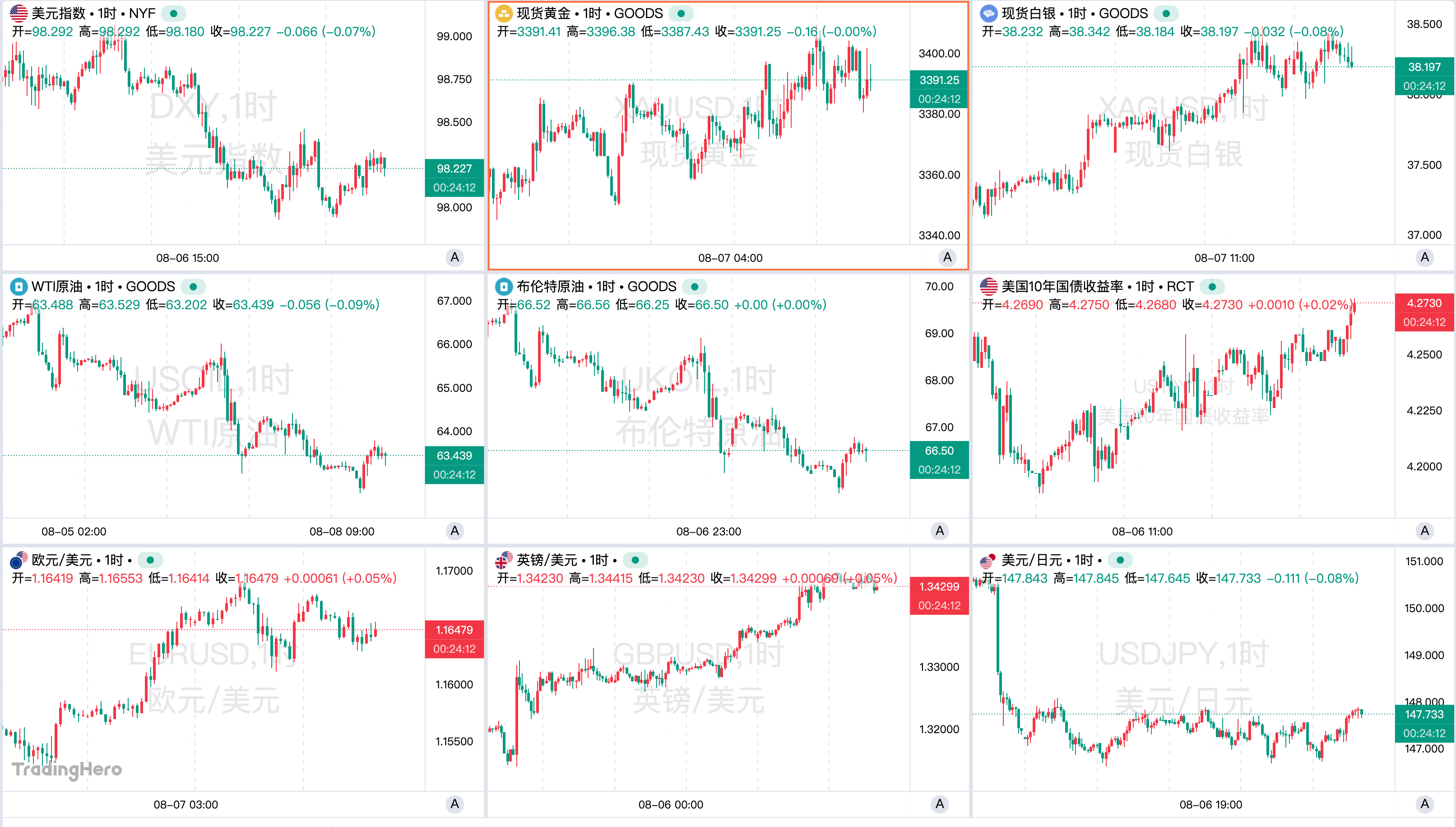
Market Overview - The US dollar index fell this week, reaching a 10-day low, primarily due to Trump's nomination of a dovish Federal Reserve governor, which increased market expectations for future rate cuts [1] - Spot gold recorded its second consecutive week of gains, driven by rising expectations for Fed rate cuts and new tariffs on 1 kg gold bars, pushing prices to a historical high of $3534 per ounce [1] - The international oil price is expected to decline for seven consecutive days as OPEC+ significantly increased production, alleviating concerns over potential supply shortages due to sanctions on Russian oil [1] Investment Bank Insights - Citigroup raised its short-term gold price forecast from $3300 to $3500 per ounce, adjusting the three-month price range from $3100-$3500 to $3300-$3600 [4] - Goldman Sachs expects the Fed to begin a series of rate cuts starting in September, with potential cuts of 25 basis points, and possibly 50 basis points if unemployment rises further [4] - Morgan Stanley has moved its forecast for the first rate cut from December to September, now anticipating three cuts this year [4] Trade Developments - The US government implemented "reciprocal tariffs" on various trade partners, with Japan and India facing significant tariff adjustments [5][6] - The US has imposed a 39% tariff on Swiss gold exports, which could significantly impact the market dynamics for gold trading [7] Geopolitical Events - A meeting between Presidents Trump and Putin is anticipated, marking a significant moment in the ongoing Russia-Ukraine conflict [8] - Trump's nomination of a dovish Federal Reserve governor is expected to reinforce market expectations for rate cuts [9] Corporate Developments - Apple announced a $100 billion investment in the US, which includes a new manufacturing project, following Trump's announcement of a 100% tariff on imported semiconductor chips [12] - The Federal Reserve's potential policy changes could open new funding sources for alternative asset managers, benefiting firms like Blackstone and KKR [14]


东京股市显著上涨
Xin Hua She· 2025-08-08 08:00
Core Viewpoint - The Tokyo stock market experienced significant gains on July 23, driven by a new trade agreement between the United States and Japan, which reduced tariffs on Japanese imports to the U.S. [1] Market Performance - The Nikkei 225 index closed up by 3.51%, while the Tokyo Stock Exchange Price Index rose by 3.18% [1] - The Nikkei index increased by 1396.40 points, closing at 41171.32 points, and the Tokyo Stock Exchange index rose by 90.19 points, closing at 2926.38 points [1] Sector Performance - All 33 industry sectors on the Tokyo Stock Exchange saw gains, with transportation machinery, banking, and metal products leading the increases [1]
需求弱化与高库存施压,PX、PTA下行趋势或难改
Tong Hui Qi Huo· 2025-08-07 09:15
1. Report Industry Investment Rating No relevant information provided. 2. Core View of the Report The downward trend of PX and PTA may be difficult to reverse due to weakening demand and high inventory. The polyester industry chain is expected to continue its weak operation, with the core drivers being the marginal weakening of demand and the suppression of absolute high inventory. PTA processing fees may further shrink, and inventory reduction depends on large - scale production cuts or unexpectedly strong demand [1][4]. 3. Summary by Relevant Catalogs 3.1 Daily Market Summary 3.1.1 PTA & PX - On August 6, 2025, the PX main contract closed at 6,794.0 yuan/ton, up 0.89% from the previous trading day, with a basis of - 98.0 yuan/ton. The PTA main contract closed at 4,724.0 yuan/ton, up 0.9% from the previous trading day, with a basis of - 64.0 yuan/ton [2]. - Cost - end: On August 6, the Brent crude oil main contract closed at 67.68 US dollars/barrel, and WTI at 65.17 US dollars/barrel. OPEC + plans to increase production from August to September, and the pressure of oil price surplus is gradually materializing. The low - level oscillation of crude oil prices provides limited cost support for PX, but attention should be paid to the risk of crude oil supply disturbances caused by the North American hurricane season [2]. - Supply - end: The basis of PX and PTA main contracts maintains a contango structure, indicating a relatively loose supply pattern in the current spot market. The recent compression of PTA processing fees has led to production cuts in some plants, offsetting the output of newly - commissioned plants, and the supply pressure of TA has slightly decreased [2]. - Demand - end: The trading volume of Light Textile City has been continuously lower than the seasonal average, confirming the weak peak - season characteristics of terminal textile demand. The inventory pressure in the polyester segment is transmitted upstream in the industrial chain. Although large - scale polyester enterprises maintain rigid operation in the short term, the negative feedback pressure in the industrial chain has not been fully released [2]. - Inventory - end: The current PTA factory inventory is at a medium level. The deterioration of processing fees has led to production cuts and load reduction in plants. The operating rate of downstream polyester segments remains at a low level characteristic of the off - season. Demand has not reached the end of the off - season, and there is no more positive support for the supply - demand situation at the PX end, with insufficient upward driving force [3]. 3.1.2 Polyester - On August 6, 2025, the short - fiber main contract closed at 6,414.0 yuan/ton, up 1.46% from the previous trading day. The spot price in the East China market was 6,480.0 yuan/ton, down 5.0 yuan/ton from the previous trading day, with a basis of 66.0 yuan/ton [4]. - The futures prices of PX and PTA showed a trend of rising first and then falling from late July to early August 2025. PX dropped from a high of 6,984 yuan/ton to 6,794 yuan/ton, and PTA dropped from 4,856 yuan/ton to 4,724 yuan/ton, reflecting the weakening of cost support and a loose supply pattern [4]. - The 15 - day moving average trading volume of Light Textile City decreased from a high of 4940,000 meters to 4840,000 meters, indicating a marginal weakening of terminal replenishment momentum. The inventories of various polyester products are significantly higher than the five - year average, and the inventory pressure is fully prominent [4]. 3.2 Industrial Chain Price Monitoring - PX: The main contract price of PX futures increased by 0.89%, the trading volume increased by 21.42%, and the open interest decreased by 2.15%. The spot prices in China's main port CFR and South Korea FOB remained unchanged. The PX basis decreased by 157.89% [5]. - PTA: The main contract price of PTA futures increased by 0.90%, the trading volume increased by 33.21%, and the open interest decreased by 5.94%. The spot price in China's main port CFR remained unchanged. The PTA basis decreased by 190.91%, the 1 - 5 spread increased by 9.52%, the 5 - 9 spread decreased by 17.07%, and the 9 - 1 spread increased by 25.00%. The PTA import profit decreased by 0.39% [5]. - Short - fiber: The main contract price of short - fiber futures increased by 1.46%, the trading volume increased by 78.51%, and the open interest increased by 172.71%. The spot price in the East China market decreased by 0.08%. The PF basis decreased by 59.51%, the 1 - 5 spread increased by 3.23%, the 5 - 9 spread decreased by 1.47%, and the 9 - 1 spread remained unchanged [5]. - Other: The prices of Brent crude oil, WTI crude oil, CFR Japan naphtha, ethylene glycol, polyester chips, polyester bottle chips, polyester POY, polyester DTY, and polyester FDY remained unchanged on August 6 compared with August 5 [5]. - Processing spreads: The processing spread of PTA decreased by 2.58%, while the processing spreads of naphtha, PX, polyester chips, polyester bottle chips, polyester short - fiber, polyester POY, polyester DTY, and polyester FDY remained unchanged [6]. - Light Textile City trading volume: The total trading volume on August 6 was 4330,000 meters, a 10.18% increase from the previous day, with 3580,000 meters of long - fiber fabric trading volume and 780,000 meters of short - fiber fabric trading volume [6][8]. - Industrial chain load rate: The load rates of PTA factories, polyester factories, and Jiangsu and Zhejiang looms remained unchanged on August 6 compared with August 5 [6]. - Inventory days: From July 24 to July 31, 2025, the inventory days of polyester short - fiber increased by 0.51%, polyester POY by 16.77%, polyester FDY by 13.79%, and polyester DTY by 5.34% [6]. 3.3 Industry Dynamics and Interpretation 3.3.1 Macro Dynamics - On August 6, Trump said he might soon announce a new Federal Reserve Chairman, with four candidates, and Bessent hoped to stay in the Treasury. - On August 5, Trump said he would significantly increase tariffs on India for its purchase of Russian crude oil, and India responded that the accusation was unfounded. - On August 5, Goldman Sachs expected the Federal Reserve to cut interest rates by 25 basis points three times in a row starting from September; if the unemployment rate rises further, it may cut interest rates by 50 basis points. - On August 5, Citigroup raised its gold price forecast for the next 0 - 3 months to 3,500 US dollars/ounce (previously 3,300 US dollars/ounce). - On August 5, Federal Reserve's Daly said the time for interest - rate cuts was approaching, and the number of interest - rate cuts within the year was more likely to be more than two. - On August 5, Trump said he would announce a candidate to fill the vacant Federal Reserve governor position in the next few days [7]. 3.3.2 Supply - Demand - Demand - On August 6, the total trading volume of Light Textile City was 4330,000 meters, a 10.18% increase from the previous day, with 3580,000 meters of long - fiber fabric trading volume and 780,000 meters of short - fiber fabric trading volume [8]. 3.4 Industrial Chain Data Charts The report provides multiple data charts, including those related to PX and PTA main futures and basis, PX and PTA spot prices, PX capacity utilization, etc., with data sources from Wind and Tonghui Futures R & D Department [9][11][13][15]. 3.5 Appendix: Big - Model Inference Process - Supply - end: The basis of PX and PTA being negative may indicate relatively sufficient spot supply. The price increases of PTA and PX may be supported by crude oil costs or due to supply shortages. Further analysis of factors such as plant maintenance and changes in operating rates is needed [33]. - Demand - end: The decline in the trading volume of Light Textile City may indicate weakening downstream demand, which in turn may lead to a decrease in PTA demand and put pressure on prices. The impact of polyester operating rates on PTA demand needs to be considered in combination with other factors [34]. - Inventory - end: Without specific inventory data, the change in inventory can be inferred from the supply and demand situation. If supply decreases while demand remains stable, inventory may decline; if supply increases while demand decreases, inventory may rise [34]. - Overall view: Future PX prices may fluctuate strongly, affected by crude oil and its own supply - demand situation. PTA prices may be limited in upward space or under pressure due to weak downstream demand and inventory pressure [36].
美对印关税再增至50%,已落后的印度股市会面临新调整吗?这些板块最受打击
Di Yi Cai Jing· 2025-08-07 07:42
Group 1 - Analysts believe that the Indian stock market will face adjustment pressure due to the U.S. imposing an additional 25% tariff on Indian imports, raising the total tariff rate to 50% [1][4] - The sectors most affected include oil, pharmaceuticals, textiles, footwear, and jewelry, as these industries are closely tied to U.S. trade [1][6] - Foreign investors sold $2 billion worth of Indian stocks in July and an additional $900 million in August, indicating a trend of capital outflow amid rising uncertainties [4][5] Group 2 - The Indian economy has approximately 20% of its export goods (2% of GDP) directed towards the U.S., making it vulnerable to the new tariffs [6] - The pharmaceutical sector has seen significant declines, with the NSE Nifty pharmaceutical index breaking key technical support levels, indicating potential further declines [7] - Companies like Reliance Industries may face pressure if India succumbs to U.S. demands to limit oil purchases from Russia, which could impact refining margins [6]
特朗普:24小时内将大幅提高关税
Zhong Guo Ji Jin Bao· 2025-08-05 14:18
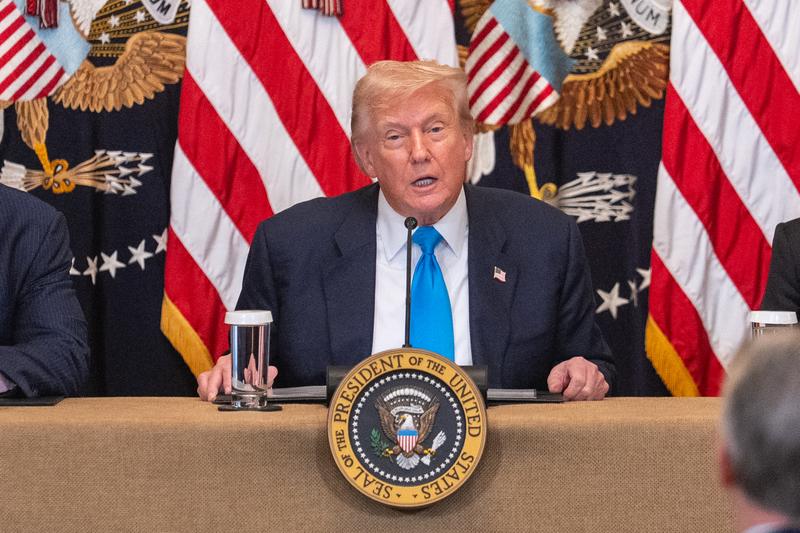
特朗普最新表态,如果欧盟不履行义务,将对欧盟征收35%的关税。 据央视新闻,当地时间5日,欧盟负责贸易的高级官员对外解释美欧日前签订的关税协定。 特朗普:将大幅提高印度关税 北京时间8月5日晚间,美国总统特朗普表示,将在未来24小时内大幅提高印度关税,印度是关税最高的 国家。他表示,印度并不是一个好的贸易伙伴,与印度存在的分歧在于关税过高。 据央视新闻,当地时间8月4日,美国总统特朗普在其社交媒体"真实社交"发文表示,印度不仅大量购买 俄罗斯石油,还将其中大部分石油在公开市场上出售,牟取暴利。因此,他将大幅提高印度向美国缴纳 的关税。 特朗普上月在"真实社交"平台上向印度发出威胁:如果印度继续购买俄罗斯武器和石油,美方将在对印 度商品征收25%进口关税的基础上额外施加惩罚性关税。8月1日,特朗普又对媒体记者说,他相信印度 打算停止购买俄罗斯石油。 路透社8月2日援引印度政府消息人士说,印俄双方所签为"长期石油合同","要在一夕之间停止采购, 不是这么简单的事"。另一名消息人士说,印度进口俄罗斯石油,协助抑制全球油价上涨。在美国为首 的西方国家自2022年2月起对俄罗斯能源实施制裁后,全球油价并未显著上涨。这两 ...
250%关税!特朗普,突发!
Sou Hu Cai Jing· 2025-08-05 14:12
特朗普表示,他已将潜在的未来美联储主席范围缩小到四名候选人,该名单不包括财政部长斯科特·贝 森特。 他表示:" 一年,最多一年半,税率将升至150%,之后将升至250%,因为我们希望药品在我们国家生 产。"但他没有透露药品的初始关税税率是多少。 综合自:央视新闻 特朗普表示, 他还将在"下周左右"宣布对半导体和芯片征收关税,但未详细说明。 此外,特朗普表示,鉴于印度持续购买俄罗斯石油, 他将在未来24小时内"大幅"提高对印度输美商品 征收的关税,目前税率为25%。特朗普并没有明确提到对印度的新关税税率。 此前一天,8月4日,特朗普在其社交媒体"真实社交"发文表示,印度不仅大量购买俄罗斯石油,还将其 中大部分石油在公开市场上出售,牟取暴利。因此,他将大幅提高印度向美国缴纳的关税。 当地时间8月5日,美国总统特朗普在接受美国消费者新闻与商业频道(CNBC)采访时表示, 美国将首 先对进口药品征收"小额关税",并在一年左右的时间内提高税率。 另外,特朗普还表示,可能很快宣布美联储新任主席。 责编:陈丽湘 ...